The 9 Best Shade Trees For California Backyards
Backyard heat gets old fast, and the right shade tree can change everything. In California, a good one does more than block sun.
It cools the yard, makes outdoor space more usable, and gives the whole landscape that settled, finished look.
Not every tree is up for the job, though. Some grow too messy, some get far too big, and some act like they were planted purely to test your patience.
The best shade trees bring generous canopy, reliable beauty, and the kind of presence that makes a backyard feel instantly more inviting.
That matters even more in California, where long sunny stretches can turn a beautiful yard into a place nobody actually wants to sit in by midafternoon.
A well-chosen shade tree can soften the heat, add value, and make everything around it feel calmer and more comfortable.
These standout picks do exactly that, with the size, shape, and staying power to earn their place.
1. Coast Live Oak
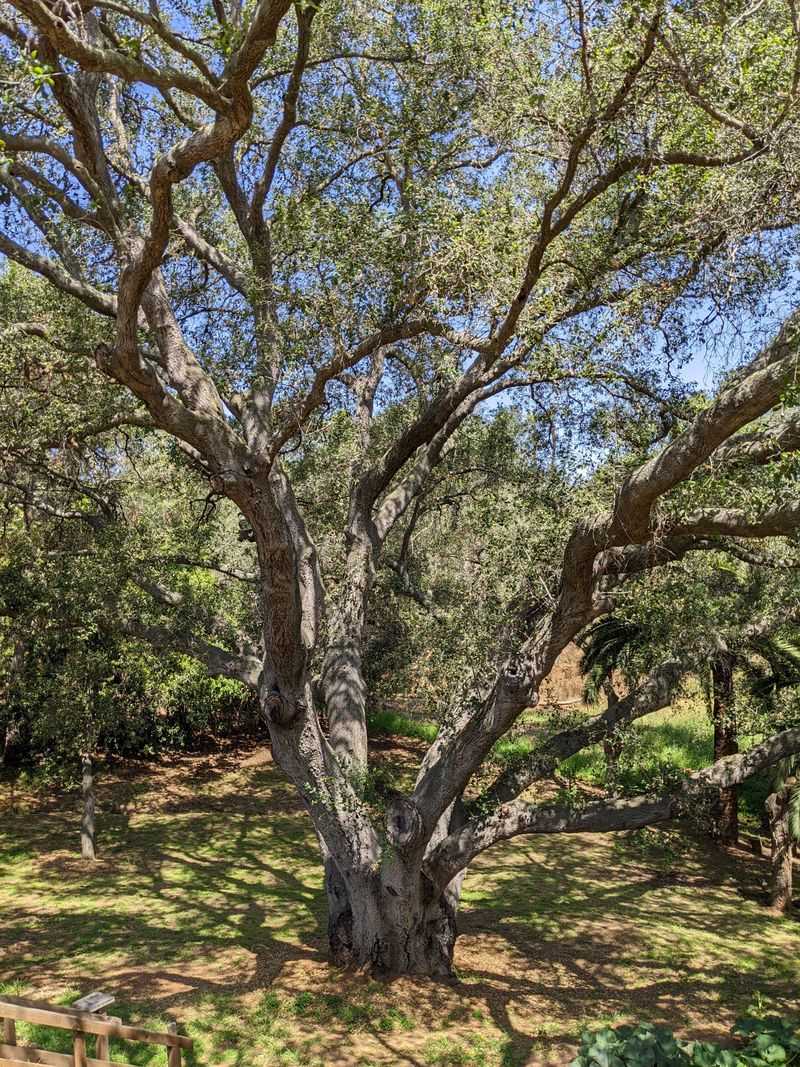
Few trees feel as deeply Californian as the Coast Live Oak. This evergreen beauty has been growing across California for thousands of years, and it still stands as one of the most dependable shade trees you can plant in your backyard.
The Coast Live Oak grows slowly but steadily, eventually spreading its wide, rounded canopy far and wide. Its dark green, leathery leaves stay on the tree year-round, so you get shade even during winter months.
That makes it a smart pick for homeowners who want consistent coverage.
It thrives in coastal and inland areas of California, handling both dry summers and mild winters with ease. Once established, this tree needs very little water, making it a great choice for drought-prone regions.
Wildlife absolutely loves it. Acorns attract birds and squirrels, and the thick canopy shelters all kinds of creatures.
Planting a Coast Live Oak is almost like creating a little ecosystem in your own yard.
Give it plenty of room to grow since mature trees can spread 70 feet wide. Keep summer watering minimal to avoid root fungus.
With proper care, this tree can live for centuries and become a true landmark in your California backyard.
2. Valley Oak
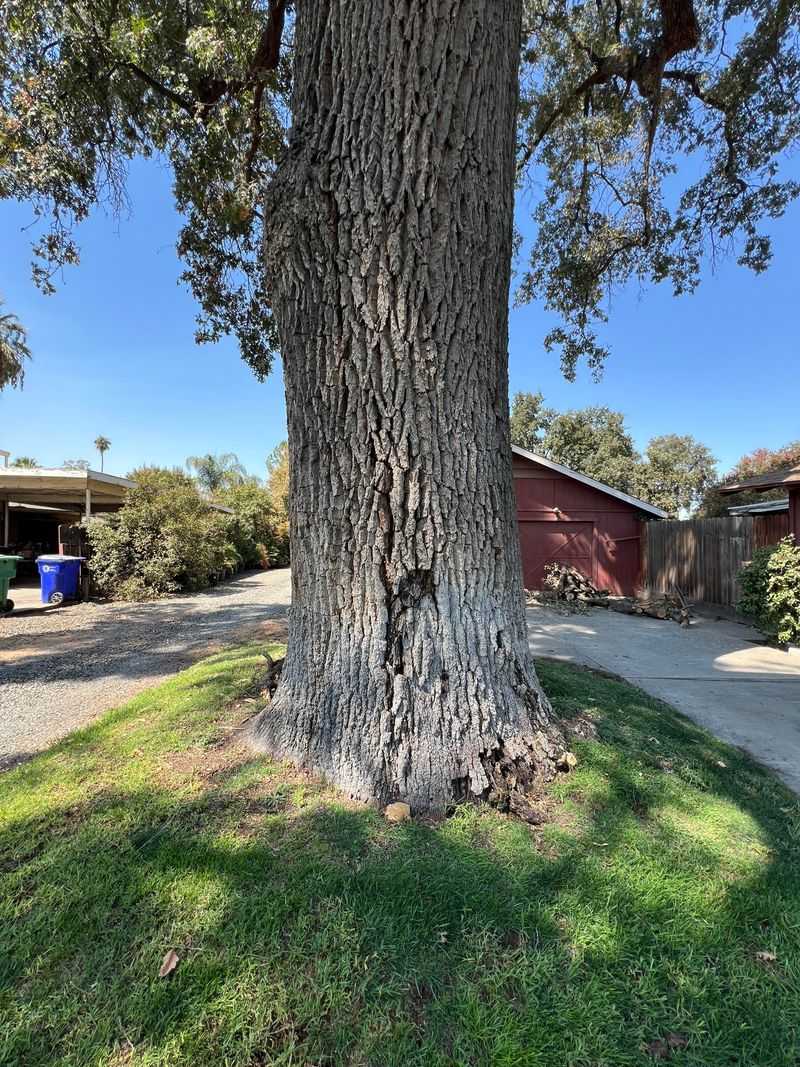
There is something almost majestic about a Valley Oak. It is the largest oak native to California, and when you see a fully grown one, it is hard not to stop and stare.
The wide, arching branches and deeply lobed leaves create a canopy that feels like a natural outdoor room.
Valley Oaks are deciduous, meaning they drop their leaves in fall, which actually works in your favor. You get full shade during hot California summers, and then sunlight filters through in winter when you might want a little warmth in the yard.
These trees grow best in the Central Valley and surrounding foothills of California, where the soil is deep and well-draining. They can reach heights of 100 feet with canopies stretching just as wide, so they are best suited for larger backyards with plenty of open space.
Young Valley Oaks need regular watering for the first few years, but once established, they are remarkably tough and drought-tolerant. Avoid planting grass or other thirsty plants near the base.
Your California Garden Changes Every Week. Your Plan Should Too.
Gardening in California changes quickly throughout the season. Every Friday you’ll receive a simple weekly plan showing exactly what to plant, prune, fertilize, harvest, and protect so you never miss the right timing.
The ecological value is outstanding. Valley Oaks support hundreds of species of insects, birds, and mammals.
Planting one is a long-term investment in both beauty and local biodiversity that will reward future generations.
3. California Sycamore
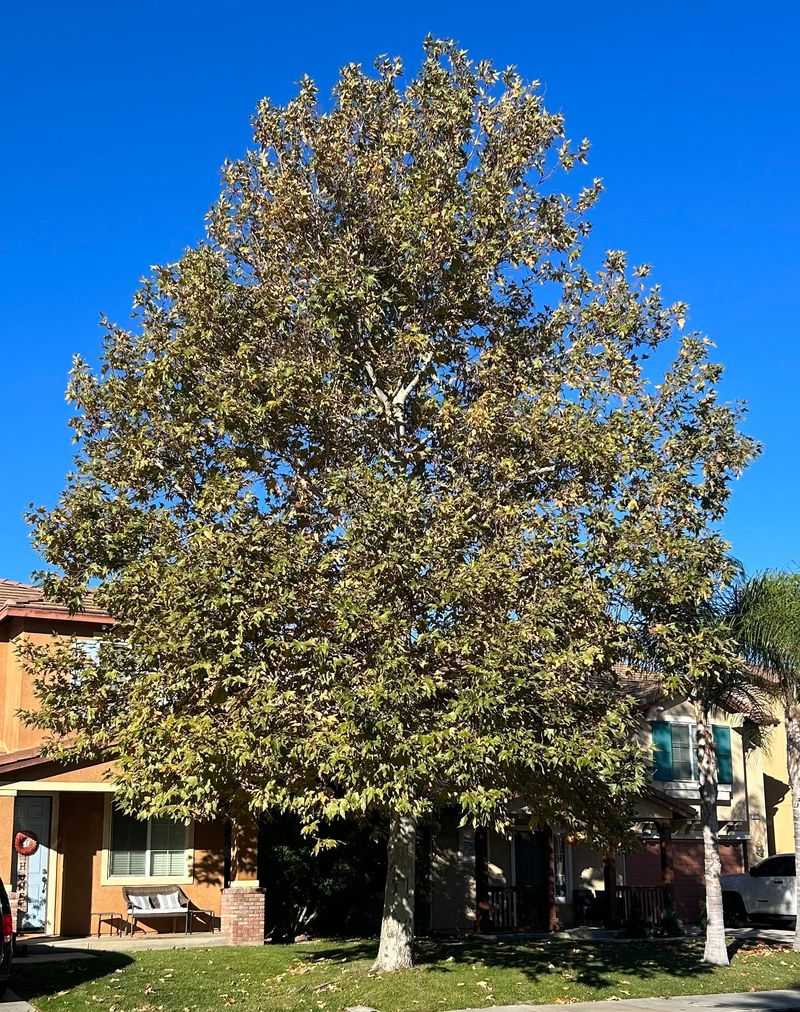
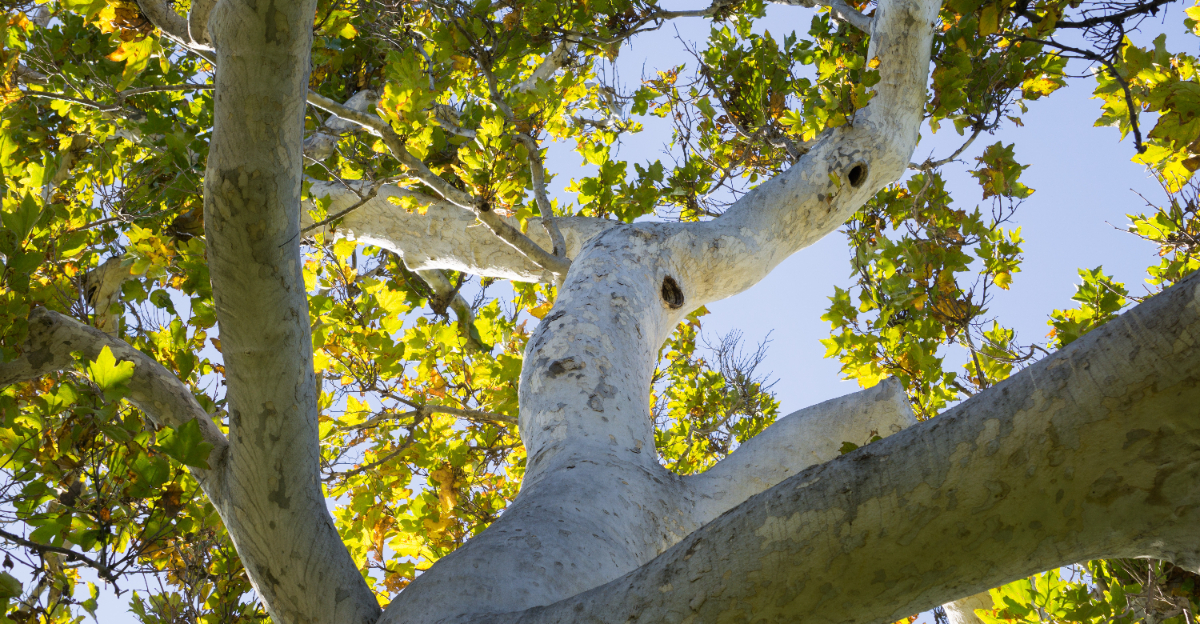
Walk along almost any California creek and you will likely spot a California Sycamore nearby. That peeling, patchwork bark in shades of white, tan, and gray is instantly recognizable and genuinely stunning up close.
It gives the tree a wild, artistic look that no other shade tree quite matches.
California Sycamores grow fast, which is great news if you want shade sooner rather than later. They can put on several feet of growth per year under good conditions, reaching heights of 40 to 80 feet at maturity.
The large, maple-like leaves create a thick canopy that blocks the sun beautifully during California’s long, hot summers.
This tree does best near water sources or in areas where the soil stays relatively moist. It is a natural fit for backyards near rivers, streams, or low-lying areas.
However, with regular irrigation, it can thrive in many parts of California.
One thing to keep in mind is that Sycamores shed a lot of leaves, seed balls, and bark throughout the year. So if you prefer a tidy yard, plan on some extra cleanup.
Birds nest in the branches, and the shade it provides is genuinely impressive. For a dramatic, fast-growing shade tree with real character, the California Sycamore is hard to beat.
4. Chinese Pistache
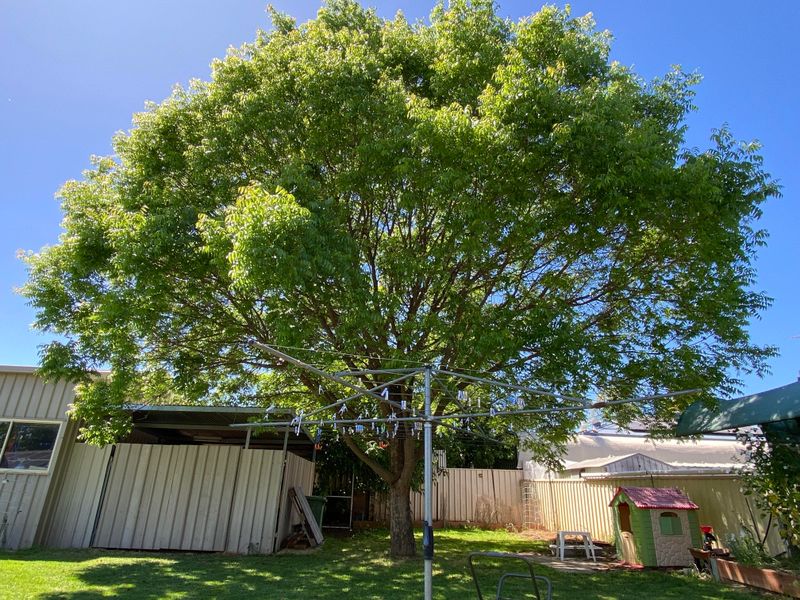
California is not exactly famous for fall color, but the Chinese Pistache changes that conversation entirely. Come autumn, this tree explodes into shades of red, orange, and yellow that look almost out of place in the California landscape, in the best possible way.
During summer, the Chinese Pistache provides a full, rounded canopy of deep green leaves that creates excellent shade for patios and seating areas. It is a medium to large tree, typically reaching 25 to 35 feet tall, making it a practical choice for average-sized California backyards.
One of its biggest selling points is toughness. Chinese Pistache trees handle California’s dry summers and variable soils remarkably well.
Once established, they need minimal supplemental water, which is a real advantage in drought-conscious communities across the state.
The tree is also resistant to most common pests and diseases, so you are not going to spend a lot of time worrying about problems. It grows at a moderate pace, and the structure of the branches is naturally attractive even in winter when leaves have dropped.
Female trees produce small clusters of red and blue berries that birds find irresistible. If you want a shade tree that gives you four-season interest and very low maintenance, the Chinese Pistache deserves a serious look for your California yard.
5. Western Redbud
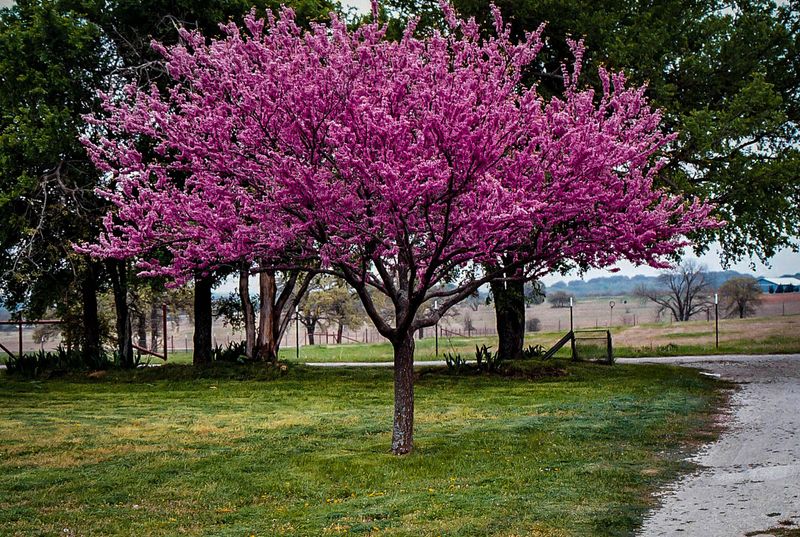
Every spring, the Western Redbud puts on a show that makes neighbors stop and ask what that gorgeous tree is. Before the leaves even appear, the branches get completely covered in brilliant magenta-pink blossoms.
It is one of the most eye-catching flowering trees native to California.
Western Redbud is a smaller tree, usually topping out around 15 to 20 feet tall. That makes it a wonderful option for compact California backyards where a massive oak would be too overwhelming.
Despite its smaller size, the rounded canopy still provides meaningful shade for seating areas and patios.
After the spring flowers fade, heart-shaped blue-green leaves emerge and create a lush, full canopy through summer. In fall, the leaves turn yellow before dropping, and the tree holds attractive seed pods through winter that add visual interest even in the off-season.
This tree is deeply adapted to California’s climate. It thrives in the foothills and interior valleys of the state, tolerating rocky soils and dry summers with little complaint.
Once established, it requires almost no supplemental irrigation.
Western Redbud also supports pollinators beautifully. Bees flock to the spring blooms, making it a great choice for gardeners who care about supporting local ecosystems.
It is a truly multi-season tree that earns its place in any California backyard.
6. Desert Willow
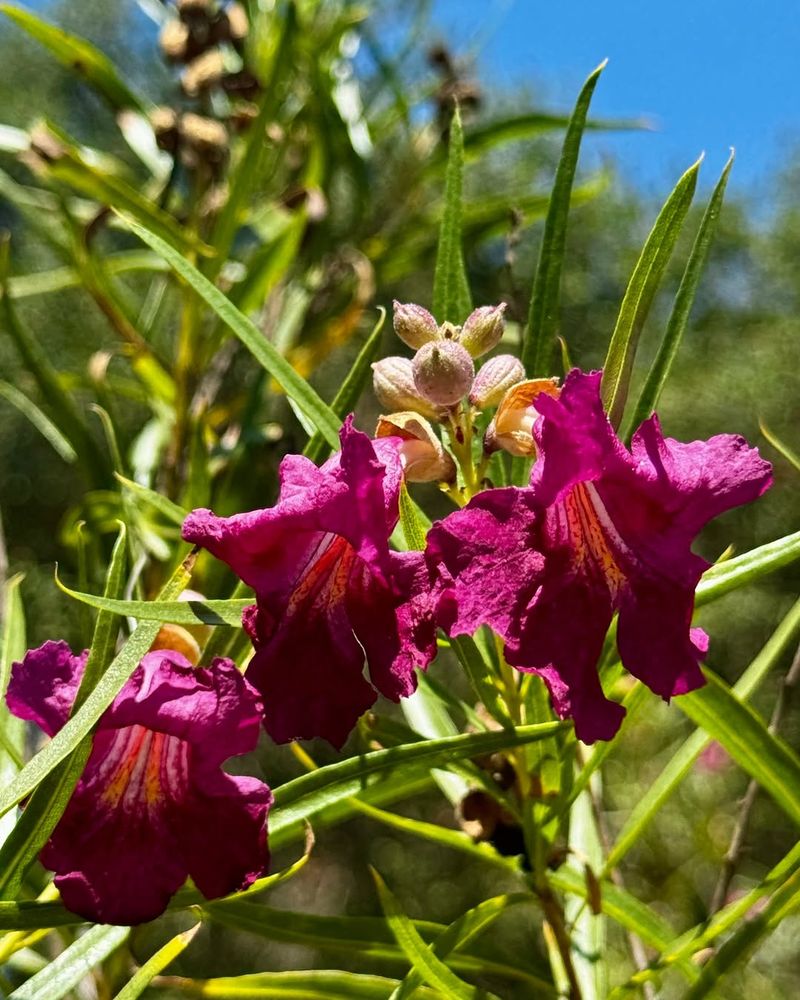
Do not let the name fool you. The Desert Willow is not a true willow, but it is absolutely a true showstopper.
From late spring through summer, this tree produces clusters of trumpet-shaped flowers in shades of pink, purple, and white that attract hummingbirds like a magnet.
Desert Willow grows well in the hotter, drier parts of California, including the Inland Empire, the Central Valley, and desert-adjacent communities. It handles extreme heat and low water conditions better than almost any other shade tree on this list, making it a smart pick for water-wise landscaping.
The tree typically grows 15 to 30 feet tall with a light, airy canopy of narrow, willow-like leaves. It does not create the deepest shade, but it provides pleasant filtered light that is perfect for outdoor dining areas or relaxed seating spots in the yard.
One practical note: Desert Willow is deciduous and drops its leaves in winter. In spring, it can be slow to leaf out, which sometimes makes people think something is wrong.
Patience pays off once those blooms appear.
It is also low-maintenance once established. Occasional deep watering during dry spells and light pruning to shape the canopy are really all it needs.
For hot California climates, this tree is genuinely hard to pass up.
7. Crape Myrtle
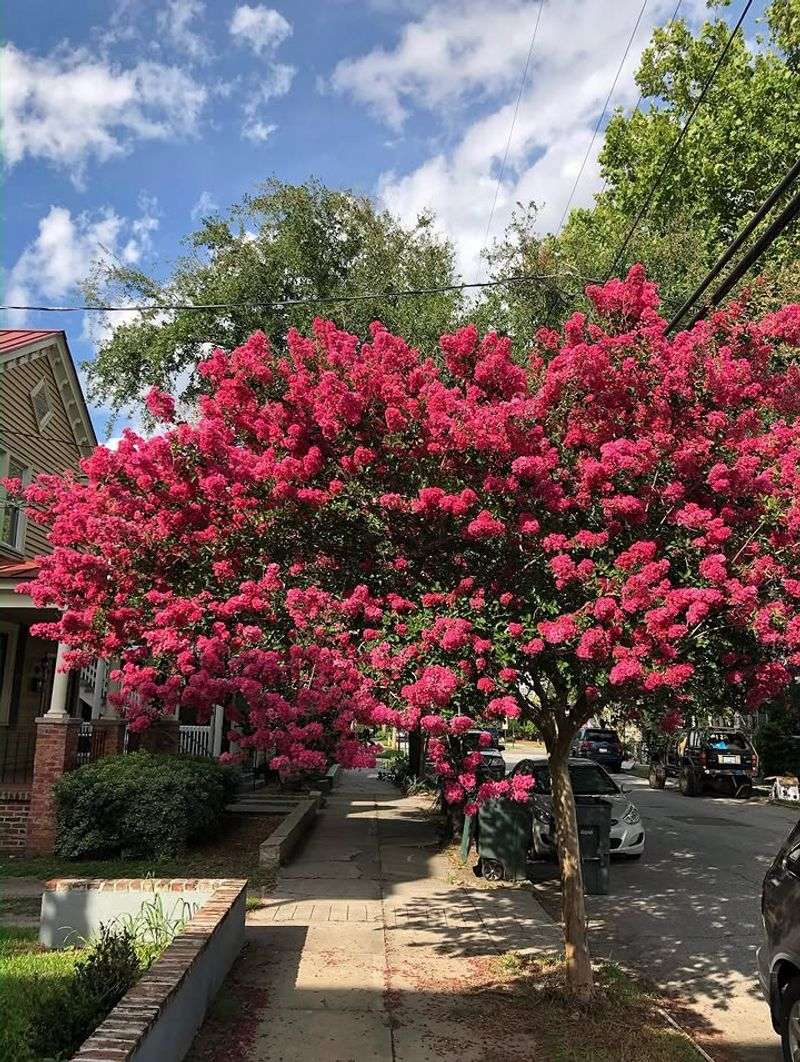
Ask any California homeowner what tree blooms most reliably through the hottest part of summer and the answer is almost always the Crape Myrtle. While other trees are just sitting there looking green, this one is covered in fluffy clusters of flowers in shades of pink, red, white, or lavender.
Originally from Asia, Crape Myrtles have found a perfect home across California. They love the heat, tolerate drought once established, and thrive in the kind of long, dry summers that California regularly delivers.
They grow well from San Diego all the way up through the Central Valley.
In terms of size, Crape Myrtles range from small shrubs to trees reaching 30 feet tall depending on the variety. For backyard shade, look for larger tree-form varieties that develop a full canopy and beautiful smooth, peeling bark that looks great year-round.
Fall brings another bonus: the foliage turns orange and red before dropping, giving you a second season of visual interest. The structure of the bare branches in winter is surprisingly elegant, especially with that smooth multi-toned bark on display.
One key tip: avoid the common mistake of heavy pruning, sometimes called crape murder. Let the tree grow naturally for the best shape and healthiest blooms.
Minimal pruning goes a long way with this California favorite.
8. Bigleaf Maple
When people think of maple trees, they usually picture New England in October. But California has its own native maple, and it is spectacular.
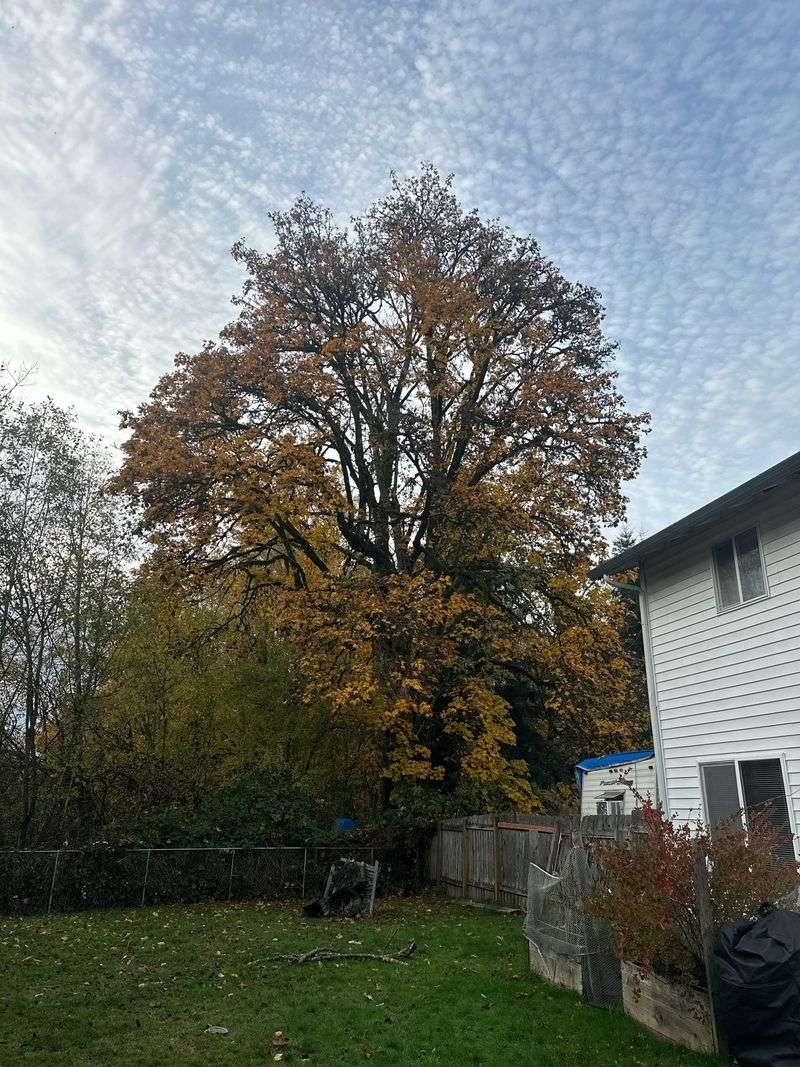
The Bigleaf Maple earns its name honestly, producing leaves that can grow up to 12 inches across, creating a canopy so dense it feels like standing under an umbrella on a hot day.
Bigleaf Maples grow naturally along the coast and in the foothills of California, especially in shaded canyons and near streams. In a backyard setting, they do best with some protection from intense afternoon sun and access to consistent moisture.
They are not the best fit for hot desert climates in California, but along the coast and in northern parts of the state, they are outstanding.
The tree grows to about 30 to 75 feet tall and develops a broad, rounded crown. In fall, the giant leaves turn bright yellow and gold before dropping, giving California yards a taste of classic autumn color that feels almost surprising in this climate.
Bigleaf Maple also supports an impressive variety of wildlife. Insects, birds, and small mammals all benefit from the food and shelter it provides throughout the year.
For California homeowners in cooler, wetter microclimates who want a native tree with serious shade and seasonal drama, the Bigleaf Maple is a rewarding and beautiful long-term choice.
9. California Bay
Here is a fun fact about the California Bay tree: the leaves smell amazing. Crush one between your fingers and you get a sharp, spicy aroma that is actually stronger than the bay leaves you buy at the grocery store.
Cooks have been using California Bay leaves to flavor soups and stews for generations.
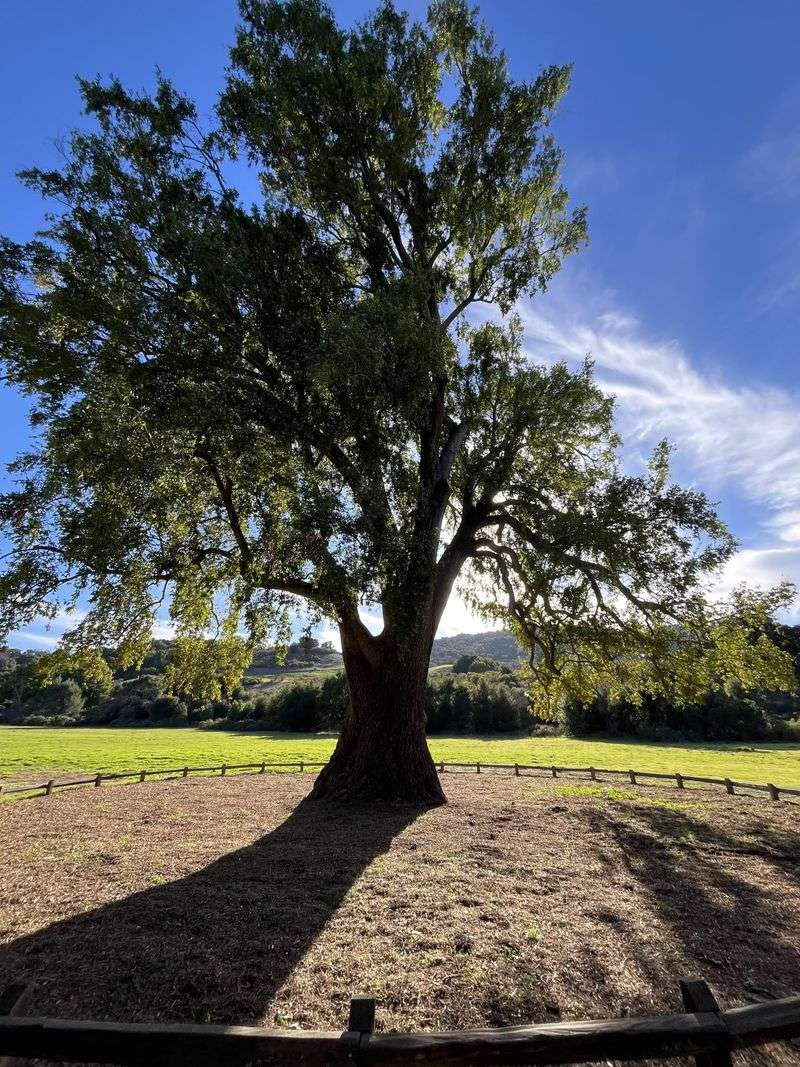
Beyond the culinary curiosity, California Bay is a seriously useful shade tree for California backyards. It grows as either a large shrub or a full-sized tree reaching up to 75 feet tall, depending on conditions.
The dense, glossy canopy of dark green leaves provides deep, year-round shade since this tree is evergreen.
California Bay thrives in coastal and foothill areas of the state, particularly in the Bay Area, Central Coast, and Northern California. It handles both sun and partial shade, and once established, it is quite drought-tolerant and low-maintenance.
The tree does have one quirk worth mentioning: it can spread aggressively through root sprouts and self-seeding, so occasional management keeps it in check in smaller yards. In larger spaces, that spreading habit actually helps it fill in beautifully.
Wildlife benefits enormously from California Bay. Birds eat the small olive-like fruits, and the dense canopy provides excellent nesting cover.
For a multi-purpose, fragrant, and genuinely attractive shade tree, California Bay is a standout choice in any California backyard.