The Bumpy Green Fruit Kentucky Grandparents Kept In Their Basements Every Fall
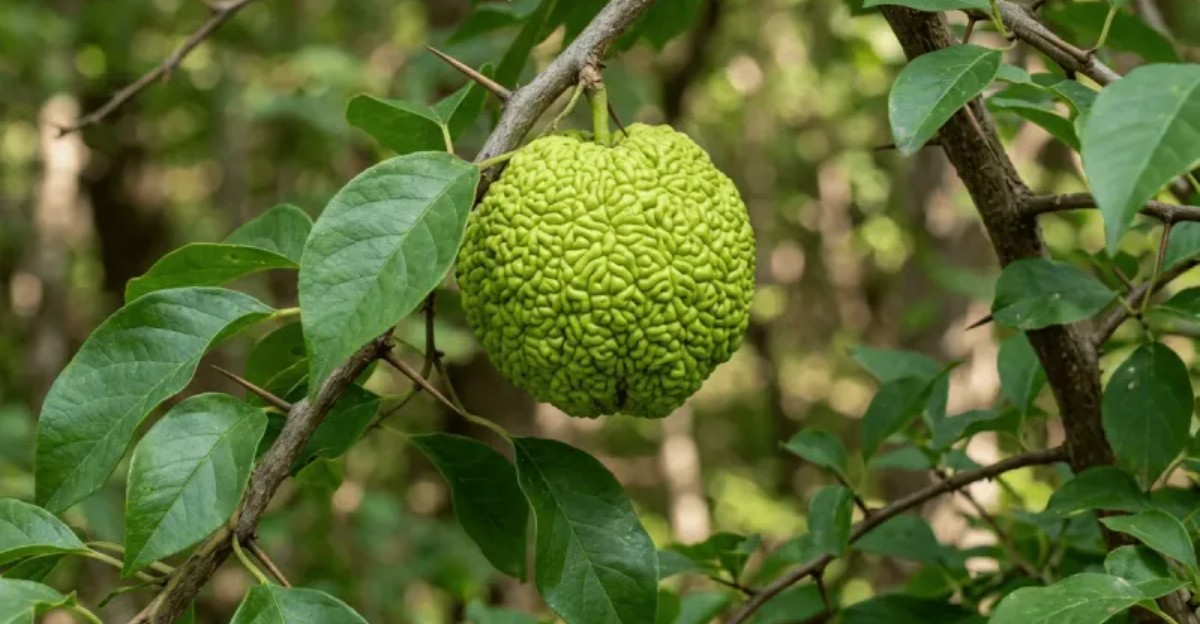
Grandma kept a lumpy green ball the size of a softball under her basement stairs. She swore it kept the spiders out. Nobody in the family ever questioned it.
Turns out, folks all over Kentucky did the same thing every fall. The fruit oozes a sticky white sap when you cut it. It smells faintly of citrus, yet it has no connection to oranges at all.
I’m the first to admit I believed the spider story for years. You probably heard a version of it too, maybe from a grandparent who kept a few tucked by the furnace or the canned beans.
Did those odd green orbs actually work, or were our grandparents onto something else entirely? The answer is stranger, older, and a lot more interesting than any basement trick. One clue hides in a prehistoric beast that once roamed North America.
That Lumpy Green Ball Under The Basement Stairs Has A Story
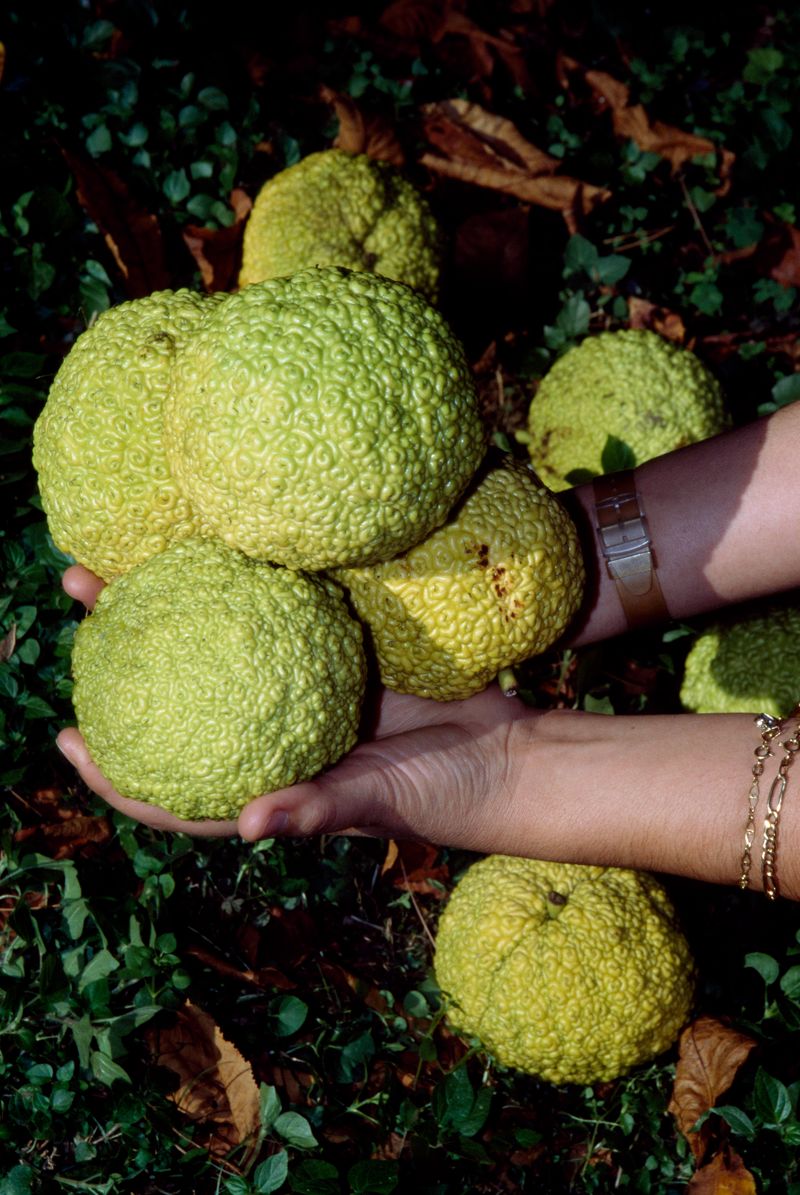
Plenty of us grew up with one of these strange green globes sitting in a dim basement corner. It looked like a brain made of tennis ball fuzz, and nobody touched it.
The fruit is the Osage orange, Maclura pomifera. Depending on whose porch you sat on, you might have heard it called a hedge apple, horse apple, or monkey ball. Kentucky folks mostly said hedge apple, since the trees often lined old field edges.
Each fruit is roughly 3 to 6 inches across and heavy for its size. The surface is covered in wrinkly bumps and grooves. Inside, it hides a pale pulp packed with small seeds and a milky, sticky sap.
Every fall, from September into October, the ripe fruits thud to the ground beneath female trees. That timing explains the tradition. Grandparents gathered them right as cooler nights pushed crickets, spiders, and mice toward the warm house.
Fair warning before you go collecting your own. That white latex can irritate skin for some people, so wear gloves when you cut one open. Also, watch your head under a loaded tree on a windy day, because these fruits can weigh over a pound.
Hedge Apples Probably Won’t Chase The Spiders Out Of Your Basement
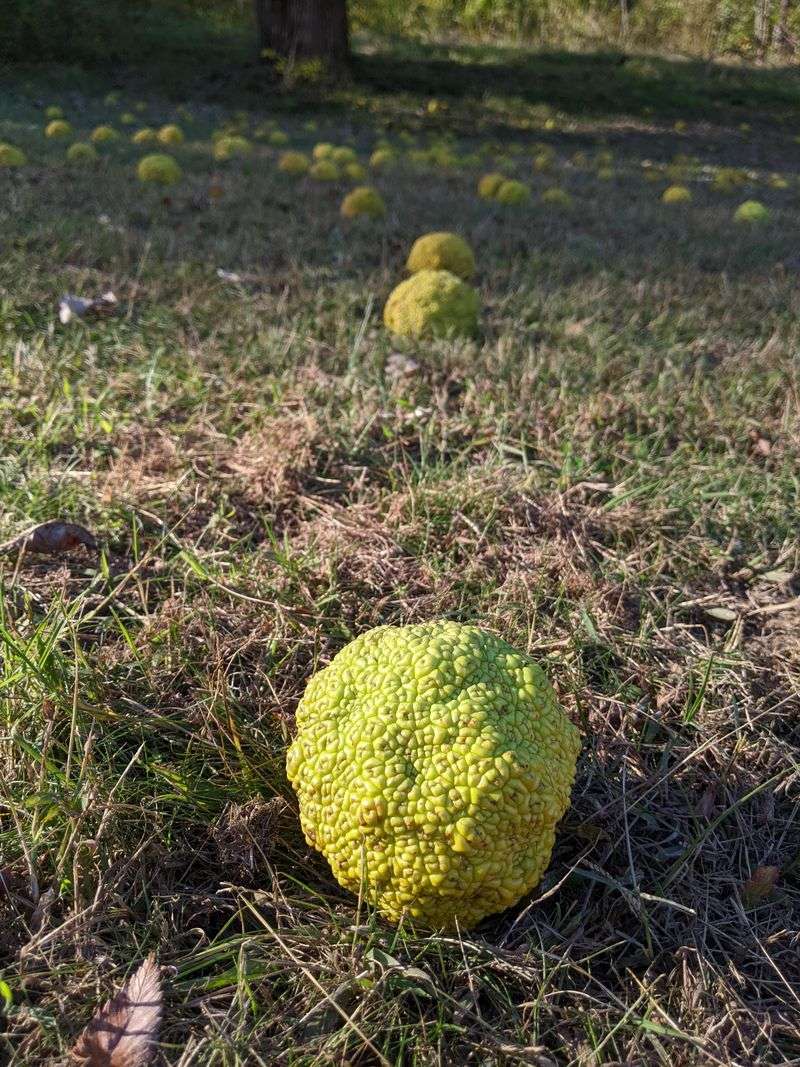
I hate to be the bearer of bad news. The spider-repelling reputation mostly falls apart under testing.
Researchers have found that certain compounds pulled from Osage orange fruit, such as elemol, can repel some insects in lab settings. Those tests used concentrated extracts, though. A whole fruit sitting on a shelf gives off only tiny amounts, nowhere near enough to protect a room.
University extension services, including Iowa State and others in the Midwest, have pointed this out for years. Spiders and crickets have been spotted crawling right over hedge apples like they were furniture. Some companies selling the fruit as pest control have also been warned against making repellent claims.
So why did Grandma swear by it? Part of it is timing. Many fall invaders wander indoors for a few weeks, then settle down or disappear on their own, so the fruit got the credit.
For real results, seal cracks around foundations, windows, and pipes. Run a dehumidifier, since crickets and many spiders love damp basements. Clear clutter and cardboard boxes where pests hide. A few sticky traps along the walls will also show you what’s actually moving through.
Those Thorny Osage Orange Hedgerows Once Fenced In Whole Farms
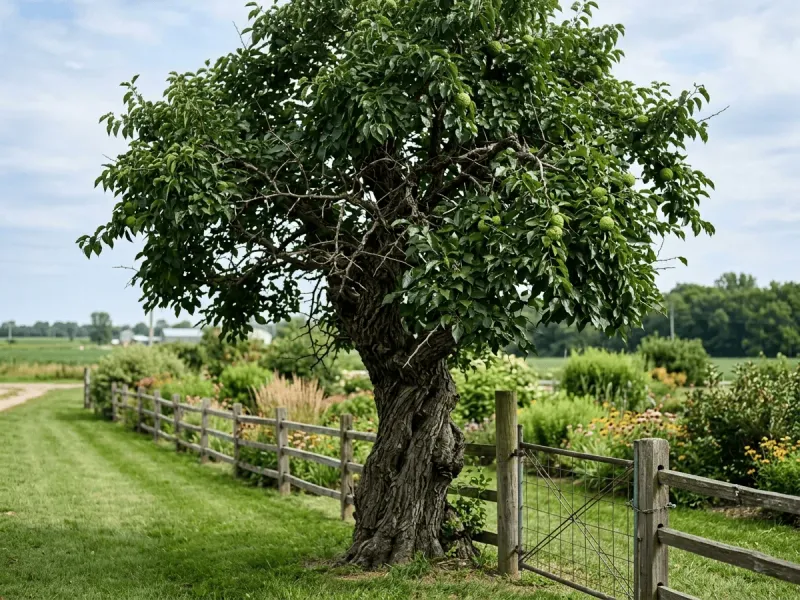
Long before barbed wire, farmers needed a fence that cattle respected. The answer grew on sharp, thorny branches.
During the 1800s, settlers planted Osage orange seedlings in tight rows across the Midwest and South. Pruned hard, the trees formed living walls described as horse-high, bull-strong, and pig-tight. Millions of feet of hedge went in before barbed wire spread in the late 1870s and 1880s.
That history is why so many old trees still trace field borders across rural Kentucky today. If you spot a crooked line of gnarly trunks along a pasture, chances are good you’re looking at a fence someone planted over a century ago.
Once barbed wire arrived, many farmers cut the hedges down. The wood didn’t go to waste, either. Osage orange is one of the most rot-resistant woods in North America, so it became prized for fence posts that could stand for decades.
Some old-timers say a well-seasoned post outlasts the farmer who set it. Next time you drive a back road this fall, look for fruit piled in the ditches. You might be passing a piece of living farm history.
Bois D’Arc Wood Made Some Of The Finest Bows In America
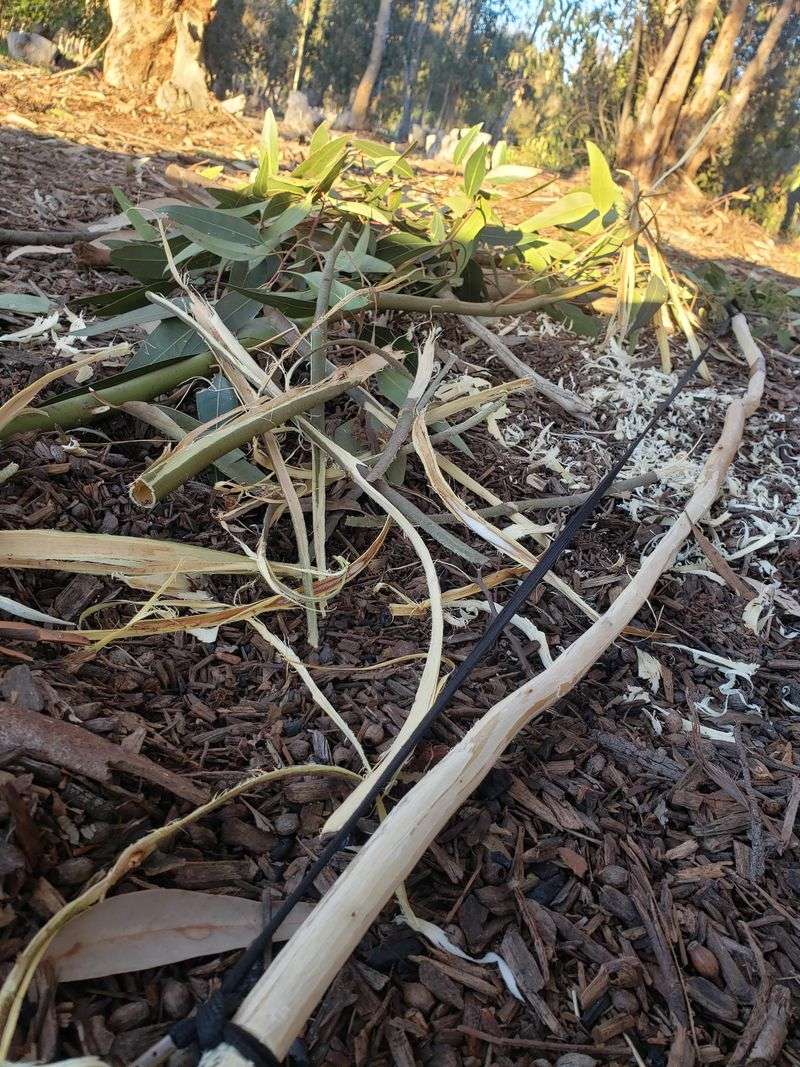
Here’s a fun fact that surprised me. French explorers named this tree bois d’arc, meaning bow wood, and the name stuck in places like Texas and Oklahoma.
The Osage people and other Native nations valued the dense, springy wood for making bows. Good bow staves were so prized that they were traded across long distances. Even today, traditional bowyers consider Osage orange one of the best bow woods on the continent.
The tree’s native range was fairly small. It originally grew mainly in the Red River region of Texas, Oklahoma, and Arkansas. Its spread into Kentucky and far beyond came largely from those hedge plantings in the 1800s.
Cut a fresh log and you’ll see bright yellow-orange heartwood. That color fades to a warm brown over time. People once boiled wood chips to make yellow and tan dyes for cloth.
The wood is also extremely hard and burns very hot. Some folks love it in woodstoves, though it throws sparks, so an open fireplace is a poor match. Woodworkers prize it for tool handles, turned bowls, and rustic furniture. Expect it to dull your saw blades quickly.
Squirrels Know The Secret Hiding Inside That Bumpy Rind
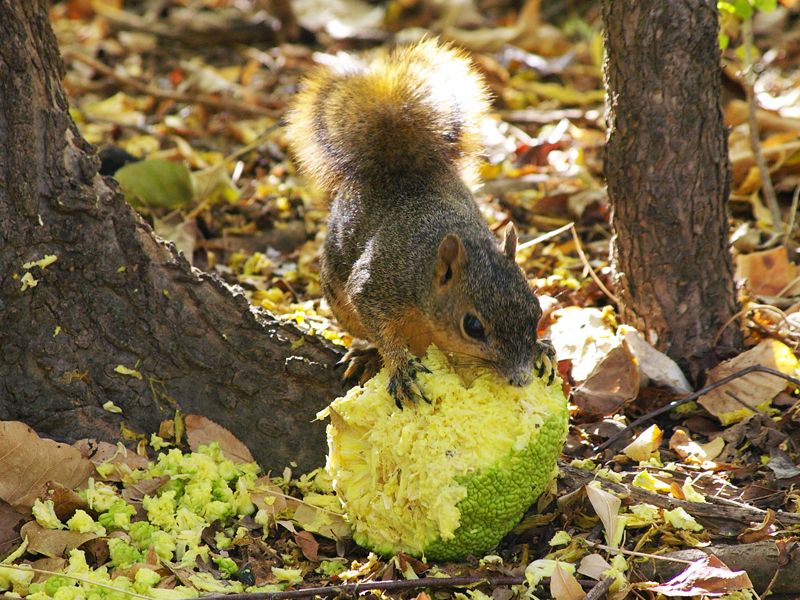
Watch a hedge apple pile for a few days and you’ll notice something. Shredded green chunks start appearing everywhere, and squirrels are usually the culprits.
They aren’t after the bitter pulp. Squirrels chew through it to reach the small seeds inside, which are rich in fat and protein. A busy squirrel can leave a neat pile of fruit bits beside a log.
Even though the flesh tastes unpleasant and gummy to most people, the fruit isn’t considered poisonous. It’s simply unappetizing. People have roasted the seeds and compared their flavor to sunflower seeds.
Getting them out takes patience. Some foragers let the fruits soften outdoors through early winter, then mash them in a bucket of water to wash the seeds free. Gloves are a smart idea because of the sticky sap.
Livestock owners should stay cautious. Cattle and horses occasionally try to swallow whole fruits, which can lodge in the throat and cause choking. If you keep animals, raking up fallen fruit near pastures is a simple fix. Deer nibble them now and then too, but squirrels remain the hedge apple’s most loyal fans.
No Citrus Here, The Osage Orange Belongs To The Mulberry Family
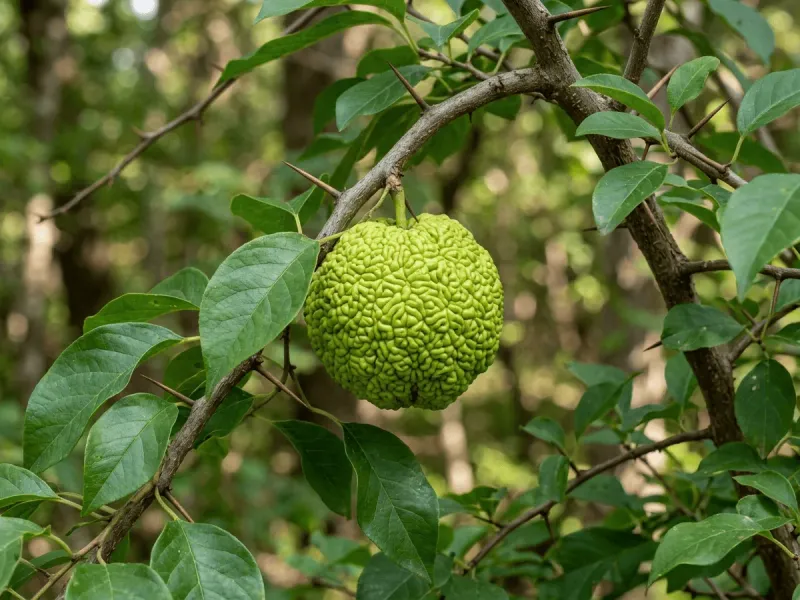
Names can mislead you. This orange has zero relation to the oranges in your fruit bowl.
Osage orange belongs to the mulberry family, Moraceae, along with mulberries and figs. That milky sap is a family trait. Cut a fig stem and you’ll see the same white latex.
The orange part of its name likely comes from the fruit’s faint citrus-like scent. Some people also link it to the orange tone of the wood. Either way, nobody should expect juice.
Each bumpy ball is actually a multiple fruit. Many tiny flowers fuse together into one large structure, which explains that wrinkled surface. Mulberries form the same way, just on a much smaller scale.
The trees are also either male or female. Only female trees produce the big green fruit, and they need a male tree nearby to make viable seeds. Without pollination, a female can still drop fruit, but the seeds inside may be empty.
That’s handy knowledge if you’re planting one. A male tree gives you shade without the falling fruit. Next fall, peek under a hedge apple tree and see whether the ground is littered or bare.
Giant Ground Sloths May Have Once Snacked On Hedge Apples
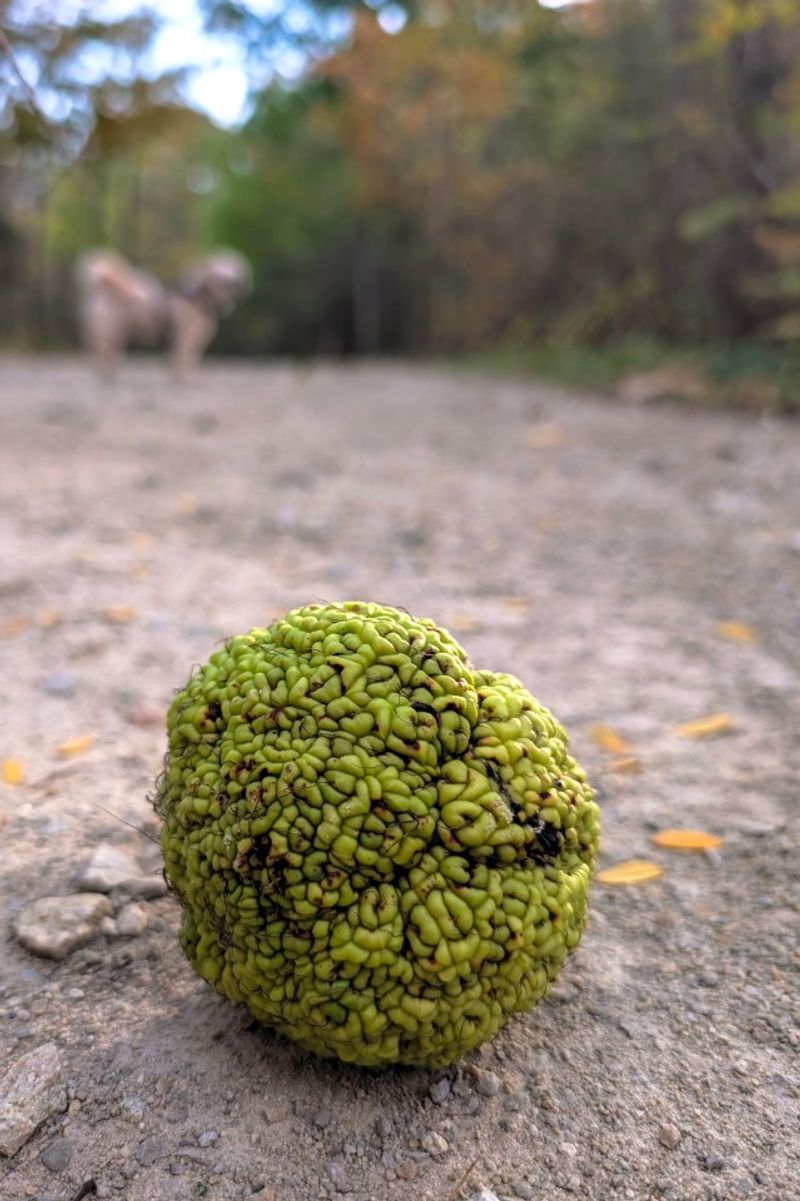
Here’s what gets me about this tree. Its fruit may be built for animals that vanished thousands of years ago.
Scientists call this idea an evolutionary anachronism. Biologists Daniel Janzen and Paul Martin suggested that large fruits like Osage orange evolved alongside mammoths, mastodons, and giant ground sloths. Those huge animals could swallow the fruit whole and spread the seeds across the land.
After the Ice Age megafauna disappeared, few animals remained to carry the fruit far. That may explain why the tree’s native range shrank to a small pocket near the Red River. Fruits mostly rolled downhill or stayed beneath the parent tree.
The theory is widely discussed, but it’s still a hypothesis, not proven fact. Researchers point to similar mysteries, like honey locust and Kentucky coffeetree pods, that few modern animals eat.
In a way, people became the new seed movers. Farmers planting hedges spread Osage orange farther than any sloth ever did. I like thinking about that the next time I kick a hedge apple across the yard. It’s a small, green leftover from a very different North America.
Put Your Fall Hedge Apple Haul To Good Use This Year
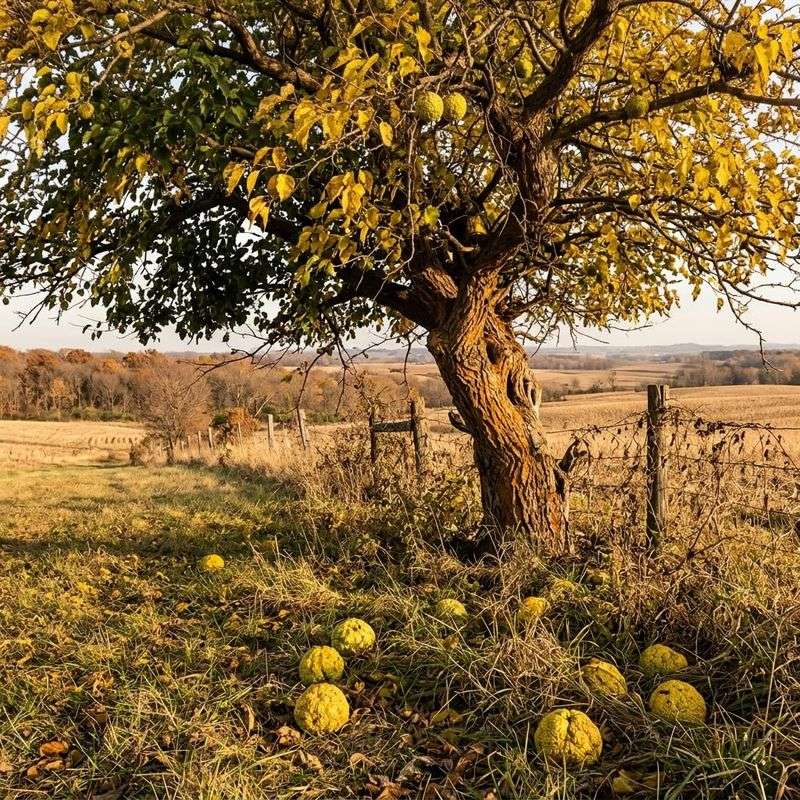
So you’ve got a bucket of hedge apples from the side of the road. Good news for decorators, because these fruits look fantastic in fall displays.
Their bright chartreuse color pops next to orange pumpkins, gourds, and dried corn. Pile a few in a wooden bowl on the porch or table. Indoors, they usually last a couple of weeks before softening and browning, so set them on a plate to catch any leaks.
Want to honor the family tradition? Go ahead and set one in the basement for nostalgia’s sake. Just keep sealing cracks and running that dehumidifier for actual pest control.
Once they start to rot, toss them in a compost pile or let them break down at the woodland edge. Squirrels will happily help finish the job.
Thinking about planting a tree? Osage orange handles poor soil, drought, and heat, and grows well across Kentucky. Thornless male cultivars like ‘Wichita’ and ‘White Shield’ skip the messy fruit. Give one plenty of room, since mature trees can reach 30 to 60 feet. Either way, you’ll be keeping a little bit of grandparent wisdom alive.