The Easiest Way Arizona Gardeners Root Dragon Fruit From A Cutting In Just A Water Bottle
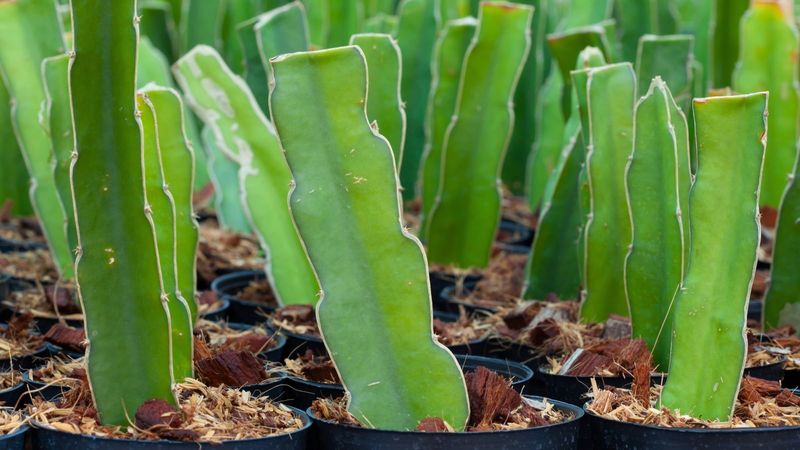
Growing your own dragon fruit in the Phoenix or Tucson area starts with a single healthy stem and a little patience. A recycled plastic bottle can actually help you root that cutting by holding a small amount of well-draining medium or by acting as a humidity enclosure around the base of the cutting.
The method works, but the bottle is just one piece of the puzzle. What really determines success is how you prepare the cutting, manage moisture, and protect the plant from low-desert heat.
Use the bottle as a propagation chamber, not a water-rooting promise
Plenty of gardeners in the Phoenix and Tucson area have spotted videos showing a dragon fruit cutting dropped straight into a bottle of water and left to sprout roots. The idea is appealing, but the evidence behind it is thinner than the plastic bottle itself.
What the research actually supports is using a recycled bottle as a small container filled with well-draining rooting medium, or as a clear enclosure placed over a cutting to trap humidity while roots form.
University of Georgia Cooperative Extension guidance on home propagation describes recycled soft-drink bottles as miniature propagation chambers that help maintain moisture around unrooted cuttings. That is a meaningful role, but it is not the same as saying the bottle causes rooting or that water submersion is the right approach.
University of Florida IFAS recommends placing cured pitaya cuttings in well-drained media kept moist but not wet, with the cutting positioned in dappled shade.
For low-desert Arizona specifically, the bottle is a practical tool with real limits. A clear bottle left in direct afternoon sun can trap enough heat to cook a cutting rather than root it.
The bottle supports the process, but the cutting’s health, the callus on its wound, the drainage in the medium, the temperature, and the shade you provide are what actually determine whether roots form.
Choose a healthy cutting and let the wound callus
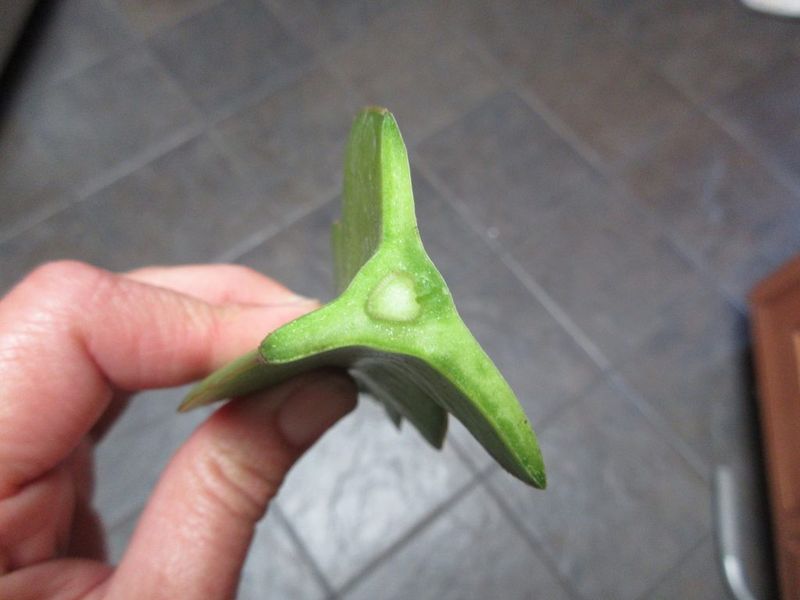
Starting with the right material makes every step that follows easier. Look for a mature, firm, green stem that shows no signs of disease, soft spots, or dehydration.
A stem that is actively flowering, visibly rotting, or already shriveled is a poor candidate regardless of how you set up the bottle.
Once you have your stem, make a clean, slanted cut at the base using a sharp, sanitized blade. The slanted angle helps water drain away from the wound rather than pooling on a flat surface.
Sanitize your cutting tool with diluted bleach and rinse it well before and after use. If you plan to reuse a plastic bottle as the propagation container, clean it the same way.
After cutting, set the stem in a dry, shaded spot and let the wound dry before it ever touches moist medium. How long that takes depends on your conditions.
Sources range from roughly 24 hours in some UF/IFAS propagation notes to 5 to 8 days in the University of Hawaii pitaya guide. In Arizona’s low humidity, the surface may seal faster, but the principle is consistent: a fresh, wet wound going directly into moist material invites rot.
Your Arizona Garden Changes Every Week. Your Plan Should Too.
Gardening in Arizona changes quickly throughout the season. Every Friday you’ll receive a simple weekly plan showing exactly what to plant, prune, fertilize, harvest, and protect so you never miss the right timing.
Give the cutting drainage instead of a bottle of standing water
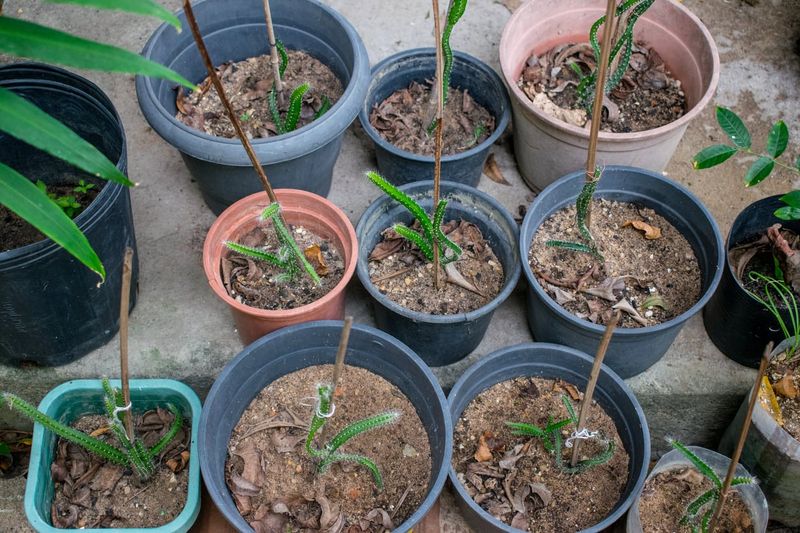
Converting a plastic bottle into a functional propagation container takes about five minutes and a few basic supplies. Start by rinsing the bottle thoroughly, then sanitize it with a diluted bleach solution and rinse again before adding any medium.
Once clean, punch or drill several small holes in the bottom so excess water can escape freely. Skipping drainage is one of the most common reasons a dragon fruit cutting rots before it ever develops roots.
Fill the bottle with a well-draining rooting medium rather than standard garden soil. A cactus and succulent mix, or a blend of coarse sand and perlite, drains quickly and holds just enough moisture to keep the cutting from drying out completely.
Heavy garden soil compacts, retains too much water, and can suffocate developing roots. NC State Extension notes that dragon fruit is susceptible to root rot under poor drainage conditions, which is especially relevant in low-desert yards where caliche and clay layers can already slow water movement.
Insert the callused end of the cutting about two to three inches into the medium and firm it gently so the stem stands upright. Keep the medium lightly moist, not saturated.
A good test is to press a finger about an inch into the mix: if it feels damp but not soggy, the moisture level is right. If you are using the bottle as a humidity dome over a small pot rather than as the container itself, the same drainage and moisture rules apply to whatever is underneath it.
Keep the setup in bright shade during low-desert heat
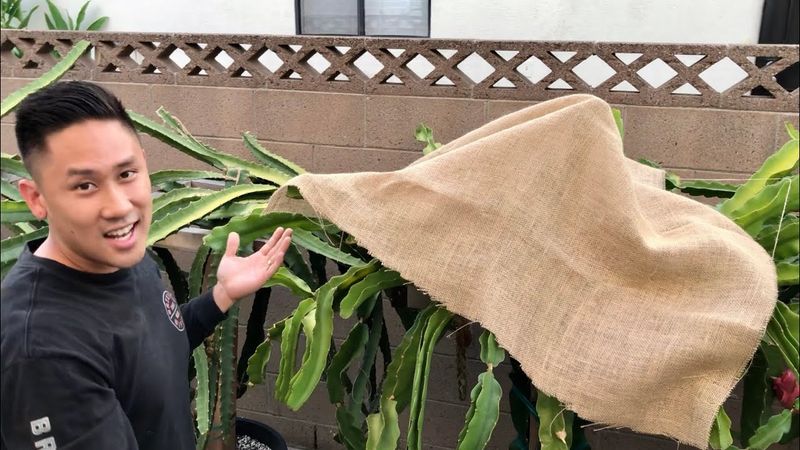
Location matters more in the Phoenix and Tucson area than almost anywhere else in the country when it comes to rooting a cutting. Place the bottle in bright, indirect light or dappled shade, not in the direct afternoon sun that hammers south- and west-facing walls from May through September.
UF/IFAS specifically recommends dappled shade for pitaya cuttings during propagation, and that recommendation makes even more sense in a climate where afternoon temperatures routinely push past 110 degrees Fahrenheit.
A clear bottle acts like a small greenhouse, which is helpful for humidity but dangerous when the sun hits it directly. University of Arizona Extension points out that heat accelerates water loss and can damage plant tissues, and that effect is amplified inside an enclosed container.
Reflected heat from stucco walls, concrete, or gravel mulch can raise temperatures around the bottle well above the air temperature, so keep the setup away from hard surfaces that absorb and radiate heat.
Check the bottle daily. Excessive condensation on the inside walls can signal that moisture is too high or that the enclosure needs a small vent to let air circulate.
If you see any soft, discolored tissue at the base of the cutting, remove the cutting immediately, trim the affected area, let it dry, and start again. Dragon fruit handles warmth well as an established plant, but an unrooted cutting sealed inside a bottle is not the same as a mature plant growing in open ground.
Expect a root system, not an instant rooting trick
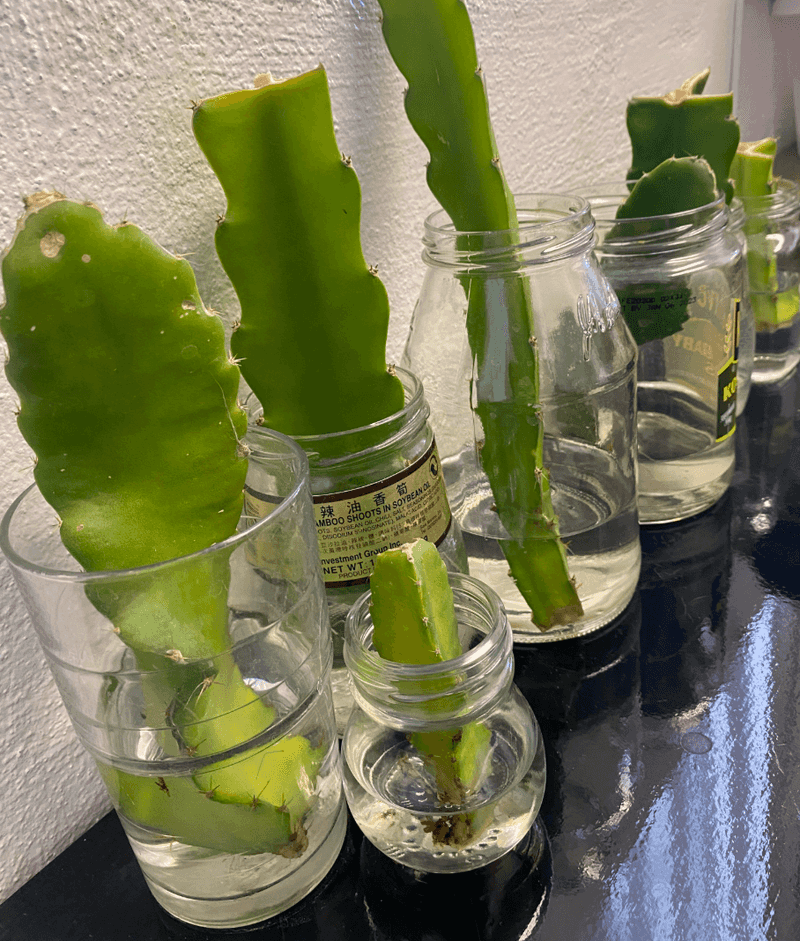
Rooting a dragon fruit cutting takes time, and the bottle does not speed that timeline up in any documented way. Look for two signs that real progress is happening: the cutting stays firm when you gently press the medium around it, and new growth appears at the top or along the ribs.
Those signals together are more reliable than pulling the cutting out to inspect the roots, which can snap fragile new growth before it has a chance to anchor properly.
UF/IFAS pitaya production guidance states that cuttings may need approximately four to six months in pots to develop a root system that is genuinely ready for transplanting. That range will feel long if you are expecting results in days, but rushing the transition is one of the main reasons newly rooted cuttings fail after being moved outdoors.
A cutting with a few visible roots and no new top growth is not ready to face low-desert soil, direct sun, or irregular irrigation.
Rooting hormone is not required. UF/IFAS propagation guidance for pitaya does not call for it, and no reviewed source establishes that a particular household additive guarantees faster or more reliable rooting.
If you want to use a commercial rooting powder, it will not hurt, but skipping it will not hurt either. Focus instead on the conditions you can control: drainage, moisture, shade, and temperature.
Acclimate the plant before moving it into Arizona conditions
Moving a rooted cutting directly from a humid, shaded bottle setup into the Arizona outdoors is one of the faster ways to lose a plant you spent months cultivating. The transition needs to be gradual.
Start by loosening the cap or creating small openings in the bottle enclosure over the course of several days, letting the cutting adjust to lower humidity and gentle air movement before the enclosure comes off entirely. University of Georgia extension guidance on home propagation specifically recommends this kind of progressive ventilation as cuttings harden off.
Once the enclosure is removed and the plant is holding steady, the next question is where it goes. Container growing in a larger pot is a reasonable intermediate step, especially if your outdoor site has not been assessed for drainage.
In low-desert yards, caliche is a real obstacle: that hard, calcium-rich layer can sit just inches below the surface and block both root penetration and water movement. University of Arizona Extension guidance on managing caliche recommends testing drainage at your planting site and physically breaking through or removing the layer where practical, rather than planting over it and hoping for the best.
For timing, general University of Arizona low-desert guidance favors fall or early spring for establishing woody and semi-woody plants, allowing roots to settle in before the harshest summer heat arrives. That principle applies reasonably well to dragon fruit, though it is drawn from broader regional experience rather than a pitaya-specific planting trial.
Avoid transplanting during a heat wave or in the peak of summer unless you have reliable shade and irrigation in place at the new site.
Plan for the trellis and care that come after rooting
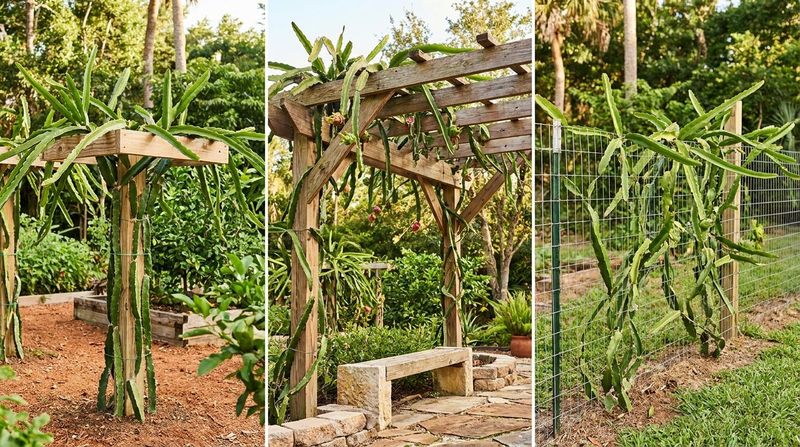
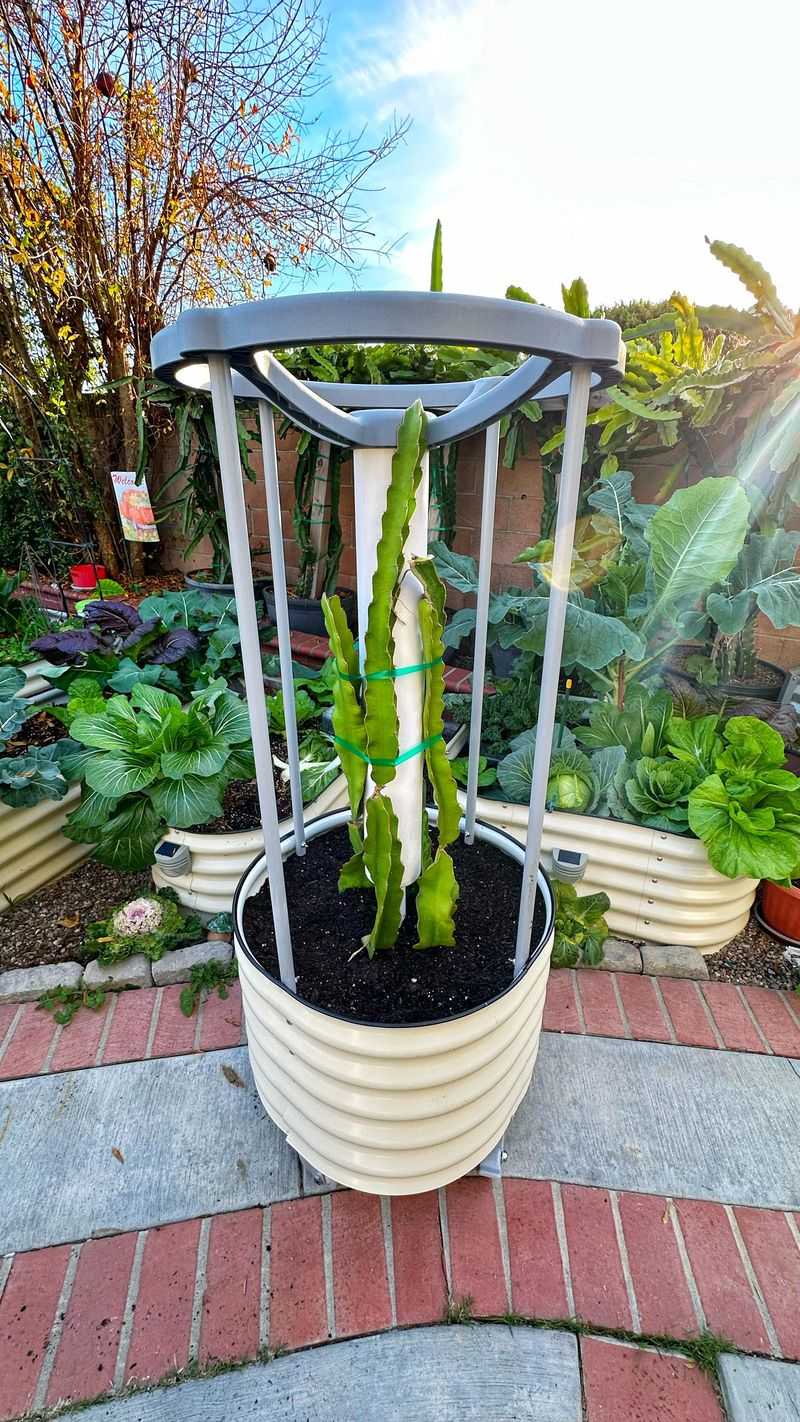
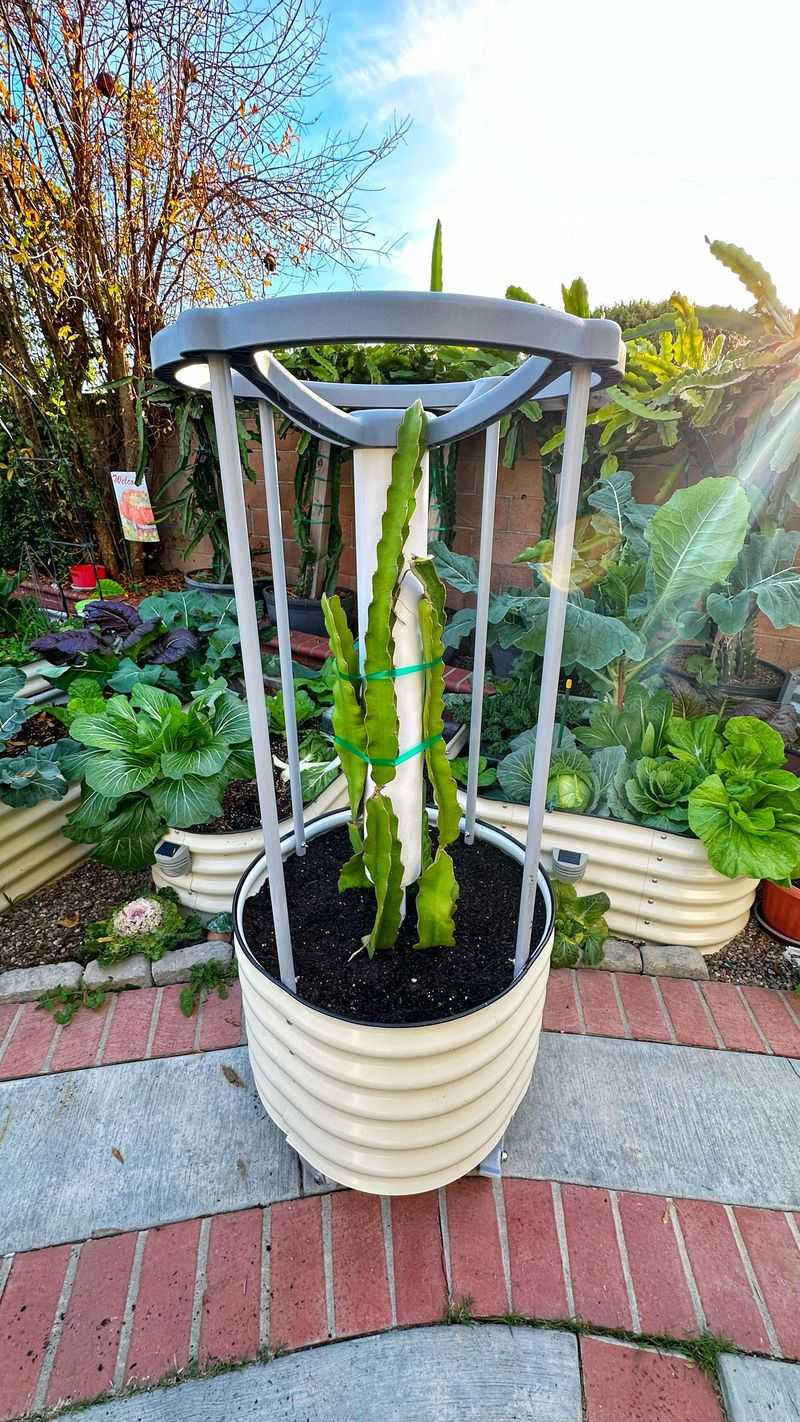
Getting a cutting to root is the first chapter, not the whole story. Dragon fruit is a climbing cactus, and without a sturdy support structure it sprawls, breaks under its own weight, and produces far less fruit than a well-trained plant.
Plan for a trellis, a thick wooden post, or a comparable support before the plant outgrows the container. UF/IFAS pitaya production guidance and the University of Hawaii pitaya publication both describe the need for a solid support system as part of standard cultivation, not an optional add-on.
Fruiting timelines vary more than most online sources admit. Under favorable conditions, some cuttings can produce fruit within six to nine months of planting according to UF/IFAS, while the University of Hawaii guide describes production commonly beginning in the second year with full output arriving later still.
Cultivar choice, trellis quality, pollination, light exposure, irrigation consistency, and the heat and drainage conditions at your specific site all influence when and how much fruit you get.
Protect the plant from reflected heat off walls and pavement, keep irrigation consistent but never waterlogged, and watch for signs of sunburn on young stems. The recycled bottle gave the cutting its start by holding draining medium and helping maintain humidity around an unrooted stem.
The rest of the plant’s life depends on the site, the support, and the care you provide once it is in the ground.