The Fast-Growing New Jersey Native Tree That Can Replace Your Fence In Two Years
New Jersey homeowners spend thousands replacing warped wood and crumbling vinyl every few years. There is a smarter way.
Native evergreen has quietly thrived in this state’s soil for centuries, growing fast, growing thick, and asking almost nothing in return. It does not need staining. It does not need replacing.
It laughs at harsh winters and bounces back from dry summers without a second thought. In a single growing season, it can rise into a living wall of dense, year-round green coverage.
Birds will nest in it. Wildlife will shelter beneath it. Your neighbors will stop and ask what it is. This tree belongs here.
It was rooted in New Jersey long before anyone thought to install a fence. Nature already solved the problem most homeowners are still paying to fix. Now it is your turn to use that solution.
Why Eastern Red Cedar Tops The List
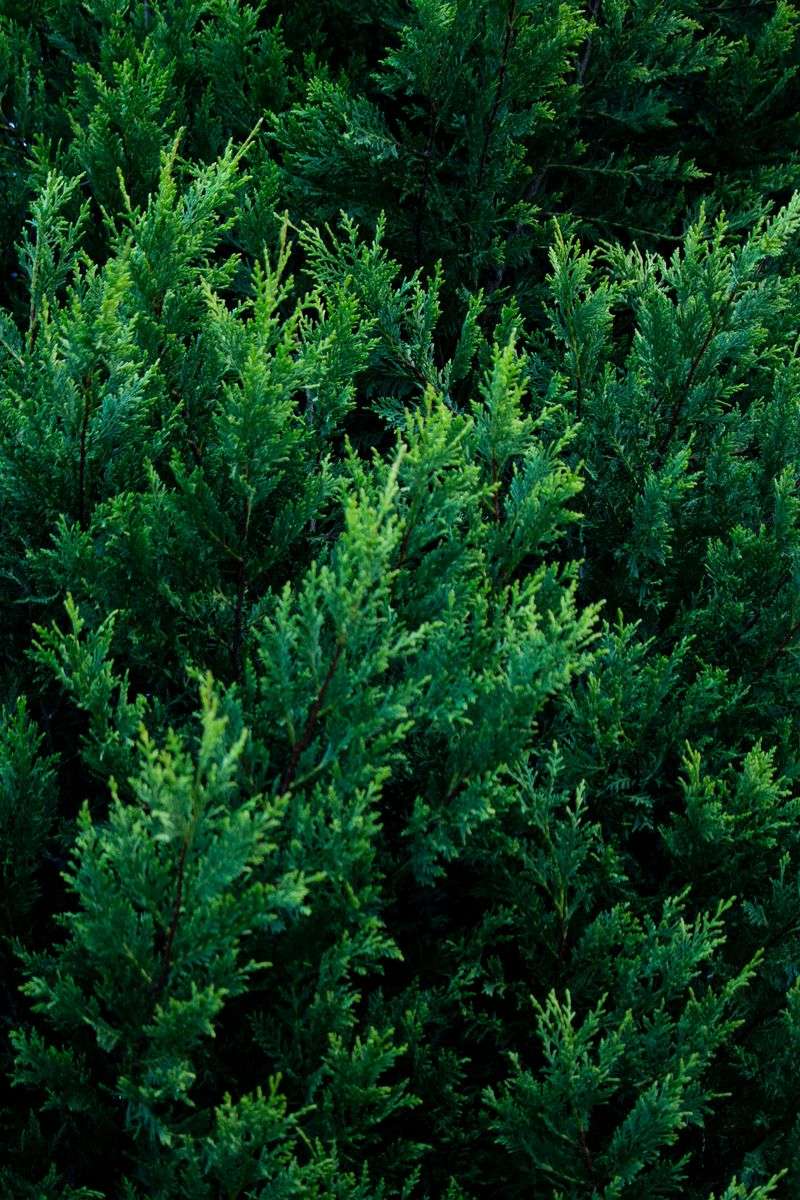
Few native trees in the Northeast grow a living wall as fast as Eastern Red Cedar. This rugged evergreen typically grows one to two feet per year, still making it one of the stronger choices for natural privacy without the contractor price tag.
And despite the name, it is not actually a true cedar at all. It belongs to the juniper family, which explains its legendary toughness.
It laughs at drought, shrugs off poor soil, and keeps its deep blue-green color all winter long when every other tree in your yard has gone bare. Neighbors will stop and ask what those gorgeous evergreens are.
Beyond looks, this tree has a track record that spans thousands of years on American soil. Indigenous communities used it for medicine, shelter, and tools.
Today, it anchors hillsides, buffers noise, blocks wind, and creates a living fence that gets stronger and more beautiful every single year. No fence post ever did that.
If you want privacy that actually improves with age, Eastern Red Cedar is the answer you have been looking for. Before you plant, there is one thing worth knowing.
Eastern Red Cedar is the primary alternate host for Cedar-Apple Rust, a fungal disease that cycles between junipers and nearby apple, crabapple, and hawthorn trees.
If any of those grow on or close to your property, consider planting your cedars at a reasonable distance from them, or check with your local New Jersey cooperative extension office before laying out a full fence line.
Year-One Vs. Year-Two Growth Expectations
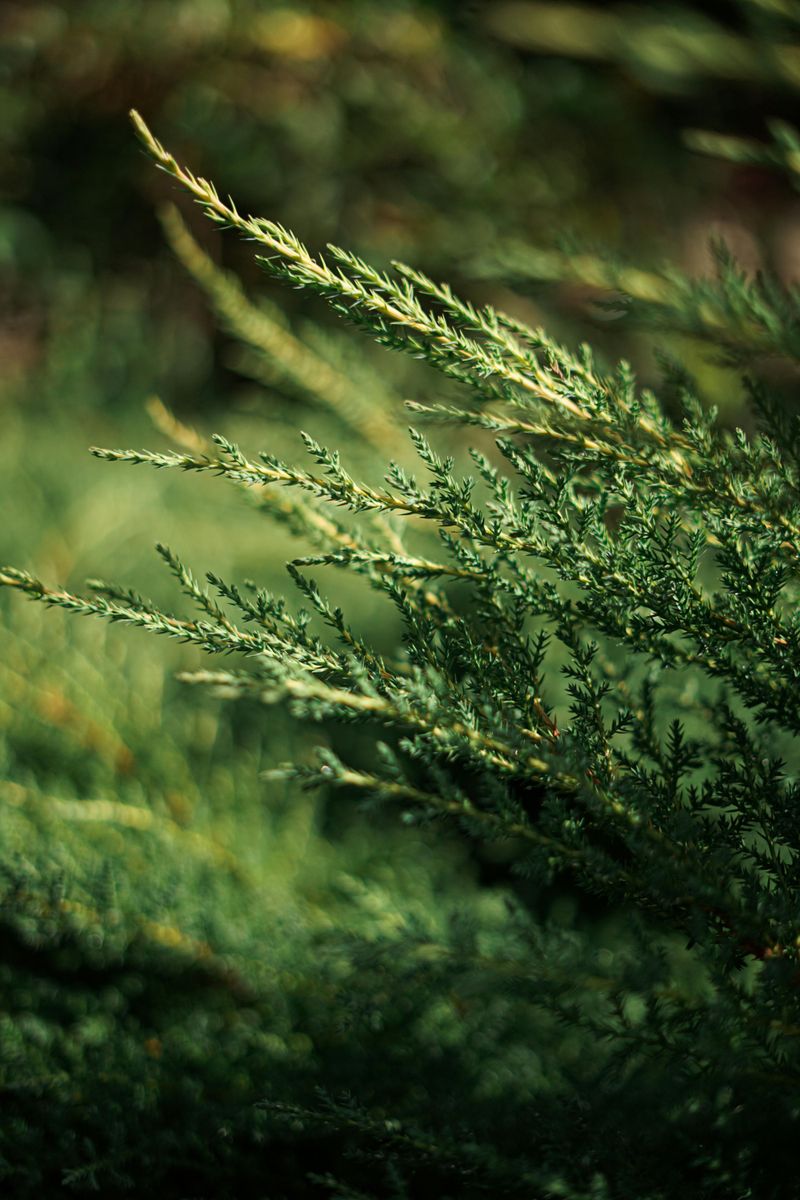
Planting day can feel a little anticlimactic when you look at a two-foot sapling and imagine it becoming a fence. Year one is all about the roots, not the branches, and that is perfectly normal.
During the first growing season, Eastern Red Cedar puts most of its energy underground, building a root system that will power strong above-ground growth later.
Expect modest top growth of one to three feet in year one, depending on your soil and how consistently you water. Do not get discouraged.
Year two is where the magic happens. Once roots are established, growth can jump to three to five feet per season, sometimes more if conditions are favorable.
Your New Jersey Garden Changes Every Week. Your Plan Should Too.
Gardening in New Jersey changes quickly throughout the season. Every Friday you’ll receive a simple weekly plan showing exactly what to plant, prune, fertilize, harvest, and protect so you never miss the right timing.
By the end of year two, a row of these trees planted at the right spacing can already create a meaningful privacy screen that blocks sightlines from neighbors and passing cars. Think of year one as planting a promise and year two as cashing it in.
Homeowners who stick with the process are almost always shocked by how quickly the landscape transforms. Patience in year one pays off with a wall of green you never have to repaint or replace.
Best Planting Time In New Jersey
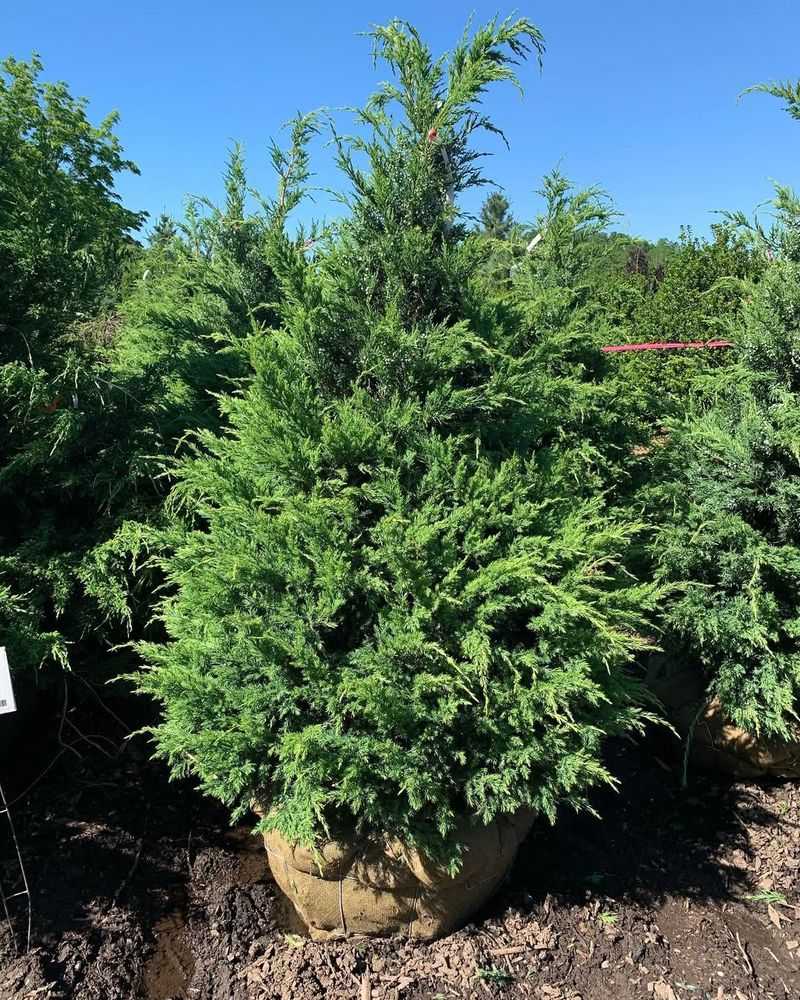
Timing your planting correctly can mean the difference between a thriving tree and one that sulks through summer.
For New Jersey gardeners, the sweet spot is early spring, right after the last frost, typically late March through April.
Cooler temperatures and spring rains give roots a chance to settle in before summer heat arrives. Fall planting is also a solid option, from mid-September through October.
Soil is still warm enough to encourage root growth, and the tree has months to anchor itself before winter.
Many experienced gardeners actually prefer fall planting because there is less watering required and the tree faces no immediate heat stress.
What you want to avoid is planting in the middle of summer. Intense July and August heat puts transplants under serious stress, even for a tough species like Eastern Red Cedar.
If summer is your only window, plant in the early morning, water deeply, and apply mulch immediately to hold moisture in the soil.
New Jersey sits in USDA hardiness zones 6a through 7b, and Eastern Red Cedar thrives across all of them without a second thought. Get the timing right, and you are already halfway to a beautiful natural fence.
Ideal Spacing For A Solid Fence Line
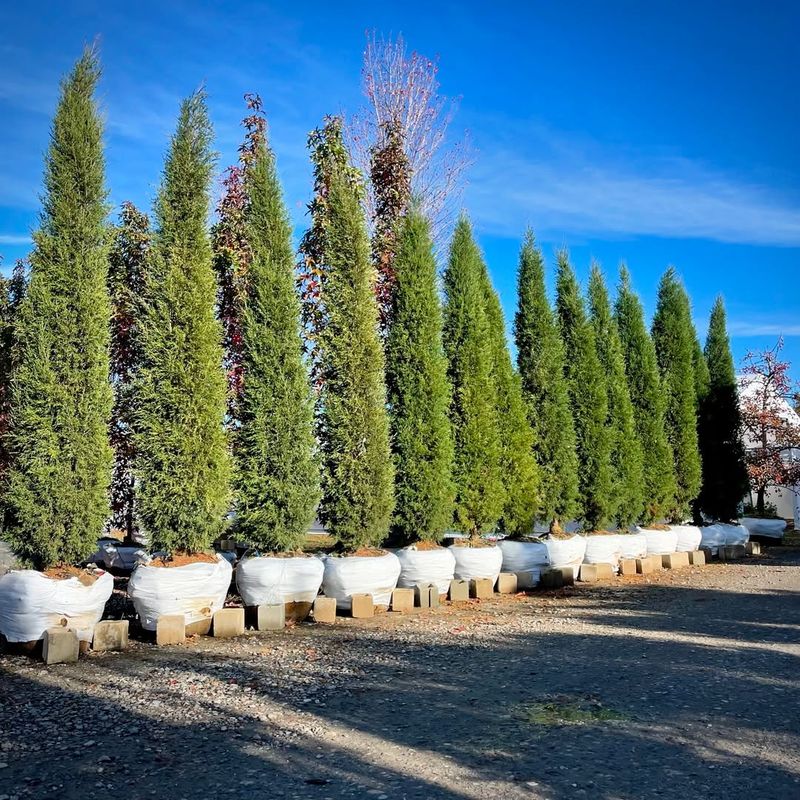
Spacing is the detail most first-time planters get wrong, and it can haunt them for years. Plant too far apart and you end up with gaps that never fully close.
Plant too close together and the trees compete for resources, grow slowly, and develop thin, scraggly forms that defeat the whole purpose.
For a dense, fence-like privacy screen, space Eastern Red Cedar trees six to eight feet apart, measured from trunk to trunk.
At this distance, the branches of neighboring trees will touch and interlock within two to three years, creating a seamless green wall.
If you want a looser, more naturalistic look, space them ten to twelve feet apart and let each tree develop its full pyramidal shape. Staggering two rows in a zigzag pattern is another smart move.
Two offset rows spaced four feet apart dramatically speed up the visual density of your screen and block wind and noise more effectively than a single line.
Mark your spacing with stakes and string before you dig a single hole. A few minutes of planning up front saves you from the frustration of a fence line that looks more like a polka-dot pattern than a wall.
Soil And Sunlight Needs
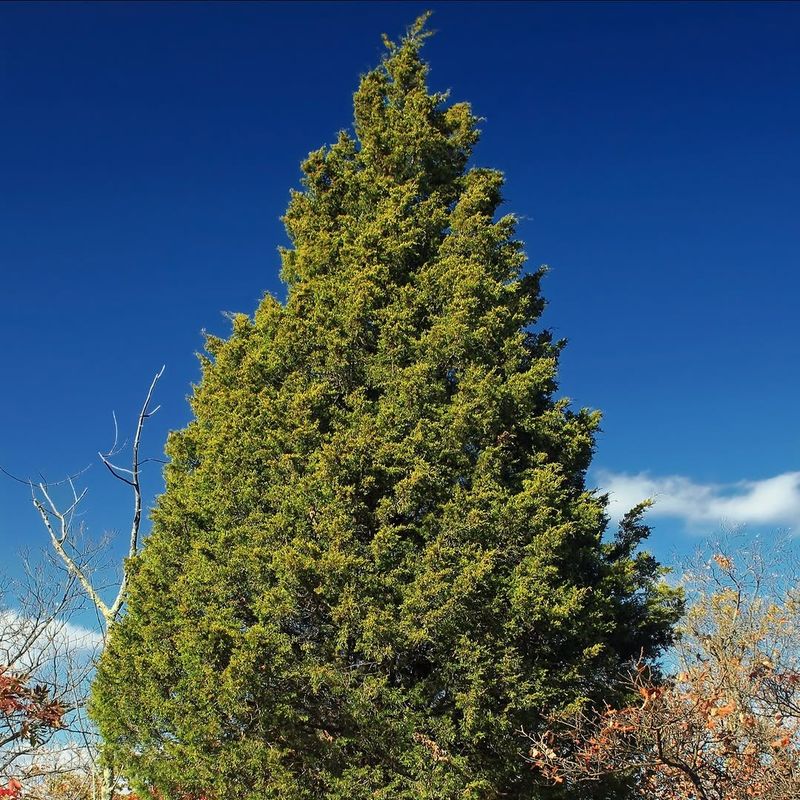
Here is something most people do not expect from a tree this tough and fast-growing: it genuinely thrives on neglect.
Eastern Red Cedar tolerates clay, sandy, rocky, and even slightly alkaline soils that would send other trees into decline.
It evolved on the rugged ridges and open fields of eastern North America, so it is practically engineered to handle whatever New Jersey throws at it.
That said, one thing it absolutely needs is good drainage. Standing water around the roots for extended periods is the one condition this tree dislikes, so avoid planting in low spots where water pools after heavy rain.
Sunlight is equally straightforward. Full sun, meaning at least six hours of direct light per day, produces the fastest growth and the densest foliage.
Partial shade is tolerable, but trees grown in shadier spots tend to open up in the center and lose that tight, fence-like form you are after.
No fertilizer is required in the first year, and heavy feeding can actually cause problems by pushing soft, vulnerable growth.
Lean soil often produces stronger, more resilient trees. Give it sun, give it drainage, and Eastern Red Cedar will handle everything else on its own.
First-Season Watering And Care
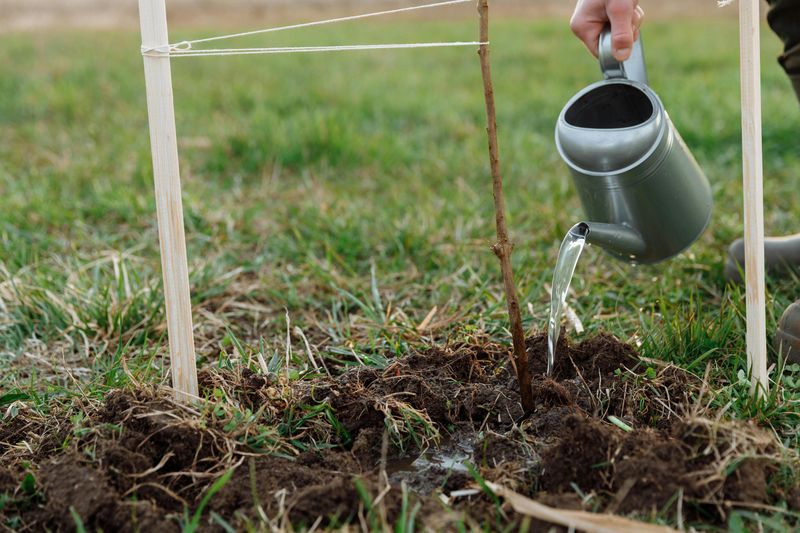
Watering a new tree sounds simple, but most people either overdo it or forget about it entirely, and both extremes can set your fence line back by a full season. During the first year, deep and infrequent watering beats shallow and frequent every time.
Aim to water your Eastern Red Cedar saplings once or twice a week, soaking the soil to a depth of at least twelve inches to encourage roots to grow downward rather than staying near the surface.
A layer of mulch two to three inches deep around the base of each tree is one of the best investments you can make.
Mulch holds moisture, regulates soil temperature, and suppresses weeds that compete with young roots. Keep the mulch a few inches away from the trunk itself to prevent rot.
Beyond watering and mulching, first-season care is refreshingly minimal. Skip the fertilizer unless your soil is extremely poor. Pruning is not necessary in year one. Just let the tree focus on getting established.
By fall of the first year, a well-watered sapling will have developed a root system capable of surviving most New Jersey winters without any additional protection. Simple care now means years of zero maintenance later.
Trees Vs. Traditional Fencing
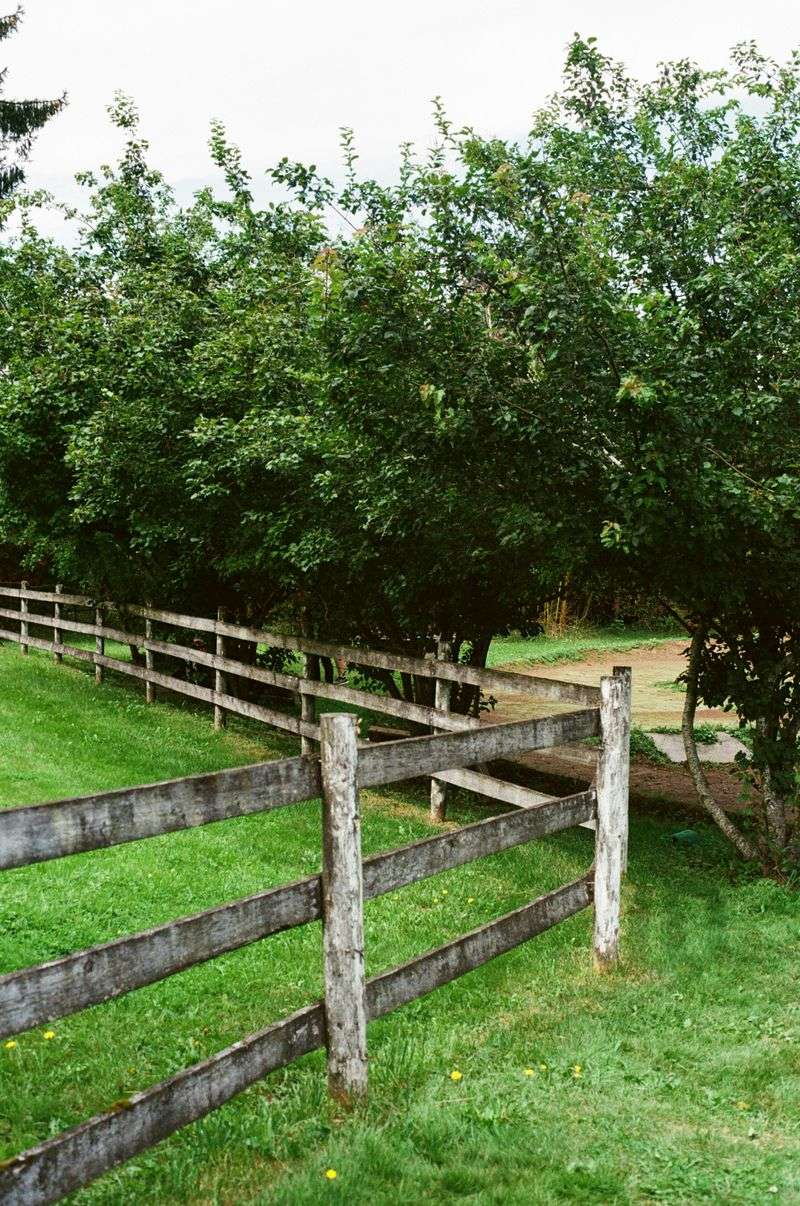
A wood fence starts falling apart the moment it goes in the ground. Rain warps the boards, UV light fades the stain, and posts rot from the bottom up, usually right around the five-year mark when repair bills start piling up.
Eastern Red Cedar does the opposite of that. Every year, it gets taller, fuller, and more effective as a privacy screen, noise barrier, and windbreak.
Traditional fencing also requires permits in many New Jersey municipalities, especially for fences over six feet. Trees are often not subject to the same permit requirements, though local rules vary and it is worth checking with your municipality.
Aesthetics are another area where trees win decisively. A cedar fence line adds genuine curb appeal, provides seasonal interest, attracts birds, and increases property value in ways that a vinyl panel never will.
Fencing also offers zero environmental benefit. Eastern Red Cedar sequesters carbon, filters stormwater runoff, and provides habitat for dozens of native species simultaneously.
The only category where traditional fencing wins is immediate privacy. A wooden fence blocks sightlines on day one, while a tree needs a season or two to fill in. For anyone willing to wait one to two years, the living fence wins on every other measure.
Cost Comparison In New Jersey
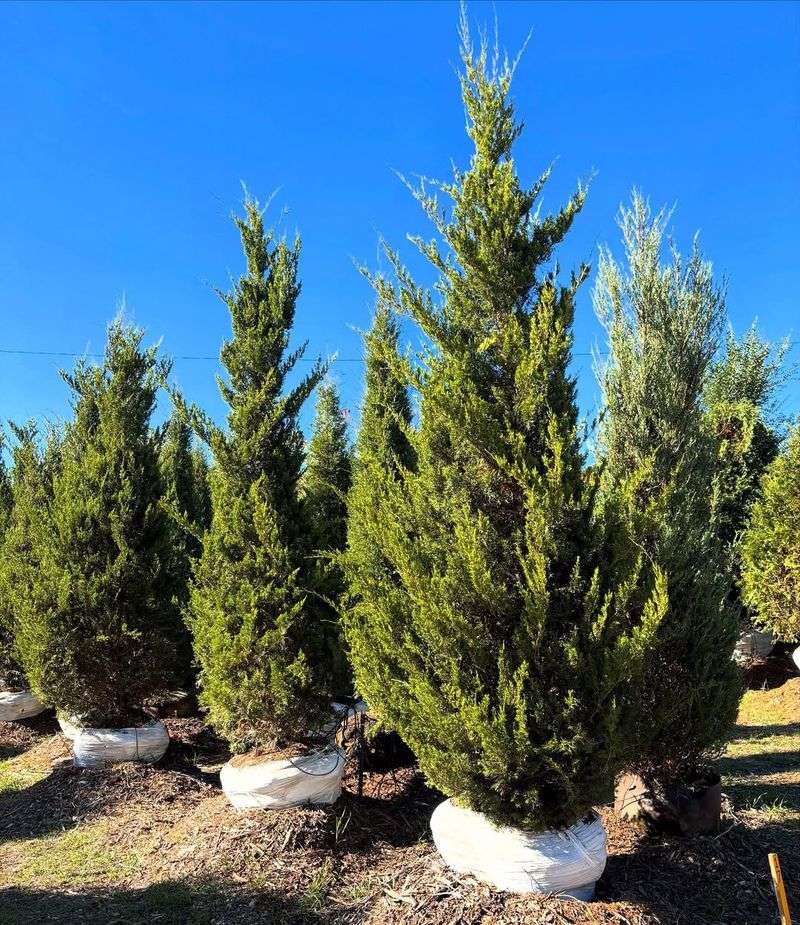
Installing a standard wooden privacy fence in New Jersey runs between twenty-five and fifty dollars per linear foot, installed.
For a one-hundred-foot property line, that is anywhere from two thousand five hundred to five thousand dollars before a single board weathers or warps.
Eastern Red Cedar saplings, by contrast, typically cost between fifteen and forty dollars each at local nurseries or garden centers.
For that same one-hundred-foot line, spaced eight feet apart, you would need roughly thirteen trees, putting your total investment between two hundred and five hundred dollars.
That is a fraction of the cost of traditional fencing. You can reduce costs further by sourcing bare-root stock in early spring, which often sells for under ten dollars per tree.
Some New Jersey county conservation districts even offer native tree seedlings at deeply discounted prices as part of environmental programs.
Maintenance costs also favor the tree dramatically. A wood fence needs staining, repairs, and eventual full replacement.
Eastern Red Cedar needs essentially nothing after the first season. Over a ten-year period, the living fence is not just cheaper to install.
It is cheaper to own, and it keeps appreciating in beauty and function while the wooden fence keeps depreciating.
Wildlife And Environmental Benefits
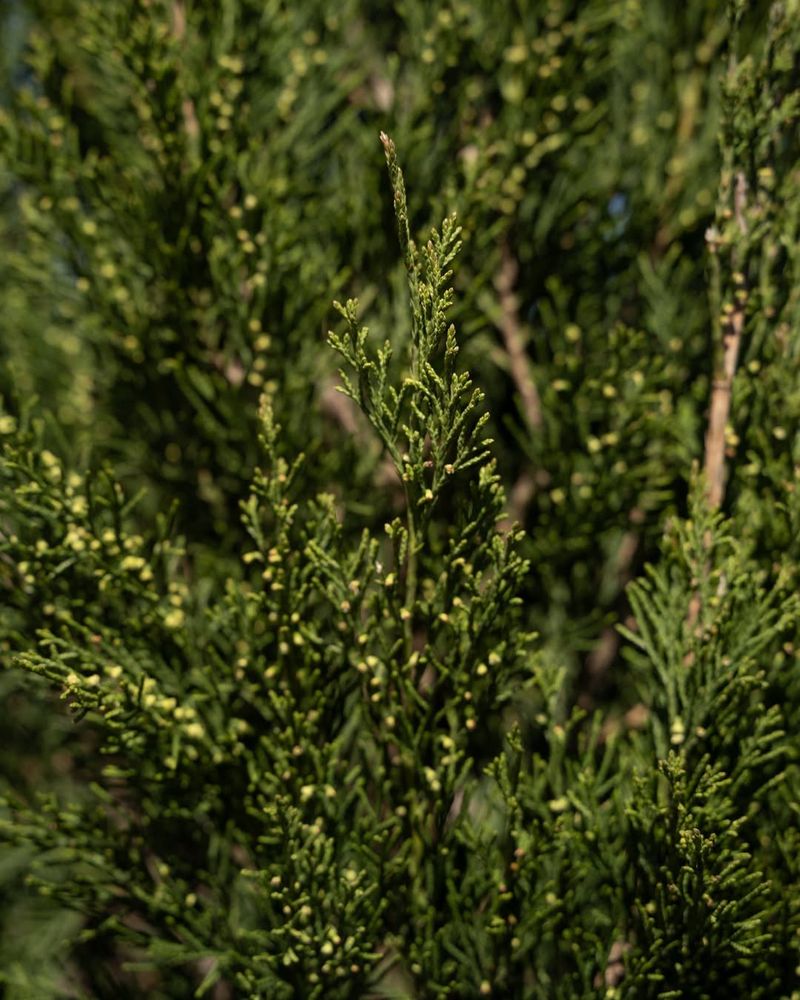
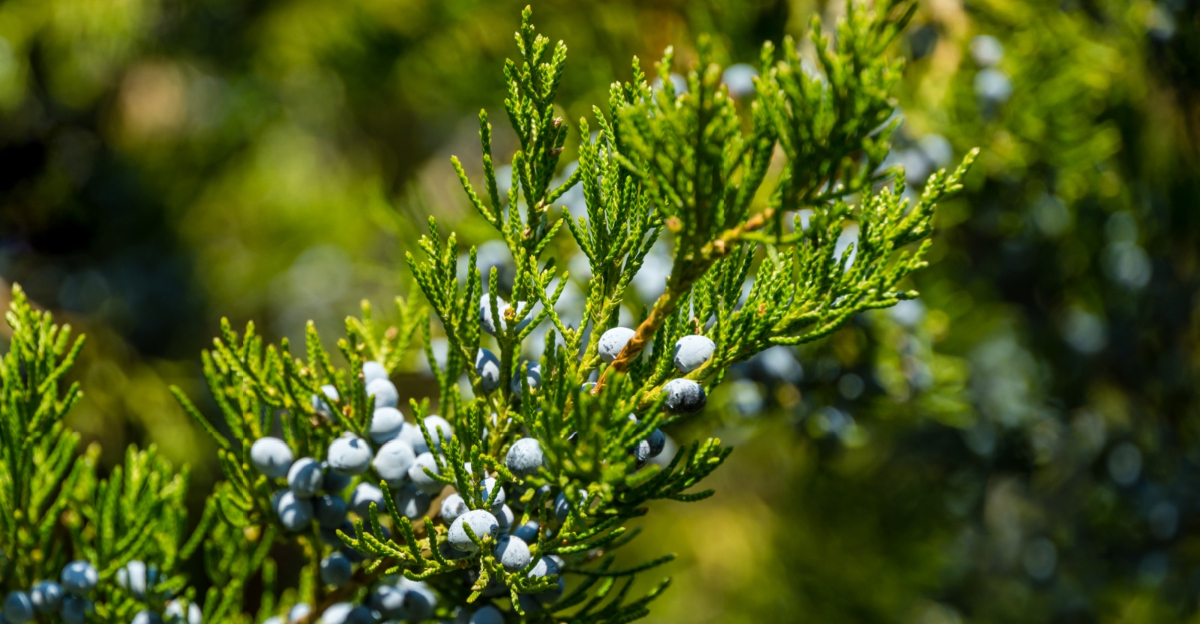
Cedar waxwings go absolutely wild for Eastern Red Cedar. These stunning birds flock to the trees in winter, feasting on the small blue-gray berries that ripen in late fall and persist through the coldest months.
Robins, mockingbirds, and bluebirds also rely on these berries as a critical food source when other options disappear.
The dense, evergreen canopy provides year-round shelter for birds seeking protection from predators and harsh weather.
Dozens of native species use Eastern Red Cedar as a nesting site, making a single row of these trees a legitimate wildlife corridor in your own backyard.
Beyond birds, the environmental resume is impressive. Eastern Red Cedar is one of the most effective native trees for controlling soil erosion on slopes and along waterways.
Its roots hold the ground during heavy rains, reducing runoff that carries pollutants into streams and groundwater. The tree also captures and stores carbon throughout its long lifespan, contributing meaningfully to local air quality.
Planting a row of these trees along your property line is not just a landscaping decision. It is an environmental act that benefits your neighborhood, your watershed, and the native species that share your corner of the world with you.
That said, it is worth noting that Eastern Red Cedar can spread naturally into open or disturbed areas and gradually take over native grasses and wildflowers if seedlings go unmanaged.
A deliberate, maintained fence line poses little concern, but if your yard borders preserved meadow or grassland, keep an eye on any volunteer seedlings that sprout outside your intended planting area and remove them early.
Common Planting Mistakes To Avoid
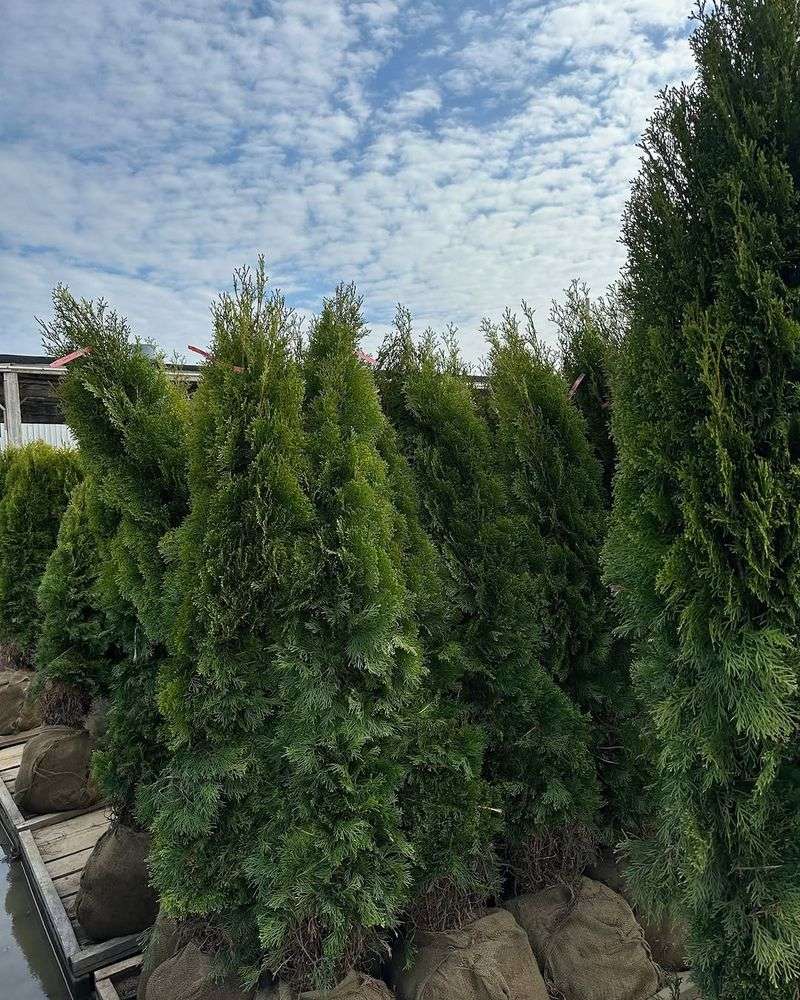
Planting Eastern Red Cedar sounds foolproof, and mostly it is, but a few common errors can slow your fence line down by a full year or more. The biggest mistake is planting too deep.
The root flare, that slight widening where trunk meets roots, should sit at or just above soil level, not buried beneath it. Burying the trunk encourages rot and restricts root development before it even gets started.
Choosing the wrong location is the second most common problem. Planting in a low-lying area that collects standing water is a fast way to stress or lose a tree that would otherwise be highly resilient.
Always check drainage before you dig. Skipping mulch is another error that costs people weeks of growth.
Bare soil around a young tree dries out fast, especially during a New Jersey summer, and unmulched trees can drop into dormancy-like stress during dry spells.
Finally, do not crowd your Eastern Red Cedar with other large shrubs or trees right at planting time. Give each sapling its space and light.
Avoid these missteps and your native fence line will reward you with years of effortless beauty, privacy, and growth that no wooden panel could ever match.