The Florida Native Plant Birds Start Visiting Once Its September Berries Appear
A flash of red fruit near the fence can change the traffic in your yard almost overnight. By September, birds that barely gave that corner a glance may start to drop in, hop through the branches, and come back again the next day.
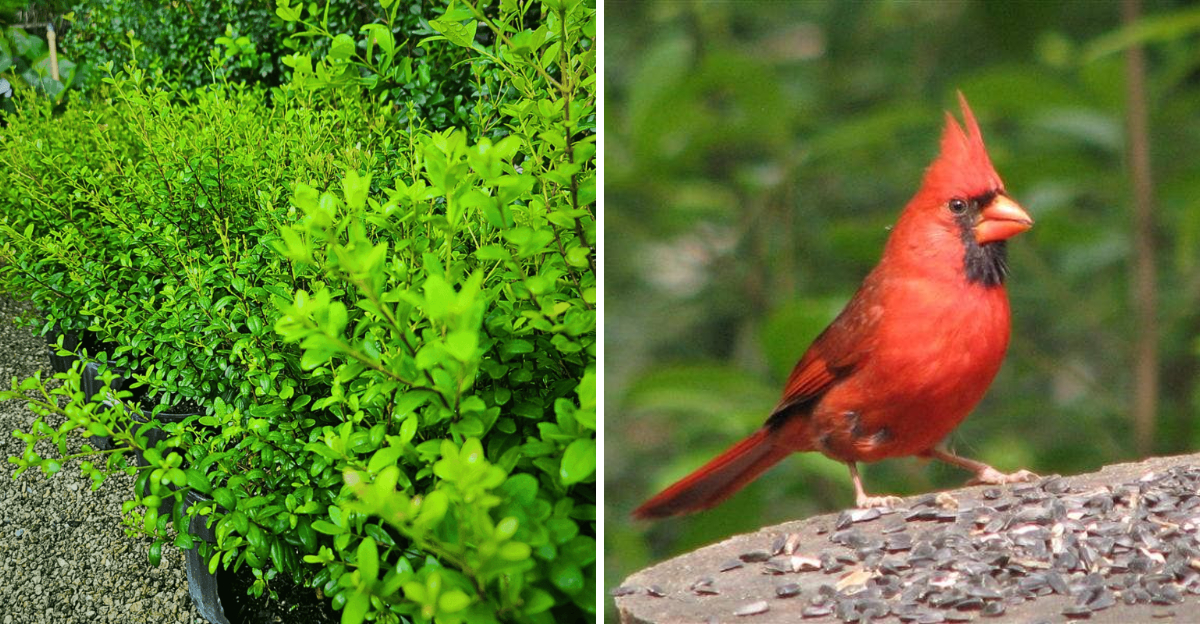
The berries do the work quietly, but the effect is hard to miss once you know where to look. Cardinals may linger lower in the shrub, mockingbirds can sweep through fast, and smaller visitors often dart in between them.
What makes this Florida plant so useful is not a loud flower show or a dramatic shape. Its value arrives at exactly the moment local birds start to notice the fruit.
That gives you color, movement, and a reason to keep an eye on the same patch of yard each morning. September reveals which shrubs truly earn their space, and this one often proves it before early breakfast.
1. Simpson’s Stopper Turns Fall Color Into Bird Food
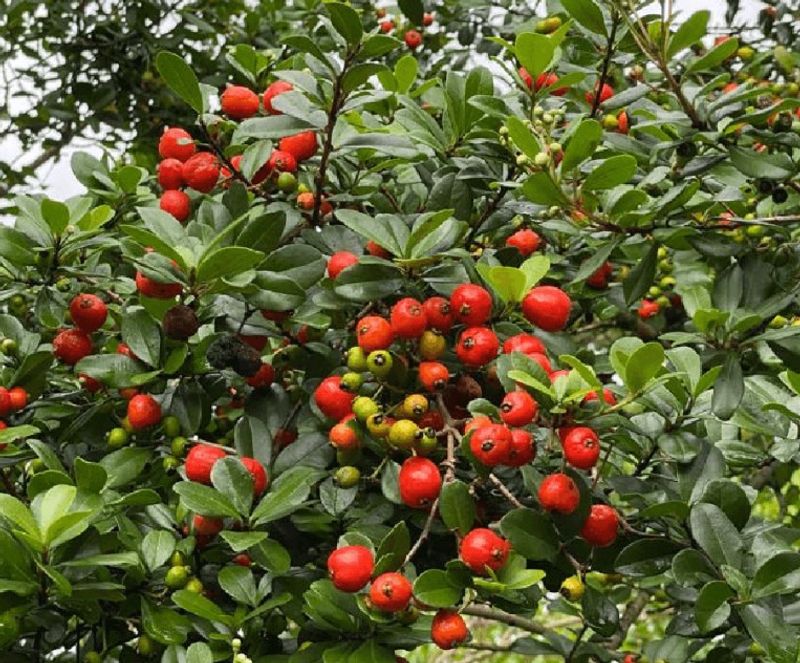
Bright orange and red fruit clustered against glossy dark green leaves is one of the more striking sights a native plant can offer in a Florida yard.
That display belongs to Simpson’s stopper, Myrcianthes fragrans, a native evergreen shrub or small tree with a lot going for it beyond good looks.
Unlike seasonal flowering perennials that fade and disappear, Simpson’s stopper keeps its foliage year-round. The plant grows as a multi-stemmed shrub or can be trained into a small tree form over time.
Its small white flowers appear in clusters, and those flowers eventually give way to fruit that shifts from green to orange or red as it matures.
That ripening fruit is not just decorative. According to the University of Florida IFAS Extension, the berries are eaten by birds, making this native plant a genuine food source rather than just a visual accent.
Cardinals, mockingbirds, and other fruit-eating species have been documented using the plant as conditions allow.
Calling Simpson’s stopper a seasonal showpiece undersells what it actually does. The combination of edible fruit and persistent evergreen structure gives this plant a role in the yard that extends well beyond any single season.
Fruit timing varies by plant age, location, and growing conditions, so the berry display is best appreciated on established specimens rather than newly planted ones.
2. September Is When Those Berries Start Getting Harder To Miss
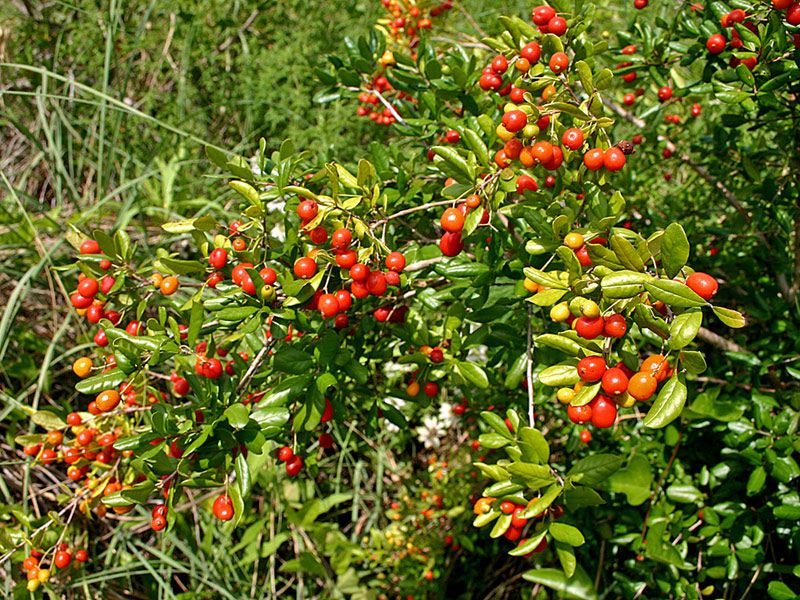
Late summer brings a visible shift to an established Simpson’s stopper. The fruit that spent weeks developing quietly begins to color up, moving from green toward orange and then red as conditions allow.
By September, on a mature and well-sited plant, that color change becomes genuinely hard to overlook.
September works well as a seasonal reference point because late summer and early fall align with active fruit development on many established specimens. That said, fruit timing is not identical across every plant or every part of the state.
Growing conditions, rainfall patterns, plant age, and regional climate all play a role in when fruit actually ripens.
Your Florida Garden Changes Every Week. Your Plan Should Too.
Gardening in Florida changes quickly throughout the season. Every Friday you’ll receive a simple weekly plan showing exactly what to plant, prune, fertilize, harvest, and protect so you never miss the right timing.
A newly planted Simpson’s stopper should not be expected to carry a heavy berry load in its first fall season. Younger plants focus energy on root establishment before they begin producing fruit reliably.
Patience matters here, and gardeners who understand that will feel less disappointed when a young plant does not perform the same way a ten-year-old specimen does.
What makes the September timing useful as an editorial hook is that it reflects a real seasonal pattern for established plants. The bright fruit stands out sharply against the glossy evergreen foliage.
This makes the plant much more visually prominent than it was during the quieter green months of summer. That visibility is exactly what tends to attract passing birds to give it a closer look.
3. Cardinals And Mockingbirds Can Find The Fruit Before You Do
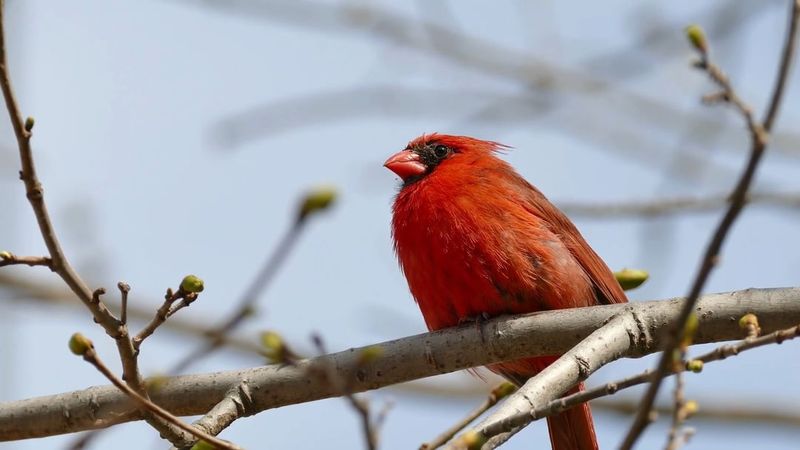
A flash of red moving through the branches before you even notice the fruit is ripe is a familiar experience for anyone who grows native berry-producing plants.
Cardinals have a sharp eye for color, and a ripening cluster of Simpson’s stopper fruit can catch their attention quickly.
The University of Florida IFAS Extension notes that birds eat the fruit of Myrcianthes fragrans. Northern cardinals and northern mockingbirds are among the species documented using the plant.
Mockingbirds in particular are known to defend productive fruiting shrubs in their territory, which can give you a front-row seat to some lively backyard behavior.
Other fruit-eating species may visit as well, depending on the season and what is moving through your area. Buntings and other migrants passing through in fall have been known to take advantage of native fruit sources.
The variety of potential visitors depends on geography, habitat quality, and what else is growing nearby.
None of this means planting one Simpson’s stopper guarantees a parade of specific species. What the plant does offer is a documented, reliable native food source during a season when natural fruit can be harder to find.
A fruiting native in a well-planted yard becomes a useful stop rather than just a pretty backdrop, and birds that find it once often return when fruit appears again.
4. The Evergreen Branches Offer More Than Berries
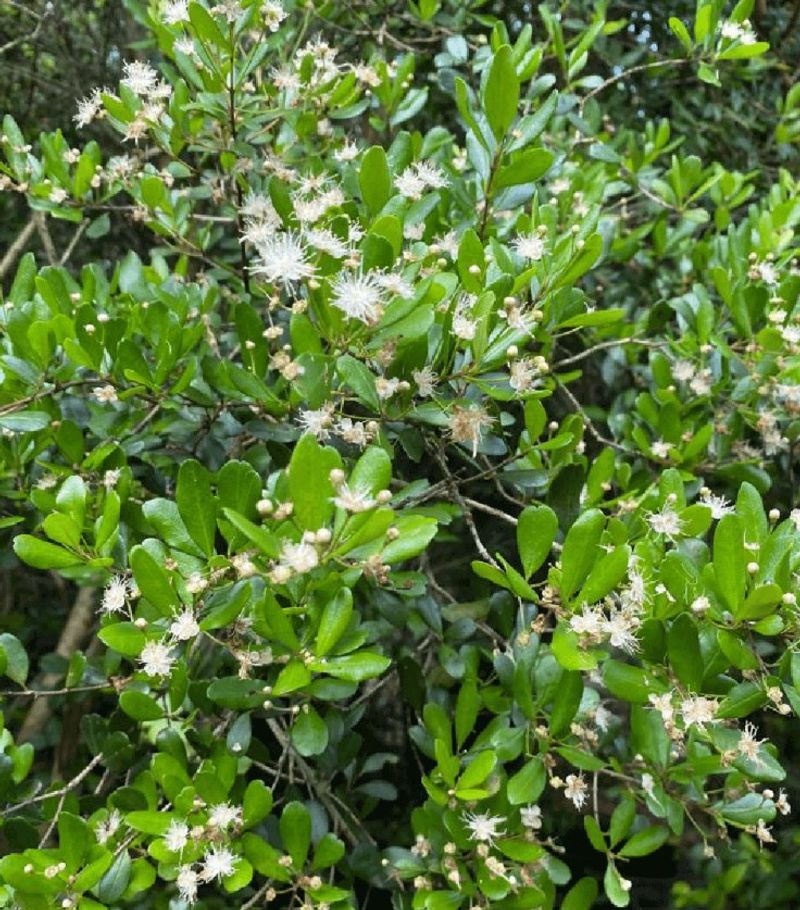
Dense, layered foliage that holds its leaves through every season does something that a bare-branched fruiting shrub simply cannot. Year-round cover gives birds a place to perch, rest, and shelter, independent of whether the plant is actively fruiting at that moment.
Simpson’s stopper grows with a naturally full and compact form. Its glossy evergreen leaves create a thick canopy that can provide real structural value within a mixed planting.
According to UF/IFAS Gardening Solutions, this plant works well as a shrub, screen, or small tree, partly because of that persistent dense form.
Cover matters to birds for reasons beyond nesting. A shrub that offers concealment gives small birds a place to escape predators, wait out weather, or simply pause during foraging.
A plant that combines fruit with that kind of protective structure offers more to wildlife than one that delivers berries alone on an otherwise open frame.
Nesting is possible in dense native shrubs, though specific nesting claims for Simpson’s stopper should not be overstated. The foliage structure makes it a reasonable candidate for small birds seeking sheltered spots, but not every plant in every yard will host a nest.
What can be said with confidence is that the year-round evergreen canopy adds wildlife value that persists long after the fall fruit season winds down. That staying power is part of what makes this native worth including in a thoughtfully planted yard.
5. Sunlight Can Change How Much Fruit You See
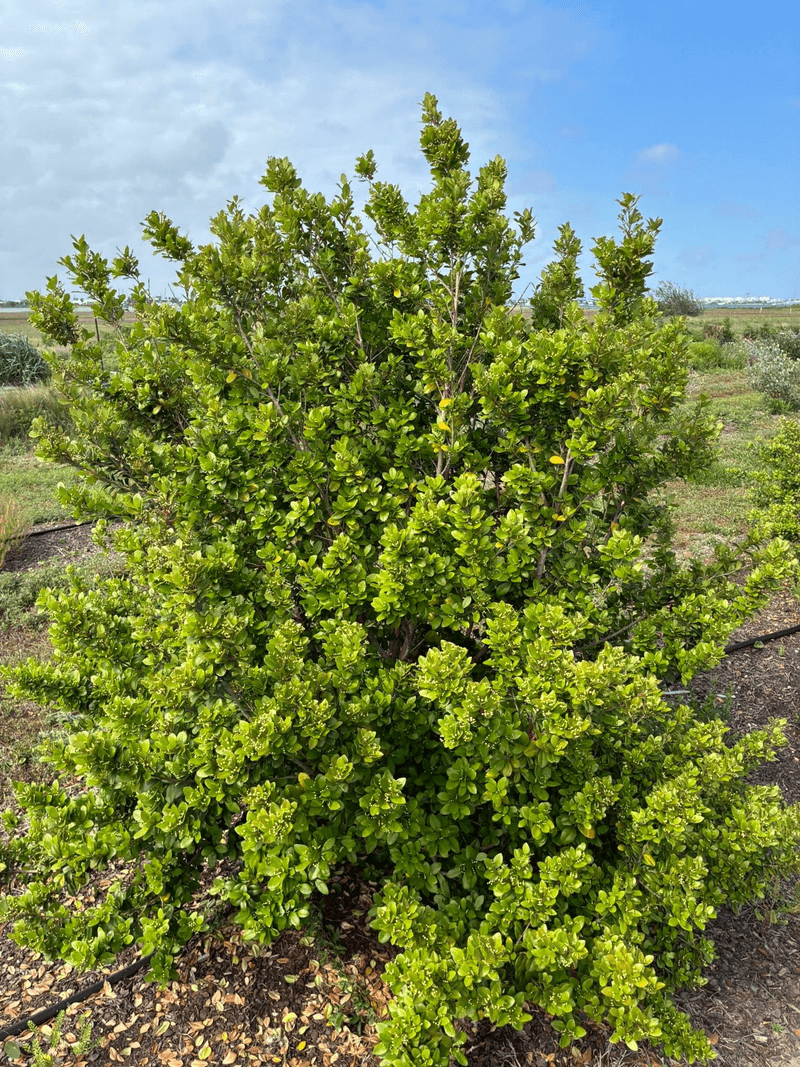
Choosing where to plant a fruiting native is not just about finding an open spot in the yard. Sunlight exposure can influence how well Simpson’s stopper flowers, sets fruit, and fills out over time, making placement a decision worth thinking through carefully.
According to UF/IFAS, Myrcianthes fragrans grows in full sun to partial shade. Plants sited in full sun tend to develop a denser, more compact form and may support stronger flowering.
More flowers generally means more opportunity for fruit set, though pollination and other conditions also play a role.
Partial shade is tolerated, and the plant can still perform well in those conditions. However, a specimen growing in deep or consistent shade may produce fewer flowers and less fruit than one receiving more direct light.
That difference in fruit production can directly affect how useful the plant becomes as a seasonal food source for visiting birds.
Plant age and general growing conditions add another layer to this picture. A young plant in full sun may still produce less fruit than a mature plant in partial shade.
It simply may not have had enough time to establish and reach its full fruiting potential. Pruning history also matters.
Repeated hard pruning may remove the plant’s flowering and fruiting growth. That can reduce the berry display regardless of how much sunlight the plant receives.
Site well, prune carefully, and give the plant time to mature.
6. Coastal Yards Give This Native Another Advantage
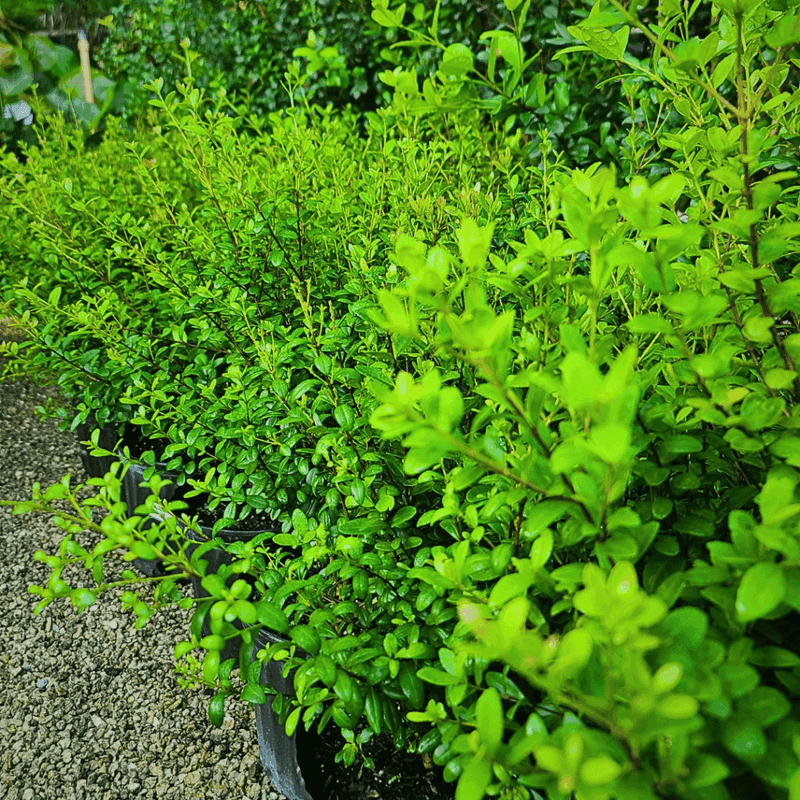
Salt air rolling off the water is not something most ornamental shrubs handle gracefully. Coastal homeowners benefit from native plants that tolerate those conditions without constant attention.
Simpson’s stopper earns its place in that conversation.
UF/IFAS notes that Myrcianthes fragrans has moderate salt tolerance, making it a reasonable candidate for coastal landscapes where salt spray is a regular factor.
That tolerance gives it an edge over more sensitive species in yards that face persistent wind and occasional salt exposure from nearby water.
A distinction worth keeping in mind is that tolerance of salt spray and tolerance of salty soil are not automatically the same thing. Plants near tidal areas or where soil salinity is consistently high may face different stresses than those simply exposed to coastal breezes.
Matching the plant to the specific conditions of your site will always produce better results than assuming one kind of salt tolerance covers every coastal scenario.
Regional suitability also matters. Simpson’s stopper is native to South Florida and performs best in warmer parts of the state.
Cold hardiness is limited, and gardeners in northern Florida should be aware that hard freezes can damage or stress the plant. In the warmer coastal zones of South and Central Florida, however, it fits naturally into native plantings and can thrive with relatively little input once established.
That combination of salt tolerance and low maintenance makes it a practical pick for the right coastal yard.
7. Heavy Pruning Can Cut Away The Fall Display
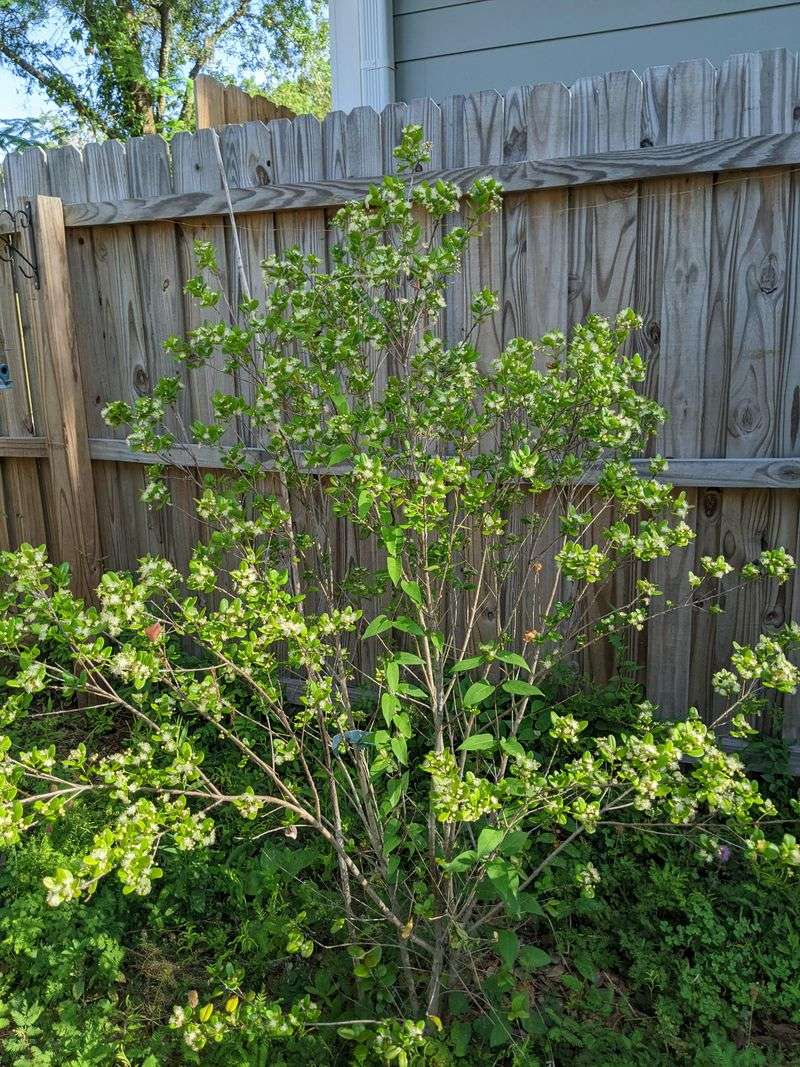
Using hedge shears on Simpson’s stopper at the wrong time or too aggressively can remove productive growth. That growth might otherwise have produced flowers and fruit later in the season.
Understanding how pruning affects fruiting is practical information for any gardener who wants to preserve that fall berry display.
Simpson’s stopper has a naturally dense, rounded form that does not require constant clipping to look tidy. Occasional light shaping to manage size or remove crossing branches is very different from repeated heavy shearing that keeps the plant tightly boxed.
Constant shearing removes new growth, and new growth is where flowers and subsequent fruit develop.
Timing also plays a role. Pruning done heavily just before or during the flowering and fruiting period can set back berry production significantly.
Let the plant move through its natural flowering and fruiting cycle before making significant cuts. This gives it the best chance to produce a useful fall display.
Light touch-ups that avoid removing large amounts of actively growing tips are far less likely to interfere with fruit set.
None of this means Simpson’s stopper should never be shaped. Managed carefully, it can function as a hedge, screen, or specimen shrub while still producing fruit.
The goal is simply to prune with intention rather than habit. A plant allowed to express some of its natural form will almost always offer more to visiting birds than one kept under constant tight control.
8. Give Simpson’s Stopper Room To Become A Real Bird Stop
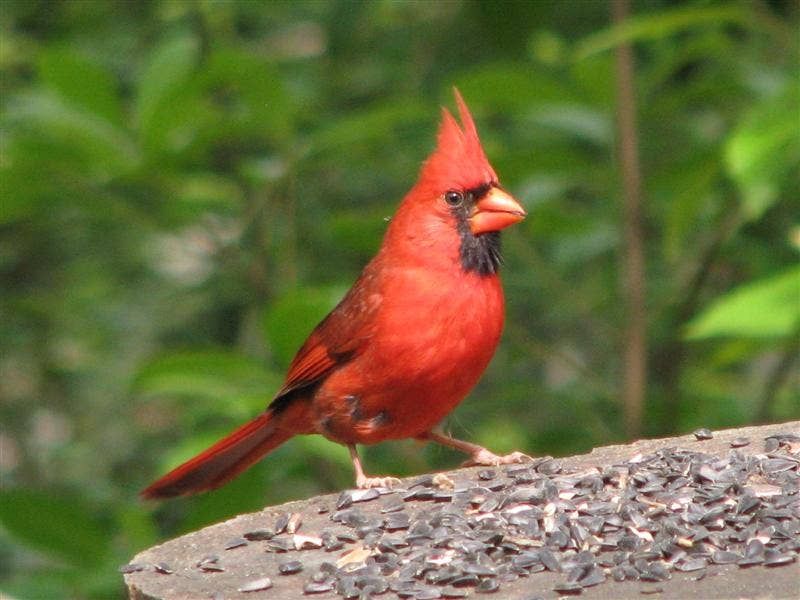
A dense evergreen screen loaded with orange-to-red fruit in late summer and fall is a genuinely useful thing to have in a wildlife-friendly yard. Give the plant enough space to develop into its natural form.
Avoid forcing it into a spot that requires constant severe cutting to keep it contained.
According to UF/IFAS, Simpson’s stopper can reach roughly ten to fifteen feet in height at maturity, sometimes more depending on conditions and pruning history. Left to grow more freely, it can develop into a small tree with an attractive canopy.
Kept lower with occasional shaping, it works as a full shrub or screening hedge. The key is matching the planting location to the plant’s realistic mature size from the start.
Squeezing it between a walkway and wall can require frequent hard pruning. That will undermine both its natural form and its ability to fruit reliably.
A site with enough room to grow, good sun exposure, and reasonable soil conditions gives the plant the foundation it needs to become genuinely productive over time.
Berries, evergreen cover, documented bird use, and regional adaptability all come together in a plant that rewards thoughtful placement more than intensive management.
Once its orange-to-red fruit appears in late summer and fall, Simpson’s stopper becomes a seasonal food stop for birds.
They may discover the plant and return to it year after year.