The Fungus Turning California Boxwood Hedges Brown From The Inside Out
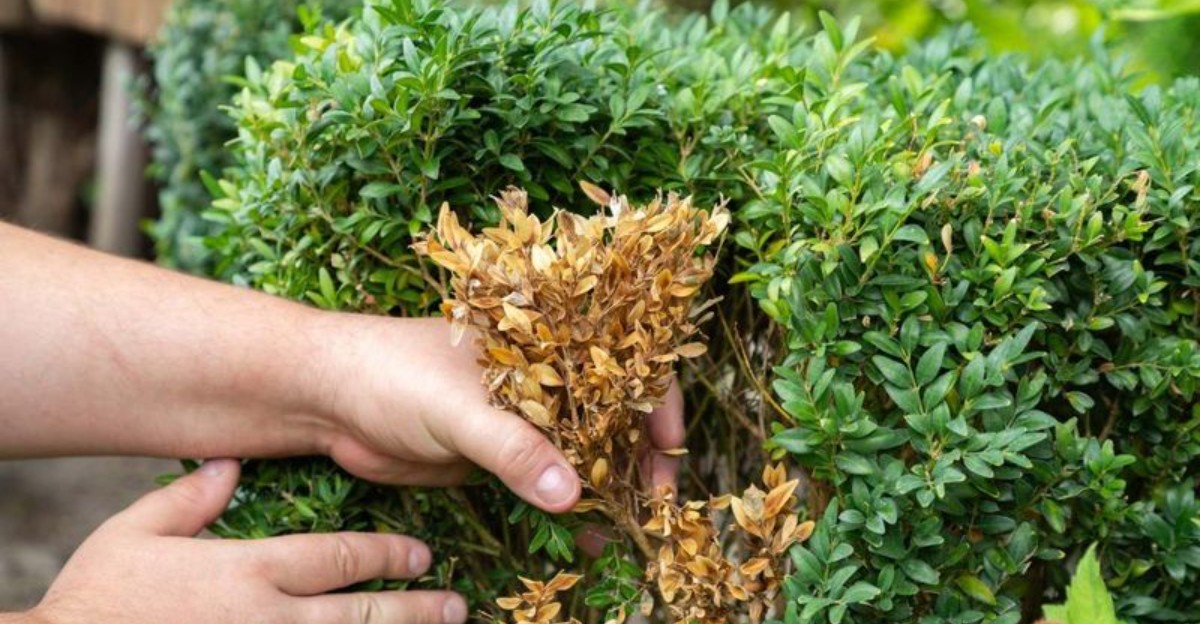
From the sidewalk, the hedge looks picture perfect, clipped tight and glossy green from one end to the other. Push a hand into the middle of the branches, though, and the story changes in a hurry.
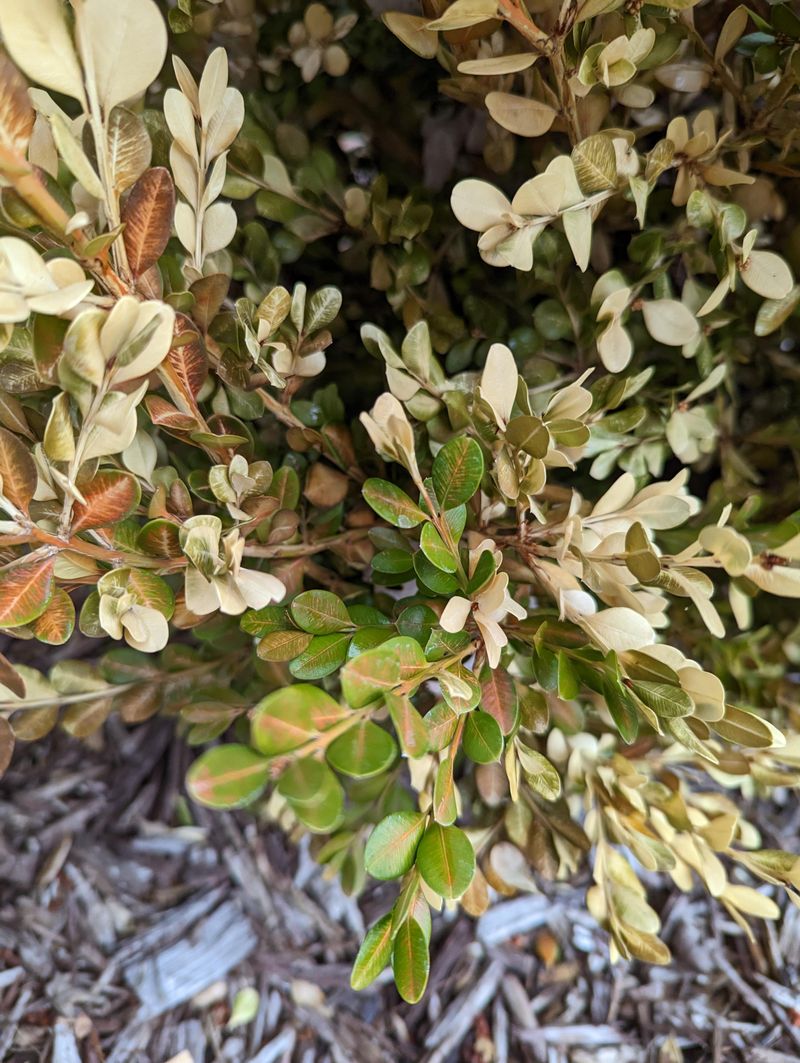
Bare twigs, straw-colored leaves, and an odd hollow feeling sit where dense, healthy growth used to be just months earlier. Something has been quietly at work on the inside for weeks while the outer shell kept up appearances.
Across California, gardeners keep swapping the same photos after every wet spring, asking what went wrong so fast. Coastal fog, evening sprinklers, and shady fence lines each play a supporting role in the mystery.
A handful of small habits decide if the hedge holds up or hollows out. Spot them early enough, and the tidy shape stays intact season after season.
The Culprit Behind The Hollow Hedge
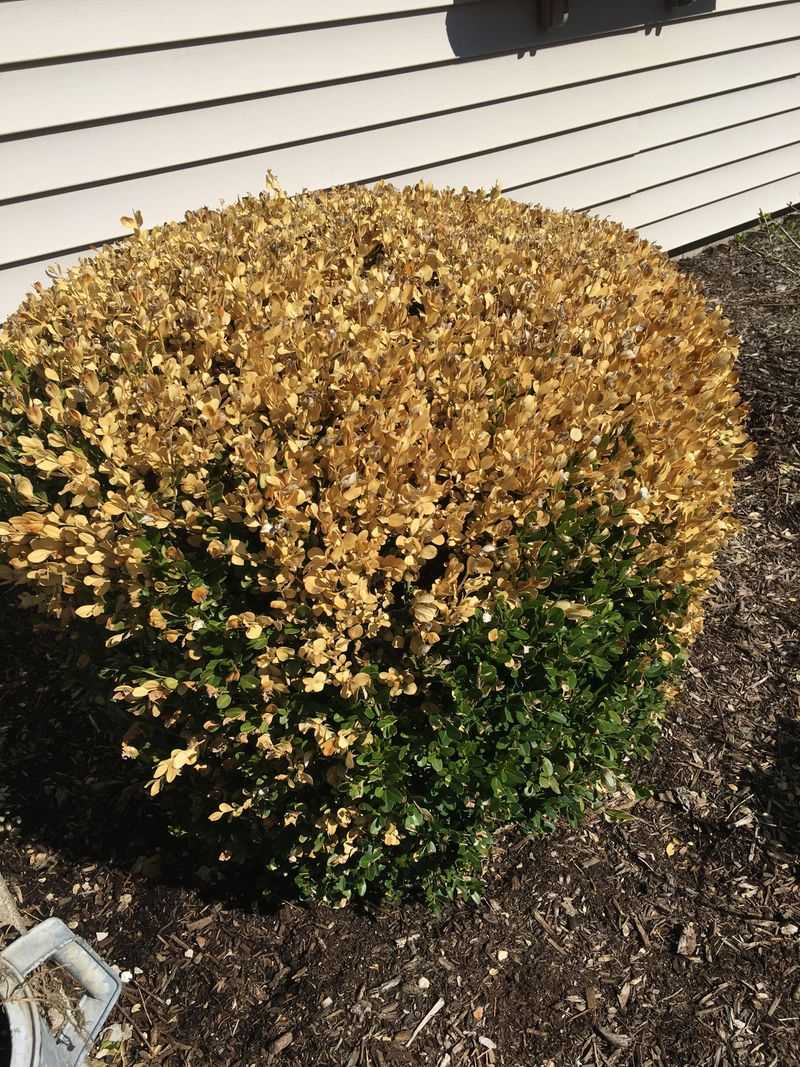
Somewhere under that tidy green surface, a microscopic troublemaker with a mouthful of a name has moved in. Calonectria pseudonaviculata, better known as boxwood blight, is a fungus that attacks leaves and young stems rather than roots.
It works from the shaded interior outward, which is exactly why so many California homeowners miss it early. The outer shell of the hedge stays glossy while the middle turns straw colored and bare.
The fungus produces sticky spores that cling to water droplets, garden gloves, shoes, and pruning blades. Wind alone does not carry them far, so most spread happens through splashing water or human hands.
Once a spore lands on a damp leaf, infection can begin within a matter of hours. Brown spots with darker edges appear first, followed by black pencil-thin streaks along the green stems.
Leaf drop follows quickly, sometimes stripping whole branches inside two weeks during a warm, humid stretch. The bare sections rarely fill back in on their own.
Here is the part that surprises people: the roots often stay healthy, so a stripped plant may push out fresh growth. That tender growth gets reinfected, and the cycle wears the shrub down season after season.
Boxwood blight first turned up in the United States in 2011 and reached California landscapes soon after. Knowing the culprit by name makes every decision that follows much easier, from how you water to how you shop for replacements.
California Weather Rolls Out The Welcome Mat
Fog, that famous coastal blanket, does more than set a moody scene. It keeps boxwood foliage damp for hours at a stretch, and damp foliage is exactly what this fungus asks for.
Spores germinate best when temperatures sit between roughly 60 and 77 degrees and leaves stay wet for five to seven hours. Coastal California hands out those conditions for months, especially from late winter through spring.
Inland valleys follow a different pattern. Hot, dry summers slow the fungus down, but the atmospheric river storms of December through March give it a long open window.
Overhead sprinklers stretch that window even further. A lawn head that sprays a hedge each evening creates a nightly rain shower right when leaves would otherwise be drying off.
Your California Garden Changes Every Week. Your Plan Should Too.
Gardening in California changes quickly throughout the season. Every Friday you’ll receive a simple weekly plan showing exactly what to plant, prune, fertilize, harvest, and protect so you never miss the right timing.
Shade matters too. A hedge along a north-facing fence or under a mature oak may hold moisture until noon, while the same variety in open sun dries by nine.
Symptoms often surface two or three weeks after a rainy stretch, which is why homeowners blame the wrong culprit. They point at the heat wave that arrived last, not the storm that arrived first.
Timing your inspections to follow wet weather changes everything. Walk the hedge after each rain event, part the branches, and study the shaded interior where trouble begins.
Drought years can hide the problem for a while, then one wet spring brings it roaring back. Consistent watching beats seasonal guessing every time.
Spotting The Quiet Clues Before The Hedge Thins
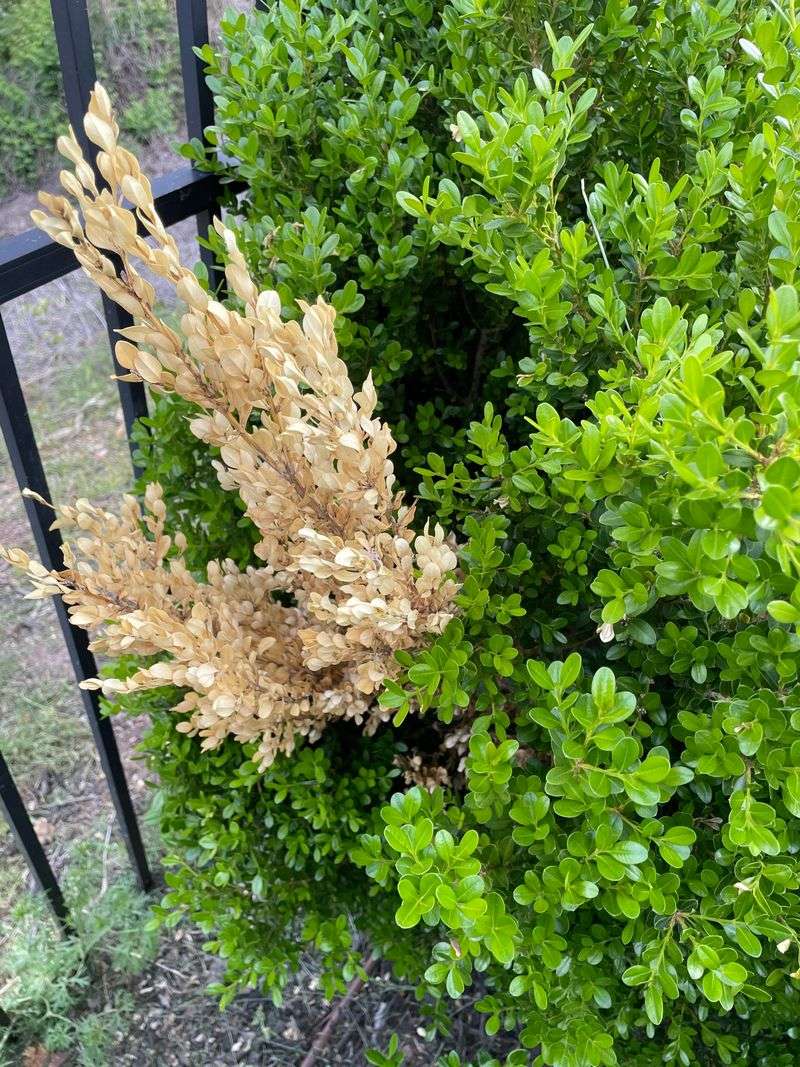
Picture a detective story where every clue sits in the shadows. The first evidence of boxwood blight hides low and deep, on leaves near the base and in the shaded center of the shrub.
Leaf spots come first, showing up as brown or tan circles ringed with a darker border. On a wet morning they may look almost water soaked, and several spots can merge into one blotchy patch.
Stem lesions are the giveaway that separates blight from ordinary stress. Look for narrow black streaks running along green twigs, thin as pencil lines and often clustered where leaves have dropped.
Defoliation moves fast. A branch that looked fine on Monday can be bare by the weekend, leaving a stripped section that stands out against the trimmed outer layer.
Winter injury, root rot, and mites cause browning too, so a little comparison helps. Cold damage tends to bronze the sunny outer surface, while root problems yellow the whole plant evenly from the top down.
Grab a flashlight and kneel down. Aim the beam into the interior, lift a few branches, and check the litter underneath for fallen foliage with spotted markings.
Bagging a sample for your county extension office or a plant clinic gives you certainty. A confirmed identification saves money, since the plan for blight looks nothing like the fix for drought stress.
Marking suspect plants with flagging tape helps you track how quickly the trouble moves week to week.
The Trouble Hitchhikes Into Your Garden
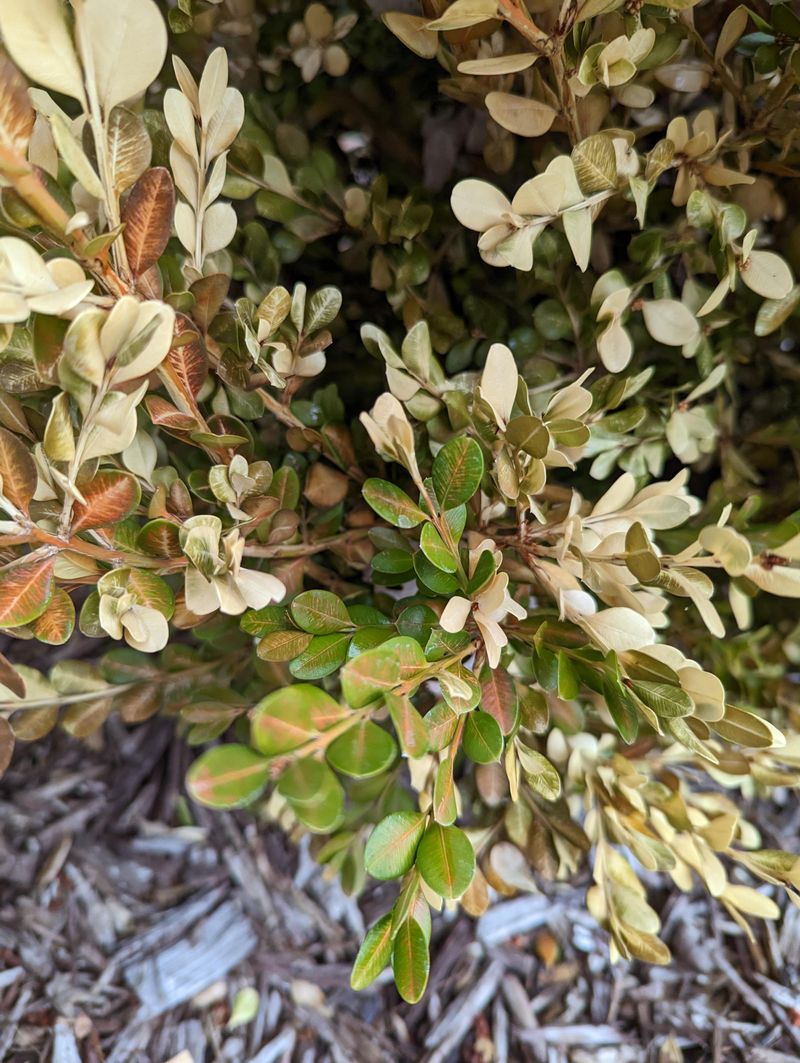
Most infected hedges did not catch anything from the neighborhood. The fungus usually arrives in the back of a car, tucked inside a nursery pot or a holiday wreath.
Young boxwood grown in crowded, misted greenhouses can carry spores without showing a single spot. Symptoms may wait weeks, long past the point where the shrub is settled happily in your border.
Holiday greenery deserves the same suspicion. Boxwood wreaths, garlands, and table arrangements sold in December have been traced to outbreaks, and shaking one out over a garden bed is an easy way to seed trouble.
A simple isolation routine solves most of this. Hold new plants in their pots away from the existing hedge for three to four weeks, water at soil level, and inspect twice a week.
Buying from growers who take part in the Boxwood Blight Cleanliness Program adds another layer of protection. Ask the garden center directly, since staff at reputable California nurseries usually know the answer.
Toss holiday greens in the trash rather than the compost pile or green waste bin. Home compost rarely heats up enough to handle the spores, which can linger in fallen debris for years.
One more habit worth adopting: keep receipts and plant tags. If a problem shows up later, knowing the source helps the nursery and helps you.
Pachysandra and sweet box face the same fungus, so treat those purchases with equal care. A quick check at the register beats a season of repairs.
The Pruning Habit That Spreads It Down The Row
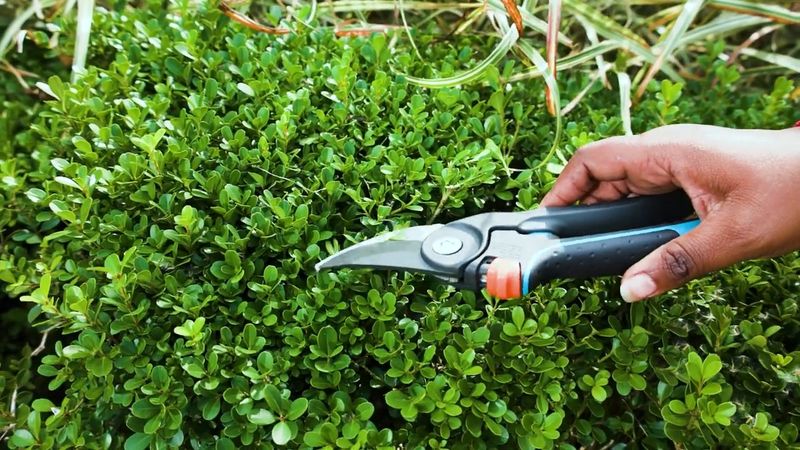
Hedge shears are wonderful tools and terrible gossips. They carry spores from one plant to the next in seconds, moving trouble down an entire row before lunch.
Shearing while foliage is wet raises the risk sharply, since spores stick to damp surfaces and fresh cuts. Waiting for a dry afternoon is one of the cheapest protections available.
Tight formal shearing creates a second issue: a dense outer shell that blocks airflow. Inside that shell, humidity lingers, light fades, and the fungus gets the sheltered pocket it prefers.
Thinning cuts help a lot. Reaching in with hand pruners to remove a few interior branches each year opens the middle, lets sunlight reach lower leaves, and shortens the time foliage stays wet.
Sanitize blades between plants using isopropyl wipes or a spray bottle of disinfectant. About ten seconds of contact time works, and a rag in your back pocket makes the habit easy.
Clean up as you go. Clippings left at the base turn into a spore reservoir that splashes back onto the shrub with the next rain or sprinkler cycle.
Skip pruning right after a storm, and avoid blowing debris along a hedge line with a leaf blower. Rake, bag, and haul it away instead.
Gloves, boots, and knee pads count too. Rinsing them after working around a suspect plant keeps the problem from riding along to another corner of the yard.
Shared tools borrowed from a neighbor deserve a wipe-down before they touch your hedge.
Turning Things Around With Sanitation And Smart Watering
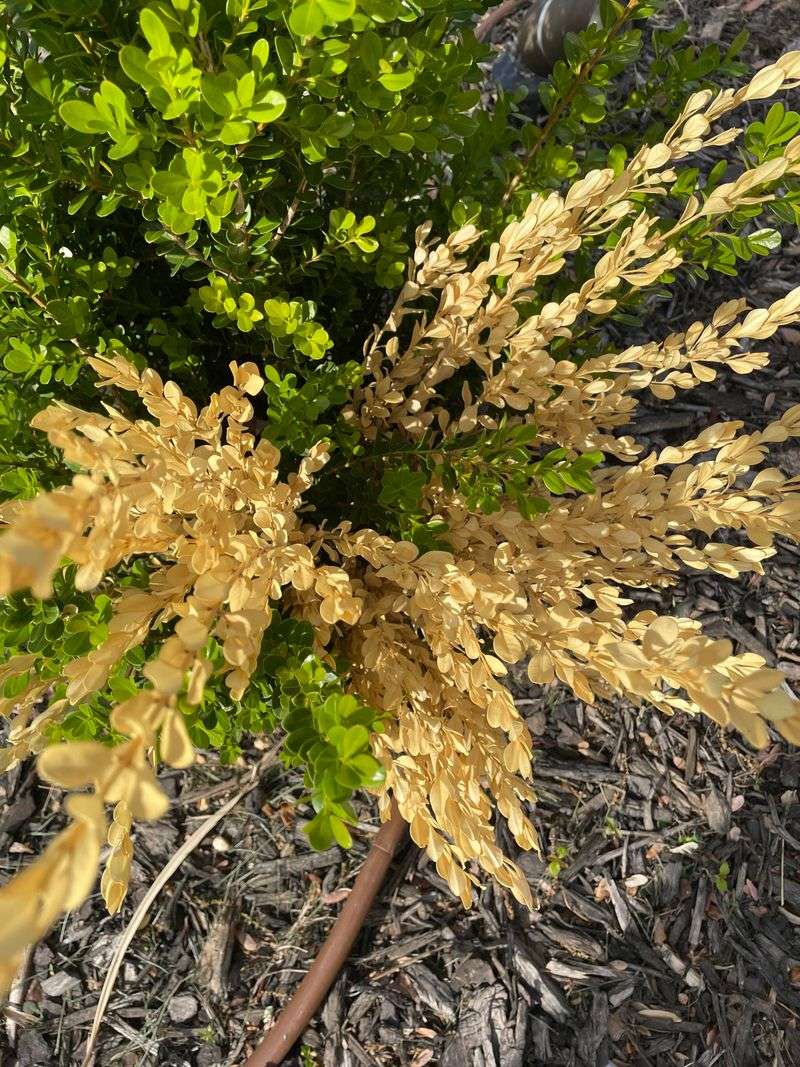
Once blight shows up, sanitation does more heavy lifting than any spray bottle. Removing infected foliage and the litter beneath the plants cuts the spore supply that fuels the next round.
Prune out affected branches on a dry day, bagging clippings right at the plant. Send them to the landfill rather than green waste, and resist the urge to shred anything.
Mulch acts like a lid. Two inches of fresh bark over cleaned soil traps leftover spores and reduces the splashing that carries them upward onto healthy leaves.
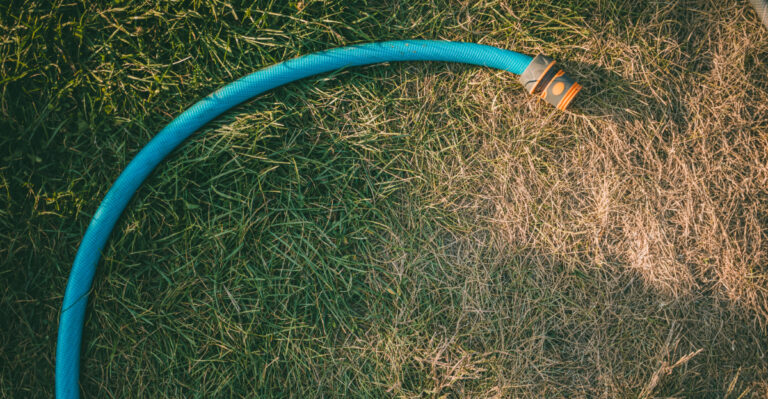
Switch irrigation to drip lines or a soaker hose so water reaches roots instead of foliage. Morning watering also helps, giving leaves the whole day to dry.
Fungicides shield healthy tissue during rainy stretches but won’t repair infected leaves. Chlorothalonil is a common choice, and rotating active ingredients lowers resistance risk.
Read California product labels carefully and follow the listed intervals, usually every seven to fourteen days while conditions stay wet. A licensed landscape professional can handle applications if you would rather hand that off.
Spacing plants farther apart, raising nearby tree canopies, and trimming the lower skirt all improve airflow. Fungi struggle in breezy, sunlit spots.
Badly affected shrubs are worth removing outright, roots and surrounding leaf litter included. Replacing three plants beats nursing a whole hedge through repeated setbacks.
Keep a simple log of what you sprayed and when, plus photos of problem sections. Patterns become obvious after one season.