7 Signs Your Michigan Cucumbers Are Getting Bitter Before You Even Pick Them
Bitter cucumbers are a harvest disappointment that almost always could have been avoided, because the plant signals what is happening well before the fruit reaches the stage where bitterness becomes obvious at the table.
Michigan’s July heat and the stress patterns it creates in cucumber vines produce specific and readable symptoms that show up on the plant days before the chemical compounds responsible for bitterness have fully developed in the fruit.
Catching these seven signs early lets you adjust watering, lower heat stress, or harvest sooner. This keeps your cucumbers crisp and mild during hot Michigan summers instead of leaving you with bitter fruit nobody wants to eat.
1. Soil Moisture Keeps Swinging Between Wet And Dry
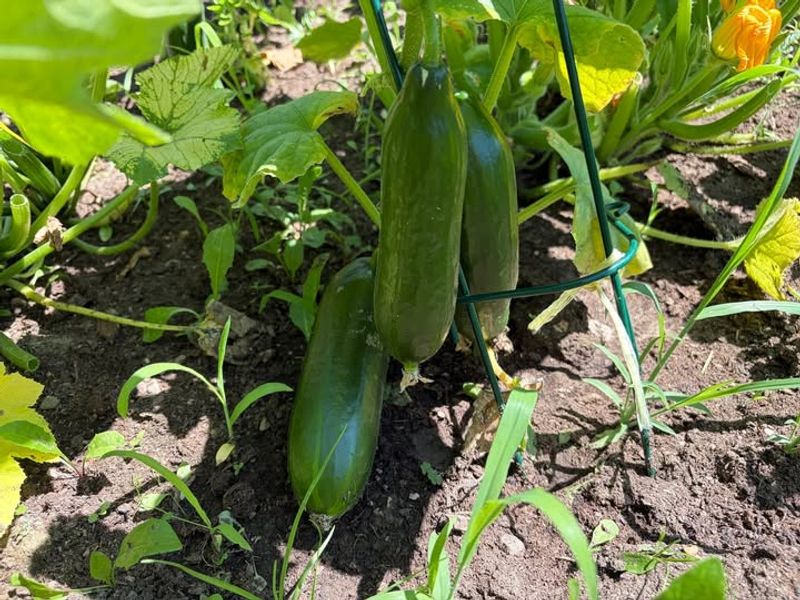
Cucumbers are thirsty plants, and they are not shy about showing it when they are unhappy.
One of the earliest and most overlooked signs that your cucumbers might turn bitter is soil that swings back and forth between bone dry and soaking wet.
This kind of inconsistency puts the plant under real stress, and stressed plants respond by producing more cucurbitacin, the natural compound responsible for that sharp, unpleasant bitter flavor.
Michigan summers can be unpredictable. One week brings hot, dry stretches and the next drops heavy rainstorms that soak the soil all at once.
Without steady moisture, cucumber roots struggle to absorb nutrients evenly, which disrupts normal fruit development right when it matters most.
Fruits forming during dry spells are especially vulnerable to bitterness because the plant cannot push enough water and nutrients into the fruit consistently.
Checking your soil moisture every day or two during fruit-forming season is one of the smartest habits you can build.
Push a finger about two inches into the soil near the base of the plant. If it feels dry at that depth, it is time to water.
Using drip irrigation or a soaker hose can make a huge difference because it delivers water slowly and evenly right at the root zone.
Mulching around your plants with straw or wood chips also helps Michigan garden beds hold onto moisture longer between watering sessions, keeping conditions stable and your cucumbers growing sweet and smooth right through the warmest weeks of the season.
2. The Plants Wilt During Hot Afternoon Weather
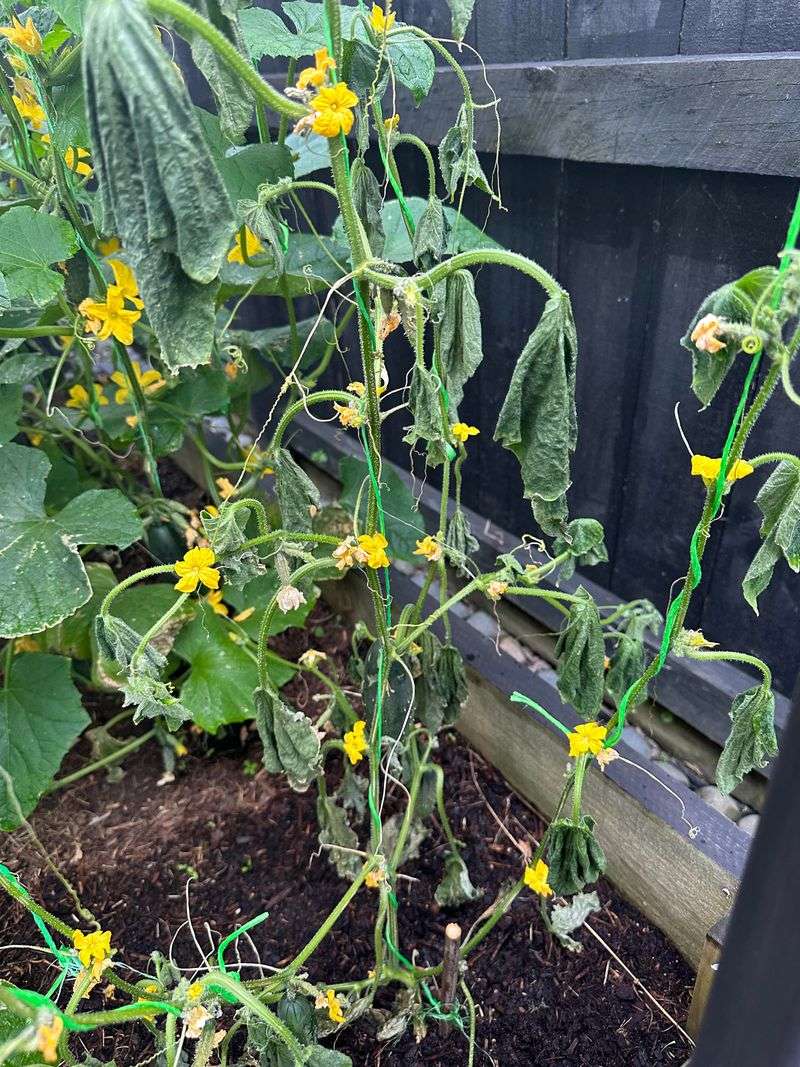
Seeing your cucumber vines droop in the afternoon heat can feel alarming, especially when you have put weeks of care into growing them.
A little wilting during the hottest part of a Michigan August day is actually pretty normal.
Plants temporarily close their leaf pores to slow water loss when temperatures climb, which causes that familiar droopy look.
The real concern starts when your vines are still wilted in the cooler evening hours or wilting happens repeatedly day after day.
Repeated wilting is a strong signal that the plant is not getting the steady water supply it needs to stay healthy and productive.
When cucumber vines struggle like this, the plant shifts its energy toward survival rather than fruit quality.
That shift often means more cucurbitacin moves into the developing fruits, and bitterness follows.
Your Michigan Garden Changes Every Week. Your Plan Should Too.
Gardening in Michigan changes quickly throughout the season. Every Friday you’ll receive a simple weekly plan showing exactly what to plant, prune, fertilize, harvest, and protect so you never miss the right timing.
Fruits forming during these stressed periods tend to taste noticeably sharper than cucumbers grown under comfortable conditions.
Watering your cucumber plants in the early morning is one of the most effective strategies for preventing afternoon stress.
Morning watering gives roots time to absorb moisture before the heat of the day kicks in, keeping the plant better hydrated when temperatures peak.
Avoid watering in the evening, since wet leaves overnight can invite fungal problems that add even more stress.
If your plants are wilting every single afternoon despite consistent watering, consider adding a layer of mulch to reduce soil temperature and slow evaporation.
Shade cloth can also offer relief during extreme heat waves, giving your vines a better chance at producing sweet, crisp fruit from vine to table.
3. Cucumbers Are Growing Curved Or Misshapen
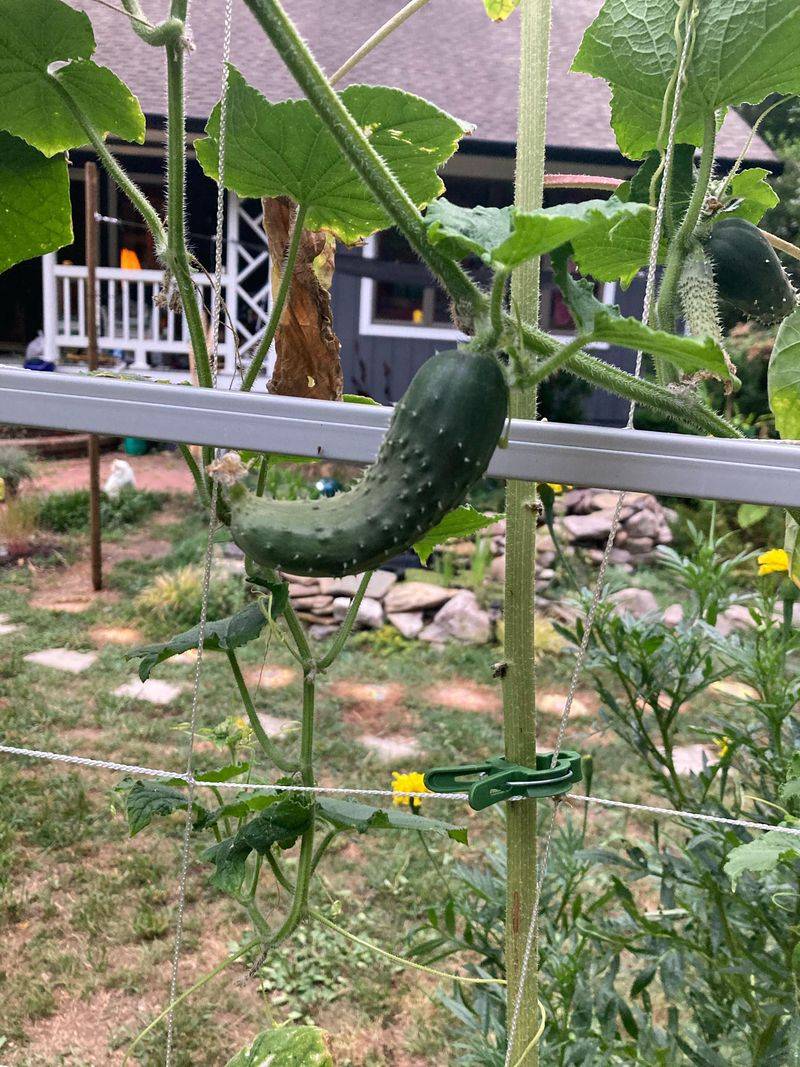
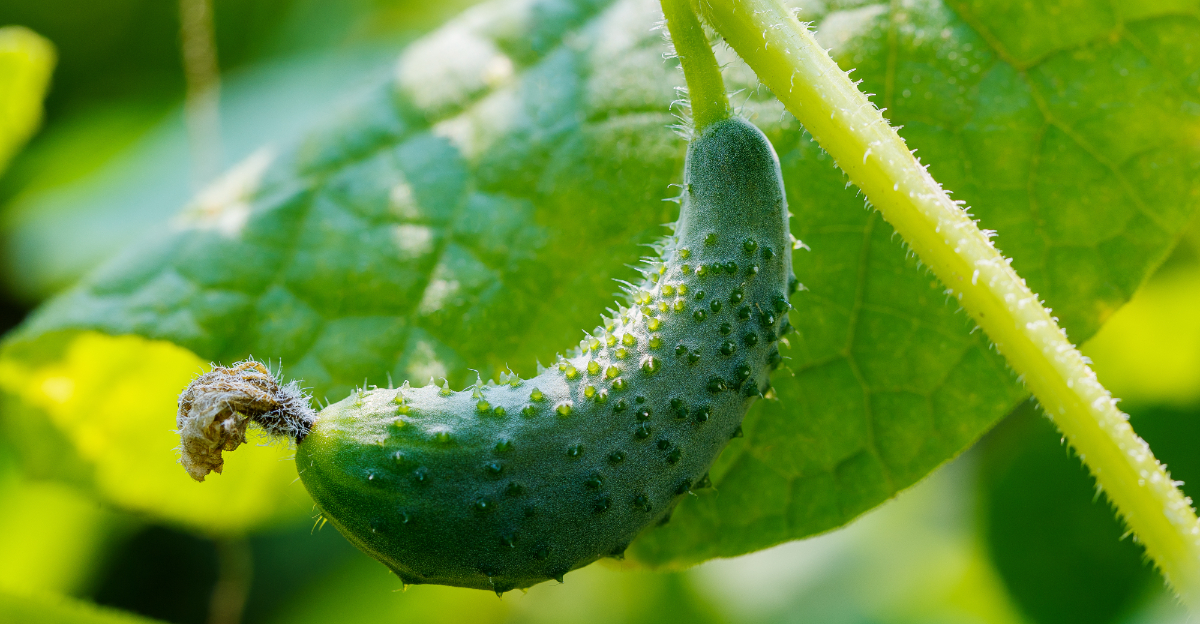
Spotting a cucumber that looks more like a banana than a vegetable is usually good for a laugh, but those odd shapes are actually sending you a message worth paying attention to.
Curved, narrow at one end, or swollen in the middle cucumbers are classic signs that something interrupted the fruit’s development.
That interruption almost always traces back to some form of plant stress, and the same stressors that cause strange shapes can also push bitterness into the flesh.
Uneven watering is one of the most common reasons cucumbers grow crooked.
When moisture is inconsistent, different parts of the fruit develop at different rates, pulling the shape out of balance. Poor pollination is another major factor.
If bees and other pollinators did not visit the flowers evenly, the seeds inside the fruit develop unevenly too, which pulls the fruit into unusual shapes.
Pest pressure from insects feeding on leaves and stems can also weaken the plant enough to disrupt normal fruit formation.
Michigan gardeners can reduce the chances of misshapen fruit by keeping a close eye on soil moisture, planting pollinator-friendly flowers nearby to attract more bees, and monitoring plants regularly for pest activity.
Picking cucumbers as soon as they reach a good size also encourages the plant to put more energy into newer fruits rather than struggling to fill out oversized or oddly shaped ones.
When you notice curved fruits forming early in the season, treat it as your cue to investigate watering habits, check for pest damage, and make small adjustments before bitterness has a chance to build up in your harvest.
4. Fruits Are Getting Too Large On The Vine
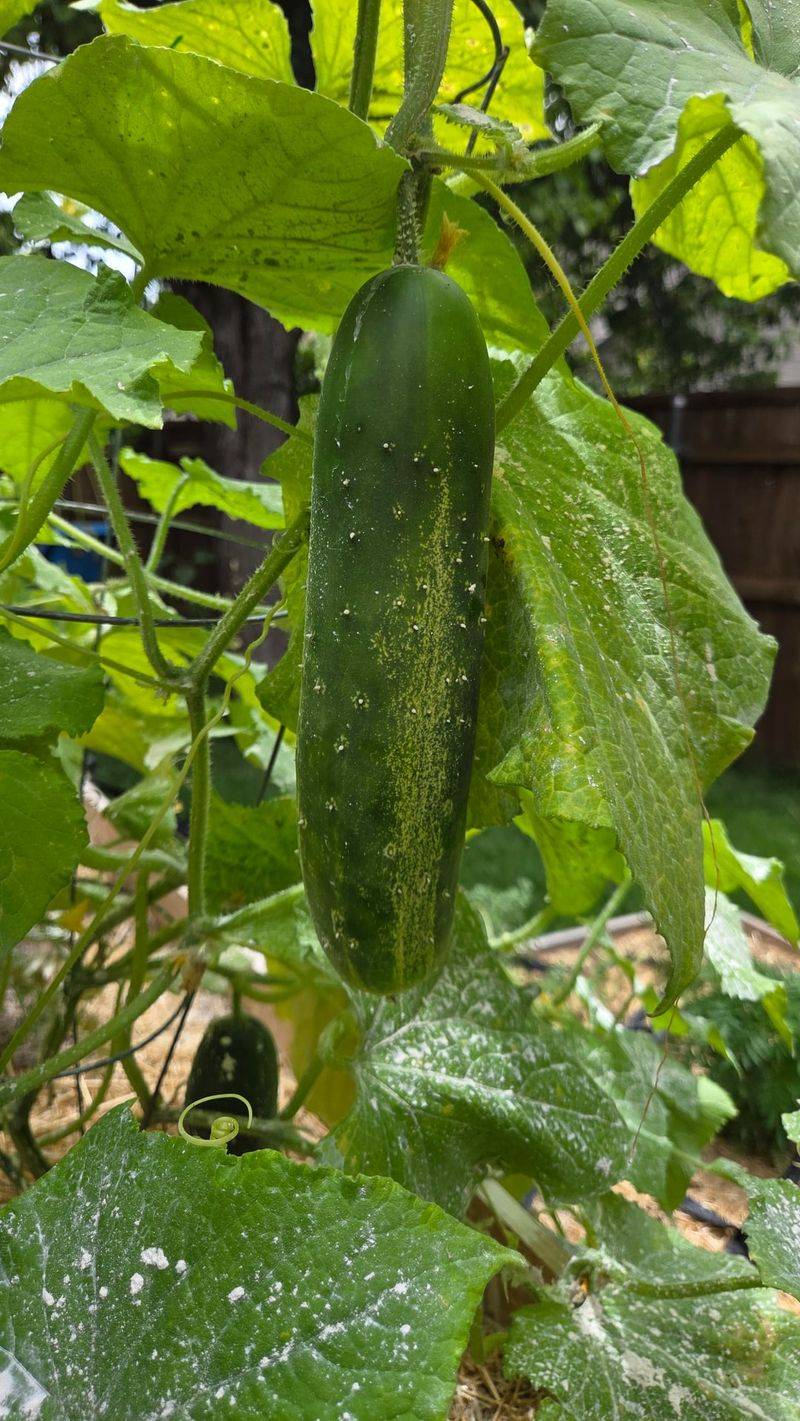
There is something tempting about leaving a cucumber on the vine just a little longer, thinking bigger must mean better. Cucumbers do not work that way.
Letting fruits grow past their ideal harvest size is one of the most common reasons home gardeners end up with bitter, tough cucumbers at the end of the season.
Flavor actually peaks when cucumbers are young, firm, and still a bright, even green color. As a cucumber stays on the vine past its prime, several things happen that work against good flavor.
The seeds inside grow larger and tougher, the skin thickens and may turn yellow, and the flesh becomes less crisp and more watery.
Most importantly, cucurbitacin levels can climb as the fruit matures beyond its ideal window.
The plant also reads an oversized fruit as a sign to slow down production, which means leaving one big cucumber on the vine too long can actually reduce the number of new fruits the plant sets.
Most slicing cucumber varieties grown in Michigan taste best when harvested at six to eight inches long. Pickling types are usually best picked even smaller, around two to four inches.
Checking vines every single day during peak season is the most reliable way to catch fruits at just the right moment.
Cucumbers can grow surprisingly fast during warm Michigan summer weather, sometimes gaining an inch or more overnight.
Setting a simple daily reminder to walk through your garden can make a real difference in keeping up with the harvest and enjoying cucumbers at their sweetest, most satisfying stage before any bitterness has time to develop.
5. The Blossom End Looks Narrow Or Uneven
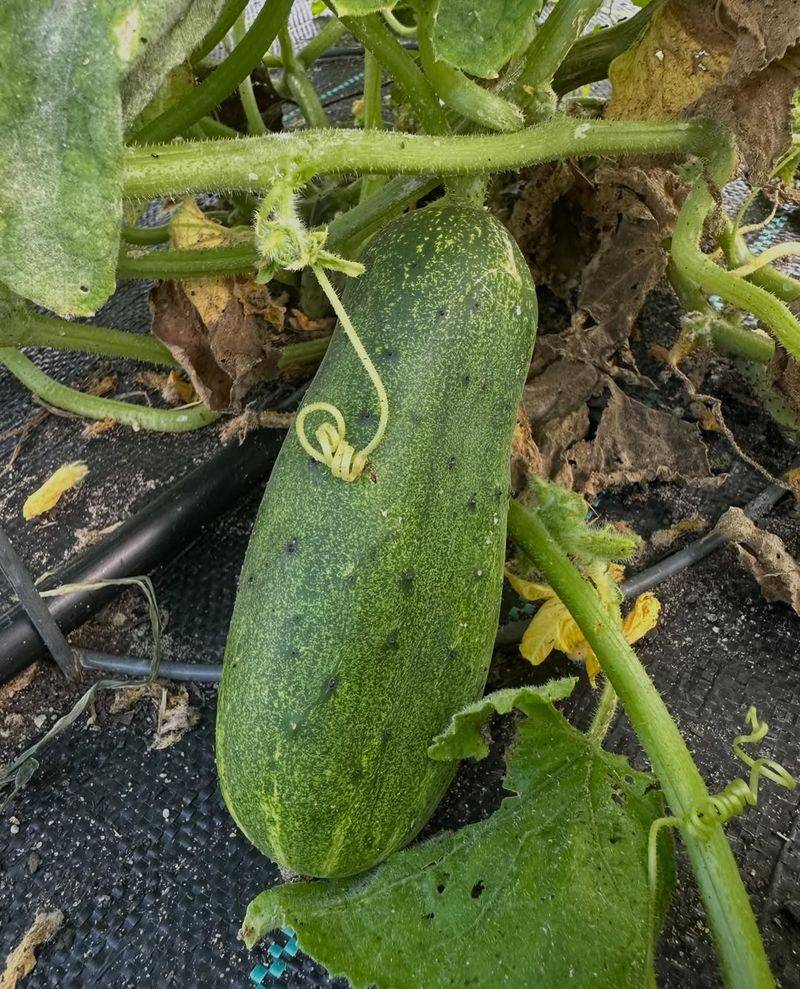
Not all cucumbers come off the vine looking perfectly uniform, and that is fine.
But when you notice that the blossom end of your cucumbers looks pinched, narrow, or noticeably different from the stem end, that shape is worth paying attention to.
A well-developed cucumber should taper gently and evenly toward the blossom end. When that end looks stunted or irregular, it often means something disrupted the fruit’s growth early in its development.
Inconsistent soil moisture is a frequent culprit behind uneven blossom ends. When the plant does not have steady access to water during the critical early days of fruit formation, cell development gets thrown off.
Poor pollination can have a similar effect. If the flower was not fully pollinated by bees and other insects, the seeds inside the fruit develop unevenly, which can pull the shape of the blossom end out of proportion.
Both of these stressors also raise the likelihood of higher cucurbitacin levels in the fruit, which is what causes that bitter bite.
Michigan gardeners can improve pollination by planting flowers like zinnias, marigolds, or basil near cucumber rows to attract more pollinators.
Watering consistently and mulching around the base of plants helps maintain steady soil moisture that supports even fruit development from the very first day a flower is fertilized.
If you spot cucumbers with narrow or pinched blossom ends forming regularly in your garden, take it as a prompt to review both your watering routine and your garden’s overall pollinator activity.
Small adjustments made early in the season can lead to noticeably better-shaped and better-tasting cucumbers throughout summer.
6. Leaves Look Pale Yellow Or Stressed In August
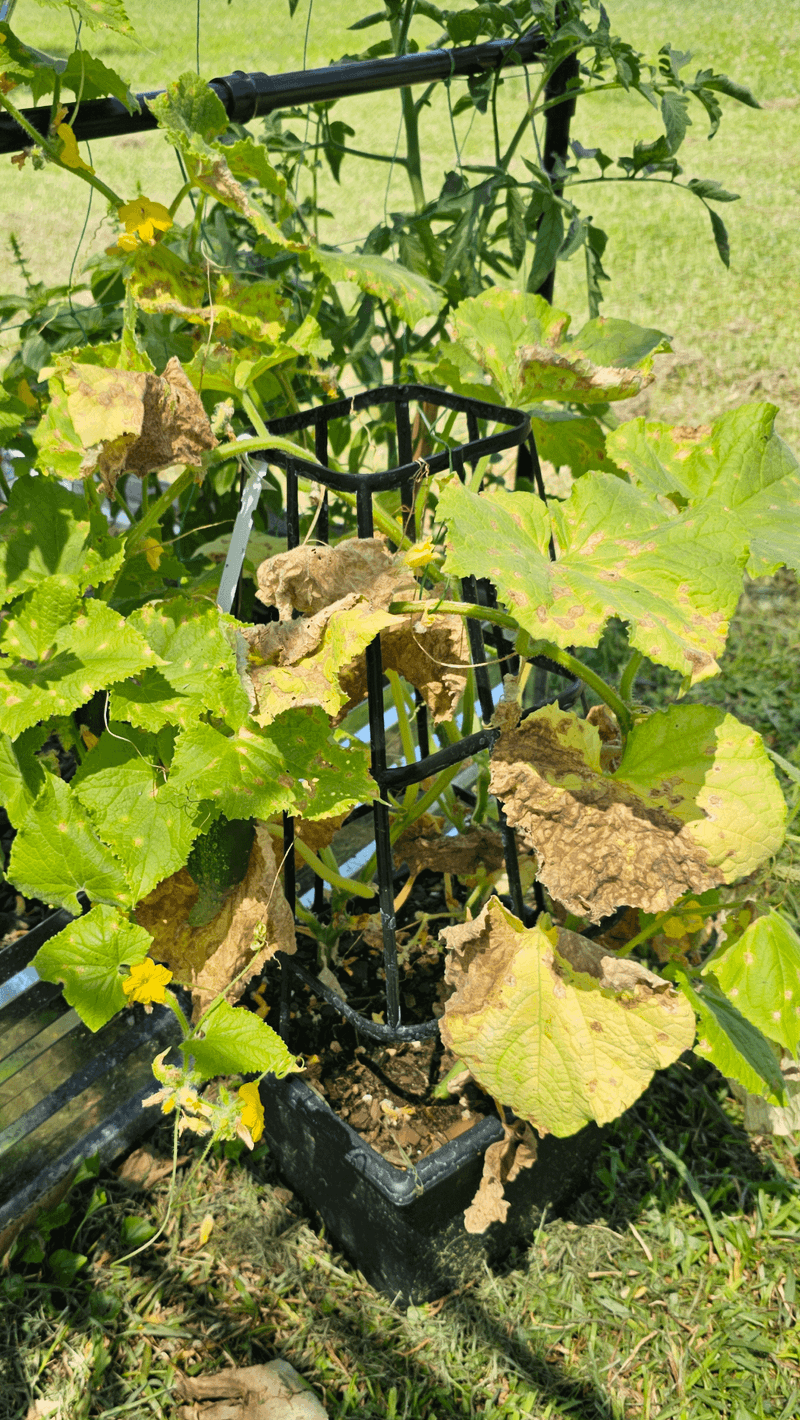
Healthy cucumber leaves should be a rich, deep green color from early summer all the way through harvest season.
When leaves start turning pale, yellow, or spotted in August, that is your garden’s way of waving a red flag.
Stressed leaves cannot photosynthesize efficiently, which means the plant cannot produce enough energy to support healthy fruit development.
Fruits forming on a struggling plant are far more likely to carry bitter flavors than those growing on a strong, vigorous vine.
Michigan cucumber plants face a specific challenge in late summer: downy mildew. This common fungal disease spreads quickly during warm, humid Michigan August nights and can turn leaves pale yellow or greenish-gray almost overnight.
Downy mildew weakens the plant significantly, reducing its ability to channel nutrients and water into developing fruits.
Other causes of yellowing leaves include nitrogen deficiency, overwatering, or root problems from soil that stays too wet for too long.
Catching leaf stress early gives you the best chance to respond before fruit quality suffers. Walk through your garden in the morning when light is good and look at both the tops and undersides of leaves.
Downy mildew often shows up first on the undersides as a grayish-purple fuzz. If you catch it early, removing affected leaves and improving airflow around plants can slow its spread.
Choosing mildew-resistant cucumber varieties suited for Michigan growing conditions is also a smart move for next season.
Keeping plants well-fed with a balanced fertilizer through the growing season helps leaves stay green, strong, and fully capable of supporting sweet, flavorful fruit right through late summer harvest.
7. Cucumber Beetles Or Other Pests Are Active On The Plants
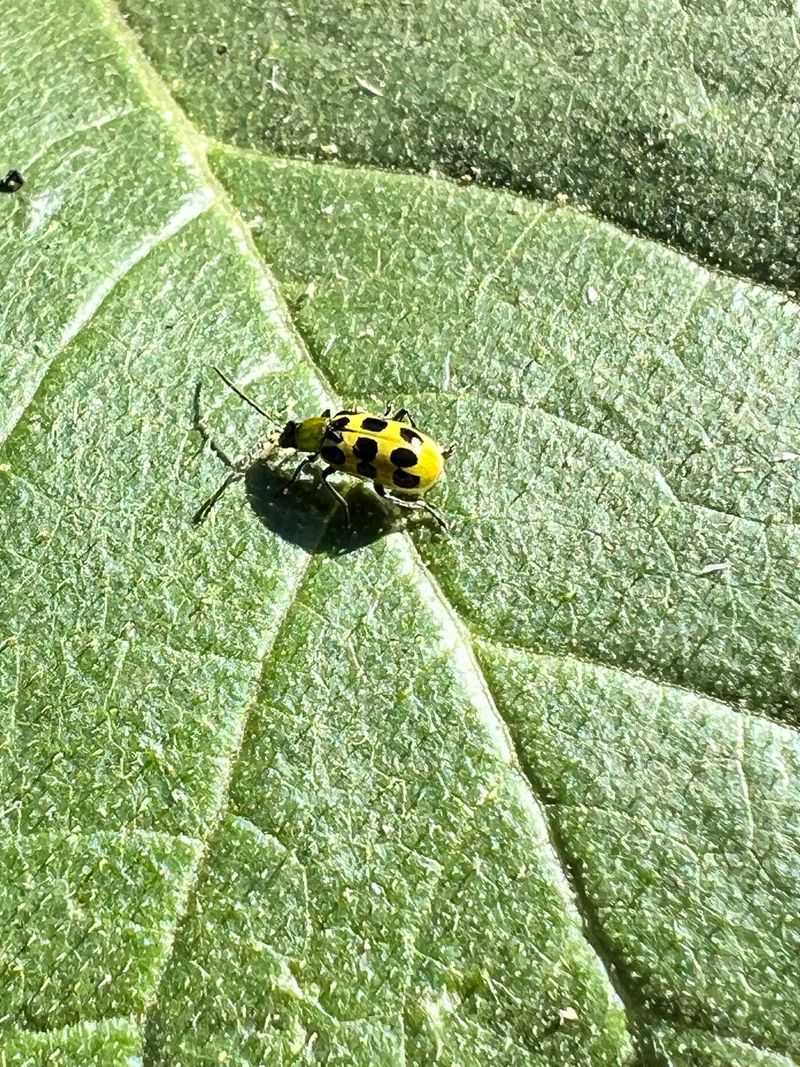
Few garden pests are as recognizable or as unwelcome as the cucumber beetle.
These small, yellow-and-black striped or spotted insects show up in Michigan gardens every summer and can cause serious problems for cucumber plants well before you ever pick a single fruit.
Spotting these beetles on your vines is not just an annoyance. It is a genuine warning sign that your plants may be under enough stress to start producing bitter cucumbers.
Cucumber beetles feed on leaves, flowers, and stems, and the damage they leave behind weakens the plant in several ways.
Chewed leaves lose their ability to photosynthesize properly, reducing the energy available for fruit development.
Beetles can also spread bacterial wilt, a disease that clogs the plant’s water-conducting tissue and causes rapid decline across the whole vine.
Even without disease transmission, the physical stress of heavy pest feeding pushes the plant into a defensive state, which often increases cucurbitacin production and the bitterness that comes with it.
Protecting your cucumber plants from beetles starts with monitoring early in the season, before populations build up.
Yellow sticky traps placed near plants can help you track beetle activity and catch problems before they escalate.
Row covers work well for young plants, though you will need to remove them once flowers appear so pollinators can get in.
Kaolin clay, applied as a spray, creates a physical barrier that makes plants less appealing to beetles without harming beneficial insects.
Keeping your garden free of debris and rotating cucumber crops to different beds each year also reduces beetle pressure significantly.
A healthy, pest-free plant almost always produces sweeter, more satisfying fruit worth all that summer effort.