The Heat-Tolerant Arizona Flowers That Bloom Without Constant Watering
Bright flowers can still thrive through the hottest part of summer without demanding constant attention. Many gardeners are surprised by how well certain varieties handle the intense Arizona climate.
These plants are built for long stretches of heat and dry conditions. Once established, they continue blooming with much less watering than many traditional garden flowers.
That does not mean they never need water. It means they stay attractive without frequent irrigation during the hottest weeks.
Choosing the right flowers also means spending less time dragging hoses across the yard. Your landscape stays colorful while using water more efficiently.
Many of these reliable bloomers also attract butterflies and other helpful pollinators. They bring life and color to the garden even during extreme heat.
The best choices combine beauty with resilience.
Planting the right flowers now can keep your garden blooming long after less heat-tolerant plants begin to fade.
1. Desert Marigold Tolerates Extreme Heat With Bright Blooms
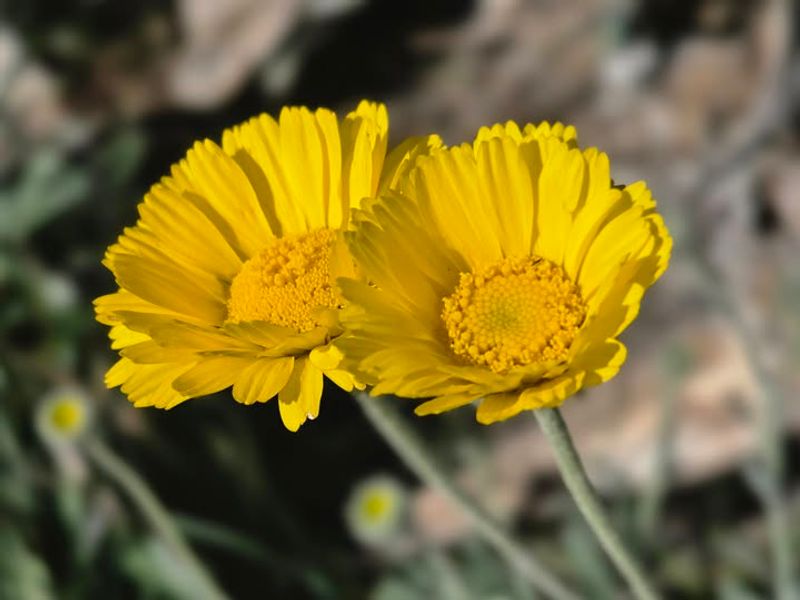
Few desert flowers put on a show quite like Desert Marigold. Bright yellow blooms cover the plant from late spring through fall, and it barely asks for anything in return.
Even when temperatures climb past 100 degrees, this plant keeps flowering.
Native to the Sonoran and Chihuahuan deserts, Desert Marigold is built for tough conditions. Sandy or gravelly soil suits it well.
It actually struggles in rich, heavily watered soil, so skip the fertilizer and extra irrigation.
Watering once every two to three weeks during dry stretches is usually enough once the plant is established. Young plants need slightly more attention in their first season, but after that, they settle in and handle drought on their own.
One thing worth knowing: the leaves and stems have a mild toxicity to livestock, so keep that in mind if animals graze nearby. For most home gardens, though, it is a safe and easy choice.
Butterflies and native bees visit the flowers regularly. Deadheading spent blooms can encourage fresh flowers to appear, though the plant will still bloom without it.
It self-seeds readily, so expect new plants to pop up nearby over time.
Planted in full sun with good drainage, Desert Marigold can reach about two feet tall and wide. It fits naturally into rock gardens, dry borders, and low-water landscapes without looking out of place.
2. Blackfoot Daisy Thrives With Very Little Water
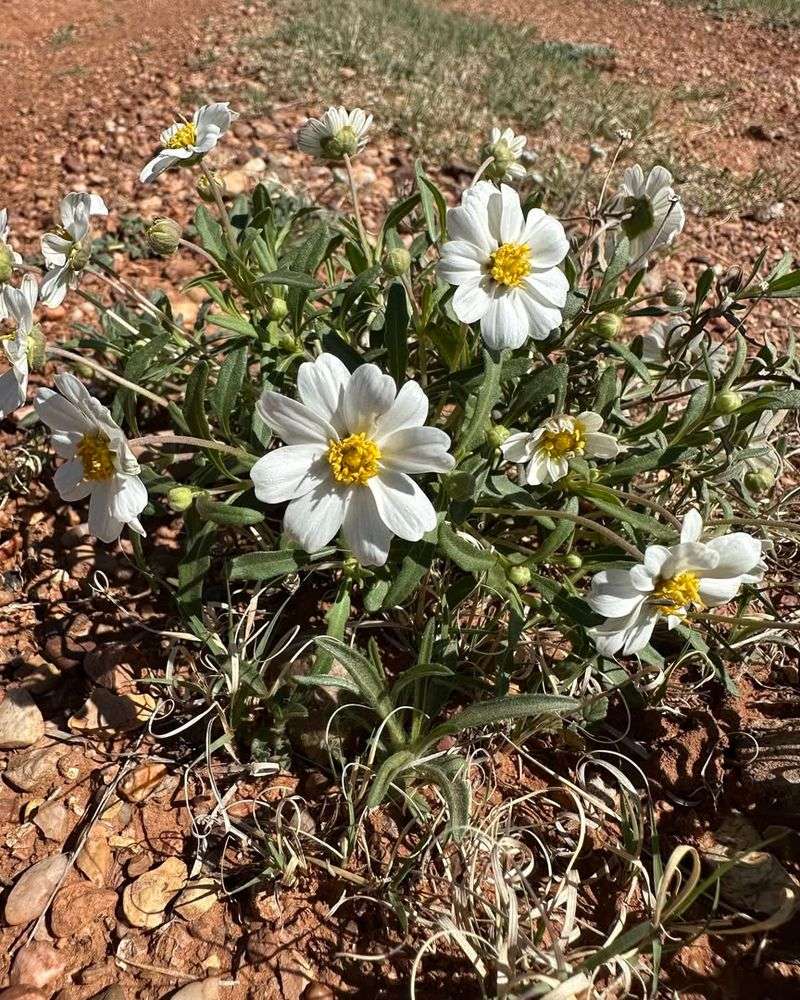
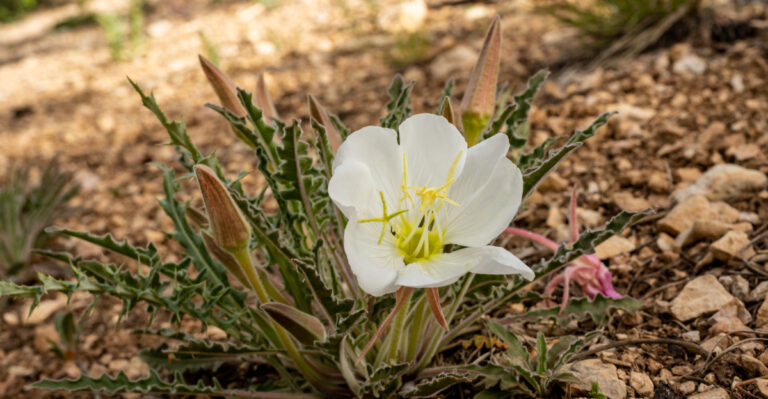
Small flowers can make a big impact. Blackfoot Daisy proves that every spring and summer when it covers itself in white blooms with cheerful yellow centers.
It looks delicate, but do not be fooled by its appearance.
Native to the Southwest and northern Mexico, this plant evolved in rocky limestone soils with very little rainfall. It handles heat, drought, and poor soil better than most ornamental flowers on the market.
Amended beds are not necessary.
Established plants can go weeks without water in summer. During monsoon season, natural rainfall is usually enough to keep them going.
Outside of that, occasional deep watering every few weeks works well.
Blackfoot Daisy grows into a low, mounding shape, usually reaching about one foot tall and spreading about a foot and a half wide. It fits naturally along pathways, in rock gardens, or at the edge of a dry border.
Your Arizona Garden Changes Every Week. Your Plan Should Too.
Gardening in Arizona changes quickly throughout the season. Every Friday you’ll receive a simple weekly plan showing exactly what to plant, prune, fertilize, harvest, and protect so you never miss the right timing.
Bees and butterflies visit the blooms often. The flowers have a faint honey-like scent that gets stronger in warm weather, which is a pleasant surprise in a low-maintenance plant.
Pruning back the plant lightly after a big bloom cycle can keep it looking tidy and encourage fresh growth. It is not always necessary, but it helps the plant stay compact.
Full sun and sharp drainage are the two most important factors for success with this one.
3. Damianita Brings Yellow Flowers To Dry Landscapes
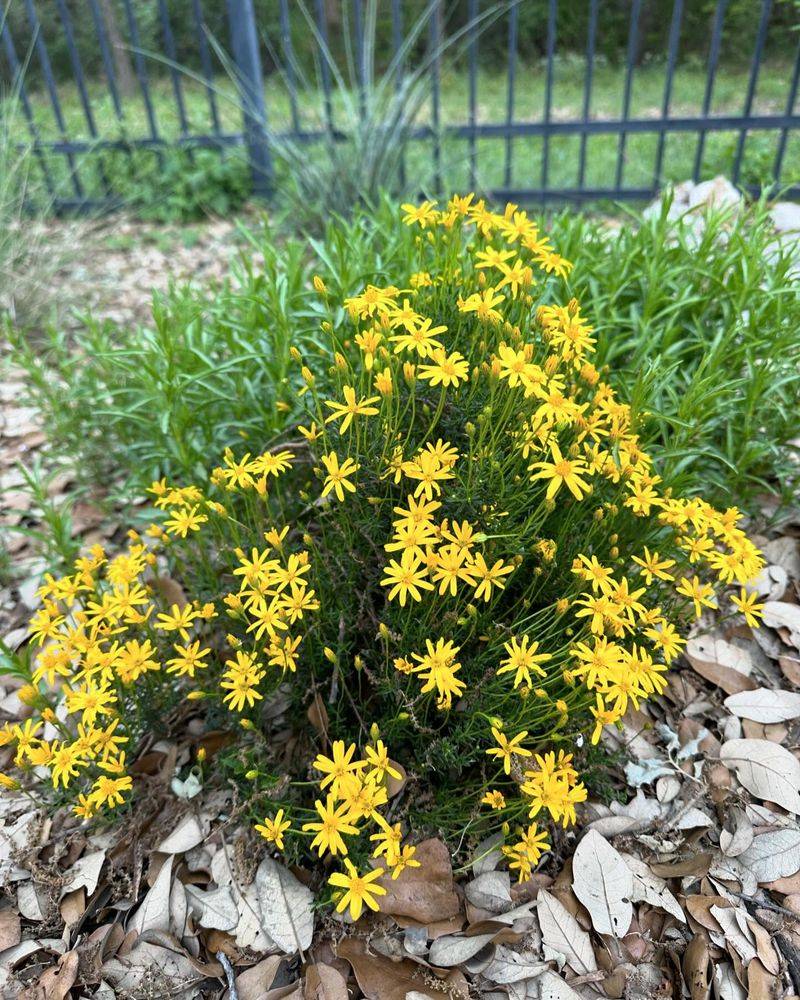
Walk past a blooming Damianita and you will notice the smell before anything else. The aromatic foliage has a sharp, resinous scent that is hard to forget.
Paired with small, vivid yellow flowers, it makes a strong impression in any dry garden.
Damianita is a low-growing shrub native to the Chihuahuan Desert. It handles extreme heat and extended dry periods with little trouble.
Rocky or sandy soils are where it performs best.
Once established, Damianita needs very little supplemental water. During hot summers, watering every two to three weeks is generally sufficient.
Overwatering is a more common problem than drought stress with this plant.
It typically grows one to two feet tall and spreads about as wide. The dense, fine-textured foliage stays green year-round in mild winters, which adds value beyond just the bloom season.
Spring is the main flowering period, but Damianita often puts out another flush of blooms after summer monsoon rains. Pollinators, especially small native bees, are drawn to the flowers during both bloom cycles.
Pruning is rarely needed, though a light trim after flowering can keep the plant looking neat. It works well as a low border plant, a filler in rock gardens, or a ground-level accent near larger desert shrubs.
Full sun is non-negotiable for strong flowering. Shade reduces bloom production noticeably.
4. Fairy Duster Adds Color With Minimal Care
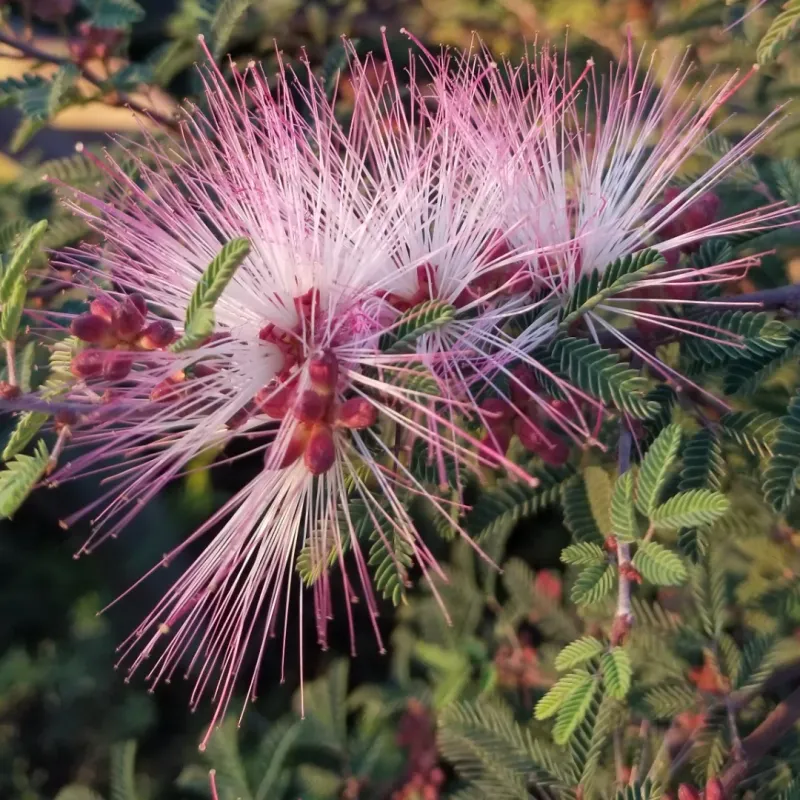
Fairy Duster is one of those plants that stops people mid-walk. The flowers are soft, feathery clusters of pink and red that look almost too interesting to be real.
Native pollinators, especially hummingbirds and butterflies, notice them too.
Native to the Sonoran Desert and surrounding regions, Fairy Duster is well adapted to rocky slopes, dry washes, and sandy flats. It handles full sun and reflected heat from walls or pavement better than most shrubs.
Bloom time typically runs from late winter through spring, with a possible second flush after monsoon rains arrive. The timing can vary depending on elevation and local conditions, so do not expect a guaranteed second bloom every year.
Water needs are low once the plant establishes, which usually takes one full growing season. Deep watering every two to three weeks during dry summer months is a reasonable baseline.
Avoid frequent shallow watering, which encourages weak roots.
Fairy Duster grows three to five feet tall and wide depending on conditions. It works well as an informal hedge, a wildlife-friendly border plant, or a colorful accent near entryways.
The fine-textured leaves stay on through mild winters but may drop in colder conditions.
Pruning is optional. Leaving the plant unpruned gives it a natural, open shape.
Light trimming after flowering keeps it compact if space is tight. Either way, it is a low-effort plant with a high visual payoff.
5. Red Yucca Sends Up Tall Flower Spikes
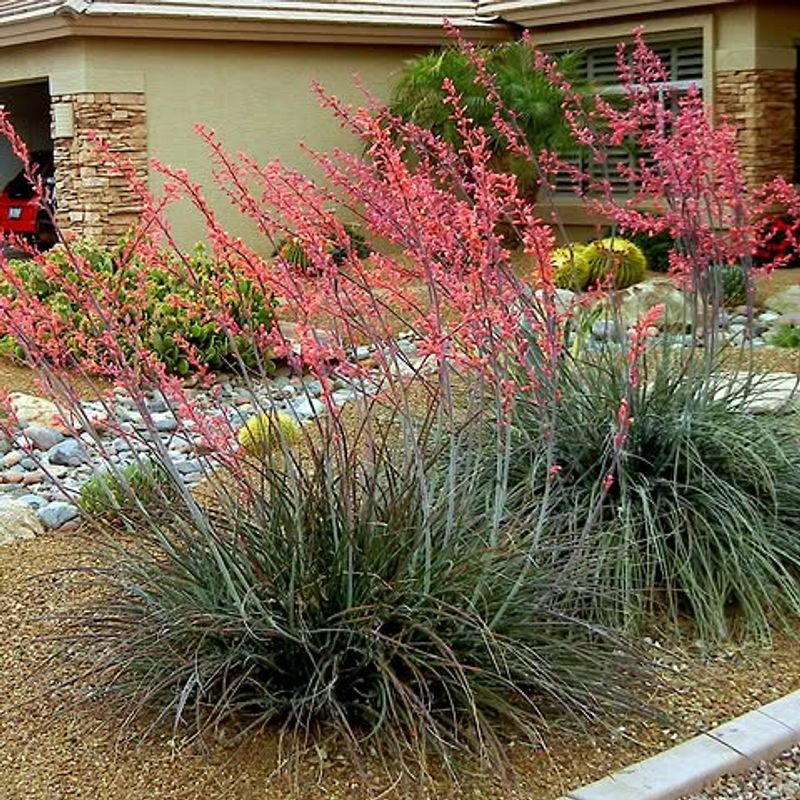
Red Yucca is not actually a yucca at all. It belongs to the agave family, which explains why it handles heat and drought so effectively.
Despite the misleading name, it earns its place in dry gardens through sheer reliability.
Coral-pink flower spikes rise four to six feet above the plant each spring and summer. Hummingbirds visit the tubular flowers constantly during bloom season.
Few other drought-tolerant plants attract as much wildlife with so little effort.
The narrow, arching leaves stay attractive year-round. They form a low, grass-like clump that works well as a textural accent among rocks, gravel, or low-growing ground covers.
It looks good even when not in bloom.
Water needs are minimal once established. In most desert gardens, natural rainfall during monsoon season handles most of the plant’s needs.
During extended dry periods, watering once or twice a month is usually enough.
Red Yucca grows best in full sun with well-drained soil. It tolerates rocky, sandy, or clay-heavy soils better than many ornamental plants.
Soggy or waterlogged soil is the main thing to avoid.
Mature plants produce offsets around the base that can be divided and replanted. Removing old flower stalks after blooming keeps the plant looking tidy.
Red Yucca is widely available at desert-adapted nurseries across the Southwest and works in both formal and naturalistic garden designs.
6. Globe Mallow Grows Through Hot Desert Summers
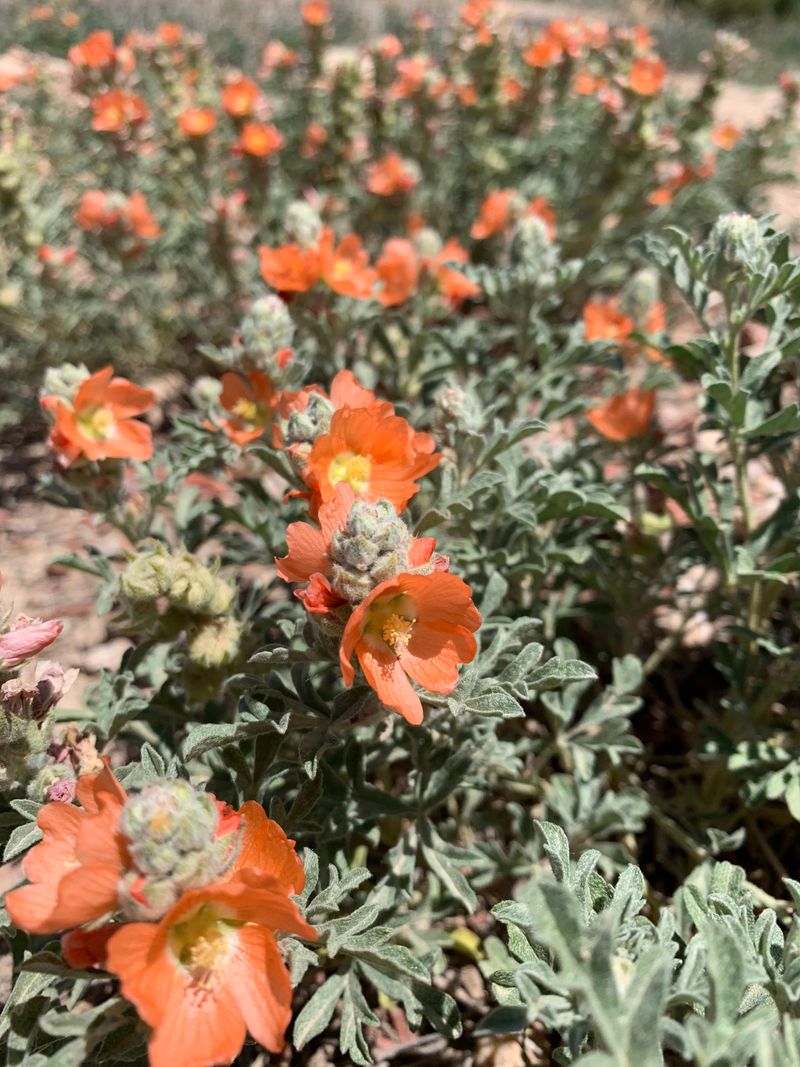
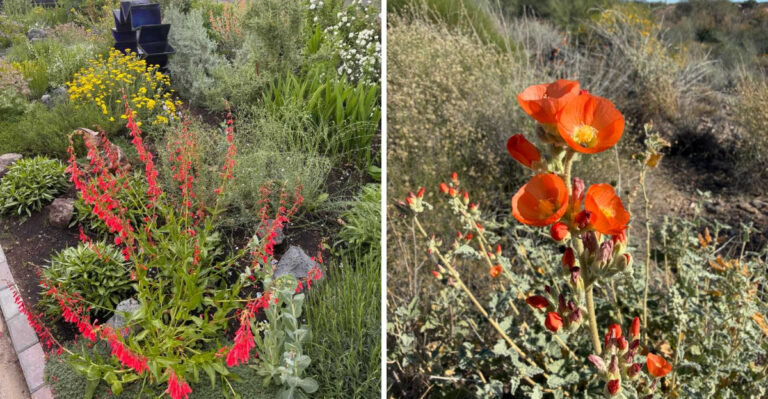
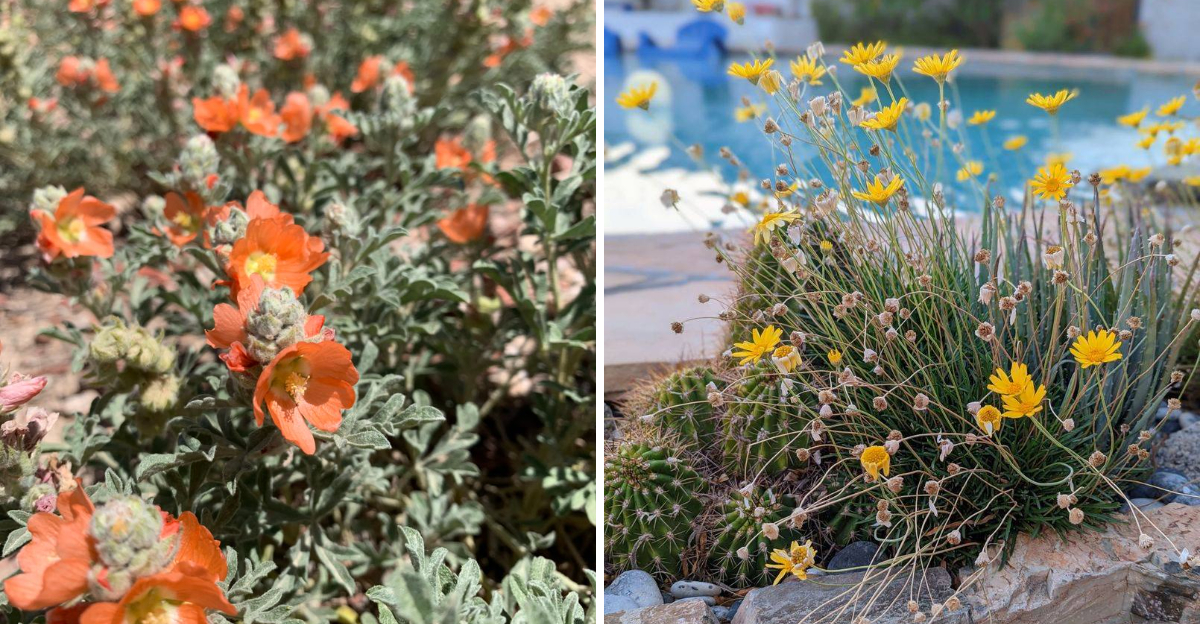
Orange flowers in the middle of a desert summer are not something you see every day. Globe Mallow pulls it off without missing a beat.
It blooms through some of the hottest months of the year, which sets it apart from most other flowering plants.
Native to the desert Southwest, Globe Mallow thrives in disturbed soils, roadsides, and open desert flats. It is not picky about soil quality, which makes it one of the easier wildflowers to establish in tough spots.
Bloom color ranges from the classic orange to softer shades of pink, lavender, and white depending on the variety. Mixing different colors in a dry garden bed creates a natural, meadow-like effect without much planning.
Water needs are low. Established plants in Arizona’s desert zones often survive on monsoon rainfall alone.
During dry spring months, watering every two weeks helps sustain blooming. Young transplants need more regular water until roots develop.
Globe Mallow grows two to three feet tall and spreads into a rounded, bushy shape. It reseeds on its own, so new plants appear each year without any effort.
Thinning out crowded seedlings occasionally helps prevent overcrowding.
One caution: the fine hairs on the leaves can irritate eyes and skin for some people. Wear gloves when handling it and avoid touching your face.
Beyond that, it is a tough, rewarding plant that earns its space in any hot-summer garden.
7. Firecracker Penstemon Attracts Hummingbirds In Heat
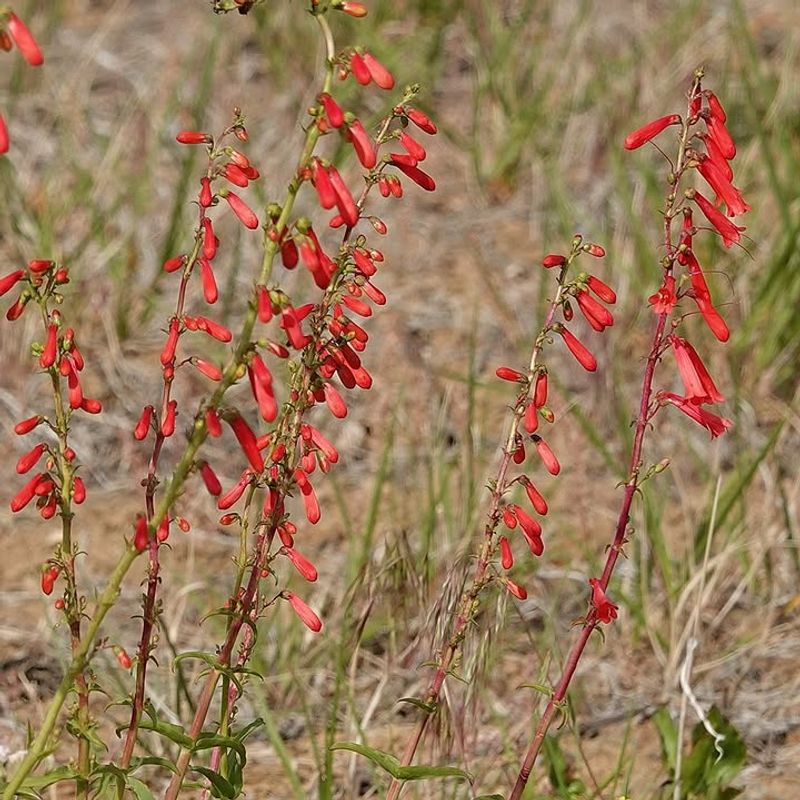
Hummingbirds find Firecracker Penstemon before most gardeners even know it is blooming. The long, tubular red flowers are practically designed for hummingbird feeding, and the birds return to the plant throughout the season.
Native to the mountains and desert foothills of the Southwest and Mexico, Firecracker Penstemon handles heat and dry conditions well once it settles in. It performs best with good drainage and full sun to light shade.
Bloom time runs from spring through early summer, sometimes extending into fall with adequate moisture. The scarlet flower spikes rise two to three feet tall above narrow, semi-evergreen foliage.
In mild winters, the leaves stay on through the season.
Watering every one to two weeks during dry periods works well for established plants. Young transplants need more consistent moisture during their first growing season.
After that, they handle dry stretches without much trouble.
Firecracker Penstemon works well mixed with other desert perennials. It pairs naturally with Desert Marigold and Globe Mallow in a dry flower bed.
The bold red color adds contrast among the yellows and oranges common in desert plantings.
Deadheading spent flower spikes can encourage fresh blooms and keeps the plant looking neat. It is not required, but it does help extend the flowering period.
Avoid overwatering, which is the most common issue with penstemon in heavy or clay-rich soils. Sharp drainage is key.
8. Angelita Daisy Brightens Dry Gardens With Golden Flowers
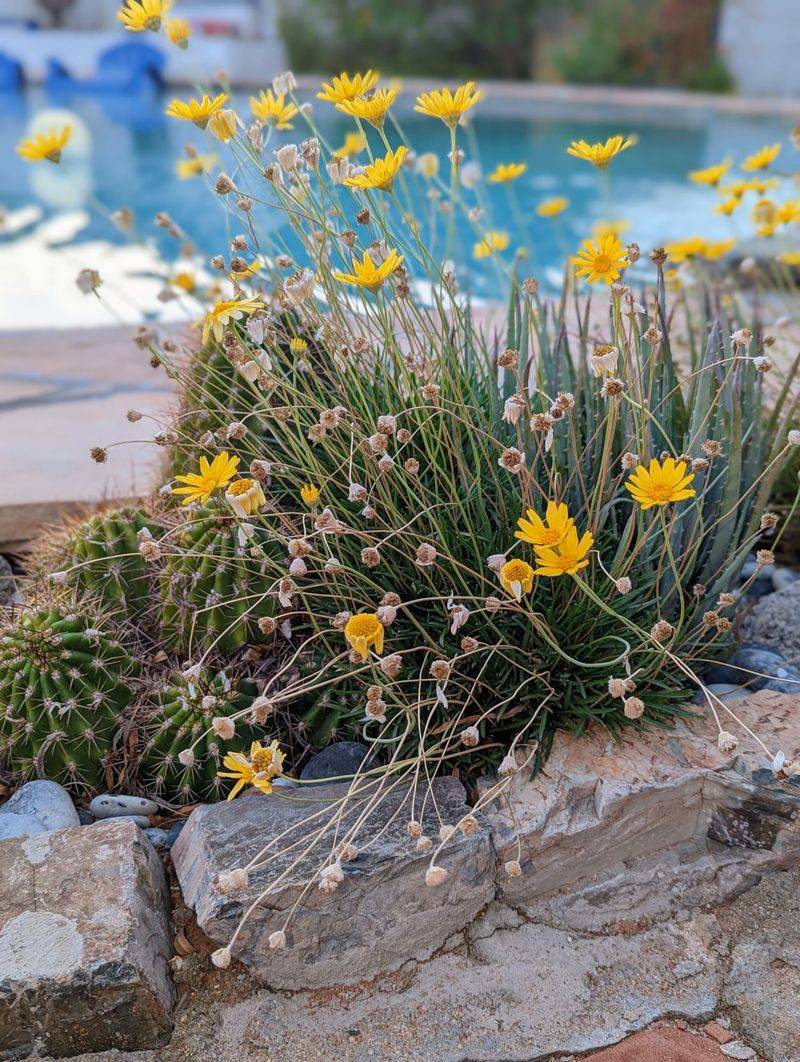
Reliable and cheerful, Angelita Daisy earns a permanent spot in dry gardens through sheer consistency. Bright golden flowers appear nearly year-round in mild climates, which is rare among drought-tolerant plants.
Even in summer heat, it keeps producing blooms.
Native to the Chihuahuan Desert region, Angelita Daisy forms a neat, compact mound about one foot tall and one foot wide. The fine, grass-like foliage stays green through most of the year.
It looks tidy without any pruning or fussing.
Full sun is where this plant performs best. In partial shade, flowering drops off noticeably.
Well-drained soil is equally important. It handles rocky or sandy soil without complaint but struggles in heavy, poorly drained ground.
Water needs are low after establishment. During hot summers, watering every two to three weeks is usually enough.
In cooler months, rainfall often handles everything. Young plants need more regular moisture during their first season to get rooted in.
Pollinators visit regularly. Small bees and butterflies are common visitors during peak bloom periods.
The plant does not self-seed aggressively, so it stays where you plant it without spreading into unwanted areas.
Angelita Daisy works well along pathways, in container plantings, or as a low border plant in desert-style landscapes. It pairs well with taller plants like Red Yucca or Firecracker Penstemon.
Few plants offer this much color with this little effort in a hot, dry garden setting.