The Native Texas Flower That Feeds Hummingbirds Right Through August
Hummingbirds need reliable food through August, and Texas gardens often fall short at exactly this moment.
Spring flowers are finished, many summer bloomers have faded in the heat, and the hummingbirds moving through or staying for the season are left searching for nectar sources that are increasingly hard to find.
Most gardeners don’t realize their garden has hit a late summer gap until the hummingbird activity suddenly drops off. One native Texas flower closes that gap entirely.
It blooms generously through August heat, produces exactly the kind of tubular flowers hummingbirds seek out instinctively, and does it all without needing extra water, special care, or any intervention during the most demanding stretch of the Texas summer.
Hummingbirds find it reliably and return to it repeatedly through the season. It’s native to Texas, built for this climate, and attractive enough to earn its spot in any garden purely on looks alone.
The hummingbird benefit is just what makes it essential. Here’s the native Texas flower that keeps hummingbirds coming back through August.
The Native Flower That Feeds Hummingbirds
Walk through the shaded woods of eastern, central, or southern Texas, and you might spot a splash of bright red tucked beneath the trees. That cheerful pop of color almost certainly belongs to Turk’s cap, known scientifically as Malvaviscus arboreus var. drummondii.
It is a native Texas flowering perennial shrub that has been growing wild across the state for centuries.
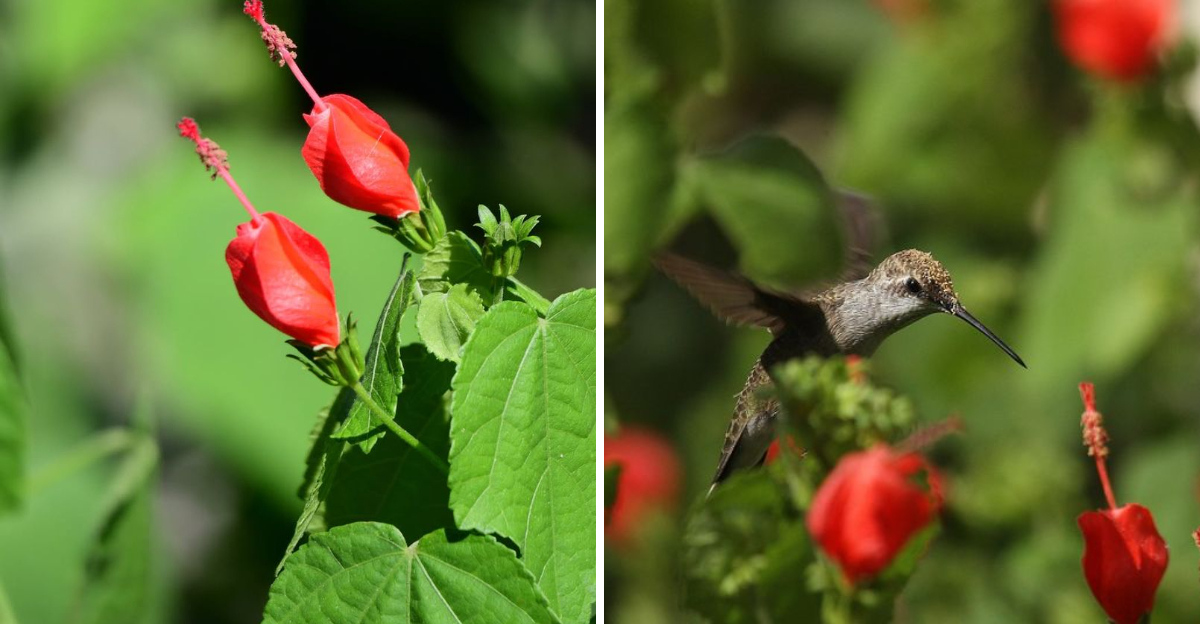
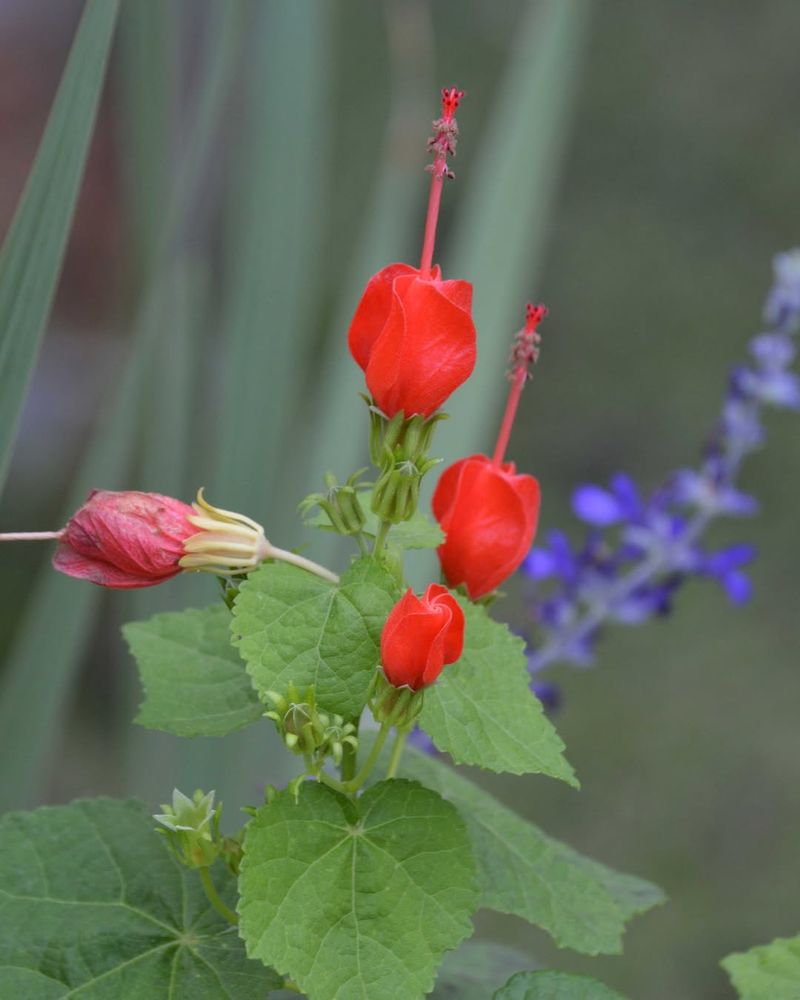
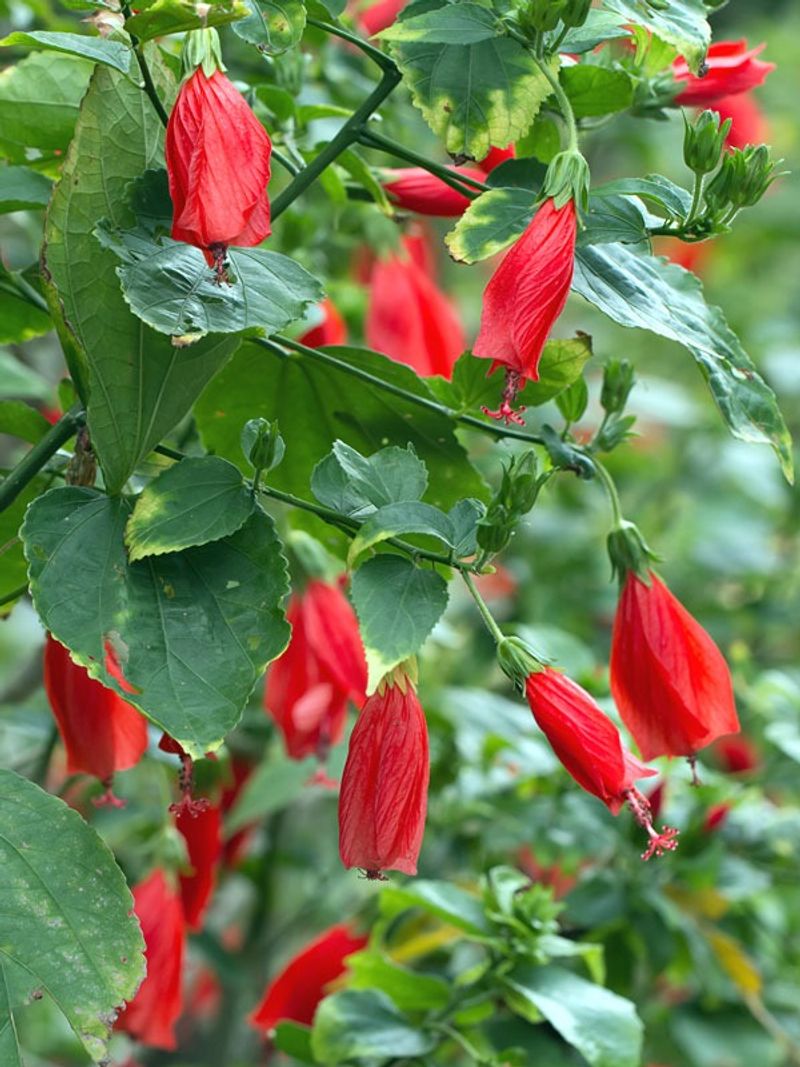
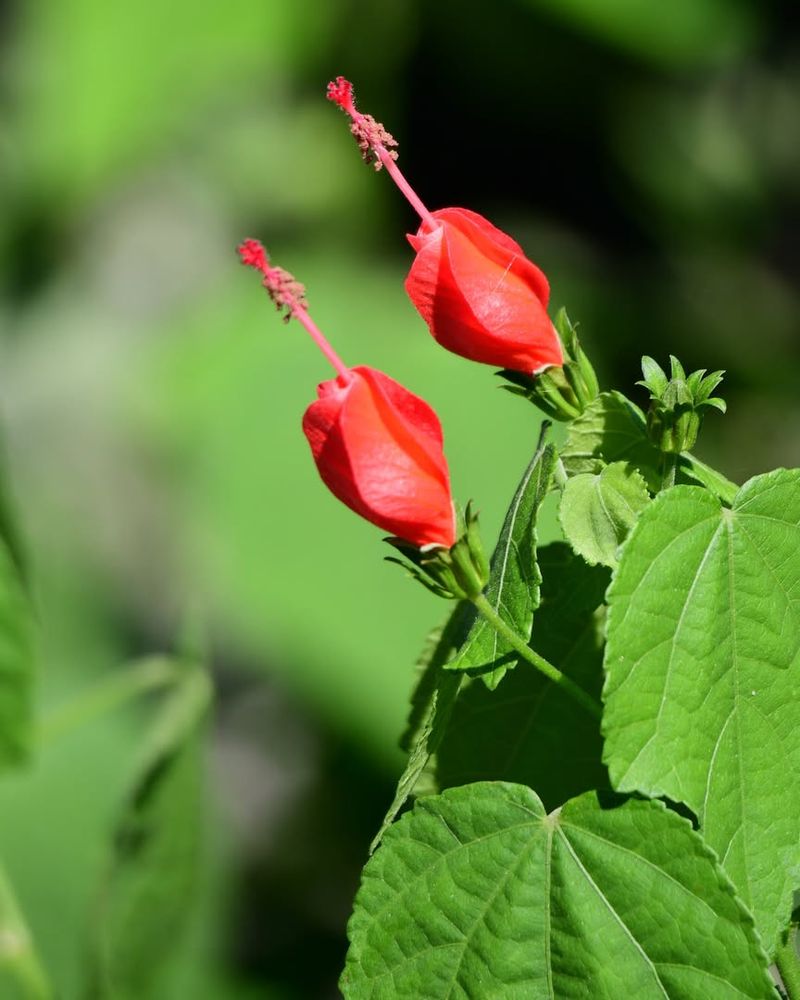
What makes Turk’s cap instantly recognizable is its one-of-a-kind flower. The petals are a bold, true red, and they spiral and curl around each other in a tight twist that looks remarkably like a tiny Turkish turban, which is exactly where the plant gets its colorful name.
Unlike a typical hibiscus flower, which opens wide and flat, Turk’s cap blooms stay partly closed at all times.
That curled, tube-like shape is not just for looks. It is perfectly designed for hummingbirds, whose long bills fit right inside to reach the nectar hidden deep within.
The plant itself can grow anywhere from two to nine feet tall depending on how much sunlight and water it receives. In shadier spots, it tends to grow taller and leggier, reaching upward toward the light.
Turk’s cap belongs to the mallow family, which makes it a close relative of hibiscus, okra, and hollyhock. It spreads gradually through underground roots, eventually forming a lush, full colony of stems and leaves.
Gardeners who want a low-maintenance, wildlife-friendly plant that feels right at home in a Texas landscape will find Turk’s cap to be an outstanding and rewarding choice.
Why Hummingbirds Keep Visiting It
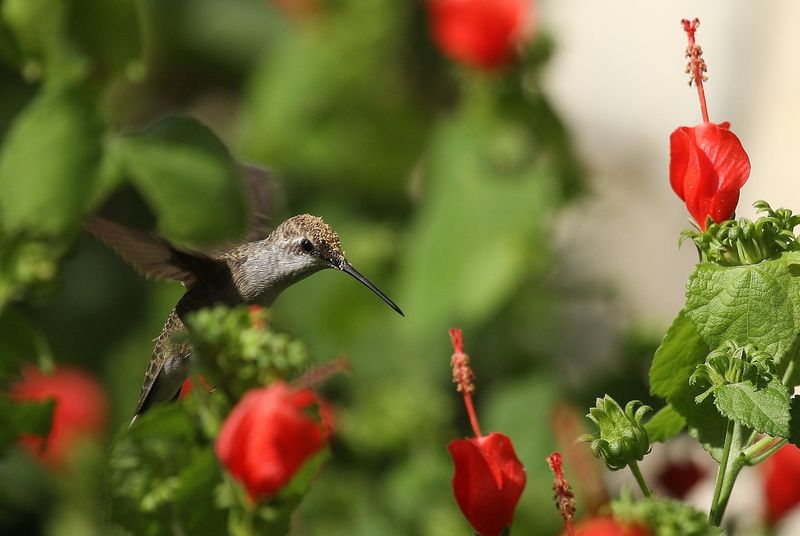
Hummingbirds are not random visitors. They scout out reliable food sources and return to them again and again as long as the nectar keeps flowing.
Turk’s cap earns that loyalty in a big way. Its elongated red flowers produce a steady supply of nectar, and the tube-like shape of each bloom is almost tailor-made for a hummingbird’s long, slender bill.
Your Texas Garden Changes Every Week. Your Plan Should Too.
Gardening in Texas changes quickly throughout the season. Every Friday you’ll receive a simple weekly plan showing exactly what to plant, prune, fertilize, harvest, and protect so you never miss the right timing.
Texas Parks and Wildlife specifically lists Turk’s cap among the recommended food plants for hummingbirds in Texas. That is a meaningful endorsement.
When wildlife experts point to a plant as a go-to food source, backyard gardeners can feel confident they are making a smart choice for local wildlife.
Ruby-throated hummingbirds and black-chinned hummingbirds both pass through Texas and actively seek out flowering plants like this one. Turk’s cap does not stop at attracting hummingbirds, either. Butterflies love it too.
Sulfurs, skippers, and swallowtails regularly visit the blooms, drawn in by the same nectar that hummingbirds crave. Bees and other pollinating insects join the party as well, making the plant a genuine hub of backyard wildlife activity throughout the growing season.
Planting several specimens together rather than just one makes a noticeable difference. A cluster of Turk’s cap creates a more visible feeding station that hummingbirds can spot from a distance.
Multiple plants also mean more flowers open at any given time, which keeps the nectar supply consistent. If you want hummingbirds to treat your yard as a regular stop rather than a one-time visit, grouping several Turk’s cap plants together is a simple and effective strategy.
How It Supplies Nectar Through August
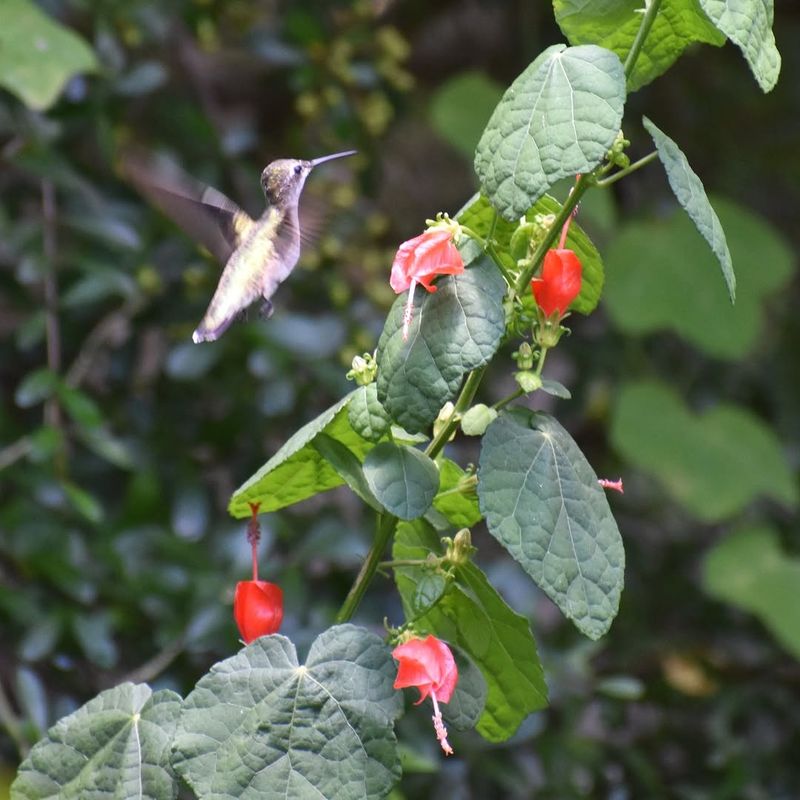
August in Texas is brutal. Temperatures regularly climb past 100 degrees, the soil bakes hard, and many flowering plants simply give up and stop blooming.
Turk’s cap is built differently. It keeps flowering right through those punishing summer conditions, producing fresh blooms even during the driest and hottest stretches of the season.
University of Texas plant resources document Turk’s cap as a reliable summer bloomer that continues well into the peak heat of August. That staying power matters enormously for hummingbirds.
Late summer is when ruby-throated hummingbirds begin their southward migration through Texas, and they need dependable nectar sources to fuel that long journey. A plant that fades in July leaves them without support exactly when they need it most.
The flowering period of Turk’s cap typically runs from late spring all the way through fall, with summer being its most active blooming time.
That extended season overlaps perfectly with both resident hummingbirds that spend the summer in Texas and the migrating birds passing through in August and September. Few native plants offer that kind of consistent, season-long value for hummingbird feeding.
Moisture plays a real role in how well the plant blooms during a drought. Turk’s cap is tough and heat-tolerant, but giving it some supplemental water during prolonged dry spells will keep the flowers coming at a stronger pace.
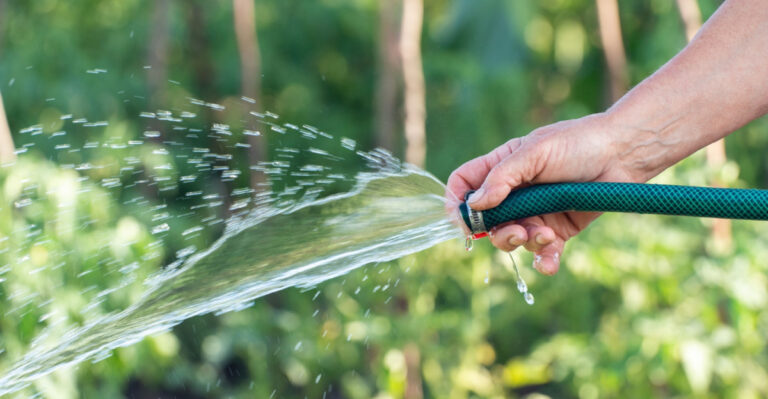
A deep watering once or twice a week during extreme heat goes a long way toward maintaining a full display of blooms. Even a modest effort with the hose can make a visible difference in flower production when rain is scarce.
Where Turk’s Cap Grows Best
Turk’s cap is one of those plants that actually prefers a little shade, which makes it a wonderful solution for garden spots that are tricky to fill.
Beneath large oak trees, along the shaded edge of a fence line, or tucked beside a covered patio, it settles in comfortably and grows with very little fuss.
In its natural habitat, it lives in the understory of Texas woodlands, so filtered light feels like home to it.
Partial shade is the sweet spot. A location that gets morning sun and afternoon shade is ideal, especially during Texas summers when afternoon heat is most intense.
Plants growing in those conditions tend to look lush and produce flowers more freely. Full shade will still support the plant, but flowering may be reduced compared to spots with some sun exposure during the day.
Sunnier locations are also possible. Turk’s cap can handle more direct sun, particularly in eastern Texas where humidity is higher.
In drier, western areas, plants in full sun may need more frequent watering to stay healthy and continue blooming. Adjusting your watering schedule based on how much sun the plant receives is the simplest way to keep it looking its best.
Established plants spread by underground stems, gradually forming wide colonies that fill in bare areas beneath trees and along garden borders.
Allow enough room for that natural spreading habit, because trying to contain it in a very tight space requires constant management.
In a wildlife garden or a naturalistic landscape, letting it spread freely creates a dense, productive planting that hummingbirds and butterflies will visit all season long.
How To Care For It During Texas Summer
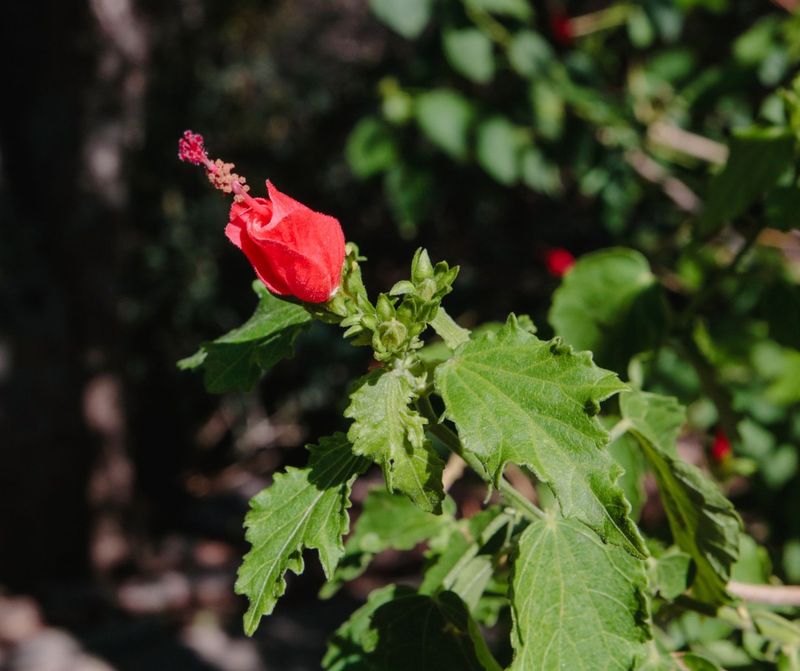
New Turk’s cap plants need a little extra attention during their first summer in the ground. Watering regularly while the root system gets established is the single most important thing you can do.
Aim for deep, thorough watering sessions rather than frequent light sprinkles, because deep watering encourages roots to grow downward into cooler, moister soil where they can better handle heat and dry spells.
Once the plant is fully established, usually after its first full growing season, it becomes remarkably self-sufficient. It tolerates heat that would stress most ornamental plants, and it can handle stretches of limited rainfall without significant harm.
That toughness is part of what makes it such a practical choice for Texas gardeners who do not want to spend every summer afternoon dragging a hose around the yard.
Mulch is one of the best tools in your summer care routine. A layer of organic mulch two to three inches thick around the root zone slows moisture loss from the soil significantly.
Keep the mulch a few inches away from the base of the stems to allow good air circulation and prevent any moisture buildup right against the plant.
Resist the urge to prune heavily during summer. Turk’s cap produces its flowers on actively growing stems, so cutting back too aggressively during the blooming season reduces the number of flowers available for hummingbirds.
Light tidying is fine if stems become damaged or unruly. Save any major pruning for late winter or early spring, after the threat of freezing temperatures has passed and before new growth begins pushing out from the base of the plant.
How To Build A Better Hummingbird Garden Around It
Turk’s cap is a fantastic anchor plant for a hummingbird garden, but the best wildlife gardens go beyond a single species. Pairing it with plants that flower at different times creates a longer and more dependable food supply across the entire season.
Think of it as building a buffet rather than a single dish, giving hummingbirds reasons to keep coming back from spring through fall.
Texas Parks and Wildlife recommends several excellent companion plants for hummingbird gardens in the state. Coral honeysuckle blooms in spring and provides early-season nectar before Turk’s cap hits its stride.
Flame acanthus is another tough native that thrives in Texas heat and produces vivid orange-red flowers that hummingbirds cannot resist.
Native sages, crossvine, and trumpet vine round out the mix with additional bursts of color and nectar at various points through the growing season.
Shade trees and dense shrubs add another layer of value to the garden. Hummingbirds need safe places to perch, rest, and watch over their territory between feeding bouts.
A garden that offers both food and shelter feels much more inviting than one that is just a collection of flowers in an open space.
Water is often overlooked but genuinely important. A shallow basin with gently moving water attracts hummingbirds for bathing and drinking.
A small solar-powered fountain creates that appealing movement without any complicated installation. Finally, remember that hummingbirds rely on tiny insects for protein, not just nectar for energy.
Avoiding broad pesticide use in your garden protects that insect food source and supports healthier, stronger hummingbirds throughout the season.