Are Arizona Homeowners Really Seeing Armadillo Holes This Fall? What the Evidence Actually Shows
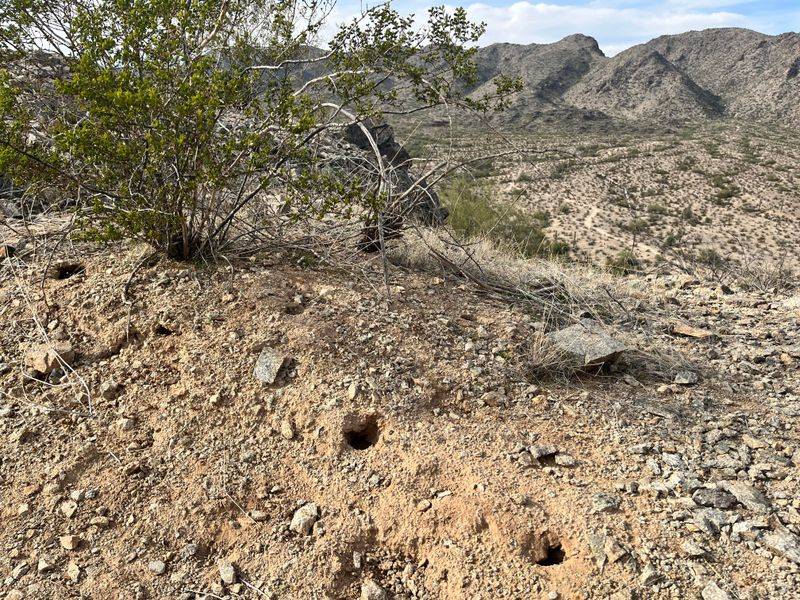
Fresh holes appearing in an Arizona yard can be genuinely puzzling, especially when a neighbor mentions armadillos and the idea suddenly seems plausible. Before blaming an unfamiliar animal, though, it pays to look at what local wildlife is actually doing in Phoenix and Tucson yards this time of year.
The available evidence does not support a sudden armadillo surge in low-desert Arizona, and the real culprit behind those holes may be much closer to home than you think.
The evidence does not show an Arizona armadillo surge
Plenty of homeowners across the Phoenix and Tucson metros have stepped outside this fall to find fresh holes in their yards, and some have wondered whether armadillos are to blame. That conclusion, while understandable, runs ahead of the available evidence.
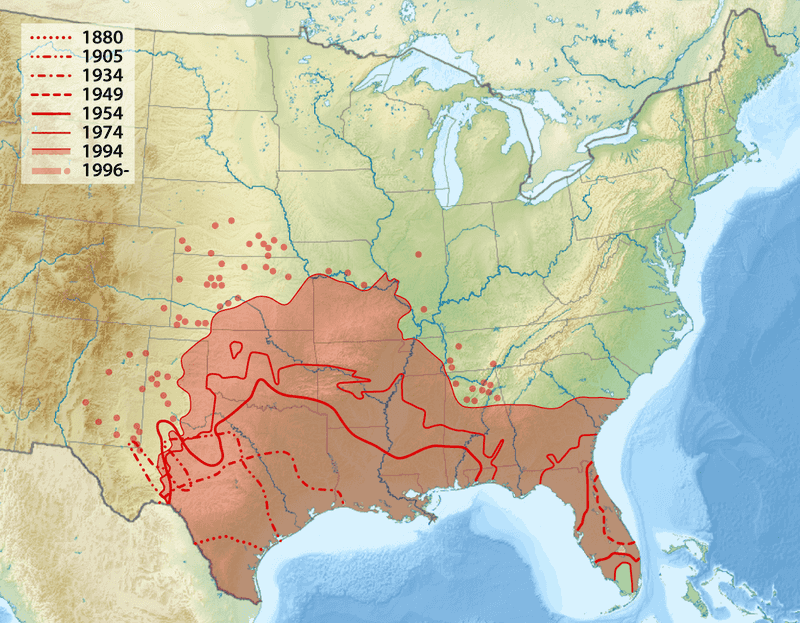
USGS distribution data for nine-banded armadillos places the established U.S. range primarily in Texas and the Southeast, and a peer-reviewed taxonomic review identifies the Sonoran Desert specifically as an arid barrier to the species’ westward dispersal.
Arizona’s official wildlife resources, including the Arizona Game and Fish Department species archive, do not list the nine-banded armadillo as an established Arizona mammal. That absence is not the same as proof that an individual animal could never turn up in the state.
A single escaped, transported, or unusually wide-ranging animal cannot be ruled out from a map alone.
What it does mean is that a sudden, widespread trend of armadillo activity across Phoenix or Tucson yards is an implausible starting point without verified photographs, camera-trap records, documented sightings, or a statement from a wildlife agency. This article treats the holes as a real observation worth investigating, not as confirmation of an invasion that current evidence does not support.
What armadillo foraging damage can—and cannot—show
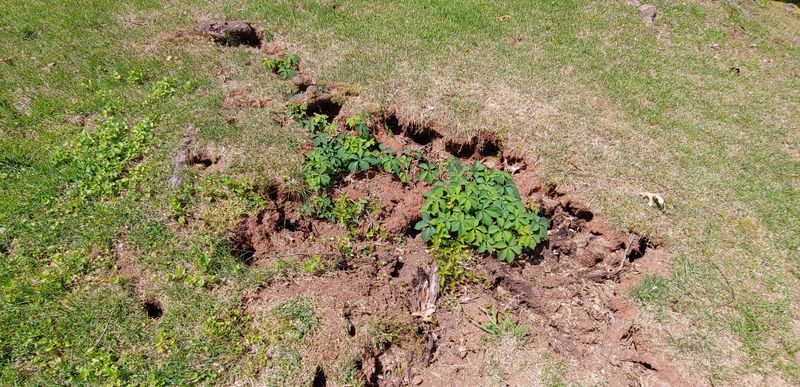
Suppose a verified armadillo did appear in an Arizona yard. Understanding what its foraging actually looks like helps separate a real possibility from guesswork.
According to the University of Georgia Cooperative Extension guide on nine-banded armadillos, these animals commonly search soil for invertebrates including grubs, beetle larvae, earthworms, and ants. Their broader diet can also include plant matter, fruit, and occasionally small vertebrates, so the foraging picture is not limited to a single food source.
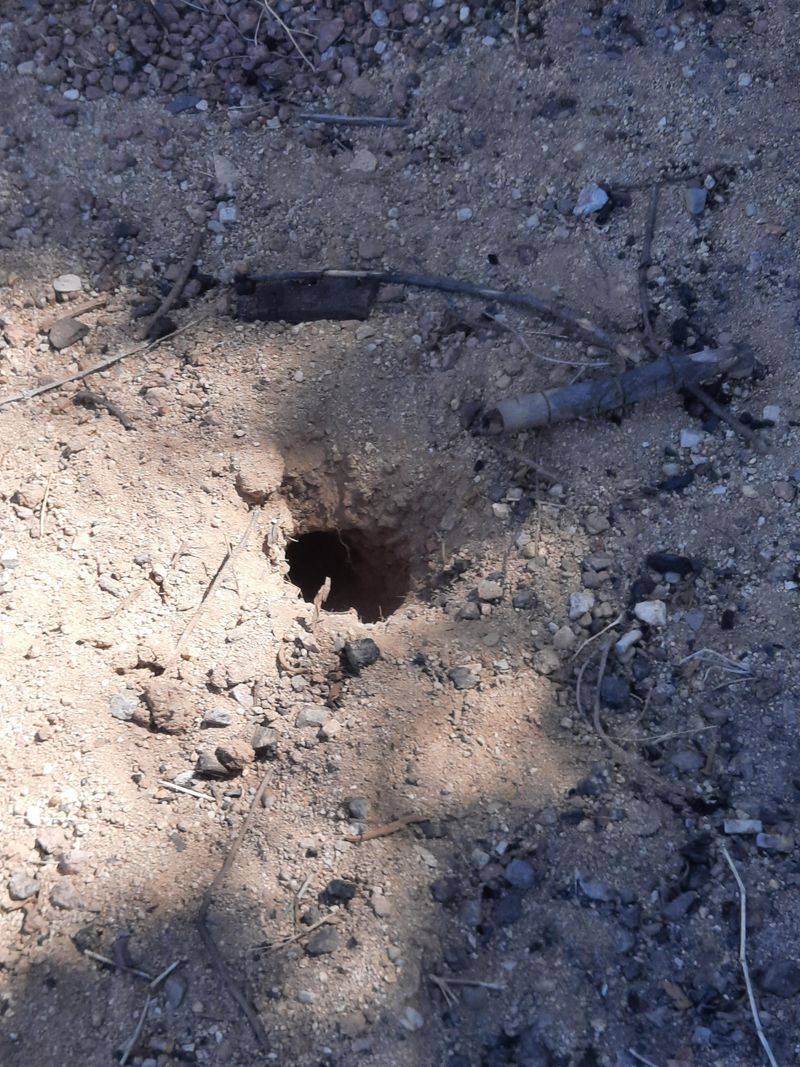
Identification guides from regions where armadillos are established describe their foraging pits as shallow, roughly 1 to 3 inches deep and 3 to 5 inches wide, often scattered across a lawn or bed in no obvious pattern. Those measurements can serve as a rough comparison tool, but hole width and depth alone cannot confirm that an armadillo made them.
Skunks, javelina, birds, and other animals can produce overlapping signs.
An important distinction applies here: the seasonal foraging patterns described in extension literature come from Texas, Georgia, Florida, and other states where armadillos are documented residents. Applying those observations directly to low-desert Arizona, without local monitoring data or verified sightings, treats an out-of-state pattern as though it were a confirmed local one.
Your Arizona Garden Changes Every Week. Your Plan Should Too.
Gardening in Arizona changes quickly throughout the season. Every Friday you’ll receive a simple weekly plan showing exactly what to plant, prune, fertilize, harvest, and protect so you never miss the right timing.
The hole dimensions are useful comparison clues, not a species identification on their own.
Skunks and javelina offer better-supported Arizona comparisons
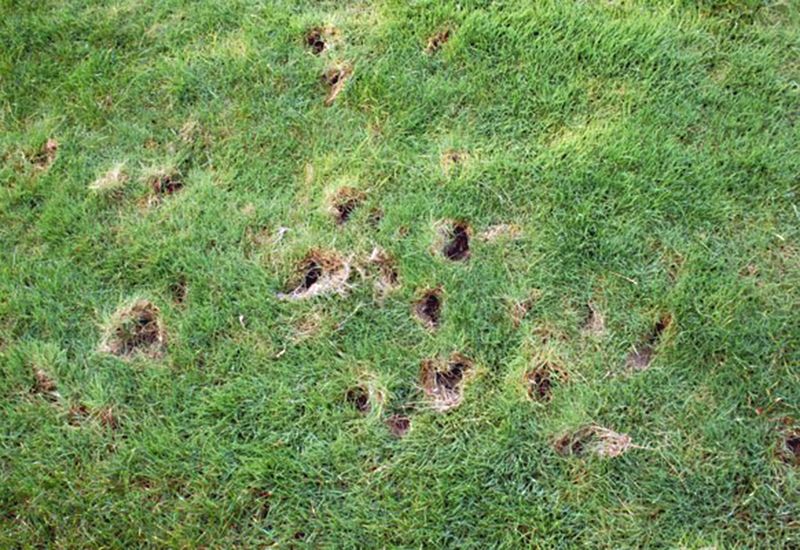
Rather than starting with an animal that lacks a documented Arizona population, it makes more sense to consider wildlife that University of Arizona research actually places in low-desert yards. Skunk foraging is one of the better-documented local explanations for small holes in lawns and gardens.
University of Arizona Cooperative Extension guidance describes skunks searching lawns, gardens, and golf courses for insect grubs, producing small, cone-shaped holes or patches of upturned soil as they go. The same guidance notes that street and yard lighting can concentrate insects, which in turn can draw skunks to those areas.
Javelina create a noticeably different kind of disturbance. These animals are omnivorous and rely heavily on smell to locate food.
University of Arizona extension material on javelina documents their tendency to dig up roots and plants, sometimes disturbing vegetation they do not ultimately eat. The resulting damage tends to be broader and more disruptive than the tight cone-shaped holes associated with skunk grub-hunting.
Overlapping signs are genuinely possible. A yard could have more than one visiting species, and a single observation rarely settles the question.
The point is not that holes automatically mean skunks or javelina, but that both animals have a documented presence in Arizona yards and produce damage consistent with what many homeowners are describing. Starting the investigation there is more grounded than beginning with a species that lacks a confirmed Arizona population.
Document the signs to narrow down the culprit
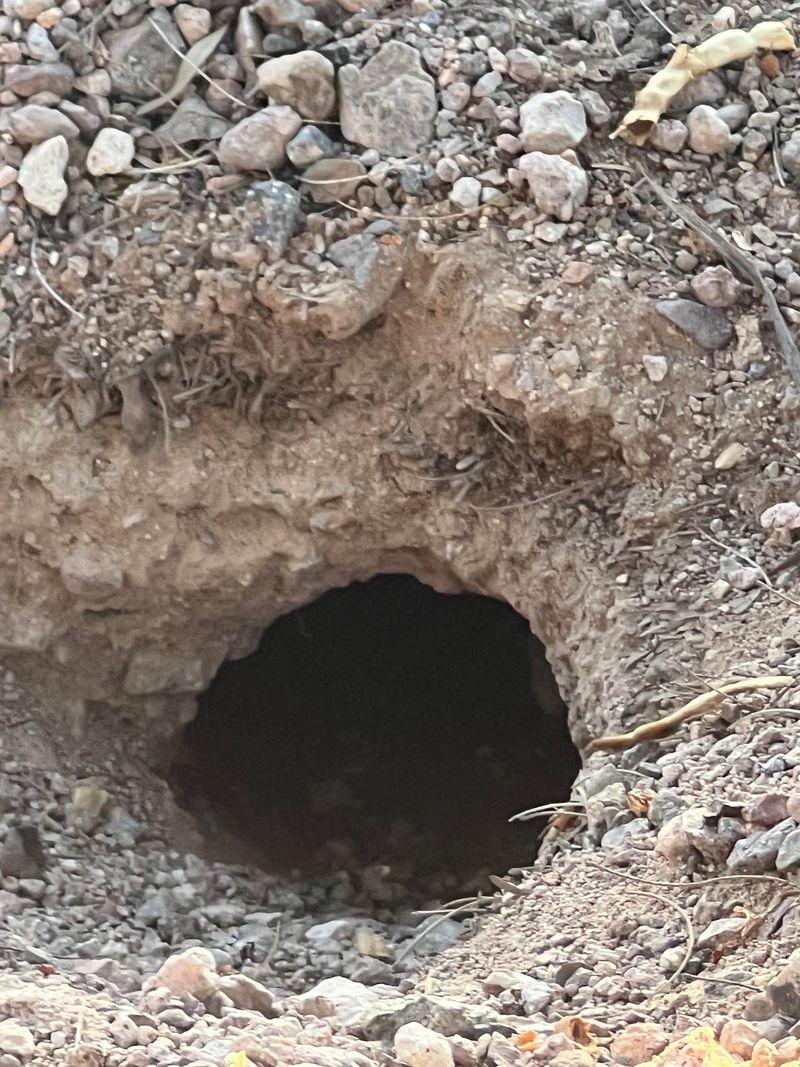
Good observation habits can close the gap between a puzzling hole and a working identification. Start by measuring each hole: record the diameter at the opening and probe gently to estimate depth.
Photograph the hole from directly above and from the side, capturing the surrounding soil and any overturned turf or disturbed gravel. Note whether a soil mound is present at the edge, since burrowing animals that excavate tunnels often push displaced dirt into a visible pile, while surface foragers typically scatter loose material more randomly.
Tracks and scat are often more species-specific than hole dimensions alone. The University of Arizona’s Southwest Arizona Track and Scat Guide recommends using multiple signs together, including footprints, droppings, feeding evidence, and disturbance patterns, rather than relying on a single visual impression to name a species.
Early morning, before foot traffic disturbs soft soil near a bed or lawn edge, is a practical time to check for fresh prints.
Collecting several observations across multiple nights builds a clearer picture. A motion-triggered camera placed near active holes is one option for capturing nighttime visitors without disturbing the area.
Even a thorough set of photographs and measurements may not conclusively establish which species is responsible, but it gives a wildlife professional or extension specialist enough to work with when you reach out for help.
Fall timing does not establish a desert armadillo migration
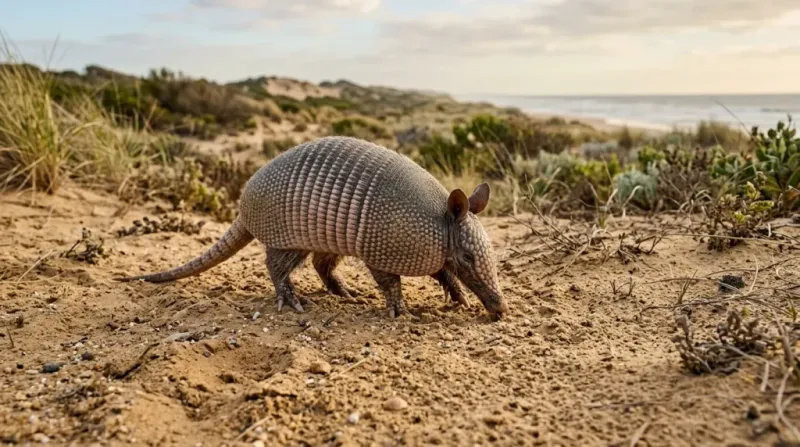
Fall conditions in low-desert Arizona, including cooler nights, residual monsoon soil moisture, and active irrigation schedules, can make yards feel like busy places for wildlife. Some homeowners reason that these conditions might be drawing armadillos westward or into new neighborhoods.
The available evidence does not support that chain of logic for Arizona specifically.
Seasonal armadillo behavior described in extension literature from Georgia, Florida, and Texas reflects conditions in those states, where the species has a documented resident population. Those observations cannot be transferred automatically to the Sonoran Desert, whose soils, typical rainfall patterns, summer heat extremes, and wildlife community differ substantially from the Southeast.
The peer-reviewed taxonomic literature that identifies the Sonoran Desert as an arid dispersal barrier reinforces why out-of-state seasonal patterns should not be assumed to apply locally.
Establishing that a local increase is actually happening would require more than a cluster of similar-looking holes during one season. Repeated verified sightings with photographs, camera-trap records from multiple locations, a systematic wildlife survey, or a statement from the Arizona Game and Fish Department or another agency would all constitute meaningful evidence.
Absent those, fall timing alone, whether tied to rain, irrigation, or temperature change, does not explain an armadillo influx that has not been documented.
Protect the yard after confirming the problem
Acting before identifying the animal often wastes time and money, and can cause unintended harm. Applying a blanket grub treatment to the entire lawn, for example, may miss the actual visitor entirely if the holes were made by a skunk, a javelina, or another animal that happens to be passing through.
University of Arizona extension guidance on garden insects notes that grub treatments depend on confirming the pest, timing the application correctly, and matching the infestation level to the product’s label directions.
Eliminating every soil invertebrate is neither practical nor advisable. Earthworms and many beetle species benefit soil structure and plant health.
Broad insecticide applications can harm these organisms along with pollinators and other non-target wildlife that share the yard. Confirm what is causing the damage, consider whether the infestation level actually warrants chemical treatment, and follow the product label precisely if you proceed.
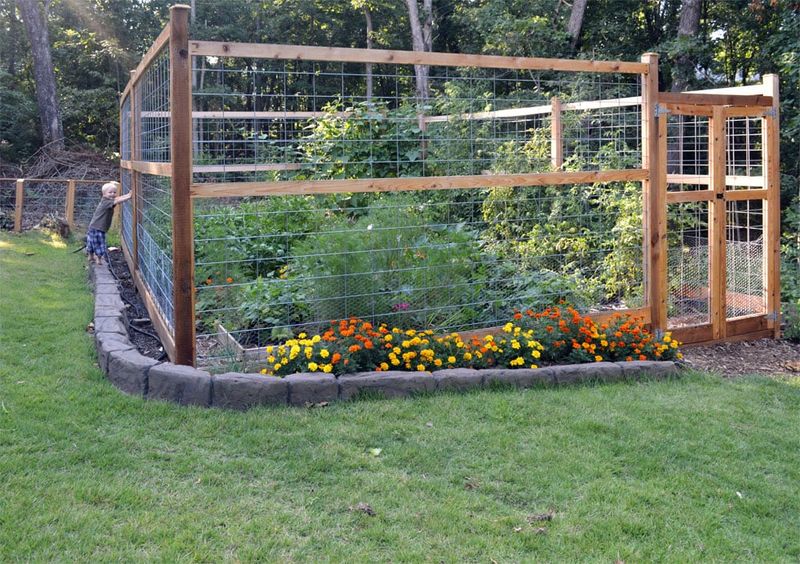
Physical protection is a proportionate option for beds or plantings that are getting repeated attention. University of Arizona Cooperative Extension guidance on fencing for wildlife recommends designing barriers with wildlife movement and safety in mind and checking for underground utilities before digging any fence posts.
A low wire barrier around a vulnerable planting bed can reduce access without requiring any chemical application or making assumptions about which animal is responsible.
Keep away from unfamiliar or abnormal wildlife
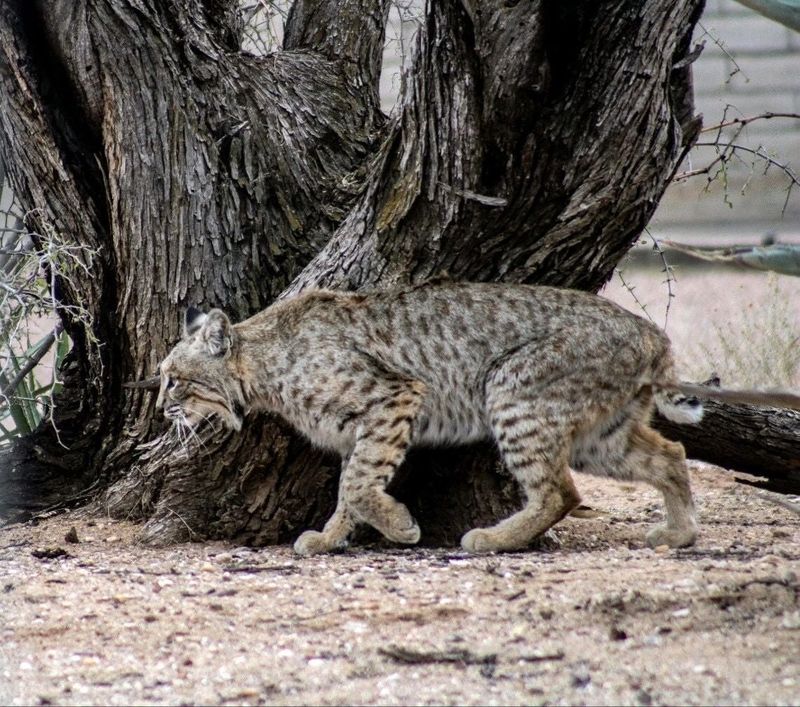
Whatever animal turns out to be visiting the yard, a few safety rules apply across the board. Do not approach, touch, or attempt to feed any unfamiliar wild animal.
Keep children away from areas where fresh digging is occurring until the visitor has been identified, and supervise pets during early morning and evening hours when many desert animals are most active.
Pay attention to behavior that seems out of place. University of Arizona Cooperative Extension guidance on wildlife-transmitted diseases advises avoiding animals that appear sick, unusually tame, or aggressive.
The same guidance recommends keeping children away from unfamiliar animals as a baseline precaution. Skunk-specific extension material adds that abnormal daytime activity, unprovoked aggression, or a complete lack of fear can be signs consistent with possible rabies and should be treated with extra caution.
If an animal appears injured, sick, or dangerous, contact your local animal-control agency, a licensed wildlife rehabilitator, or your county public health department rather than attempting to handle the situation yourself. Arizona Game and Fish can be a useful starting point for identifying the right authority depending on the species involved.
Do not try to trap, relocate, poison, or otherwise remove a wild animal without first confirming what it is and checking what Arizona regulations allow.
Fresh holes do not prove a fall armadillo invasion
Finding holes in the yard is a real observation and worth taking seriously. What those holes cannot do on their own is confirm that armadillos have arrived in Arizona yards in unusual numbers this fall.
The available evidence does not document an established Arizona population, a Phoenix- or Tucson-area colonization trend, or any agency-confirmed increase in local armadillo activity.
Measure the holes, photograph the surrounding signs, check for tracks and scat, and compare what you find against documented local wildlife before drawing conclusions. Identify the animal as carefully as possible, then choose the least disruptive response the situation actually calls for.
The yard’s best protection is an accurate diagnosis, not a seasonal assumption or a chemical application made before the culprit is known. Most of the time, the digger turns out to be a familiar Arizona neighbor.