The Japanese Moss-Ball Trend Quietly Taking Over Minnesota Homes
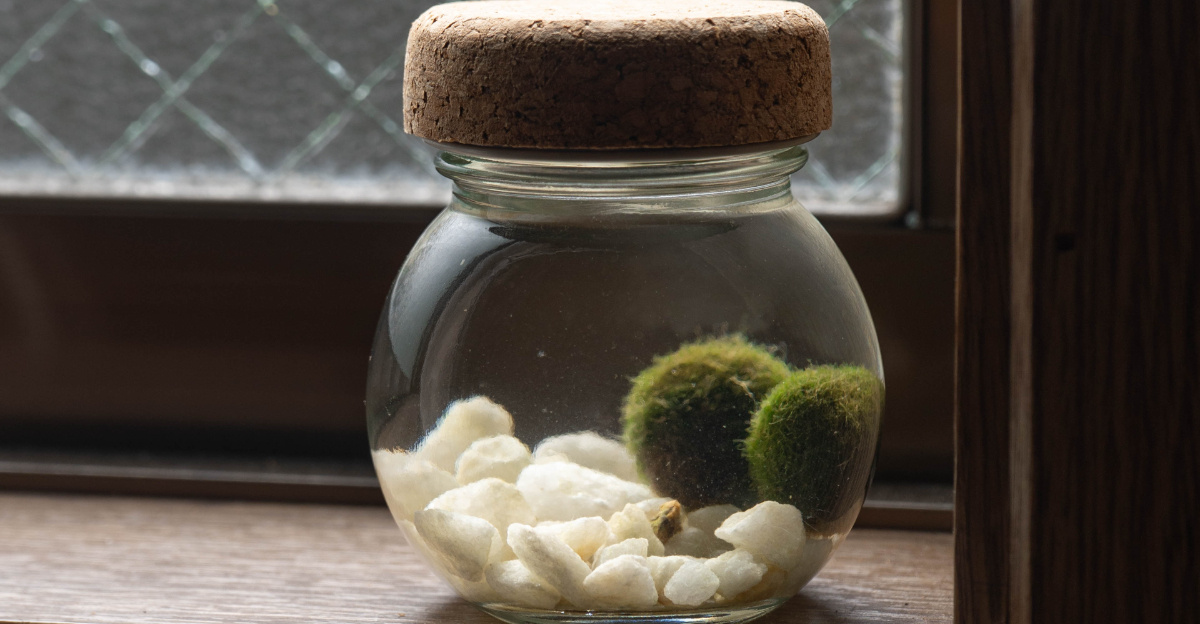
Strange orbs keep appearing on windowsills, and you cannot ignore them. Nobody warned you before marimo moss balls took over Minnesota. You may already own it, unaware of what it truly does.
Japan has cherished these living spheres for centuries, long before you noticed them. Minnesota homeowners are obsessed, and you are about to understand why. Water is nearly all you need to keep it thriving.
Light helps, but you can forget about it for weeks. Homeowners keep telling you how little effort this plant demands. Curiosity pulls you in before you even understand why.
Everyone around you seems to want this plant now. Social feeds keep showing you jars you suddenly crave. Questions start forming the moment you notice it.
Momentum keeps pulling you toward this vibrant green trend. Attention shifts toward you the instant you own it. Once you see what happens next, you will not stop watching.
What Marimo Moss Balls Actually Are
Forget everything you think you know about houseplants. Marimo moss balls are not actually moss at all.
They are a rare form of algae called Aegagropila linnaei. These soft, round spheres grow naturally in cold freshwater lakes.
The name marimo comes from Japan. Mari means bouncy ball, and mo means plant. So basically, you are growing a bouncy plant ball in a jar.
The species was first scientifically described in the 1820s in Lake Zell, Austria, though it wasn’t discovered and named in Japan’s Lake Akan until 1898.
Some sources suggest wild marimo can live for well over a century in the right conditions, though this figure is not scientifically confirmed. That would make them among the longer-lived aquatic organisms, though exact lifespan data is limited.
In Japan, marimo are considered symbols of good luck and lasting love. Couples and friends often gift them to each other for special occasions.
Owning a marimo feels like owning a small piece of natural history. In the wild, a ball this size can take decades to form.
They grow very slowly, typically around 5 to 10 millimeters per year depending on conditions. That slow pace is actually part of their charm for modern plant lovers.
You can find them in sizes ranging from a marble to a softball. Bigger ones are older and often more prized by collectors.
For anyone curious about the Japanese moss ball trend, the marimo is where it all begins. Start here, and you will never look at a jar of water the same way again.
Why This Japanese Trend Is Spreading
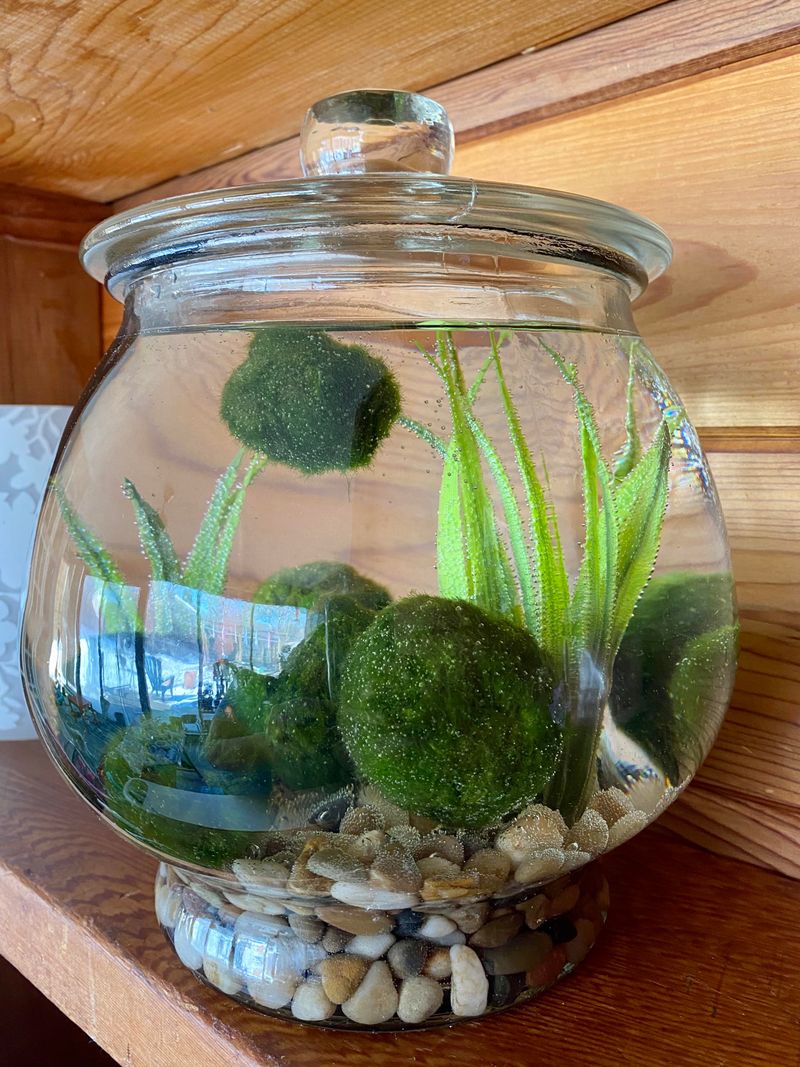
Social media did not create this trend, but it absolutely supercharged it. TikTok and Instagram reels showing marimo in aesthetic jars have gained significant traction online. People are drawn to the simplicity. No soil, no mess, no complicated fertilizer schedules.
Plant lovers burned out by high-maintenance greenery are finding marimo refreshing. They offer all the joy of plant ownership without the guilt of forgotten watering schedules.
Wellness culture also plays a big role here. Watching a marimo float gently in water has a genuinely calming effect on the nervous system.
Your Minnesota Garden Changes Every Week. Your Plan Should Too.
Gardening in Minnesota changes quickly throughout the season. Every Friday you’ll receive a simple weekly plan showing exactly what to plant, prune, fertilize, harvest, and protect so you never miss the right timing.
Minimalist home decor trends have created the perfect backdrop for marimo displays. A single green ball in a clear jar looks like intentional, curated art.
Local plant shops in the Twin Cities have increasingly started stocking marimo in recent years. Since then, demand has grown steadily every season.
The Japanese moss ball trend also appeals to apartment dwellers. No outdoor space needed, no grow lights required, just a bright windowsill and some tap water.
Kids love them too, which makes marimo a rare find in the plant world. They are soft, safe, and endlessly fascinating to little hands.
Gift shops and local markets have caught on fast. You can now find marimo bundled with tiny decorative stones and sold as self-contained terrariums.
Once you spot one on a friend’s shelf, you want one immediately. That word-of-mouth pull is exactly why this quiet trend keeps growing stronger every month.
Why Marimo Make Sense In Minnesota Winters
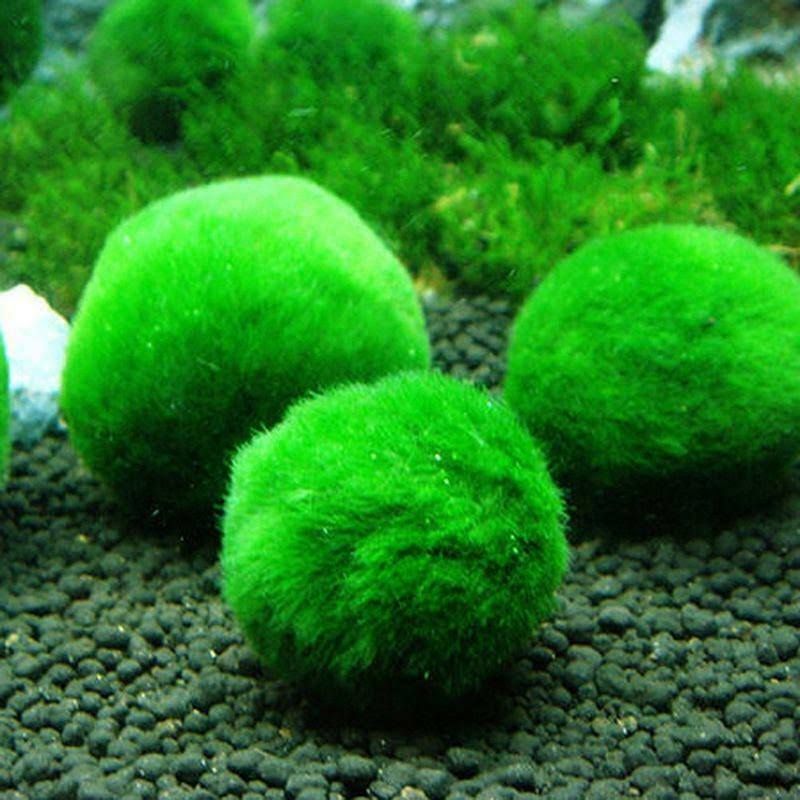
Minnesota winters are long, dark, and very cold. Most outdoor plants are completely out of the picture from November through April.
That is exactly where marimo shine. They thrive in cool water temperatures, which makes them perfectly suited to indoor Minnesota conditions.
Most homes in the state stay in a comfortable range of roughly 65 to 72 degrees Fahrenheit in winter. Marimo generally tolerate a wide range of cooler water temperatures, so they fit right in.
Seasonal depression is real for many Minnesotans. Having something green and alive on the kitchen counter genuinely lifts the mood during grey, sunless months.
Unlike tropical houseplants, marimo do not need extra humidity or heat lamps to survive the dry winter air. They stay content in their water-filled jars.
The Japanese moss ball trend has found particularly loyal fans in northern states for this reason. Cold climate living and marimo care are a natural match.
Ice fishing culture in Minnesota also creates an interesting parallel. People here already love cold water environments, even in recreation.
Marimo require very little light, which is a huge advantage when the sun sets at 4:30 pm. Indirect natural light from a north-facing window is often enough.
Winter is also the best time to start a new marimo. Cooler tap water straight from the faucet closely matches their ideal habitat.
When the snow piles up outside and cabin fever sets in, a little green orb floating in a jar feels like a small comfort. And that feeling is worth everything in January.
Setting Up A Marimo In A Jar Or Tank
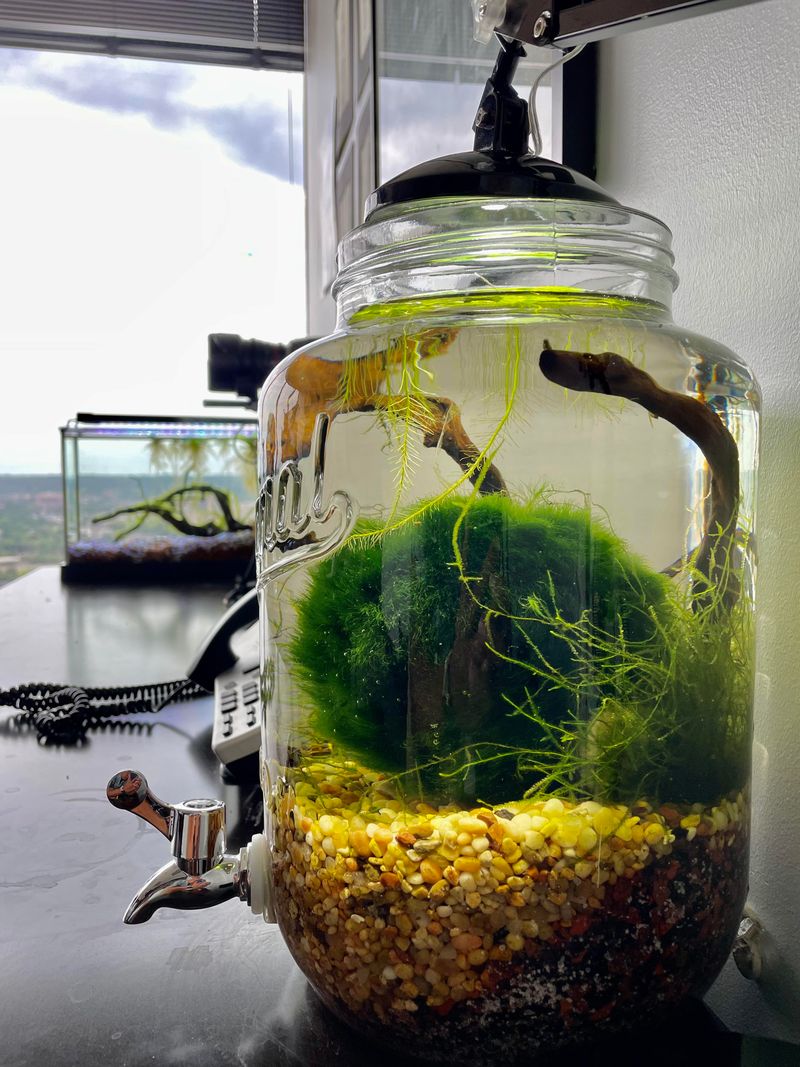
Getting started with a marimo is remarkably simple. You do not need a green thumb, a special tank, or any prior plant experience.
A simple glass jar works perfectly for most beginners. Mason jars, apothecary bottles, and fish bowls are all popular choices among marimo fans.
Fill your container with clean, room-temperature water before placing the marimo inside. Tap water is fine in most areas, but let it sit for 24 hours to let chlorine evaporate.
Add a small layer of aquarium gravel or decorative stones to the bottom. This anchors the aesthetic and gives your marimo something to rest against.
Place one or several marimo inside, depending on the size of your container. They look stunning in groups of three inside a wide-mouth jar.
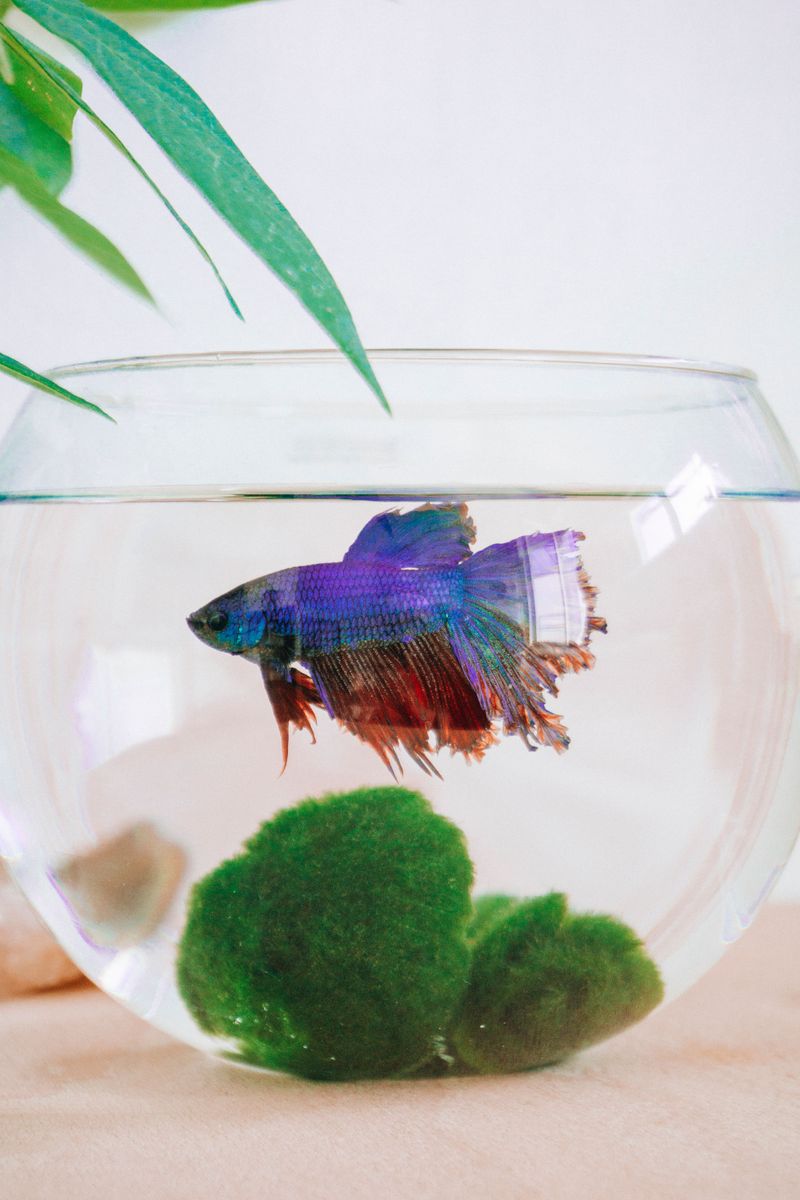
You can also keep marimo in a small aquarium with fish. Betta fish and marimo are a particularly popular pairing because they share similar water needs.
Avoid metal containers entirely. Metals can leach into the water and stress the algae over time.
Decorate around the jar with pebbles, small figurines, or fairy lights for a full display. The Japanese moss ball trend thrives on thoughtful, personalized presentation.
Change the water every one to two weeks. A quick rinse under cool tap water keeps the marimo fresh and vibrant between full water changes.
Once your jar is set up, resist the urge to constantly move it around. Marimo settle into a rhythm, and consistency helps them stay healthy and round.
Basic Water, Light, And Temperature Needs
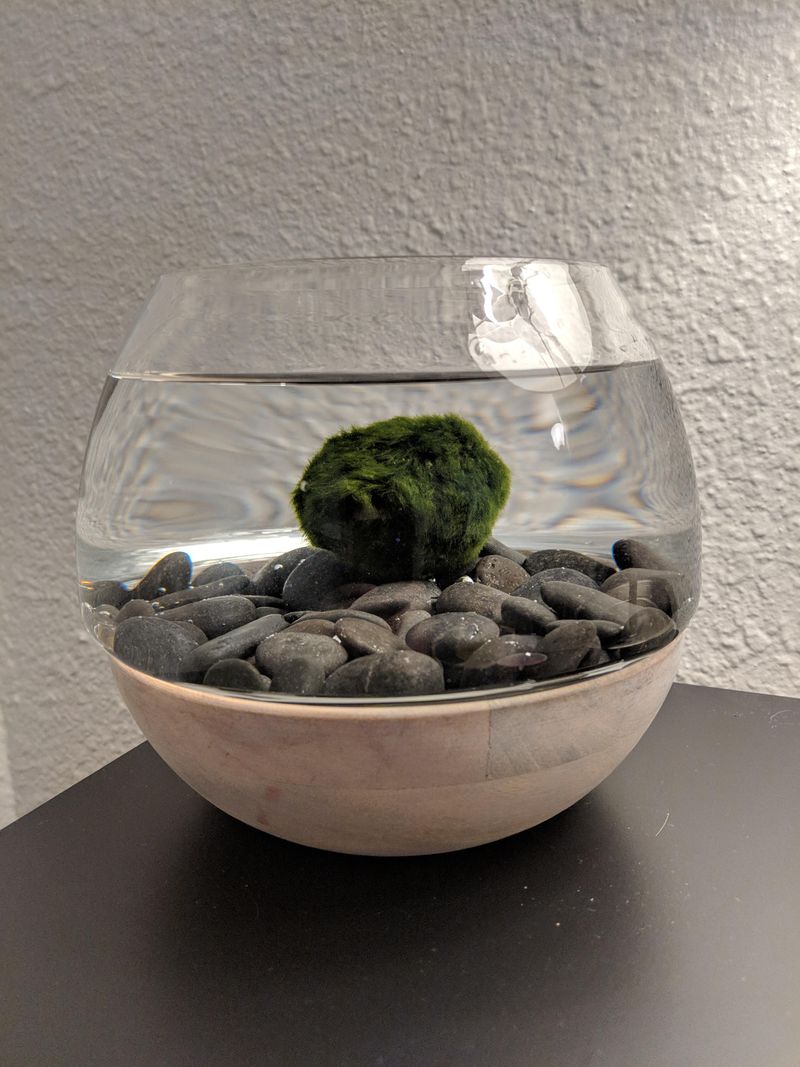
Three things keep a marimo alive: water, light, and temperature. Get those right, and your marimo will outlive most of your other houseplants.
Water quality matters more than people expect. Tap water with low chlorine works well, but filtered or spring water is even better for long-term health.
Change the water every two weeks in warm months. In cooler months, once every three weeks is usually fine.
Light is where most beginners get tripped up. Marimo need indirect light, not direct sunlight, which can bleach them yellow or even white.
A spot near a north or east-facing window is ideal. If your home gets intense afternoon sun, place the jar a few feet back from the glass.
Fluorescent light works surprisingly well for marimo. Many owners keep them under desk lamps or in office spaces with no natural light at all.
Temperature is the third pillar of marimo care. They generally do best in cool to moderate water, roughly room temperature or cooler.
Avoid placing jars near heating vents, radiators, or stoves. Warm water encourages algae growth that can cloud the container and harm the marimo.
In summer, you can add an ice cube to the jar occasionally. This mimics the cool lake conditions where marimo naturally grow.
Rotate the marimo gently every week so all sides get equal light exposure. This simple habit keeps them round and evenly green, which is the signature look of a healthy Japanese moss ball.
Common Mistakes That Turn Marimo Brown
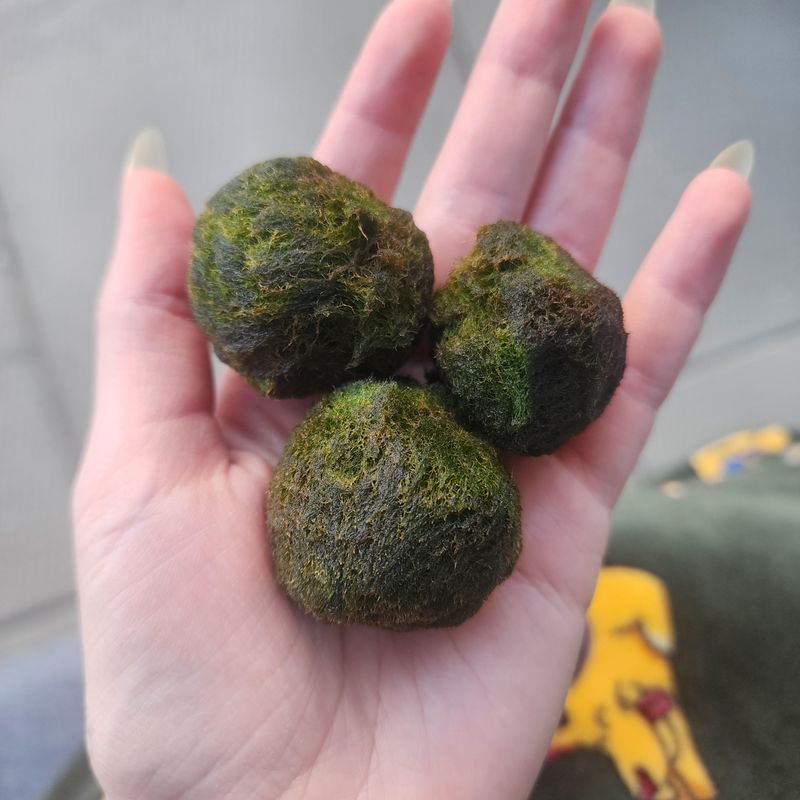
Brown marimo usually signal a fixable problem, not permanent damage. Most color problems are completely reversible with a few simple adjustments.
The number one culprit is too much direct sunlight. Placing a marimo on a south-facing sill in summer is like putting it under a heat lamp.
Move it to a shadier spot immediately and do a fresh water change. Within a week or two, the green color usually starts returning.
Another common error is forgetting to change the water regularly. Stale water becomes a breeding ground for harmful bacteria that slowly discolor the algae.
If the water looks cloudy or smells off, change it right away. Do not wait for the scheduled two-week mark if something seems wrong.
Salt buildup from tap water can also cause browning over time. Switching to filtered or spring water often clears this issue up quickly.
Some owners over-handle their marimo, squeezing and reshaping them constantly. Too much physical pressure damages the outer layer and creates flat, brown patches.
Handle your marimo gently and only when necessary, like during water changes. A soft rinse under cool water is all the maintenance it needs.
Brown spots on one side usually mean that side is not getting enough light. Simply rotate the marimo and the issue often resolves on its own.
Caring for a Japanese moss ball is mostly about paying attention. Small problems caught early almost always turn around, and your marimo can bounce back greener than ever.