The One Thing You Must Do To Crape Myrtles In Texas Before August Is Over
Late August in Texas has a way of revealing things in the garden that were easy to miss during the busiest weeks of summer.
The blooms are fading, things are slowing down a little, and suddenly you have a moment to actually look closely at what is happening on your crape myrtle trunks and branches.
And what some Texas homeowners are finding is not exactly pretty.
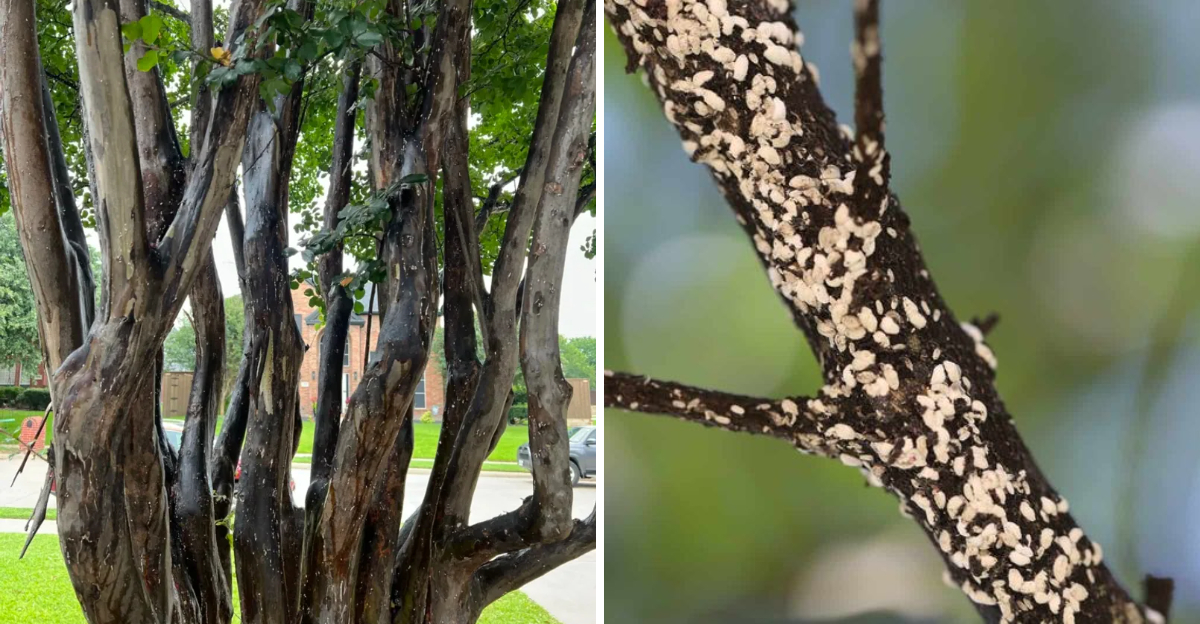
Crape myrtle bark scale has had months of warm weather to settle in and spread, and the signs, white scale clusters, sticky honeydew dripping onto whatever is below, and black sooty mold coating the bark, are becoming a lot more visible right about now.
Late August is not some official treatment deadline, but it is a genuinely practical time to take a close look and figure out where things stand with your trees.
1. Late Summer Is A Smart Time To Inspect The Bark
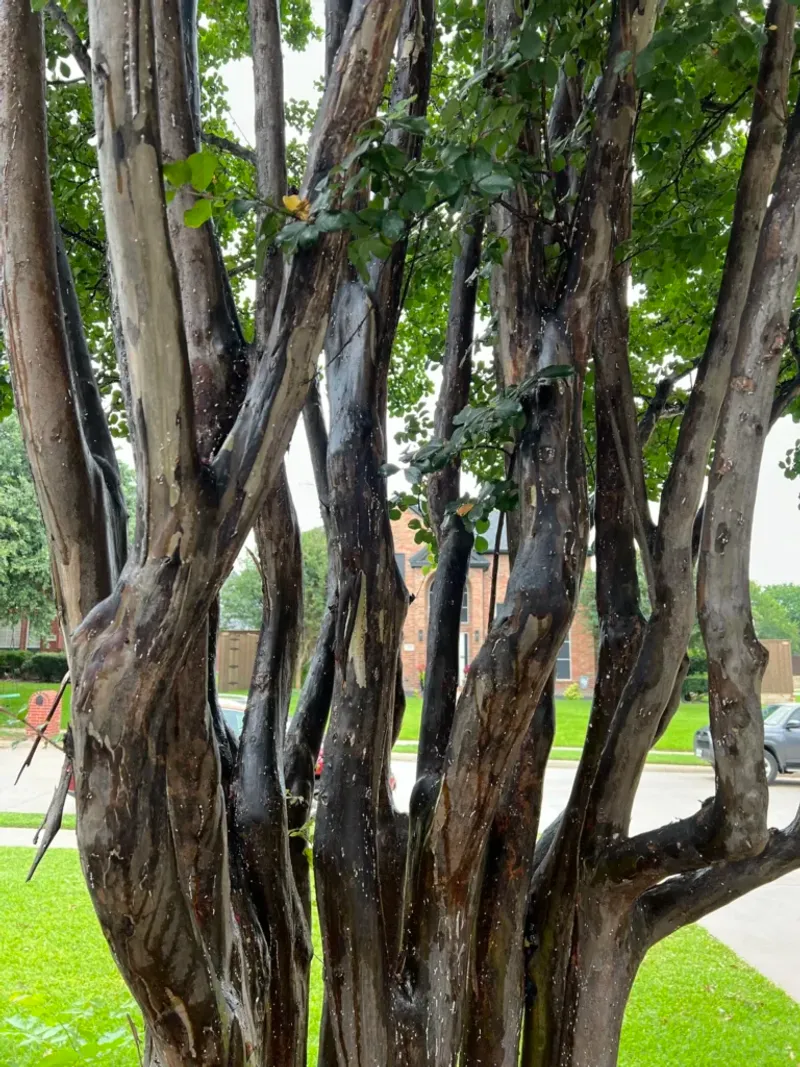
After months of warm-season activity across Texas, the signs of crape myrtle bark scale can become easier to notice on trunks and larger limbs.
Populations that started small in spring have had plenty of time to build, and the symptoms tend to stand out more by late summer.
Take a slow walk around each tree and look at the whole plant, not just the eye-level areas. Run your gaze along the main trunk, the bigger branches, and especially the smaller branch crotches where limbs meet.
Protected bark surfaces and tight crevices give scale insects a sheltered spot to gather.
Good lighting helps a lot, so try inspecting in the morning or on a bright afternoon. Gently move aside any low foliage so you can see the bark clearly.
Keep in mind that late August is not the only time worth checking. Crape myrtle bark scale can be inspected during other parts of the year too, and conditions differ across North, Central, East Texas, and the Gulf Coast.
The goal here is observation rather than immediate action. By noticing what your tree looks like now, you build a baseline you can compare against later.
If something seems off, you will have a much clearer picture of where the problem started and how widespread it might be across your landscape.
2. White Scale Clusters Can Hide In Branch Crotches And Crevices
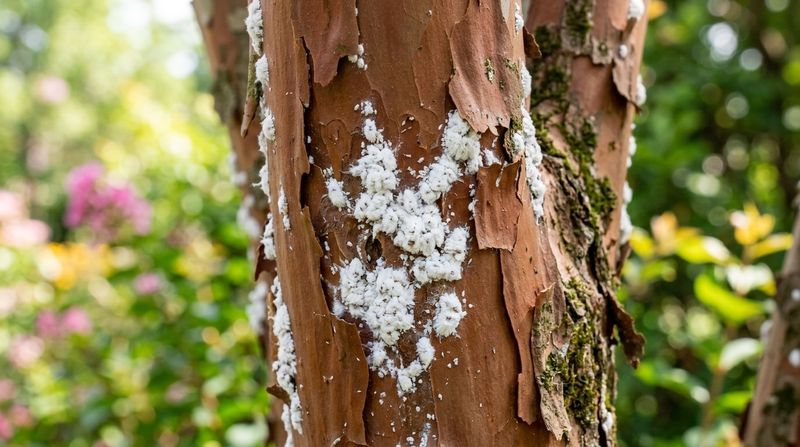
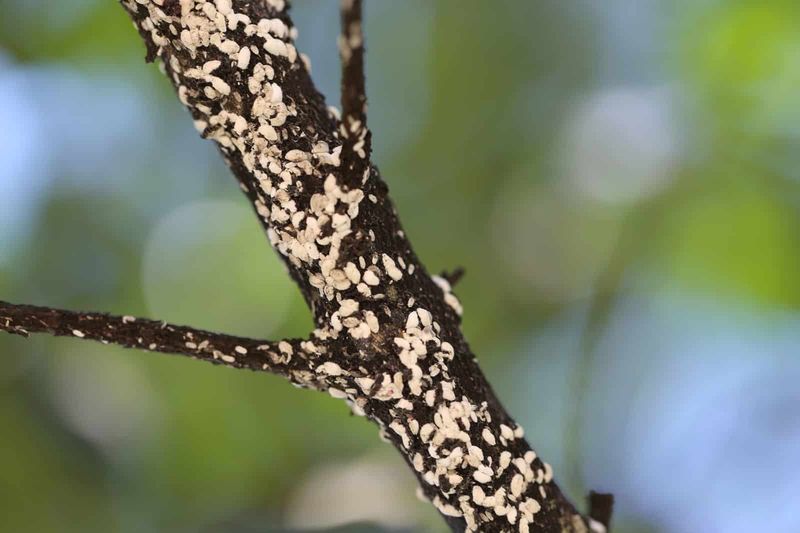
Small white or grayish-white bumps on the bark are one of the clearest clues that crape myrtle bark scale may be present. These are the protective coverings the insects create, and they often show up as felt-like or crusty patches on trunks and branches.
Tight, protected spots deserve the closest look. Branch crotches, cracks, and pruning scars give the scale a sheltered place to feed and multiply, so those areas are worth examining carefully.
On heavily affected trees, the coverings can build up until parts of the bark look encrusted.
Texas A&M notes that if you press or crush one of these white scales, a pink or reddish fluid may appear underneath. That detail can support your identification, but it works best alongside other evidence rather than on its own.
Your Texas Garden Changes Every Week. Your Plan Should Too.
Gardening in Texas changes quickly throughout the season. Every Friday you’ll receive a simple weekly plan showing exactly what to plant, prune, fertilize, harvest, and protect so you never miss the right timing.
One white spot does not tell the whole story. Try to confirm what you are seeing by checking for several signs together, such as the scale coverings, sticky residue, and darkened bark.
Different parts of Texas may see different levels of pressure, so a neighbor’s tree and yours might not match. Take your time and inspect several branches before drawing a conclusion.
When you gather a few matching clues, your identification becomes far more reliable, and you can decide on next steps with better confidence.
3. Sticky Honeydew Can Be An Early Warning Sign
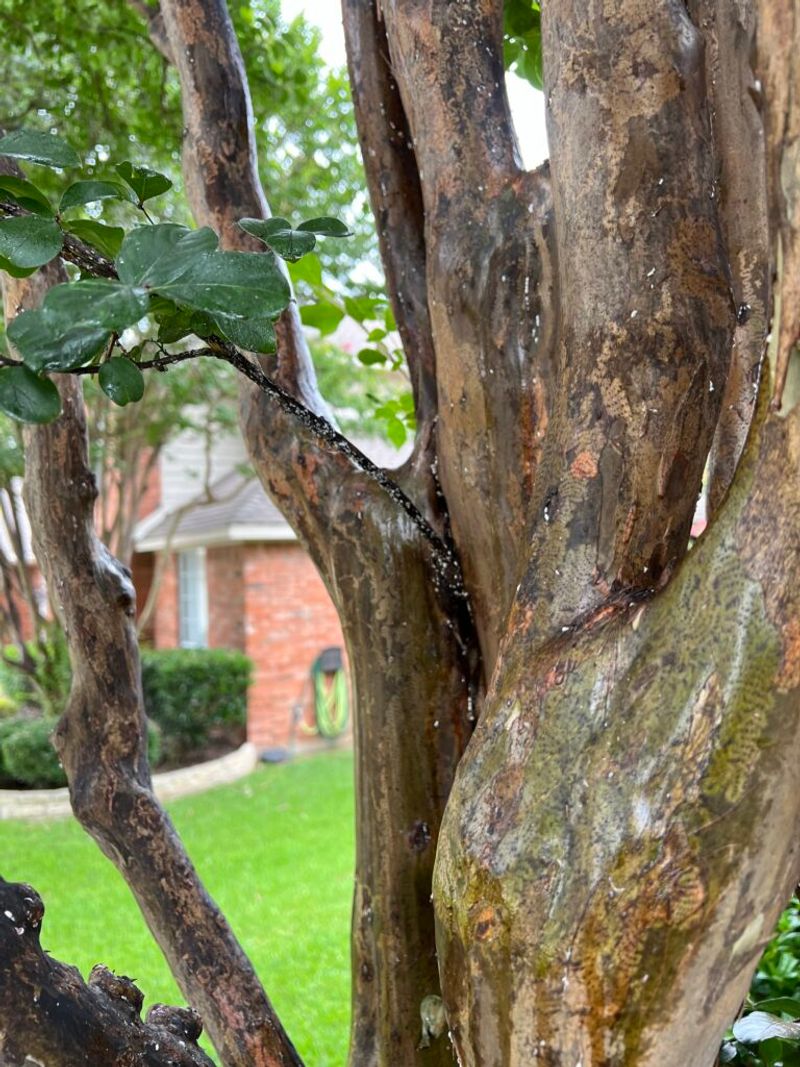
Ever notice a shiny, sticky film on leaves, a patio, or the hood of a car parked under a tree? That gluey residue is called honeydew, and it can be an early hint that sap-feeding insects are at work.
Honeydew is a sugary waste product left behind by insects such as crape myrtle bark scale as they feed on plant sap. When populations grow, the sticky material can drip onto branches, foliage, walkways, furniture, and objects sitting beneath the canopy.
Across many Texas yards, homeowners often notice the stickiness before they spot the insects themselves. Touching a leaf and feeling that tacky coating can be your cue to look closer at the bark.
Here is the catch though. Honeydew is not unique to crape myrtle bark scale.
Aphids and other sap-feeding insects also produce it, so sticky residue alone does not confirm exactly which pest is responsible.
Use honeydew as a prompt to investigate rather than a final answer. Check the trunk and branches for the white scale coverings and other supporting signs before deciding what you are dealing with.
If you find sticky surfaces without any scale insects, another culprit could be involved. Matching the honeydew with visible scales gives you a stronger case.
Taking that extra step helps you avoid guessing and points you toward the right identification for your Texas landscape.
4. Black Sooty Mold Can Reveal A Bigger Bark Scale Problem
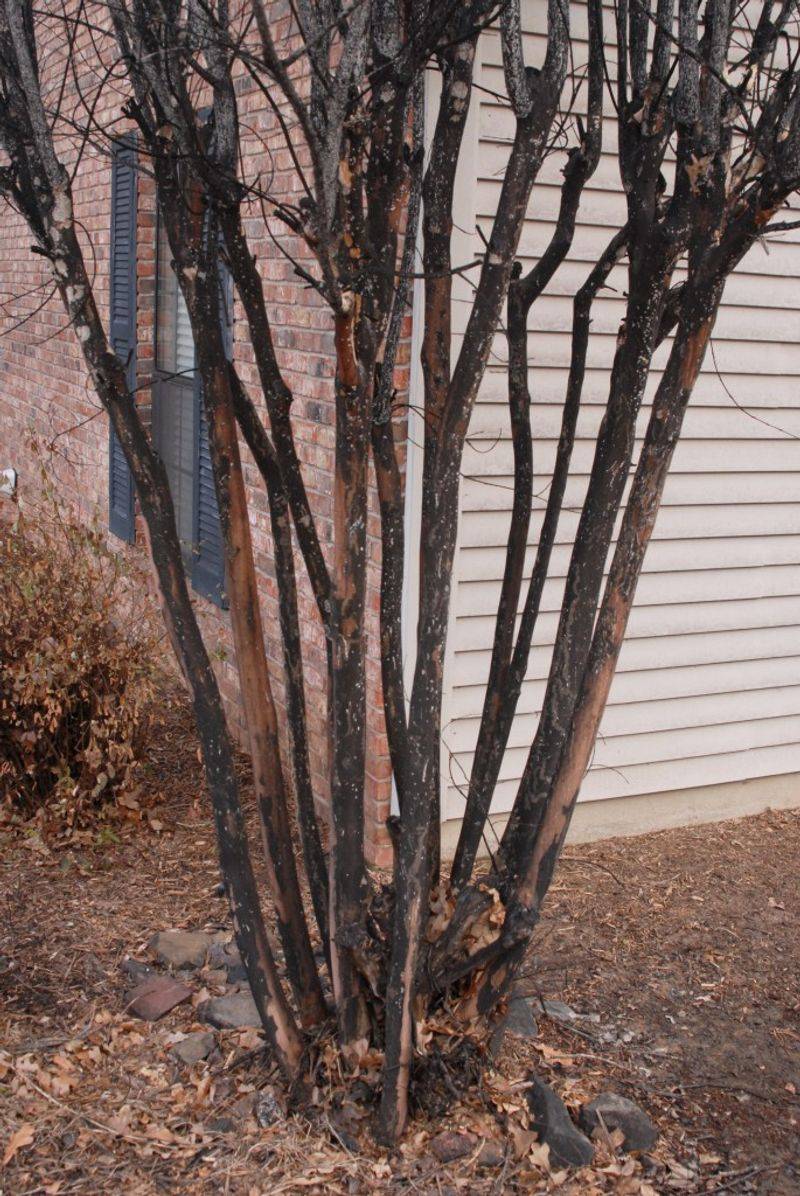
A crape myrtle whose trunk and branches have turned dark and grimy tends to catch the eye right away. That blackened look often comes from sooty mold, a group of fungi that grow on the sugary honeydew left by sap-feeding insects.
The important thing to understand is that sooty mold is feeding on the honeydew, not on the tree itself.
It coats the surface of bark and leaves, which can make the plant look dirty, but it is a symptom of an insect problem rather than a direct attack on the crape myrtle.
Because darkened bark stands out so clearly, it can serve as an obvious signal that something deserves a closer look. Where you see heavy sooty mold, there is often honeydew above it and sap-feeding insects nearby.
Still, black bark on its own does not prove crape myrtle bark scale is present. Several sap-feeding insects can lead to honeydew and the mold that follows, so the safest move is to inspect for the actual scale insects and other supporting signs.
Resist the urge to reach for a spray just because the bark looks black. Figure out which insect is producing the honeydew first.
Across different regions of Texas, the responsible pest can vary, so confirming the cause helps you follow the right guidance instead of treating a symptom without understanding it.
5. Heavy Bark Scale Infestations Can Reduce Flowering
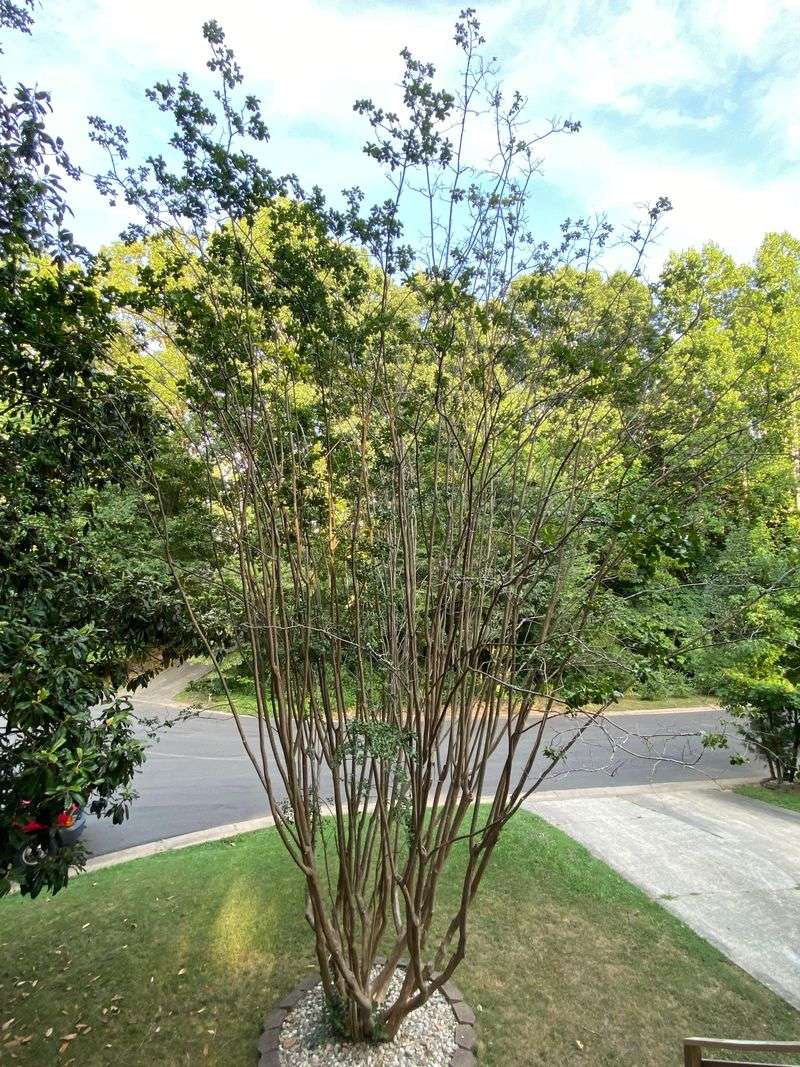
Fewer blooms than you remember from past summers can sometimes point to a scale problem.
Texas A&M has reported that substantial crape myrtle bark scale infestations may reduce both the amount and the quality of flowering while coating plants in honeydew and sooty mold.
When large numbers of insects feed on a tree, they draw off sap and add stress. That combined pressure can leave a plant with less energy for producing the showy summer flowers crape myrtles are loved for across Texas.
It helps to keep expectations realistic here. Not every infestation leads to a dramatic drop in blooms, and the response can vary quite a bit from tree to tree.
Several factors shape how a plant reacts, including how severe the infestation is, the overall condition of the tree, the growing environment, and other stresses like drought or poor soil.
A lightly affected crape myrtle in good health may still flower well.
Reduced flowering paired with sticky honeydew and blackened bark makes a stronger case that scale is involved. On its own, a slow bloom year could come from weather, watering, or pruning choices instead.
Use flowering as one clue among several rather than proof by itself. If blooms seem sparse and you also spot scale insects and sooty mold, that fuller picture can guide your decision about whether management is worth considering for your particular tree.
6. Normal Peeling Bark Should Not Be Confused With Bark Scale
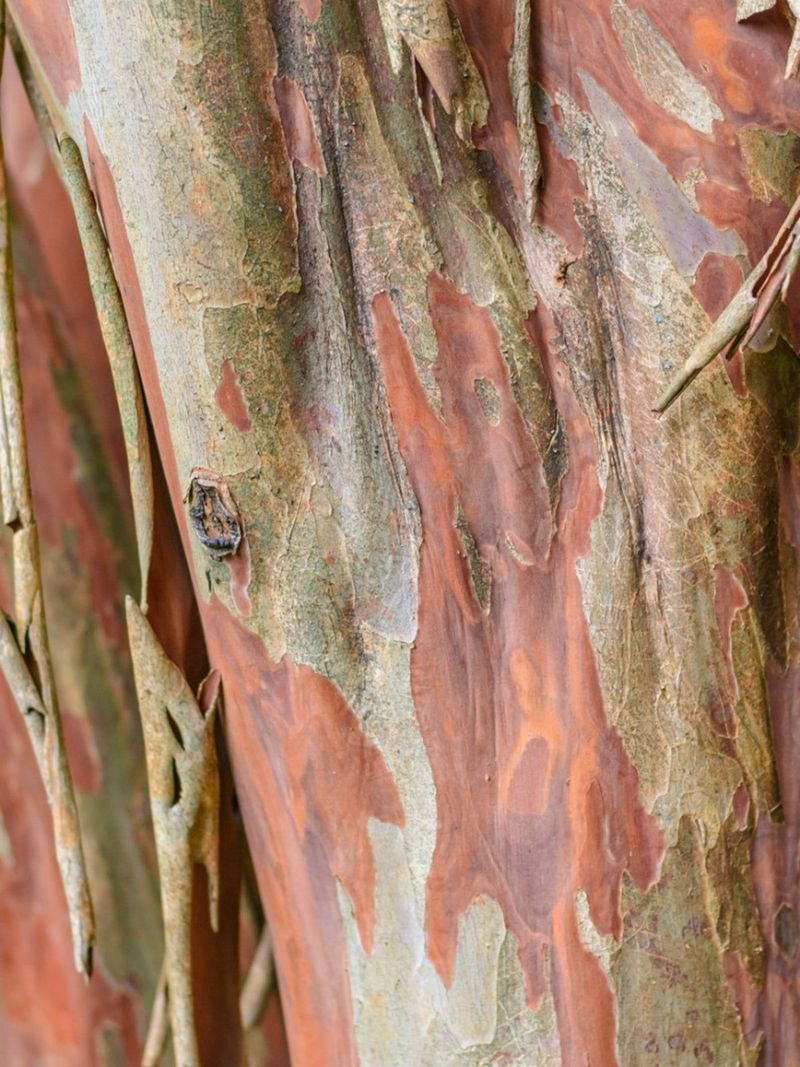
One of the prettiest features of a mature crape myrtle is its smooth, peeling bark that sheds in thin curls to reveal fresh, colorful wood underneath.
This natural shedding often shows tones of cinnamon, tan, and gray, and it is a normal and attractive part of the tree.
Because peeling bark can look unusual to newer gardeners, it sometimes gets mistaken for a problem. Exfoliating bark by itself is not a sign of pests or disease, and it does not call for any treatment.
The difference matters. Normal shedding leaves behind smooth, healthy wood, while crape myrtle bark scale shows up as raised white or grayish crusty coverings, often paired with sticky honeydew and blackened bark.
Run your hand over the trunk and think about texture. Clean peeling reveals a fresh surface, whereas scale feels bumpy and crusty and tends to gather in crotches and crevices.
Before deciding a pest is present, look for the actual scale insects along with honeydew and sooty mold. Those supporting signs are what separate a genuine infestation from the ordinary beauty of exfoliating bark.
Across Texas, many healthy crape myrtles peel every year without any trouble at all. Knowing this can save you from treating a tree that simply does not need it.
When in doubt, gather several clues before concluding that scale, rather than nature, is behind what you see.
7. Late-Summer Pruning Is Not The Answer To Bark Scale
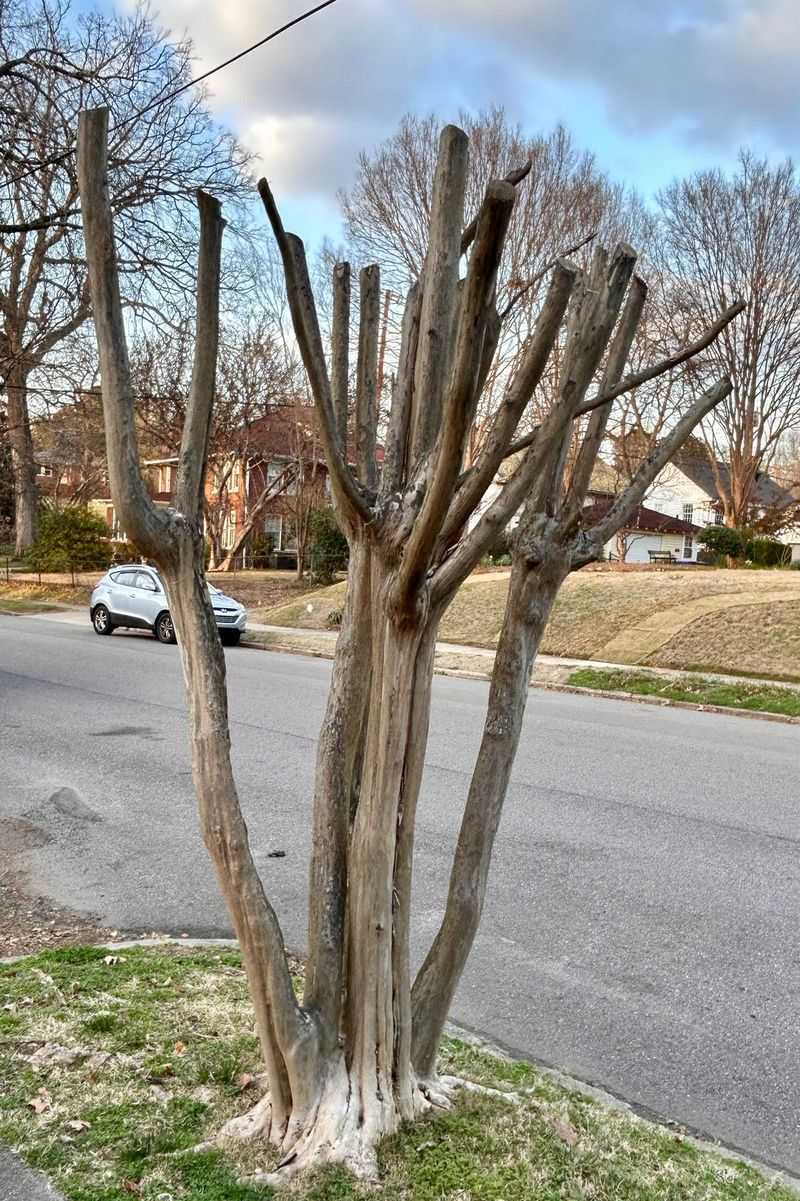
It can be tempting to grab the loppers and cut back a tree that looks crusty and blackened, but heavy late-summer pruning does not solve a crape myrtle bark scale problem.
Removing branches does not remove the underlying infestation, and the scale can remain on whatever wood is left.
Cutting hard at this time of year can also add stress. As the Texas growing season starts shifting toward fall, aggressive pruning may push out tender new growth that has little time to settle before cooler weather arrives.
Texas A&M guidance encourages avoiding excessive crape myrtle pruning in general. The practice sometimes called topping, where trees are cut back severely, is discouraged and is not a pest-management tool.
Rather than reshaping the whole tree in a rush, focus on identifying what is actually happening on the bark.
If crape myrtle bark scale is confirmed, the right response involves proper identification and research-based management, not a round of drastic cutting.
Light, thoughtful pruning for structure has its place, but it belongs to the appropriate season and purpose. Slicing off limbs to chase away scale tends to create more work and unwanted regrowth.
Think of pruning and pest control as two separate jobs. Keeping them separate helps your crape myrtle stay healthier and better shaped over time, and it keeps you from adding unnecessary stress to a tree that is already dealing with insects.
8. Treatment Timing Matters More Than A Last-Minute August Spray
The urge to spray something before the month ends is understandable, yet good treatment decisions rest on more than the calendar.
Proper identification, the level of infestation, the product you choose, the season, and research-based timing all shape whether management makes sense.
Texas A&M guidance has included systemic treatments during specific spring windows for substantial crape myrtle bark scale infestations.
Other options can depend on when crawlers, the mobile young stage, are active, and on following the directions printed on the product label.
Because of this, a rushed August spray is not automatically the right move. A light infestation may not need treatment at all, and jumping in without confirming the pest can waste effort and product.
Start by making sure crape myrtle bark scale is truly what you have, using several signs together such as white scale coverings, honeydew, and sooty mold. Then consider how widespread it is and what current recommendations suggest for your situation.
Conditions also differ across Texas, so timing that fits the Gulf Coast may not match North or West Texas. Checking current Texas A&M advice for your area helps you choose wisely.
August 31 is not a scientific deadline, and missing it will not doom your tree.
The most useful thing you can do this month is inspect carefully, gather clear information, and let solid identification guide any management steps you decide to take.