The Lawn Damage Showing Up In Maryland After The Treatment Window Closed
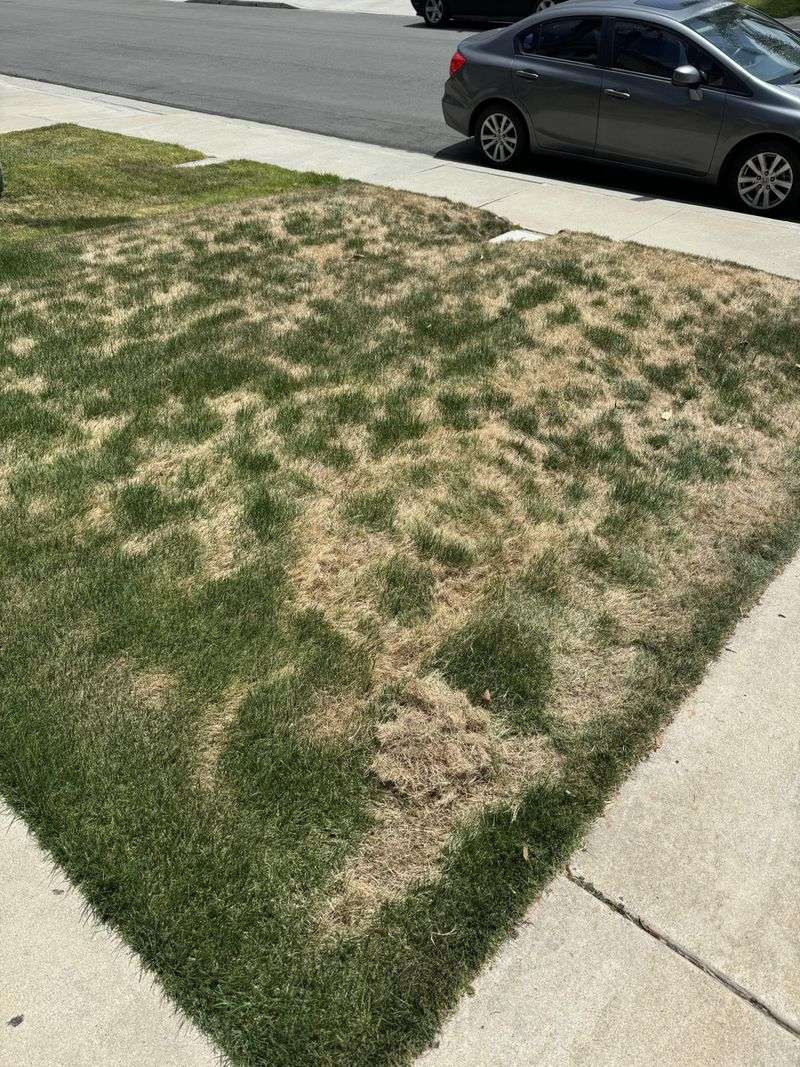
Something odd happens to Maryland lawns in early fall. The grass looks fine one week, then a soft brown patch spreads near the sidewalk.
You tug at it, expecting resistance, and instead the turf lifts away in one loose piece, with no roots holding it down and nothing but cool bare soil left underneath.
Most homeowners blame drought, dull mower blades, or the neighbor’s dog. Meanwhile the real culprit has been feeding quietly since midsummer, and the calendar has already moved past the point where the usual product does much good.
That timing gap explains most of what happens next, and it decides if September brings a quick fix or a full renovation next spring.
The Reason Patches Appear Right Around Now
Late August into September is when the phone calls start piling up at Maryland garden centers. Homeowners describe the same thing: a wilted patch that watering does not fix.
The reason is biology, not neglect. Beetle eggs laid in June and July hatch into small larvae that spend weeks feeding on grass roots just below the surface.
Early on, the feeding barely registers. A few chewed roots out of thousands is something healthy turf shrugs off without a visible sign.
By late summer, though, those larvae have grown considerably and their appetite scales up with them. Root systems get trimmed back faster than the plant can regrow them.
Add the heat and dry stretches common in a Maryland September, and the turf simply cannot pull enough water. That is the moment brown shows up seemingly overnight.
Sunny, south-facing strips along driveways and sidewalks usually go first. Warmer soil there speeds up development, and the reflected heat pushes stressed grass over the edge sooner.
Irrigated lawns are not spared, either. Well-watered turf actually attracts egg-laying females in midsummer, so sprinkler-fed yards sometimes show the heaviest feeding.
Here is the frustrating part for anyone paying attention. The damage becomes obvious only after the grass has already lost most of its anchoring roots.
Recognizing the pattern early gives you options. Spotting one soft patch in late August means you can check the soil, confirm the cause, and plan repairs before the whole strip turns.
Confirming What Is Under The Turf
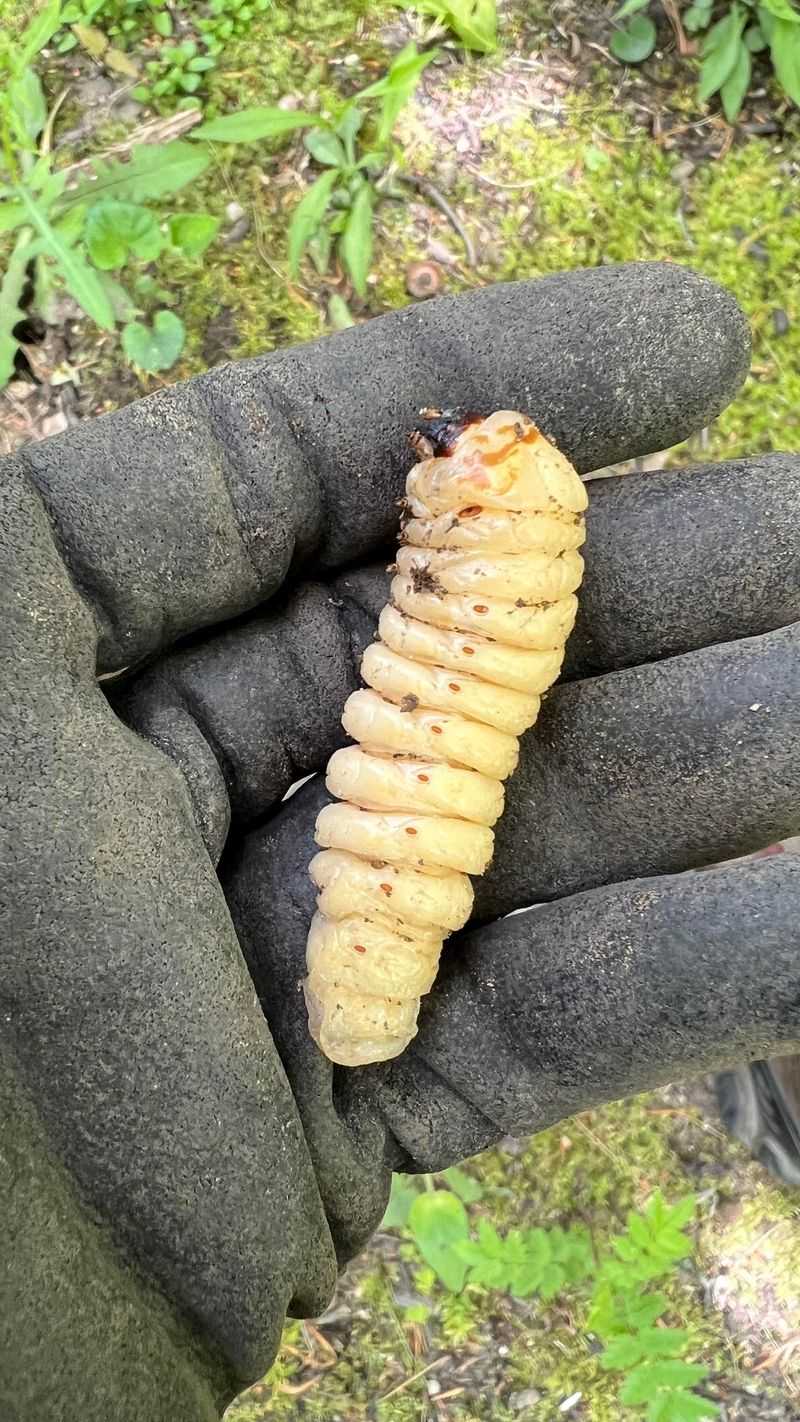
Guessing costs money. Before buying anything, spend ten minutes with a spade and settle the question for good.
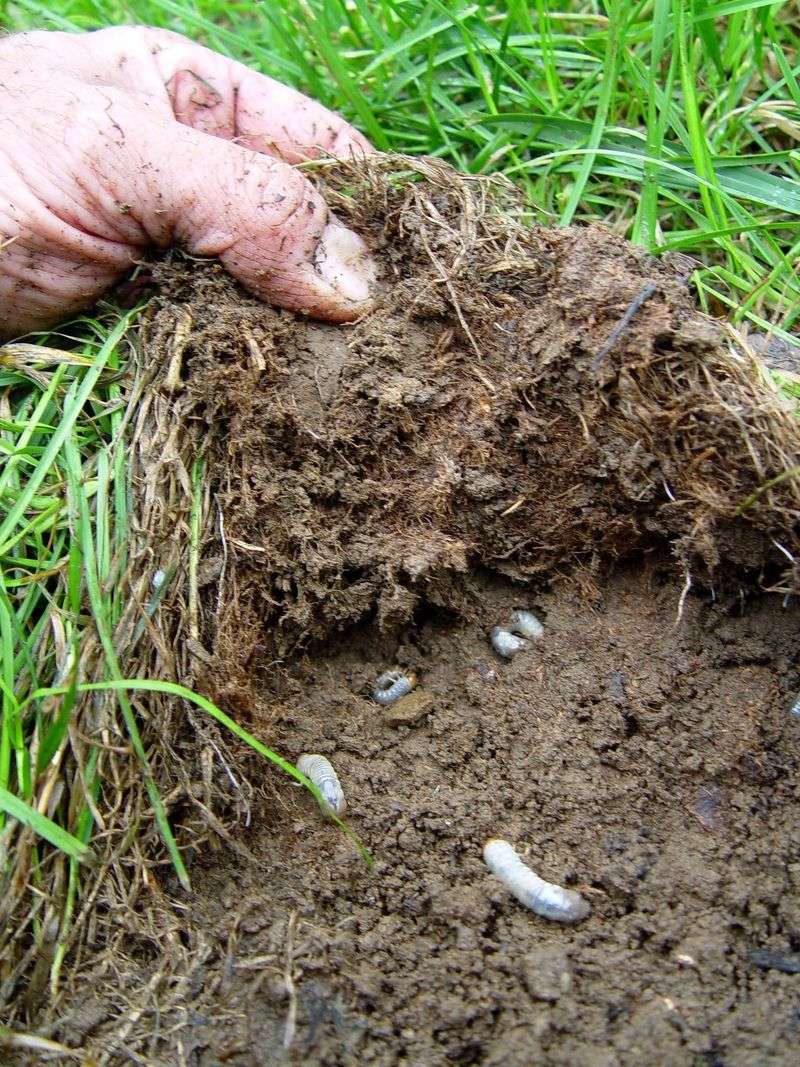
Cut three sides of a one-foot square at the edge of a damaged patch, about two to three inches deep. Peel the flap back like the cover of a book.
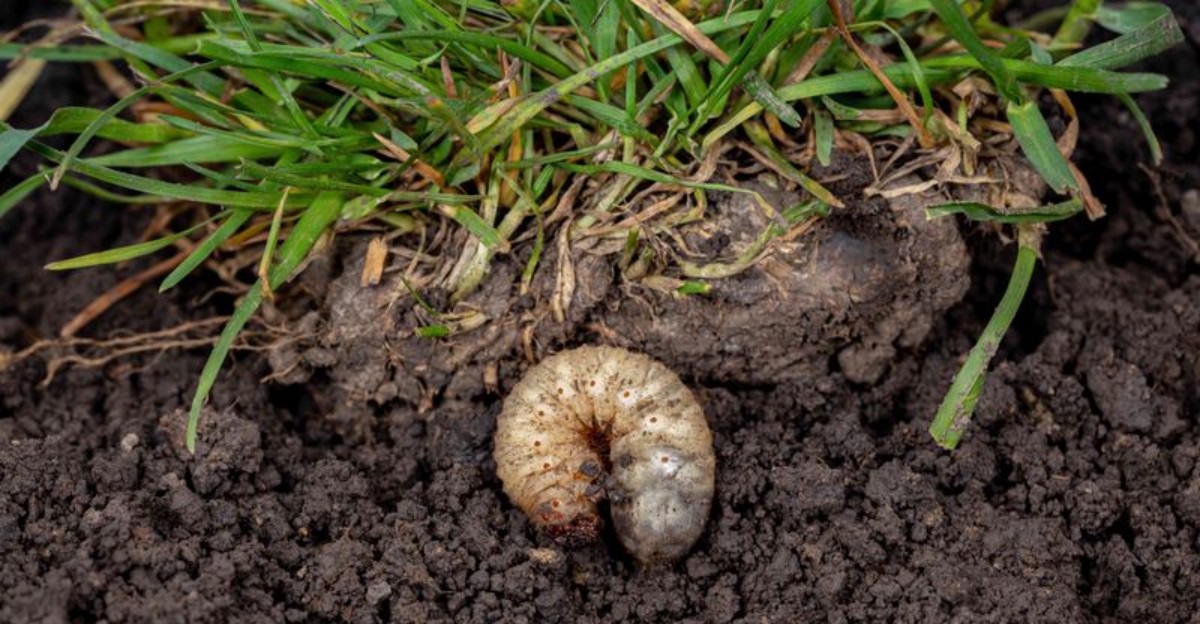
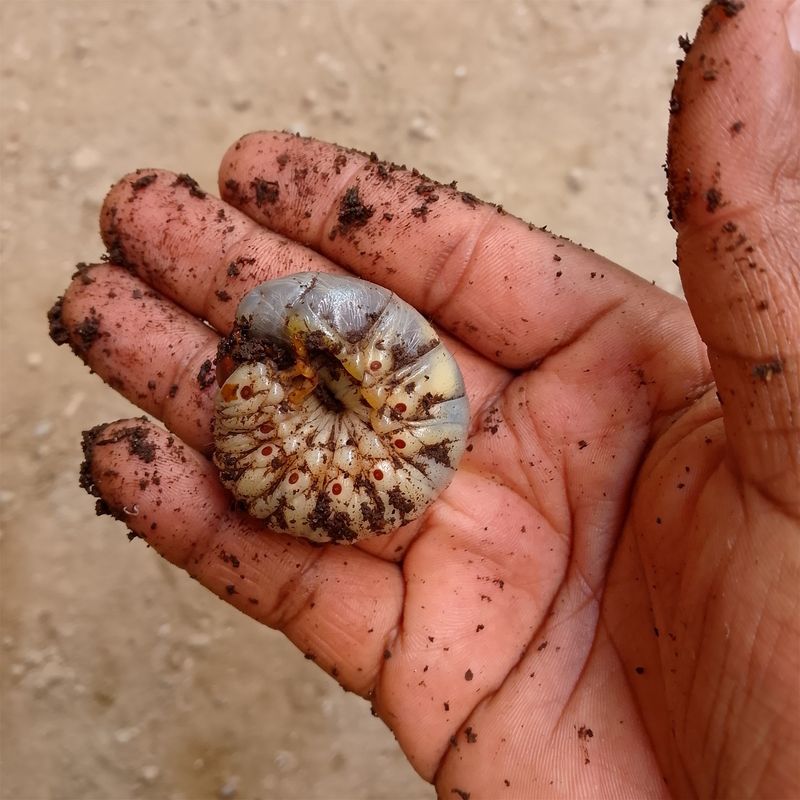
What you are looking for are plump, pale larvae curled into a C shape, with brown heads and six visible legs. They sit right where roots meet soil.
Count them. Fewer than five per square foot in healthy turf is background noise most Maryland lawns tolerate without help.
Somewhere between six and ten starts to matter, especially on thin or drought-stressed grass. More than that explains the brown patch on its own.
Check the border, not the center. Larvae move away from turf they have already stripped, so the middle of a patch often reads falsely low.
Your Maryland Garden Changes Every Week. Your Plan Should Too.
Gardening in Maryland changes quickly throughout the season. Every Friday you’ll receive a simple weekly plan showing exactly what to plant, prune, fertilize, harvest, and protect so you never miss the right timing.
Sample three or four spots across the yard for a fair picture. One hot square does not mean the whole property needs attention.
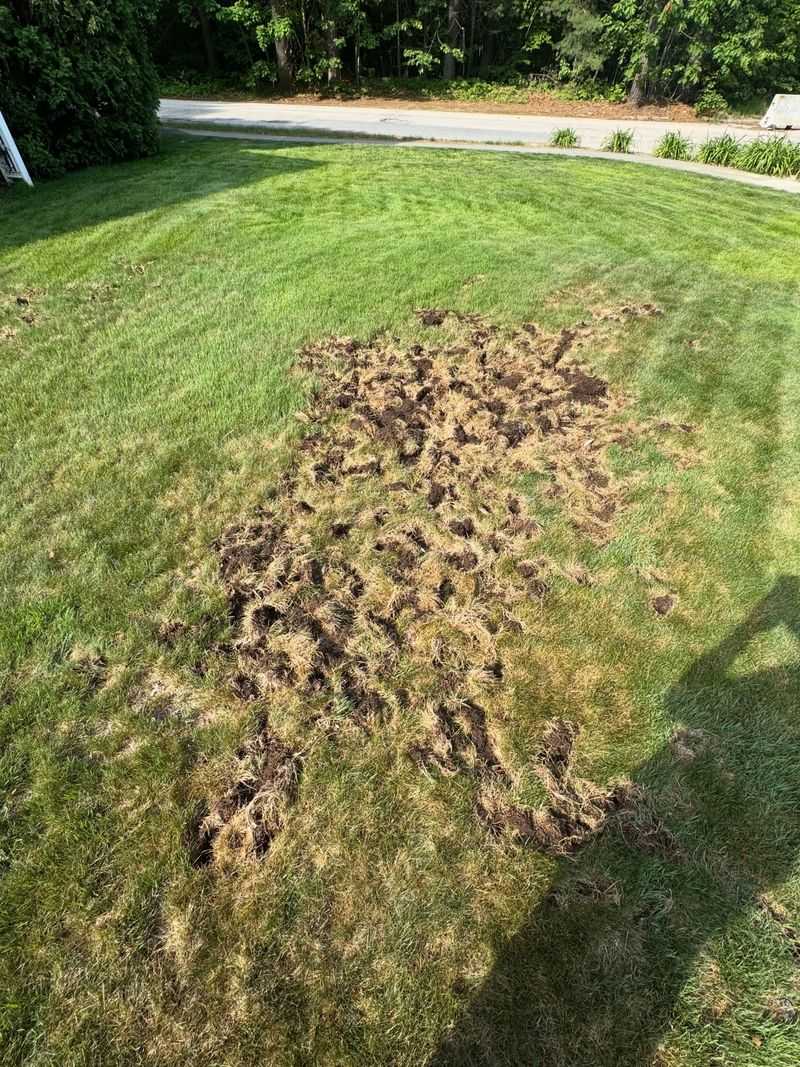
Two other clues back up your count. Skunks, raccoons, and crows tearing up strips of sod at night are hunting something, and spongy footing that feels like walking on a mattress points the same direction.
Press the flap back down afterward and water it in. The turf knits back together within a week or two.
Write down your numbers and the date. That record becomes your reference for timing next season’s decision.
The Treatment Window That Already Passed
Timing, more than product choice, decides if a grub application works. The University of Maryland Extension’s Home and Garden Information Center is blunt about it.
Preventive products go down before or right as eggs hatch. In Maryland that generally means mid-June through mid-July, with early July often cited as the sweet spot.
The active ingredients in those products need time to move into the root zone. Watering them in after application is part of the process, not an optional step.
When tiny, newly hatched larvae begin feeding, they encounter treated roots immediately. Small insects with small appetites are far easier to stop.
Miss that stretch and the math changes. A product applied in September meets larvae that are many times larger, tougher, and feeding deeper in the soil profile.
Because dates shift with weather each year, checking the current UMD HGIC turf calendar beats relying on memory. Their guidance updates as seasons run early or late.
Worth remembering: preventive treatment only makes sense if you have a history of trouble. Blanket applications on a lawn that has never had a problem waste money and put pressure on pollinators visiting clover and flowering weeds.
The smarter cycle is to scout in late summer, record what you find, and use that evidence to decide about the following June.
Mark your calendar now while the brown patch is still fresh in your mind. Next spring the lawn will look fine, and it is remarkably easy to forget.
Reasons Curative September Applications Disappoint
Plenty of people reach for a bag of insecticide the day they see the damage. It feels like the responsible move, and it rarely delivers.
Size is the main obstacle. A third-stage larva in September has a thick body and a hardened exterior that shrugs off doses which would have handled a newborn.
Location works against you too. As soil cools, larvae drift deeper, putting distance between themselves and any product sitting near the surface.
Appetite drops as well. Mature larvae feed less, and since many products depend on the insect ingesting treated material, less feeding means less exposure.
Product type matters more than the label shouting. Preventive neonicotinoid-style ingredients are built for early-season use and simply are not designed for large larvae.
Fast-acting curative ingredients exist and can reduce numbers if applied while larvae are still shallow and actively feeding. Even then, expected results fall short of what a properly timed June or July application achieves.
Then there is the part no chemical addresses. Grass that has already lost its roots does not green back up just because feeding stops.
You would be paying to protect turf that is beyond recovery. The money goes further toward seed, topsoil, and water.
Milky spore and beneficial nematodes get mentioned often as alternatives. Nematodes need moist, warm soil and careful handling to perform, and milky spore targets only certain beetle species over several years.
Accepting the missed window is not defeat. It just redirects your effort toward repair, which pays off faster.
Repairing Thin And Loose Areas This Fall
Cooler air brings a fresh opportunity. September and early October happen to be the best seeding stretch of the entire year in Maryland.
Start by raking out the loose material. If turf lifts free with no roots holding it, pull it away rather than trying to nurse it along.
Loosen the top inch of soil so seed makes real contact. Seed resting on compacted ground or old thatch mostly goes to waste.
Turf-type tall fescue is the workhorse choice for most of the state. Deeper roots give it better tolerance of both summer heat and future root feeding.
Spread seed at the rate on the bag, then press or lightly rake it in. A thin dusting of compost or topsoil holds moisture without smothering.
Water lightly and often at first, aiming for consistently damp soil rather than puddles. Once seedlings are up, stretch the interval and water more deeply.
A starter fertilizer helps new roots establish, and Maryland’s fertilizer rules set limits on rates and timing worth reviewing before you spread anything.
Hold off on mowing until new grass reaches roughly three inches. Then cut high, around three to four inches, which shades soil and encourages deeper roots.
Foot traffic is hard on young seedlings. Reroute the dog, the kids, and the shortcut across the corner for a few weeks.
By Thanksgiving those patches usually blend in. The lawn heading into winter with fresh roots is a lawn better prepared for whatever next July brings.
Building A Lawn That Resists Next Summer

Ask anyone who has dealt with this cycle for years and they will tell you the same thing. Thick, deep-rooted turf handles root feeding far better than thin turf does.
Mowing height is the cheapest upgrade available. Keeping fescue at three to four inches encourages roots to reach deeper, where a little feeding matters less.
Watering habits shape the outcome too. One deep soaking a week beats daily sprinkles, which train roots to stay shallow and keep the surface attractive to egg-laying beetles.
Consider going drier in midsummer on purpose. Cool-season grass naturally slows in July, and firmer soil is less inviting for eggs, which need moisture to survive.
Soil testing removes guesswork about lime and nutrients. Maryland soils often run acidic, and grass growing in the right pH range simply outperforms grass that is not.
Aeration in fall relieves compaction and helps water and roots move down instead of sideways. Pair it with overseeding and you get double value from one afternoon.
Scouting stays part of the routine. A quick flap check in early August each year tells you if next June deserves a preventive application or not.
Encourage the helpers, as well. Birds, ground beetles, and parasitic wasps all reduce larvae quietly, and skipping unnecessary broad treatments keeps them around.
Fun bit of history: some of the beetles behind this trouble arrived in shipments of nursery stock over a century ago and spread across the mid-Atlantic from there. Steady habits beat emergency reactions every season.