The Low-Water Flowers That Stand Out In Arizona Front Yards
Nothing catches your eye faster than a front yard that still looks bright when everything around it seems tired from the heat. You do not have to be an experienced gardener to notice the difference.
Some homes always seem to have flowers that stay colorful long after others begin to fade. Seeing that can make you stop for a moment and wonder what they are doing differently.
Great landscapes rarely happen by accident. They usually come from choosing plants that continue to look good without demanding constant attention every single week.
That is one reason low-water flowers have become such a popular choice for front yards in Arizona.
They bring dependable color while handling hot, dry conditions much better than many traditional bedding plants.
The right varieties can make your landscape stand out through the season without turning watering into a daily chore.
1. Desert Marigold Blooms Through Hot Weather
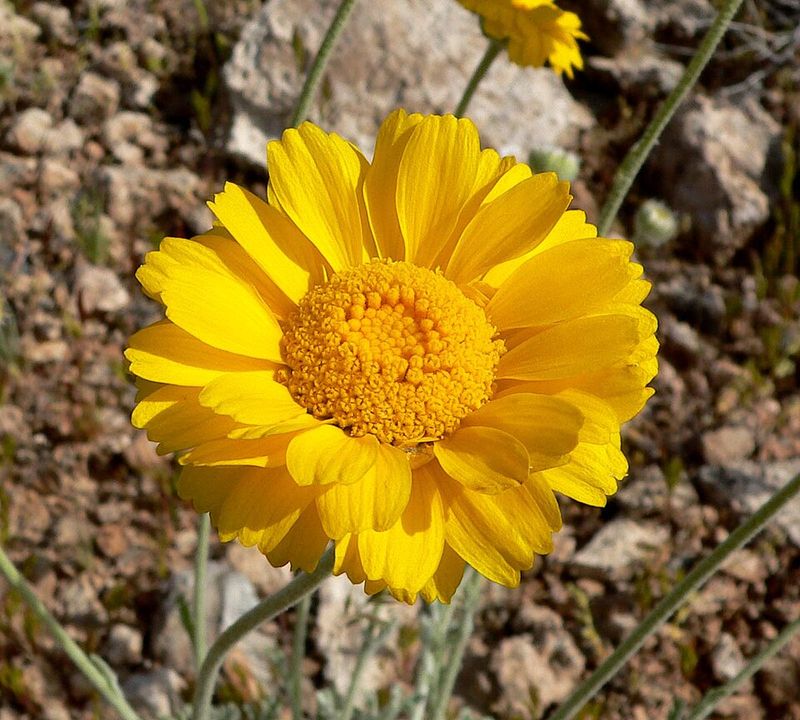
Bright yellow and almost impossible to ignore, desert marigold earns its place in any low-water front yard. It blooms heavily in spring, slows down a little in peak summer heat, then bounces back in fall.
Few flowers match that kind of seasonal staying power in dry desert climates.
Reaching about one to two feet tall, it fits neatly along walkways or borders without taking over. Bees and butterflies visit the flowers regularly, which adds life to the yard beyond just color.
Deadheading spent blooms can encourage fresh flowering, though many gardeners skip it and still get decent results.
Drainage matters a lot with this plant. Soggy soil causes root problems faster than heat ever would.
Plant it in well-draining ground, gravel, or caliche-heavy soil, and it tends to settle in without much fuss.
Once established, supplemental watering every couple of weeks during dry stretches is usually enough. Younger plants need a bit more attention in their first season.
Native to the Sonoran and Chihuahuan desert regions, it is already adapted to the extremes most desert gardeners deal with regularly.
Compact, cheerful, and surprisingly tough, desert marigold rewards low-maintenance gardeners with months of golden blooms that look great against gravel or decomposed granite.
2. Blackfoot Daisy Flowers For Months
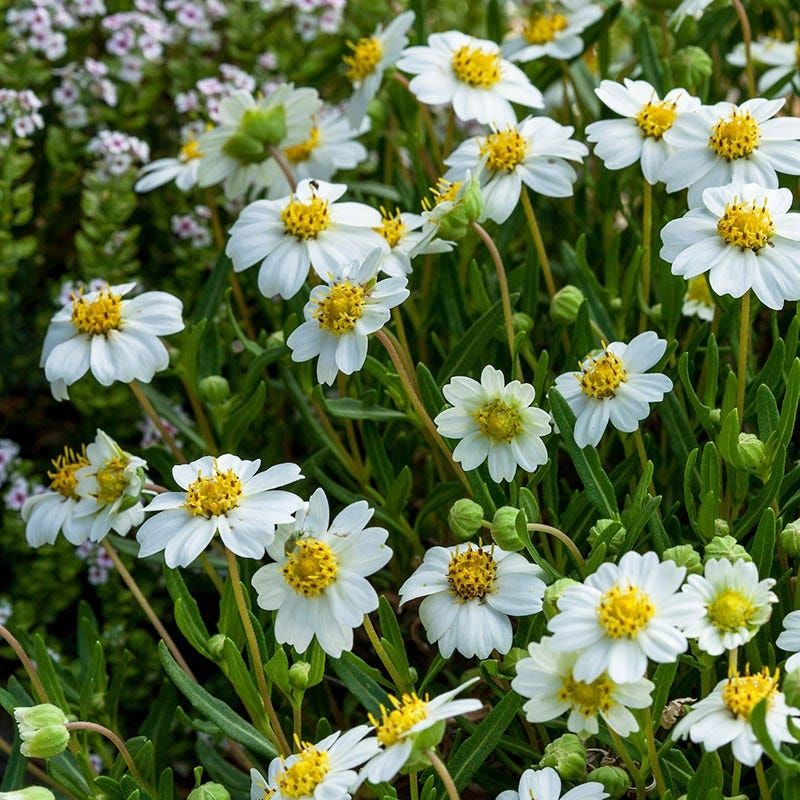
Blackfoot daisy might be small, but it blooms longer than almost anything else you can plant in a dry front yard. White petals with a sunny yellow center, it looks delicate but handles drought and rocky ground surprisingly well.
Gardeners who overlook it based on size usually end up regretting it.
Blooming season can stretch from early spring all the way into late fall under decent conditions. Cooler temperatures tend to bring out the heaviest flushes of flowers.
During peak summer heat, blooming may slow, but the plant generally holds its shape and stays alive without much intervention.
It tops out around one foot tall and spreads about one to two feet wide. That low, spreading habit makes it ideal for filling gaps between rocks or along the edges of gravel paths.
Your Arizona Garden Changes Every Week. Your Plan Should Too.
Gardening in Arizona changes quickly throughout the season. Every Friday you’ll receive a simple weekly plan showing exactly what to plant, prune, fertilize, harvest, and protect so you never miss the right timing.
Planting in groups of three or more creates a fuller, more polished look.
Watering every one to two weeks during dry periods is typically enough once it is established.
Avoid planting in clay-heavy soil since poor drainage shortens its lifespan noticeably. Sandy, gritty, or decomposed granite soil works best.
Native to the Chihuahuan desert, blackfoot daisy thrives in low-desert front yards with minimal intervention. It self-seeds lightly, so new plants may pop up nearby over time, slowly filling in bare spots on their own.
Butterflies also visit the flowers regularly, adding even more life and movement to the landscape throughout the growing season.
3. Red Yucca Sends Up Striking Flower Spikes
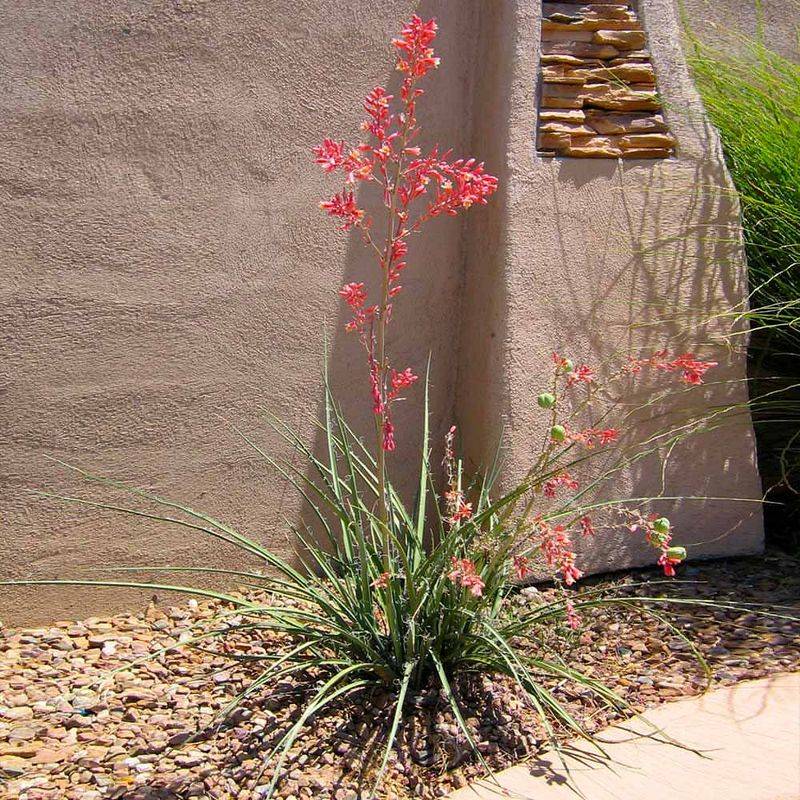
Nothing in a low-water front yard commands attention quite like red yucca in full bloom. Tall, arching flower spikes covered in coral-pink tubular blossoms shoot up four to five feet above the plant’s grassy base.
Hummingbirds find those flowers irresistible, and they will visit repeatedly throughout the blooming season.
Despite the name, red yucca is not a true yucca. It belongs to the agave family and lacks the sharp leaf tips that make some desert plants hazardous near walkways.
That makes it a safer choice for yards where kids or pets move around regularly.
Blooming typically runs from late spring into summer. After flowers fade, the seed stalks can be left up to add winter structure or cut back to keep things tidy.
Either approach works fine without harming the plant.
Red yucca handles full sun and reflected heat from walls or pavement without much stress. Once established, it rarely needs supplemental watering in areas that receive occasional rainfall.
In prolonged dry stretches, a deep soak every few weeks helps maintain healthy growth. It spreads slowly by offsets, forming attractive clumps over several years.
Planted against a light-colored wall or pale gravel, the flower spikes create a bold visual contrast that looks striking from the street. Few plants offer that combination of drama, wildlife value, and low water demand.
Even when it is not blooming, its blue-green foliage stays attractive year-round, giving the landscape lasting texture and structure.
4. Angelita Daisy Thrives In Full Sun
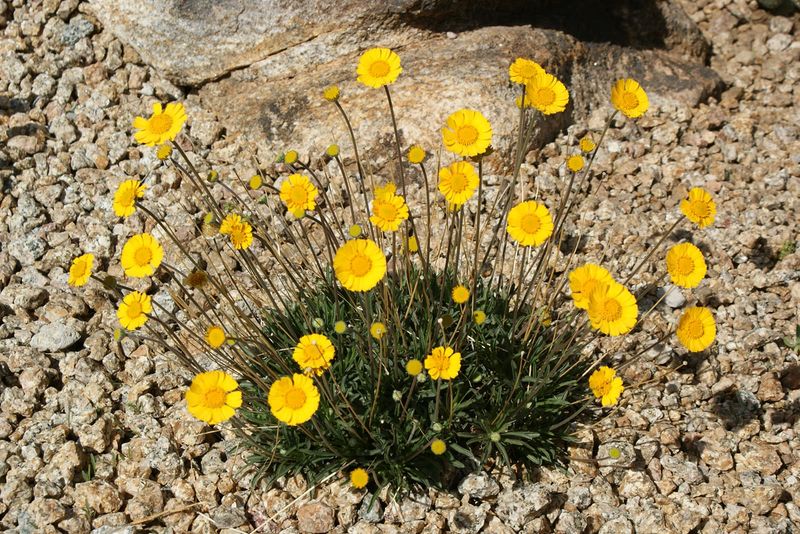
Full sun does not slow down angelita daisy one bit. Compact, tidy, and covered in small yellow flowers for most of the year, it performs consistently in spots where other plants struggle to survive.
Hot south-facing exposures that bake other plants tend to be exactly where this one does its best work.
Reaching about one foot tall and spreading slightly wider, it fits into tight spaces without crowding neighboring plants. The fine-textured, dark green foliage stays attractive even when blooming slows during extreme heat.
That evergreen quality means it adds year-round visual interest beyond just its flowers.
Blooming often picks up again in fall when temperatures drop slightly. In mild desert winters, it may continue producing flowers with only brief pauses.
Gardeners in low desert zones sometimes report near-continuous blooming across multiple seasons, though results depend on specific microclimates and soil conditions.
Water requirements are minimal once established. Deep watering every two to three weeks during dry periods is a reasonable starting point, adjusting based on how the plant looks.
Wilting or yellowing leaves usually signal either too little water or poor drainage rather than heat stress. Gritty, fast-draining soil gives it the best chance of long-term success.
Pair it with red yucca or globe mallow for a front yard combination that delivers color across multiple seasons without demanding constant attention or heavy irrigation.
5. Parry’s Penstemon Draws Hummingbirds With Its Flowers
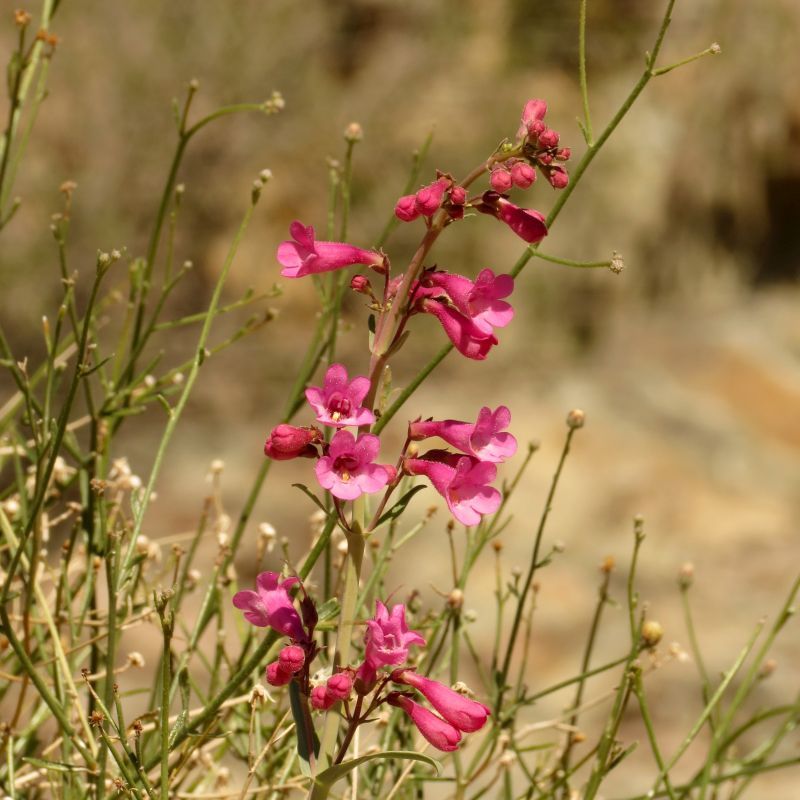
Hummingbirds show up fast once Parry’s penstemon starts blooming. Tall spikes of bright pink tubular flowers appear in late winter through spring, often before most other desert plants wake up.
That early bloom time makes it especially valuable for wildlife and for adding color when the yard still looks bare.
Plants typically reach two to four feet tall when in flower. After blooming ends, the foliage remains tidy and low to the ground.
Leaving the seed heads in place after bloom provides food for birds and allows the plant to self-seed naturally in nearby soil.
It handles rocky, lean soil better than rich amended ground. Overwatering or planting in heavy clay often leads to root problems.
Well-draining, native desert soil with minimal amendments tends to produce the healthiest, longest-lived plants.
Established plants survive on rainfall alone in many desert locations, though a deep soak every three to four weeks during dry spring periods helps maintain strong blooming.
Avoid overhead watering since wet foliage can encourage fungal issues in humid stretches.
Starting from nursery transplants rather than seed gives faster, more reliable results for most home gardeners. Parry’s penstemon naturalizes well in desert front yards, slowly spreading over time through self-seeding.
Few spring-blooming plants in dry desert landscapes offer this combination of wildlife value, striking visual height, and low water demand in a single package.
6. Globe Mallow Handles Extreme Heat Well
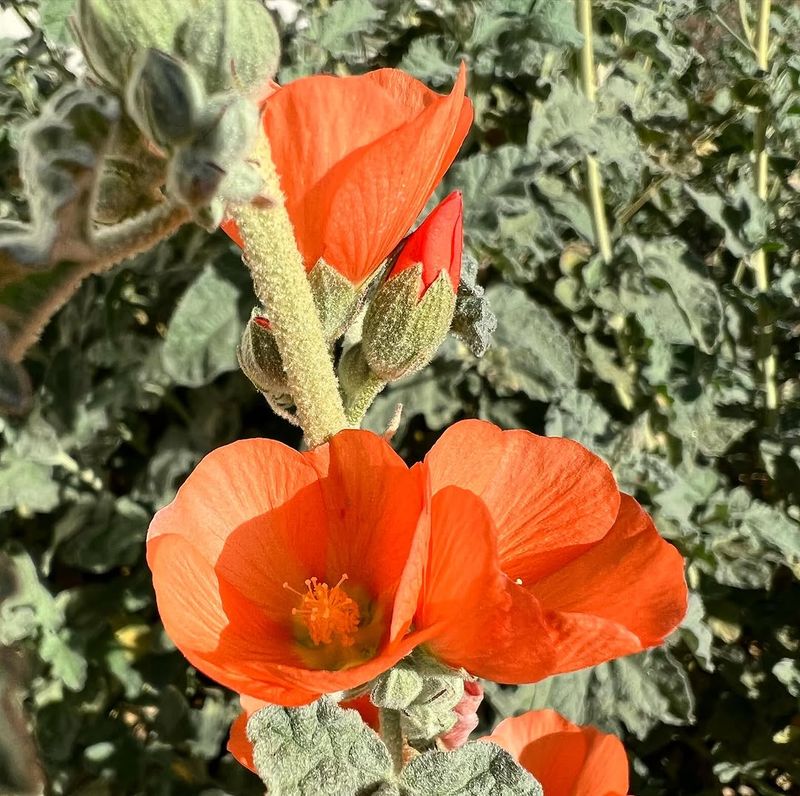
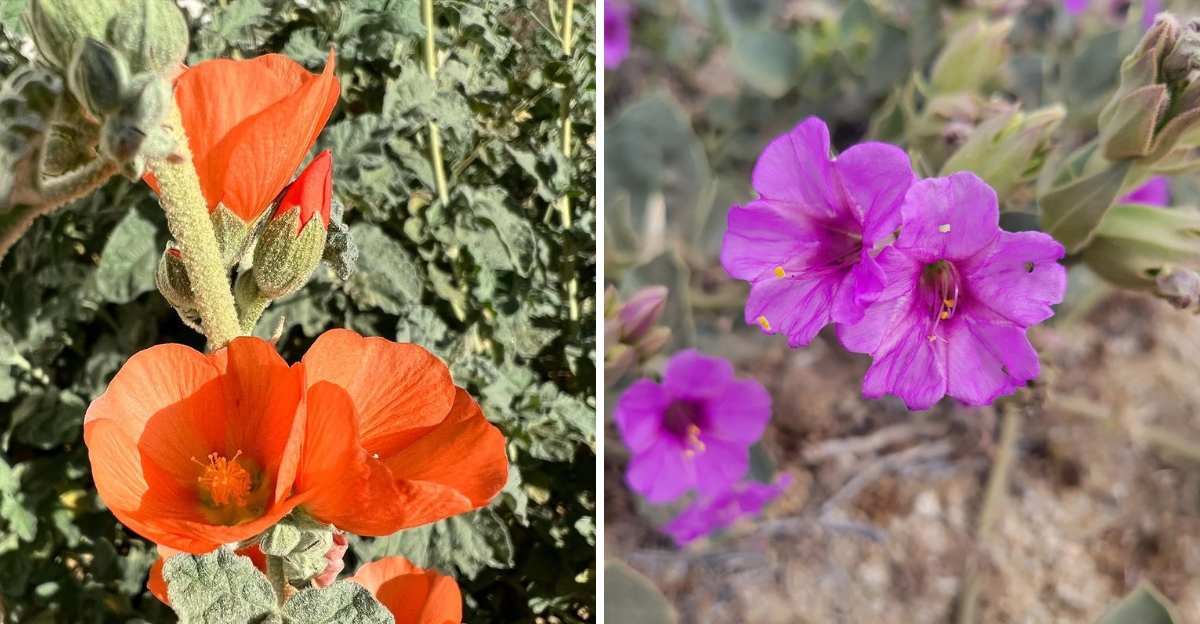
Orange, red, or pink cup-shaped flowers covering a silvery-leafed shrub in the middle of a desert summer is exactly what globe mallow delivers.
It blooms heavily in spring, but unlike many desert plants, it can push out new flowers during summer heat if given occasional water. That extended performance is rare among low-water plants.
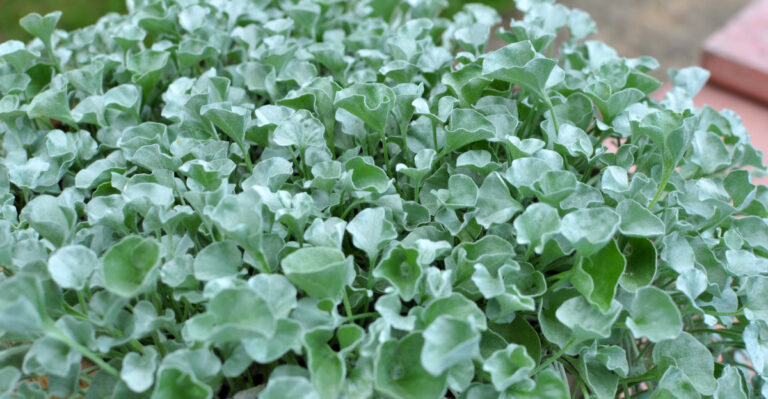
Silvery-gray foliage reflects sunlight and helps the plant stay cooler during peak heat hours. It also gives the plant an attractive, soft texture that contrasts nicely against dark gravel or red rock landscaping.
Even without flowers, globe mallow looks interesting in a front yard setting.
Heights vary by species, generally ranging from one to four feet. Compact varieties work well along borders, while taller types make good background plants or informal hedges.
Cutting plants back by about one-third in late summer can encourage a fresh flush of fall blooms in many cases.
Watering every one to two weeks during dry stretches supports consistent blooming. Established plants survive on less, but flowering often drops off significantly during prolonged drought without any supplemental water.
Planting in full sun and fast-draining soil is essential. Globe mallow reseeds readily, so seedlings may appear in surrounding gravel over time.
Pulling or relocating unwanted seedlings is easy when they are small. It is a reliable, low-fuss bloomer that holds up well through the worst of desert summer conditions.
7. Desert Zinnia Forms A Colorful Ground Cover
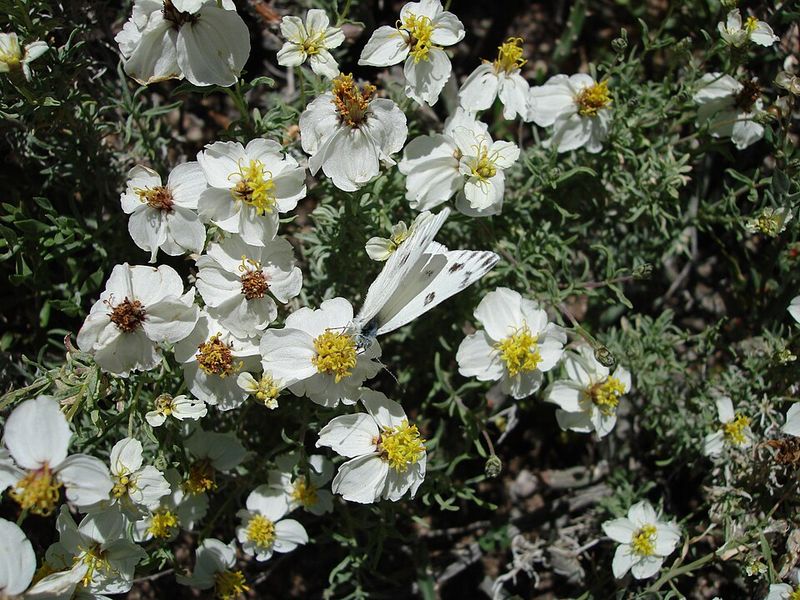
Ground-level color that spreads across gravel without needing much water sounds too good to be true, but desert zinnia pulls it off. White ray flowers with yellow centers bloom from spring through fall under typical desert conditions.
Plants stay low and spread outward, slowly filling gaps between rocks and pavers over time.
Growing only six to ten inches tall, it works well at the front of a planting bed or tucked between larger plants. Bees visit the flowers regularly, adding quiet but consistent pollinator activity to the yard.
Deadheading is optional since plants tend to rebloom without much encouragement.
Unlike hybrid garden zinnias, the desert variety is genuinely adapted to lean, rocky soil and strong sun exposure. Amended, nutrient-rich soil can actually cause overly lush growth that reduces flowering.
Keeping soil lean and well-drained gives better results.
Water every ten to fourteen days during dry periods once established. Younger plants need closer attention during their first summer.
Planting in early spring gives roots time to settle before peak heat arrives, which improves survival rates noticeably. Desert zinnia reseeds moderately, so small plants may appear nearby each year.
It pairs well with angelita daisy or blackfoot daisy for a low, layered ground-level planting that provides season-long color without demanding regular irrigation.
In hot, sunny front yards across the desert Southwest, it is a dependable, underrated option worth planting more widely.
8. Desert Four O’Clock Opens Its Flowers At Dusk
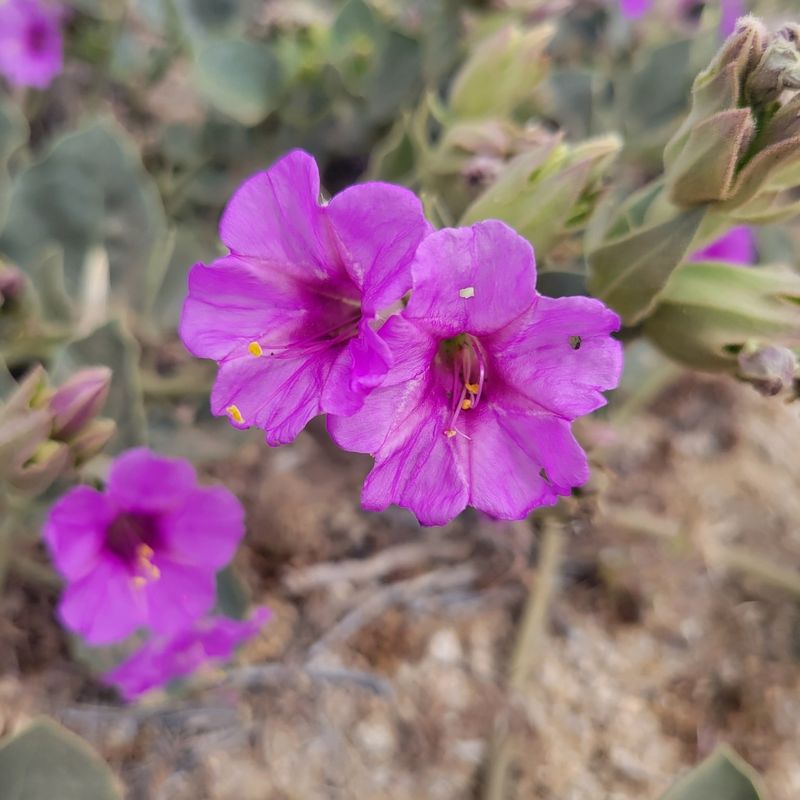
Not every front yard flower needs to perform at noon. Desert four o’clock waits until late afternoon or early evening to open its magenta-pink trumpet-shaped blooms, putting on a show right when many people are actually outside enjoying their yards.
That evening timing makes it genuinely different from most flowering desert plants.
Plants grow into a rounded mound two to three feet tall and wide. Foliage is lush and dark green compared to many desert natives, giving it a fuller, more tropical appearance.
Flowers close by midmorning, so the display is brief but vivid each day throughout the blooming season.
Blooming runs from late spring into fall, with the heaviest flowering often occurring after monsoon rains arrive. Established plants have a deep taproot that stores water and helps them recover quickly after dry stretches.
That taproot also makes transplanting difficult once plants are mature, so choose the planting location carefully.
Water every one to two weeks during prolonged dry periods. Cutting plants back in late fall helps keep them compact and encourages fresh growth the following spring.
Plants may go dormant in winter and re-emerge from the base when temperatures warm. Self-seeding is common, and seedlings transplant easily when caught young.
Desert four o’clock attracts sphinx moths in the evening, adding unexpected wildlife interest to front yards.
It is a relaxed, low-demand plant that rewards patient gardeners with daily evening color throughout the warm months.