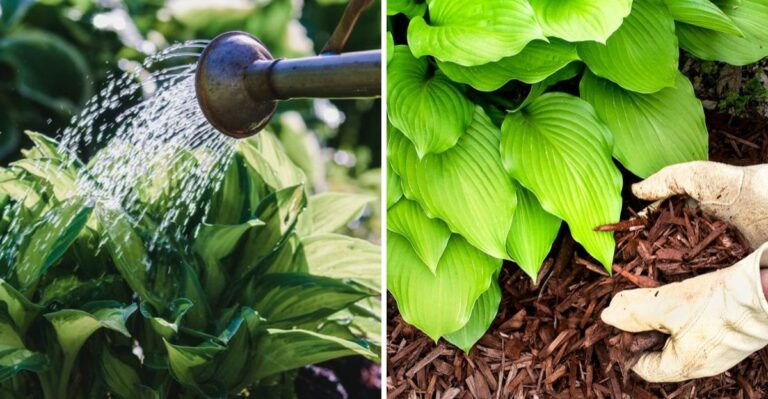
The Meaning Behind Finding A Salamander Hiding Under Your Pennsylvania Mulch
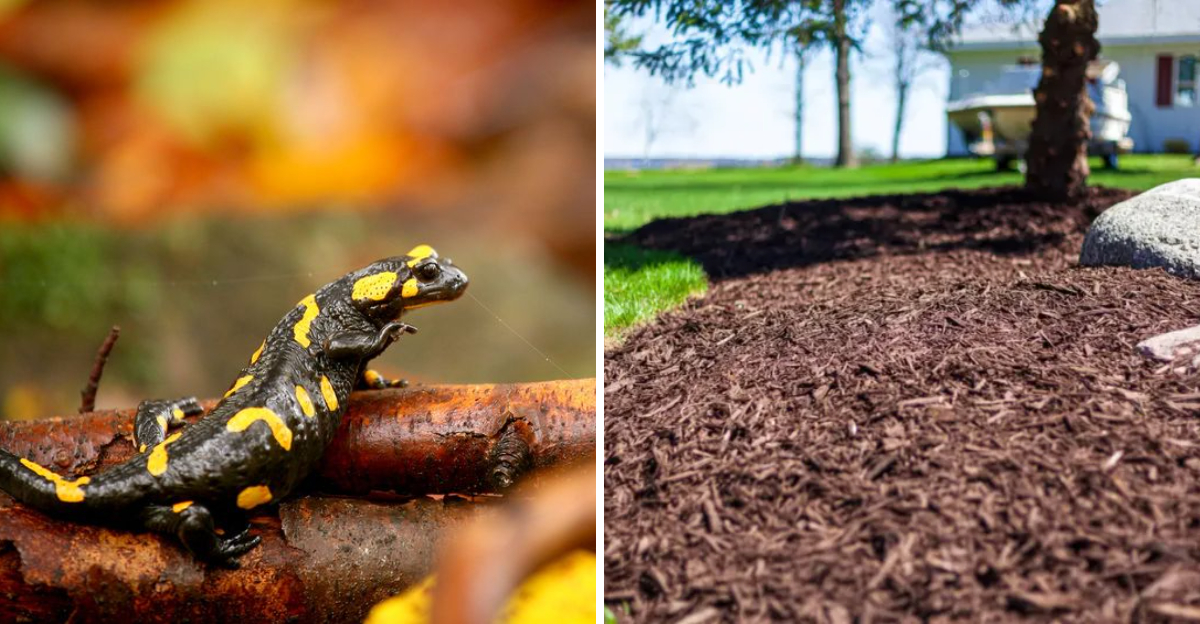
Lifting a layer of mulch in your Pennsylvania garden and finding a salamander underneath is one of those quiet discoveries that feels a little magical.
These are secretive, ancient looking creatures that most people rarely encounter up close, and finding one in your own yard, hidden just beneath the surface, tends to produce a moment of genuine wonder before any questions arrive.
Then the questions arrive. What is it doing there? What does it mean?
On the practical side, a salamander in your garden mulch is one of the most meaningful signs your outdoor space can offer. These animals are highly sensitive to environmental conditions and deeply selective about where they live.
Their presence is a direct indicator of soil health, moisture levels, and the overall ecological quality of your garden in ways that no soil test can fully capture.
Beyond the science, salamanders carry rich symbolic meaning in folklore and natural traditions that stretch back centuries across many of the cultures that have called Pennsylvania home.
Here’s what finding a salamander under your Pennsylvania mulch really means.
1. Your Mulch Is Creating The Cool, Damp Shelter It Needs
Mulch does more than make a garden look tidy. Beneath that layer of wood chips or shredded bark, something remarkable happens: the ground stays cool, shaded, and moist even on warm summer days.
For a salamander, that combination is basically a five-star hotel. Salamanders have smooth, thin skin that must stay damp at all times. Unlike reptiles, they cannot hold moisture inside their bodies very well.
If their skin dries out, they are in serious trouble. That is why they spend most daylight hours tucked away under leaves, rotting logs, bark, or anything else that blocks the sun and holds humidity.
Mulch imitates the forest floor almost perfectly. It slows moisture evaporation from the soil, blocks direct sunlight, and creates a stable microclimate just a few inches below the surface.
Many Pennsylvania gardeners add three to four inches of mulch around their plants, and without realizing it, they are recreating the shaded, damp habitat a woodland salamander would naturally seek out.
So when you lift a corner of mulch and find one of these creatures resting quietly underneath, your garden bed has essentially passed a habitat quality test. The moisture is right.
The temperature is right. The cover is right. You did not plan for a salamander to move in, but your mulch made it happen anyway.
Keeping your mulch at a consistent depth and watering your garden regularly will help maintain these conditions.
Organic mulch that breaks down slowly, like hardwood chips or shredded leaves, tends to hold moisture better and creates an even more welcoming layer for secretive ground-dwelling animals.
2. Your Garden Contains Plenty Of Small Prey
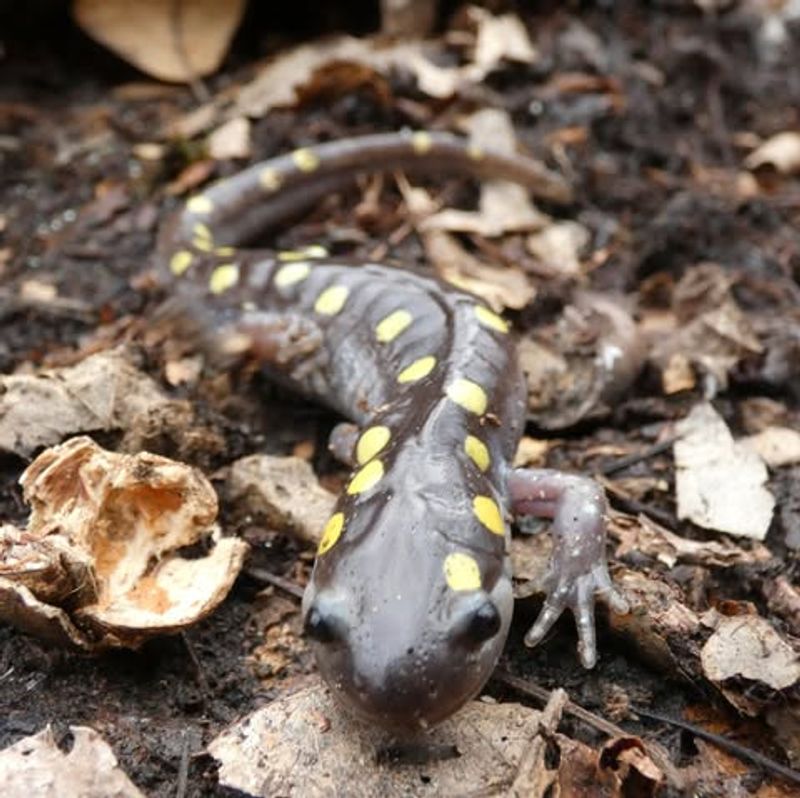
A salamander does not stumble into a garden by accident. It follows the food. If one has set up a resting spot under your mulch, there is a very good chance your soil and garden bed are packed with small invertebrates that make a satisfying meal.
Your Pennsylvania Garden Changes Every Week. Your Plan Should Too.
Gardening in Pennsylvania changes quickly throughout the season. Every Friday you’ll receive a simple weekly plan showing exactly what to plant, prune, fertilize, harvest, and protect so you never miss the right timing.
Salamanders are active hunters. They feed on insects, insect larvae, earthworms, spiders, isopods (those little roly-poly bugs), and other tiny creatures that live in or just beneath the soil surface.
A garden rich in organic mulch tends to attract all of these critters naturally because decomposing material provides both food and shelter for them.
What you are really looking at is a layered food web. Bacteria and fungi break down the mulch. Tiny invertebrates eat those microorganisms. Larger invertebrates eat the smaller ones.
Then a salamander slips in and eats from the top of that chain. Your garden is not just growing plants. It is running a whole underground ecosystem.
Gardeners who use chemical pesticides heavily may actually push salamanders away. When the invertebrate population crashes because of spraying, the food supply disappears.
Salamanders need living, active soil to survive. Choosing organic methods and letting some natural decomposition happen in your beds can keep that underground community thriving.
Seeing a salamander is basically your garden telling you that the soil biology is healthy and active. That is genuinely great news for your plants too, since healthy soil full of organisms improves drainage, nutrient cycling, and root growth.
The salamander is just the most visible sign of something good happening beneath the surface.
3. The Visitor May Be An Eastern Red-Backed Salamander
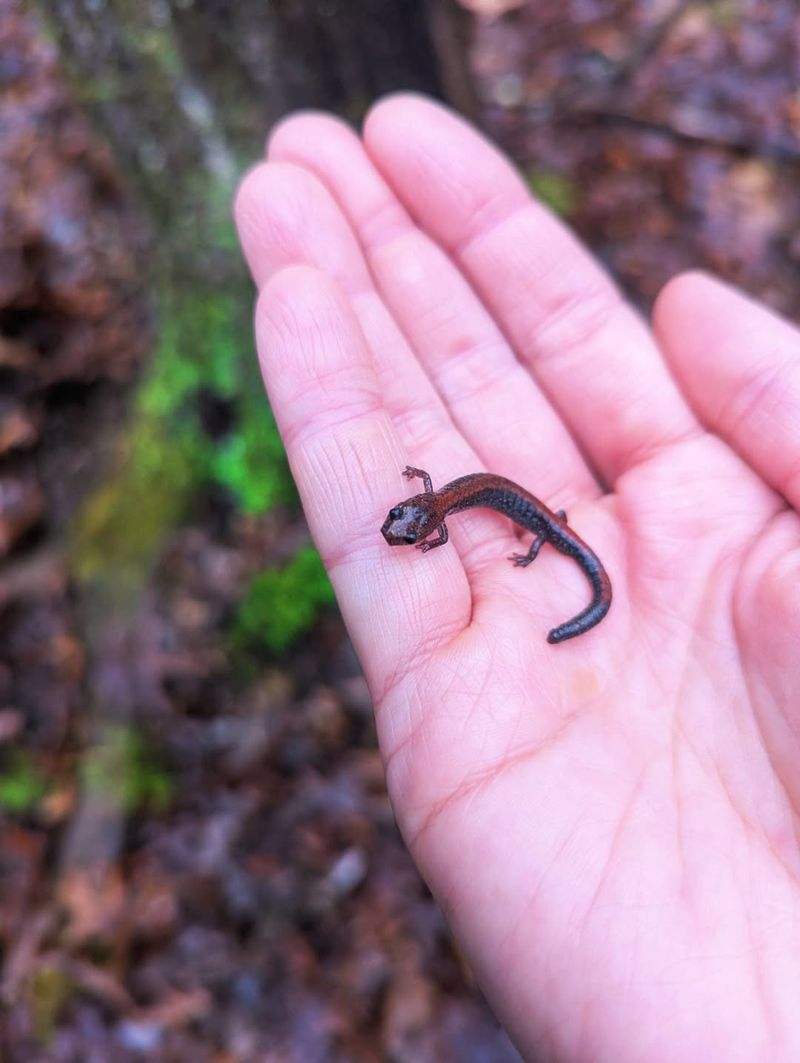
Not all salamanders look the same, and figuring out which species just visited your mulch pile is actually pretty interesting.
The most likely candidate in a Pennsylvania backyard is the Eastern red-backed salamander, one of the most common woodland salamanders in the entire northeastern United States.
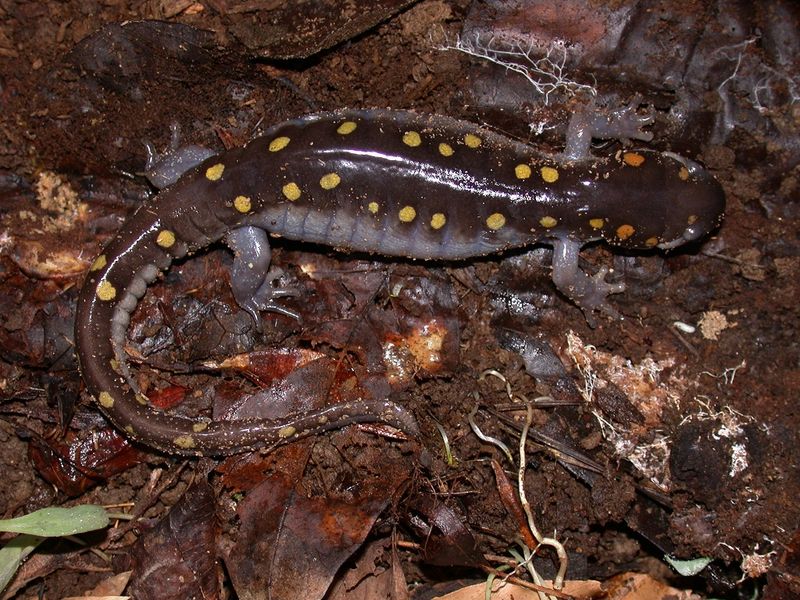
This little creature is slender, usually between two and four inches long, and comes in two color forms. The “red-back” form has a reddish or orange stripe running down its back from head to tail.
The “leadback” form is a plain gray or nearly black color with no stripe at all. Both forms are the same species, just wearing different outfits.
Here is something genuinely cool about this animal: it has no lungs. Eastern red-backed salamanders breathe entirely through their moist skin and the lining of their mouth.
That is another reason why staying damp is not optional for them. It is literally how they get oxygen into their bodies.
Pennsylvania is home to 22 salamander species, so exact identification does matter. Some species prefer stream edges, others live in caves, and a few are found only in specific mountain habitats.
The Eastern red-backed salamander is one of the few species comfortable living close to suburban gardens, which is why it is the most frequent mulch-pile visitor.
If you want to identify what you found, take a quick photo before replacing the mulch. Field guides and free identification apps can help you figure out the species without needing to handle the animal at all.
Knowing what visited your yard makes the whole experience even more rewarding.
4. Nearby Trees Or Natural Ground Cover Are Making Your Yard Accessible
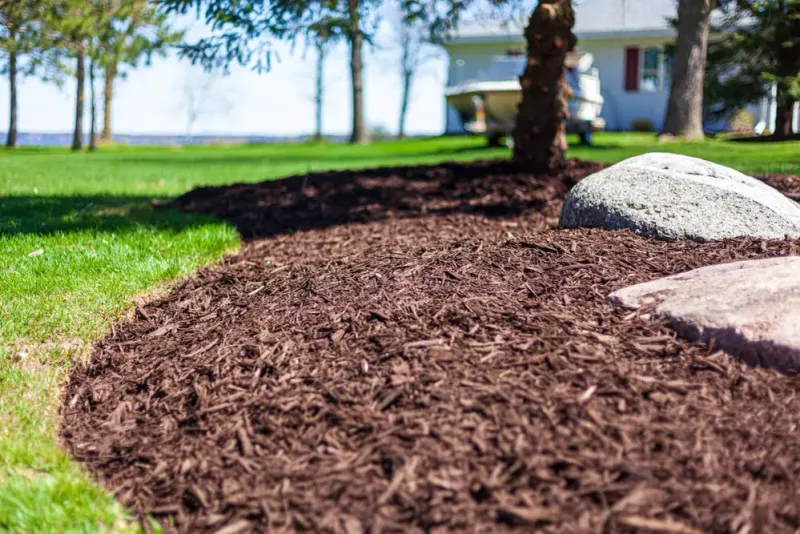
Salamanders are not great travelers. They move slowly, stay close to the ground, and need damp conditions the whole way.
Finding one in your garden usually means it did not come from very far away. Something nearby is providing the habitat it calls home most of the time.
Woodland salamanders live on the forest floor. They tuck themselves under fallen logs, damp leaves, loose bark, and mossy rocks during the day.
At night, especially after rain, they move around to hunt and sometimes explore new areas. If your yard connects to a wooded border, a tree line, or even a single mature tree with deep leaf litter around its base, that could be the launch point for your salamander visitor.
Gardens that sit right next to natural areas act like extensions of the forest floor. The salamander may cross a small patch of lawn or follow a damp edge along a fence line to reach your mulch bed.
Moisture is the highway they travel on. A wet night after a summer rainstorm is exactly when they are most likely on the move.
You can actually make your yard more accessible and welcoming by leaving a strip of undisturbed natural ground cover between your garden and any nearby wooded area.
A few rotting logs, a pile of leaves, or even a stack of flat rocks can act as stepping stones that allow salamanders to move safely across your property.
Keeping some shaded, natural edges around your yard essentially opens a door for these animals. They will find you if the conditions are right and the path between their forest home and your garden stays moist and sheltered.
5. The Salamander Is A Helpful Predator, Not A Plant Pest
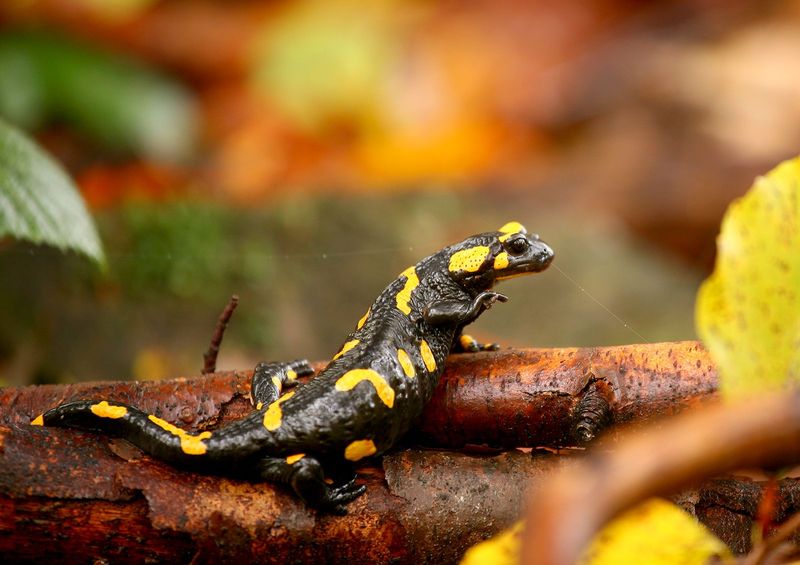
Some people flip over a piece of mulch, spot a salamander, and immediately wonder if it is eating their tomatoes or chewing through their flower roots. The good news is that you can completely relax.
Salamanders do not eat plants. Not even a little bit. Every single thing a salamander eats is an animal. Specifically, it is a small invertebrate animal.
Slugs, pill bugs, beetles, fly larvae, earthworms, and spiders are all on the menu. Salamanders are strictly carnivorous predators, and their entire lifestyle is built around hunting these tiny creatures in the soil and leaf litter.
That makes them genuinely useful in a garden setting. Slugs, for example, are a real nuisance for gardeners growing lettuce, hostas, or strawberries.
Salamanders actively hunt slugs. They also consume many types of insect larvae before those larvae have a chance to grow into adult pests.
By simply existing in your garden, a salamander is doing quiet, helpful work. That said, one small salamander is not going to wipe out a major slug infestation on its own. Its impact is real but modest.
Think of it as one helpful member of a larger team that includes birds, ground beetles, and other natural predators working together across your yard.
The bigger point is that a salamander is not a threat to anything you are growing. There is no reason to remove it, relocate it, or worry about it being near your vegetable beds.
Treating it as a welcome guest rather than a problem is the right call. Gardens that support natural predators tend to have fewer pest problems over time, and that is a benefit worth protecting.
6. The Safest Response Is To Replace The Mulch And Leave It Alone
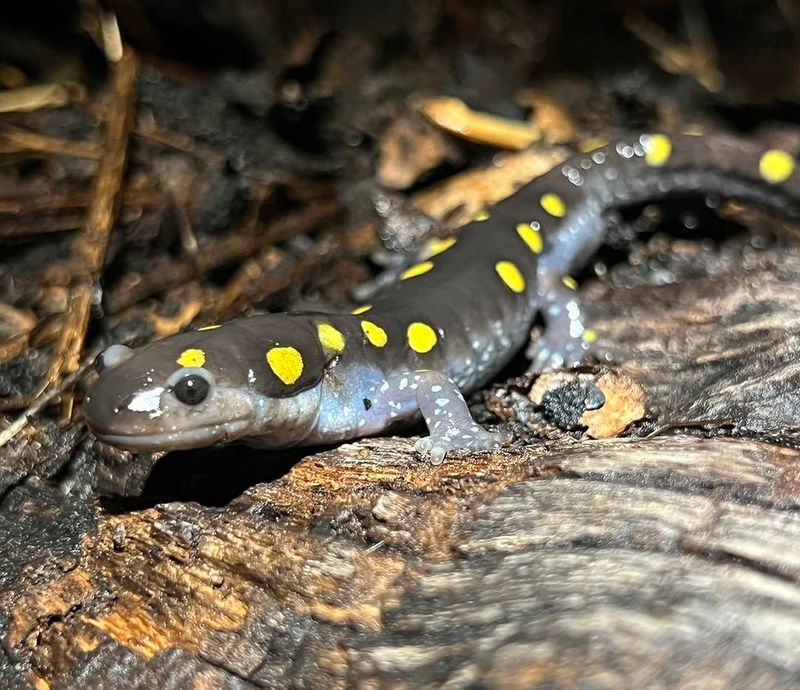
You lifted the mulch, spotted the salamander, and now you are wondering what to do next. The answer is simpler than most people expect: put the mulch back and walk away. That is genuinely the best thing you can do for the animal.
Salamanders are sensitive creatures. Their skin absorbs everything it touches, including the oils, salts, and any chemicals on human hands.
Even brief handling can cause irritation or stress. Unless the animal is in immediate danger, the kindest response is to avoid touching it entirely.
Gently slide the mulch or cover material back into place and let it settle back into its routine.
Resist the urge to move it to a different spot in the yard or to a nearby wooded area. Salamanders have small home territories, and relocating one can actually cause more harm than leaving it where it chose to rest.
It picked that spot for a reason. Trust its judgment. If you want to actively support salamanders long-term, a few simple habits make a real difference. Keep some areas of your yard shaded and damp.
Leave a few flat rocks or a small log pile in an undisturbed corner. Avoid raking up every leaf in fall, since leaf litter is critical winter cover for many salamander species. Reduce or eliminate chemical pesticide use in your garden beds.
Extensive soil disturbance, heavy tilling, and letting mulch dry out completely are the main things that push salamanders away.
Keeping your garden bed covered, slightly moist, and connected to natural areas gives these animals the stable environment they need to stick around season after season.