The Meaning Behind Seeing A Pileated Woodpecker In Your Oregon Yard
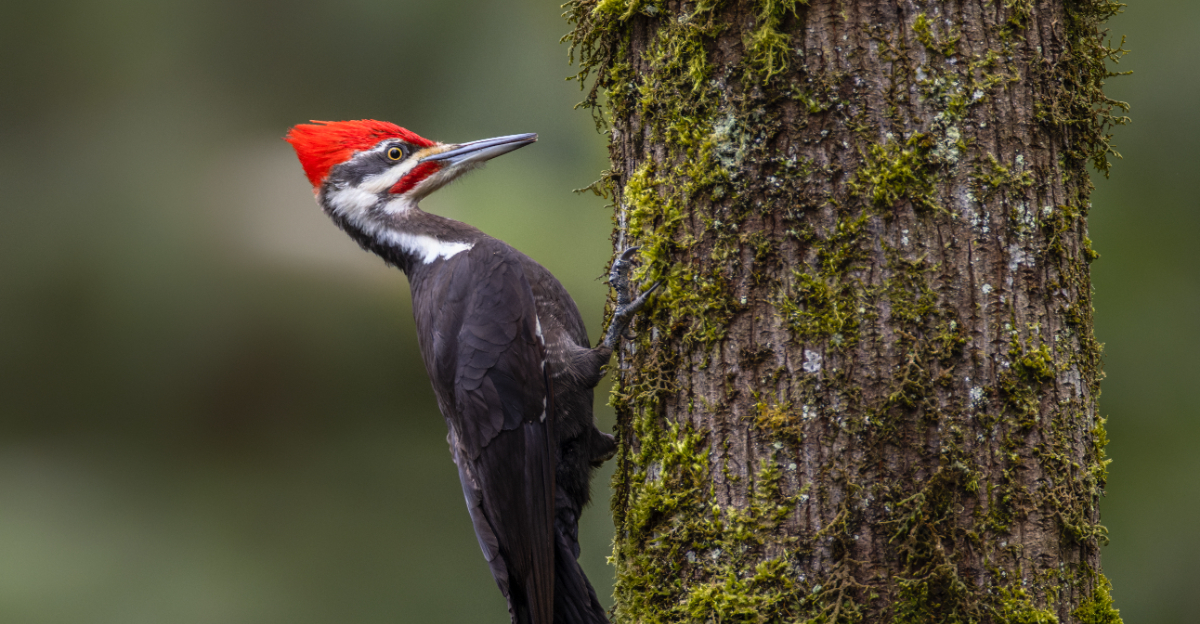
There is no mistaking a pileated woodpecker. The red crest looks almost theatrical, the call carries across the yard, and the bird itself seems far too large to belong on an ordinary backyard tree.
Yet there it is, inspecting the bark like a contractor with very high standards.
Its arrival can feel special because these woodpeckers tend to seek out places that offer more than a convenient perch.
A yard may hold clues that are easy for people to miss but obvious to a bird built to read trees.
That does not always mean something is wrong. In fact, the visit may say something encouraging about the habitat around your home.
A pileated woodpecker rarely blends into the scenery, and that is part of the fun. When one appears, it brings noise, color, and a fascinating hint that your yard plays a bigger role in Oregon wildlife than it seems.
1. Your Yard Has Mature Tree Habitat
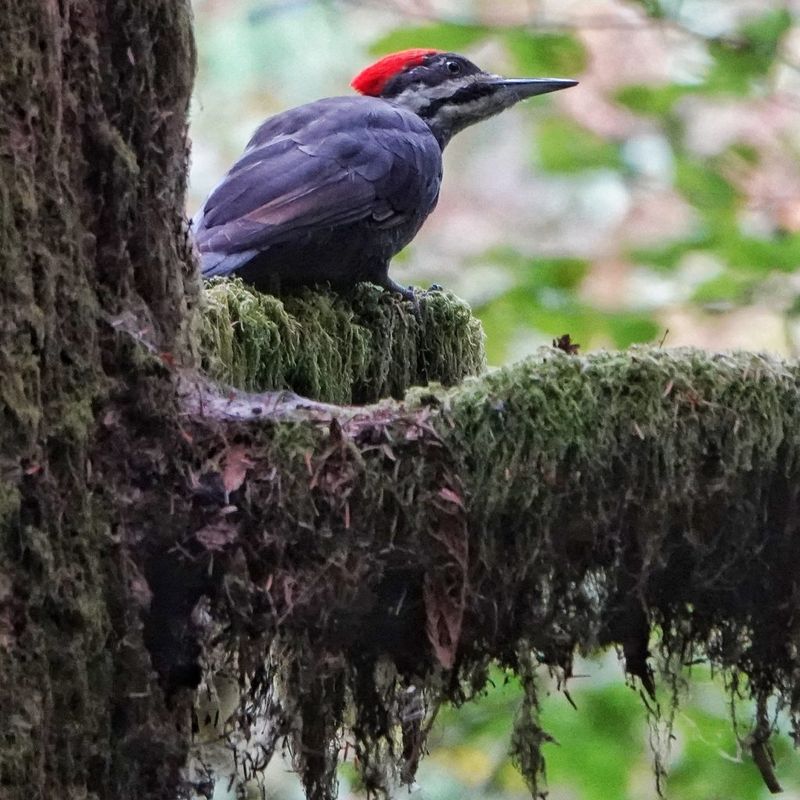
Few things attract a pileated woodpecker faster than a yard full of big, old trees. These birds are not interested in young saplings or freshly planted landscaping.
They need mature forest habitat, and if your property has towering Douglas firs, big-leaf maples, or older ponderosa pines, you have exactly what they are looking for.
Mature trees offer more than just height. They provide thick bark, deep crevices, and years of accumulated insect activity inside their trunks.
A pileated woodpecker can sense where food is hiding, and older trees are like well-stocked pantries compared to younger growth. The larger the tree, the more it has to offer.
Many Oregon neighborhoods that border natural areas still have remnant old trees in their yards. These trees act as bridges between wild forest and suburban space.
When a pileated woodpecker crosses that bridge, it means your trees are mature enough to register as real habitat. That is a genuine compliment to your landscape.
You do not need to live deep in the wilderness for this to happen. Backyards near the Cascades, the Coast Range, or even older urban neighborhoods with legacy trees can attract these birds.
If your yard has trees with trunks wider than your arm span, you are already providing the kind of structure this woodpecker needs to feel at home.
2. Withered Wood May Be Drawing It In
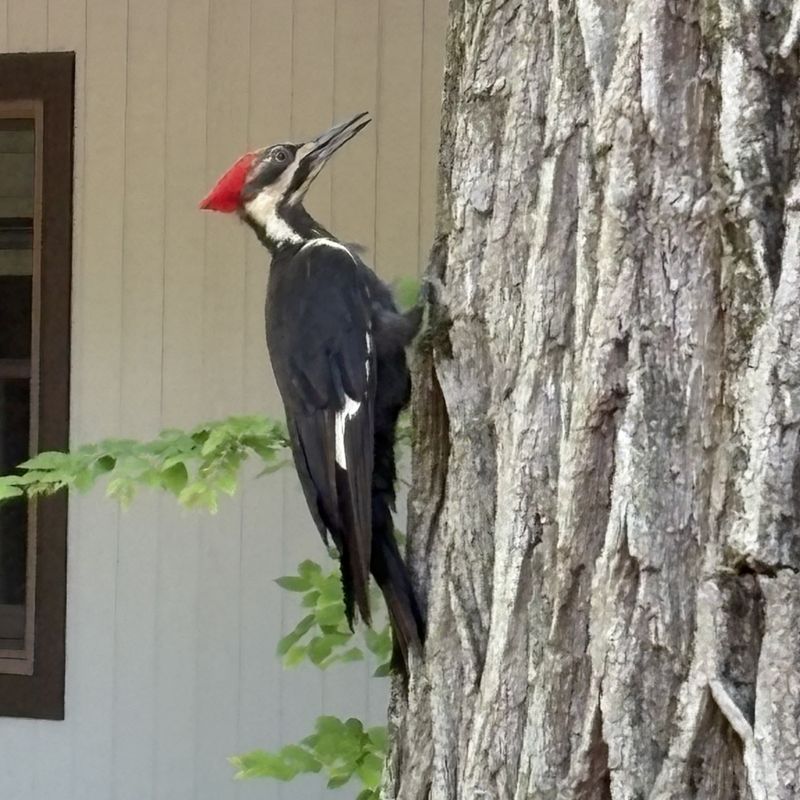
Standing withered trees, called snags, are like magnets for pileated woodpeckers. Most homeowners see a withered tree and want it removed right away.
But to a pileated woodpecker, a standing snag is one of the most valuable things in the landscape. It is where the food is, and these birds are expert at getting to it.
Pileated woodpeckers use their powerful beaks to chisel deep, rectangular holes into withered or softening wood. These holes can be surprisingly large, sometimes as big as your fist.
The goal is to reach carpenter ants, beetle larvae, and other wood-boring insects that have moved into the decaying tissue of the tree.
If you have a snag in or near your yard, and a pileated woodpecker is visiting, that tree is actively supporting wildlife. The bird is not just passing through.
Your Oregon Garden Changes Every Week. Your Plan Should Too.
Gardening in Oregon changes quickly throughout the season. Every Friday you’ll receive a simple weekly plan showing exactly what to plant, prune, fertilize, harvest, and protect so you never miss the right timing.
It found a food source and came back for it. That level of return behavior shows the snag is productive and worth the trip.
In forested regions of Oregon, snags are a natural part of the woodland cycle. In suburban yards, they are rarer, which makes them even more attractive to wildlife when they do exist.
Leaving a safe snag standing, even partially, can make your yard a reliable stop for one of the most dramatic birds in the Pacific Northwest. It is a simple choice with a big payoff for local wildlife.
3. Large Trees Offer Better Foraging Spots
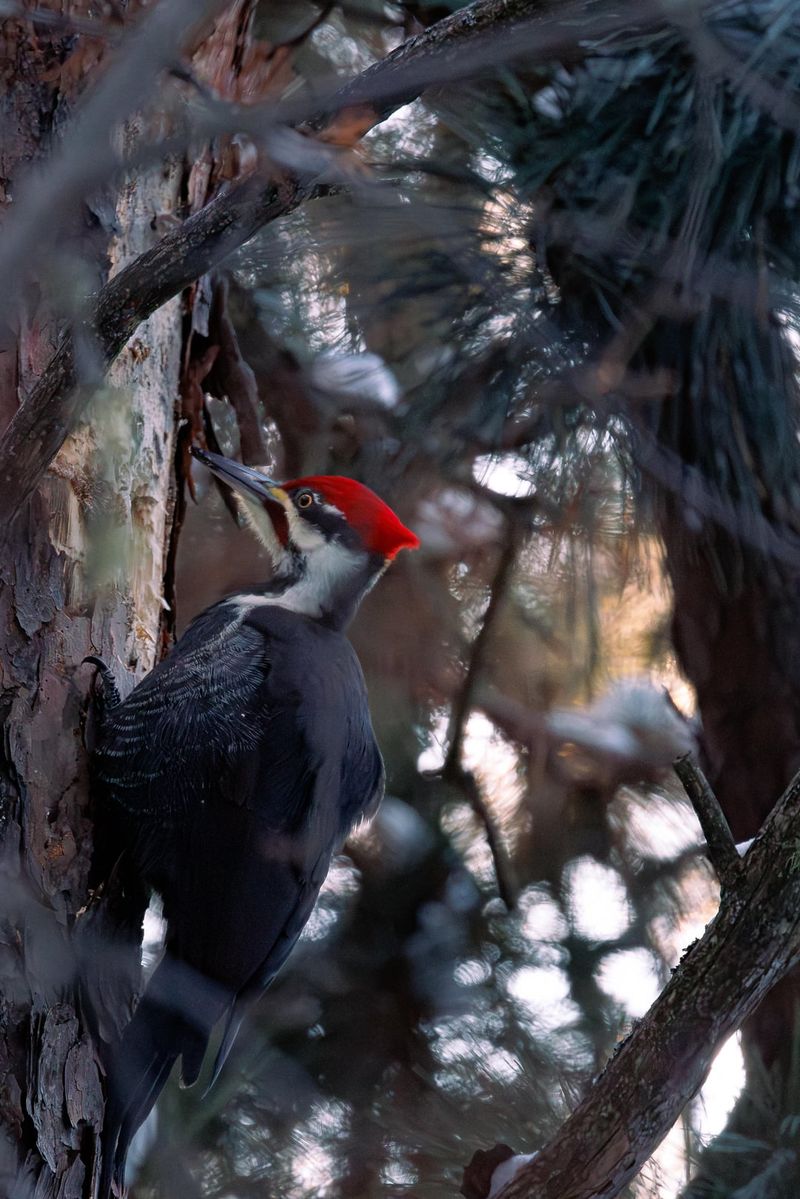
Not all trees are created equal when it comes to feeding a pileated woodpecker. Size really does matter here.
A wide, thick trunk gives this bird more surface area to work with, more bark layers to peel back, and more interior wood to excavate. Smaller trees simply cannot compete with what a large one offers.
When a pileated woodpecker forages, it is not just pecking randomly. It listens and feels for movement beneath the bark.
Carpenter ants leave acoustic and chemical trails that these birds can detect. Once they lock onto a target, they chisel with impressive force and precision.
Larger trees tend to host larger ant colonies, which makes them far more rewarding to work on.
Yards with big trees near a wooded edge are especially attractive foraging zones. The woodpecker can move between the forest and the yard with ease, stopping wherever the food signals are strongest.
If your property has one or two genuinely large trees, those are likely the reason the bird showed up in the first place.
Maintaining large trees in your yard is one of the best things you can do for local wildlife. Resist the urge to remove healthy giants just for tidiness.
Their value to birds like the pileated woodpecker goes far beyond what you can see from the outside. Inside those trunks is a whole world of activity that keeps this extraordinary bird coming back again and again.
4. Carpenter Ants Can Bring Woodpeckers Closer
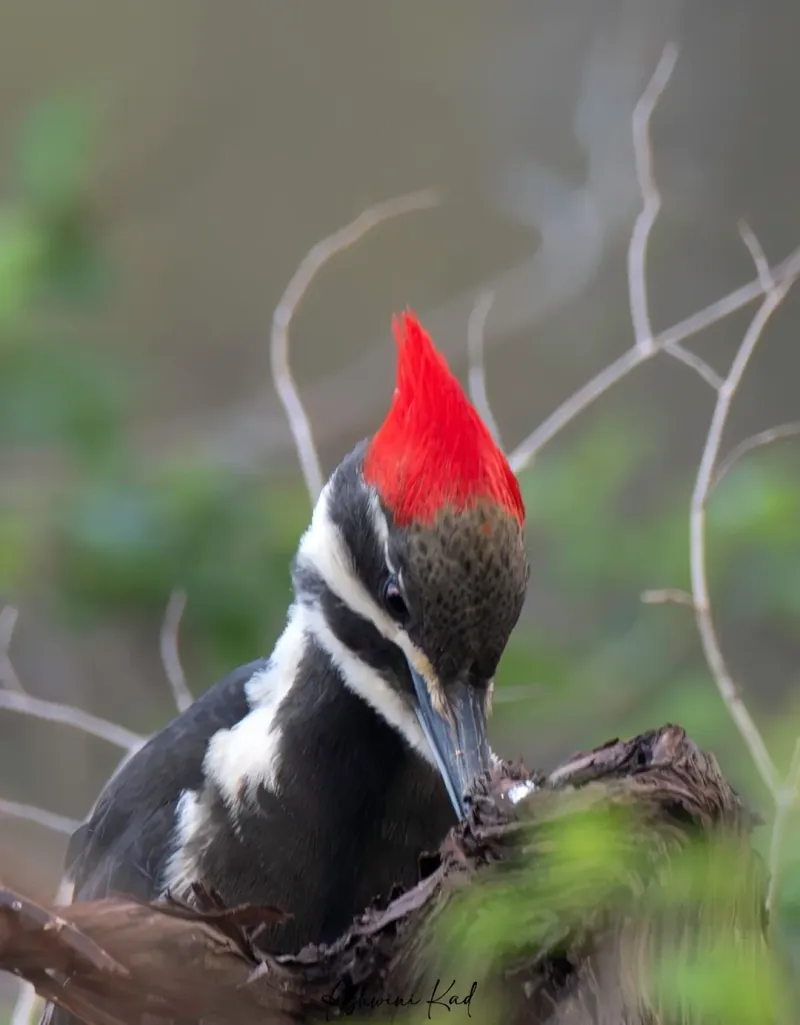
Carpenter ants are the number one food source for pileated woodpeckers. If these ants have set up colonies in or near your yard, you may have unknowingly laid out a welcome mat for one of the most striking birds in the region.
The woodpecker is simply following its food supply, and your yard just happens to be on the route.
Unlike termites, carpenter ants do not eat wood. They tunnel through it to build their nests, preferring wood that is already soft or moist.
Old stumps, aging fence posts, and the base of large trees are common nesting spots. Once a colony is established, it can number in the thousands, which is a serious meal for a hungry woodpecker.
Seeing a pileated woodpecker in your yard does not automatically mean your home is at risk. These ants typically nest in outdoor wood, not inside houses.
But if you notice the woodpecker returning to the same spot repeatedly, it may be worth checking nearby wood structures for signs of ant activity.
The connection between carpenter ants and pileated woodpeckers is one of nature’s most efficient cleanup systems. The bird controls the ant population, the ant breaks down old wood, and the whole cycle benefits the ecosystem.
Your yard, if it has older wood anywhere on the property, is part of that system. Watching a pileated woodpecker work is like watching a natural pest manager doing its job with total focus and power.
5. Rotting Logs Make The Yard More Useful
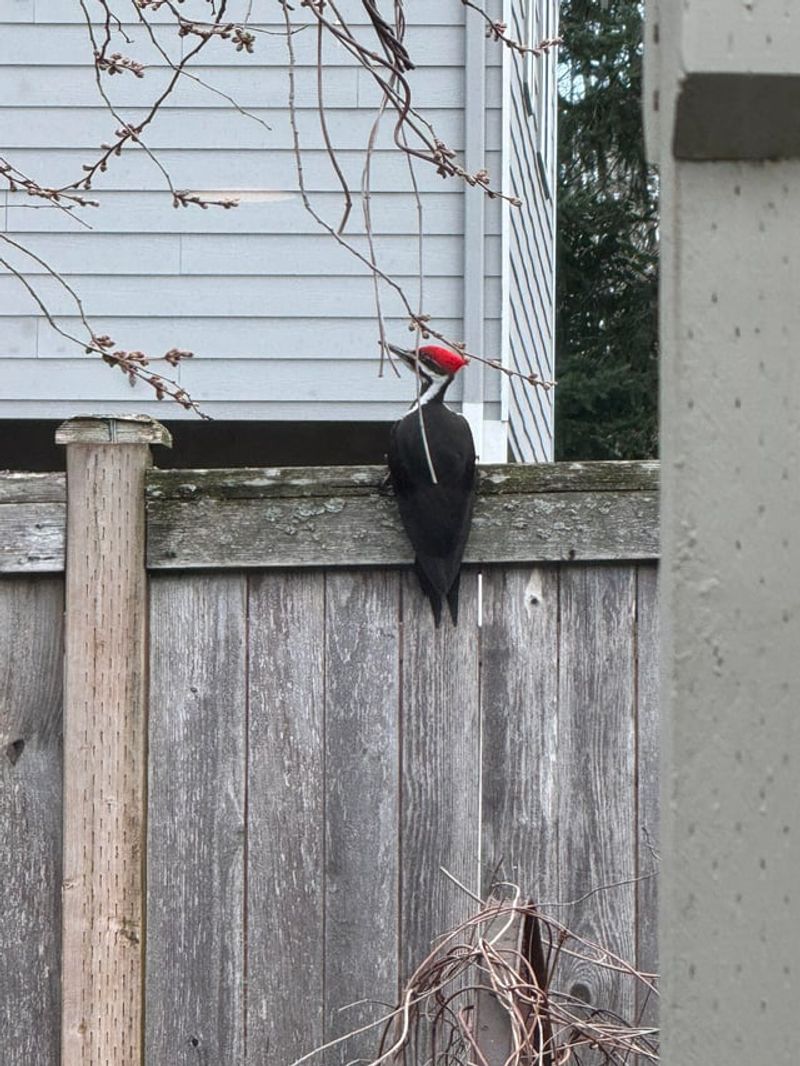
A mossy, rotting log sitting quietly in the corner of your yard might look like yard waste, but to a pileated woodpecker, it looks like opportunity. Decaying logs are packed with the kinds of insects these birds depend on.
Leaving logs in place, especially larger ones, is one of the easiest ways to make your yard more attractive to wildlife overall.
As wood breaks down, it softens from the inside out. Beetles, ants, and other invertebrates move in and begin their own life cycles within the log.
This process creates a layered food source that different animals use at different stages. Pileated woodpeckers are particularly drawn to logs in the middle stages of decay, when the wood is soft enough to excavate but still solid enough to hold a colony.
In the wetter Oregon parts, rotting logs are common in natural areas but often cleared from yards.
If you have space to leave one, even partially buried or tucked against a fence line, it becomes a wildlife feature rather than an eyesore. Over time, it attracts more than just woodpeckers.
Think of a rotting log as a slow-release wildlife station. It feeds birds, shelters salamanders, and enriches the soil as it breaks down.
A pileated woodpecker visiting your log is a sign that your yard has moved beyond just looking pretty.
It is actually functioning as part of the local ecosystem, and that is something worth celebrating.
6. Big Nest Cavities Need Serious Tree Size
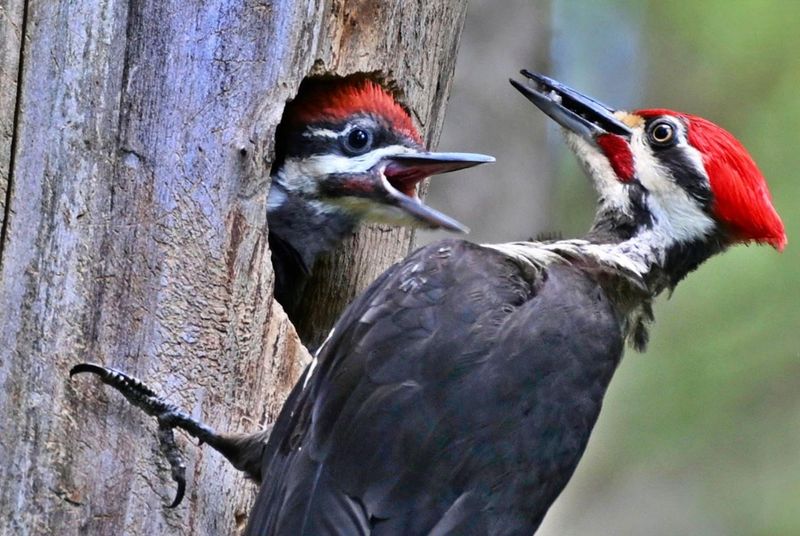
Pileated woodpeckers are not just foragers. They are also cavity nesters, and the holes they carve are enormous compared to those of other woodpecker species.
To build a proper nest, they need a tree with a trunk wide enough and strong enough to support a cavity that can be more than a foot deep. That kind of tree is not common in most yards.
When a pileated woodpecker is seen spending a lot of time high up in a single large tree, it may be scouting or actively excavating a nest site.
These birds return to the same general area year after year, and once they find a tree that works, they may use it repeatedly across seasons.
Spotting this behavior in your yard means your trees are not just big enough to forage on but big enough to raise a family in.
Nest cavities carved by pileated woodpeckers do not go to waste after the birds move on. Owls, ducks, and smaller mammals often move into abandoned cavities later.
One excavation supports multiple species over many years. That chain of habitat creation starts with one bird and one sufficiently large tree.
If you have a tree that is clearly getting attention from a pileated woodpecker high in its canopy, protect it.
Avoid unnecessary pruning or disturbance during nesting season, which typically runs from spring into early summer in our region.
Giving the bird space to complete its work benefits the whole local wildlife community in ways that ripple outward for years.
7. A Visit Can Signal A Healthy Woodland Edge
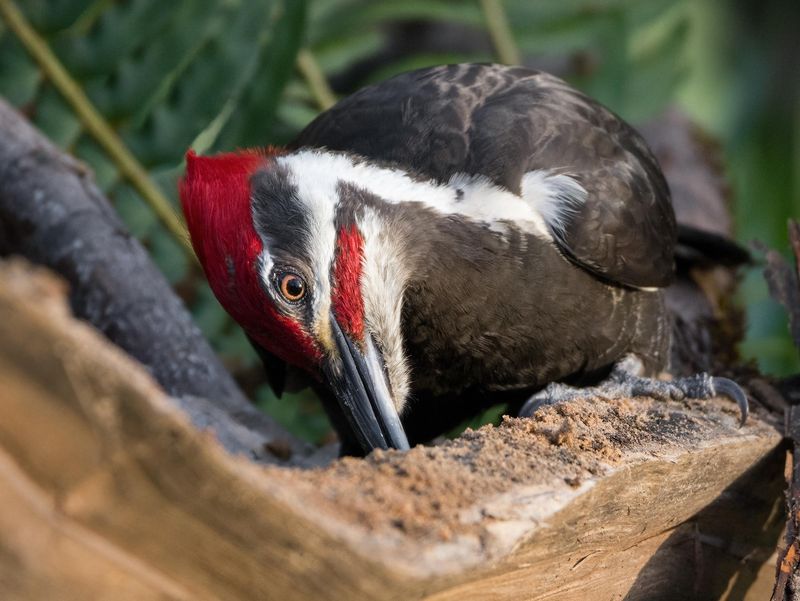
When a pileated woodpecker shows up at the edge of your yard, it is carrying information with it. These birds are what ecologists call indicator species.
Their presence tells you something real about the health of the surrounding landscape. They do not thrive in degraded or heavily disturbed environments.
They need intact, functioning woodland to survive.
A yard that sits along a healthy woodland edge, where your grass meets a tree line of mixed native species, is the kind of transition zone pileated woodpeckers actively use.
They move along these edges to forage, scout for nesting sites, and travel between larger patches of forest.
Your yard, in this case, is part of a wildlife corridor, not just a private outdoor space.
Seeing one of these birds regularly near your property is a quiet indicator that the local forest is still in decent shape. It means there is enough undisturbed habitat nearby to support a breeding population.
That is genuinely good news, especially in areas where development has fragmented natural land.
You can support this by keeping your yard edge as natural as possible. Native shrubs, leaf litter, and low-growing plants along the fence line all contribute to the kind of habitat structure these birds use.
Reducing pesticide use also helps, since chemical treatments can reduce the insect populations that woodpeckers depend on.
Your yard choices ripple outward into the broader ecosystem in ways that directly affect what wildlife chooses to visit.
8. Don’t Remove Every Snag Too Quickly
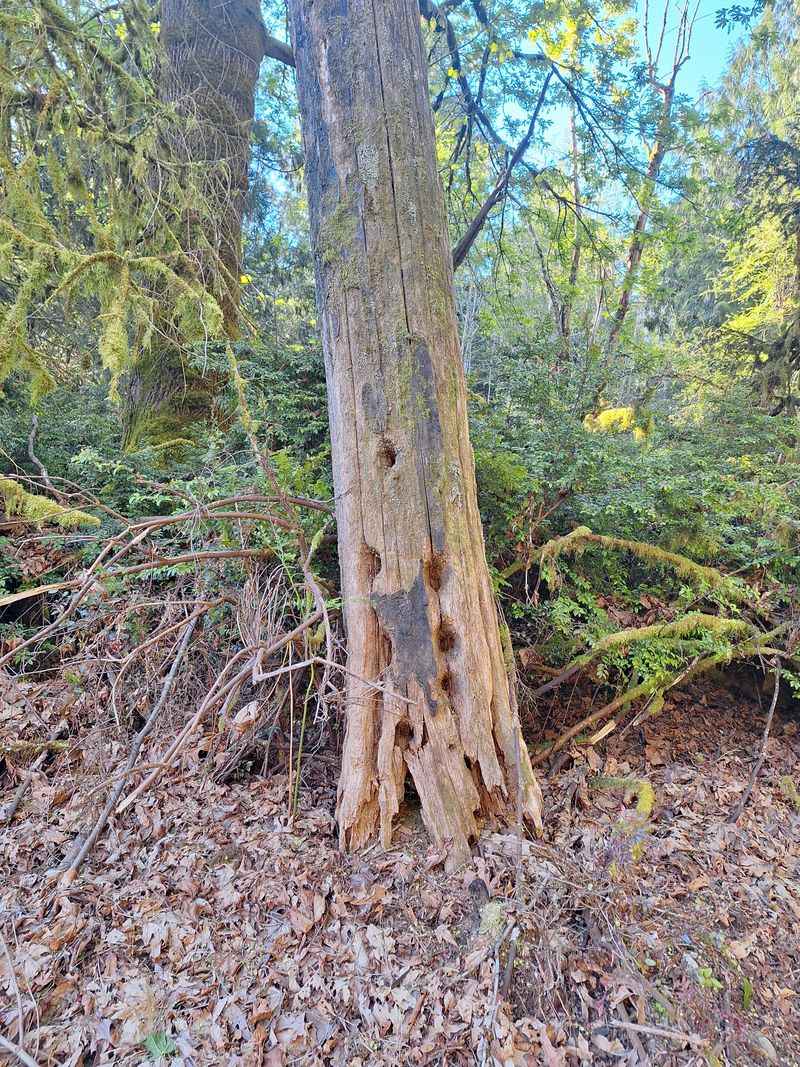
The instinct to clean up a yard is completely understandable. Withered branches and standing snags can look messy, and some do pose real safety risks.
But before you call the tree service, take a moment to consider what that snag might be offering to the wildlife around you. Removing it too fast can eliminate a resource that took decades to develop.
Pileated woodpeckers need snags at various stages. A freshly declined tree with tight bark still intact is useful for a while.
As the bark loosens and the wood softens, it becomes even more productive. A snag that has been standing for several years often hosts the densest insect populations, making it the most attractive to a foraging woodpecker.
If a snag is not posing a hazard to structures or people, leaving it in place is one of the highest-value things you can do for local birds.
Even a snag that has lost its top and stands only twenty feet tall can provide nesting and foraging opportunities for multiple species over many years.
Woodpeckers, owls, and small mammals all benefit from what looks like a useless trunk.
Oregon wildlife-friendly yard management is becoming more recognized as a real contribution to conservation. You do not have to rewild your entire property.
Simply slowing down on snag removal, assessing each one for actual risk before acting, and leaving safe ones in place can make a measurable difference. A pileated woodpecker visiting your snag is proof that your patience paid off.