The Meaning Behind Seeing A White Ibis In Your Florida Yard
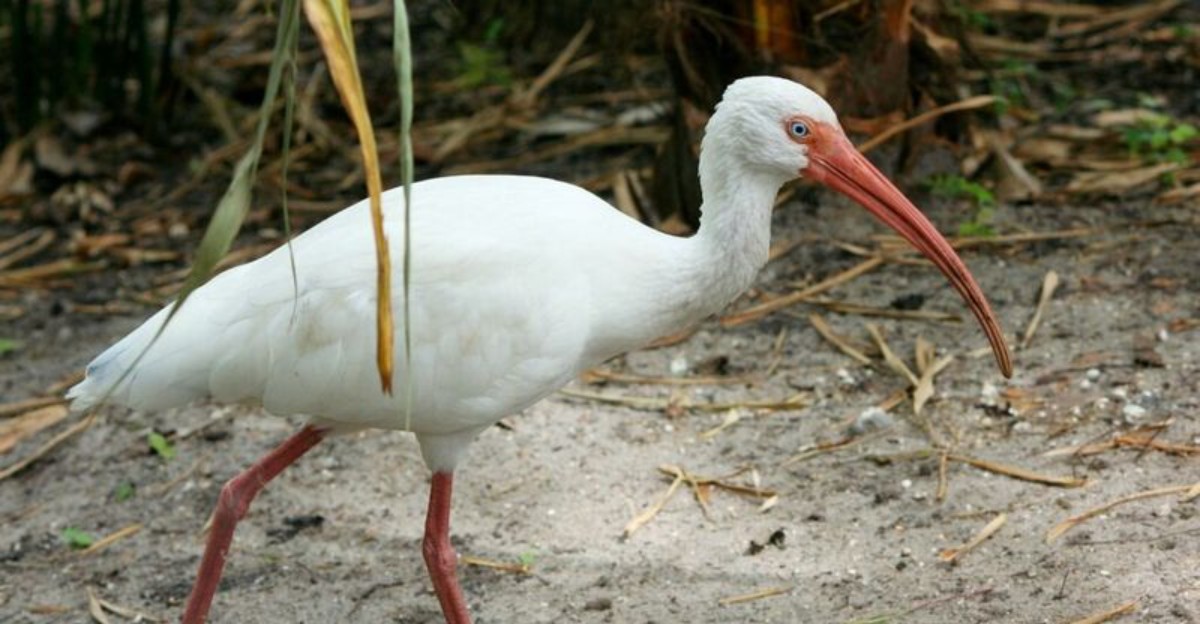
A white ibis working the edge of the lawn, curved bill jabbing into the grass over and over like it’s reading something written just under the surface. It’s not lost.
It picked this exact spot on purpose.
Ibises show up where the ground offers something specific. Usually a steady supply of insects, grubs, or small crustaceans close enough to the surface to reach with that curved bill.
A yard drawing one in regularly says something about moisture and soil conditions most homeowners never think to check. The same bird returning day after day tends to mean the same thing kept bringing it back, not chance.
Florida yards sit closer to ibis territory than most people realize. A visit from one carries a little more information than it looks like at first glance.
1. A White Ibis Usually Means Your Lawn Has Something Worth Finding
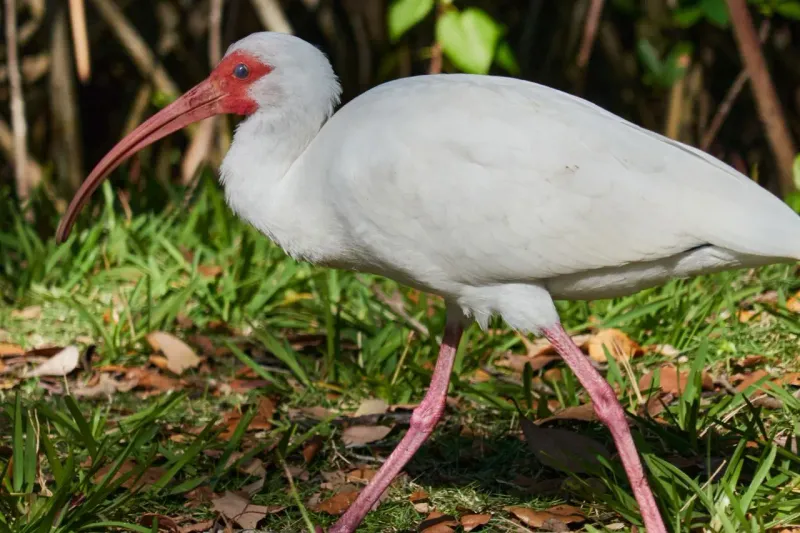
Birds do not waste energy on empty ground. When a white ibis chooses your grass over the pond down the street, it has already decided your yard is worth the walk.
These birds are opportunistic foragers, meaning they follow food rather than habit. Researchers have watched them expand into lawns, parks, and golf courses across Florida, and the common thread is simple: those places hold hidden invertebrates.
So a visiting ibis is basically a free soil report with feathers. Its presence hints that earthworms, beetle larvae, or other small creatures are living in the top few inches of your turf.
That news can be good or mildly annoying, depending on the numbers. A few worms are a sign of healthy, biologically active soil that drains well and breaks down thatch.
A heavy grub population, though, may explain spongy patches or grass that lifts up like loose carpet. If ibis keep circling one section of the lawn, peel back a small square of sod and count what you see underneath.
A small number of grubs is not necessarily a problem, but a heavy concentration paired with visible turf damage is worth investigating. If you’re unsure what you’re finding, a local extension office can help identify it.
Either way, the bird noticed before you did.
2. Soft Damp Ground Turns An Ordinary Yard Into Feeding Territory
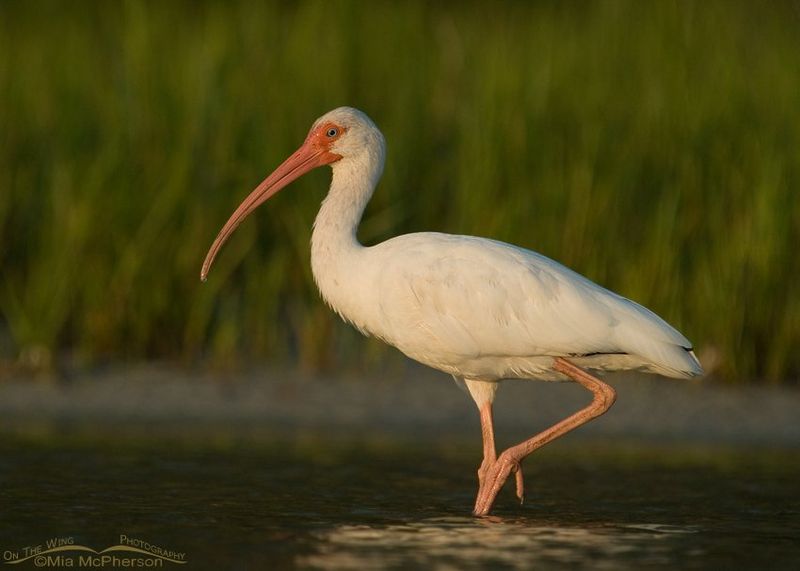
Think of soil like a locked box. Dry, hard-packed ground keeps the lid shut, while moist soil pops it open.
White ibis evolved to probe mud and shallow water, so their feeding style depends on ground they can actually push into. A lawn that was watered last night, or one still damp from a passing shower, gives their bills easy entry.
That is why you often spot them shortly after the sprinklers shut off. Moisture also pulls worms and insects closer to the surface, which stacks the odds even further in the birds’ favor.
Low spots near downspouts, edges of flower beds, and shady corners that stay soggy tend to be the busiest feeding zones. If your irrigation runs long and often, you are essentially setting the table every morning.
Your Florida Garden Changes Every Week. Your Plan Should Too.
Gardening in Florida changes quickly throughout the season. Every Friday you’ll receive a simple weekly plan showing exactly what to plant, prune, fertilize, harvest, and protect so you never miss the right timing.
Watering deeply but less frequently helps grass roots grow stronger and keeps the top layer drier between cycles. You will still get ibis visits, just fewer marathon sessions.
A quick tip worth remembering: if you notice small pencil-sized holes scattered across damp turf, those are probe marks, not pest damage. The birds are sampling the soil, and the grass usually bounces back within a day or two.
Your sprinkler schedule, more than anything, decides whether your yard reads as buffet or barren.
3. Worms Grubs And Insects May Be The Real Attraction
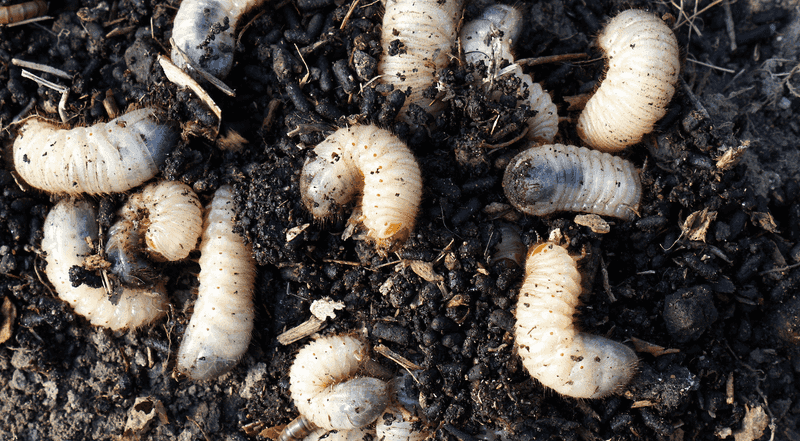
Menu check: crayfish, crabs, snails, small fish, frogs, and the occasional snake. That is the classic wetland spread for a white ibis, and it explains those famously flexible appetites.
Out on a suburban lawn, though, the offerings shift. Earthworms and insect larvae become the headliners, and pastures and irrigated turf serve them up in reliable quantities.
Nearby ponds, wetlands, drainage areas, or other shallow-water habitat can make regular ibis visits more likely. Those same creatures show up on pest-control lists, which is why an ibis patrol can feel oddly helpful.
Do not expect them to solve a serious infestation, though. Birds skim what is easy to reach, while grubs deeper in the root zone stay untouched.
Watching where they concentrate can still save you money. If a flock keeps working the same ten-foot stretch week after week, that patch likely has a larger insect population than the rest of the lawn.
Treating one problem area beats spraying the whole property. Skip broad insecticide applications if you enjoy the visits, since wiping out the food supply also clears the guest list.
Here is a small delight: an ibis sometimes carries a worm to a puddle and rinses it before swallowing. Nobody is quite sure why, but it looks remarkably polite.
4. Nearby Water Can Put Your Yard On An Ibis Feeding Route
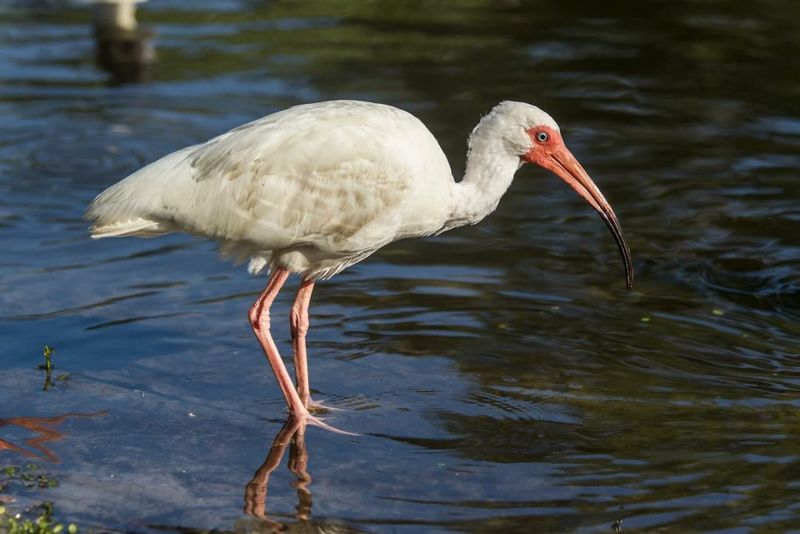
Picture a delivery driver with a route. White ibis operate the same way, hopping between reliable stops within a few miles of where they roost.
Coastal marshes, shallow wetlands, retention ponds, drainage canals, and flooded fields all anchor those routes. If your neighborhood sits near any of them, your grass may simply be stop number four.
Florida subdivisions are full of engineered water features, and the birds figured that out quickly. A stormwater pond behind the houses provides drinking water, loafing space, and a safe place to regroup between feeding sessions.
Golf course ponds and retention basins work the same magic. Being semi-nomadic, these birds constantly test new locations and remember the ones that pay off.
You can check your odds with a quick look at a satellite map. Any blue within half a mile raises the chance of regular visitors considerably.
Homeowners with backyard ponds or birdbaths sometimes see the birds linger longer, especially during hot afternoons. Keeping edges shallow and open gives them a comfortable place to pause without encouraging dependence.
A fun detail from banding studies: individual ibis have been tracked moving many miles in a single day while searching for productive feeding grounds. Your lawn might be a brief stop on a surprisingly long commute.
5. Rain And Changing Water Levels Can Send Ibis Looking Elsewhere
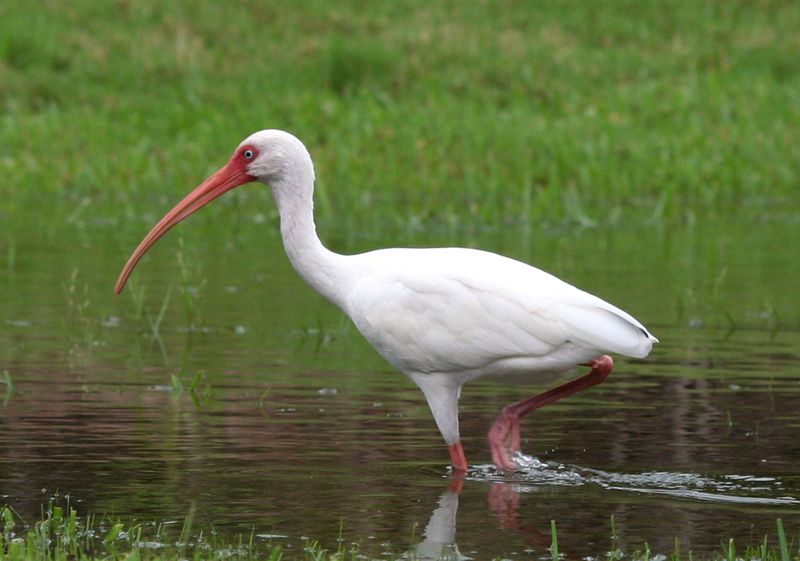
Timing explains a lot about bird behavior. Water levels rise and fall across Florida wetlands throughout the year, and ibis movements follow those swings closely.
During the dry season, shrinking marsh pools concentrate prey into tight spaces, which is excellent news for a probing bird. When the rains return and water spreads out, hunting gets harder and the birds fan out to find alternatives.
Deep water is the real obstacle. An ibis cannot probe what it cannot reach, so flooded marshes push them toward shallower, softer ground.
That is often when suburban lawns get busy. Heavy rain also drives earthworms upward, creating easy pickings on turf that would normally be too firm to work.
Studies in urban parks have linked rainfall patterns to shifts in ibis numbers and even changes in what the birds choose to eat. More natural food nearby means less interest in scraps and handouts.
So if your regular visitors vanish for a few weeks, nothing is wrong. Conditions somewhere else simply improved, and they followed the opportunity.
Expect them back once your soil softens again after the next good storm. Seasonal absence is part of the rhythm, and patience usually gets rewarded with a return appearance on a drizzly morning.
6. That Curved Bill Is Built To Search Beneath The Surface
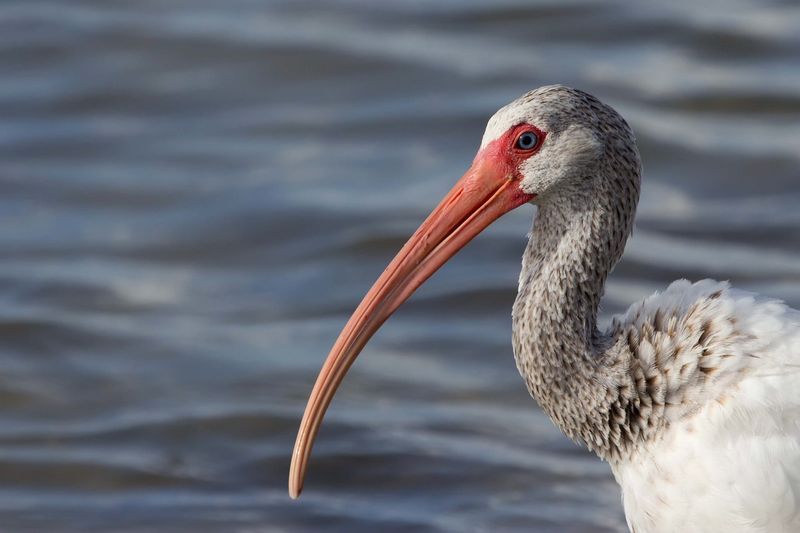
Nature designed a metal detector and gave it feathers. The long, downcurved pink bill of a white ibis is a precision tool, not a decoration.
Instead of relying on sight, the bird works by touch. Sensitive nerve endings run along the bill tip, letting it feel movement in mud, sand, or soft soil where eyes would be useless.
When something wriggles against those nerves, a reflex snaps the bill shut faster than the bird could consciously react. The whole process happens in a fraction of a second.
Watch closely and you will see a distinctive side-to-side sweeping motion. That sweep covers more ground per step, much like a person waving a wand across the sand at the beach.
The curve serves a purpose too, allowing the tip to reach under roots and debris that a straight bill would miss. It also explains why damp ground matters so much, since firm soil blocks the probe entirely.
Young ibis start out with straighter, darker bills that curve and brighten as they mature. Spotting a brown-and-white juvenile alongside snowy adults is a good sign that a nesting colony sits somewhere nearby.
Next time one visits, skip the phone and just watch the technique. The efficiency is genuinely impressive.
7. A Flock On The Lawn Can Be Perfectly Normal Florida Behavior
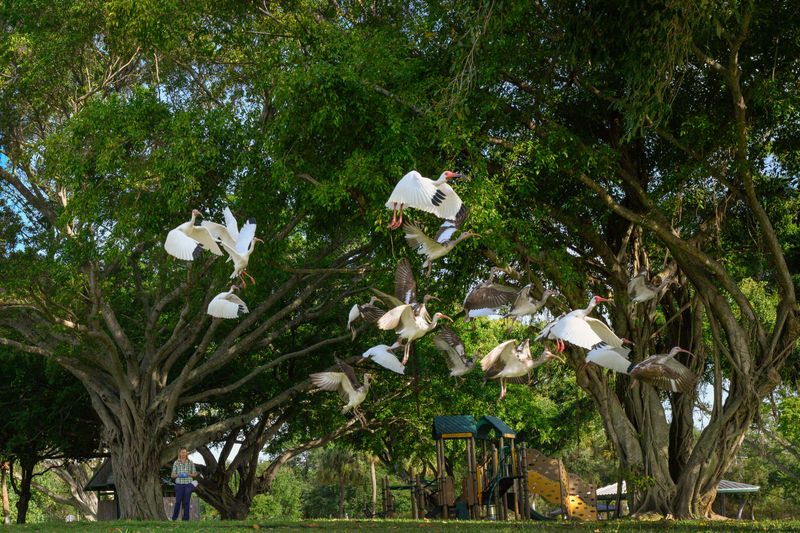
Twenty white birds on the front lawn looks dramatic. For Florida, it is roughly as unusual as an afternoon thunderstorm in July.
White ibis are deeply social creatures that feed, roost, travel, and nest in groups. Flocking gives them extra sets of eyes for spotting danger and helps them locate productive feeding areas faster.
There is a practical benefit to the crowd as well. Many feet shuffling through grass stir up insects, which flushes prey toward waiting bills.
Neighbors sometimes worry that a large group signals a problem with the yard. Usually it just means the conditions were right that morning and word spread quickly among the birds.
The flock will often move as a unit, working one lawn for ten minutes before lifting off together toward the next. Watching them land is a treat, with wings flashing black tips against all that white.
Damage is usually minor. Probe holes are small, and healthy turf will generally recover without intervention.
One historic note worth mentioning: the University of Miami adopted the white ibis as its mascot, partly because of a legend that the bird is among the last to seek shelter before a hurricane and the first to reappear afterward.
8. Repeat Visits Reveal How Well Ibis Have Adapted To Suburban Florida
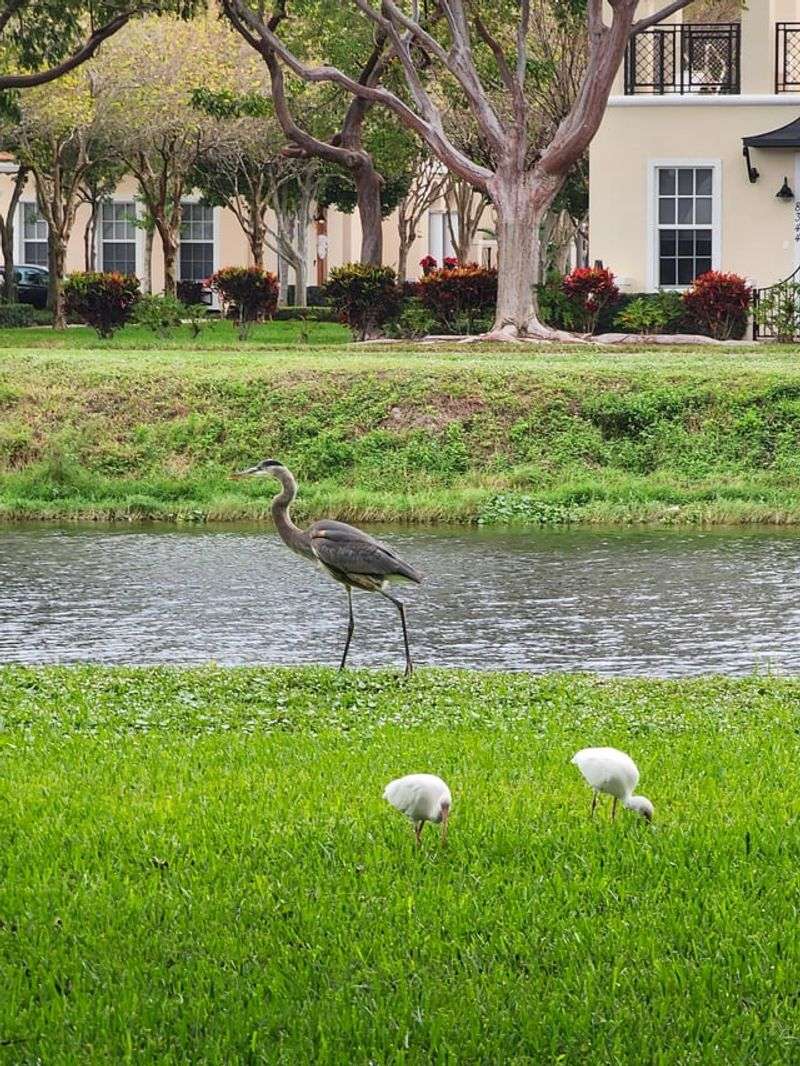
Same birds, same time, same patch of grass. Once you start noticing the pattern, it is hard to unsee.
As Florida’s landscape has changed, white ibis have also expanded their use of human-altered habitats such as parks, golf courses, and residential yards.
Southern Florida populations in particular have grown comfortable around people. Birds that once flushed at the sight of a human now barely glance up when someone walks by with a leash and a dog.
Scientists studying urban ibis have documented how readily they learn schedules, locations, and even individual people. That flexibility is a big reason the species has held on while other wading birds struggled.
Repeat visitors to your yard are essentially telling you the habitat passed inspection. Consistent moisture, a steady insect supply, and low disturbance all factor into their decision.
You can support that without doing much at all. Limiting broad pesticide use, keeping a portion of the yard less manicured, and giving the birds space go a long way.
Consider the recurring guests a quiet compliment. In a state where wild spaces keep shrinking, a lawn that still feeds native wildlife is doing something genuinely worthwhile, and the ibis clearly agree with the assessment.
9. Enjoy The Visitors Without Teaching Them To Expect A Handout
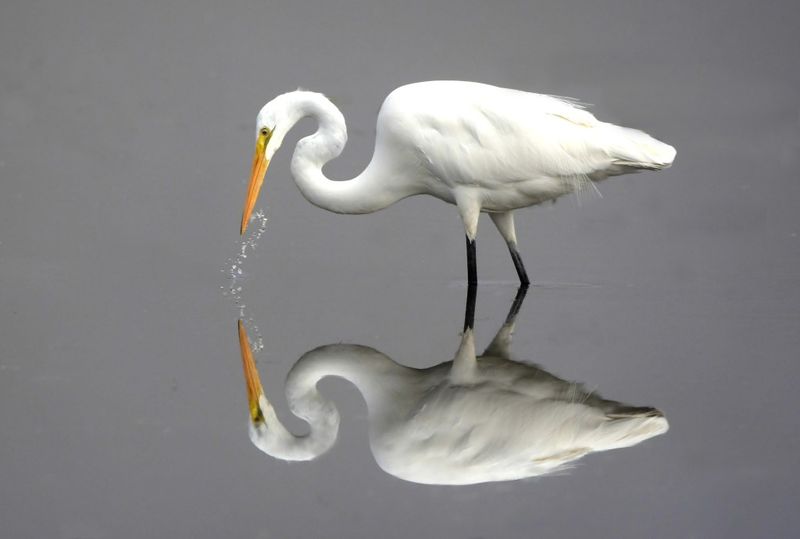
The bread bag is tempting. Resist it anyway, because kindness in this case backfires.
Human food fills an ibis stomach without supplying the protein, calcium, and vitamins wild prey provides. A bird that loads up on bread or fries has less room for the worms and insects its body actually needs.
Research on urban ibis populations has found poorer diet quality and higher exposure to certain diseases among birds that rely heavily on handouts. Crowding around a food source also makes it easier for illness to pass between individuals.
There are practical downsides for you too. Fed birds return more boldly, bring friends, and may start approaching people, patios, and picnic tables with uncomfortable confidence.
A far better approach is doing nothing special at all. Let the lawn, the soil, and the insects do the work while you watch from the porch.
If neighbors are tossing scraps, a friendly explanation usually helps more than a complaint. Most people simply do not know that white bread offers almost nothing nutritionally.
Keep pets calm indoors or leashed during visits, and give the flock a wide berth so they feed without stress. Observing from a distance preserves the wild behavior that made the visit interesting in the first place.