The Michigan Pollinator Plant That Keeps Blooming When Summer Gardens Start Looking Tired

There is a moment every Michigan gardening season when the flower beds start looking like they have given everything they have and are ready to rest.
The bold summer colors are gone, the garden feels quieter, and fall has not quite arrived to make things interesting again.
New England Aster is the native perennial that fills that gap with surprising confidence. It does not bloom all summer, and that is entirely the point.
It waits, builds up through the warm months, and then opens into clouds of purple blooms in late August and September right when the garden needs the lift most.
Bees and butterflies arrive in numbers that make the whole planting feel alive again, and the color carries beautifully right into Michigan’s first hints of fall.
1. New England Aster Brings Late Color
Walking through a Michigan garden in late August or early September can feel a little discouraging. The peonies are long gone, the coneflowers are fading, and even the black-eyed Susans are starting to look past their prime.
That is exactly when New England Aster steps in and changes the mood entirely.
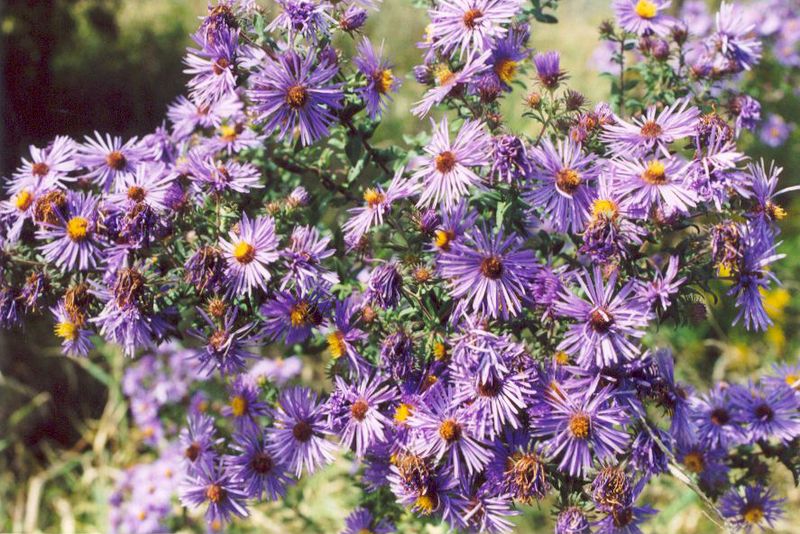
New England Aster, known botanically as Symphyotrichum novae-angliae, is a native perennial wildflower that typically begins blooming in late summer and continues well into fall across much of Michigan.
Its bloom window does not stretch across the whole growing season, but its timing is what makes it so valuable.
Most gardeners are not looking for more flowers in June. They want color in September, and this plant can deliver it.
The blooms appear in clusters at the tops of tall stems, creating a burst of color that can feel almost surprising after weeks of quieter garden activity.
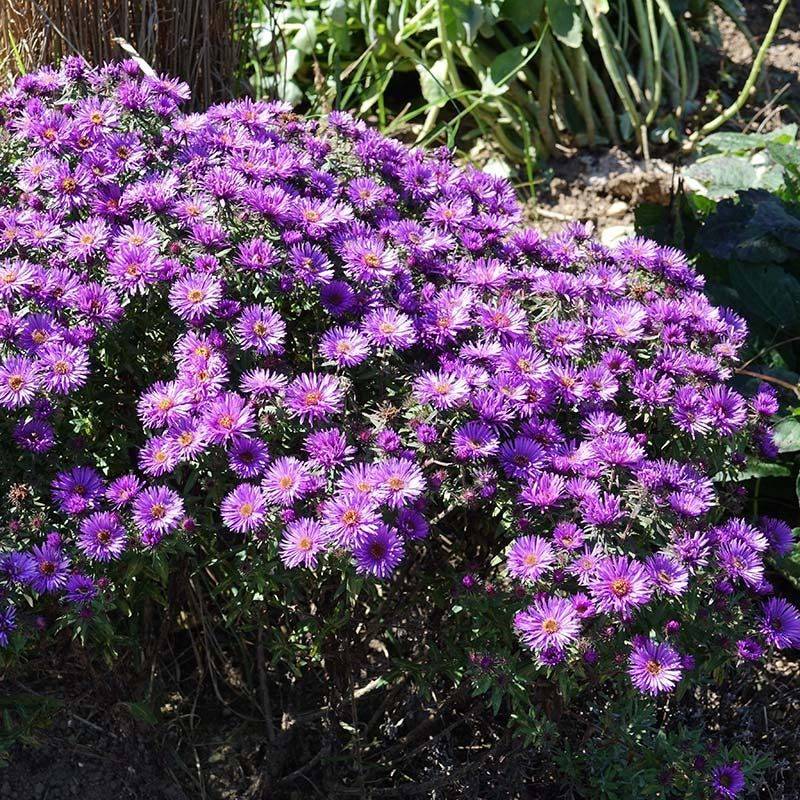
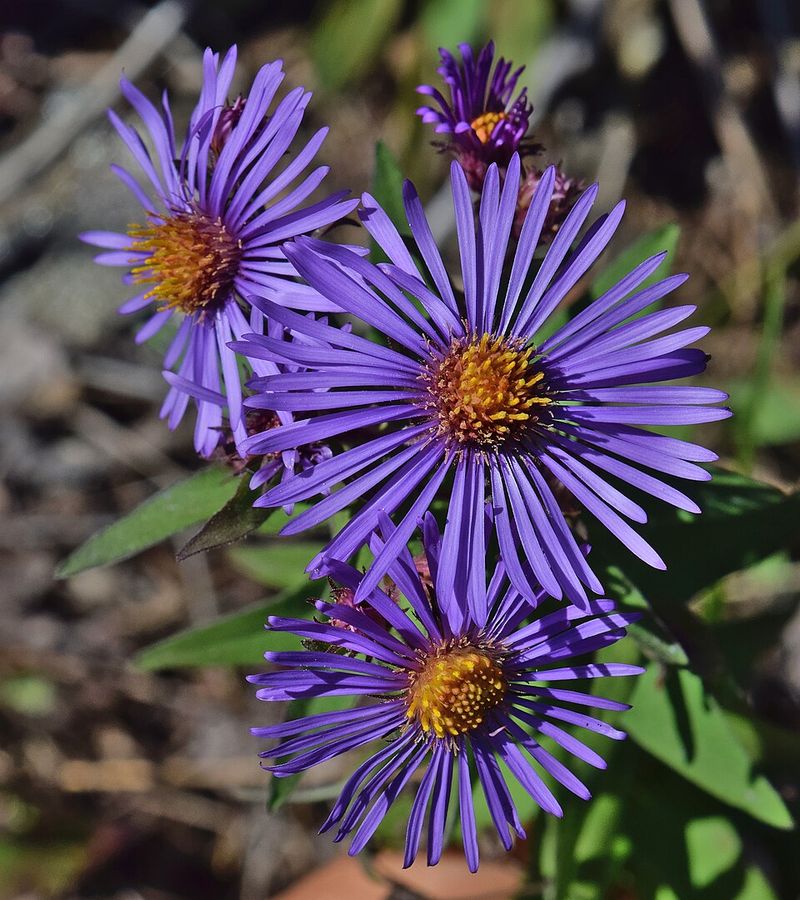
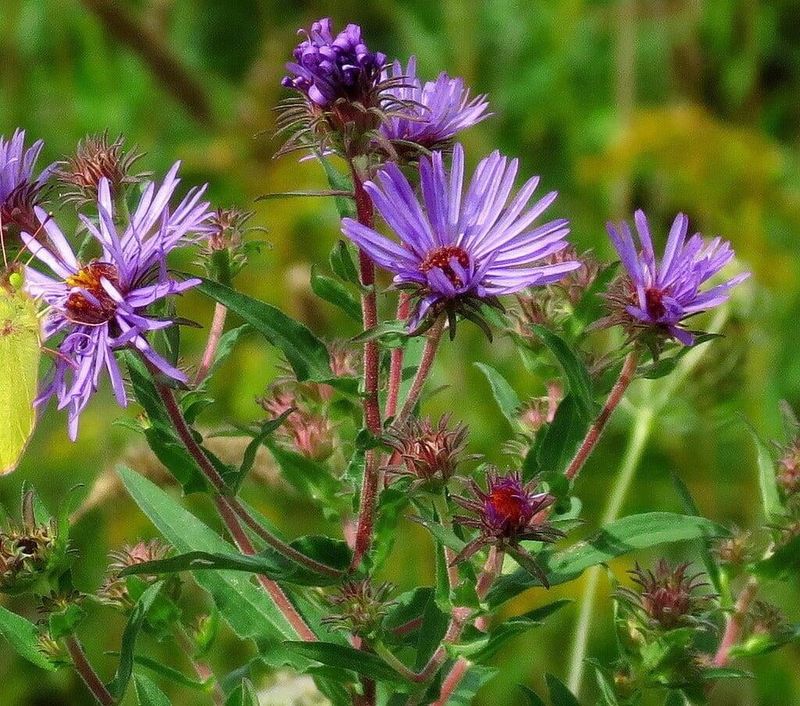
Each flower head features slender petals in shades ranging from soft lavender to deep violet-purple, surrounding a small yellow center disk.
The contrast is vivid and cheerful, and it reads well even from a distance across a yard or garden border.
For Michigan gardeners who feel let down by the slow fade of late summer, planting New England Aster can shift the experience.
Instead of watching the garden wind down in August, there is something to look forward to as temperatures begin to cool and the season starts its turn toward fall.
2. Purple Flowers Brighten Tired Beds
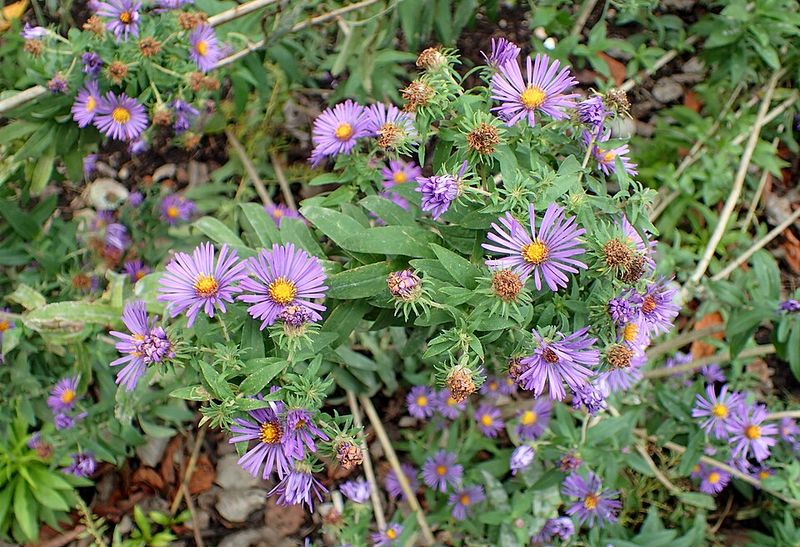
There is something about purple flowers in a fall garden that just works. The color holds up well in lower autumn light, pairs naturally with the golds and oranges that start appearing in foliage, and creates a sense of richness that feels right for the season.
New England Aster delivers that purple in a way that few other Michigan native plants can match at this time of year.
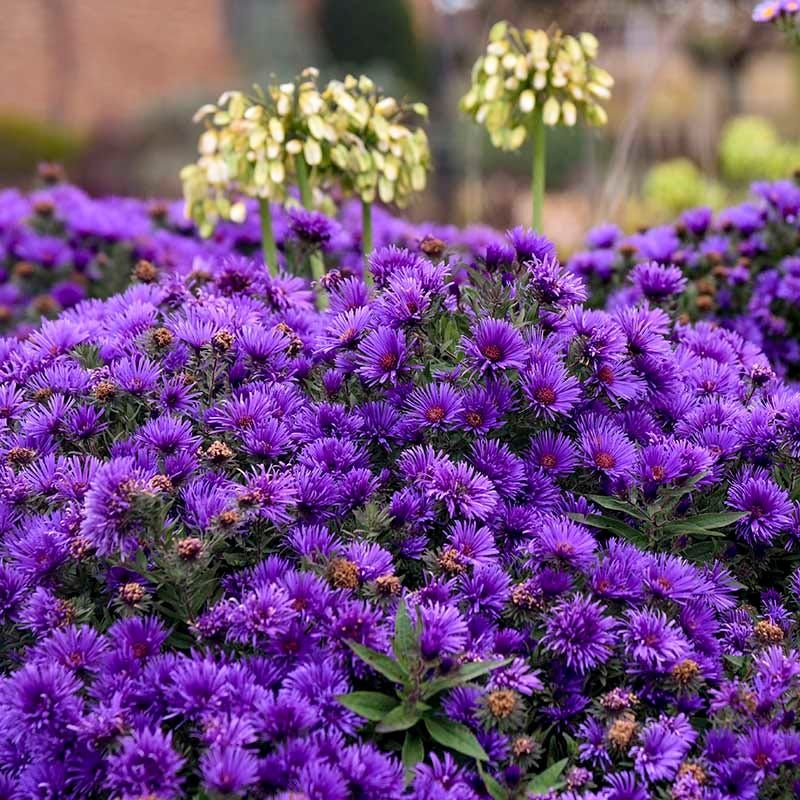
The flower heads are daisy-like in structure, with thin ray petals spreading outward from a compact yellow center.
Individual flowers are not especially large, but they appear in generous clusters along branching stems, so the overall effect is full and colorful rather than sparse.
Your Michigan Garden Changes Every Week. Your Plan Should Too.
Gardening in Michigan changes quickly throughout the season. Every Friday you’ll receive a simple weekly plan showing exactly what to plant, prune, fertilize, harvest, and protect so you never miss the right timing.
A mature clump in bloom can look almost like a small flowering shrub from a distance.
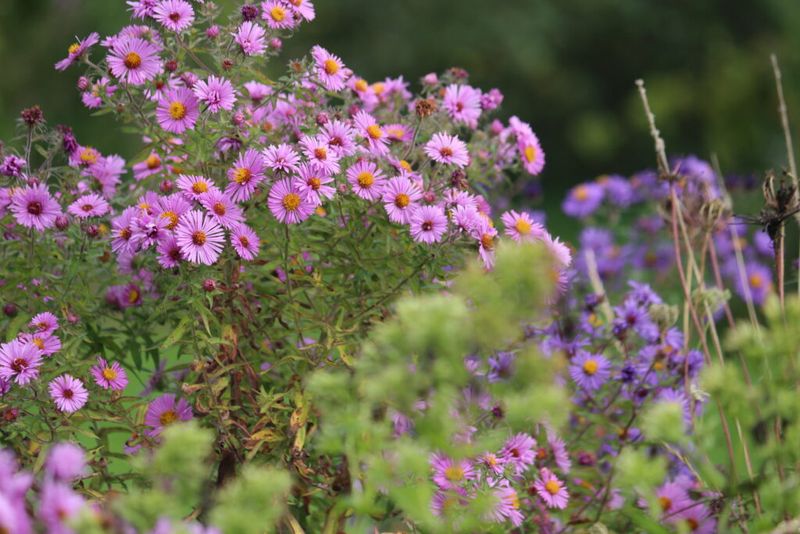
Color variation exists within the species. Plants grown from seed or collected from different wild populations may lean toward pale lavender, medium violet, or deeper reddish-purple tones.
Named cultivars bred for garden use sometimes offer more consistent color, and several are available through Michigan native plant nurseries.
Gardeners who want a specific shade may find it helpful to look for named selections rather than relying entirely on seed-grown plants.
What stands out most about the purple is how it refreshes a tired bed without requiring any extra effort from the gardener.
The plant does the work on its own, blooming reliably as days shorten and temperatures drop, adding color to Michigan landscapes at a time when most perennials have already finished for the season.
3. Pollinators Use The Late Blooms
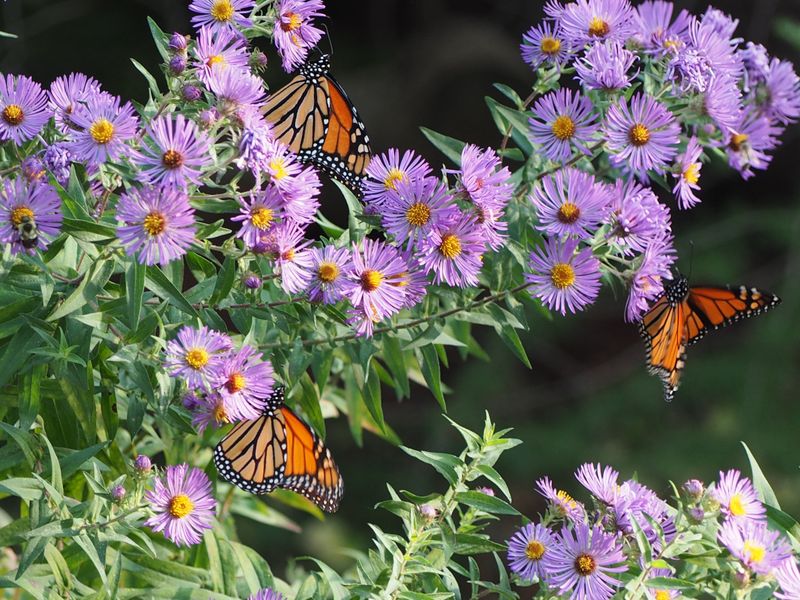
Few sights in a fall Michigan garden are more satisfying than watching a bumblebee move steadily from flower to flower across a blooming aster.
By September and October, many nectar sources have dried up, and pollinators that are still active before winter can have a harder time finding food.
New England Aster can play a meaningful role in filling that gap.
The flowers produce both nectar and pollen, making them useful to a range of visiting insects. Native bees, including several bumblebee species that remain active into fall, are frequent visitors.
Monarch butterflies, which migrate through Michigan in September, are also known to feed on aster blooms during their journey south. The late timing of the flowers aligns well with the needs of these travelers and late-season foragers.
Specialist native bees in the genus Colletes, sometimes called plasterer bees or polyester bees, have a documented relationship with asters and goldenrods.
These bees time their nesting activity specifically around aster bloom periods, making plants like New England Aster genuinely important to their life cycle rather than just a convenient food source.
Gardeners who want to support pollinators in Michigan often focus heavily on spring and summer plantings. Adding New England Aster extends that support into the fall, when the need is real but the options are limited.
A single healthy clump can attract noticeable pollinator activity during a stretch of the season when most other garden plants have little left to offer.
4. Full Sun Helps It Flower Well
Sunny spots in a Michigan yard can sometimes feel like they need to work overtime.
The same south-facing border that baked through July still needs something worthwhile growing in it come September, and many plants simply cannot hold up to both the summer heat and the fall wind.
New England Aster tends to handle that challenge reasonably well when it has the light it needs.
Full sun, generally understood as six or more hours of direct sunlight per day, supports the best flowering in New England Aster.
Plants grown in shadier conditions may still survive and even bloom, but they often produce fewer flowers, stretch their stems more noticeably, and may be more prone to flopping before the season ends.
For gardeners who want a full, upright, flower-covered plant come September, a sunny location gives the best chance of that result.
Michigan gardens offer plenty of suitable sunny spots, from open backyard borders to the edges of driveways and property lines.
Rain gardens in full sun can also work well, since New England Aster tolerates periodic wet conditions that sometimes come with that type of planting.
The key is avoiding deep shade, which tends to reduce bloom quality noticeably over time.
Placing New England Aster in a sunny location also tends to keep the stems a bit sturdier.
Stems that grow in shadier spots reach for light and can become leggy by midsummer, which creates a less tidy appearance even before bloom time arrives in late summer and early fall.
5. Moist Soil Can Support Strong Growth
Michigan landscapes come in a wide range of soil conditions, and not every corner of a yard drains the same way. Areas near downspouts, low-lying spots that collect rain, or garden beds with heavier clay soils can be tricky to plant.
New England Aster is one of the native perennials that tends to handle those wetter conditions better than many alternatives.
In its native habitat across Michigan, New England Aster is commonly found growing in moist meadows, along stream banks, and at the edges of wet ditches.
This background means the plant has a natural tolerance for soils that hold moisture rather than draining quickly.
It is not a true aquatic plant and does not thrive in standing water, but consistently moist soil suits it well and can support vigorous growth.
Average garden soil that stays reasonably moist through summer works fine. In particularly dry summers, plants in well-drained sandy soils may show some stress if they do not receive supplemental water.
Michigan gardeners dealing with clay-heavy soil may actually find that New England Aster performs better in those spots than plants that prefer sharp drainage.
Rain gardens have become a popular feature in Michigan residential landscapes, and New England Aster is frequently recommended as a suitable native plant for those settings.
Its tolerance for periodic flooding followed by drier periods fits the fluctuating moisture levels that rain gardens typically experience.
Planting it toward the middle or upper edge of a rain garden basin, rather than the lowest point, often works best for long-term health.
6. Tall Stems Need Smart Placement
One thing that surprises some first-time growers is just how tall New England Aster can get. In a good Michigan growing season with adequate moisture and sun, mature plants can reach four to six feet in height, sometimes even taller.
That is a significant presence in a garden bed, and it calls for some thoughtful planning before planting.
Height is not a problem in itself. Tall plants serve important roles in layered garden designs, providing vertical structure, background interest, and a sense of abundance that shorter plants cannot match.
The challenge comes when a tall, somewhat sprawling plant ends up in the front of a narrow border or in a small formal bed where its size overwhelms everything around it.
Placing New England Aster toward the back of a mixed border, where shorter plants in front can mask the sometimes-bare lower stems, tends to produce the most visually satisfying result.
Meadow-style plantings and naturalistic garden areas also suit it well, since those settings embrace a more relaxed, layered look rather than demanding tidy, uniform growth.
Some Michigan gardeners use a technique called the Chelsea chop, cutting stems back by about one-third to one-half in late May or early June. This encourages branching, can reduce overall height, and may result in a fuller, more compact plant by bloom time.
The tradeoff is a slight delay in flowering, but for gardeners concerned about floppy stems, the pruning approach is worth considering as part of a routine summer maintenance plan.
7. Native Habitat Explains Its Flexibility
Understanding where a plant comes from naturally often explains a lot about how it behaves in a garden.
New England Aster is native to Michigan and found growing wild across much of the state, from roadsides and open meadows to wet ditches, forest edges, and prairie remnants.
That broad native range is a clue to why the plant can adapt to a variety of garden conditions.
Plants that evolved in variable habitats tend to carry more flexibility than species that developed in one narrow niche.
New England Aster grew up, so to speak, in Michigan conditions, including cold winters, variable summer rainfall, clay-heavy soils, and the kind of seasonal swings that challenge many non-native ornamentals.
That background gives it a resilience that shows up in garden settings as reliable establishment and consistent return each spring.
Its presence across different Michigan landscape types, from sunny open roadsides to partially shaded woodland edges, suggests it can tolerate a range of light conditions, though full sun tends to produce the best flowering.
The fact that it thrives in moist roadside ditches and along stream banks explains its comfort in rain gardens and low areas of the yard.
For Michigan gardeners who want a native perennial that does not require constant management, the plant’s natural adaptability is a genuine asset. It is not a plant that needs coddling once established.
Its long history in Michigan landscapes means it already knows how to handle the seasons, the soils, and the climate that local gardeners deal with every year.
8. Fall Gardens Get One Last Show
By the time October arrives in Michigan, most gardeners have mentally moved on from the growing season.
The tomatoes are finished, the annual beds are looking rough, and the perennial border has taken on that end-of-season, slightly ragged look that signals the year is winding down.
New England Aster has a way of interrupting that quiet resignation with one genuinely impressive display.
When a healthy clump of New England Aster reaches peak bloom in September or early October, the effect can be striking.
The tall, flower-covered stems hold up well even as nighttime temperatures drop, and the purple blooms contrast beautifully with the golds, oranges, and rusts of fall foliage that begin appearing in Michigan trees and shrubs at the same time.
The combination is one of the more visually rewarding moments a Michigan native garden can offer.
The show does not last indefinitely. Blooms typically continue for several weeks before the plant begins to set seed and the stems start to look more weathered.
Leaving the seed heads in place through winter provides some food source for birds and adds a bit of structural interest to the winter garden.
For Michigan gardeners who feel that their yards lose all interest after Labor Day, adding New England Aster to a sunny or partly moist border can genuinely extend the season.
It is not a solution for every tired garden situation, but when it is planted in the right spot with enough room to grow, it can make early fall feel like a second season worth paying attention to.