The Most Underrated Michigan Native That Helps Reduce Tick Habitat Along Yard Edges
The edges where a Michigan yard meets wooded areas, unmowed strips, or overgrown fence lines are where tick habitat is most concentrated and most difficult to manage through conventional means alone.
Treatments applied to open lawn areas do very little to address what is happening in those transitional zones, and that is precisely where a strategic planting choice makes the biggest difference.
One native Michigan plant has a well-documented ability to reduce the conditions ticks depend on along exactly these kinds of edges, and it does it while looking intentional and fitting naturally into a layered planting scheme.
It is tough enough for the challenging growing conditions that yard edges typically present and requires almost no ongoing care once it gets established through its first season.
1. Spicebush
Not every superhero wears a cape. Some grow quietly along woodland edges in Michigan, producing aromatic leaves and putting in serious work where your lawn meets the wild.
Spicebush, known scientifically as Lindera benzoin, is one of those plants that does far more than it gets credit for.
Native to Michigan and much of the eastern United States, Spicebush thrives in part shade to full shade, making it a perfect fit for those tricky spots along fence lines, property edges, or the shaded back corners of your yard.
It grows between six and twelve feet tall and spreads naturally into a full, layered shrub that fills in gaps beautifully over time.
That dense growth habit is exactly what makes it so effective at reducing tick habitat. Ticks prefer humid, shaded areas with low ground-level vegetation where they can wait for a passing host.
Spicebush creates a canopy that shades the ground while its thick branching structure reduces the kind of tall grassy, open understory that ticks love to hang out in.
Planting it along yard edges essentially creates a natural buffer zone. Beyond tick management, Spicebush brings incredible ecological value to any property.
It supports native bees, songbirds, and even the gorgeous Spicebush Swallowtail butterfly, which uses it as a host plant.
For homeowners who want a yard that works with nature rather than against it, this shrub is one of the smartest choices available.
2. Aromatic Foliage That Naturally Deters Unwanted Visitors
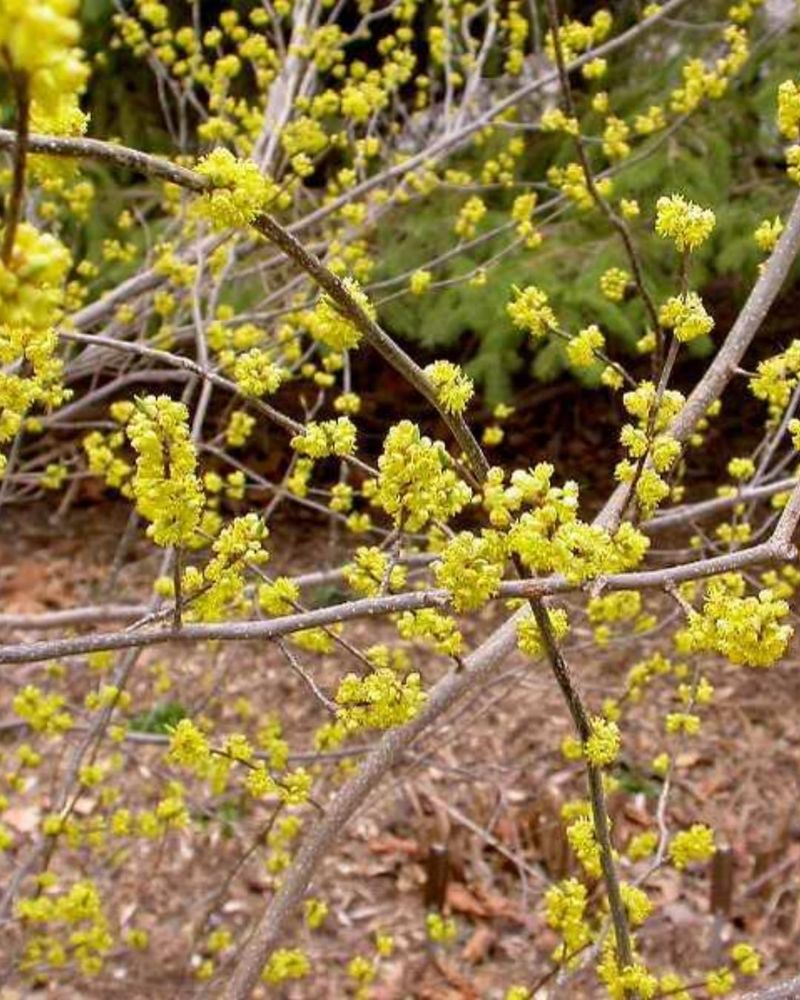
Crush a single Spicebush leaf between your fingers and you will immediately understand why so many animals give this plant a wide pass.
The scent is sharp, spicy, and almost citrusy, a natural chemical signature that comes from the plant’s essential oils.
That aroma is not just pleasant to humans; it is actively unappealing to deer, rabbits, and many insects, including ticks.
The leaves contain compounds like benzaldehyde and camphor-like oils that make the foliage unpalatable to browsers and unattractive to pests looking for a cozy environment.
For gardeners dealing with constant deer pressure along yard borders, this is genuinely great news.
Spicebush rarely gets browsed the way other shrubs do, which means it holds its shape and density throughout the growing season without you having to do much at all.
Your Michigan Garden Changes Every Week. Your Plan Should Too.
Gardening in Michigan changes quickly throughout the season. Every Friday you’ll receive a simple weekly plan showing exactly what to plant, prune, fertilize, harvest, and protect so you never miss the right timing.
When planting Spicebush for maximum coverage and pest deterrence, aim to space plants about five to eight feet apart.
This spacing allows each shrub to fill out naturally while still creating a continuous, dense line of aromatic foliage along your yard edge. Planting in staggered rows adds even more depth and coverage.
Michigan homeowners dealing with edge habitat issues will find that a consistent row of Spicebush creates a fragrant, living wall that works around the clock.
The foliage stays dense from spring through fall, and even in winter the twigs carry that distinctive scent.
It is one of those quiet, hardworking plants that earns its place in the landscape every single day.
3. Dense Basal Growth That Closes Off Tick-Friendly Microhabitats
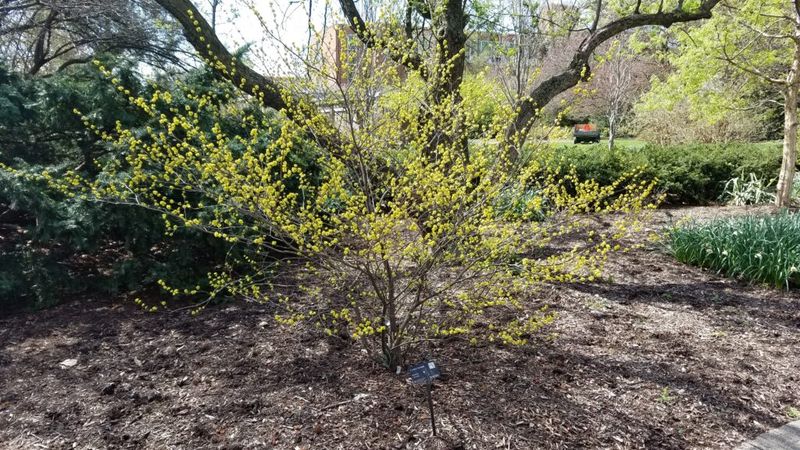
Ticks are surprisingly picky about where they set up camp. They thrive in areas with high humidity, filtered shade, and tall grassy or leafy ground cover where they can climb up and wait.
Take away those conditions and ticks have a much harder time establishing any real presence in your yard.
That is where Spicebush earns some serious points. One of the most impressive things about Spicebush is how it grows from the base.
Unlike many ornamental shrubs that stay open and leggy at ground level, Spicebush sends up dense basal shoots that fill in the lower portions of the plant naturally.
Over time, a well-established Spicebush creates a thick wall of growth from the ground up, eliminating the open, humid understory that ticks depend on. The canopy of overlapping leaves also plays a major role.
By shading the ground beneath and around the shrub, Spicebush reduces the moisture and warmth that ticks need to survive at soil level.
Fewer humid microclimates along your yard edge means fewer places for ticks to complete their life cycle successfully.
For Michigan homeowners, establishing a continuous hedge of Spicebush along property edges or where lawn meets woodland is one of the most practical landscaping moves available.
Planting in early spring or fall gives the roots the best chance to settle in before summer heat arrives.
Once established, the shrubs fill in quickly, creating that important low-level density that makes the border far less hospitable to tick populations over time.
4. Early Spring Blooms That Bring Pollinators Back To Life
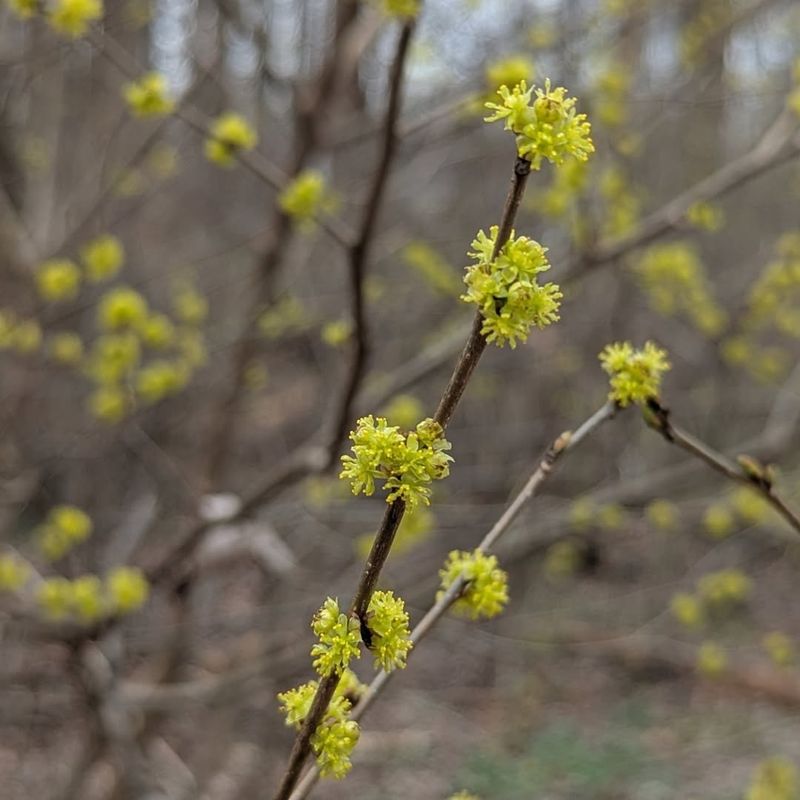
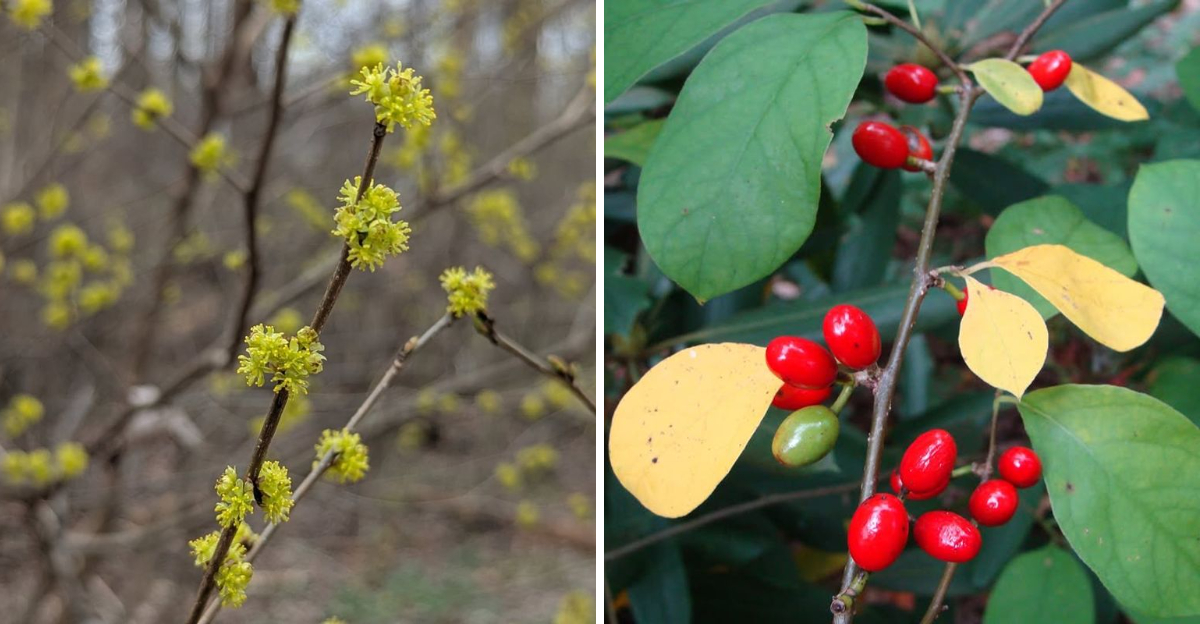
Before most trees even think about leafing out, Spicebush is already putting on a show.
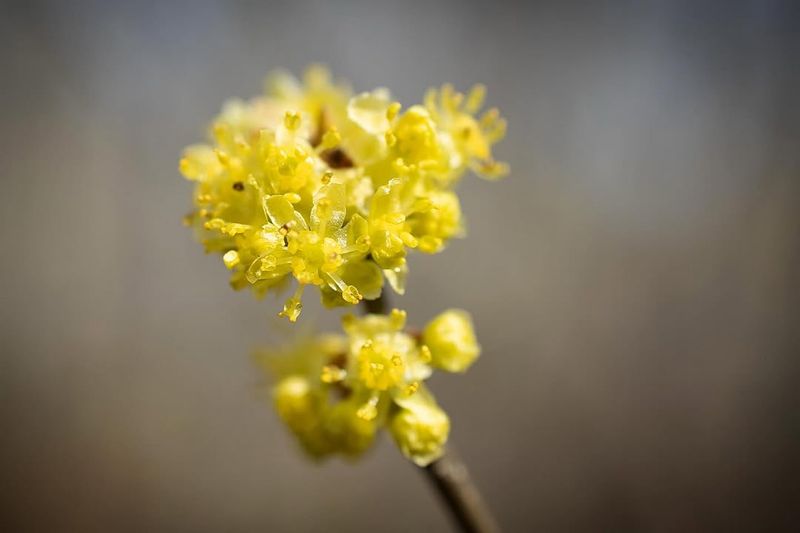
In early spring, usually March or April in Michigan, the bare branches burst into clusters of tiny, bright yellow flowers that practically glow against the gray late-winter landscape.
It is one of the earliest native bloomers in the state, and pollinators absolutely love it for that reason.
Native bees, including several early-emerging solitary bee species, depend on these flowers as one of their first reliable food sources after winter.
When little else is blooming, Spicebush steps up and provides nectar and pollen at a critical time for bee populations trying to rebuild after the cold months.
That early ecological contribution is something most ornamental shrubs simply cannot offer.
What makes this even more exciting is that the pollinator activity does not interfere with the shrub’s tick-reducing function at all.
The flowers are high on the branches, the pollinators are focused on nectar, and the dense basal growth continues doing its job at ground level. You get two major benefits happening at the same time without any trade-off.
Homeowners who care about supporting native bee populations will find Spicebush an incredibly rewarding addition to any yard.
Pairing it with other early bloomers like native willows or red maples creates a spring pollinator corridor that benefits the entire local ecosystem.
Watching the first bees of the season work those yellow clusters is honestly one of the most satisfying signs that spring has truly arrived in Michigan.
5. Bright Red Berries That Feed Wildlife Without Raising Tick Risk
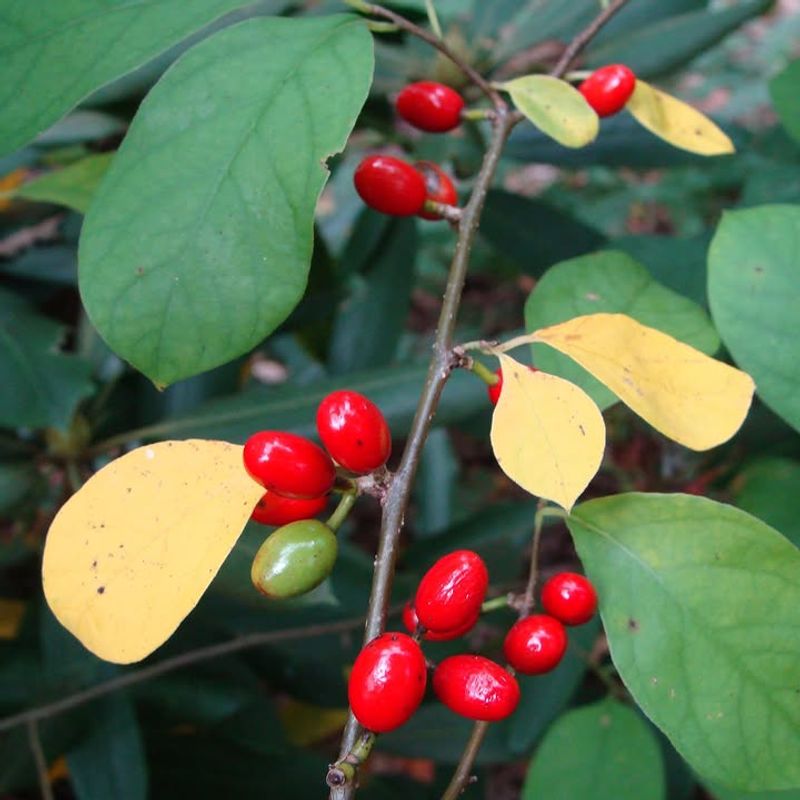
By the time September rolls around in Michigan, female Spicebush shrubs transform into something truly eye-catching.
The branches become loaded with small, glossy red berries that stand out brilliantly against the fall foliage.
These berries are a major food source for migrating songbirds, including thrushes, vireos, and warblers that stop through Michigan on their long journeys south.
The berries are high in fat and energy, making them especially valuable to birds building up fuel reserves for migration.
Wood Thrushes, in particular, are known to rely heavily on Spicebush berries during fall migration, and planting female shrubs in your yard essentially turns your property into a reliable rest stop for some of most beautiful birds.
Having at least one male Spicebush nearby is necessary for pollination and berry production, so plan for both when designing your planting layout.
A common concern with berry-producing plants is whether they attract rodents and other small mammals that might increase tick populations in the yard. With Spicebush, the risk is genuinely low.
Birds consume the berries quickly and efficiently, and the shrub’s aromatic properties make it far less attractive to the kinds of small mammals that typically carry ticks.
The visual impact of those red berries against fall color is also worth mentioning for pure aesthetic value.
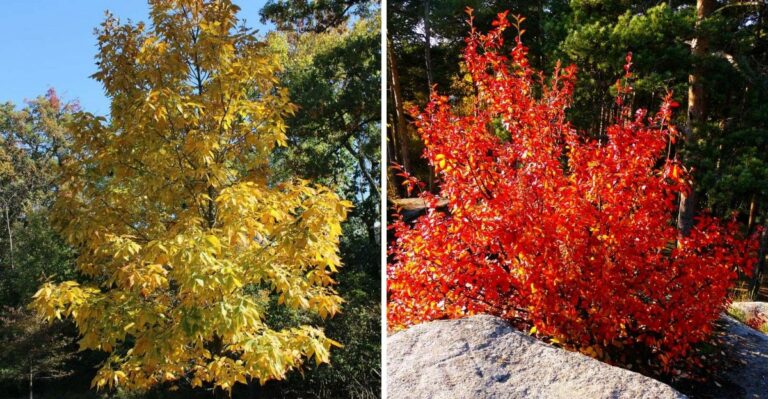
Spicebush turns a warm yellow in autumn, and the combination of golden leaves and bright red fruit is stunning in any landscape.
Beauty and ecological function rarely come packaged this well together in a single native shrub.
6. Low Maintenance Once Established
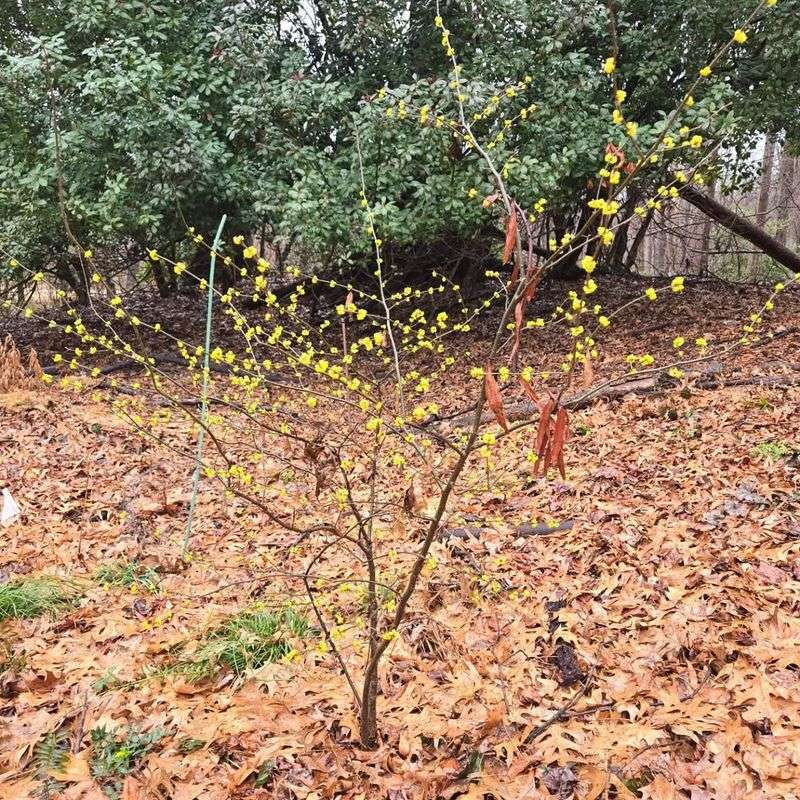
For gardeners who love the idea of a beautiful, functional yard but do not want to spend every weekend maintaining it, Spicebush might just be the answer to a lot of problems.
Once it settles into Michigan’s native soil, this shrub is remarkably self-sufficient. It evolved here, after all, and it knows exactly how to take care of itself in local conditions. Watering needs drop significantly after the first year or two.
Spicebush is naturally adapted to the moisture levels found in Michigan’s woodland edges and riparian zones, so established plants handle both dry spells and wet periods without much drama.
A deep watering during the first summer is helpful, but after that the plant largely takes over its own hydration management through its root system.
Pruning is rarely necessary unless you want to shape the shrub for a more formal look. Spicebush naturally grows into a rounded, multi-stemmed form that looks tidy without intervention.
Removing any crossing or crowded branches every few years is plenty. Fertilization is almost never needed in average Michigan garden soil, and the shrub actually performs better when left to grow in conditions similar to its natural woodland habitat.
Pest and disease problems are genuinely rare with Spicebush. Its aromatic chemistry helps deter many common garden pests, and it has no serious disease vulnerabilities in Michigan’s climate.
For a homeowner looking for maximum ecological value with minimal ongoing effort, few native shrubs deliver as reliably and consistently as this one does season after season.
7. Companion Planting That Builds A Tick-Resistant Border
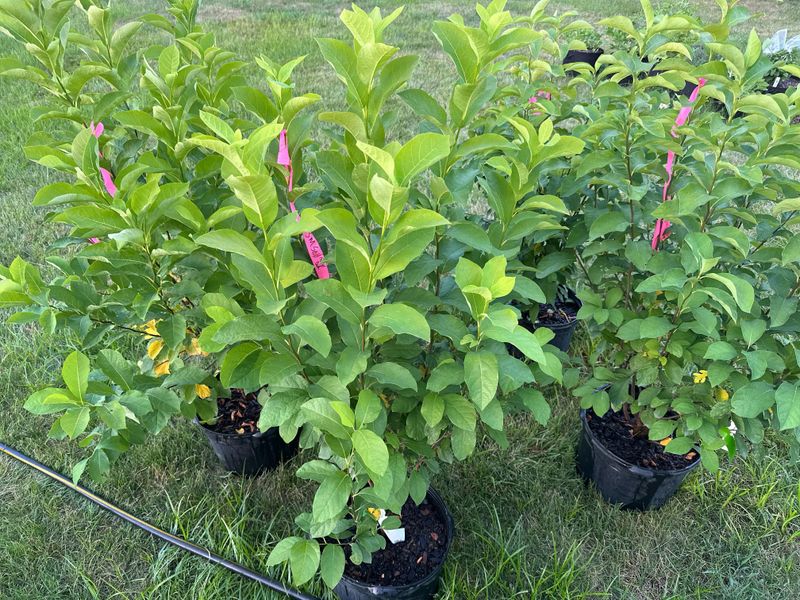
Spicebush is impressive on its own, but pair it with the right native companions and your yard edge becomes something truly remarkable.
Layered planting designs that combine multiple native shrubs create the kind of dense, varied structure that is genuinely inhospitable to ticks while also being beautiful, wildlife-rich, and deeply rooted in Michigan’s natural landscape.
Northern Bush Honeysuckle, or Diervilla lonicera, is a fantastic pairing with Spicebush. It stays lower to the ground, filling in the front of a border nicely while adding yellow summer flowers that pollinators enjoy.
Leatherwood, or Dirca palustris, is another excellent Michigan native that thrives in similar shaded conditions and adds interesting texture and early spring yellow blooms to the mix.
Mapleleaf Viburnum rounds out the combination beautifully with its bold foliage, fall color, and clusters of blue-black berries that birds find irresistible.
When these shrubs are planted in layered rows, tall plants at the back and shorter ones at the front, the result is a continuous wall of foliage at multiple heights.
This structure blocks the open, humid zones ticks prefer and replaces them with a complex, aromatic, well-shaded border that functions as a true ecological buffer between your lawn and any wild areas nearby.
From a design standpoint, the combination of textures, bloom times, and fall colors creates a border that looks intentional and dynamic through every season.
Michigan homeowners who invest in a layered native planting like this get a yard that is not only more tick-resistant but genuinely more alive, more beautiful, and far more rewarding to spend time in.