The Mulch Mistake Piled Around So Many Maryland Trees Slowly Rots Their Bark
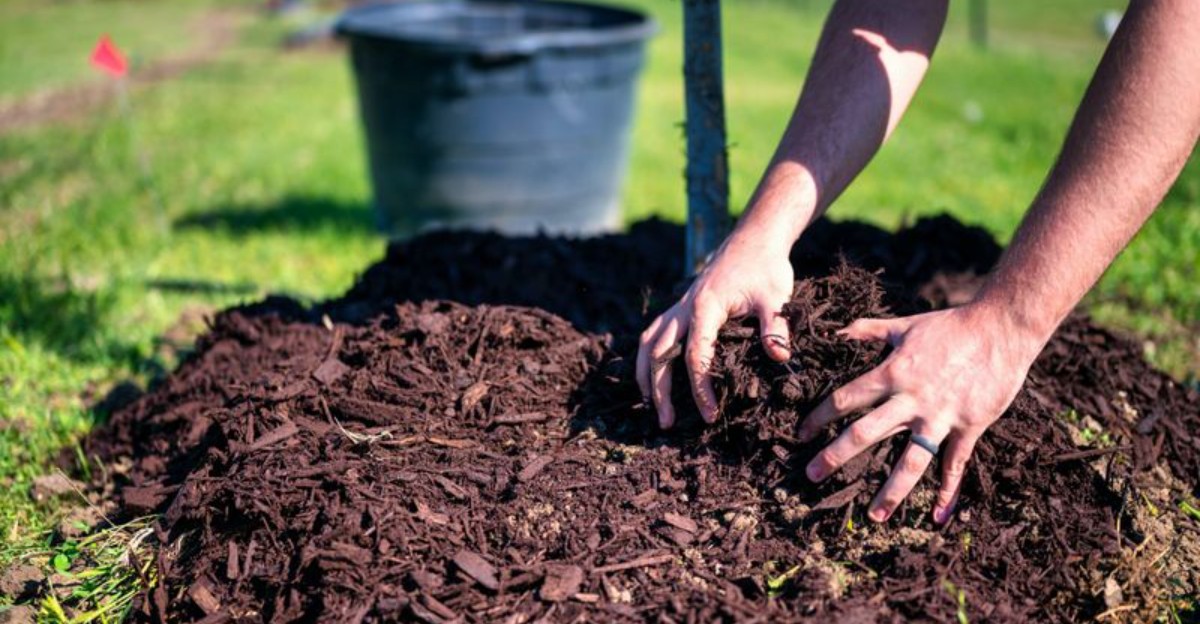
Arborists have a nickname for the tall cone of wood chips hugging so many tree trunks. They call it a volcano, and it can quietly rot the bark it touches.
I used to think a big tidy mound looked professional, like a fresh haircut for the yard. Then a certified arborist pulled one back for me, and the bark underneath was soft, dark, and smelled like a damp basement.
Across Maryland, you can spot these mounds outside banks, schools, and plenty of front yards every spring. The trees look fine for years, which is exactly why nobody connects the dots.
The fix takes about ten minutes and a garden rake. So why does the mound keep showing up season after season, and what is your favorite maple hiding at its base?
That Tall Cone of Wood Chips Around Your Tree Trunk Is Hiding Something
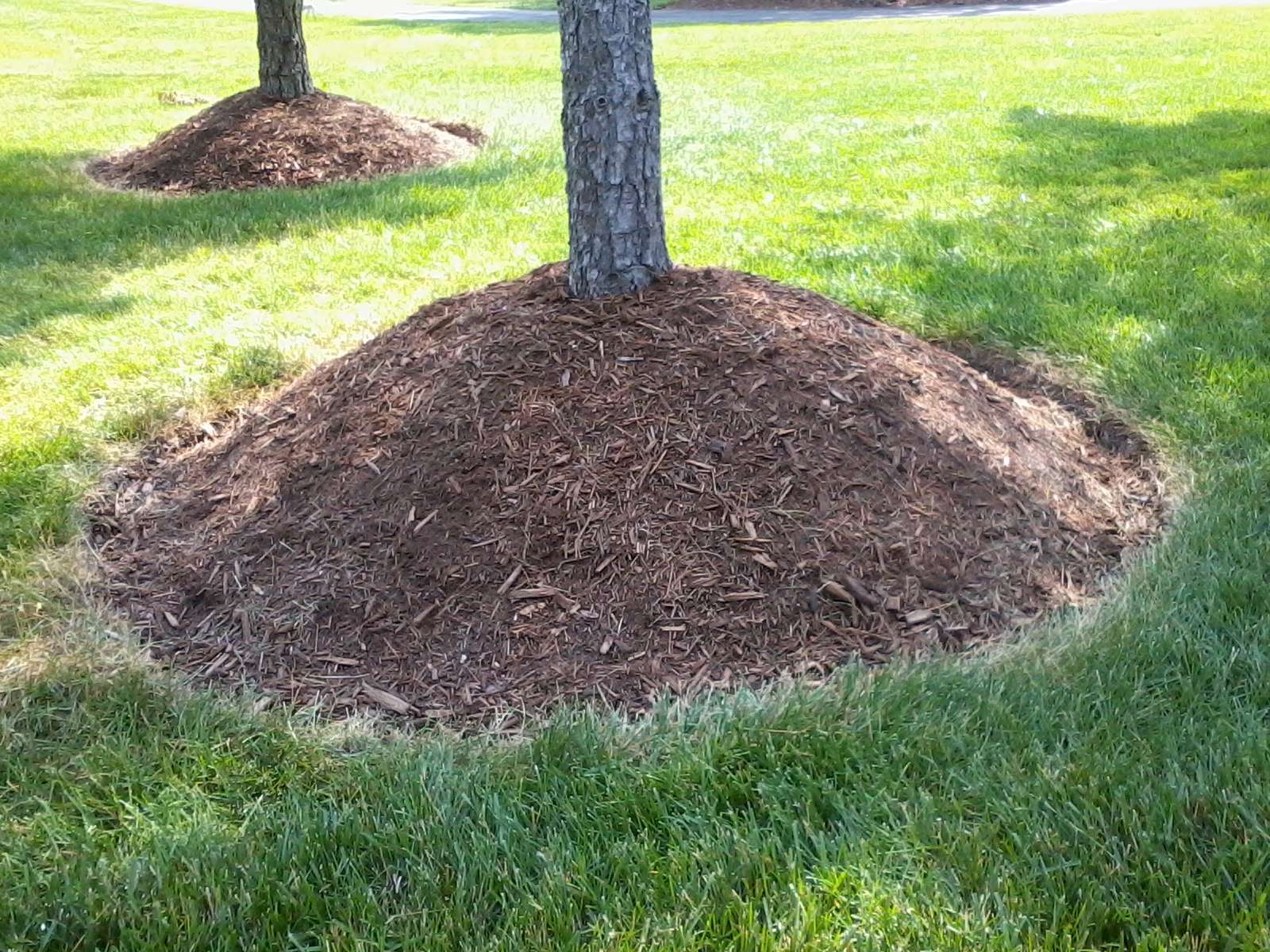
Landscapers did not invent the mulch volcano to harm anything. It spread because it looks neat, holds its shape, and signals that someone just cared for the yard.
The trouble sits out of sight. When wood chips pile 6, 10, or even 12 inches up a trunk, they cover the root flare, the spot where the trunk widens and the roots begin. That flare is designed to sit in open air, not under a wet blanket.
Tree bark works a lot like a raincoat. It sheds water and dries out between storms. Packed mulch keeps it soaked day after day, and that steady moisture is what bark struggles to handle.
I find it sneaky that the tree rarely complains right away. Leaves may stay green for several summers while the damage builds near the soil line. By the time a canopy thins, the problem often started years earlier.
So take a walk around your yard this week and look closely at the base of each tree. Can you see the trunk flare out like the base of a wine bottle, or does it vanish straight into a pile of chips? That one quick look tells you more than you might expect.
Soggy Bark Under Piled Mulch Becomes an Open Door for Rot
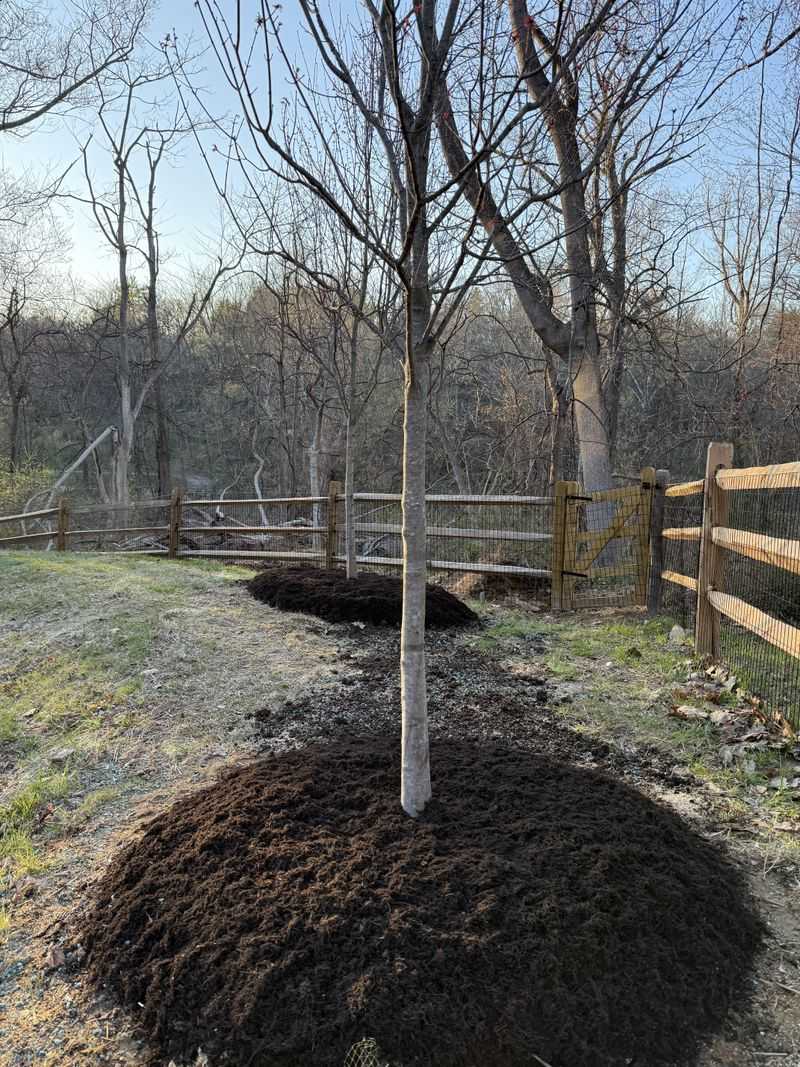
Bark has one big job, which is guarding the thin living layer just underneath it. That inner bark, called the phloem, carries sugars from the leaves down to the roots.
When wet mulch presses against the trunk for months, the outer bark softens and starts to break down. Fungi and bacteria that normally bounce off dry, healthy bark suddenly find an easy way in. University extension specialists, including those at the University of Maryland, list deep mulch against trunks as a common cause of bark decay and cankers.
Once the inner bark is damaged all the way around, the roots stop getting their food delivery. Arborists call that girdling, and a tree can decline slowly from it over several seasons.
Roots and the trunk base also need oxygen. A thick, matted mound reduces air exchange, which adds even more stress.
Not going to lie, I once pulled back a mound and found bark that peeled off like wet cardboard. The tree pulled through after I cleared it, but only because I caught it early. Moist, crumbly, or blackened bark at the base deserves your attention right away, not next season.
A Flat Mulch Donut Keeps the Trunk Flare Dry and Happy
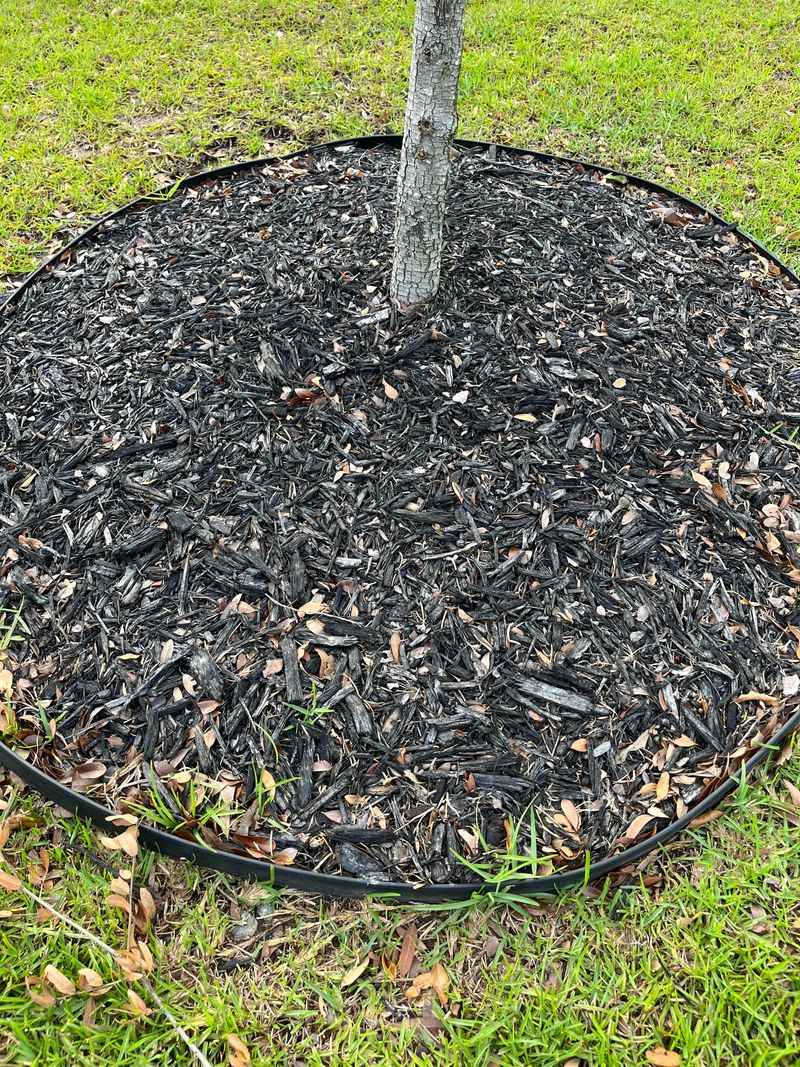
Swap the volcano for a donut, and you have solved most of the problem. Arborists across the country widely recommend this simple shape.
Spread organic mulch 2 to 4 inches deep in a wide, flat ring. Then pull it back from the trunk so there is a bare gap of about 3 to 6 inches. Some tree pros like a gap closer to a foot around larger trunks.
Go wide instead of tall. Most of a tree’s feeder roots live in the top foot or so of soil and spread far beyond the trunk. Mulching out toward the drip line, or as far as your yard allows, helps far more roots than a tall pile ever could.
Fixing an old volcano is easy. Grab a rake or your gloved hands and gently pull the excess away until you find the flare. Go slowly so you do not scrape the bark.
If you discover roots circling the trunk, snap a photo and call an ISA certified arborist before cutting anything. Those roots sometimes need careful handling. Ten minutes of raking now can spare you a costly tree removal later.
Roots Creeping Up Into Deep Mulch Can Wrap Around the Trunk
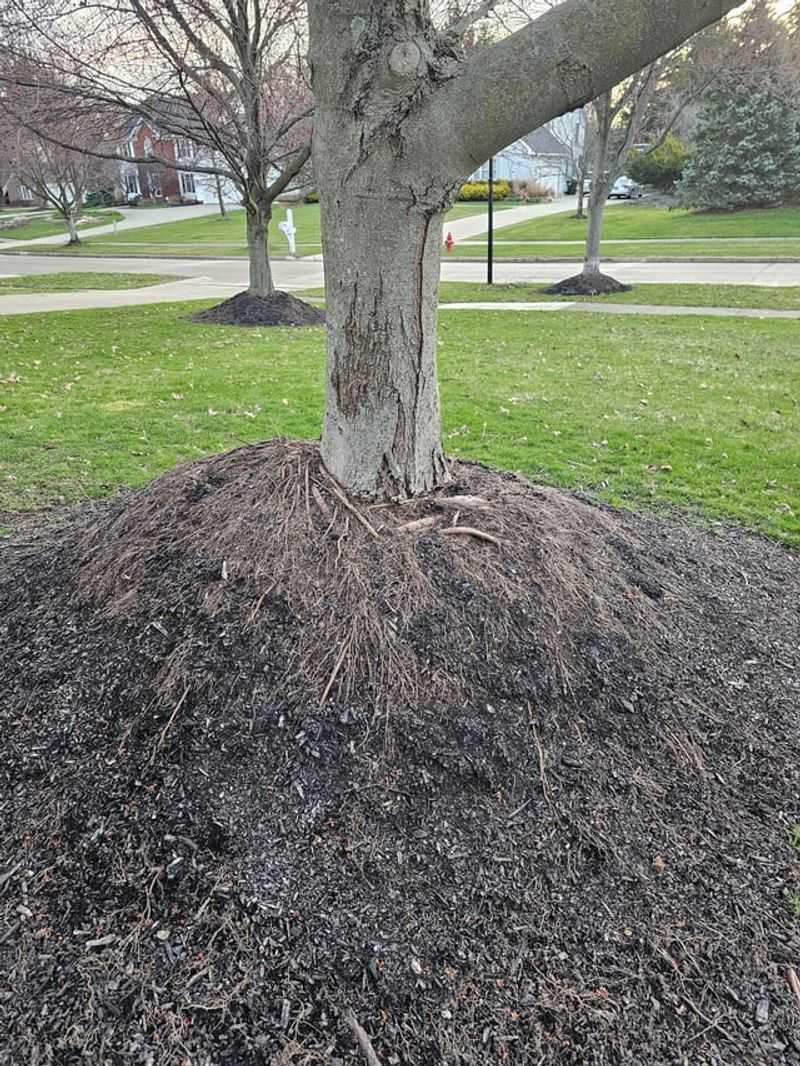
Trees are opportunists. Give their roots a deep, moist pile of mulch, and many will happily grow up into it instead of down into the soil.
That sounds harmless until those roots start circling. Roots that wander in a thick mound can wrap around the trunk, and as both grow wider, the roots squeeze the trunk. These girdling roots slowly pinch off the flow of water and nutrients.
Shallow roots living in mulch also dry out fast during a hot Maryland August. The mulch that seemed to hold water can turn into a crispy sponge once it loses moisture.
Here is a clue many people miss. A trunk that rises straight out of the ground like a telephone pole, with no visible flare, often has a buried base or roots wrapping around it.
Maples and lindens are among the trees commonly reported with girdling root issues, though plenty of species can develop them. Planting too deep at the nursery stage can add to the problem.
If you spot a root crossing the trunk, resist the urge to grab a saw. A certified arborist can judge whether removing it will help or cause more harm.
Voles and Mice Love a Cozy Mulch Mound Next to Tender Bark

Small critters see a tall mulch pile as a five-star hotel. It is warm, hidden from hawks, and parked right next to a buffet of soft bark.
Voles are the usual suspects. These little rodents tunnel through mulch and snow in winter, then gnaw the bark near ground level. Young fruit trees, dogwoods, and freshly planted shade trees are favorite targets.
When they chew all the way around a young trunk, the damage acts much like girdling. The tree may leaf out in spring, then fade as summer heats up.
Insects join the party too. Constant dampness can attract carpenter ants, termites, and wood-boring beetles looking for softened wood. Scientists do not blame mulch for every pest problem, but extensions agree that moist, buried bark is easier to invade.
Guilty as charged here. I lost bark on a young apple tree one February and never suspected the mulch until I pulled it back and saw the tiny tooth marks.
Keeping that bare gap around the trunk takes away the hiding spot. For young trees, a loose hardware cloth guard set a couple inches into the soil adds extra protection through the cold months.
Shredded Hardwood, Pine Straw, and Leaves Each Work a Little Differently
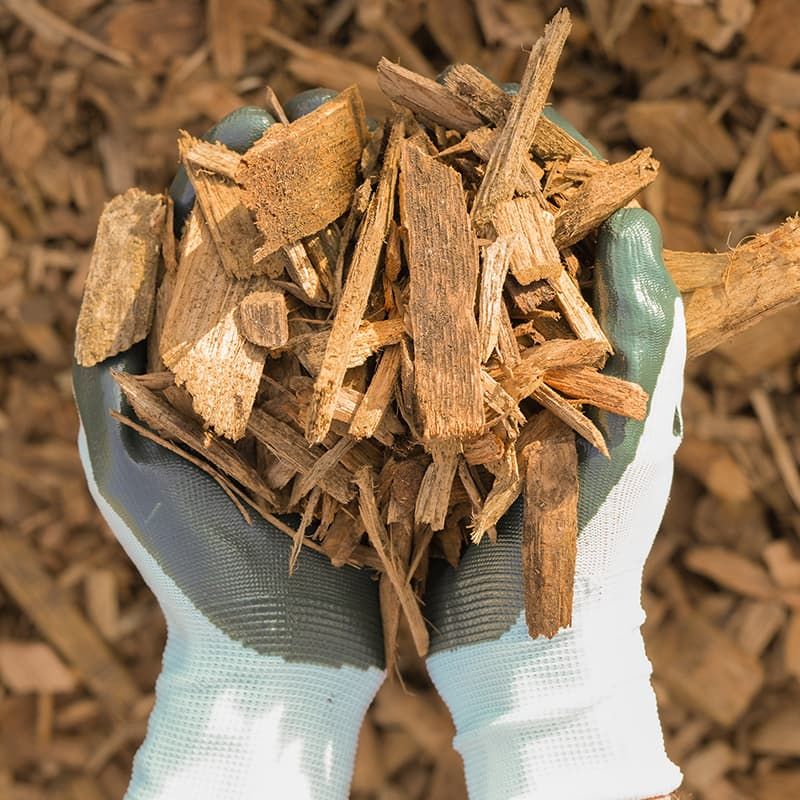
Walk into any garden center in spring and you will find a wall of mulch bags. Picking one gets easier once you know what each type does.
Shredded hardwood is a local favorite and breaks down into rich organic matter. It does mat down, so fluff it with a rake once a year to let water through. Wood chips from tree crews are often free and work beautifully around trees.
Pine straw stays light and airy, which makes it less likely to smother the soil. Chopped fall leaves are the budget pick and feed soil life as they break down.
Watch for sour mulch. If a fresh load smells like vinegar or rotten eggs, it may have fermented in a tight pile, and it can scorch nearby plants. Spread it thinly and let it air out first.
Dyed mulch looks bright, but it offers no extra benefit for tree health. Rubber mulch does not improve soil at all.
Whatever you choose, top off only enough to keep the layer at 2 to 4 inches. Fresh mulch on top of old mulch every year is how many volcanoes are born.
A Quick Spring Check Around Each Tree Base Pays Off for Years
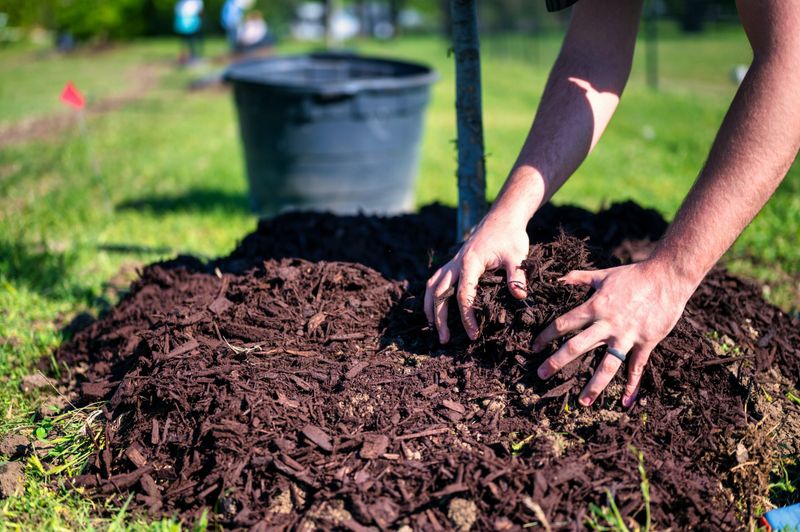
Mulching right is one of the kindest things you can do for a tree. It copies the forest floor, where leaves and twigs blanket the soil and slowly feed it.
A good layer holds moisture, keeps weeds down, and cushions roots from summer heat and winter freezes. It also keeps lawn mowers and string trimmers away from the trunk, which prevents a surprising amount of bark damage.
So make a simple habit of it. Each spring, before adding anything new, push a finger or trowel into the old mulch and measure. If it is already 3 inches deep, skip the new bag and just loosen what is there.
Check that the trunk flare is visible on every tree. Look for soft bark, mushrooms at the base, or roots circling the trunk.
If you hire a landscaper, say it plainly: no mulch against the trunk. Many crews pile it high because customers expect it, and a quick request changes the result.
Your trees work hard for decades shading your home and feeding birds. Giving them a little breathing room at the base is an easy way to return the favor in Maryland yards.