What It Means When A Bald Eagle Circles Your Ohio Property
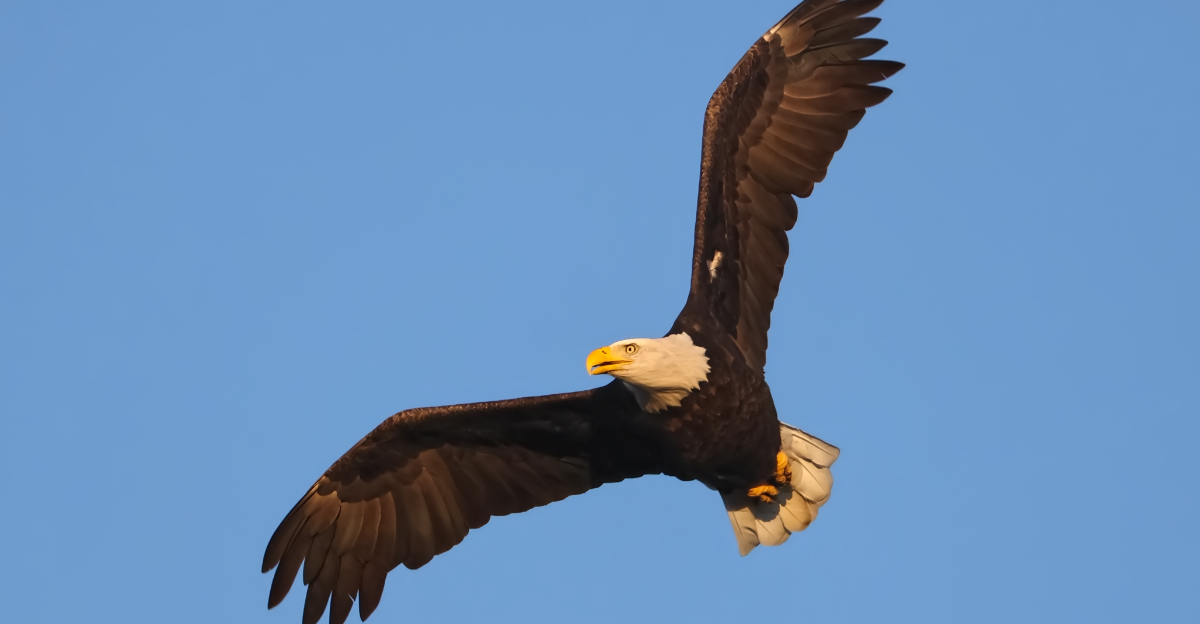
Most Ohio wildlife sightings get a photo and a post. A bald eagle circling your property gets something else entirely.
A stopped breath. A strange feeling that the yard just got evaluated by something that has been doing this longer than the neighborhood has existed.
That feeling is not wrong. Bald eagles circle with intention.
A property they return to is offering something the bird found worth coming back for. That something is specific, readable, and says more about the land beneath the circle than most homeowners ever think to consider.
Ohio bald eagle numbers have been climbing for years. The sightings are moving closer to residential properties, further from remote shorelines, and into conversations that used to belong exclusively to wildlife refuges.
Something about Ohio’s landscape is changing. The eagles noticed before anyone else did.
What they are circling over is the evidence.
1. High Circles Often Mean The Eagle Found A Free Ride On Rising Air
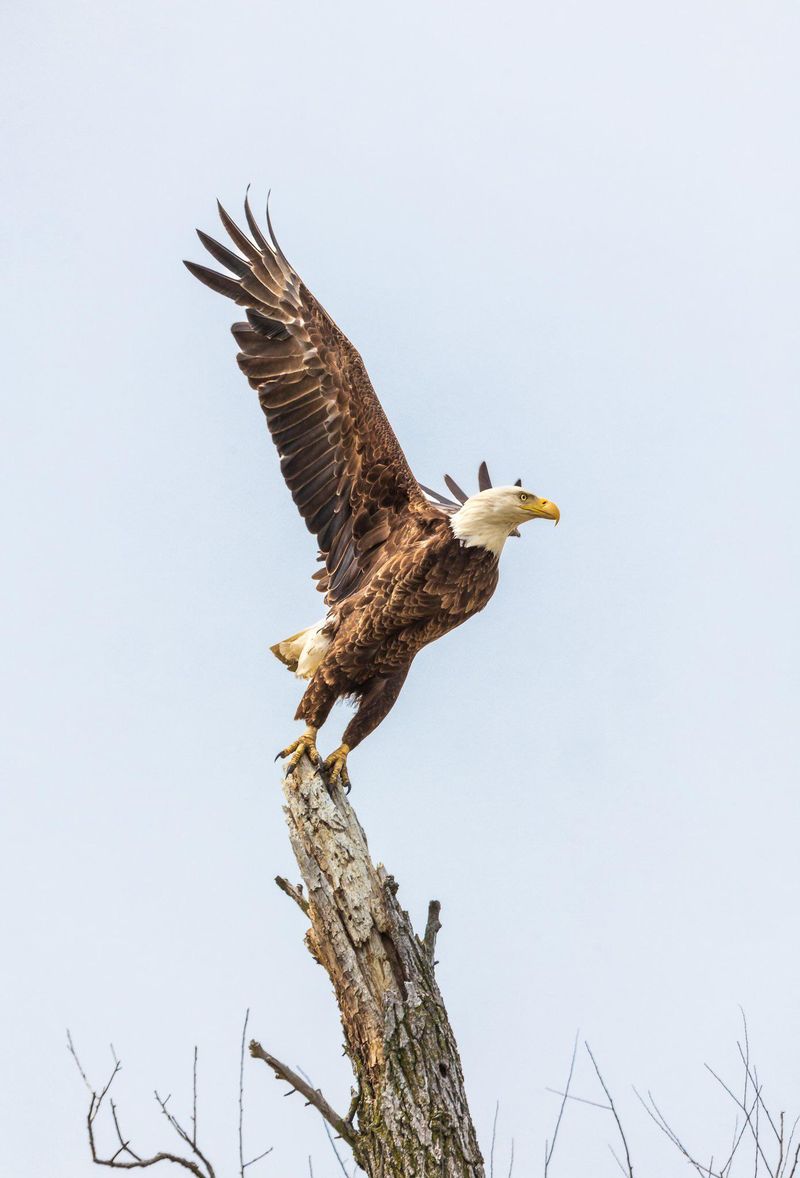
Watching a large bird gain hundreds of feet of altitude without a single visible wingbeat is one of the more striking things you can see on a clear afternoon. Large raptors, including Bald Eagles, use columns of rising warm air called thermals to climb efficiently.
A thermal forms when the sun heats the ground unevenly, causing air near the surface to rise. The bird enters that rising column and circles within it to stay aloft as it gains height.
Cornell Lab of Ornithology notes that broad-winged soaring birds use rising air to reduce the energy cost of flight. Circling keeps the bird inside the thermal rather than flying out of it.
Once enough altitude is gained, the eagle can glide in a chosen direction, covering ground with very little effort. That sequence, climb and then glide, is an efficient way to travel or simply to move between parts of a home range.
Not every overhead circle involves a thermal. Wind, terrain shape, and the bird’s own intentions all play a role.
A bird soaring high above your land may be responding to atmospheric conditions far more than anything directly below. The ground underneath a high-soaring eagle is not necessarily what drew it there.
Altitude alone is worth noting when you try to make sense of what you observed.
2. Nearby Rivers And Lakes Can Put Your Property Along A Foraging Route
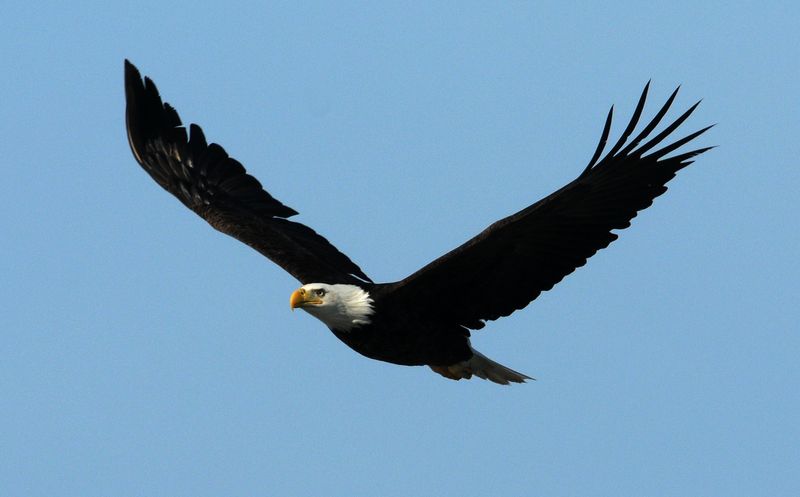
A river several miles beyond your fence line can quietly shape which birds appear in your airspace. Bald Eagles have a strong association with aquatic habitats.
Rivers, lakes, reservoirs, marshes, and wetland edges all figure prominently in where these birds spend their time. The Ohio Department of Natural Resources notes that the state’s river corridors and large inland lakes support high concentrations of Bald Eagles.
These areas are especially important for nesting and wintering birds. Fish make up a significant part of the diet, particularly where waterways stay open and productive.
But the diet is broader than fish alone. Waterfowl, carrion, and other food sources also factor in depending on season and local availability.
A bird does not need to feed exclusively at the water’s edge. It may travel between a feeding area and a distant perch, crossing over fields, neighborhoods, and wooded ridges along the way.
A property that sits between a large body of water and a stand of tall trees may fall naturally along one of those travel lines. That does not mean the bird has a fixed route over your Ohio yard.
Flight paths shift with food availability, weather, and the bird’s own ranging behavior. Regional water resources can draw eagle activity into the broader surrounding area.
Your property may simply fall within that zone on certain days.
3. Open Ground Gives An Eagle More Room To Scan What Lies Below
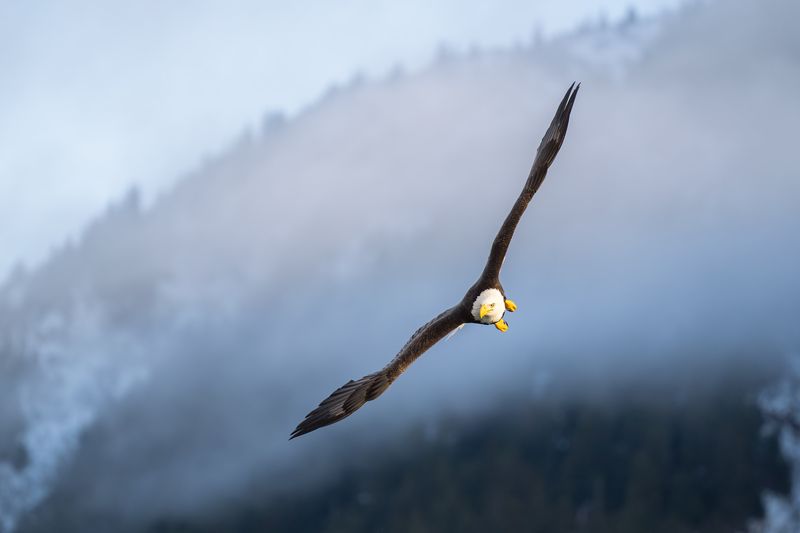
Large fields, shorelines, and wetland edges share one useful quality for a wide-ranging raptor: they offer unobstructed sight lines. Dense forest canopy makes it much harder for a large bird to spot food on the ground.
Open ground removes that barrier. Research on Bald Eagle foraging habitat consistently points to open or semi-open landscapes as areas where these birds spend active feeding time.
Seeing one pass over a field does not confirm it is actively searching for food at that moment. The bird may be traveling between water and a perch, using the open terrain as a convenient corridor.
Soaring over open land is also simply easier than threading through a wooded area at low altitude. The difference between a bird scanning for food and one that is merely passing through is not always visible to someone watching from the ground.
Behavioral cues can help narrow the interpretation. A bird making tight, repeated passes at lower altitude over one spot behaves differently from one making broad, drifting turns at height.
Actual prey capture involves a committed descent, not casual soaring. If the bird crosses the field without changing altitude or direction much, it may be moving through rather than working the area for food.
Open ground matters in eagle habitat, but one pass overhead does not confirm what the bird was looking for.
4. Tall Mature Trees Can Offer A Useful Perch Between Flights
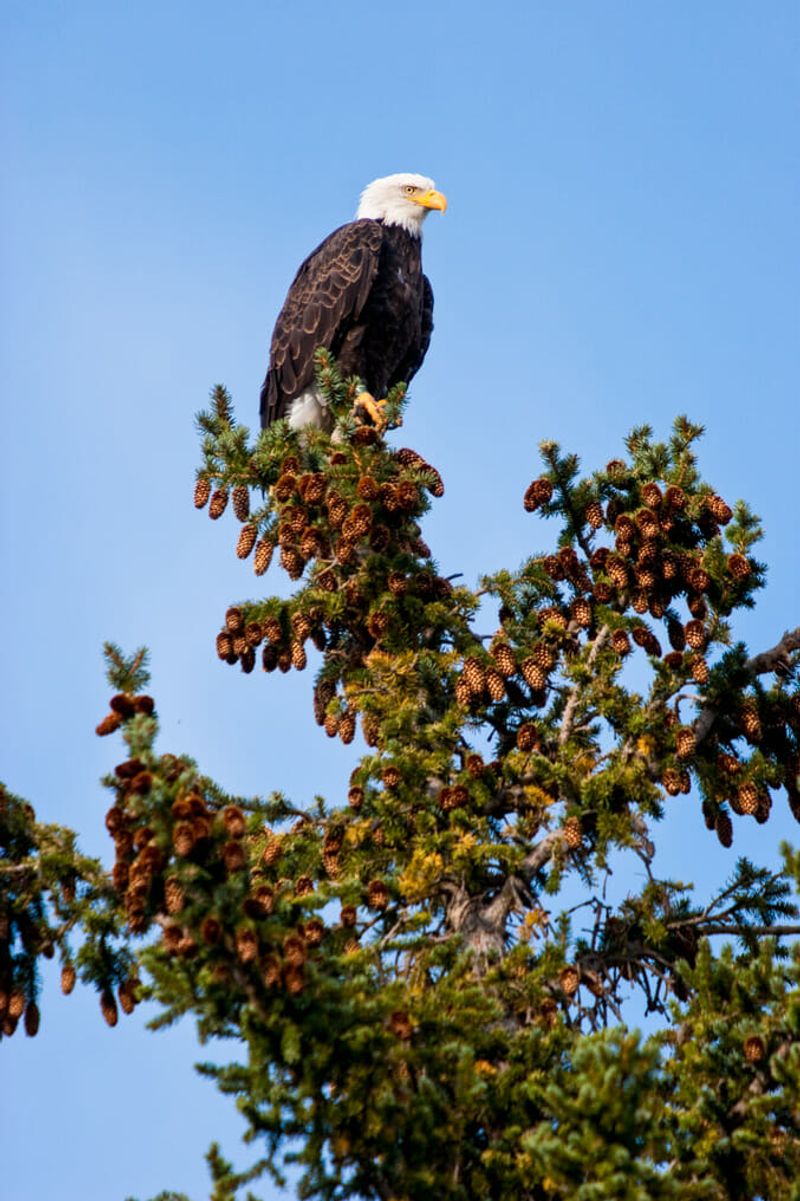
Not every eagle sighting involves a bird in flight. A large white-headed bird sitting motionless near the top of a tall Ohio tree can be easy to overlook from a distance.
That perch may be just as important to the bird as a feeding area. Bald Eagles rely on prominent, elevated perches for resting, watching over nearby water, and roosting during colder months.
Trees that stand well above the surrounding canopy, particularly those near water or open ground, tend to attract repeated use.
A property with one or more large, mature trees near a wetland edge or open field may simply offer a convenient resting point between flights. The tree does not have to be on prime waterfront land to serve that purpose.
Eagles can travel meaningful distances between a perch and a feeding area, and a tall tree partway along that route may be genuinely useful to them.
Observing a perched eagle from a respectful distance with binoculars or a zoom lens is a reasonable way to watch without causing stress to the bird.
Walking toward a perched eagle, positioning yourself beneath it, or making loud noise near it can cause it to flush, which wastes the bird’s energy.
Perching is not the same as nesting, and a tree that attracts a resting eagle does not automatically become nesting habitat. That distinction matters and comes up again in a later section.
5. A Low Circle May Be About Food Nearby Rather Than Your House
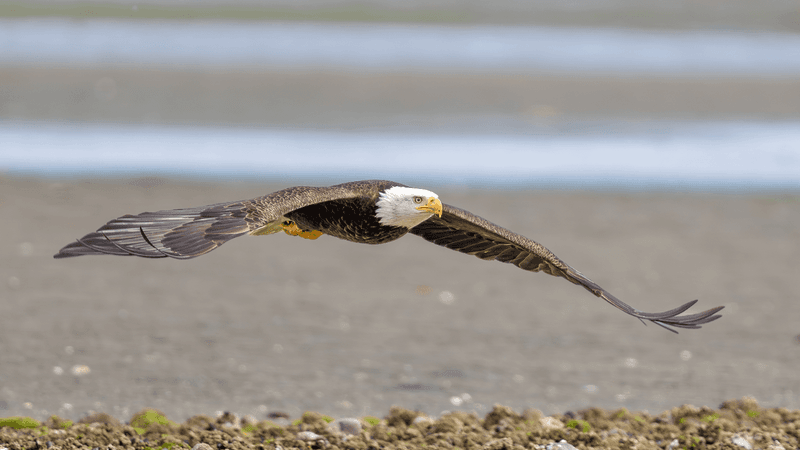
When a large eagle makes a lower pass over a yard or field, the instinct for many people is to assume the bird is watching them or targeting something close to the house.
That feeling is understandable, but the bird’s attention is far more likely directed at a food source than at people or structures.
Bald Eagles have a broad diet that can include fish, waterfowl, small and medium-sized mammals, and carrion when available. The food that caught the bird’s attention may be well beyond the property line.
A pond edge, a road shoulder, a creek crossing, or a wetland margin near the yard can all hold food that draws a passing eagle lower. The bird does not need to be directly above the food source to be orienting toward it.
Low flight along an open corridor can simply reflect the terrain rather than a specific target on your land.
Concerns about small pets or backyard poultry come up whenever a large raptor appears nearby. Bald Eagles do occasionally prey on waterfowl and small mammals.
However, an eagle passing over a residential yard cannot reliably be interpreted as a threat to animals on the ground. If you have concerns about free-ranging small animals, consult your state wildlife agency for current, evidence-based guidance.
Avoid drawing conclusions from a single observation.
6. Repeat Sightings Can Point To Good Eagle Habitat Somewhere Close By
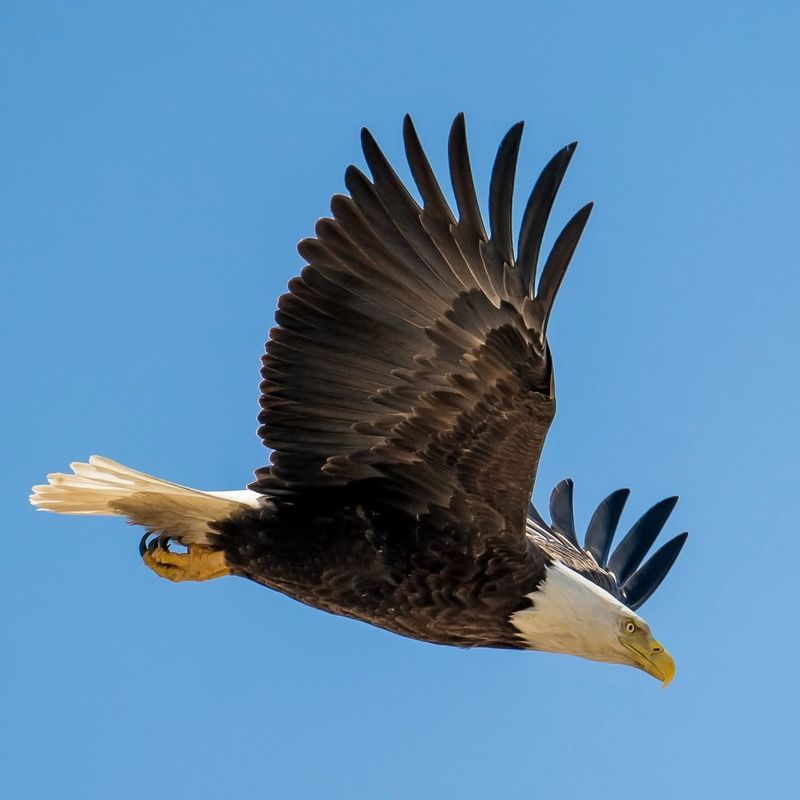
Spotting what appears to be a Bald Eagle on several separate days over the same general area naturally raises a question: is the same bird coming back, and if so, why?
Multiple sightings spread across a week or more can suggest that useful resources exist somewhere in the surrounding landscape.
Those resources might include reliable food, a productive stretch of water, tall perch trees, or roosting cover somewhere nearby.
A few cautions apply before drawing firm conclusions. Two adult birds look nearly identical without leg bands or other identifying marks, so repeat sightings do not guarantee a single returning individual.
Two or more different birds may be using the same area independently. Eagles can also range across large areas, so a bird seen over your land one morning may have covered many miles by afternoon.
The state has seen a remarkable recovery in its Bald Eagle population over recent decades. The Ohio Department of Natural Resources has documented steady growth in active nests statewide.
As a result, regional sightings have become less unusual than they once were. Greater overall abundance in the state naturally increases the chance of repeated local observations.
That regional context matters when interpreting what you see. Repeated flights over one area can reflect genuinely good nearby habitat.
They can also simply reflect a bird using a broad landscape that regularly includes your neighborhood.
7. One Eagle Overhead Does Not Mean A Nest Is On Your Property
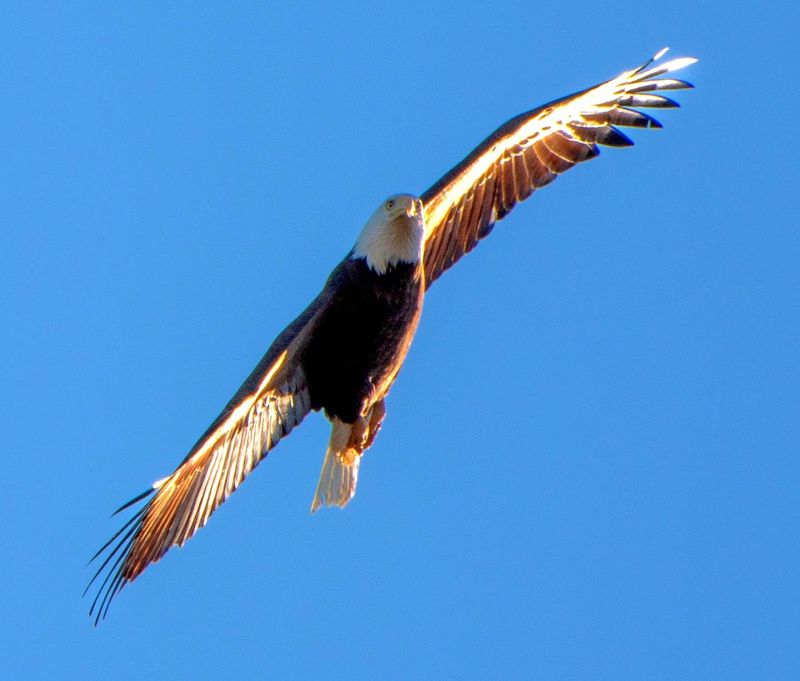
A single adult making broad turns overhead is striking, but it is not evidence of a nest on or near your Ohio land. Nesting Bald Eagles require several specific conditions.
They need a large, stable tree capable of supporting a heavy stick nest, reliable food nearby, and relative freedom from frequent human disturbance. Not every property with a tall tree and nearby water meets all of those needs.
When a pair does nest close by, the nest itself is usually visible if you know where to look. Bald Eagle nests are large accumulations of sticks, often added to year after year, positioned high in a sturdy tree.
A single overhead bird, even a repeated one, does not confirm that kind of structure exists on your land. Other large birds, including Great Blue Herons and Ospreys, also build conspicuous nests that can be misidentified from a distance.
Federal law protects Bald Eagles and their nests under the Bald and Golden Eagle Protection Act, regardless of where the nest is located.
Disturbing a nest, approaching it in ways that cause adults to abandon it, or interfering with nesting activity can carry serious legal consequences.
If you genuinely believe a nest is present on nearby land, the appropriate step is to contact your regional U.S. Fish and Wildlife Service office for current guidance rather than investigating on your own.
8. The Same Area Can Keep Drawing Eagles Back When Food And Habitat Line Up
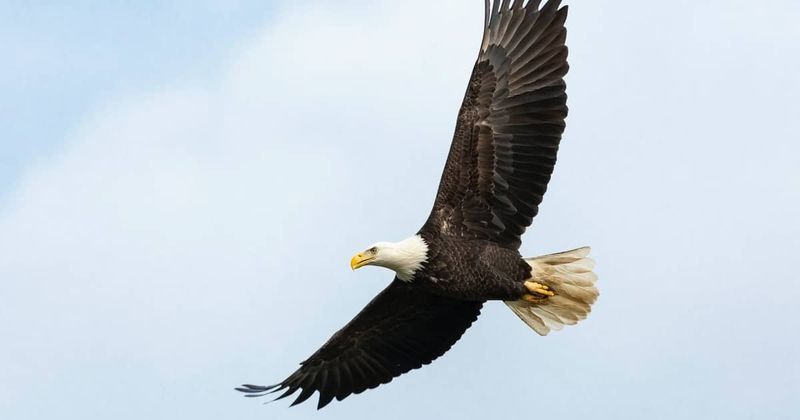
Some stretches of landscape simply work well for large raptors over the long term. A combination of open water, reliable food, tall perch trees, and low human disturbance can make a region attractive to Bald Eagles across multiple seasons.
When those elements line up across several miles of connected habitat, birds may cross the same general area repeatedly without any single yard being the reason.
Property lines mean nothing to a bird navigating by food, terrain, and atmospheric conditions. An eagle crossing your land may have roosted near a reservoir miles away and fed along a river corridor.
It could then be heading toward a perch in a woodlot beyond a neighboring farm. Your yard falls in the middle of that route by geography, not by any particular quality it holds.
That is actually what a circling eagle tends to reveal most clearly: something about the surrounding landscape rather than the specific patch of ground below.
Water, open habitat, and tall trees somewhere in the broader area create conditions that bring these birds through.
A single observation, even a repeated one, invites curiosity about the wider habitat network rather than conclusions about one address.
Watching carefully, noting the altitude and direction of flight, and considering what lies beyond your fence line will tell you far more than the sighting alone.