The Native Florida Berry Shrub That Feeds Songbirds Through The Worst Of August Heat
August is when Florida songbirds need food sources the most and find them the hardest. The easy season is over.
Heat has pushed many fruiting plants past their productive window. Native insects have cycled through their most visible stage.
The birds that stayed through summer are working harder to find what the landscape used to offer more generously. One native Florida shrub peaks in August on purpose.
Not despite the heat. Because of it.
American beautyberry does not apologize for summer. It leans into it, producing clusters of electric purple berries at the exact point in the season when most other fruiting plants have already said everything they had to say.
Songbirds find it fast. They find it reliably.
And a yard with a mature beautyberry in August becomes something birds actually compete for access to rather than pass through looking for something better.
1. Meet American Beautyberry And Its Bird Feeding Fruit
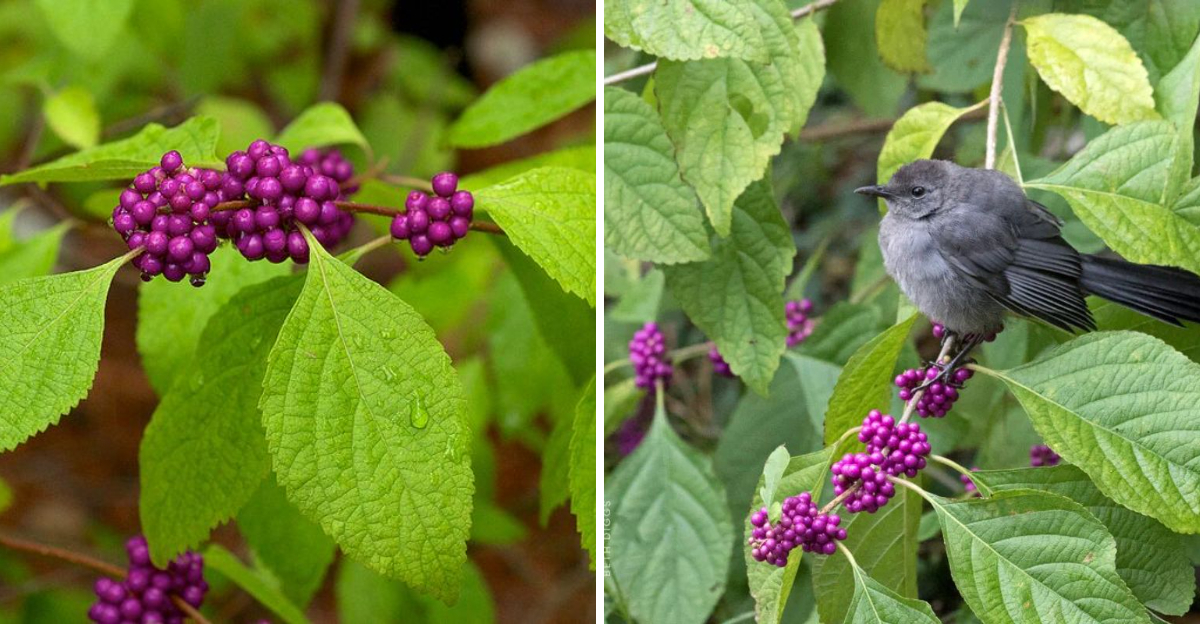
Clusters of small berries wrapped tightly around arching woody stems make American beautyberry one of the most recognizable native shrubs in the Southeast. Its accepted botanical name is Callicarpa americana.
It grows naturally across the region in woodland edges, hammocks, and shrubby thickets where filtered light and loose soil are common.
The shrub has a loose, arching form with broad, slightly rough-textured leaves that can reach several inches long. Small pinkish or lavender flowers appear in summer, forming in clusters close to the stems at leaf nodes.
Those flowers gradually give way to round berries that develop in dense rings encircling the stems. That feature makes the plant visually distinctive even from a distance.
Fruit color deepens over time, often shifting from green to a vivid magenta-purple as the season progresses. Some plants may begin showing color in late summer, while others develop their full display into fall.
The berries are seasonal and do not persist year-round. Several fruit-eating bird species are drawn to the clusters when ripe fruit is available.
This makes the shrub a useful seasonal resource within a thoughtfully planted landscape. Identification is straightforward once you see those stem-hugging berry rings up close.
2. Watch Purple Clusters Form Through Late Summer
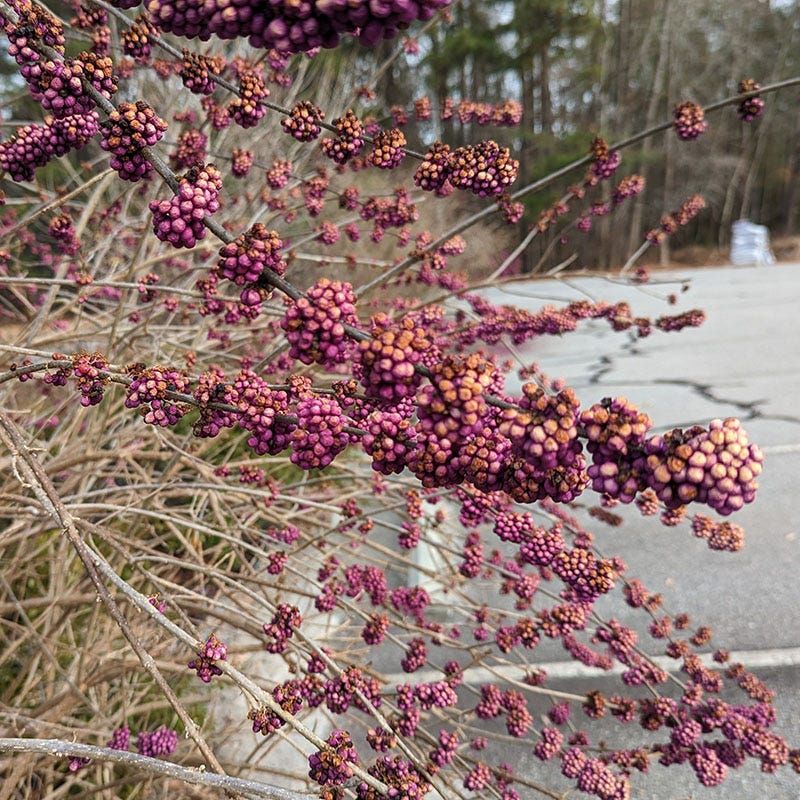
Green berry clusters catching the late-summer light are easy to overlook, especially when gardeners expect vivid color right away. The fruit of Callicarpa americana begins forming after the summer flowers fade.
The color change from pale green to deep magenta-purple happens gradually over several weeks rather than all at once.
Timing varies considerably depending on your location within the state, local weather patterns, and available sunlight. It also depends on plant maturity and whether the shrub was pruned earlier in the season.
Plants growing in sunnier conditions often produce more abundant fruit, according to UF/IFAS guidance. Though the shrub can still flower and fruit in partial or filtered shade.
Heavy shade may reduce flowering and overall fruit production, so full to partial sun tends to give better results.
White-fruited selections exist and are sometimes sold in nurseries, but the Florida native purple-fruited form is the one most commonly found growing wild across the region. If your plant has not yet shown color by mid-August, that does not mean it has failed.
Your Florida Garden Changes Every Week. Your Plan Should Too.
Gardening in Florida changes quickly throughout the season. Every Friday you’ll receive a simple weekly plan showing exactly what to plant, prune, fertilize, harvest, and protect so you never miss the right timing.
Watch the developing clusters patiently through late summer and into fall. Fruit timing is not the same every year, and a closer look at those stems often reveals more progress than expected.
3. Give Songbirds A Valuable Seasonal Food Source
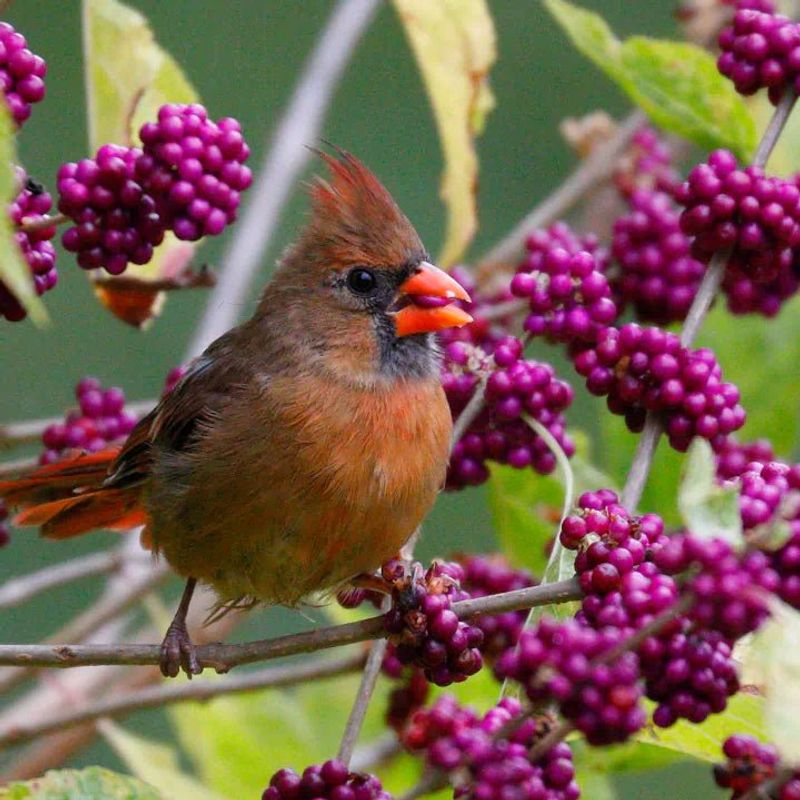
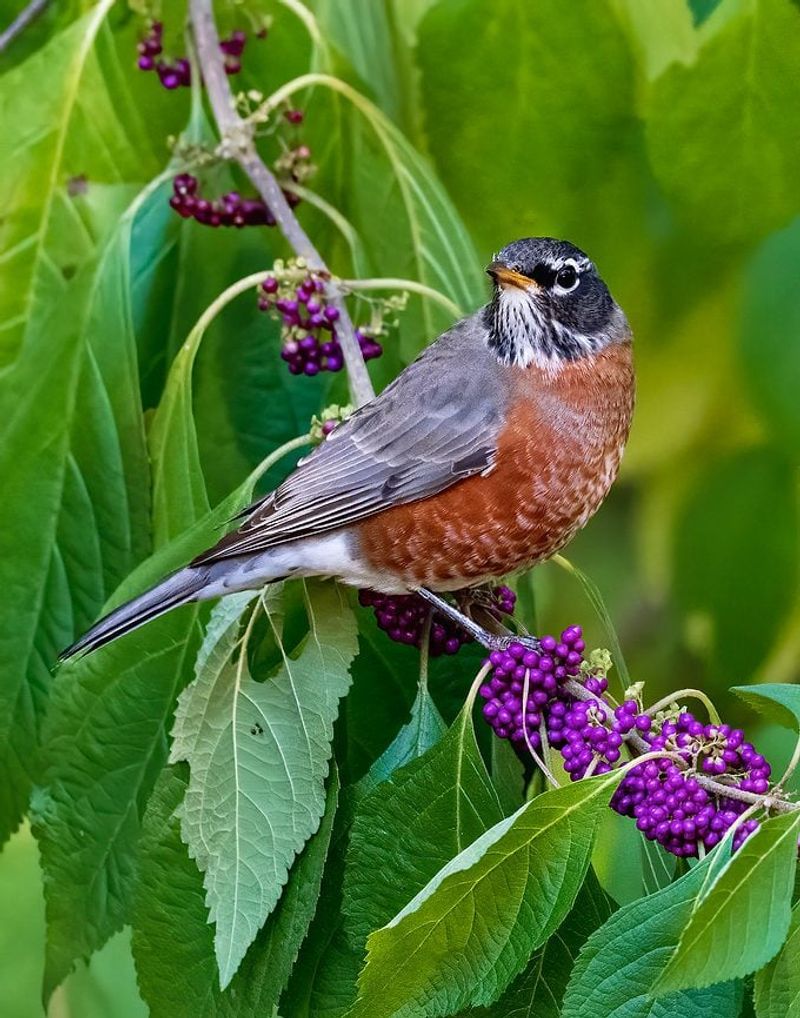
A mockingbird landing near a loaded stem, tilting its head toward a cluster of ripe purple berries, is one of the more satisfying sights a backyard can offer in fall. Several bird species are documented feeding on American beautyberry fruit.
These include Northern mockingbirds, brown thrashers, Eastern towhees, and gray catbirds, among others noted in wildlife and extension literature.
Fruit-eating birds treat ripe beautyberry clusters as a seasonal foraging stop rather than a permanent food supply. In one yard the clusters may disappear within days of ripening, while in another they linger for weeks.
Local bird activity, the density of nearby vegetation, surrounding food availability, and fall migration patterns all influence how quickly the fruit gets taken. Planting one shrub does not guarantee a specific bird will visit.
But providing ripe, Florida native fruit alongside clean water, insect-supporting plants, and layered cover creates conditions where visits become more likely.
Beautyberry fruit complements seeds and insects rather than replacing them. Many songbirds rely heavily on insects during nesting season and shift to fruit later in the year.
To observe feeding without causing stress, watch quietly from a window or seated position at a comfortable distance. Sudden movement near the shrub tends to send birds off quickly.
4. Plant It Where Birds Can Feed Under Cover
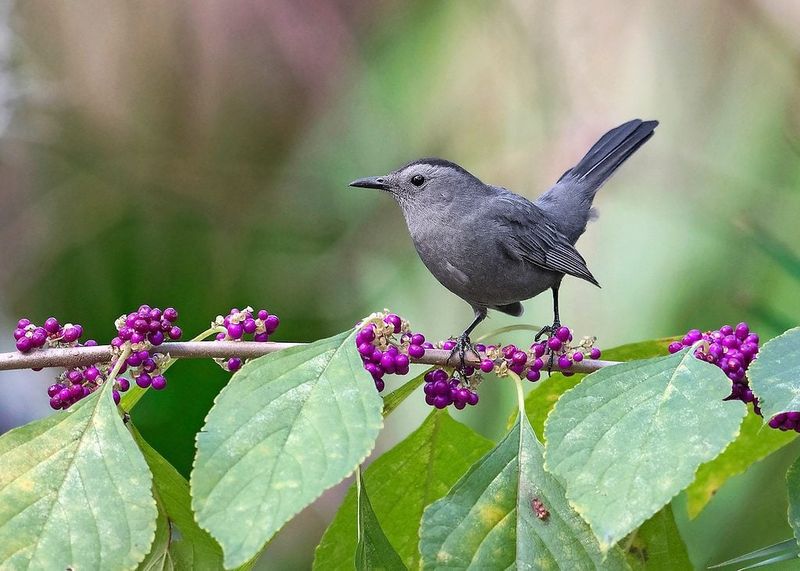
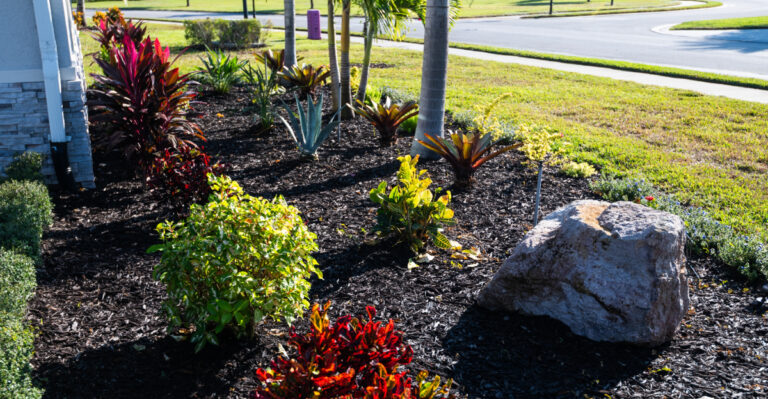
A layered planting beside your beautyberry gives visiting birds somewhere to land, pause, and retreat. Placing the shrub near an existing tree canopy, a dense Florida native hedge, or a mix of varying plant heights helps birds.
It allows them to move between cover and the fruit clusters without feeling exposed in open ground.
Callicarpa americana typically reaches six to eight feet tall and spreads to a similar width at maturity, according to UF/IFAS regional guidance. Its arching habit requires open space to develop naturally.
Avoid pressing it into a narrow foundation bed or along a tight walkway where the stems will be constantly cut back. That kind of repeated shearing works against its natural form and may reduce fruiting.
Full sun to partial shade suits the shrub well, though fruiting tends to be more consistent with several hours of direct sunlight each day. A spot visible from a window or porch seat makes observation easy.
If your planting site is near large glass panels, consider placing a physical barrier or applying window film to reduce collision risk. Bird-conservation organizations recommend addressing reflective glass near fruiting plants.
Coastal and salt-spray-exposed locations are generally not ideal, since the plant has limited salt tolerance. Choose a more sheltered inland spot when planting near the coast.
5. Keep The Roots Cooler Through August Heat
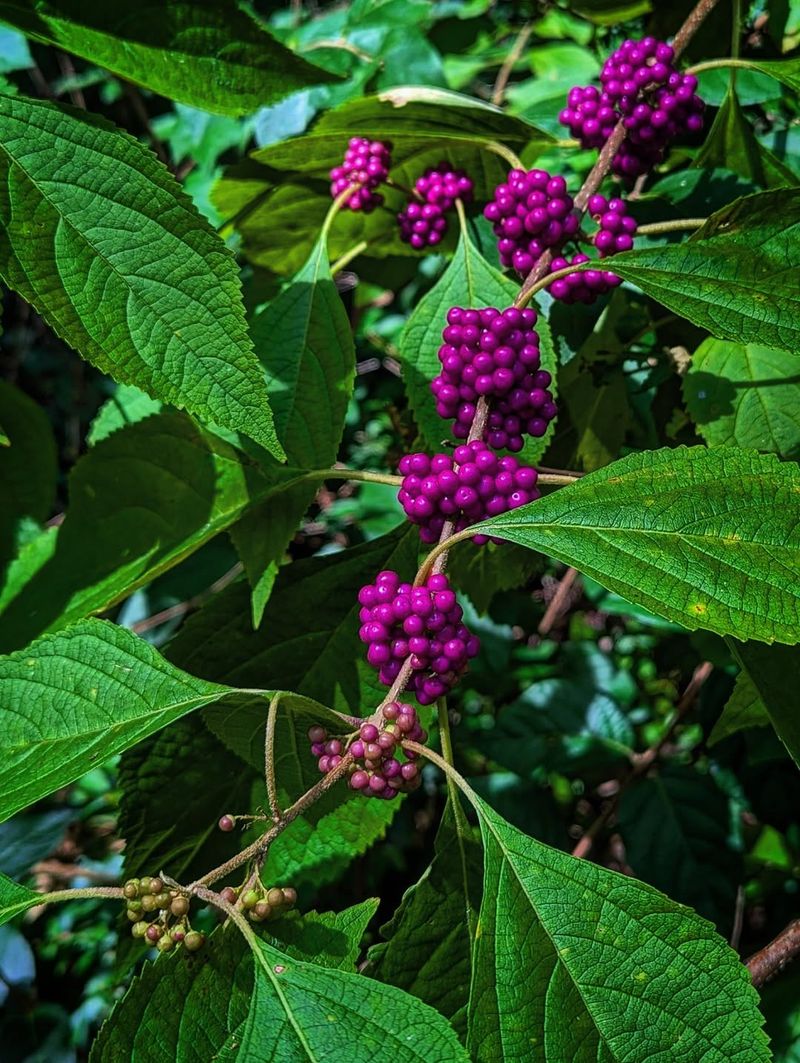
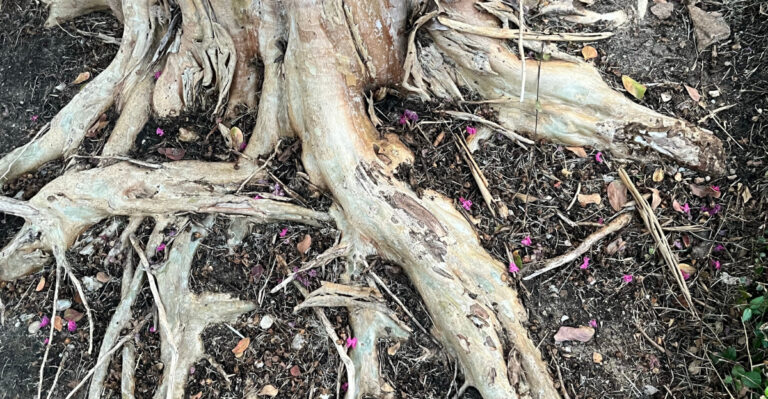
Hot, dry soil around a newly planted root zone can stress a young beautyberry faster than most gardeners expect. An established plant develops enough root depth to handle dry periods with more resilience, but that tolerance takes time to build.
Newly planted shrubs need consistent moisture checks during their first year, particularly through hot, dry stretches.
Rather than watering on a fixed daily schedule, press a finger a few inches into the soil near the root zone. If it feels dry at that depth, water thoroughly.
Sandy soils drain quickly and may need more frequent attention than heavier soils. Shaded root zones dry out more slowly than those in full sun, so adjust your approach based on your specific site conditions and recent rainfall.
Mulch applied around the root zone helps moderate soil temperature and slows moisture loss between waterings. Keep the mulch a few inches away from the main stems to allow airflow at the base of the plant.
Do not pile it into a mound around the trunk. UF/IFAS guidance supports mulching as a practical establishment tool in warm-climate landscapes.
Avoid planting during the peak of summer heat when possible. A fall or early spring planting window gives roots more time to settle before facing extreme conditions.
6. Prune Without Sacrificing The Coming Fruit Display
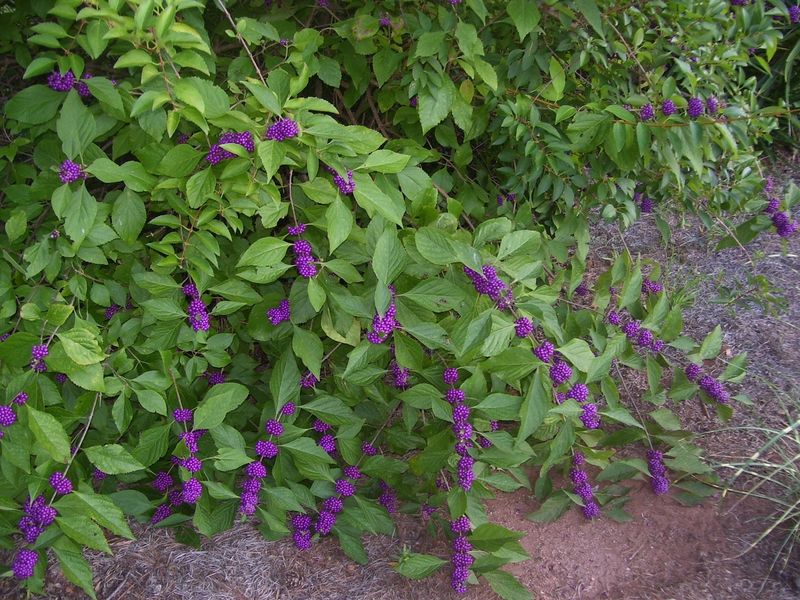
Reaching for the pruning shears in late summer while the stems are loaded with developing clusters is usually the wrong move.
American beautyberry flowers and fruits on new growth produced during the current season, which means timing matters significantly.
UF/IFAS guidance recommends pruning in late winter or early spring, before new growth begins, to avoid removing the stems that will carry this season’s fruit.
Heavy pruning during late summer cuts off clusters that are still forming or just beginning to ripen. If you prune at that point, you are trading the current fruit display for tidiness.
That is a reasonable choice only if a branch poses a genuine hazard, rubs against a structure, or is clearly damaged. Removing one problem branch is different from elective shaping of the entire shrub at the wrong time of year.
Shearing the plant into a rigid rounded shape repeatedly also works against its natural arching character. A looser, more open form tends to suit the plant and the birds that move through it.
Use clean, sharp tools and cut each branch for a specific reason. Pruning response depends on plant age, overall health, and current growing conditions, so do not expect identical results every season.
Keeping major cuts to the late-winter window protects the fruiting potential for the year ahead.
7. Pair It With Native Plants Birds Already Use
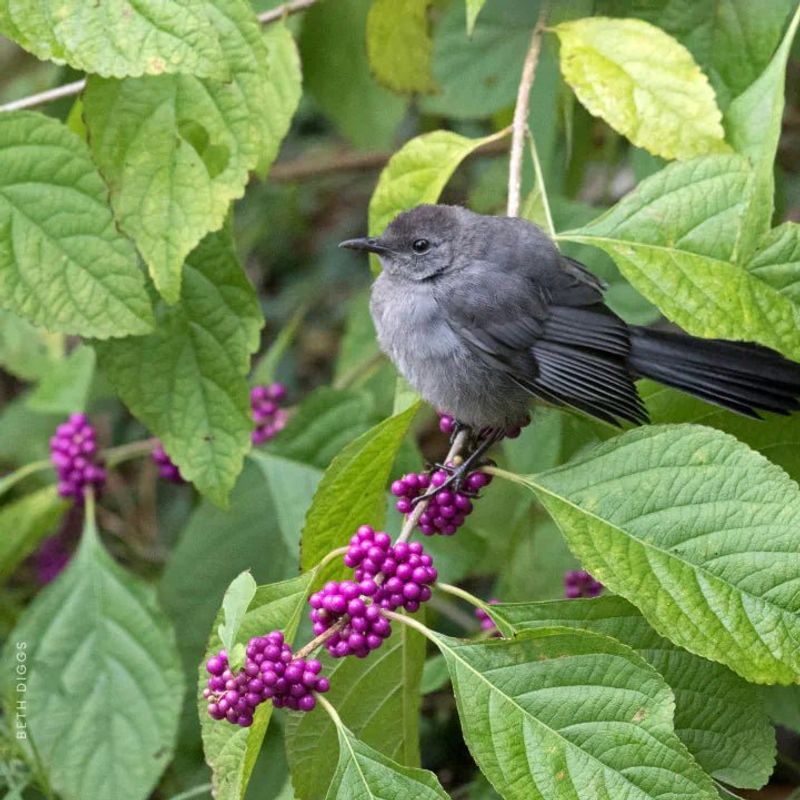
Several Florida native plants growing together at different heights create a more complete seasonal resource than any single shrub can provide on its own. Pairing beautyberry with plants that offer food, cover, or foraging opportunities at different times helps.
It extends the value of your landscape well beyond the fall fruit display.
Native trees such as wax myrtle or dahoon holly can provide vertical structure and additional fruit sources.
Native grasses and ground-level plantings support the insects that many birds depend on during nesting periods, particularly warblers and other insect-focused species.
A mix of flowering plants that bloom across different seasons supports pollinators, which in turn support insect-eating birds. Planting only berry-producing shrubs leaves out the insects, shelter, and nesting structure that a complete bird-friendly yard requires.
Choose plants suited to your specific soil type, available sunlight, moisture conditions, and space. Not every native plant performs equally well in every part of the state, and regional differences matter.
Verify plant identifications carefully, since common names sometimes apply to more than one species. Avoid invasive non-native plants that may crowd out the natives you are working to establish.
Your county extension office or a recognized native plant society can help you identify regionally appropriate companions. These will complement beautyberry without overwhelming it.
8. Turn One Shrub Into A Busier Backyard Habitat
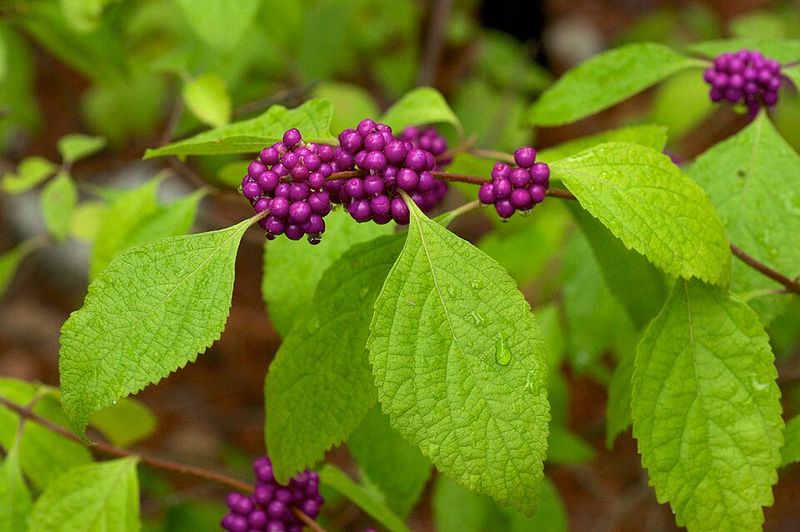
Ripe fruit on the stems and insects moving through nearby flowers help create conditions where one beautyberry becomes part of something larger. So does clean water in a shallow dish and a mix of cover plants nearby.
The shrub works best when the surrounding yard supports it with a range of resources rather than relying on the berry clusters alone to do all the work.
Reducing broad-spectrum pesticide use around and near the shrub protects the insects that many birds need as a protein source. Caterpillars, beetles, and other invertebrates support nesting birds in ways that fruit alone cannot.
Leaf litter and natural ground layers left in place near the shrub can shelter the insects that make a yard genuinely productive for wildlife. Managing that layer responsibly means keeping it away from doors, paths, and seating areas while letting it function in lower-traffic spots.
A shallow water source kept clean and refreshed regularly draws birds year-round, not just during fruiting season. Watch the beautyberry through late summer and into fall to learn when your local birds actually begin feeding on the clusters.
That observation tells you more about your specific yard than any general guideline can. Steady, low-maintenance habitat choices made across the whole year are what make the late-summer fruit display count.