The One Yard Change That Brought Cedar Waxwings To A Florida Garden
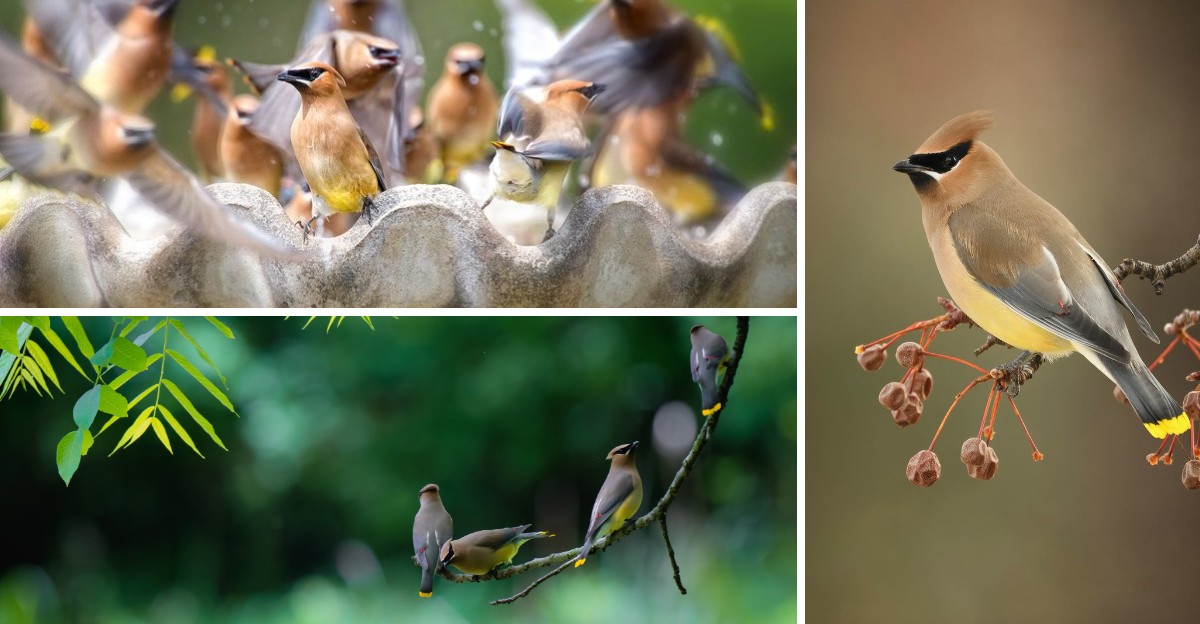
A flock of cedar waxwings dropped into one Florida yard last winter, ate their fill, and left. The owner had changed exactly one thing.
Nothing fancy. No new feeders, no pricey landscaping, no weekend spent hauling sod.
A single adjustment turned a quiet yard into a stop on the birds’ route, and neighbors with far bigger budgets never got a visit.
Waxwings are picky travelers. They move in tight flocks, follow the food, and skip anywhere that misses the mark.
Plenty of yards look perfect to humans and register as empty to a bird scanning from the sky.
The change itself is easy to copy, and it may already be growing a few streets away.
Study your yard the way a hungry flock would. The answer is hiding in plain sight.
The Change Was A Simple Birdbath
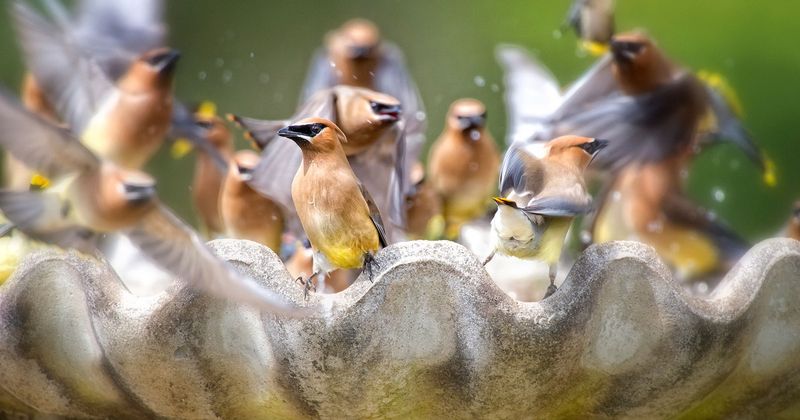
Nobody expected a plain bowl of water to change everything. One Florida gardener set out a basic birdbath, and within days a flock of cedar waxwings arrived.
Birds need water for drinking, bathing, and even hanging out with friends. In Florida, natural puddles can vanish fast during dry winter weeks.
A birdbath fills that gap and gives birds a steady, reliable spot to visit.
Waxwings eat a lot of fruit, which can make them thirsty. Fresh water helps them stay healthy, especially while traveling during migration.
A clean bath also lets them keep their silky feathers in top shape. Neat feathers help them fly well and stay warm on chilly nights.
You do not need anything fancy to start. A simple bowl on a pedestal or a shallow dish on the ground can work just fine.
Place it near trees or shrubs so birds have a safe place to perch before they hop in.
Keep the water fresh by changing it every two or three days. A quick scrub with a stiff brush keeps algae from building up.
Clean water looks inviting from above, and birds notice it.
Small effort, big reward. Sometimes the easiest yard upgrade turns out to be the one that brings the most joy.
A Dozen Waxwings Lined Up To Take Their Turn
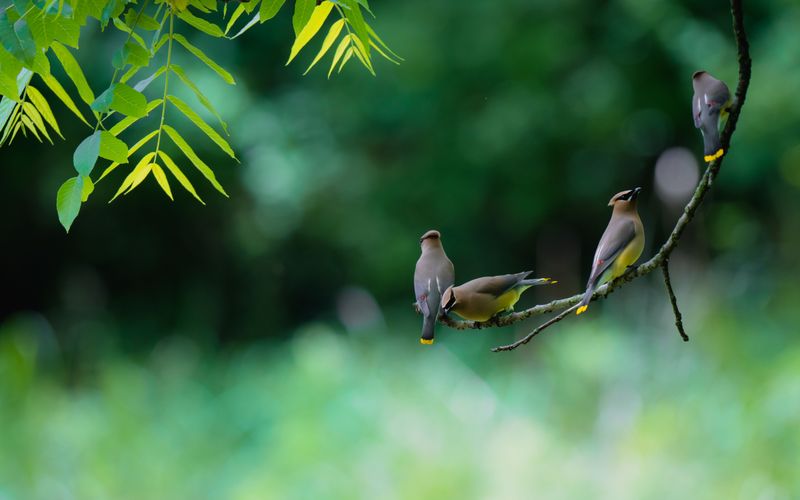
Imagine a polite little line at a water fountain, but with feathers. That was the scene when twelve cedar waxwings showed up at the new birdbath.
A few birds splashed in the water while the rest waited on a nearby branch. They sat shoulder to shoulder, almost like kids waiting for the slide at recess.
When one group finished, the next group fluttered down for a turn.
Cedar waxwings are very social birds. They eat together, travel together, and yes, bathe together.
Watching them share space so calmly feels like a small lesson in good manners.
Here is a fun bit of trivia. Waxwings sometimes pass a berry back and forth down a row of birds on a branch.
Scientists think this playful habit may help build bonds within the group.
If you want to see a similar show, place your birdbath near a tree with sturdy branches. Those limbs become the waiting room where birds can rest and watch for danger.
Your Florida Garden Changes Every Week. Your Plan Should Too.
Gardening in Florida changes quickly throughout the season. Every Friday you’ll receive a simple weekly plan showing exactly what to plant, prune, fertilize, harvest, and protect so you never miss the right timing.
Keep cats indoors so the birds feel safe while they wait.
Grab binoculars and sit quietly by a window. Count how many birds take turns.
You might be amazed at how organized a flock of wild birds can be.
Cedar Waxwings Winter In Florida From October To May
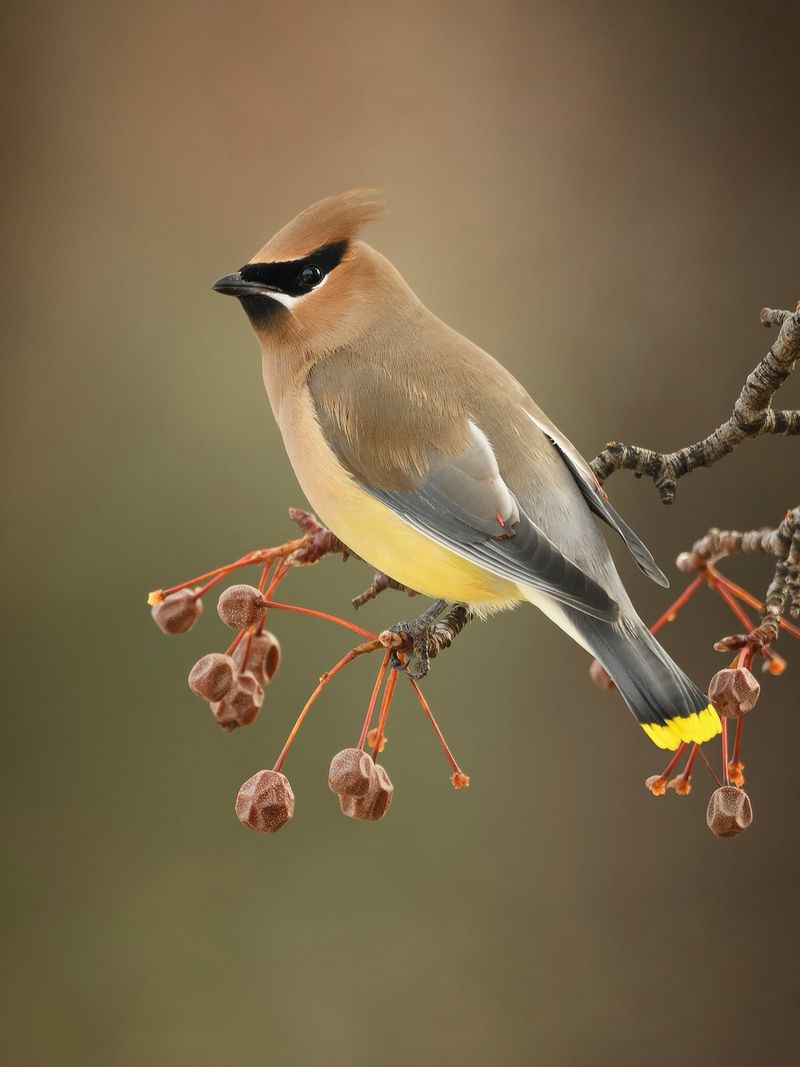
Mark your calendar in pencil, because these birds keep a loose schedule. Cedar waxwings usually start reaching Florida around October and may stay until May.
They spend summers farther north, where they raise their young. When cooler weather moves in, many head south to places with milder winters and plenty of fruit.
Florida fits that wish list nicely.
Their arrival can feel a bit random, though. Waxwings follow food, so they move around based on where berries are ripe.
One yard might see a big flock in December, while another gets visitors in March.
Spring often brings the biggest surprises. Many gardeners notice waxwings in late winter and early spring, when birds gather before heading north.
That is a great time to keep your birdbath full and clean.
Listen for their call before you spot them. It sounds like a thin, high whistle, almost like a soft squeak.
Once you learn it, you will hear it often during the cooler months.
Keep a simple notebook of the dates you see them. Over a few years, you may find a pattern for your own yard.
That record can help you prepare water and plants just in time for their return.
Their Flocks Can Number In The Hundreds
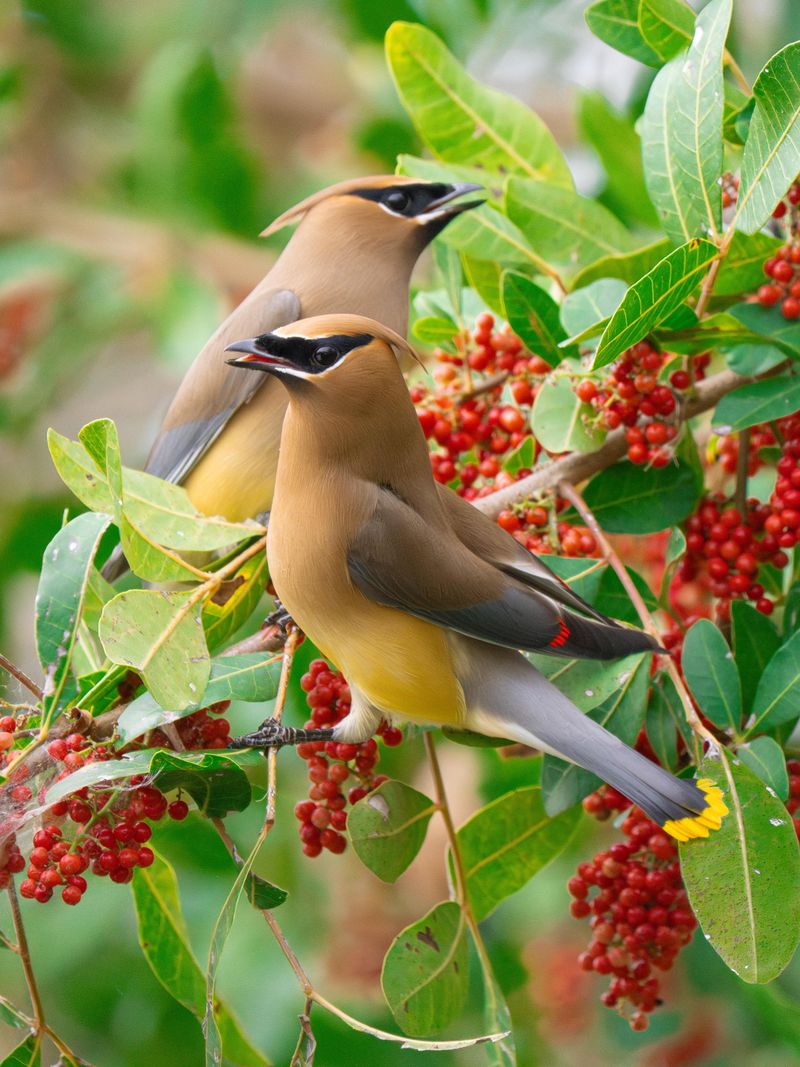
Thirty birds? Normal.
One hundred birds? Pretty common.
More than three hundred? It does happen, and it is quite a sight.
Cedar waxwings are rarely seen alone. Most flocks hold somewhere between 30 and 100 birds.
Now and then, big groups gather around a tree loaded with fruit, and the numbers climb into the hundreds.
A flock that size can strip a berry bush in an afternoon. They swoop in, feast, and lift off together like a living cloud.
Then they swirl away to find the next snack bar.
Why do they stick together so closely? Traveling in groups helps them find food faster.
More eyes also means a better chance of spotting hawks before trouble begins.
For gardeners, this means you should plan for crowds. One small birdbath may not handle a hundred thirsty visitors.
Adding a second bath or a wider basin gives more birds room to drink at once.
Also expect a little mess. Big flocks leave droppings under favorite perches, so avoid placing baths right above your patio chairs.
A quick rinse with the hose takes care of most cleanup. The thrill of seeing hundreds of waxwings is worth a few extra chores.
Shallow Water Suits Them Best
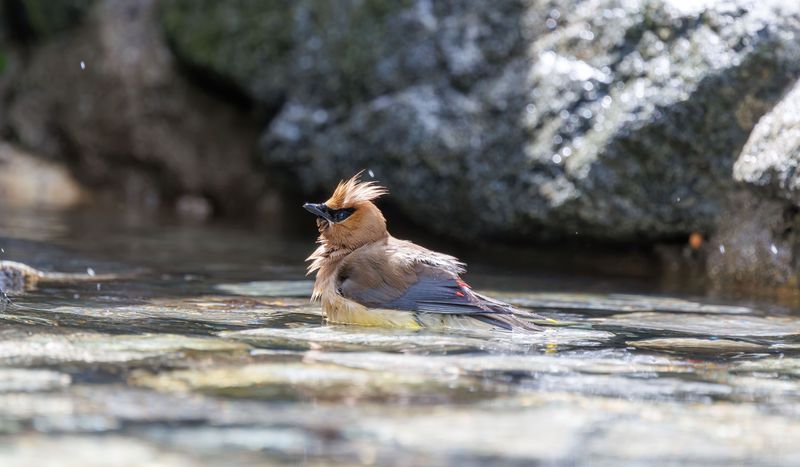
Think of a kiddie pool, not a deep swimming hole. Most songbirds, including waxwings, like water only 1 to 2 inches deep.
Deep bowls can feel risky to small birds. They want to stand, dip, and splash without worrying about sinking.
Shallow water lets them bathe with confidence.
The best design has gently sloping sides. Aim for edges about half an inch to 1 inch deep.
Then let the middle reach no more than 2 inches. This slope lets birds wade in slowly, the way you might test cold water with your toes.
Already own a deep birdbath? No need to toss it.
Add a few flat stones or a layer of clean pebbles to raise the floor. You can also set a shallow plant saucer inside the basin.
Shallow water does warm up and dry out faster in the Florida sun. Check the level each day, especially on breezy afternoons.
A little shade from a nearby tree can help keep the water cooler too.
Easy depth, happy birds. When waxwings feel secure, they stay longer and splash harder.
That means more time for you to enjoy their sleek colors up close.
The Sound Of Moving Water Draws Them In
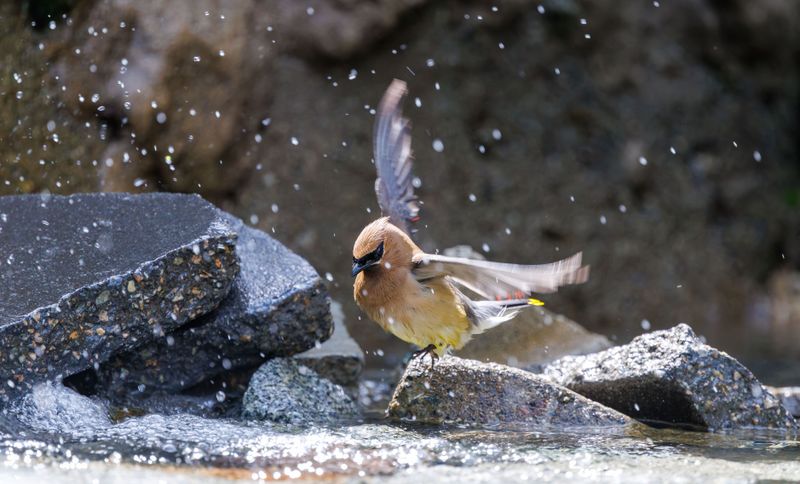
Drip, drip, splash. To a bird flying overhead, that sound is like a dinner bell.
Moving water catches attention in two ways. The ripples sparkle in the sunlight, and the gentle sound carries through the yard.
Passing waxwings notice both and swoop down to check it out.
You can add motion in several simple ways. A dripper hangs above the bath and lets water fall in slow drops.
A bubbler pushes water up from the center. A wiggler is a small device that stirs the surface.
Small solar fountains also work well in sunny Florida yards.
Motion brings a bonus benefit. Mosquitoes like still water for laying eggs.
Moving water makes your bath much less appealing to them, which means fewer itchy bites for you.
Here is a budget trick. Poke a tiny hole in an old plastic jug, fill it with water, and hang it above the bath.
It creates a slow drip for almost no cost.
Keep pumps clean so they run smoothly. Leaves and algae can clog small parts over time.
A quick rinse every week or two keeps the water flowing and the birds coming back for more.
Red Cedar Berries Are A Favorite Winter Food
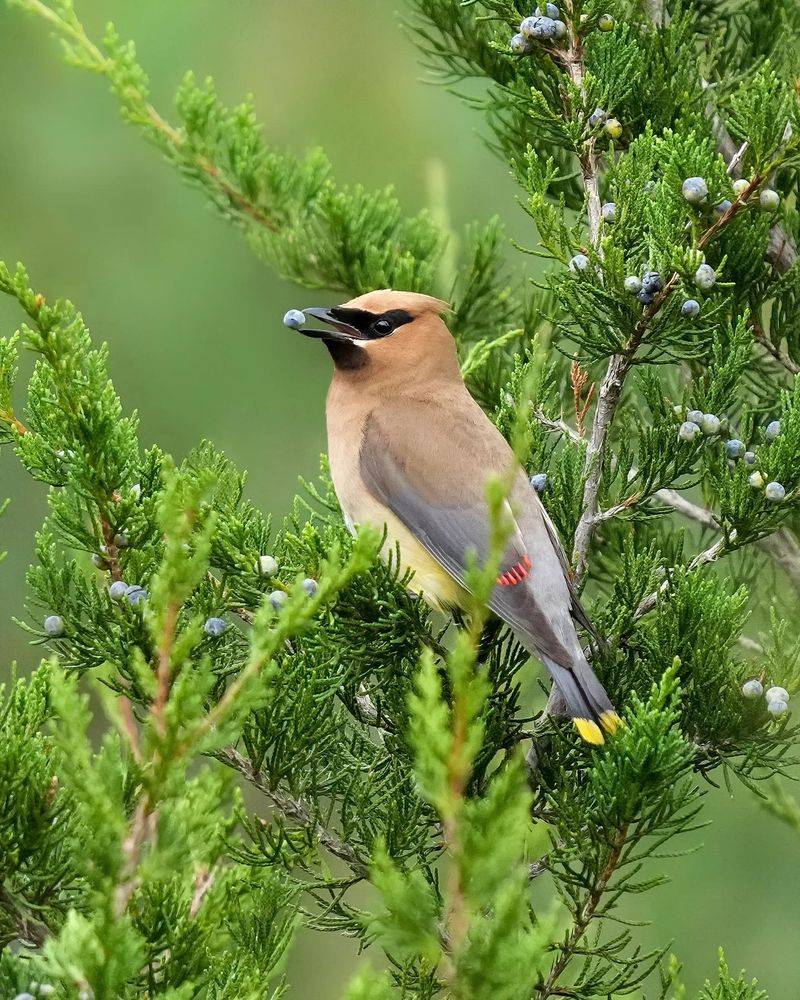
Their name is a big clue. Cedar waxwings got the cedar part from their love of red cedar fruit.
Eastern red cedar, known to scientists as Juniperus virginiana, makes small blue berries. They are actually tiny cones that look and act like berries.
Waxwings gobble them up during winter when other food runs low.
Fruit makes up a huge part of a waxwing diet all year. In summer they snack on insects too, but winter is berry season.
A yard with fruit and water together becomes a top stop on their route.
Southern red cedar grows well in many parts of Florida. It handles heat, sandy soil, and salty breezes near the coast.
The evergreen branches also give birds shelter from wind and hawks.
Only female trees make berries, so plant a few if you can. A mix raises the chance of a good crop.
Give each tree plenty of room, since they can grow tall over time.
Fun fact time. Waxwings swallow berries whole and later drop the seeds elsewhere.
In a way, these birds act as tiny gardeners, planting new cedars across the land as they travel.
Native Hollies Help Keep Them Fed
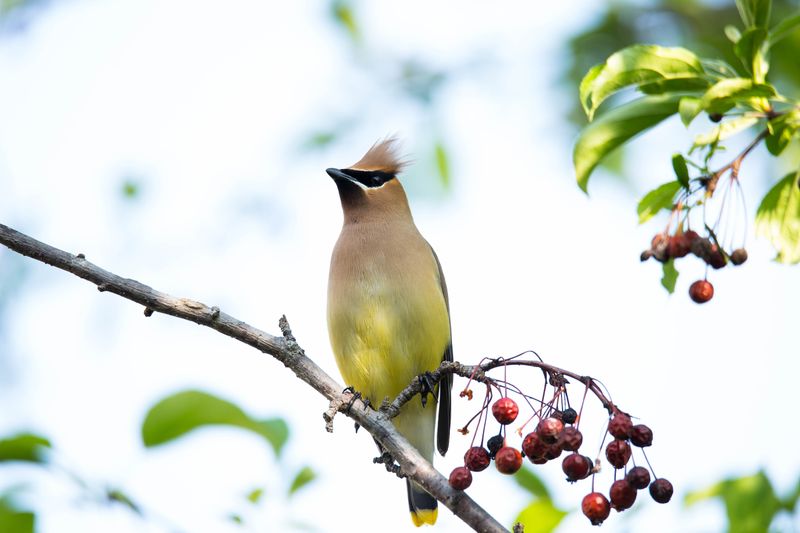
Red berries against glossy green leaves look like a holiday card. To a waxwing, though, that scene looks like a full pantry.
Native hollies, part of the Ilex family, are great food plants for Florida birds. Their fruit often hangs on the branches through December and well into the colder months.
That long-lasting supply helps flocks when other berries are gone.
American holly, or Ilex opaca, grows into a handsome tree with classic spiky leaves. Winterberry holly, Ilex verticillata, drops its leaves and shows off bright berries on bare stems.
Yaupon holly is another Florida favorite that handles tough conditions well.
Like red cedars, most hollies need male and female plants to make fruit. Ask your local nursery for help choosing the right mix.
Planting a few near your birdbath creates a handy snack and drink combo.
Native plants bring extra perks. They usually need less water and fewer chemicals once settled.
They also support local insects, which feed other birds in warmer months.
Picture a winter morning with waxwings plucking red berries, then hopping down for a sip. That simple pairing of food and water can turn your yard into a favorite stop all season.
A Textured Bottom Gives Them Better Footing
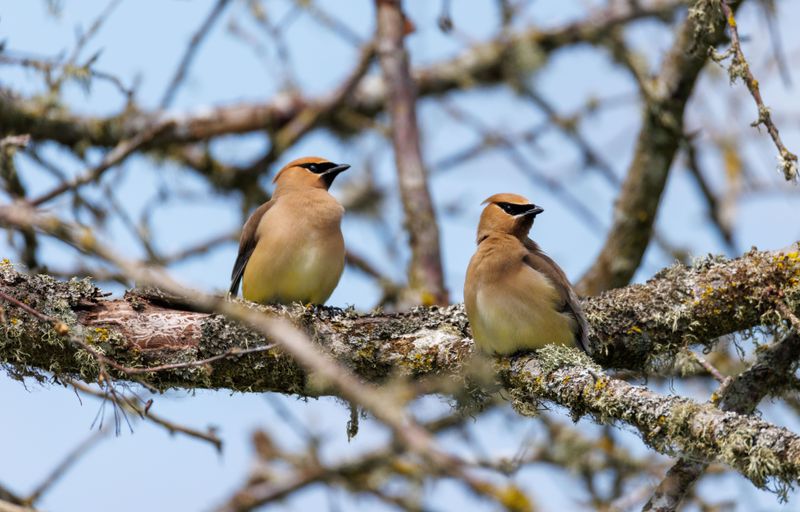
Ever stepped onto a wet tile floor in socks? Birds face a similar problem in slick, glossy birdbaths.
Smooth or glazed surfaces can feel slippery under tiny feet. Birds may avoid baths where they cannot get a good grip.
A rough or textured bottom helps them stand steady while they splash.
Concrete and stone baths usually have plenty of natural texture. If yours is glass or glazed ceramic, you can still fix it.
Scatter clean pebbles or flat rocks across the bottom to add grip.
Rocks also work as little landing islands. In deeper baths, a large stone sticking above the water gives birds a safe perch.
They can hop on, take a sip, and ease into the water when ready.
Be careful with rough surfaces, though. Avoid sharp edges that could scrape little feet.
River rocks and smooth flat stones are good choices.
Clean those rocks during regular bath scrubbing. Algae can grow on them and make them slick again.
A quick rinse keeps everything safe.
Small detail, big comfort. When waxwings feel sure-footed, they relax, bathe longer, and come back again.
Your reward is a front row seat to one of nature’s sleekest shows.