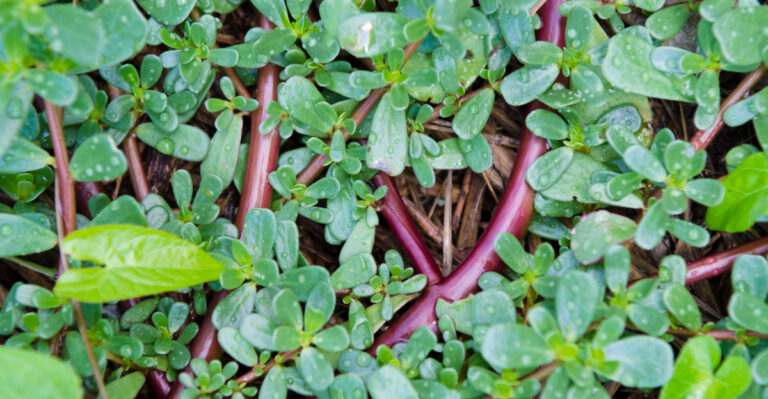
The Native Ohio Plant That Draws Eastern Towhees To Backyard Edges
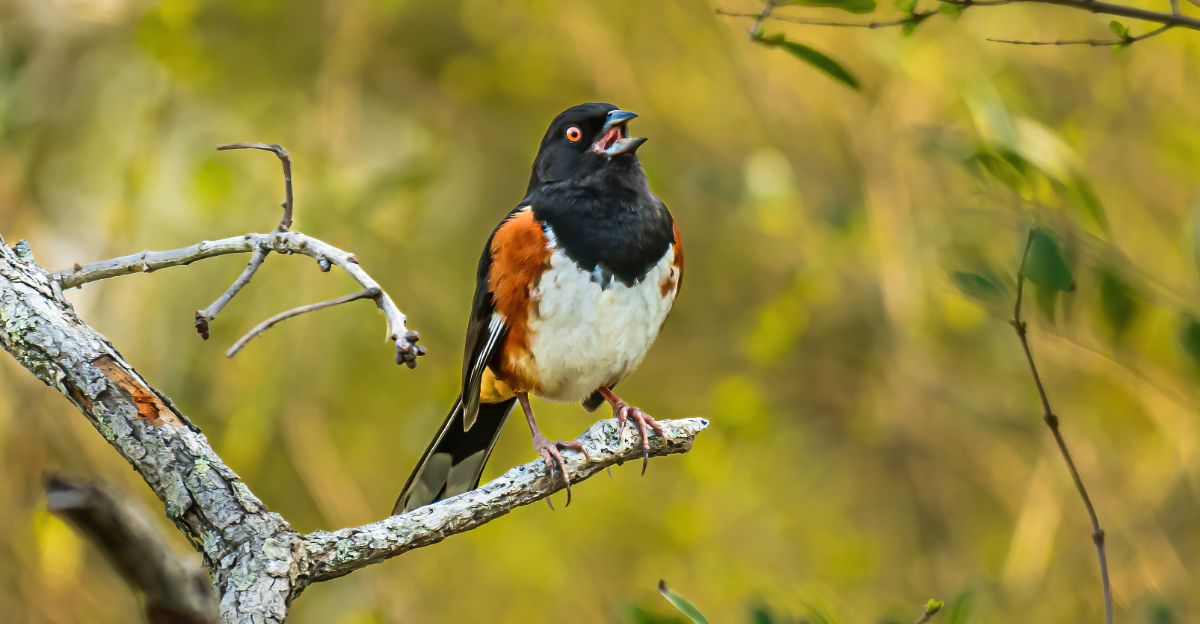
Eastern towhees are not birds that come to you. They work the edges, the thickets, the brushy tangles where most gardeners see a mess and a towhee sees everything it needs.
Catching a glimpse of one in an Ohio yard means the yard has something going for it that most suburban landscapes quietly lack. That something usually comes down to a specific kind of native plant structure.
Eastern towhees have depended on it long before anyone was designing wildlife gardens around them. One Ohio native plant creates exactly that structure better than almost anything else available to a backyard gardener.
It belongs at the edges, spreads in ways that build the layered cover towhees prefer, and supports the insect life they rely on through the season. A yard with this plant at its edges is a yard that eastern towhees find worth stopping in.
Some birds you attract with a feeder. This one you attract with the right plant.
1. Plant Native Blackberry Where Yard Edges Can Grow Wild
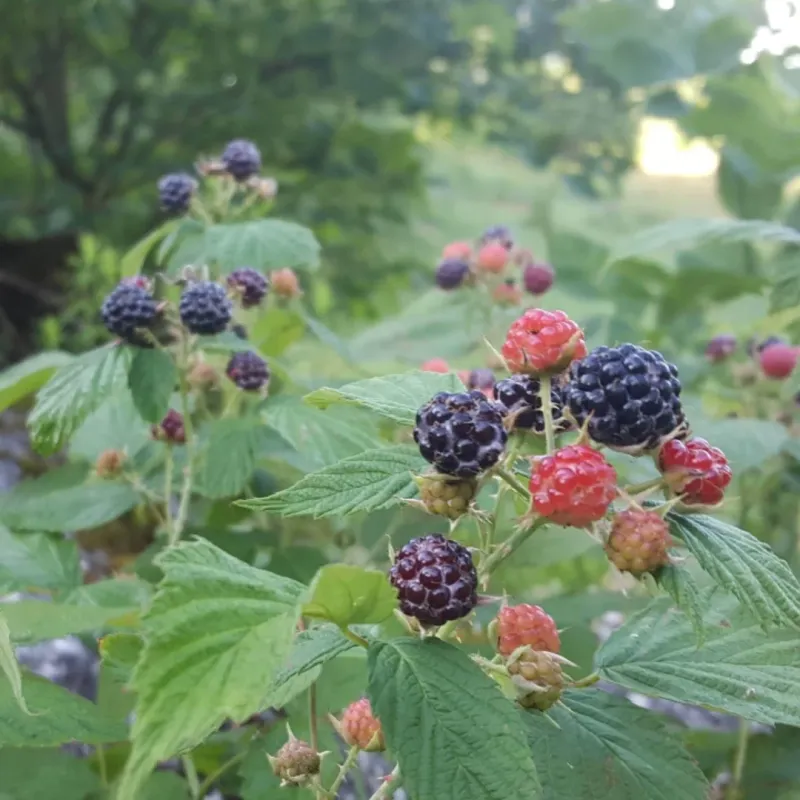
A polished strip of turf rarely gives a ground-feeding bird much reason to stay. Ohio native blackberry is not a plant for a tidy flower bed or a narrow path beside the porch.
It spreads by canes, roots, and sometimes seed, and it will move outward if you let it. That is not a flaw.
That spreading habit is exactly what makes it useful along a wilder edge.
Back fence lines, woodland margins, and naturalized corners of the yard are the spots where native blackberry does its best work. Rubus allegheniensis, the common blackberry found across this state, can grow six feet tall and just as wide.
Give it room, and it will form the kind of dense, thorny thicket that creates real edge structure. Rubus occidentalis, the black raspberry, stays a bit shorter and arches more gracefully.
Both are native and both can anchor a brushy border.
Before planting, think carefully about where the canes will go in three or four years. Skip spots near play areas, tight walkways, or places where people need easy access.
A back corner, a slope behind the garden, or a fence line bordering woods is a much better fit.
2. Give Eastern Towhees The Brushy Cover They Prefer
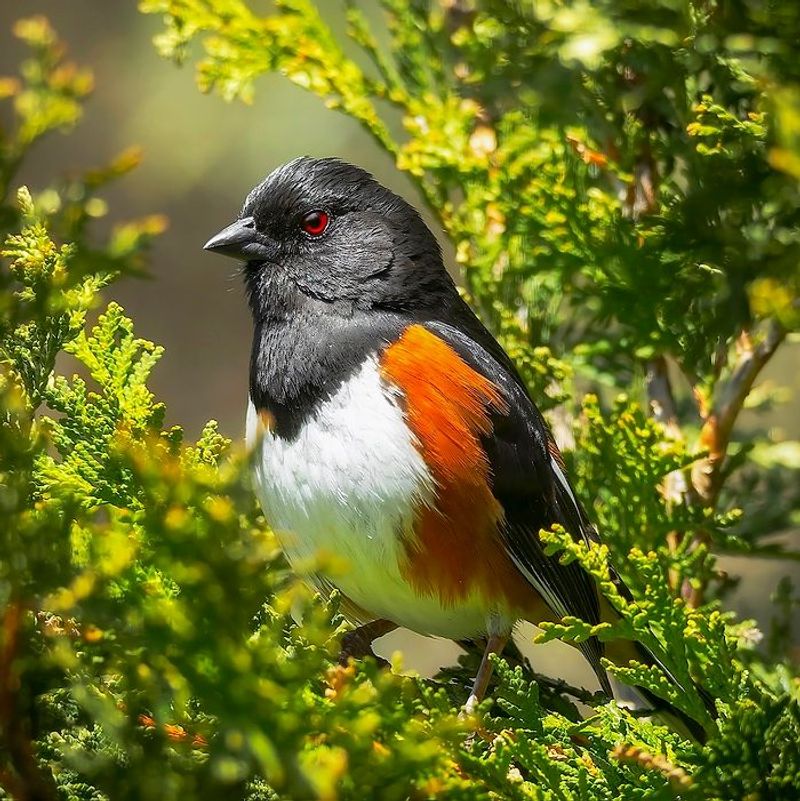
A scratching sound in the leaf litter, a flash of rufous and white under the shrubs, and then a sharp drink-your-tea call from somewhere deep in the brambles. That is often how a first towhee sighting goes.
These birds are not open-lawn birds. According to Cornell Lab of Ornithology, Eastern towhees favor brushy edges, shrubby fields, and the tangled margins where trees meet open ground.
Native blackberry can add exactly that kind of texture to a yard edge. The low arching canes create a mid-level layer between the ground and the canopy.
That in-between zone is where towhees feel most at home. They move through it, scratch beneath it, and use the cover to stay hidden from overhead predators while they forage.
Blackberry alone does not create complete habitat. It works best as one piece of a layered edge that also includes leaf litter, nearby shrubs, and some open ground close by for scratching.
Your Ohio Garden Changes Every Week. Your Plan Should Too.
Gardening in Ohio changes quickly throughout the season. Every Friday you’ll receive a simple weekly plan showing exactly what to plant, prune, fertilize, harvest, and protect so you never miss the right timing.
But as a structural anchor for a brushy border, native blackberry adds the low, tangled cover that makes a yard edge feel more like the wild margins towhees actually use. That difference matters more than most people expect.
3. Leave Leaf Litter Beneath Brambles For Ground Foraging
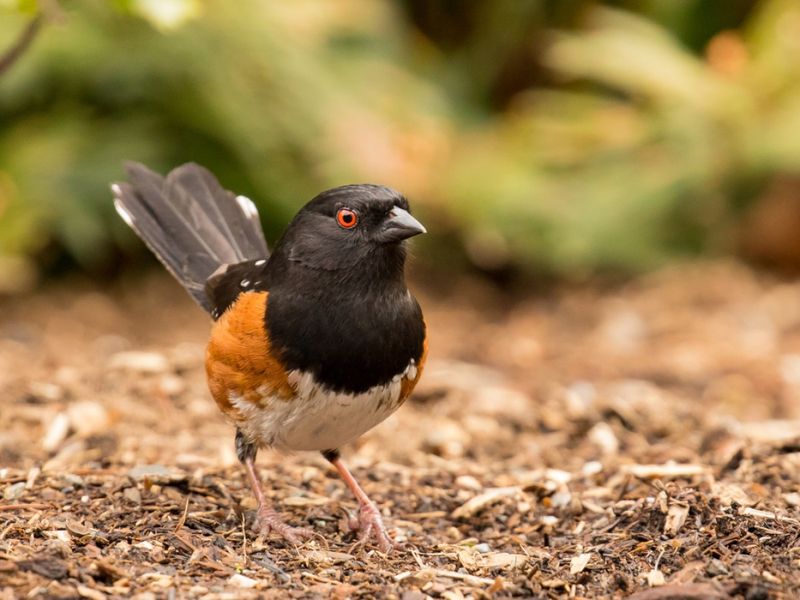
Leaf litter is not yard waste when you are trying to attract ground-foraging birds. For Eastern towhees, it is the whole point.
These birds use a distinctive double-scratch move, hopping forward and kicking back with both feet at once. That motion flips leaves and exposes the insects, seeds, and invertebrates hiding underneath.
A bare patch of mulched ground offers almost nothing for that kind of foraging.
Leaving a natural layer of fallen leaves beneath blackberry brambles and nearby shrubs gives towhees something to work with. The litter holds moisture, shelters ground beetles and other invertebrates, and accumulates the seeds that towhees pick up while scratching.
Over time, an undisturbed leaf layer becomes a genuinely productive foraging zone for ground-feeding birds.
Keep the leaf litter away from building foundations and do not let it pile up against wood structures. A thick mat against siding or a fence post can cause moisture problems.
Along a naturalized edge, though, a few inches of accumulated leaves under the brambles is exactly what the habitat needs. Resist the urge to blow it all out in fall.
Leave it where it is safe, and let the birds do the rest of the work come spring.
4. Use Thorny Canes To Create Safer Low Shelter
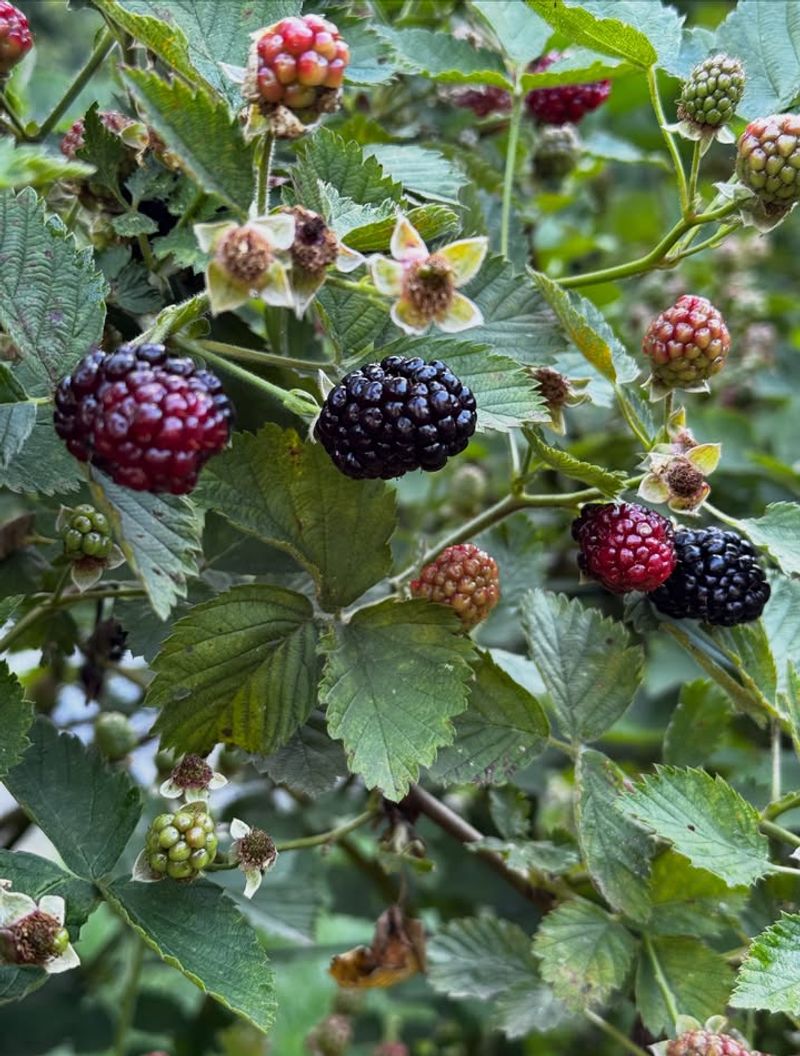
Thorns get a bad reputation in the garden, but for birds, they are a feature, not a problem. The sharp canes of native blackberry create a kind of natural fortress at ground level.
Predators, including cats and some raptors, are less willing to push through a thorny tangle than to reach into an open shrub. That makes bramble thickets genuinely safer low cover for birds that feed and rest close to the ground.
Eastern towhees spend a lot of time at or near ground level. They forage there, they nest low in dense vegetation, and they move through brushy cover rather than open air.
A patch of established blackberry canes gives them a place to retreat quickly when something spooks them. That kind of escape cover matters in a backyard setting where threats can come from multiple directions.
Placement still requires common sense. Keep blackberry brambles away from children’s play areas, narrow gates, and any spot where people or pets need to pass regularly.
A thorny cane at shin height is not a pleasant surprise. Along a back fence, a property edge, or a naturalized slope, those same thorns do real work.
They scratch a gardener’s arm, but they also create protective shelter for the birds using that space.
5. Let A Backyard Edge Stay Messier Than The Lawn
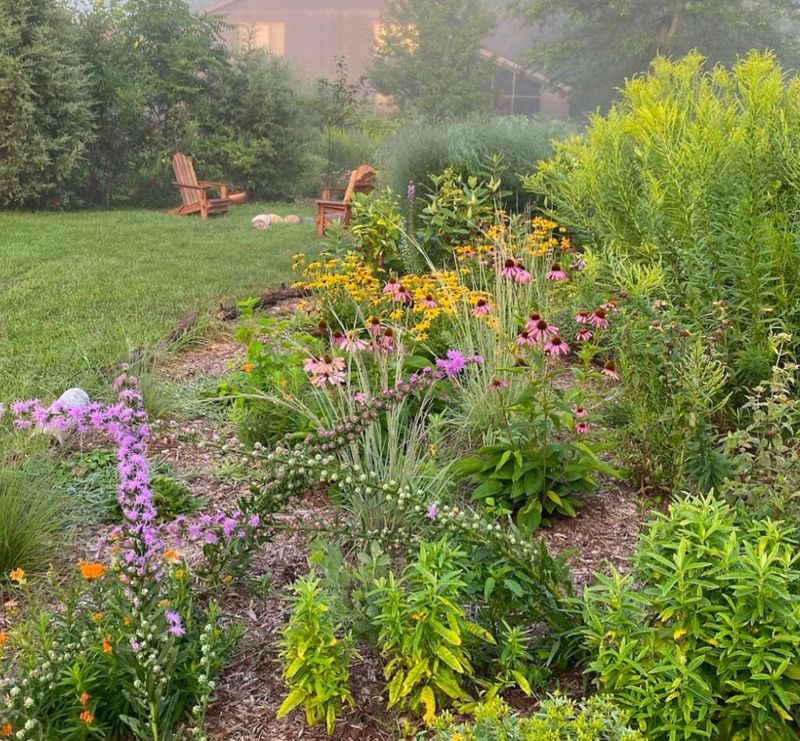
Yard edges that look a little rough are not neglected. They are managed differently, and that difference matters a lot to ground-feeding birds.
A towhee-friendly border has layers. It has some leaf litter, uneven shrub height, and patches where canes cross and tangle.
That texture is what makes an edge useful rather than just decorative.
Most home landscapes lean toward the tidy side, and that is understandable. A yard that looks completely unkempt can create friction with neighbors or local ordinances.
The goal is not chaos. The goal is a graduated edge where the lawn stays mowed and clean, but the border zone behind it gets to keep some of its roughness.
Native blackberry is a natural fit for that transition zone.
Let the canes arch where they want to along the back edge. Skip the fall blowout in that one corner.
Leave a few seed heads standing through winter. These small choices add up to a habitat layer that feels very different from a clipped hedge.
You do not have to sacrifice the whole yard to give towhees a reason to visit. One honest, slightly wild strip along the back fence can be enough to make a real difference in who shows up.
6. Add Nearby Native Shrubs For A Thicker Habitat Layer
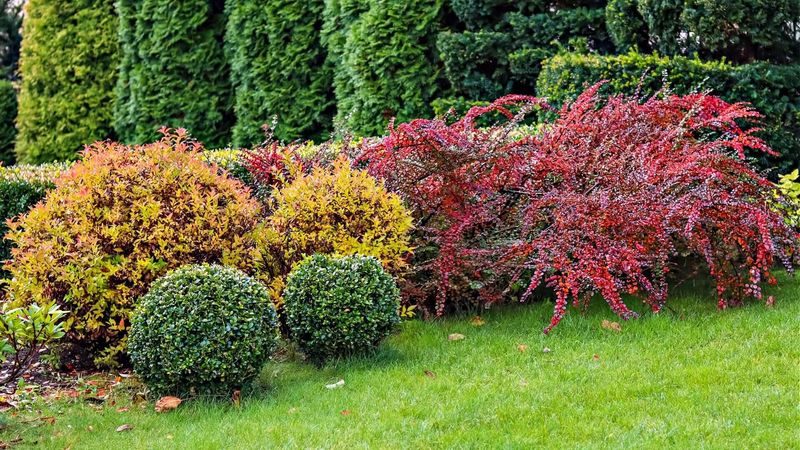
Native blackberry works harder when it has company. A single bramble patch along a fence creates some structure.
A layered edge with multiple native shrubs creates something much closer to the habitat Eastern towhees actually use in the wild. Shrub layers add height variation, more cover options, and a wider range of seeds and fruits across the seasons.
Spicebush (Lindera benzoin) is one of the best companions for a shady to partly shady edge. It stays four to twelve feet tall, tolerates wet soil, and produces red berries that many birds use in fall.
Arrowwood viburnum (Viburnum dentatum) handles sun and part shade well and grows into a sturdy, multi-stemmed shrub that fills gaps in the edge nicely.
Elderberry (Sambucus canadensis) grows fast and produces heavy fruit clusters that draw birds from across the yard.
Smooth sumac (Rhus glabra) works well on drier, sunnier slopes and holds its red fruit clusters well into winter.
Match each shrub to your site conditions before planting. Some of these get large, and crowding them against structures or into tight spaces creates problems down the road.
Spread them out along the edge and let the blackberry fill the lower layer between them. That combination of heights and textures is what gives a border real habitat depth.
7. Keep Cats Away From Low Nesting And Feeding Areas
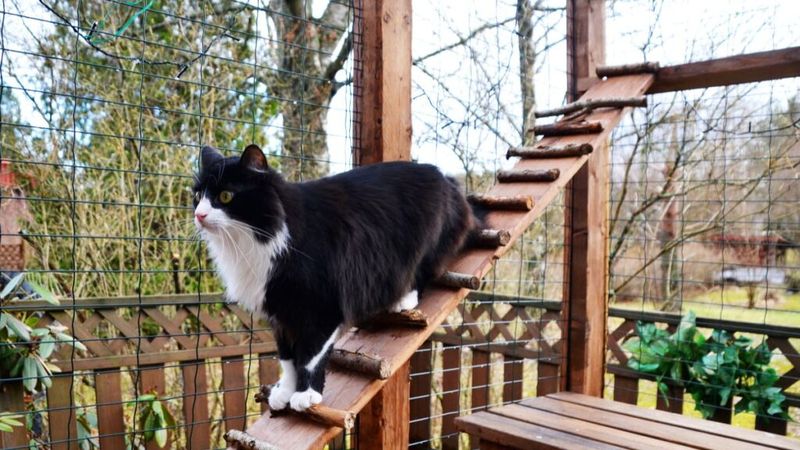
An outdoor cat and a ground-feeding bird are not a safe combination. Eastern towhees spend most of their time within a few feet of the ground.
They scratch in leaf litter, move through low brush, and nest directly on or very near the ground in dense vegetation. That puts them at serious risk from free-roaming cats.
According to the American Bird Conservancy, cats are one of the leading human-related causes of bird loss in North America.
Creating a brushy edge with blackberry and native shrubs is only useful if the birds can use it safely. A yard that has good habitat but also has a roaming cat is not a safe yard for towhees.
The thorny canes offer some protection, but a determined cat will wait at the edge of a thicket and catch birds as they come out to scratch.
Keeping cats indoors is the most effective solution. Enclosed outdoor cat enclosures, sometimes called catios, give cats fresh air without giving them access to birds.
If neighbor cats are the issue, motion-activated sprinklers placed near the habitat edge can discourage visits. The habitat work you do in the yard deserves a follow-through on the safety side too.
Birds cannot use a space that feels like a trap.
8. Skip Heavy Cleanup Where Towhees Scratch For Food
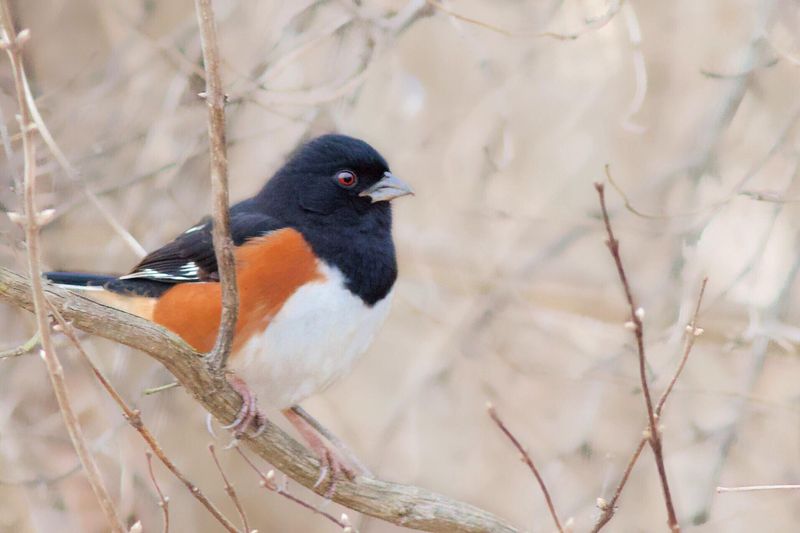
A perfectly raked, blown-out Ohio yard edge in fall removes most of what ground-feeding birds need heading into winter. Leaf litter, fallen seeds, small twigs, and decomposing plant material are not just yard debris.
For Eastern towhees and other ground foragers, that layer is a food source and a foraging zone that takes months to develop naturally.
Lighter cleanup along wilder edges keeps more of that resource in place. You do not have to skip cleanup entirely.
Remove invasive plants, clear debris piled against structures, and pull out anything that creates a moisture or pest problem. But along the back edge, under the blackberry canes, and beneath native shrubs, let the natural accumulation stay where it is.
A few inches of leaf litter does far more good than a bare mulched surface.
Standing seed heads from native grasses and perennials also add to the foraging value of a yard edge through fall and into early spring. Leave them up as long as they are standing.
Towhees and other sparrow-family birds will work through them steadily. The cleanup can happen in late winter or early spring, after the birds have had a full season to use what the plants left behind.
That shift in timing costs almost nothing and pays off in real habitat value.