What It Really Means When A Red-Tailed Hawk Keeps Circling Your North Carolina Yard
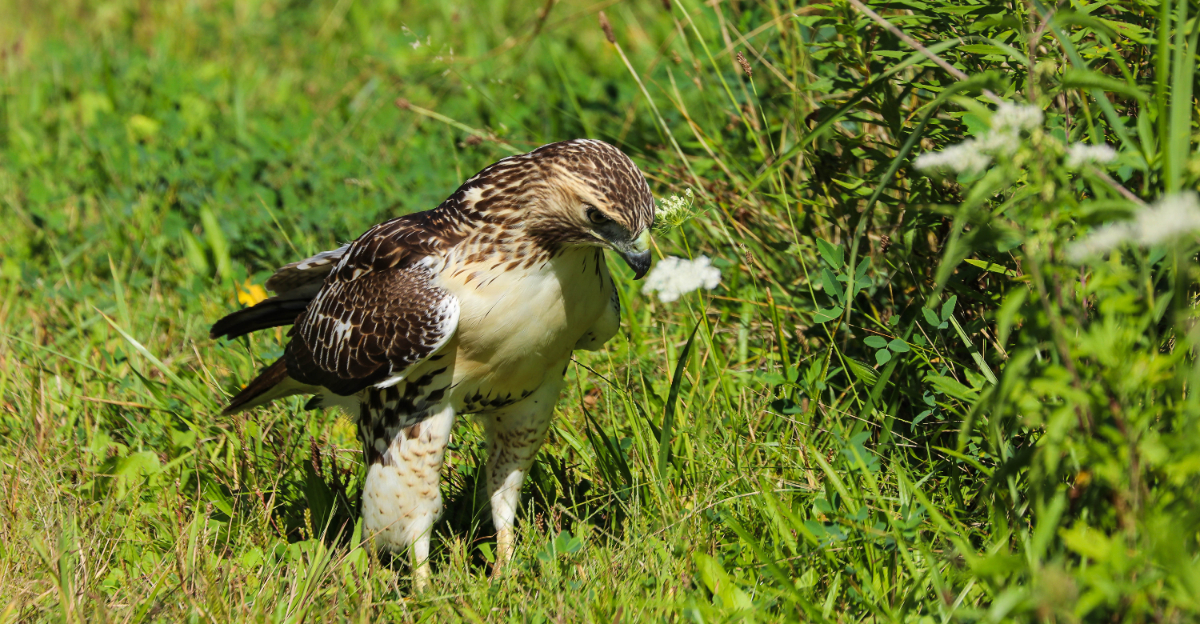
Spotting a red-tailed hawk overhead once is a treat. Seeing the same bird circle your yard repeatedly over several days starts to feel like something worth paying attention to.
North Carolina provides ideal habitat for red-tailed hawks across most of the state, and when one keeps returning to the same location, there is always a specific reason rooted in what that yard is offering.
Prey activity, perch availability, nesting proximity, and territorial behavior all play a role in where these birds spend their time and attention.
Understanding what is actually drawing a hawk back to your space repeatedly gives you a completely different and genuinely fascinating way of reading what is happening at ground level in your own backyard.
1. Territorial Behavior
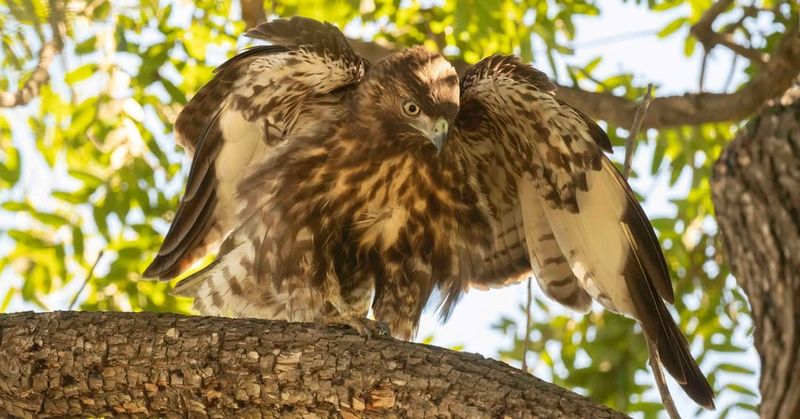
Few things in the bird world are as bold as a Red-Tailed Hawk claiming its turf. When one of these hawks circles your yard repeatedly, there is a strong chance it is patrolling a territory it has already decided belongs to it.
Red-Tailed Hawks are highly territorial birds, and they take that role seriously, especially during spring and early summer.
A single hawk can claim a territory ranging from one to several square miles, depending on the availability of food and suitable nesting spots.
Suburban and rural North Carolina yards often fall right inside these patrol zones, particularly if there are open grassy areas, tall trees, or nearby woodlands.
The hawk circles as a way of monitoring its boundaries and sending a clear message to other raptors to stay away.
You may notice the same bird returning to circle at similar times each day. That kind of routine is a reliable sign of territorial ownership rather than just a casual fly-by.
Hawks are creatures of habit, and once they claim an area, they revisit it consistently. Watching this behavior is genuinely fascinating.
It means your yard has become part of a living, working raptor territory, which says a lot about the quality of your local environment.
2. Hunting For Prey
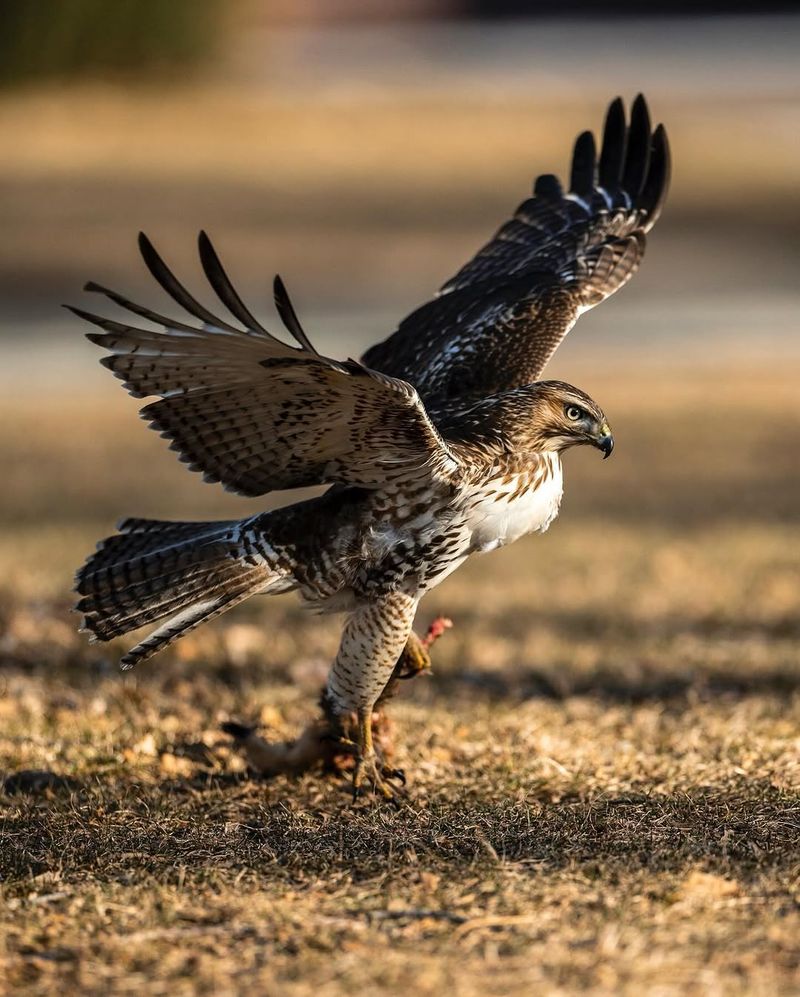
Picture a hawk with laser-sharp vision scanning every inch of your yard from hundreds of feet in the air. That slow, deliberate circle is not aimless wandering.
It is a highly efficient hunting strategy, and your yard might be serving as the perfect hunting ground right now.
Red-Tailed Hawks primarily hunt small mammals like mice, voles, rabbits, squirrels, and chipmunks. North Carolina yards, especially those with bird feeders, compost piles, or thick ground cover, tend to attract exactly these kinds of animals.
The hawk has likely noticed that your property is a reliable food source, and it keeps coming back because the hunting is good.
Hawks use their extraordinary eyesight to spot movement from remarkable distances. A vole shifting through the grass or a mouse darting near a garden bed is more than enough to draw a circling hawk downward in a swift strike.
Understanding this predator-prey dynamic can actually help homeowners manage unwanted rodent populations naturally, without traps or chemicals.
If mice or squirrels have been bothering your garden, a resident hawk might be doing you a quiet favor.
Your North Carolina Garden Changes Every Week. Your Plan Should Too.
Gardening in North Carolina changes quickly throughout the season. Every Friday you’ll receive a simple weekly plan showing exactly what to plant, prune, fertilize, harvest, and protect so you never miss the right timing.
Watching a hawk hunt is a reminder that your backyard is not just a garden. It is a fully functioning piece of the natural world.
3. Mating And Nesting Signals
When late winter arrives in North Carolina, something remarkable begins happening in the skies above backyards and open fields. Red-Tailed Hawks start their courtship season, and the aerial displays that come with it are genuinely breathtaking to witness.
If a hawk has been circling your yard frequently between February and May, romance might be the reason.
During courtship, a male hawk will soar high above a female, then plunge downward in dramatic dives before swooping back upward. Pairs may circle together, calling loudly with that iconic, piercing cry that sounds so familiar from nature documentaries.
These flights serve as both a bonding ritual and a way for the male to show off his fitness as a mate.
Once a pair bonds and begins nesting, the circling behavior shifts slightly. Instead of purely romantic displays, one or both birds will circle regularly to monitor the nest site and watch for potential threats.
North Carolina nesting season typically runs from late February through early July, so prolonged circling during those months is a strong indicator that a nest is either being established or actively used nearby.
Spotting this behavior is a real privilege. You may be witnessing the beginning of a new generation of hawks being raised right in your neighborhood, which is something worth celebrating.
4. Using Thermals To Conserve Energy
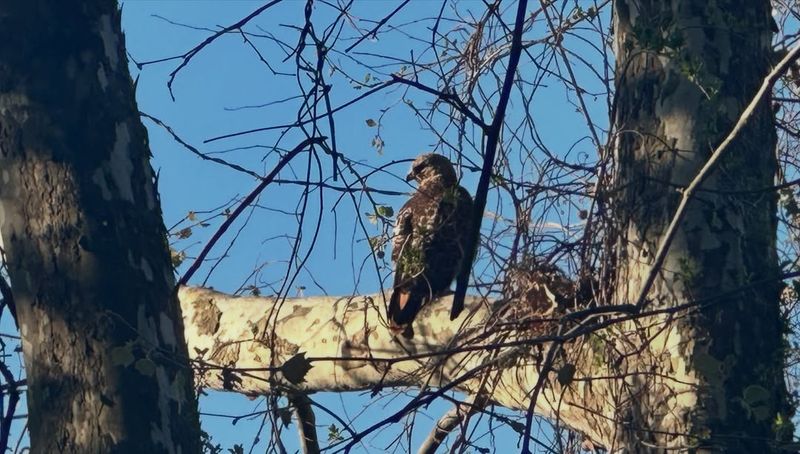
Not every circle a hawk makes is about food or territory. Sometimes, a Red-Tailed Hawk is simply being smart about energy management, and the physics of warm air are its best tool.
Thermals are columns of warm air that rise from sun-heated ground, and hawks are masters at finding and riding them.
On a warm, sunny North Carolina afternoon, open yards and fields heat up faster than shaded areas, creating strong thermal columns that push upward from the ground.
A hawk will locate one of these invisible elevators and glide in wide circles, barely flapping its wings, while rising to impressive heights with almost no effort. From that altitude, it gains a sweeping view of the landscape below.
This behavior is especially common on clear days between late morning and mid-afternoon when the sun has had time to warm the earth.
If you notice a hawk circling lazily and steadily gaining altitude without much wing movement, it is almost certainly riding a thermal.
Red-Tailed Hawks can cover enormous distances using this technique, which is why they are so widespread across North Carolina. Watching this graceful efficiency is one of nature’s most calming sights.
It is a reminder that wildlife has developed brilliant solutions to everyday challenges, and your warm, open yard is playing a helpful supporting role in that process.
5. Indicator Of A Healthy Ecosystem
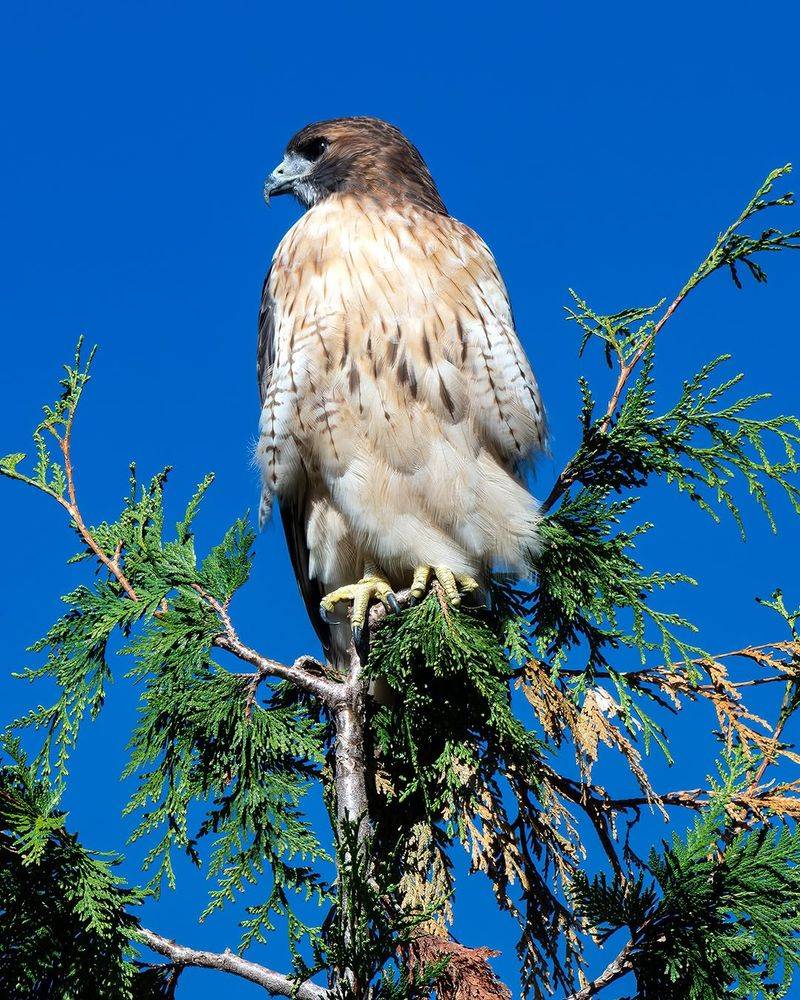
A hawk circling your yard is genuinely good news, even if it feels a little dramatic at first glance. The presence of a top predator like a Red-Tailed Hawk is one of the clearest signs that your local ecosystem is in excellent shape.
Raptors only stick around where the food chain beneath them is healthy and active. For a hawk to find your yard worth patrolling, there needs to be an abundance of prey.
That means your property likely supports a thriving population of small mammals, which in turn means your soil, plant life, and insect communities are also doing well.
It is an ecological chain reaction, and the hawk sitting at the top of it is the most visible proof that everything below is functioning properly.
North Carolina homeowners who maintain native plantings, avoid heavy pesticide use, and leave some natural areas in their yards tend to attract more wildlife at every level. Hawks are essentially a report card for how well your outdoor space supports biodiversity.
If one keeps showing up above your yard, you are doing something right. Gardeners who notice this should feel encouraged to keep their natural-friendly practices going.
A yard that attracts a Red-Tailed Hawk is a yard that supports dozens of other species quietly working behind the scenes every single day.
6. A Nest Is Nearby
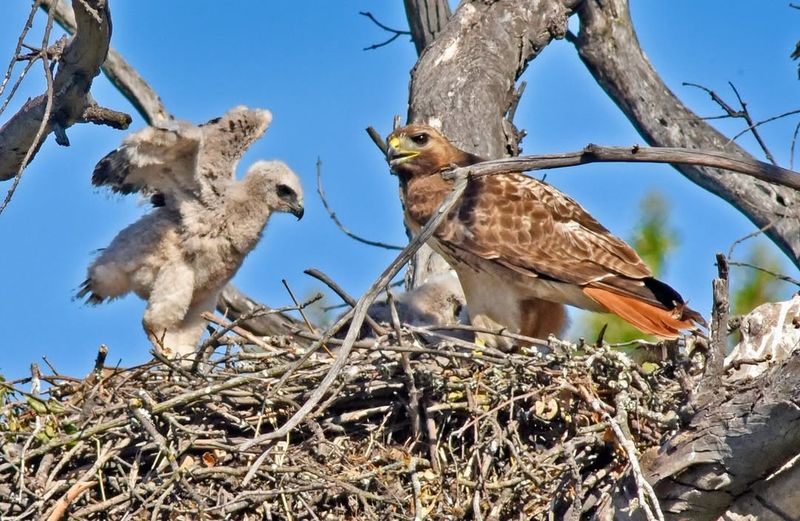
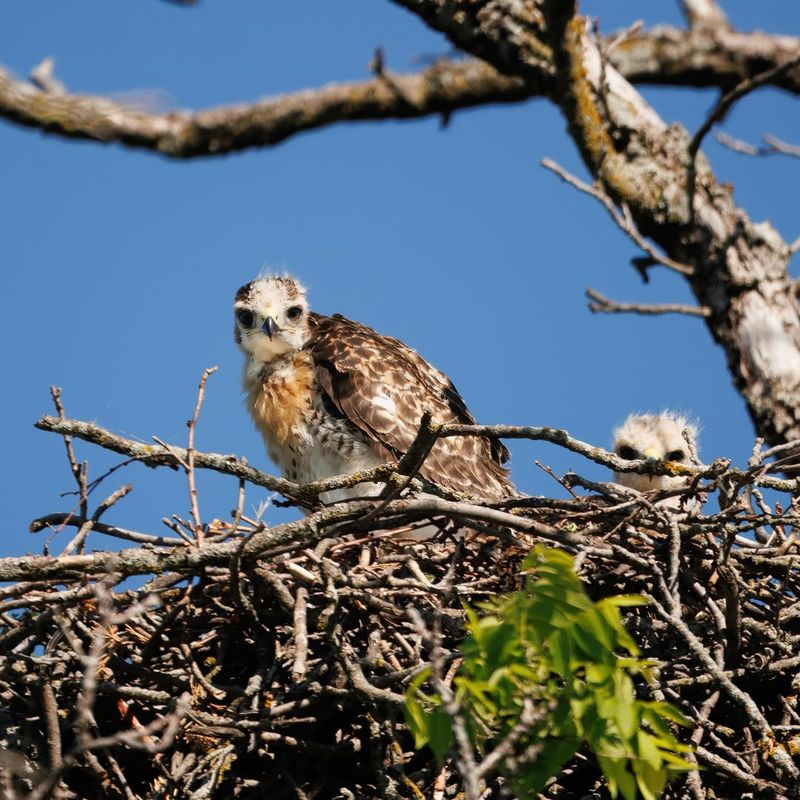
Repeated circling in the exact same area of your yard is one of the strongest clues that a nest is located nearby. Red-Tailed Hawks build large, bulky nests called eyries, typically placed high in tall trees, on utility poles, or even on building ledges.
Once a nesting site is established, the birds return to the same area year after year.
In North Carolina, Red-Tailed Hawks favor tall oaks, pines, and sycamores for nesting, especially trees at the edge of open areas where hunting is easy.
If your yard backs up to a tree line or has large mature trees nearby, there is a real possibility that a nest is tucked up in the canopy somewhere close.
The circling you observe is the hawk keeping close tabs on its home base.
Finding a nearby nest does not require climbing trees or getting close. Watch where the hawk consistently lands or disappears into the tree canopy, and you will likely identify the general nesting zone.
Keep a respectful distance and enjoy the experience from afar. Many North Carolina homeowners have unknowingly lived near hawk nests for years without realizing it, simply because the birds are quiet and efficient.
Knowing the nest is there gives you a front-row seat to one of nature’s most impressive parenting stories unfolding right outside your window.
7. Protecting Young
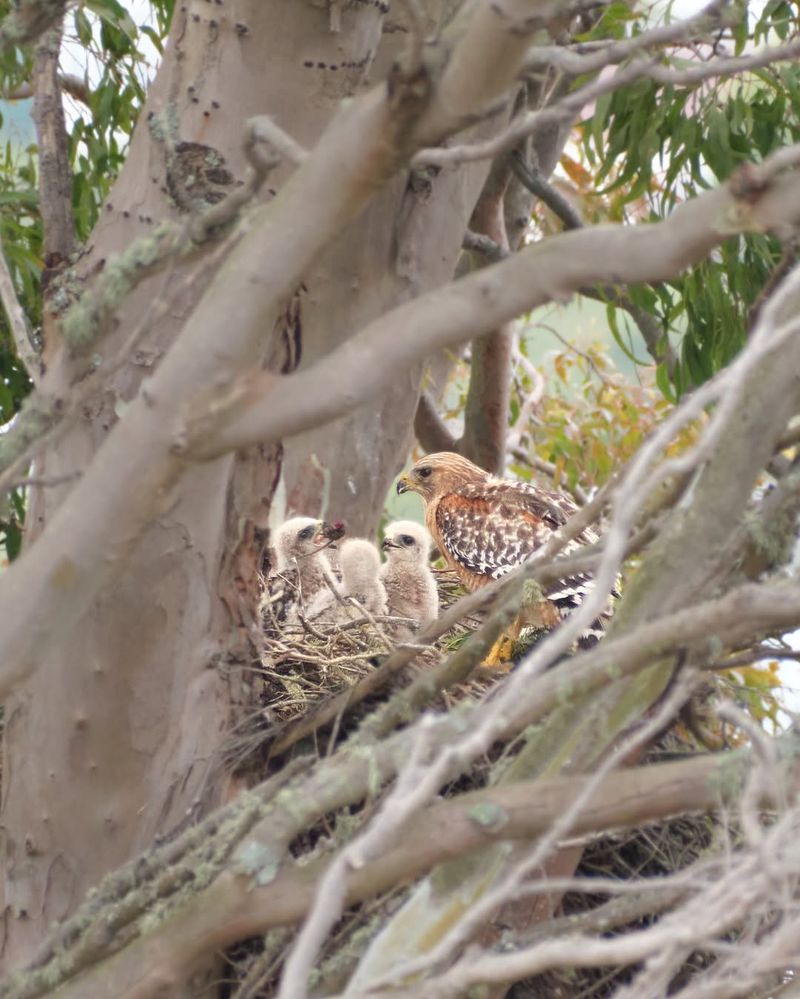
There is something deeply instinctive and powerful about a parent protecting its young, and Red-Tailed Hawks are no exception.
If you are seeing a hawk circle your yard persistently, especially between May and July, it may be standing guard over fledglings that have recently left the nest but are not yet fully independent fliers.
Young hawks, called fledglings, spend a few weeks on low branches, fence posts, and even the ground while they build up their flight muscles. During this vulnerable period, parent hawks watch from above with intense focus.
Any movement that feels threatening, whether a dog, a cat, or even a curious human getting too close, will trigger the adult hawk to circle tighter and call out loudly.
Homeowners who notice this behavior should give the area a wide berth for a few weeks. Keep pets indoors or supervised when possible, and avoid approaching any low branches where a young hawk might be resting.
The fledglings are learning quickly and will be fully airborne soon. Witnessing this stage of hawk development is genuinely rare and exciting. The adults are not being aggressive without reason.
They are simply doing what every good parent does: making sure their young ones have the best possible chance at a strong and healthy future. A little patience from your end goes a long way.
8. Seasonal Migration Patterns
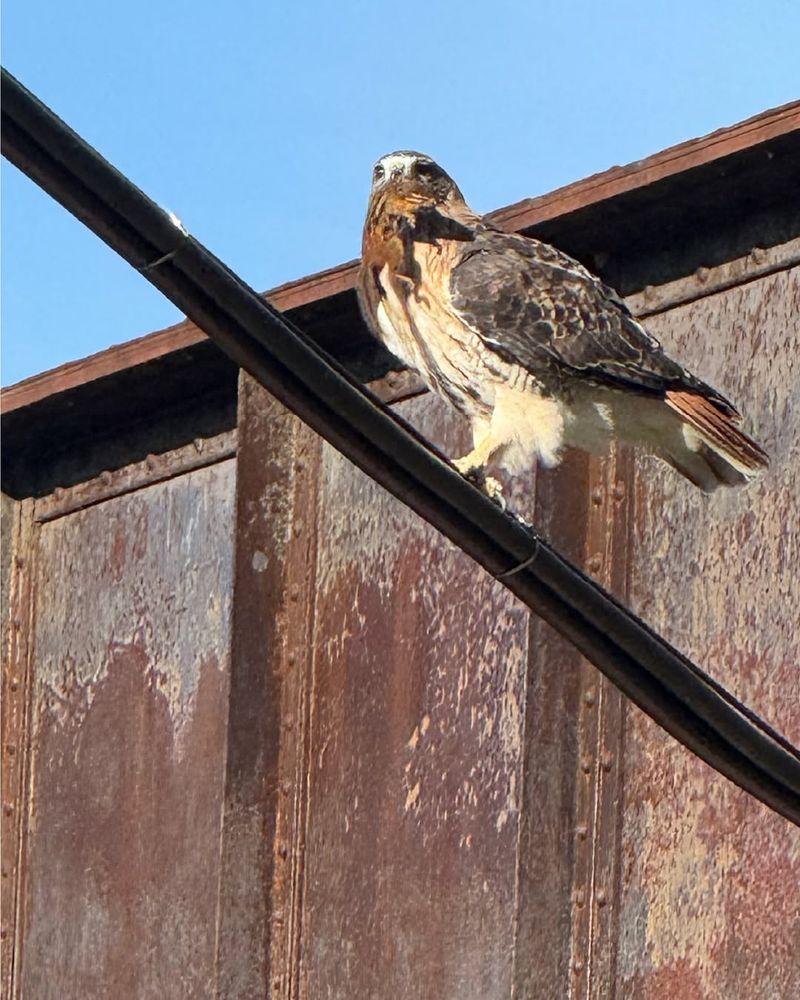
Not every Red-Tailed Hawk circling your yard is a permanent resident. Some are travelers passing through, and North Carolina sits right along important eastern raptor migration corridors.
During fall migration, typically from October through December, hawk movement through the state increases noticeably, and some birds circle over yards while getting their bearings or refueling.
Migrating hawks often use the same thermal-soaring technique as resident birds, but their circling has a different quality to it. They tend to gain altitude quickly and then glide off in a consistent direction, often southward or toward the coast.
If you notice a hawk circling for a short time before heading off purposefully, migration is a likely explanation. Spring migration in March and April can bring similar activity as hawks return northward.
North Carolina is home to well-known hawk watching spots like Pilot Mountain and the Blue Ridge Parkway, where hundreds of raptors pass through each season.
Even in suburban backyards, this migration activity is visible to those who know what to look for.
Keeping a simple journal of hawk sightings throughout the year can reveal fascinating patterns over time.
You might discover that the same general area of your yard attracts passing hawks each autumn, which tells you something meaningful about your property’s position within the broader landscape these birds navigate every year.
9. How To Coexist Safely
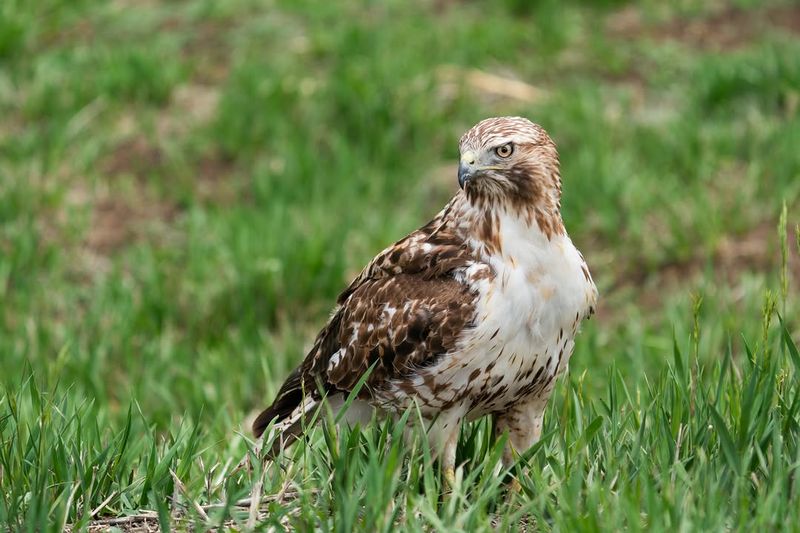
Sharing your yard with a Red-Tailed Hawk is one of the most rewarding wildlife experiences a North Carolina homeowner can have.
These birds are protected under the federal Migratory Bird Treaty Act, which means it is both illegal and unnecessary to interfere with them.
The good news is that coexisting with hawks is easy once you understand a few simple guidelines.
Start by giving hawks space. Observing from a comfortable distance with binoculars is the best way to enjoy them without causing stress to the bird.
If a hawk is circling low or calling persistently, it may feel crowded. Simply moving indoors or away from the area for a short time usually resolves the situation quickly and calmly.
Small pets like rabbits or tiny dogs should be supervised when outdoors, especially during active hawk seasons. Covering outdoor rabbit hutches with sturdy wire mesh is a smart precaution.
Avoid using rodent poisons in your yard, since hawks that consume poisoned prey can suffer serious harm.
Planting native trees and shrubs not only beautifies your property but also supports the prey base that keeps hawks coming back naturally.
Think of a circling hawk not as a threat but as a neighbor with excellent eyesight and impressive flying skills. Welcoming that relationship makes your yard richer, wilder, and more connected to the natural world around you.