The Native Tree Connecticut Homeowners Choose For Privacy With Minimal Pruning
Pruning shears again? Some Connecticut homeowners have quietly stopped reaching for them.
They swapped their fussy hedge for a tree that shrugs off wind, ice, and neglect. It grows dense on its own. No shaping required.
Neighbors keep asking what it is. The answer surprises most people, because this tree grows wild along roadsides and fence lines across the state already. Nobody planted it there. It just thrives.
Give it a few seasons and it forms a wall of green thick enough to block a nosy neighbor’s view. Curious which tree is quietly taking over Connecticut yards? Keep reading.
A Shift Away From Fast-Growing Privacy Screens
Arborvitae looked great in the nursery catalog. Then it grew three feet in one season and turned your weekend into a trimming marathon.
Plenty of Connecticut homeowners have been down that road. Fast-growing privacy trees sound like a dream until the upkeep becomes a part-time job.
Eastern Red Cedar grows at a moderate, manageable pace. That slower rhythm means you spend less time with a ladder and more time enjoying your yard.
Browning centers, wind damage, and deer browsing are common complaints with popular screening trees. Eastern Red Cedar sidesteps most of those frustrations with ease.
Its dense, layered branching fills in naturally without shearing. You get a full, green wall of coverage without wrestling with the tree every spring.
Homeowners who made the switch often say the same thing: they stopped noticing the tree because it just handled itself. That kind of reliability is rare in the landscaping world.
Cost adds up too when a tree needs constant attention. Between trimming tools, replacement plants, and the occasional professional trim, high-maintenance hedges quietly drain both time and money.
Choosing the right privacy tree is not just about height. It is about what the tree demands from you over the next twenty years.
A shift toward low-maintenance native options is growing across New England. More people are planting smarter, not harder, and Eastern Red Cedar leads that charge confidently.
Setting This Tree Apart From Arborvitae
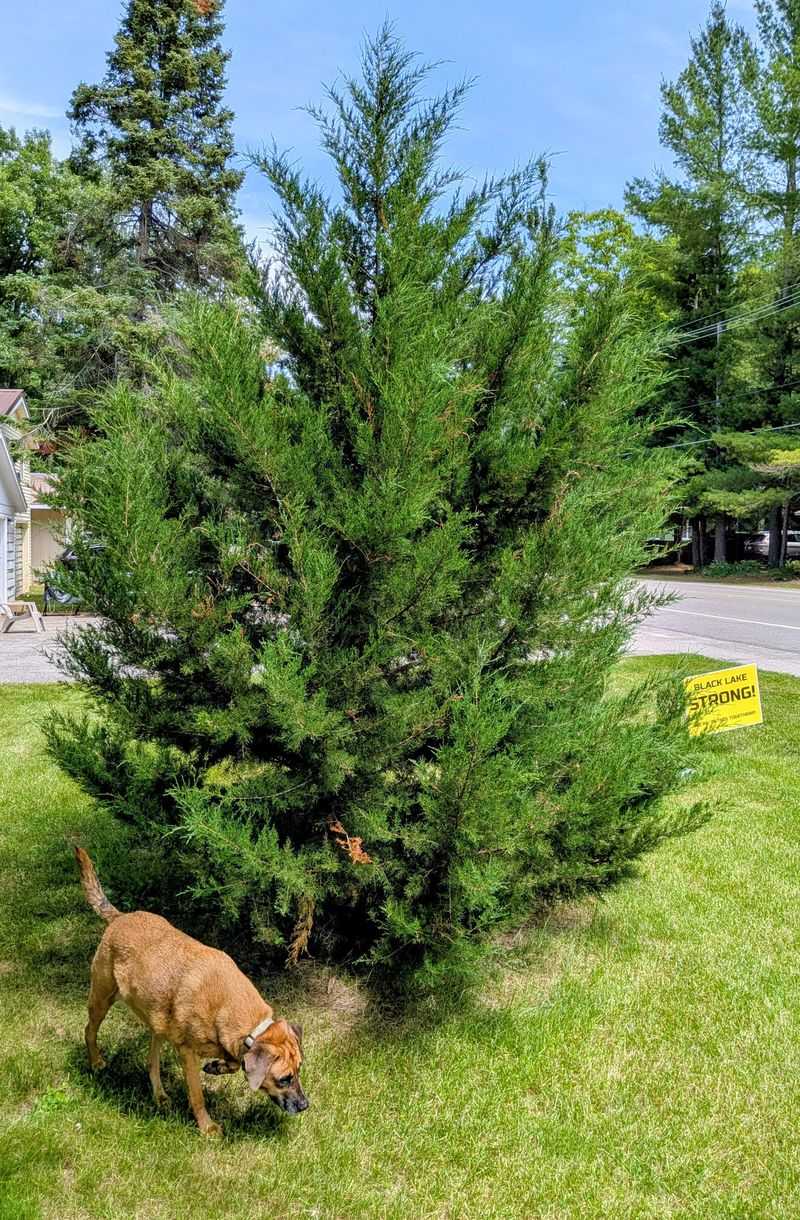
Walk through any Connecticut neighborhood and arborvitae is everywhere. It became the default privacy screen, but it comes with a long list of problems most buyers never expect.
Deer have a real weakness for arborvitae. A single winter night can leave your once-full hedge looking like a chewed-up mess.
Eastern Red Cedar does not share that weakness. Its foliage has a sharp, resinous quality that deer find deeply unappealing.
Arborvitae also struggles in compacted, rocky, or clay-heavy soil. Eastern Red Cedar grows right through those conditions without missing a beat.
The texture of Eastern Red Cedar is also worth noting. Its blue-green, scale-like foliage has a rich, aromatic quality that adds sensory interest to any yard.
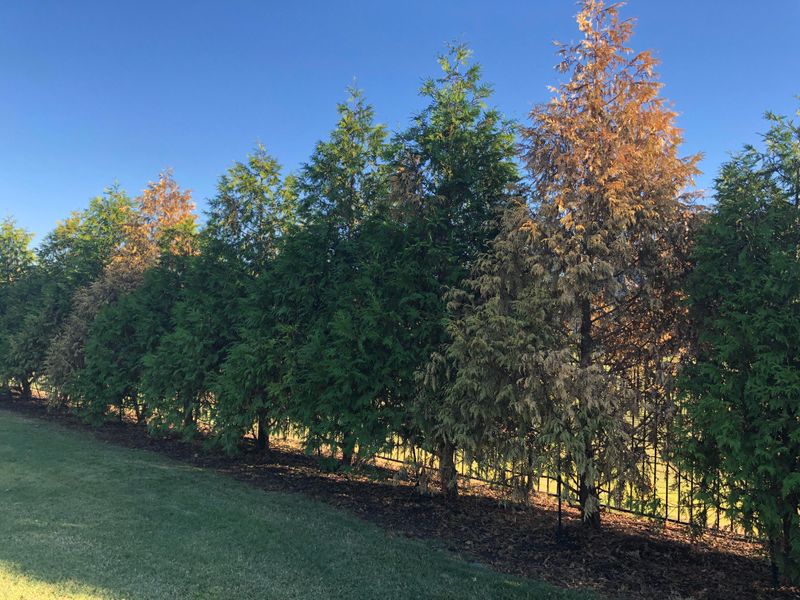
Arborvitae can develop brown patches in the center when airflow is poor. Eastern Red Cedar stays green and full from trunk to tip with very little help.
Both trees offer year-round screening, but one asks far more of you. The maintenance gap between the two becomes obvious after just one or two growing seasons.
Your Connecticut Garden Changes Every Week. Your Plan Should Too.
Gardening in Connecticut changes quickly throughout the season. Every Friday you’ll receive a simple weekly plan showing exactly what to plant, prune, fertilize, harvest, and protect so you never miss the right timing.
Native to Connecticut, Eastern Red Cedar already knows the local climate. It has adapted over centuries to thrive here, giving it a head start most nursery-grown arborvitae simply don’t have.
Swapping one for the other might feel bold at first. But once you see the results, you will wonder why you waited so long to make the change.
The Eastern Red Cedar Advantage For Privacy
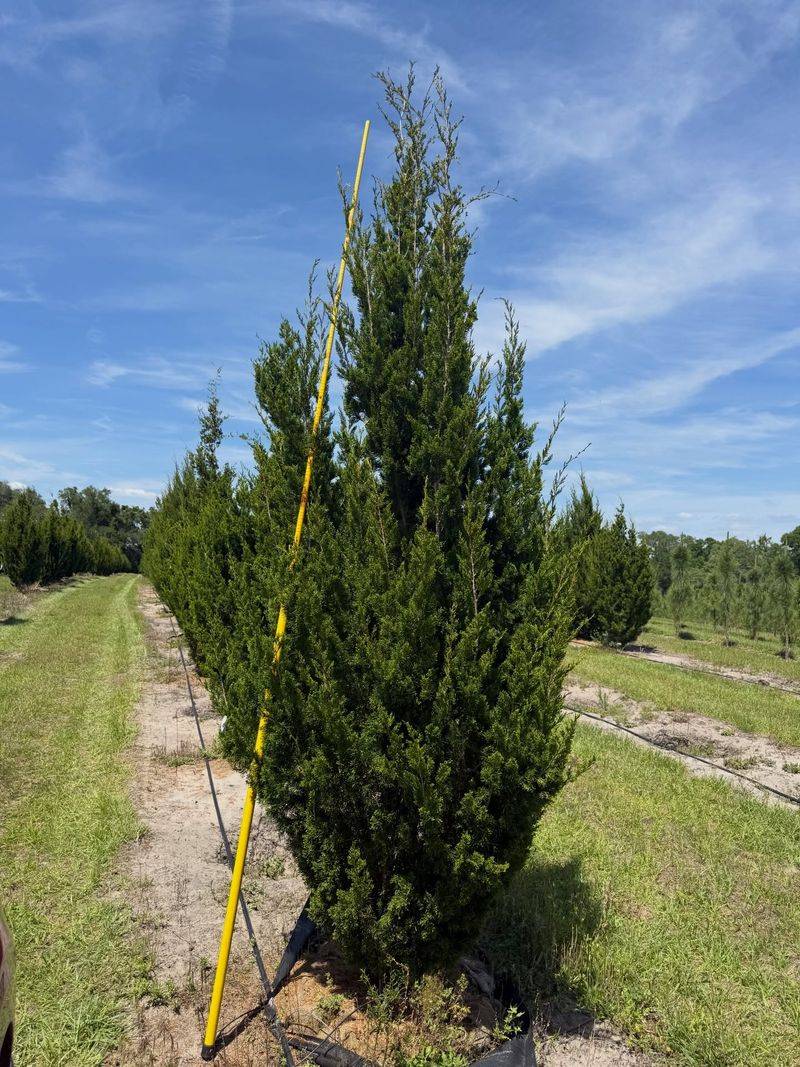
Picture a wall of deep green that holds its color all winter long. Eastern Red Cedar delivers exactly that, season after season, without asking for fertilizer or fuss.
Its branching starts low to the ground, which is critical for true privacy. Many trees leave a frustrating gap at the base where neighbors can still see right through.
Eastern Red Cedar plugs that gap naturally. The lower limbs stay full and dense, giving you ground-to-sky coverage that actually works.
A mature tree can reach thirty to forty feet tall and spread eight to fifteen feet wide. That kind of size creates a serious visual barrier along any property line.
The tree also blocks wind and noise, which adds another layer of comfort to your outdoor space. Sitting in a yard buffered by Eastern Red Cedar feels noticeably quieter and calmer.
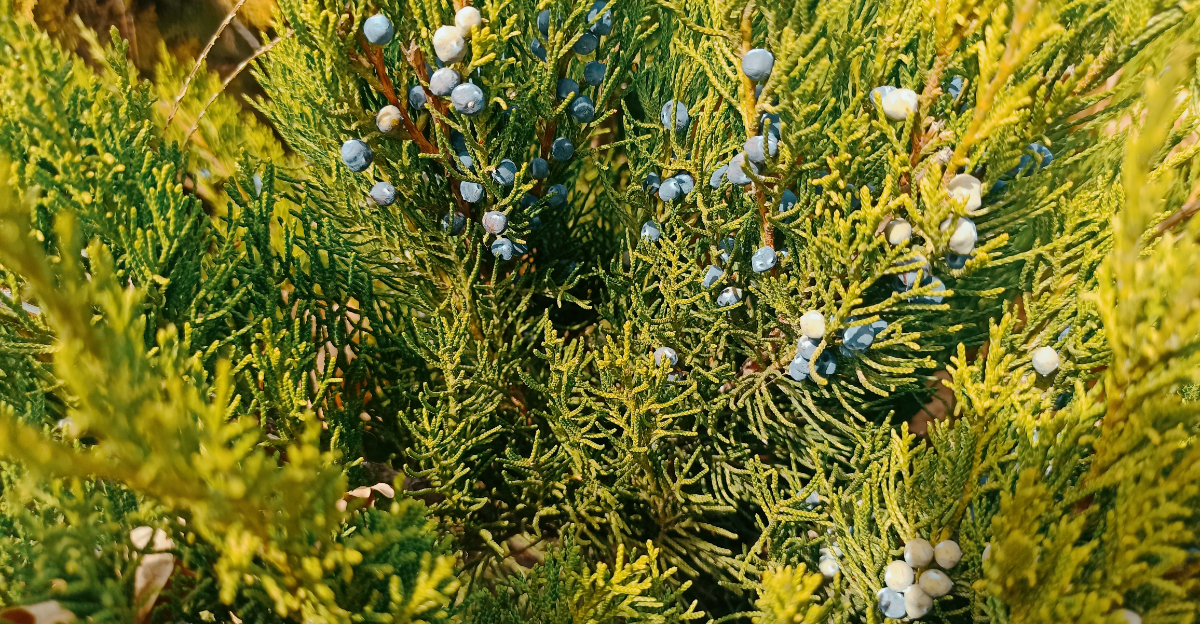
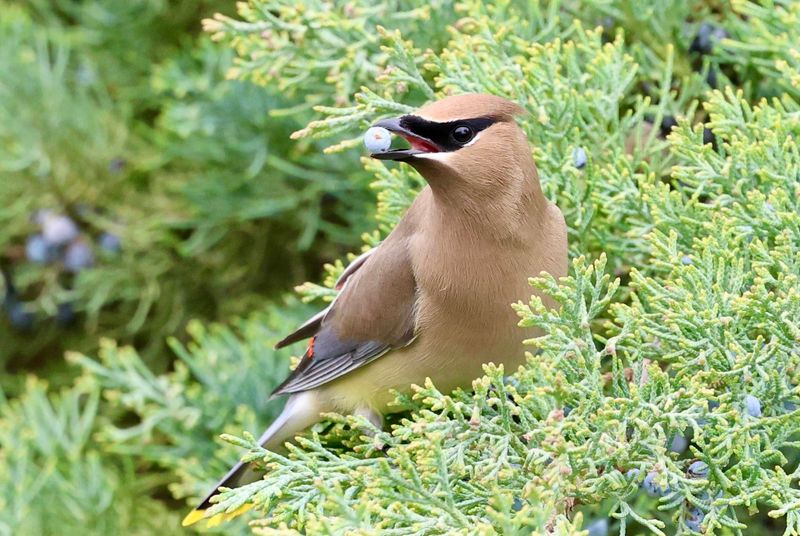
Birds love this tree too, which is a bonus many homeowners did not expect. Cedar waxwings, robins, and bluebirds flock to its small blue berries, turning your privacy screen into a wildlife habitat.
This particular evergreen does more than block views. It creates an ecosystem right in your backyard.
Privacy is the goal, but the side benefits keep stacking up. Choosing Eastern Red Cedar means getting more than you bargained for, and that is a genuinely good thing.
Growth Habits That Require Little Upkeep
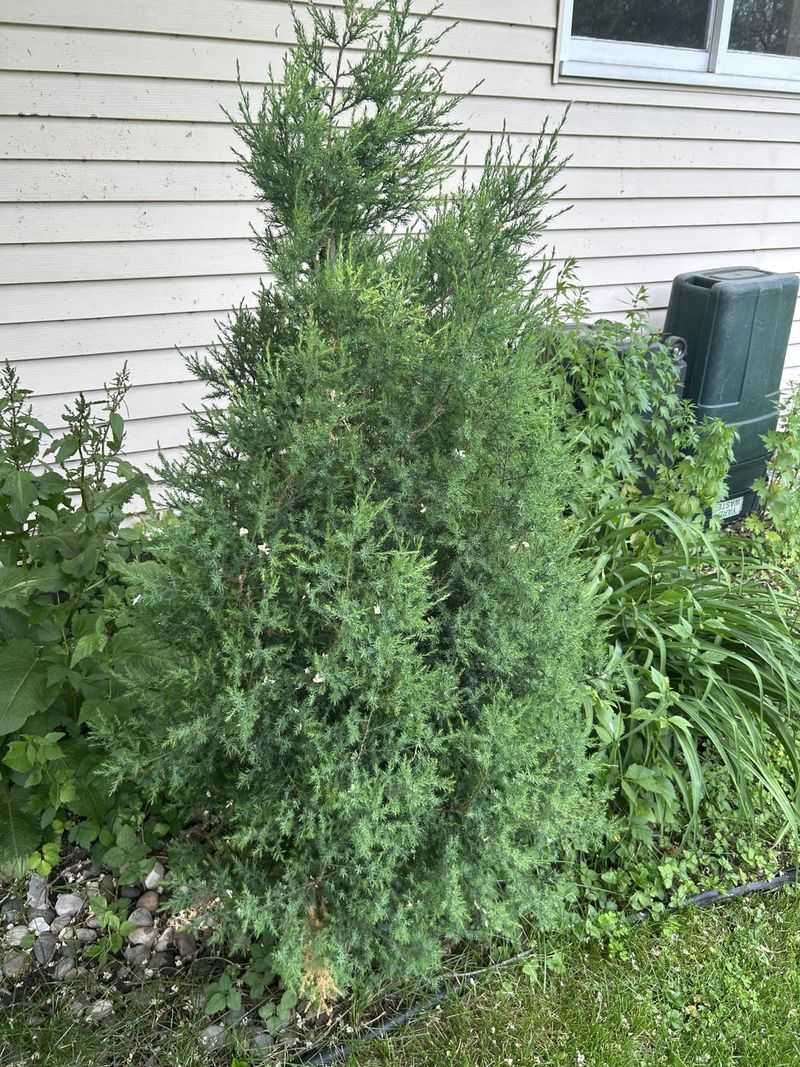
Some trees grow like they are trying to escape the yard. Eastern Red Cedar grows like it has a plan and sticks to it.
The average growth rate is about one to two feet per year. That pace is steady enough to build coverage quickly but slow enough to stay manageable.
Its natural shape is a tight, upright column or pyramid. That form holds without shearing, staking, or seasonal correction.
You will not need to pull out the hedge trimmer every spring. The tree simply grows into its shape and maintains it on its own terms.
Root systems are deep and spreading, which makes the tree drought-tolerant once established. After the first year or two, supplemental watering becomes optional rather than essential.
Eastern Red Cedar also handles salt spray, which matters near Connecticut roads and coastal areas. Most privacy trees suffer badly from road salt, but this one shrugs it off.
Wind resistance is another quiet strength of this species. Storms that damage weaker trees tend to pass right through Eastern Red Cedar without causing serious damage.
Low upkeep does not mean no upkeep. A light inspection each spring to remove any bare interior branches keeps the tree healthy and looking its best year-round.
When a tree practically takes care of itself, your weekends stay yours. That is not a small thing when you are managing a full property in New England.
Best Planting Spots For Full Coverage
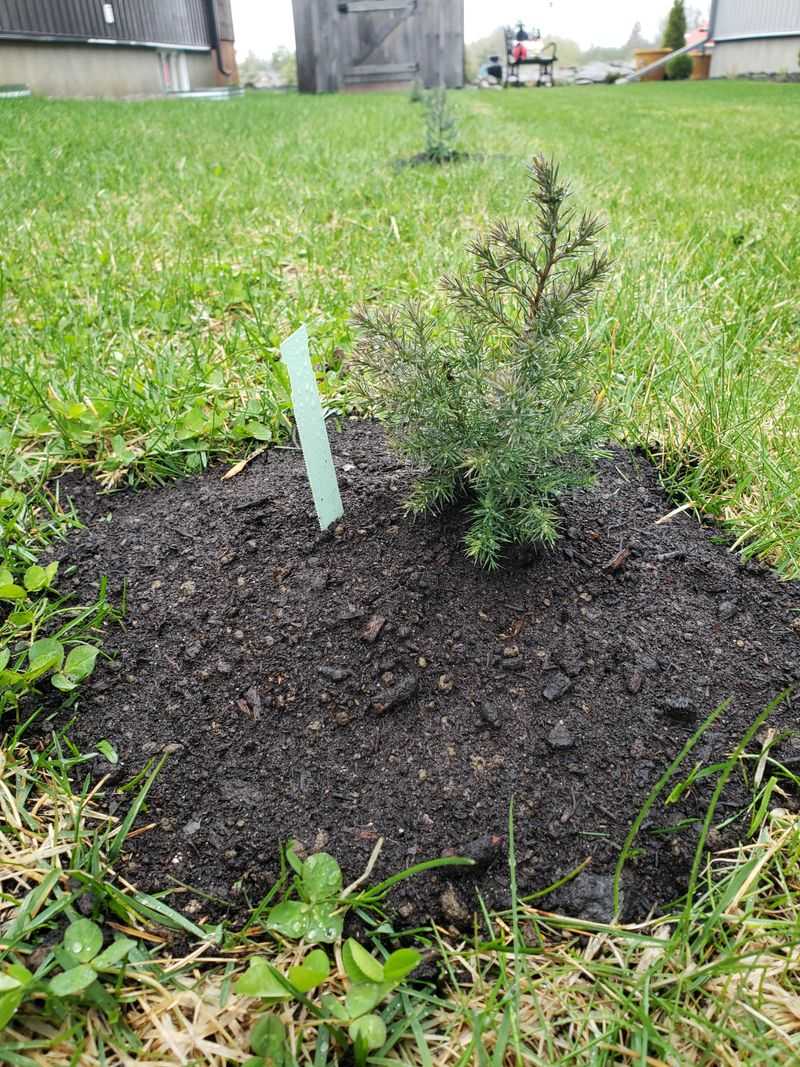
Placement makes or breaks a privacy screen. Plant in the wrong spot and you end up with gaps, leaning trunks, and a screen that never quite closes in.
Eastern Red Cedar thrives in full sun, meaning at least six hours of direct light per day. Shade slows its growth and thins the interior foliage over time.
Spacing matters just as much as sunlight. Plant trees eight to ten feet apart for a solid screen that fills in within three to five years.
If you want faster coverage, tighten that spacing to six feet. The trees will knit together sooner, though airflow between them becomes something to monitor.
Soil quality is refreshingly flexible with this species. Sandy, loamy, rocky, or clay-heavy ground all work fine as long as drainage is reasonable.
Avoid low spots where water pools after rain. Eastern Red Cedar tolerates dry conditions far better than it handles soggy roots over long periods.
Property lines along roads, driveways, and neighboring yards are ideal locations. The tree creates a natural boundary that looks intentional and adds real curb appeal.
Planting in a staggered double row creates even denser coverage. Two offset rows give depth to the screen and greatly reduce the chance of gaps between trunks.
Eastern Red Cedar rewards smart placement. Get the location right from the start and the tree does the rest on its own schedule.
Long-Term Benefits Beyond Privacy
Most people plant a privacy tree for one reason: to block the view. Eastern Red Cedar delivers on that goal and then keeps going.
Its berries feed dozens of bird species through fall and winter. A row of these trees along your property line becomes a natural feeding station that wildlife returns to every year.
The aromatic wood also deters moths and insects naturally. Homeowners near the tree often notice fewer pest problems in adjacent garden beds.
Carbon sequestration is another quiet benefit. Every tree you plant pulls carbon dioxide from the air, contributing to cleaner air right in your neighborhood.
Property value tends to rise with mature, well-placed evergreens. Real estate agents in New England consistently note that established privacy screening adds appeal for buyers.
Eastern Red Cedar also serves as a windbreak in winter. A well-placed row can reduce heating costs by blocking cold northwest winds from hitting your home directly.
The tree needs little to no fertilizer, pesticides, or seasonal sprays. That means less money spent on yard chemicals and less runoff reaching local waterways.
Native plants also support local pollinators and soil health in ways that non-native species simply cannot match. Choosing native is often the smarter long-term decision for a Connecticut landscape.
This resilient evergreen keeps giving long after planting day. Year after year, it proves that the best landscaping decisions are the ones you barely have to think about again.