The North Carolina Trees That Invite Owls Into Your Yard and How That Helps With Rats
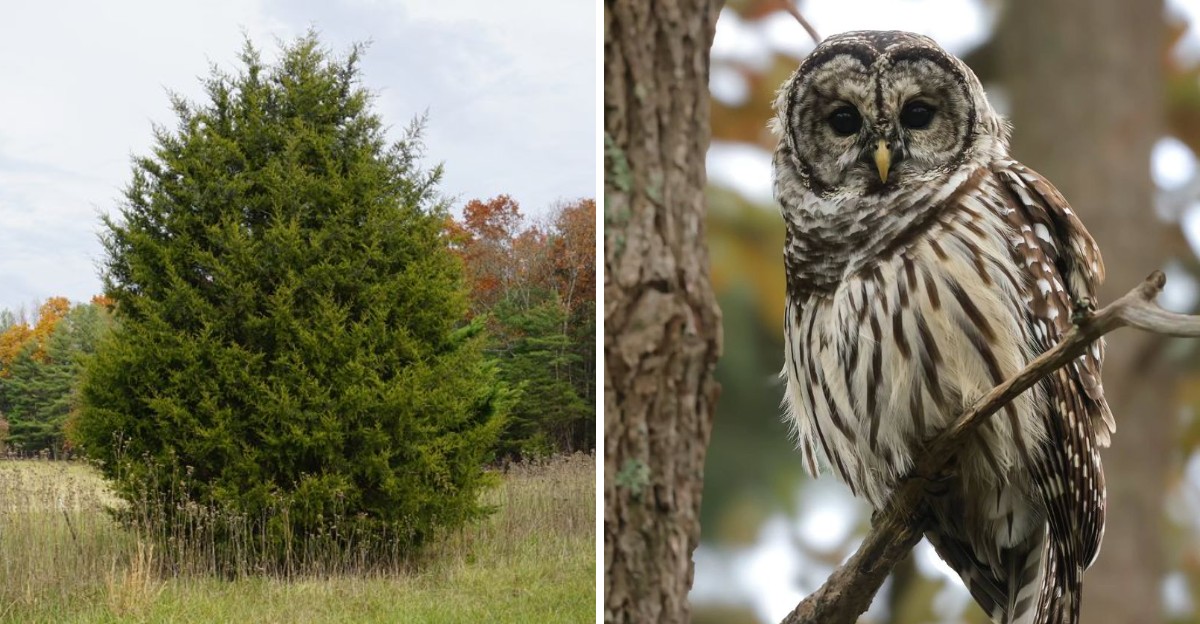
A single family of barn owls can swallow more than a thousand rodents in one year, bones and all. They cough up the fur and bones later as tidy pellets, which scientists happily pick apart for clues.
In North Carolina, barred owls and great horned owls patrol yards and woodlots quietly once the sun goes down. Rats and mice fill a big share of their menu, especially near creeks and older neighborhoods with mature cover.
I’ve always felt that the best pest control works quietly overhead while I sleep soundly inside the house. Owls will not erase every rat, but they can help keep numbers lower when habitat invites them to stay.
So what makes a hungry owl choose your yard over the quiet one down the street? The answer starts with the right native trees, and a few of them might already be growing nearby.
1. White Oak
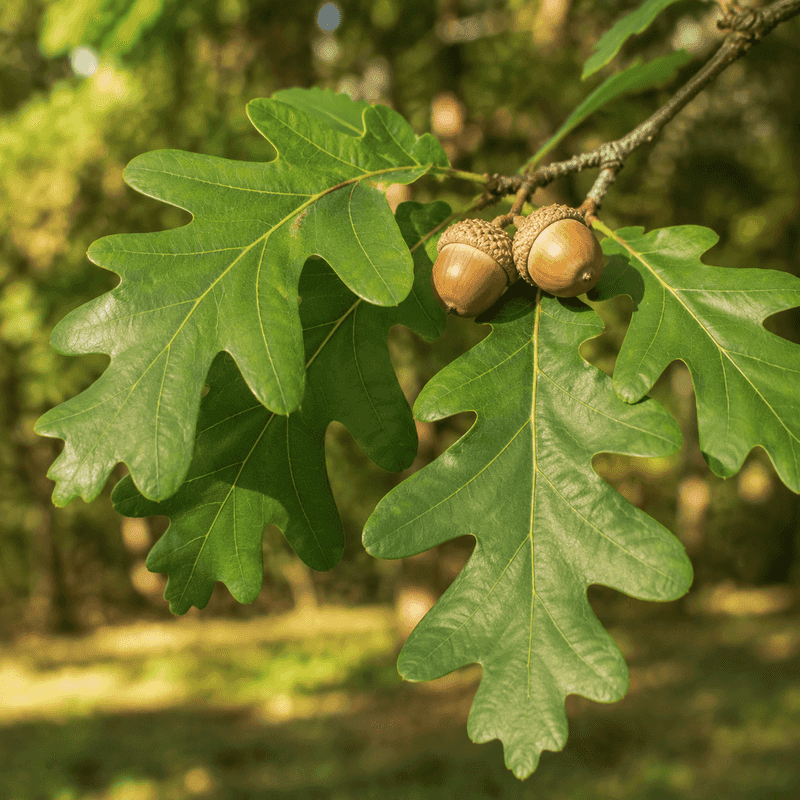
Few trees host more life than a white oak, which supports hundreds of caterpillar species across the eastern states. I love standing under one at dusk, listening to the leaves rustle while something hoots softly from above.
Older white oaks often lose limbs over time, and the scars slowly rot into snug hollows inside the trunk. Eastern screech-owls happily move into those hollows, since they rely on cavities instead of building their own nests.
Acorns drop heavily in good years, and mice and squirrels rush in to gather them before winter arrives. That steady rodent traffic turns the ground beneath the tree into a dependable hunting spot for patient owls.
Screech-owls are small, but they do eat mice and young rats along with plenty of large insects. Bigger owls, like barred owls, also hunt under oaks, taking rats that come looking for fallen acorns.
White oak, Quercus alba, grows well across North Carolina, from the mountains down to the coastal plain. It prefers deep, well-drained soil and full sun, though young trees handle a little shade just fine.
Plant it at least thirty feet from your house, since mature trees can spread eighty feet or more. Growth is slow at first, so think of it as a gift to your future self and neighbors.
If you already have an old oak, consider leaving safe hollow limbs instead of cutting every one away. Have a certified arborist check them, because a sound cavity can become a cozy owl apartment for years.
2. Loblolly Pine
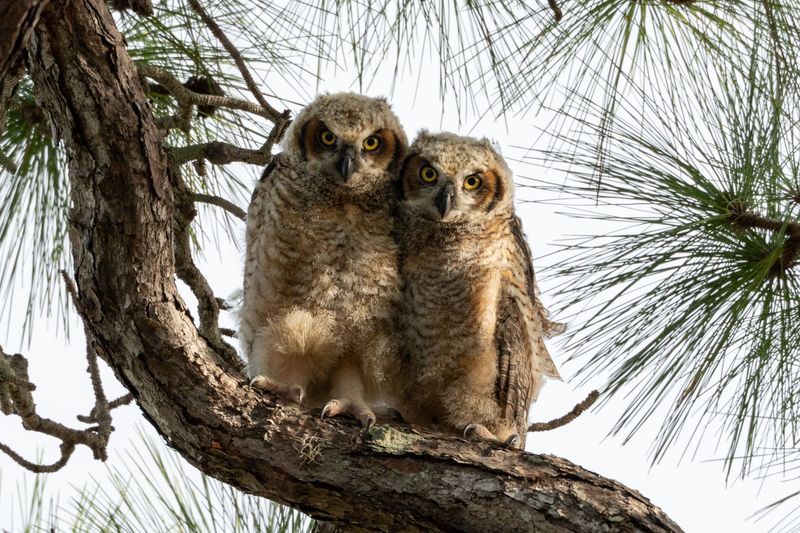
Walk under a loblolly pine on a breezy night, and you will hear a soft hiss like distant ocean waves. That whispering crown is exactly where a great horned owl might be sitting, watching the lawn below for movement.
Pinus taeda is one of the most common pines in the Southeast, and it grows surprisingly fast. Young trees can add two feet or more each year, giving you useful height sooner than slow hardwoods.
Great horned owls rarely build their own nests, so they often take over old hawk or crow nests. Tall pines hold those borrowed platforms well, and the thick needles hide the nest from curious eyes.
These powerful owls take a wide range of prey, and Norway rats are definitely on the list. They also eat rabbits and mice, which makes them a welcome night shift around sheds and woodpiles.
Year-round needles matter in winter, when bare hardwoods offer little shelter from cold wind and pestering crows. Owls roosting in pines during the day are often mobbed by crows, so dense cover helps them rest.
Loblolly pine handles clay and sandy soils, and it loves full sun across the Piedmont and coastal plain. It can reach ninety feet, so give it plenty of room away from roofs and power lines.
In my experience, a small group of pines works better than a single lonely tree in a big lawn. Leave some pine straw beneath them, because the needles make a tidy mulch for nearby beds and paths.
3. Eastern Redcedar
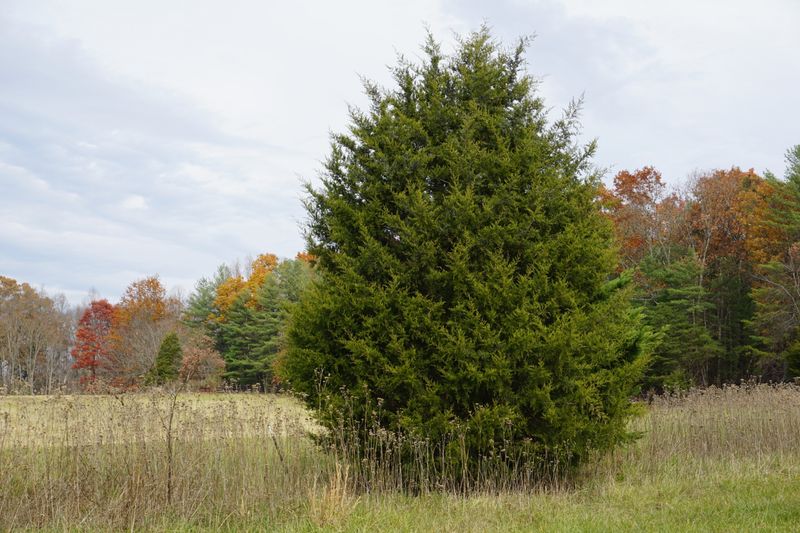
Shake a dense eastern redcedar in winter, and a startled owl might flap out of the green shadows. These scrappy evergreens look humble along fence lines, yet small owls treat them like private hideaways.
Juniperus virginiana is technically a juniper, not a true cedar, despite the name it has carried for centuries. Its fragrant wood was once a favorite for pencils and closets, because the scent helps repel clothes moths.
Eastern screech-owls often roost in thick evergreens like redcedar, tucking themselves close to the trunk during daylight. Their gray or reddish feathers blend so well with the shaggy bark that you can easily walk past.
Female trees produce dusty blue berrylike cones that cedar waxwings and many other birds gobble through winter. Small mammals pick up fallen fruit too, which keeps a little prey activity happening near the roost.
Redcedar is tough enough for poor or sandy soil, and it handles drought surprisingly well once established. Full sun keeps the foliage thick, while too much shade makes the tree thin and open over time.
One caution matters for fruit growers, since redcedar hosts cedar-apple rust, a fungus that also affects apples. Keep a good distance from apple trees, or choose rust-resistant apple varieties if you want both together.
I like planting redcedars in a staggered row as a living screen along a property edge. You get privacy for yourself and a sheltered owl perch, which feels like a fair trade to me.
4. American Sycamore
Ghostly white branches make the American sycamore easy to spot along creeks, even under a pale moon. Those massive old trunks often turn hollow inside, and that hidden space is exactly what owls go looking for.
Platanus occidentalis is one of the largest native hardwoods in eastern North America, with notably thick trunks. Peeling bark reveals creamy patches underneath, creating a camouflage pattern that kids love to point at.
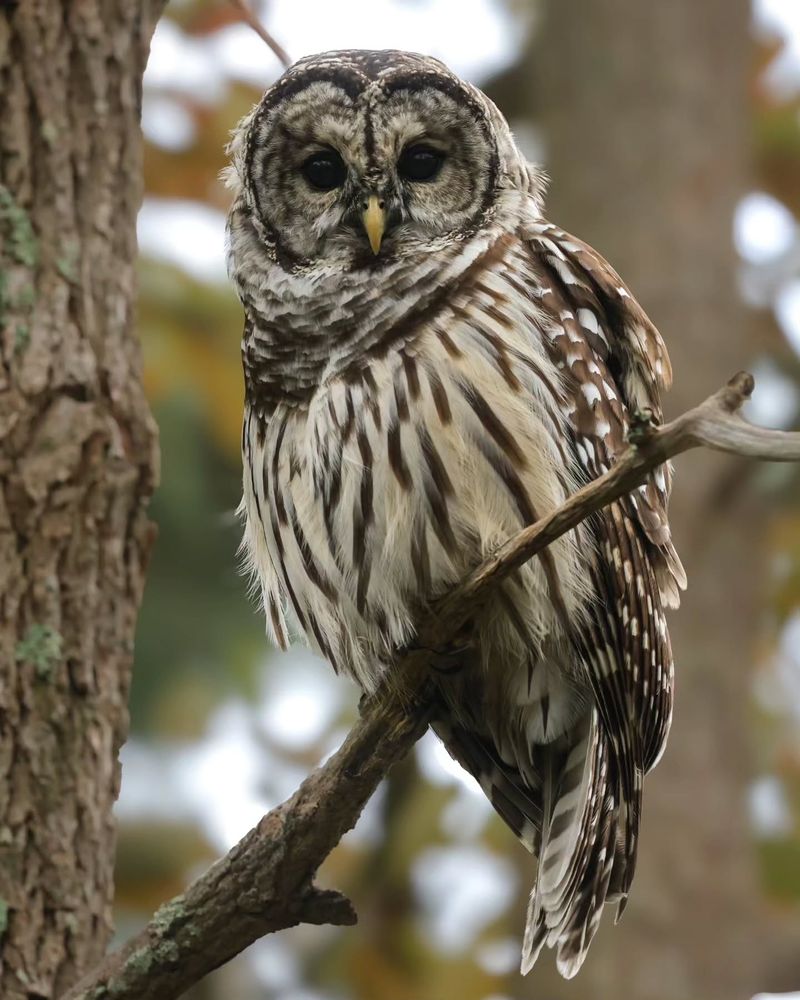
Barred owls nest in natural tree cavities, and big hollow sycamores near water suit them very well. Their famous call sounds like someone asking, who cooks for you, echoing across the creek after dark.
Barred owls eat mostly small mammals, including mice and rats, plus frogs and crayfish near streams. Barn owls also use hollow trees, and they are especially skilled rodent hunters over open fields and pastures.
Sycamores grow fast and thrive in moist, rich soil, which makes them perfect for wet low spots. They suit most of the state, though they need plenty of space since mature trees spread widely.
Be ready for some cleanup, because peeling bark and fuzzy seed balls drop throughout much of the year. Anthracnose can brown the spring leaves in wet weather, though trees usually leaf out again by summer.
Honestly, I think a sycamore belongs on any larger property with a creek or a soggy corner. Plant one young tree, and someday an owl family may thank you with a chorus of hoots.
5. Black Gum
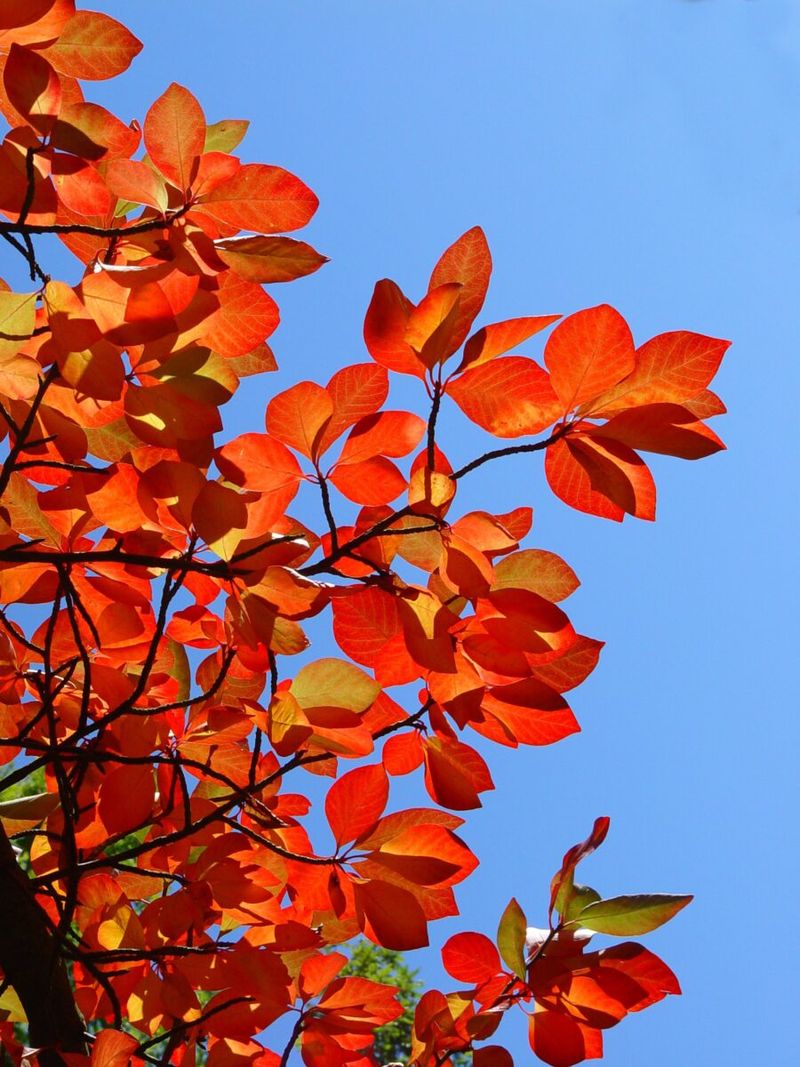
Black gum leaves turn scarlet early in fall, often blazing red before most other trees have even started. That fiery show is pretty, but the hollow trunks hiding underneath are what really interest owls.
Nyssa sylvatica is famous among foresters for developing heartrot, which hollows out the center of older trees. Early settlers even used hollow black gum sections as beehives, called bee gums in parts of Appalachia.
Those natural cavities give screech-owls and barred owls protected nesting spots out of the rain and wind. Woodpeckers often start holes in soft wood too, and owls happily move into the abandoned homes later.
Small blue-black fruits ripen in late summer and early fall, drawing robins and thrushes in noisy groups. Fallen fruit attracts mice and other small mammals, quietly building the kind of prey base owls follow.
Black gum handles both soggy bottomland and drier upland slopes, which makes it unusually flexible in yards. Give it full sun or partial shade, and acidic soil will keep the leaves glossy and healthy.
It grows slowly and has a deep taproot, so plant small nursery trees rather than large ones. Water regularly during the first two summers, especially in dry spells, until the roots settle in.
I’ve noticed black gum rarely shows up at big garden centers, which honestly surprises me every single time. Ask for it by name, and you may need a native plant nursery to find a good one.
6. Southern Magnolia
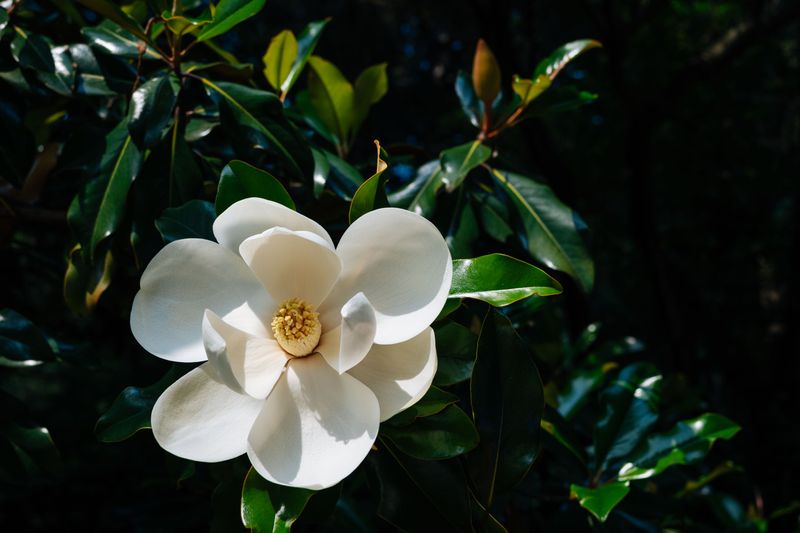
Glossy leaves as big as your hand make southern magnolia one of the darkest, coziest hideouts in winter. Owls tucked inside that thick evergreen canopy can nap all day while you stroll right underneath them.
Magnolia grandiflora is native to the Southeast, and it grows naturally in the coastal plain of the state. It does best in zones 7 through 9, with some cultivars hardy a bit colder for mountain gardeners.
Dense foliage gives roosting owls shelter from cold rain and from crows that love to harass them. Barred owls and screech-owls both roost in thick evergreens, especially when the deciduous trees around them stand bare.
Bright red seeds pop from fuzzy cones in fall, and birds and squirrels eagerly carry them away. Those busy squirrels and visiting rodents help keep a hunting owl interested in sticking around nearby.
One honest note matters here, because owls alone rarely solve a serious rat problem around a home. Pair owl-friendly trees with sealed trash cans and tidy feeders so rats find much less to eat.
Skip rodent poisons too, since owls that eat poisoned rats can become seriously sick or harmed themselves. Snap traps placed inside covered boxes offer a safer option that protects your hard-working feathered helpers overhead.
Southern magnolias reach sixty feet or more, and their roots dislike being disturbed once they settle. Give one a sunny spot with room to grow, and enjoy those lemony white blooms each summer.