The Ohio Owl You May Have In Your Backyard Without Ever Seeing It
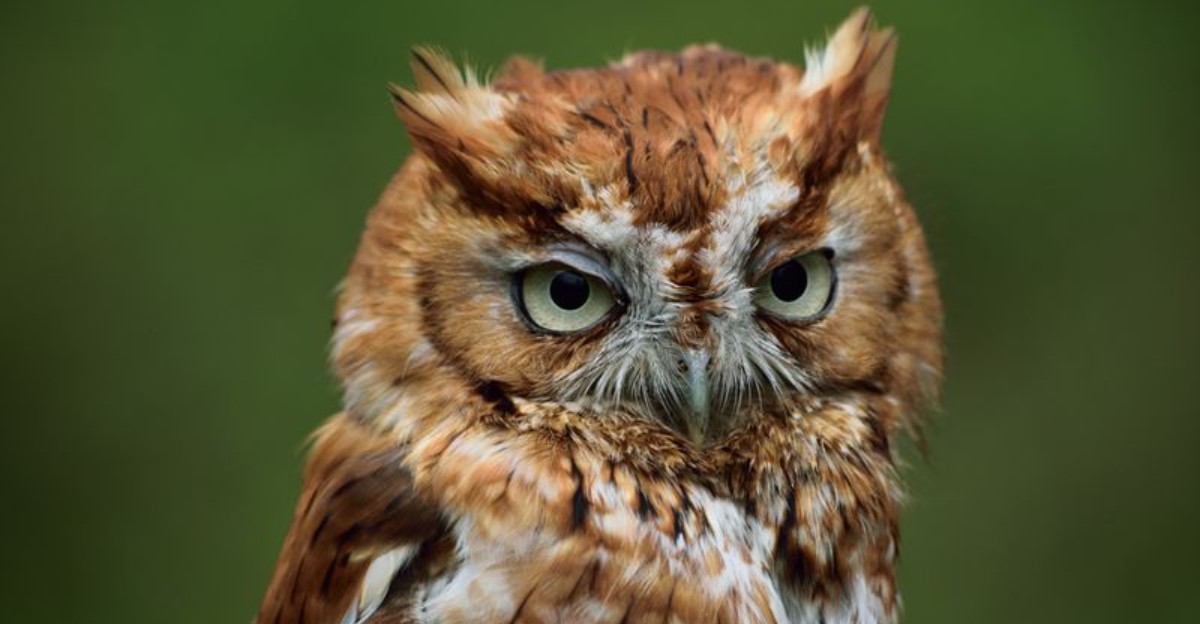
You could host an owl in your yard for years and never once lay eyes on it.
Owls stay hidden by design, tucked into tree cavities or dense branches during daylight hours while you go about your day none the wiser. The real proof shows up in sound, not sight.
A specific call after dark, easy to miss unless you know what to listen for, gives away far more Ohio backyards than most homeowners would guess.
Pellets on the ground count too, small clumps of fur and bone that fall from a roost above without anyone noticing for weeks. Most people walk right past them, assuming they belong to something else entirely.
Step outside after dusk this week and just listen. What greets your ears might surprise you more than anything you’d catch with your eyes.
1. Meet Ohio’s Secretive Eastern Screech-Owl
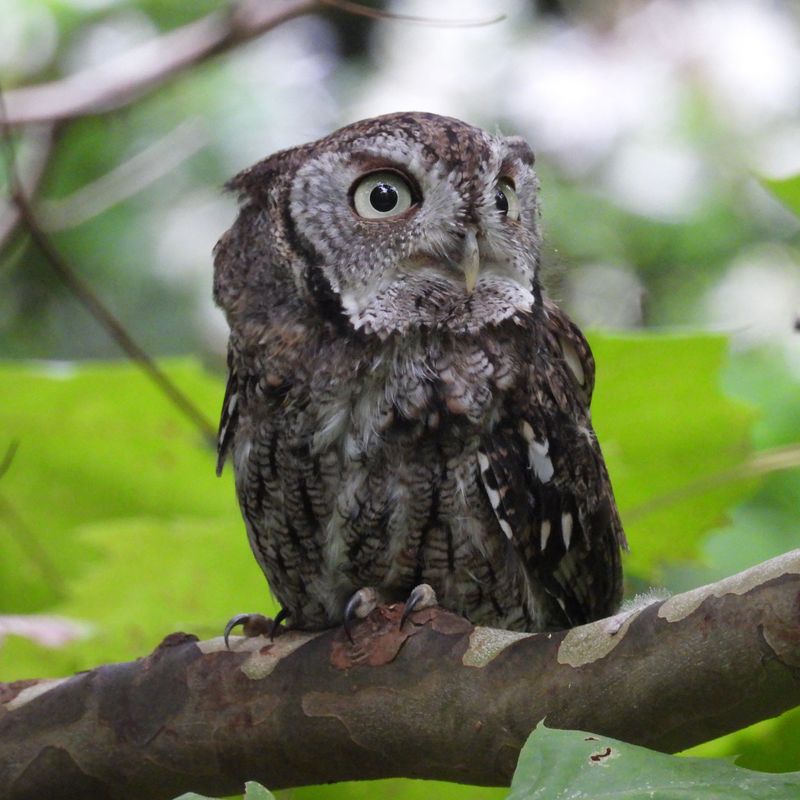
Ohio’s most common owl is also the one almost nobody sees. The Eastern Screech-Owl lives in every single county, from Cleveland suburbs to farm woodlots in the southern hills.
Picture a bird only 6 to 10 inches tall, roughly the size of a soda can with feathers. Its wingspan stretches 18 to 24 inches, and it weighs about as much as a stick of butter.
That is still about twice the heft of an American Robin, so it packs more muscle than its height suggests.
Two features stand out once you get a look: pointed ear tufts and startlingly yellow eyes. The tufts are not ears at all, just feathers that the owl can raise or flatten depending on its mood.
The name is honestly misleading. Instead of a screech, these owls produce a soft horse-like whinny that slides downward, plus a steady, rhythmic trill that sounds almost like a purr.
Activity happens after sunset, which explains why daytime encounters are so uncommon. They settle comfortably in woodlands, older neighborhoods, and city parks wherever big shade trees grow.
If your street has mature oaks or maples, the odds are decent that one of these little owls already considers your block home territory.
2. Its Camouflage Makes Backyard Sightings Rare
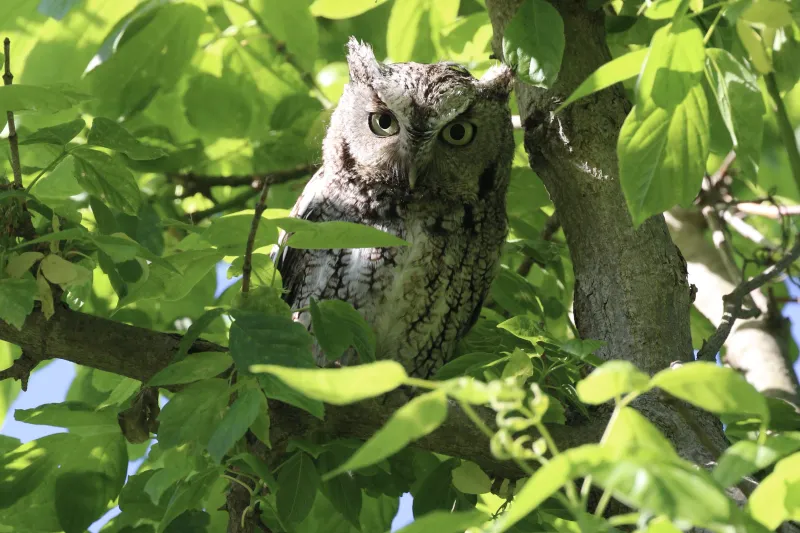
Try spotting a screech-owl in daylight and you will understand why birders call it a magic trick. The feathers carry fine bars, streaks, and speckles that mimic tree bark so well the bird seems to vanish into the trunk.
Color comes in two main versions, called morphs. Some birds wear soft gray, others a warm reddish-brown known as rufous, and a scarce brown morph shows up occasionally.
Gray individuals melt into oak and maple bark. Rufous ones look right at home against cherry or weathered cedar, which gives the species an edge in mixed Ohio woodlots.
The hiding trick gets better. When resting, the owl often tucks itself into a cavity opening and fills the hole with its body, turning a dark gap into what looks like ordinary bark.
Those ear tufts do double duty here. Raised up and with the body stretched tall and thin, the owl resembles a broken stub of branch rather than a living creature.
Your Ohio Garden Changes Every Week. Your Plan Should Too.
Gardening in Ohio changes quickly throughout the season. Every Friday you’ll receive a simple weekly plan showing exactly what to plant, prune, fertilize, harvest, and protect so you never miss the right timing.
Eyes squeeze down to slits, cutting the glare that might otherwise give it away. Hikers have walked past roosting screech-owls at eye level without noticing a thing.
Scan tree trunks slowly and look for shapes that seem slightly too symmetrical. Patience beats speed every time.
3. Tree Cavities Become Daytime Hideouts
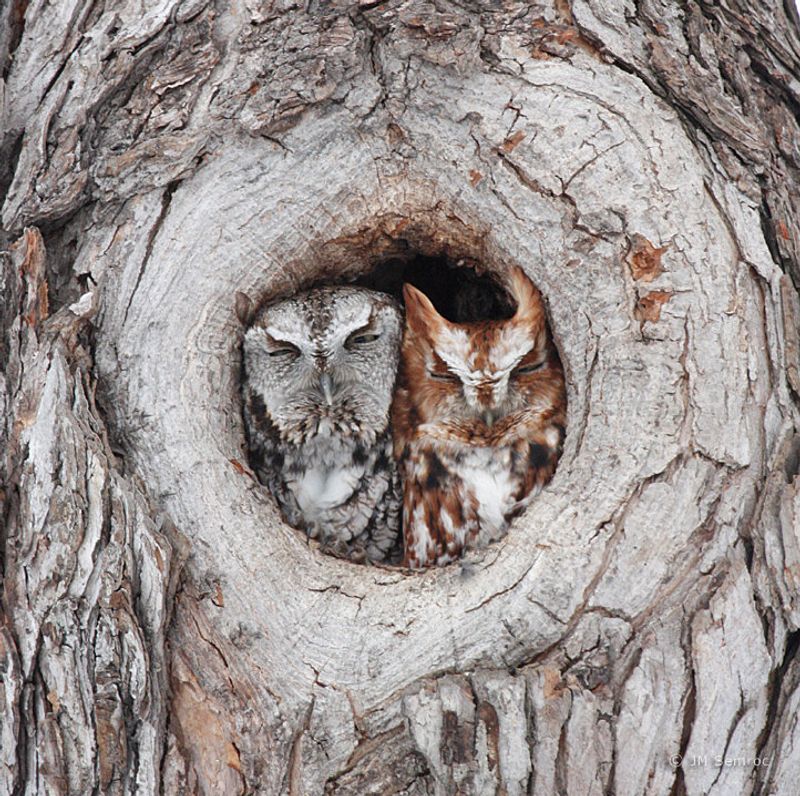
Daylight hours belong to napping, and a hollow in an old tree makes the perfect bedroom. Screech-owls spend most of the day tucked inside natural cavities, snoozing while the neighborhood goes about its business.
Here is the catch: these owls generally rely on existing cavities rather than excavating their own. They borrow whatever the woods provide, whether that is a cavity left by decay, a squirrel’s old den, or a woodpecker hole.
Abandoned nests from Northern Flickers and Pileated Woodpeckers rank high on the list. A Pileated makes a sizable opening, and a screech-owl moves in like a tenant taking over a furnished apartment.
Sometimes standards relax. During dry stretches, an owl may settle into a cavity that is open to the sky, apparently unbothered by the lack of a roof.
Autumn brings a change in routine. Pairs often begin sharing a hollow, roosting together through the cold months as they get ready for spring nesting.
Homeowners can help by leaving standing deceased limbs alone when they pose no safety risk. Every hollow trunk removed is one less bedroom available in the neighborhood.
Watch cavity openings around sunset. A round head easing out of a hole is one of the finest sights an Ohio yard offers.
4. Small Size Helps This Owl Stay Out Of Sight
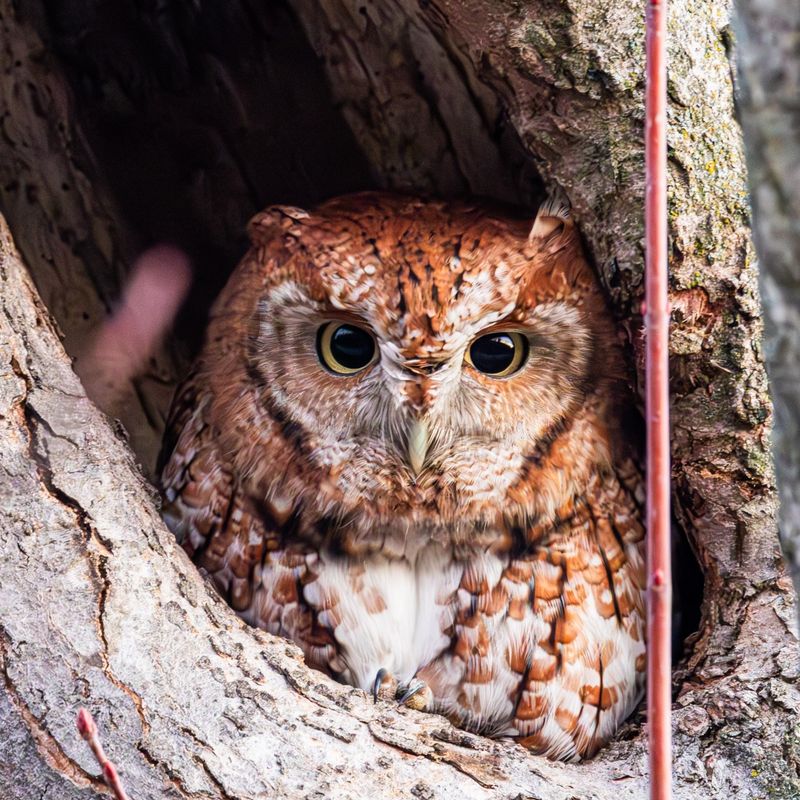
Size matters when your survival strategy is going unnoticed. Among North American owls, the Eastern Screech-Owl ranks near the bottom of the height chart, standing just 6 to 10 inches tall.
Weight lands somewhere between 4 and 8 ounces. Hold a stick of butter and you have a decent sense of what one of these birds feels like in the hand.
Compare that to a Great Horned Owl, which can top three pounds and is impossible to miss on a bare branch. A screech-owl simply does not create the same silhouette against the evening sky.
Small bodies fit into small openings, which widens housing options considerably. A hole barely three inches across works fine, and plenty of older trees offer exactly that.
Compactness also helps during winter. Curled inside an insulated hollow, a tiny owl conserves warmth better than it would sitting exposed on an open limb.
The downside is that other predators view them as prey. Staying small means staying quiet, still, and hidden, habits that carry over into every part of daily life.
Next time you scan the treetops for something owl-sized, shrink your expectations. You are looking for a lump about the size of a grapefruit, not a football.
5. Night Hunting Keeps It Mostly Invisible
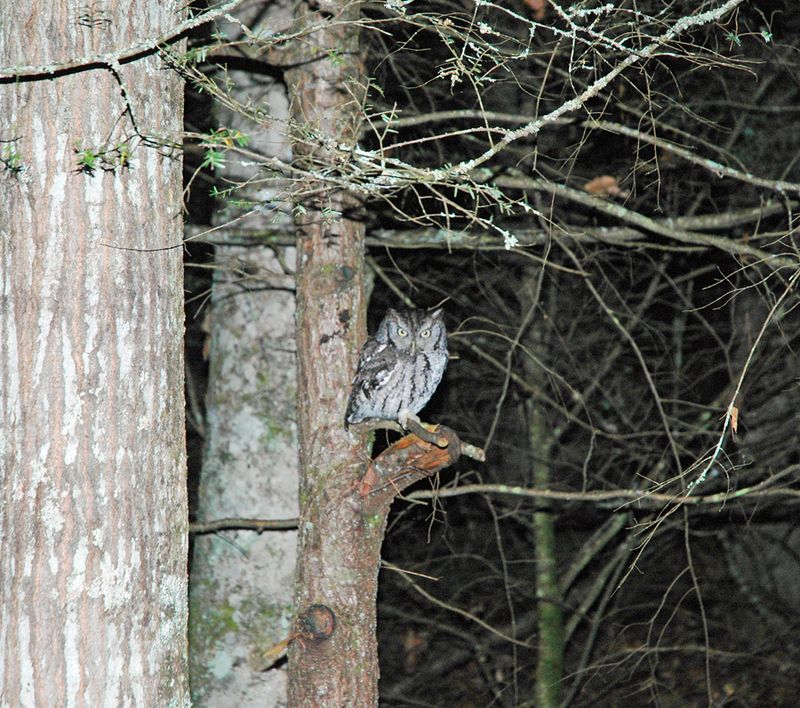
The workday starts when yours ends. Screech-owls are primarily nocturnal, becoming active around dusk and continuing through the night.
Hunting style is patient rather than frantic. The owl picks a perch, watches and listens, then drops silently onto whatever moves below.
Special feather edges break up the rush of air over the wings, so flight produces almost no sound. Prey rarely gets a warning.
Menus vary wildly depending on the season. Beetles, moths, mice, voles, small birds, frogs, lizards, earthworms, and even crayfish all show up in screech-owl diets.
Flexibility is the whole strategy. Whatever is abundant that week becomes dinner, which is one reason the species does well in so many different Ohio habitats.
When hunting goes especially well, extras get stashed in a tree hole for later. A well-stocked cavity acts like a backyard pantry during rough weather.
All of that happens while most people are asleep or indoors with the curtains drawn. The owl may work your lawn nightly and leave behind nothing but a few pellets under a favorite perch.
Check the ground beneath large branches for small gray pellets of fur and bone. Finding them is solid proof you have a night hunter on the property.
6. A Nest Box Can Make Your Yard More Welcoming
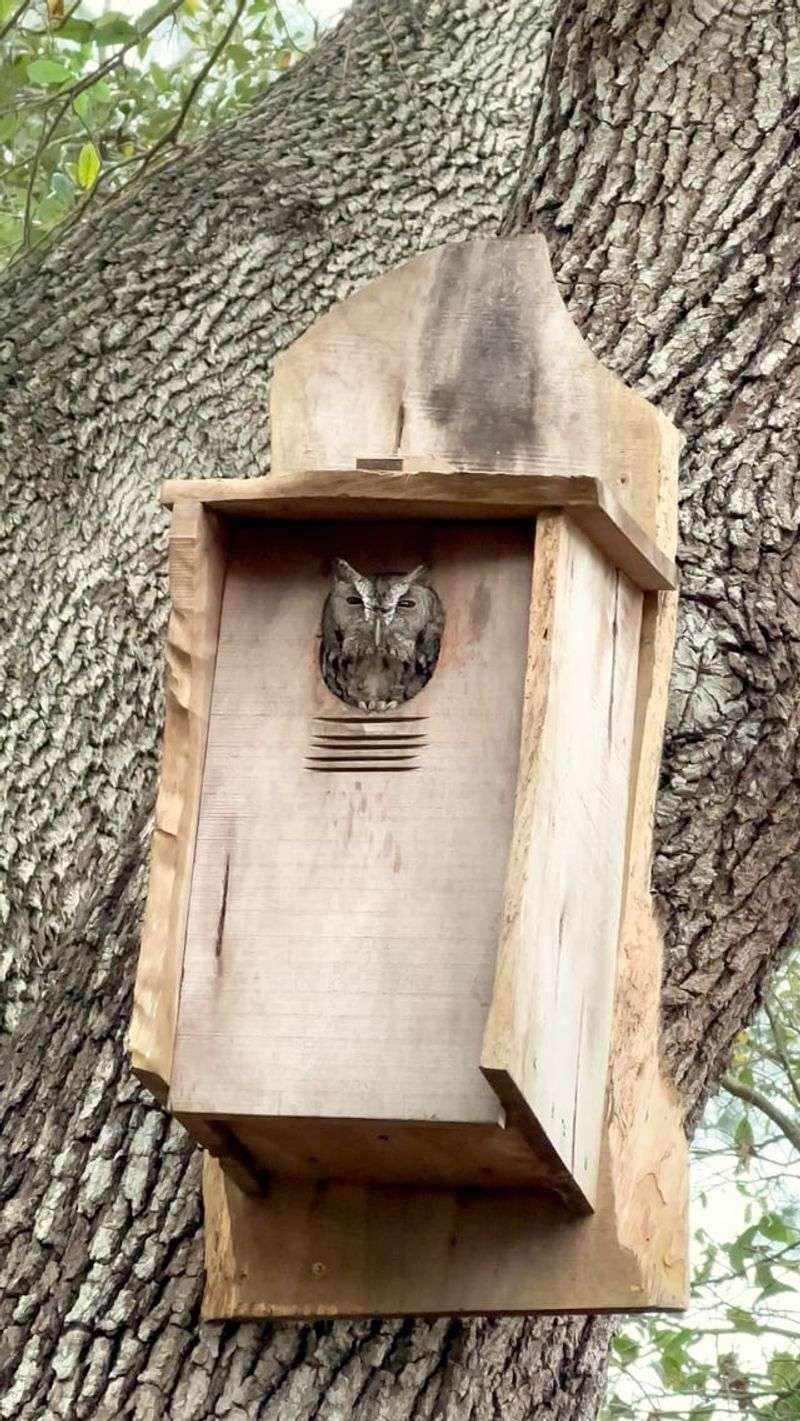
Good news for anyone hoping to host one: screech-owls take to wooden boxes readily. A properly built box can turn an ordinary yard into prime real estate.
Measurements matter more than looks. A nest box with an entrance around 3 inches wide and an interior floor around 8 by 8 inches is a practical size for this species.
Mount the box 10 to 20 feet up. Facing the opening east or south catches morning sun and turns the back of the box toward the worst wind.
Owls bring no nesting material of their own, so give them a head start. Two or three inches of wood shavings or dry leaves on the floor makes the space usable right away.
Timing gives you an advantage. Install in late fall or early winter, and an owl may discover the box as a cozy roost long before breeding season arrives.
Add a predator guard to the pole or trunk. Raccoons are persistent climbers, and a simple metal baffle keeps eggs and young much safer.
Skip the perch below the hole, since it only helps unwanted visitors. Clean the box out each late summer, then step back and let the tenants decide.
7. Mature Trees Give This Owl Valuable Shelter
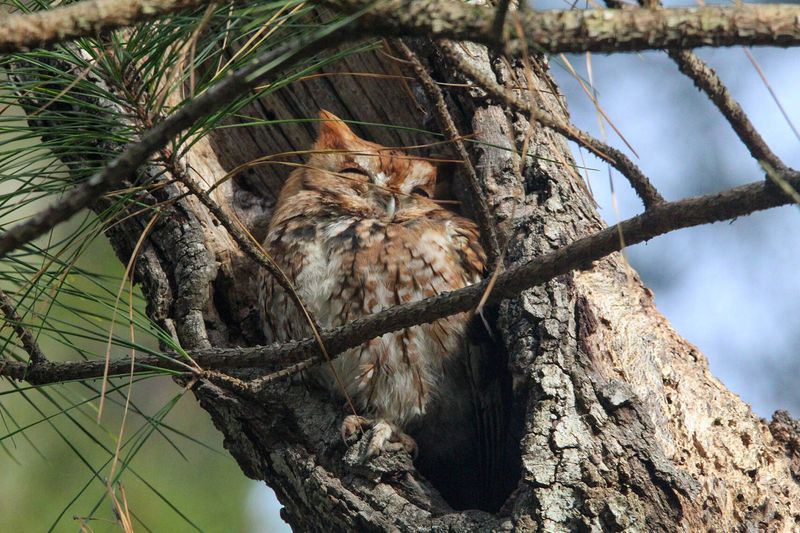
Old trees are the whole foundation of screech-owl life in Ohio. Deciduous and mixed woodlands, parklands, and leafy older neighborhoods all support them, provided the trees have some age on them.
Why age? Cavities form slowly.
A broken limb rots inward over years, a woodpecker chisels out a nest chamber, and eventually a hollow appears that suits a small owl perfectly.
Young landscaping trees simply cannot offer that. A subdivision planted five years ago has plenty of greenery and not one usable owl bedroom.
Adaptability is the species’ saving grace. Screech-owls settle happily among houses, sidewalks, and streetlights as long as big shade trees still stand along the block.
Older Ohio neighborhoods with mature oaks, sycamores, and maples often support surprising owl numbers. Residents may hear trilling for years without connecting the sound to the trees overhead.
Property owners hold real influence here. Keeping a sturdy older tree, leaving a safe snag standing, and resisting the urge to patch every hollow all add up.
Planting now pays off later too. A young oak set in the ground today becomes cavity-rich habitat for generations of owls long after you have moved on.
8. Rodents Can Bring Screech-Owls Closer To Homes
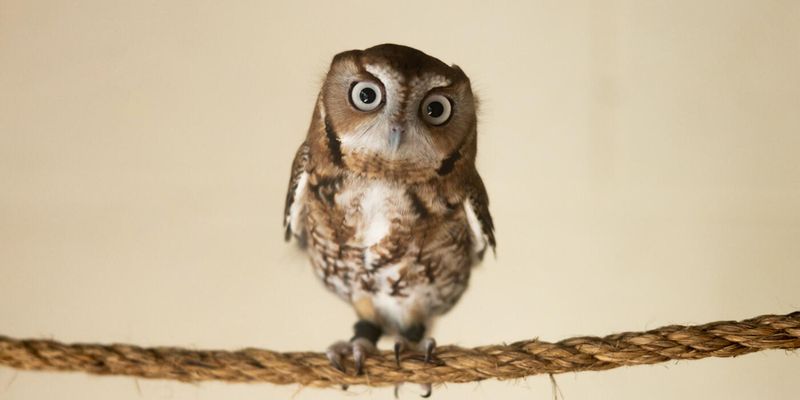
Follow the mice and you will often find the owl. Small mammals like voles and mice make up a big share of the screech-owl diet, particularly once winter tightens its grip.
Suburban yards turn out to be surprisingly generous hunting grounds. House mice, an introduced species, thrive around buildings and provide steady meals through the cold months.
Bird feeders play a quiet role in this. Seed spilled on the ground attracts rodents after dark, and those rodents attract something with yellow eyes and silent wings.
Snow cover tends to be thinner in neighborhoods than in open countryside. Less snow means prey stays visible and reachable, which gives town-dwelling owls an advantage over rural ones.
Homeowners get a real benefit from the arrangement. A resident screech-owl can help keep local rodent activity in check while hunting naturally around the property.
That relationship comes with one important caution. Rodent poisons move up the food chain, so an owl that catches a poisoned mouse takes the poison too.
Snap traps, sealed food storage, and tidy feeder areas protect your feathered helper. Keeping the yard free of toxic bait may be the single kindest thing you can do for the owl next door.