The One Native Built For That Soggy Clay Corner Under Your North Carolina Downspout
That low corner where your downspout drains has probably killed more plants than you can count. After every summer thunderstorm, water pools in the clay, sits there for a day or two, and the next thing you know another shrub is rotting at the roots. Most North Carolina homeowners eventually give up and throw mulch at it. There is actually a native perennial that handles exactly that pattern, but whether it fits your specific corner depends on a few things worth checking first.
Swamp Milkweed Is a Conditional Best Fit

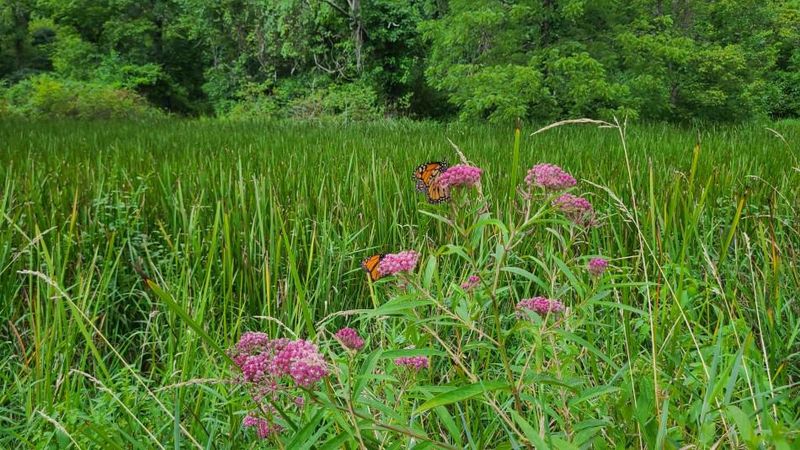
Swamp milkweed, Asclepias incarnata, is the plant that comes up first when you describe a North Carolina corner that floods after rain and stays wet for a day or two before draining down. The eastern form, Asclepias incarnata subsp. pulchra, is the subspecies NC State Extension lists as native across the state and naturally suited to low-lying areas that hold moisture. It grows in the Coastal Plain, the Piedmont, and the mountains, turning up along streamsides, pond edges, and bogs where clay and wet conditions would finish off most garden plants.
The target site for this recommendation is specific. The corner becomes saturated after storms but drains within roughly three days, receives at least partial sun, and has room for a plant that reaches approximately 3 to 5 feet tall and spreads about 2 to 3 feet wide. That is not a universal description of every downspout corner in North Carolina, and the title’s promise of one single answer is an editorial shortcut worth qualifying right away. Site drainage, available sunlight, setback from the house, and the volume of runoff all determine whether swamp milkweed actually fits.
The plant does earn its place on the list. NC State’s marsh milkweed profile confirms it tolerates clay and moist to occasionally wet soil while supporting monarch caterpillars and a range of other pollinators. Several other natives, including cardinal flower, southern blue flag iris, and buttonbush, also appear on NC State Extension’s rain-garden plant list for wet-site conditions. Test the corner before you buy anything, because the drainage pattern you find will tell you more than any plant list can.
Match the Plant to the Water Pattern
Here is where it gets tricky. Clay soil in the Piedmont drains slowly under the best conditions, and a downspout corner gets hit with concentrated roof runoff every time a summer storm rolls through. Swamp milkweed handles moist and occasionally wet clay well, but it is not designed for a site that stays deeply ponded or saturated for weeks at a time. Before you plant anything, you need to know which kind of wet corner you actually have.
The test is straightforward. Dig a hole about 1 foot deep, fill it with water, let it drain, fill it again, and then time how long the second fill takes to empty. NC State’s Rain Garden Manual classifies the results this way: water that drains in under 12 hours means quick drainage, water that clears in 12 to 72 hours fits a standard rain-garden condition, and water that sits for more than 3 days points to a wetter wetland-garden condition. Swamp milkweed is a reasonable choice for the 12-to-72-hour range.
Your North Carolina Garden Changes Every Week. Your Plan Should Too.
Gardening in North Carolina changes quickly throughout the season. Every Friday you’ll receive a simple weekly plan showing exactly what to plant, prune, fertilize, harvest, and protect so you never miss the right timing.
If your hole is still full on day four, the site may need a plant list built around true wetland species instead.
Sunlight matters just as much as drainage. NC State lists Asclepias incarnata subsp. pulchra as growing in full sun to partial shade, and full sun, roughly 6 or more hours of direct light, is the safer choice if you want reliable flowering. Partial shade is listed as acceptable, so a corner that catches a few hours of morning sun and afternoon shade is not automatically disqualifying. A corner that sits in deep shade most of the day is a different story, and weaker blooms or reduced vigor are realistic outcomes there.
Protect the House Before You Plant
A soggy corner right next to the house can feel like the obvious place to put a water-tolerant plant, but proximity to the foundation is actually the first thing that can rule out any planting at all. NC State’s Rain Garden Manual recommends keeping a rain-garden planting area at least 10 feet from the house foundation. The reasoning is practical: water directed into a planted area near the house can move toward the foundation if the grade is wrong or the soil becomes saturated beyond what the planting can manage.
The same manual sets two more distances worth knowing before you dig. Stay at least 10 feet from a wellhead and at least 25 feet from a septic drain field. And call 811 before breaking ground anywhere near underground utilities, because a downspout corner is exactly the kind of spot where a buried line can turn a planting project into a repair bill.
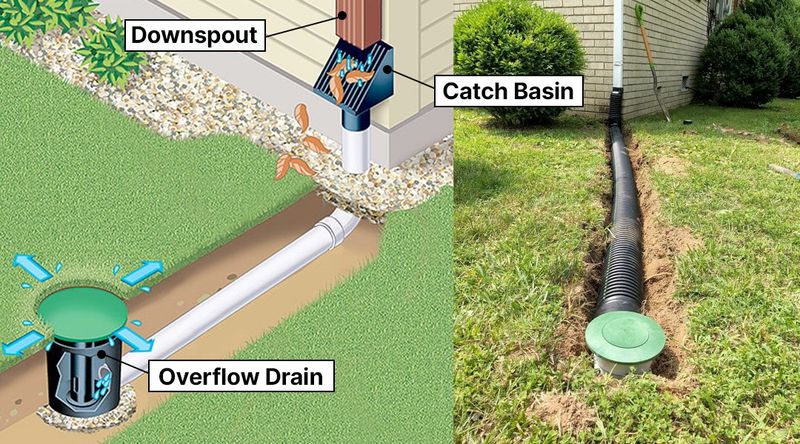
These setbacks are not suggestions you can adjust based on how much you want the plant. If the only available space between your downspout and your foundation is 6 feet, swamp milkweed or any rain-garden planting may not be the right answer for that exact location. An extension of the downspout pipe to carry water farther from the house, or a French drain routed to a more open area, might need to come first. The available setback, not just the soil’s wetness, is what actually determines whether this site is workable.
Slow the Downspout’s First Rush
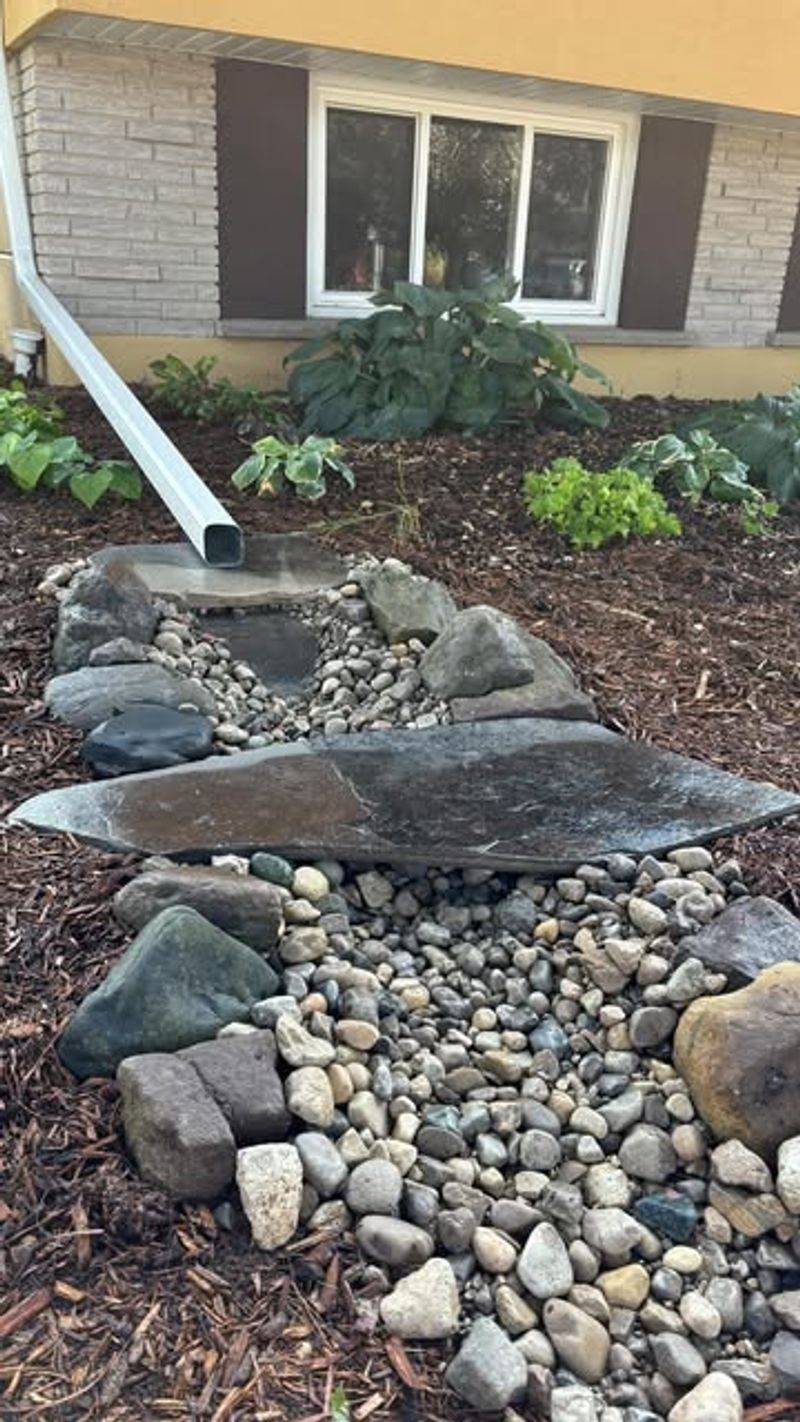
Roof runoff coming off a typical North Carolina house during a summer thunderstorm is not a gentle trickle. It hits the ground in a concentrated stream, and clay soil, even clay that drains reasonably well, cannot absorb that kind of flow fast enough to prevent erosion. Swamp milkweed is tough, but its roots cannot anchor soil that is being physically scoured away at the inlet point every time it rains.
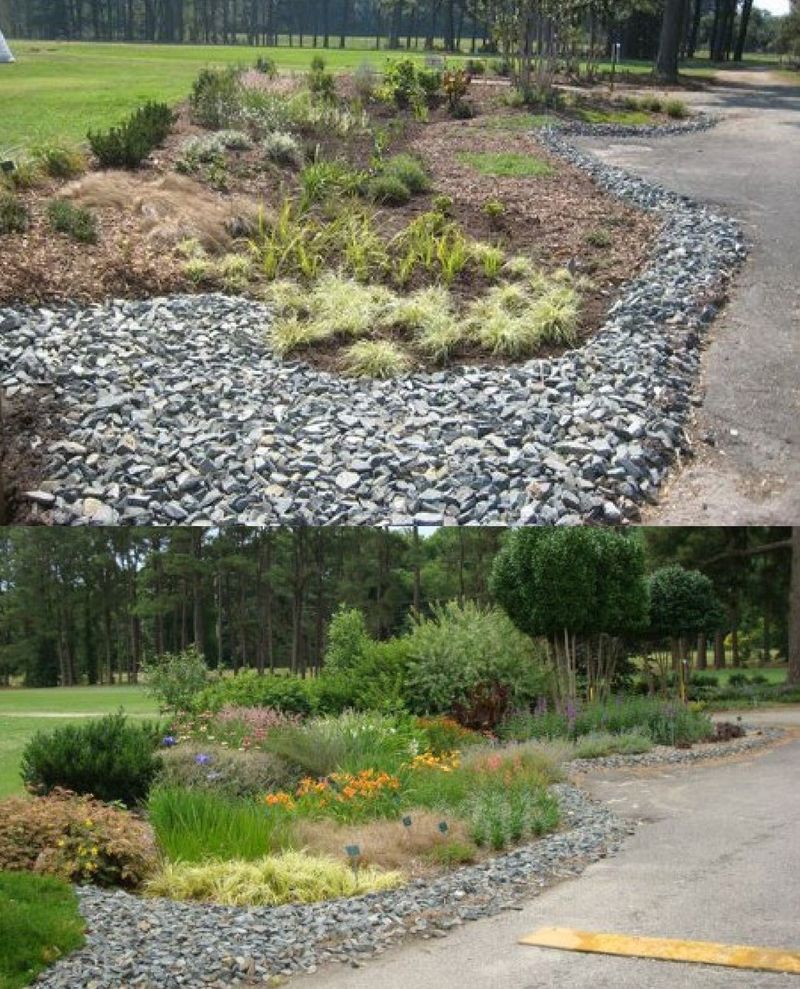
NC State’s rainscaping guidance recommends directing runoff into a planted area with appropriate grading and mulch, using rocks or a splash pad at the point where water enters to break the initial force of the flow. A layer of river rocks or a small splash pad at the downspout outlet does this job without creating a dam. The water slows, spreads, and soaks in rather than cutting a channel through the planting bed.
An overflow route is not optional, especially during hurricane season, which runs June through November in North Carolina. Rain garden design guidance consistently treats overflow planning as a core part of the system, not an afterthought. A well-designed rain garden includes a clear path for excess water to exit the planting area and move away from the house. Drainage performance comes from the basin’s size, infiltration rate, grading, inlet treatment, and overflow design working together.
The plant contributes to the system, but it cannot substitute for it.
Plant for Size, Soil, and Establishment
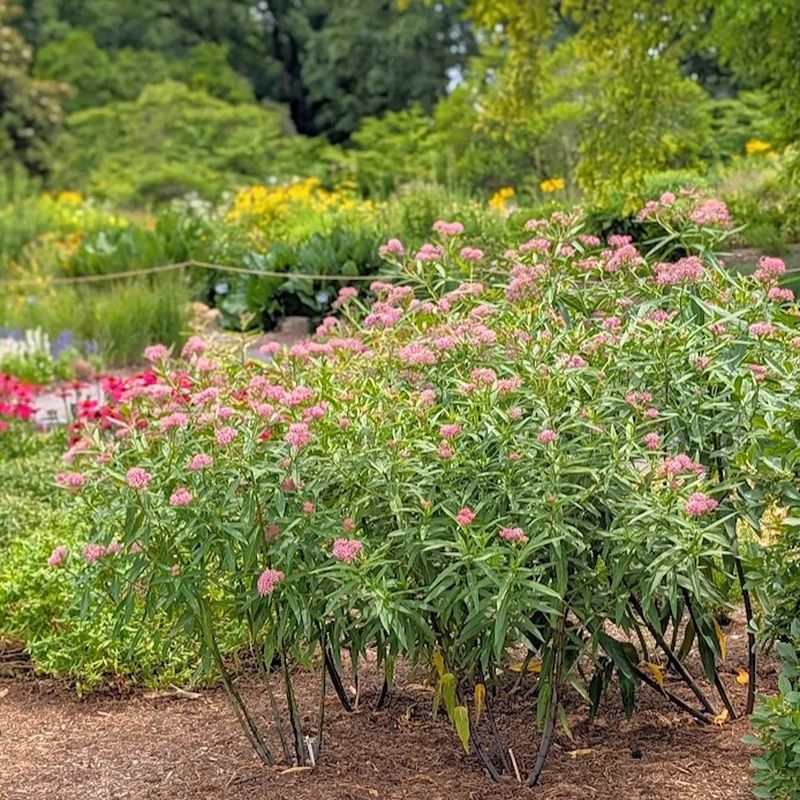
Once the drainage test passes and the setbacks clear, the planting plan itself needs a few specific decisions. Swamp milkweed reaches approximately 3 to 5 feet tall and spreads about 2 to 3 feet wide at maturity, so a narrow strip between a walkway and a foundation wall is not a workable spot. Give it room to stand upright and fill out without pressing against a hard surface, because crowding it against a wall or edging creates air circulation problems and makes the wet-root conditions worse.
Compacted Piedmont clay benefits from organic matter worked into the planting hole and the surrounding area. Compost can improve soil structure and pore space, making it easier for roots to establish and for water to move through. Do not add sand by itself, NC State Extension’s landscape design guidance notes that sand mixed into clay can produce a brick-like result rather than a looser texture. Also avoid creating a sharply different amended pocket directly around the root ball, because roots that hit a sudden soil change can circle rather than spread outward.
Water the plant immediately after putting it in the ground, and keep watering for several weeks while roots establish. NC State’s rainscaping guidance is direct on this point: native plants need supplemental water during establishment and during drought, even in a location that gets regular runoff. The pink to rose-purple flowers generally appear from July through September, and the seed pods persist into fall and winter, adding structure to the bed after bloom. One practical note: NC State lists swamp milkweed as having low-severity poisonous characteristics.
Keep plant material away from children and pets, and treat it the same way you would any unfamiliar garden plant.
Choose Another Native When Conditions Change
Swamp milkweed is a solid choice for a periodically wet, clay-based site with partial to full sun, but three other North Carolina natives come up regularly in conversations about wet-corner planting, and each one fits a different set of conditions.
Southern blue flag iris, Iris virginica, is the better option when standing water is frequent rather than occasional. NC State’s blue flag iris profile documents its ability to grow in water up to about 6 inches deep, which makes it genuinely suited to a site that ponds more persistently. The trade-off is that it needs consistent moisture during the growing season and does not handle dry-down periods well. A downspout corner that dries out between storms may actually stress southern blue flag iris more than it would stress swamp milkweed.
Buttonbush, Cephalanthus occidentalis, handles standing water, compaction, and clay across North Carolina, but size is the real issue. NC State’s buttonbush profile puts its common height at 5 to 8 feet in cultivation, and the shrub can grow larger. A narrow corner beside a walkway or foundation is not the right spot for it.
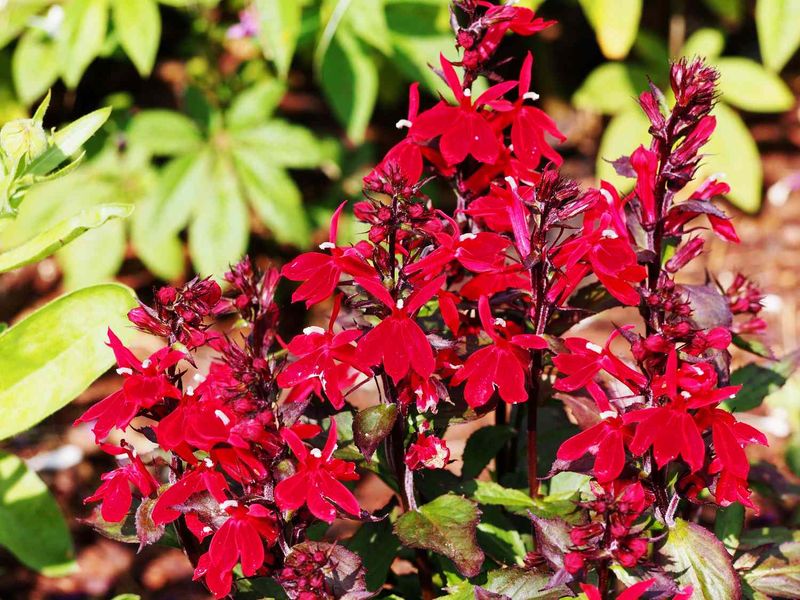
Cardinal flower, Lobelia cardinalis, fits moist and shady wet-garden conditions and attracts hummingbirds, making it a credible choice for a corner that gets more shade than sun.
NC State’s cardinal flower profile does not specifically call out clay tolerance the way the swamp milkweed profile does, so treat it as an alternative for shadier or moister sites rather than a direct substitute for the clay-plus-downspout scenario. The NC State rain-garden plant list includes all of these species, and browsing the full list is worthwhile if your site does not match the original target conditions closely.Build Habitat Without Expecting a Miracle

Swamp milkweed genuinely earns its place as a monarch larval host plant and a nectar source for a range of pollinators. NC State’s marsh milkweed profile confirms both roles, and fall monarchs moving through the Piedmont and Coastal Plain do use milkweed species as a resource. One plant in one corner, though, does not create complete habitat. Pollinator value grows when the planting area includes several native species with different bloom periods, so monarchs and bees have something available from spring through fall rather than just July through September.
When space allows, pairing swamp milkweed with other NC State-listed rain-garden natives builds a more functional system than a single-species bed. After planting, keep up with basic maintenance: refresh mulch as it breaks down, check that the inlet is not clogged with debris after heavy storms, and confirm that the overflow route is clear. NC State’s rainscaping guidance treats these steps as part of keeping the planted area working as intended.
One concern that comes up with any low-lying planting is mosquitoes. A properly designed rain garden that drains within roughly 3 days is not expected to sustain mosquito populations, because mosquito larvae need several days of standing water to develop. The risk comes from clogged inlets, containers left nearby, or poorly maintained depressions that hold water well past that window. CDC guidance on home mosquito control focuses on eliminating water that sits for more than a few days, which is exactly what a functional rain garden is designed to prevent.
Match the plant to a tested site, slow the runoff at the inlet, protect the foundation, and treat swamp milkweed as one working part of a thoughtful planting rather than a guaranteed fix. A corner that once killed everything it touched can actually become the most interesting spot in the yard.