The One Thing Georgia Camellias Need In August For Better Blooms Next Season
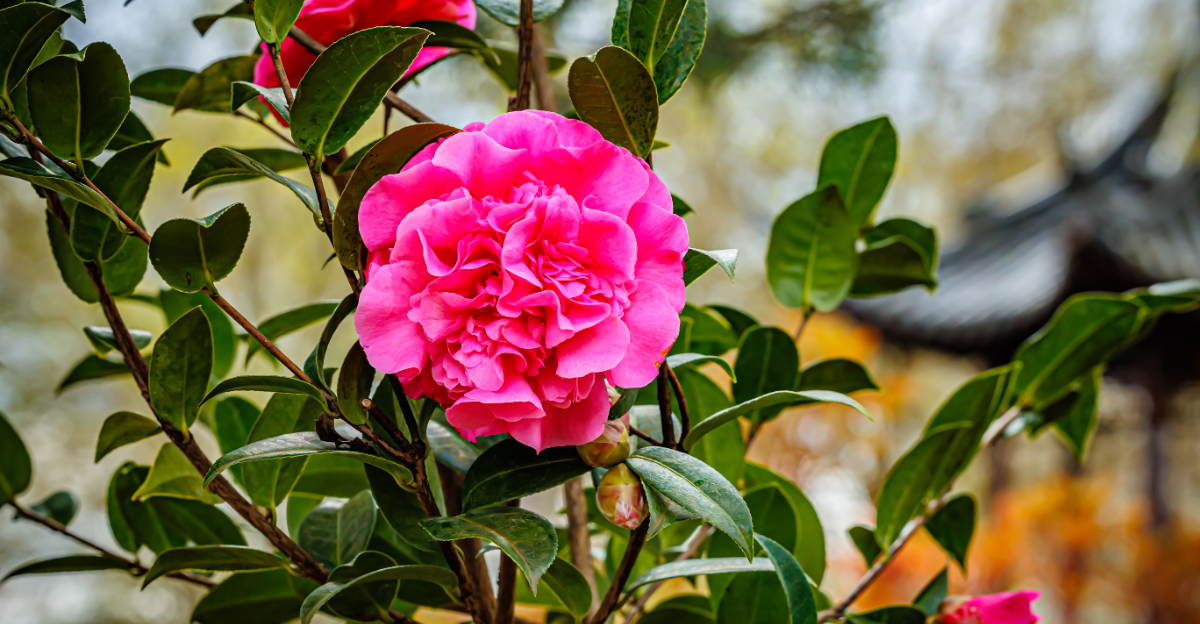
Camellias may look quiet in August, but they are far from taking a break. What happens now plays a big part in the flowers you will enjoy next season.
Many gardeners stop paying attention once the summer blooms are gone. That is often when these shrubs need a little care the most.
Healthy green leaves do not always tell the whole story. A camellia can appear perfectly happy while quietly preparing its next round of blooms.
Gardeners in Georgia know August is an important month for these classic shrubs. Good timing now can make a noticeable difference when blooming season returns.
Do not wait until cool weather arrives before checking on your camellias. A small amount of attention at the right moment goes a long way.
Beautiful spring flowers often begin with simple choices made months earlier.
1. Even Soil Moisture Matters More Than Anything Else
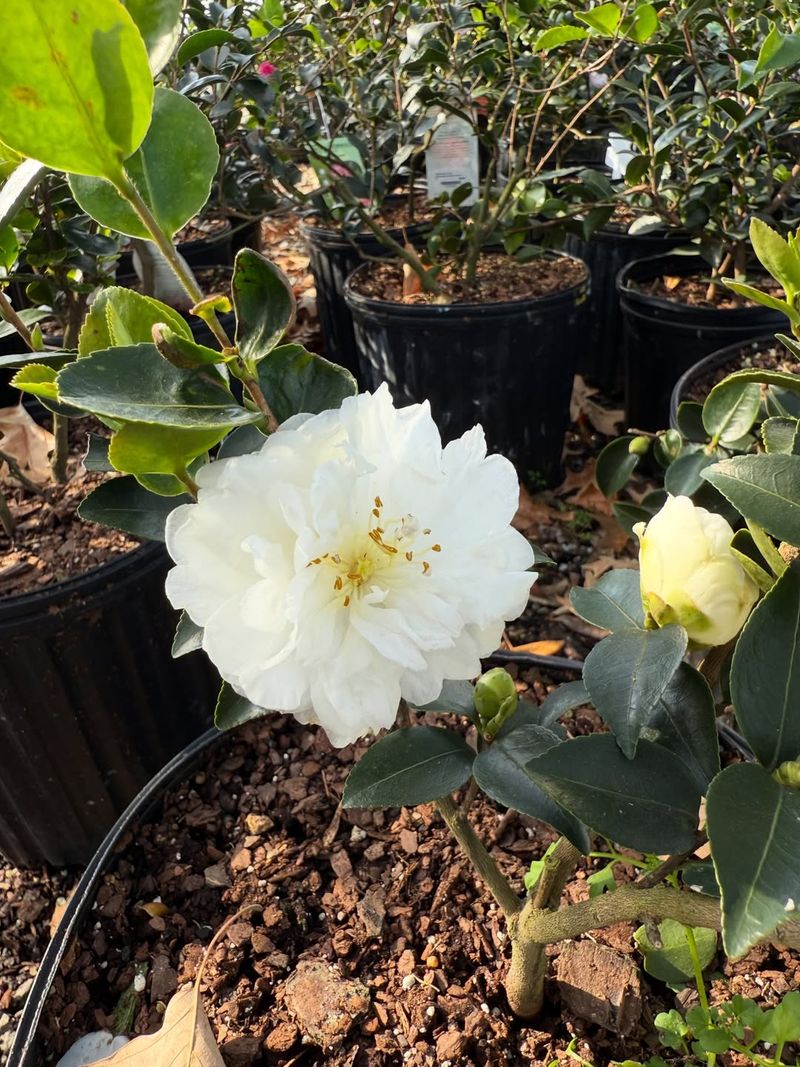
Soil moisture in August can make or break next season’s flower buds. Camellias are forming bud cells right now, and uneven watering puts serious stress on that process.
Dry soil followed by a heavy soak confuses the plant and can cause buds to drop before they ever open.
Consistency is the goal. Aim for steady, moderate moisture in the root zone, not wet and not bone dry.
Checking the soil a few inches down gives a much better read than judging by surface appearance alone.
Sandy soils drain fast and may need more frequent attention. Clay-heavy ground holds moisture longer but can stay waterlogged if drainage is poor.
Knowing your soil type helps you water smarter rather than just watering more.
A camellia under drought stress in August may still look fine on the outside. Leaves stay green and glossy while bud development quietly suffers.
Catching moisture problems early, before wilting starts, is what separates a strong bloom season from a disappointing one.
Watering at the base of the plant, rather than overhead, keeps foliage dry and reduces the chance of fungal issues.
Morning watering gives any splashed leaves time to dry before evening. Small habits like this add up over a full season.
2. Flower Buds Are Already Taking Shape
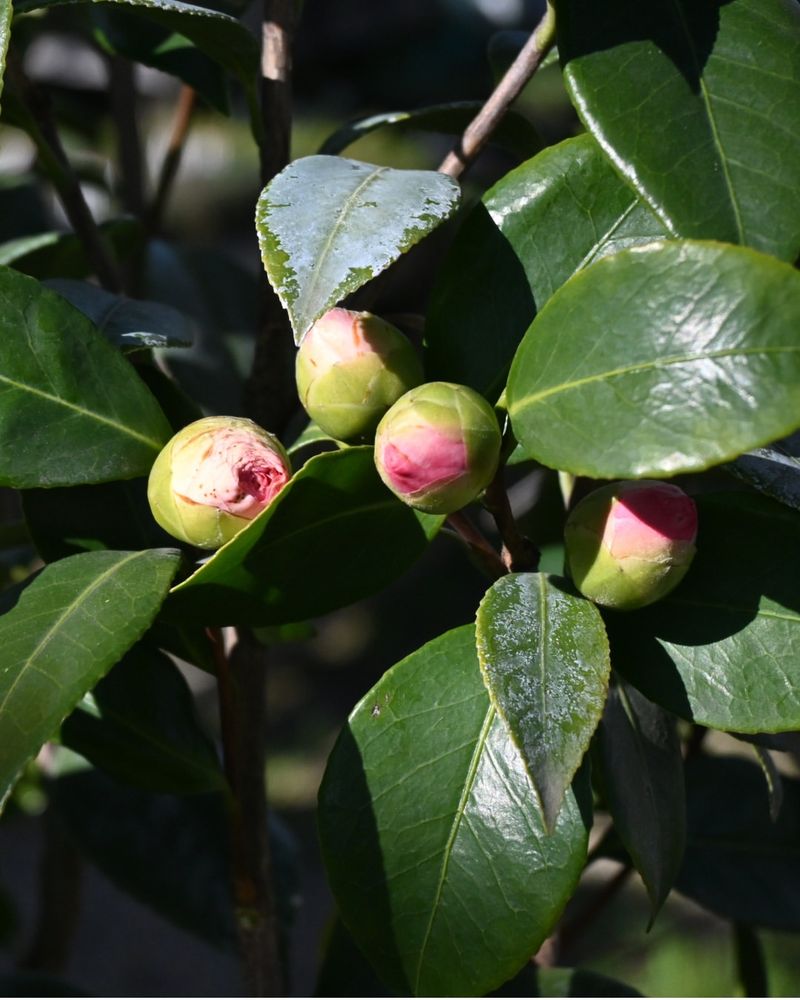
Most gardeners do not realize it, but camellia buds start forming in midsummer. By August, those tiny buds are already set and slowly growing.
What happens to the plant right now directly affects whether those buds develop fully or struggle to open later.
Bud development is an energy-intensive process. The plant pulls resources from roots, stems, and leaves to support each bud.
Stress from heat, drought, or poor soil conditions during this window can interrupt that process and reduce bloom count.
Bud drop is a real concern for camellia growers across the Southeast. It often traces back to inconsistent conditions during late summer.
A healthy plant with steady water, good soil, and no extreme stress is far more likely to hold onto every bud it sets.
Spotting the buds early is satisfying and useful. Checking your plant weekly in August lets you notice if buds are swelling on schedule or if something looks off.
Your Georgia Garden Changes Every Week. Your Plan Should Too.
Gardening in Georgia changes quickly throughout the season. Every Friday you’ll receive a simple weekly plan showing exactly what to plant, prune, fertilize, harvest, and protect so you never miss the right timing.
Catching a problem early gives you time to adjust before damage becomes harder to fix.
Protecting those developing buds is the whole point of August camellia care. Every choice you make this month, from watering to mulching to feeding, should support what is already quietly happening on those branches.
The blooms you want in winter start right here.
3. Water During Dry Spells Instead Of Waiting For Wilting
Waiting until a camellia wilts before watering is waiting too long. By the time leaves droop or curl, the plant has already been under stress for a while.
Bud development suffers quietly long before any visible sign shows up on the foliage.
August in the South can bring stretches of dry heat with little rain. Checking the forecast and watching soil moisture gives you a head start.
If rain has not fallen in a week and the top few inches of soil feel dry, that is a clear signal to water.
A slow, deep soak works better than a quick surface rinse. Water needs to reach the root zone, which sits several inches below the surface for an established shrub.
Shallow watering encourages roots to stay near the surface, making the plant more vulnerable during dry spells.
Drip irrigation or a soaker hose placed around the drip line of the plant is one of the most efficient setups. It delivers water slowly and directly where it is needed.
Less water is wasted, and the soil stays more consistently moist between watering sessions.
Frequency depends on your soil, shade, and local conditions. There is no universal schedule that fits every yard.
Observing your specific plant and adjusting based on weather is more reliable than following a fixed watering calendar.
4. Mulch Slows Moisture Loss Around The Roots
Pine straw is a natural fit for camellias in Georgia. It breaks down slowly, adds a slight acidity to the soil over time, and does a solid job of holding moisture during hot, dry stretches.
A fresh layer in late summer is one of the easiest things you can do for your plant right now.
Mulch acts as insulation for the root zone. It slows evaporation from the soil surface, which helps keep moisture available between watering sessions.
During August heat, that buffer can make a noticeable difference in how the plant handles dry conditions.
Aim for a layer about two to three inches deep around the base of the shrub. Keep mulch pulled a few inches away from the main stem to allow airflow and prevent moisture from sitting directly against the bark.
That small gap matters for plant health.
Wood chip mulch also works well and tends to last longer than pine straw. Either option helps regulate soil temperature, which supports healthy root activity even when surface conditions are harsh.
Roots that stay comfortable in summer are better prepared to support bud development.
Refreshing mulch once or twice a year keeps it doing its job effectively.
Over time, old mulch compacts and loses its ability to retain moisture well. A simple top-up in late summer costs very little effort but pays off during the dry months ahead.
5. Hold Off On Pruning Until Flowers Fade In Spring
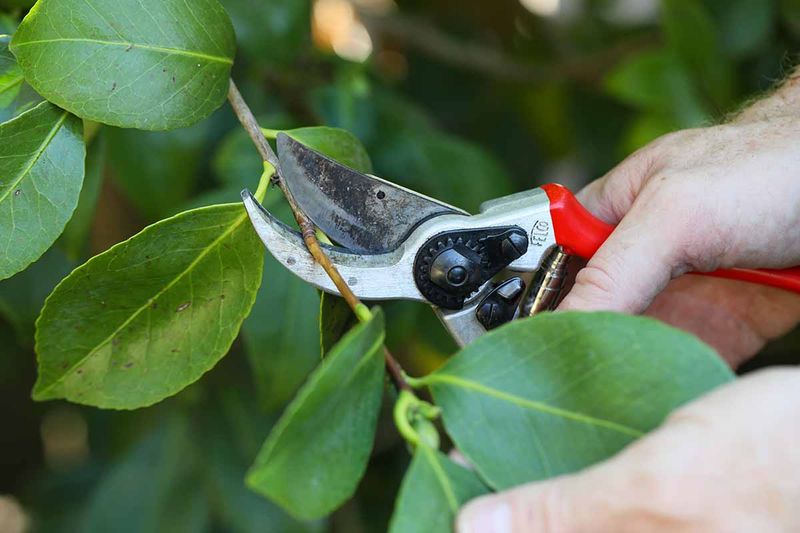
Pruning camellias in August is one of the fastest ways to lose next season’s blooms. Buds are actively forming right now on those branches.
Cutting stems back removes the very growth points where flowers will appear in fall or winter.
Timing matters with camellia pruning more than most people expect. The right window is right after flowering finishes in spring.
At that point, the plant has completed its bloom cycle and has not yet started setting new buds for the following season.
Skipping the pruners in summer feels counterintuitive when a shrub looks overgrown. Resisting that urge pays off.
A slightly unruly plant that blooms heavily is more rewarding than a neatly trimmed one with sparse flowers.
Light shaping can sometimes be done carefully after bloom without causing major bud loss, but late summer is not the time to test that. Any cut made now risks removing bud-bearing wood.
Leaving the plant alone through the rest of summer and fall is the safer approach.
If a branch is broken, rubbing against a structure, or causing a specific problem, removing it is reasonable. Targeted removal of problem growth is different from general shaping.
Outside of those situations, the pruners are better left in the shed until spring arrives and the last flower drops.
6. Skip High-Nitrogen Feeding Late In The Summer
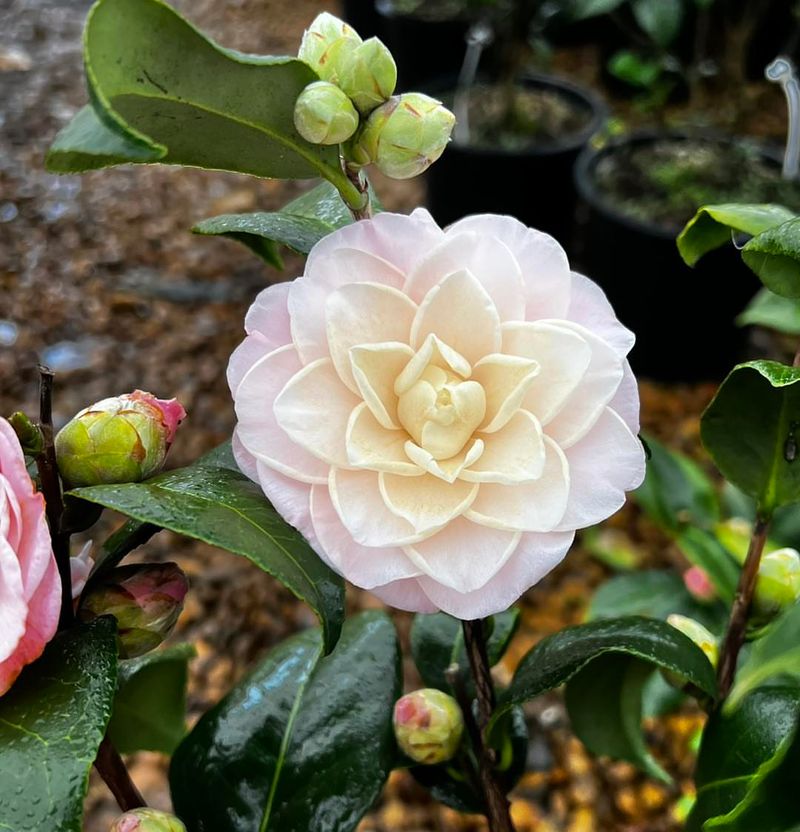
High-nitrogen fertilizer in August pushes a camellia to produce new leafy growth at exactly the wrong time. Soft, fast-growing shoots that appear in late summer are more vulnerable to stress and do not support the bud development already underway.
Feeding with the wrong product at the wrong time works against the plant.
Camellias benefit most from fertilizer applied earlier in the season, typically after flowering ends in spring and again in early summer. By August, most feeding should be finished.
Letting the plant wind down naturally through late summer supports a healthier transition into fall.
If you feel the need to feed at all in late summer, a low-nitrogen or balanced formula applied sparingly is a more cautious choice. Avoid anything labeled for fast growth or heavy feeding.
Less is genuinely more at this stage of the growing season.
Soil pH plays a role in how well camellias absorb nutrients. These plants prefer slightly acidic soil, generally in the 5.5 to 6.5 range.
If pH is off, feeding may not help much regardless of what product you use. A simple soil test can clarify whether nutrients or pH are the real issue.
Skipping late-summer fertilizer is not neglect. It is a deliberate, informed choice that respects the plant’s natural growth cycle.
7. Strong Root Conditions Support A Fuller Floral Display
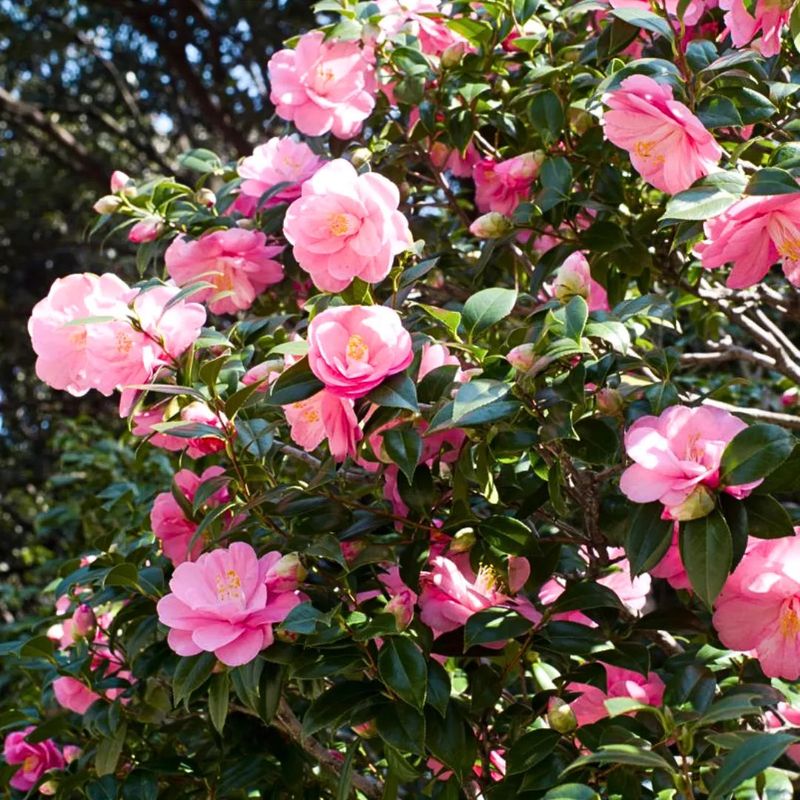
Roots are where everything starts. A camellia with a healthy, well-established root system handles summer heat, dry spells, and soil fluctuations far better than one with shallow or stressed roots.
Strong roots in August mean better bud support through fall.
Compacted soil is one of the more common obstacles for camellia roots in home gardens. Foot traffic, heavy clay, and poor drainage all limit how far roots can spread.
Loosening the soil around the drip line, without disturbing surface roots, can improve conditions meaningfully.
Camellias are relatively shallow-rooted compared to larger trees. Most of the active root zone sits in the top foot or so of soil.
Protecting that layer with mulch, consistent moisture, and minimal soil disturbance gives roots the stable environment they need to function well.
Root health is also connected to soil biology. Beneficial microbes in the soil help break down organic matter and make nutrients available to the plant.
Heavy pesticide use or repeated soil disruption can reduce that microbial activity over time.
Healthy roots are not something you can see, but the results show up clearly in the canopy. A camellia with good root conditions tends to hold its buds better, push out stronger growth in spring, and bloom more reliably season after season.