The One Thing Michigan Rhubarb Needs In September For A Bigger Harvest Next Spring
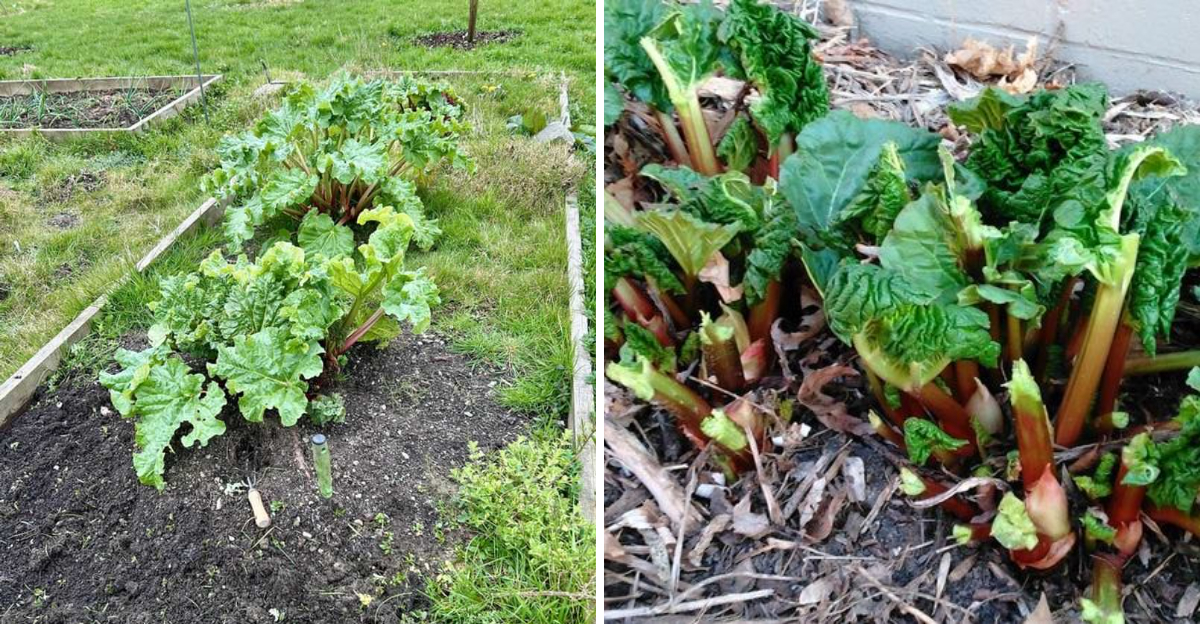
Your rhubarb disappointed you last spring.
Thin stalks. Not many of them. Nothing like the thick red stems you were picturing when you planted it.
Many Michigan gardeners blame winter for that. Or the soil, or the variety, or the general unfairness of gardening.
The actual explanation happened months earlier, in a stretch of the season when nobody is thinking about rhubarb at all.
Here’s the thing about this plant: harvest ends in early summer, and then it keeps working for another four months underground.
Those big leaves you stop paying attention to in July are still producing energy. All of it goes into the crown, and that stored energy becomes next spring’s stalks.
Interrupt that process and the plant has nothing to spend in April.
One habit determines most of it, and September is when it matters most.
Curious what your rhubarb has been asking for?
Keep Roots Watered Through Early Fall
Last spring, plenty of Michigan gardeners stared at skinny rhubarb stalks and blamed winter, soil, or bad luck.
The bigger story usually starts much earlier, after harvest, when the plant still needs healthy leaves to make food.
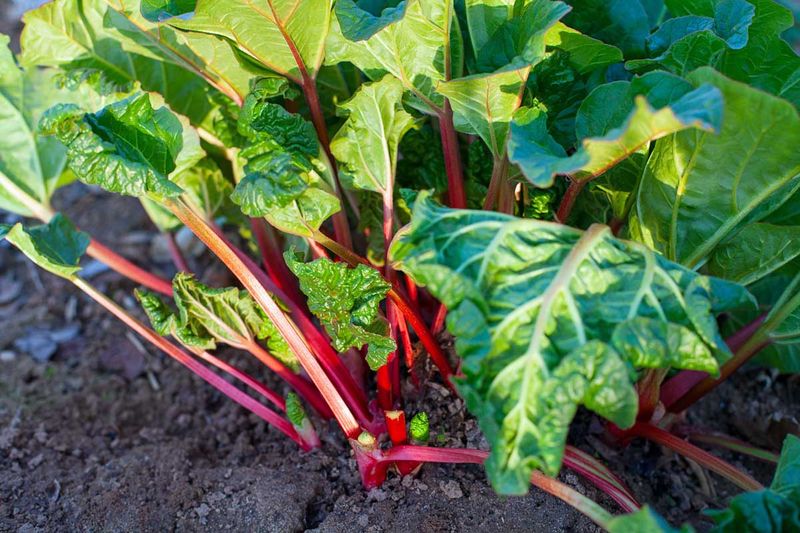
Steady moisture during the post-harvest season helps rhubarb keep producing leaves and storing energy in its roots for next year’s crop.
September matters because it belongs to that longer stretch rather than functioning as a rescue date.
If rain runs light, soak the soil deeply enough to moisten the root zone, then let the surface dry somewhat before watering again.
About an inch of water per week from rain and irrigation is a reasonable target, though sandy soil needs checking more often than heavier ground.
Watch the plant rather than the calendar alone.
Broad green leaves are actively filling the crown with reserves, while wilted tired growth means the plant is losing opportunities to build next spring’s stalks.
Water at the base, mulch lightly once foliage begins fading, and skip late nitrogen that pushes soft growth.
Rhubarb is a heavy feeder with a substantial root system, which is part of why it responds so clearly to fall conditions.
Fall care works like charging a battery underground before winter arrives.
Roots entering dormancy well supplied wake up considerably stronger.
Why Post-Harvest Moisture Matters So Much
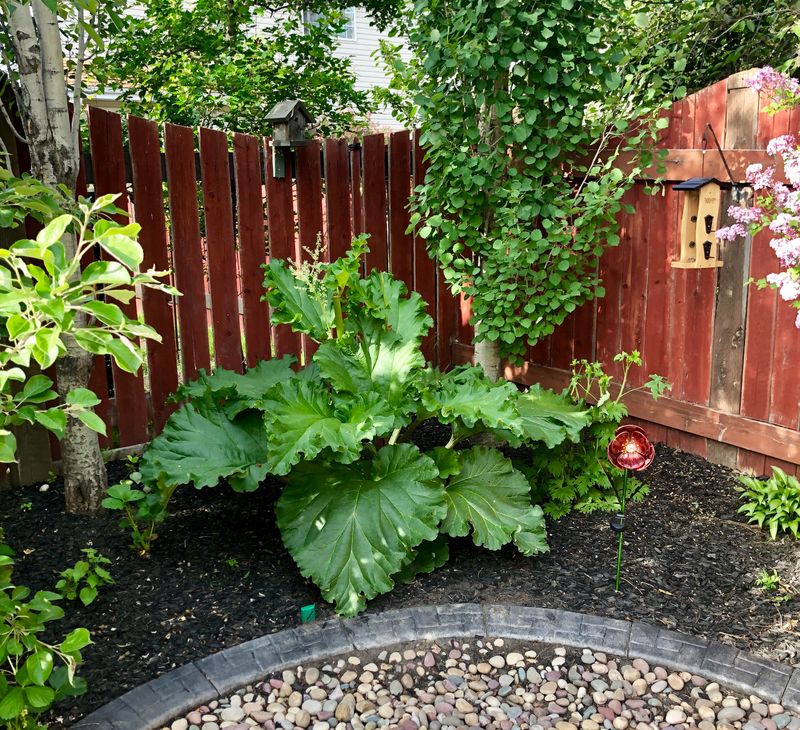
Understanding the mechanism makes this habit easier to maintain.
Rhubarb is a perennial that stores energy in a fleshy crown and root system rather than producing seed you harvest.
Everything you pick in spring comes from reserves the plant built the previous year.
That timeline is what most gardeners miss. Spring stalks are not made in spring. They’re withdrawn from an account filled during the previous summer and fall.
Leaves are the deposit mechanism. Large healthy foliage photosynthesizes through July, August, and September, sending sugars downward into storage.
Water drives that entire process.
Photosynthesis requires water directly, and drought stress causes leaves to close their stomata, which halts sugar production while the leaf sits there looking fine.
Your Michigan Garden Changes Every Week. Your Plan Should Too.
Gardening in Michigan changes quickly throughout the season. Every Friday you’ll receive a simple weekly plan showing exactly what to plant, prune, fertilize, harvest, and protect so you never miss the right timing.
A rhubarb plant stressed for three weeks in August loses three weeks of deposits it cannot recover.
Root growth also happens during this period. New roots developing in cooler fall soil expand the plant’s capacity for next season.
Dry soil limits that expansion, which compounds the problem across years.
So the connection runs directly from September soil moisture to April stalk thickness, with nothing in between that you can adjust later.
That’s why one habit carries this much weight.
How To Water Rhubarb Correctly
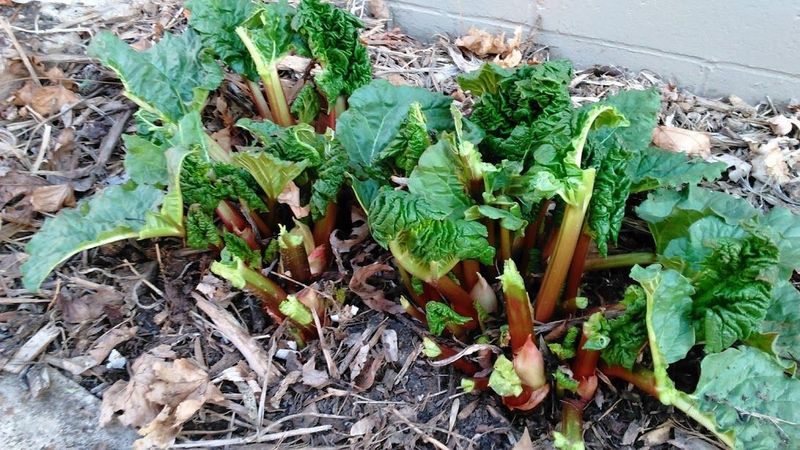
Technique matters as much as frequency here.
Rhubarb roots run deep and wide, extending well past the visible leaf spread, so watering close to the crown misses much of the root system.
Apply water across the full area beneath the leaves and a foot or two beyond.
Deep soaking beats frequent light applications considerably.
A slow soak reaching six to eight inches down encourages roots to develop at depth, where soil moisture lasts longer between waterings.
Shallow sprinkling keeps roots near the surface, where they dry out fast and stress the plant repeatedly.
A soaker hose or drip line does this well and keeps water off the foliage, which reduces leaf disease.
Check before watering rather than following a fixed schedule.
Push a finger or a screwdriver several inches into the soil near the leaf edge, and dry conditions at that depth mean it’s time.
Morning application works best, giving the plant moisture ahead of afternoon demand and letting any splashed leaves dry.
Avoid soaking the crown itself repeatedly, since standing water at the center invites rot.
Established plants generally need less frequent attention than divisions planted this year, which want closer monitoring through their first two seasons.
Michigan fall rain often covers much of the requirement, so watch what actually fell before running a hose.
Mulch Holds The Moisture You Provide
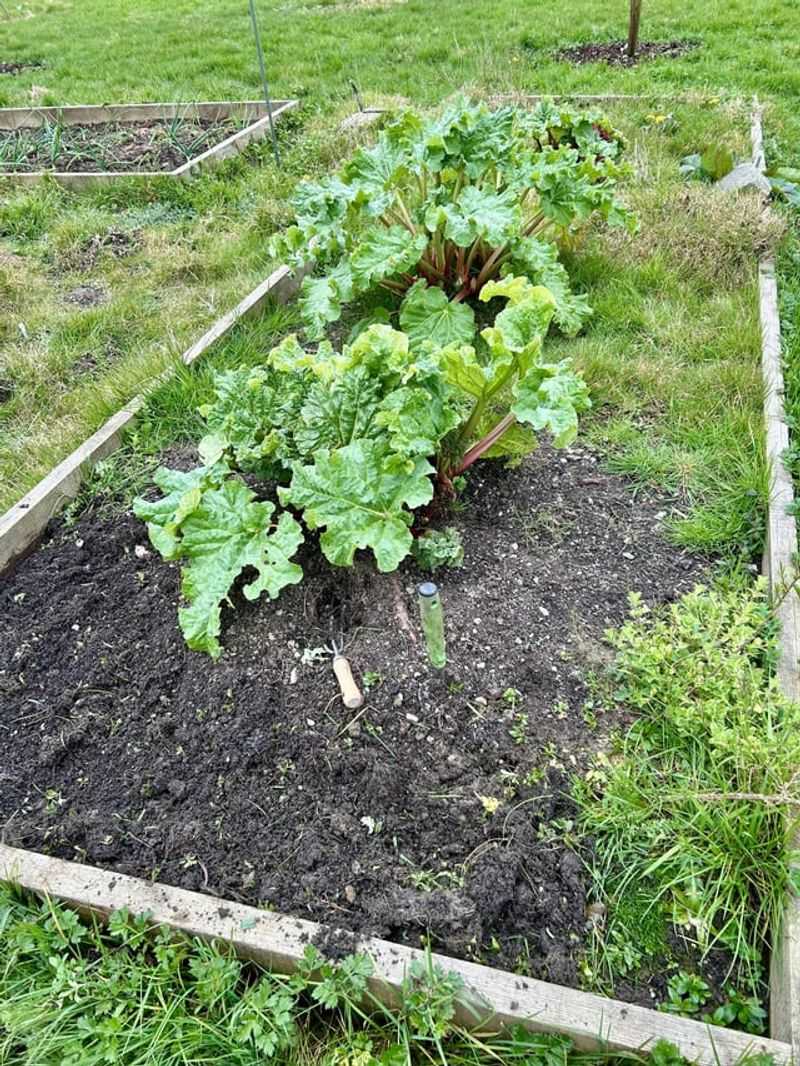
Water applied without mulch drains and evaporates faster than most people expect.
Two to three inches of organic mulch across the root zone changes how long each watering lasts.
Straw, shredded leaves, compost, and aged wood chips all work well for rhubarb.
Benefits stack up beyond moisture retention. Soil temperature stays steadier, weeds struggle, and the surface stays looser.
Weed competition matters here, since rhubarb draws heavily from the same soil and dislikes sharing.
Keep mulch pulled back a few inches from the crown itself.
Material packed against the center holds moisture where crown rot develops, which is one of the few real threats to an established plant.
Timing gives you flexibility. Mulch applied in September holds summer moisture, while a heavier layer provides winter protection.
Compost works especially well as mulch on rhubarb, since the plant appreciates fertility and the material breaks down into the root zone over time.
Refresh the layer as it decomposes, since a thin patchy covering accomplishes little.
Michigan winters bring freeze-thaw cycles that can heave shallow crowns, and mulch reduces that movement.
One caution on wood chips. Keep them as surface mulch rather than working them into soil, where they temporarily tie up nitrogen.
Signs Your Rhubarb Is Running Dry
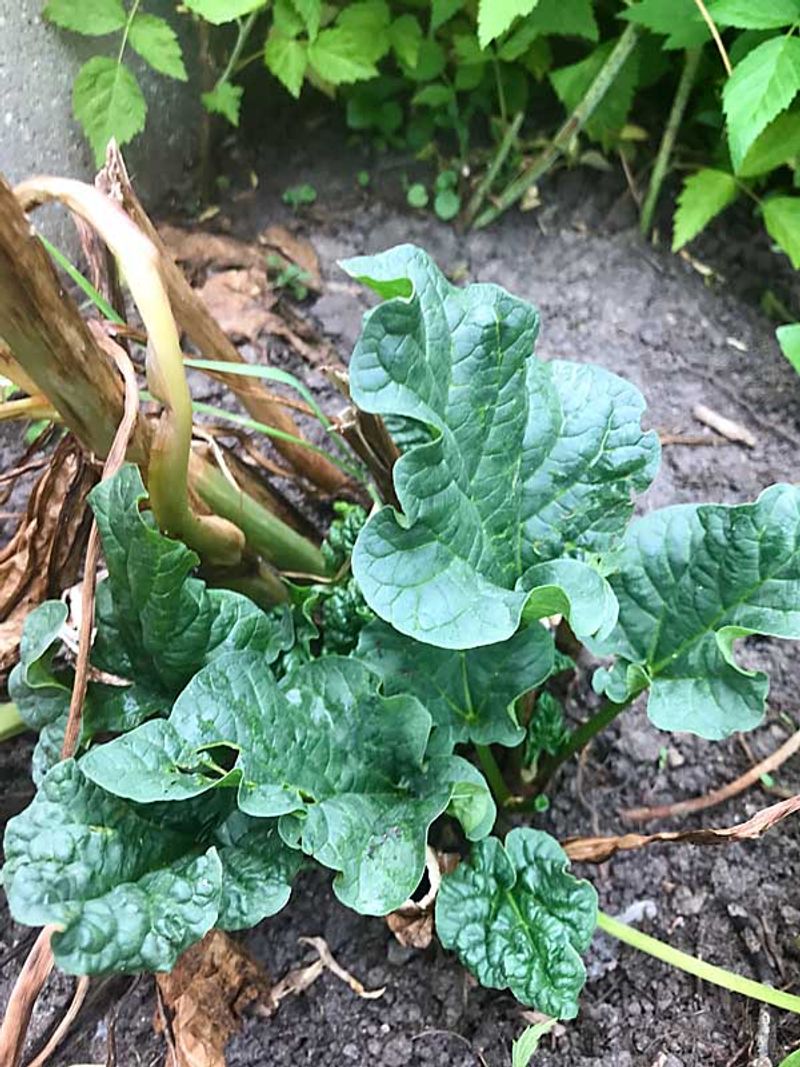
The plant signals water stress clearly once you know the pattern.
Wilting is the obvious one, and rhubarb wilts dramatically. Those large leaves droop hard, sometimes lying flat against the ground.
Some midday wilting during hot weather is normal, and leaves still limp the next morning indicate genuine trouble.
Leaf edges browning and turning crisp point toward extended dry conditions rather than a single hot afternoon.
Smaller new leaves emerging than what the plant produced in June suggest reduced capacity.
Early yellowing of outer leaves is another indicator, since a stressed plant sheds foliage it cannot support.
Normal fall senescence looks different, arriving gradually across the whole plant as temperatures drop.
Drought-driven decline concentrates on outer leaves while the center keeps trying.
Soil checking separates the two reliably. Dry soil several inches down plus wilting means water, while wet soil plus wilting points toward root problems or crown rot.
Sandy soil across much of Michigan holds less water than clay, so the same weather stresses plants differently depending on your site.
Container-grown rhubarb dries out fast enough to need near-daily attention in warm weather.
Plants under trees or near foundations face competition and reflected heat, both of which increase demand.
Catching stress early protects reserves you cannot rebuild after the leaves go down.
What Not To Do While Watering Matters
Several well-meaning interventions work against the fall storage process.
Harvesting late is the biggest one. Pulling stalks in August or September removes the very leaves doing the storing work.
Michigan guidance generally recommends stopping harvest by early summer, and stopping earlier on young or struggling plants.
Cutting foliage naturally has the same effect. Those leaves keep producing until frost ends them, so let them finish.
Fertilizer timing matters too. Nitrogen applied in September pushes soft new growth that won’t harden before cold arrives.
Spring and immediately after harvest are the appropriate feeding windows, using compost or a balanced product.
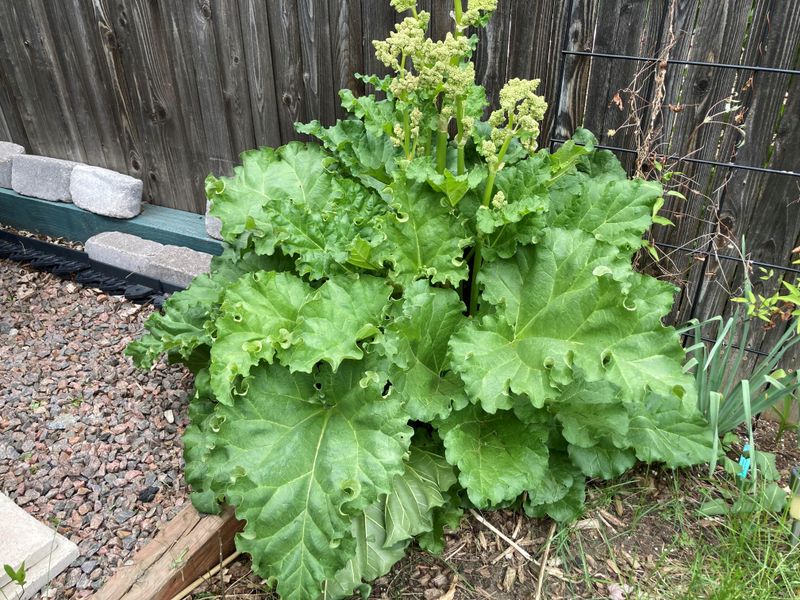
Flower stalks deserve removal whenever they appear, since seed production diverts energy directly away from root storage.
Cut them at the base as soon as you notice them, regardless of season.
Dividing in fall is possible and generally works better in early spring in Michigan, giving divisions a full season to establish.
Overwatering causes its own problems, since rhubarb dislikes saturated soil and crown rot follows standing water.
Skip disturbing the soil around the crown, since damaging roots now costs you stored energy.
Doing less is often correct this month. Water, mulch, and let the leaves work.