The One Thing Michigan Winterberry Holly Needs In September To Guarantee Winter Berries
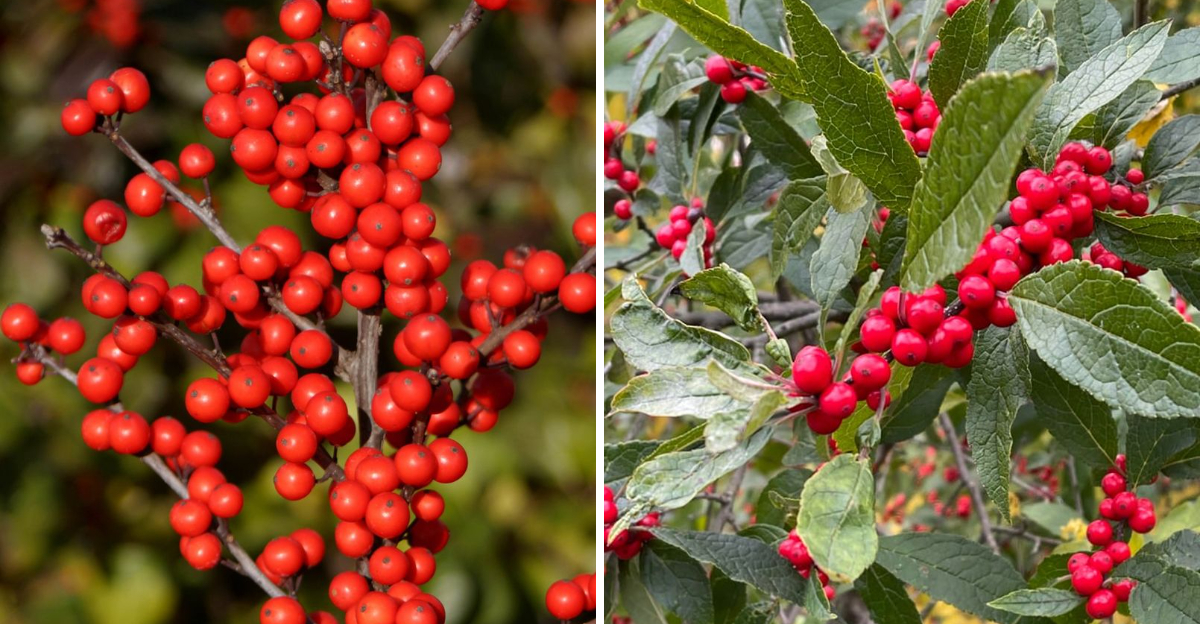
Those small green berries on your winterberry are already spoken for.
Whether they turn bright red by December, or drop off shriveled in October, has almost nothing to do with anything you can do about pollination now.
That decision happened back in June.
What September controls is different, and it’s the part most gardeners skip entirely.
Here’s the situation. Winterberry has shallow roots and a genuine preference for moist soil, and a dry Michigan September puts real stress on a plant carrying a full fruit load.
Stressed plants drop fruit. That’s the whole mechanism.
So the shrub covered in green berries right now can still deliver a spectacular winter display or a disappointing one, and the difference comes down to soil moisture over the next several weeks.
One habit protects everything the plant already built.
Curious what your winterberry needs before the ground freezes?
Keep Soil Moist As Berries Swell
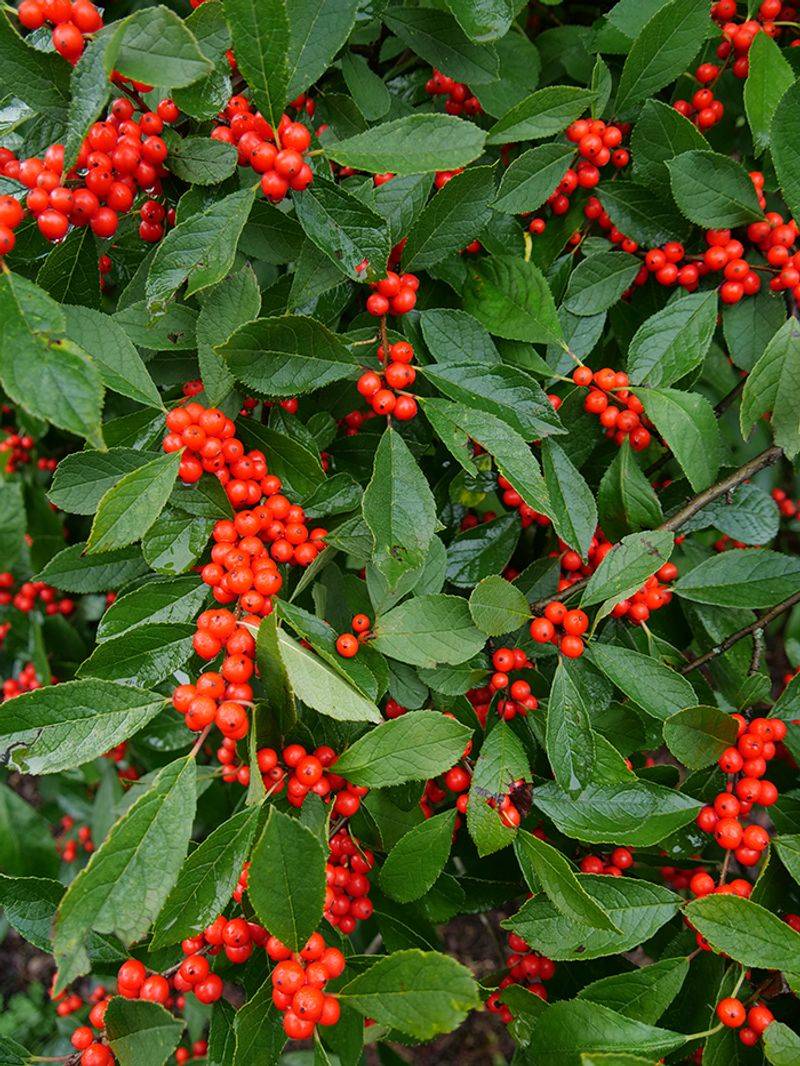
In many Michigan yards, winterberry carries small green fruit by September, and that’s a useful signal.
The flowers were pollinated back in early summer, so no fall task can produce berries from nothing.
What September can do is help the shrub hold and finish the berries it already started.
Steady moisture is the primary need, since winterberry prefers moist acidic soil and has fairly shallow roots.
When September turns dry, berries can suffer before hard freezes arrive, particularly in sandy spots or windy exposed beds.
Give the shrub a slow deep watering during dry stretches, keeping soil evenly damp rather than saturated.
A two to three inch mulch ring helps that moisture stay in place, with mulch kept a few inches back from the stems.
Skip pruning entirely right now, since cutting branches in fall removes this year’s berries and can take off buds carrying next year’s flowers.
Light berry crops point toward a pollination question rather than a moisture one.
If your shrub produces few berries year after year despite good care, September is a reasonable time to note that and check whether a compatible male plant grows nearby.
That’s a next-season fix rather than something to solve now.
Why Fall Moisture Protects The Fruit
Understanding what’s happening explains why this single habit matters so much.
Winterberry is a wetland native, growing naturally along pond margins, swamp edges, and low wet areas across Michigan.
That origin shapes everything about its root system, which stays shallow and fibrous rather than reaching deep for water.
Shallow roots mean no reservoir to draw on. When the top foot of soil dries, the plant feels it immediately.
Fruit development is also the plant’s most demanding job at this point in the season.
Berries swell through late summer and early fall, and that expansion requires water moving into the fruit continuously.
Drought stress interrupts that supply, and the plant responds by shedding fruit it cannot support.
Premature berry drop is the visible result, and it’s usually irreversible once it starts.
Leaf drop follows in severe cases, which reduces the photosynthesis funding the whole operation.
Your Michigan Garden Changes Every Week. Your Plan Should Too.
Gardening in Michigan changes quickly throughout the season. Every Friday you’ll receive a simple weekly plan showing exactly what to plant, prune, fertilize, harvest, and protect so you never miss the right timing.
There’s a second consideration heading into winter. Winterberry is deciduous, dropping its leaves and displaying bare red-berried branches, which is the entire appeal.
Fruit that stayed on through fall needs to persist through cold weather, and well-hydrated berries hold better than stressed ones.
Roots also continue growing into fall while soil stays warm, and adequate moisture supports that development for next season.
How To Water A Shallow-Rooted Shrub
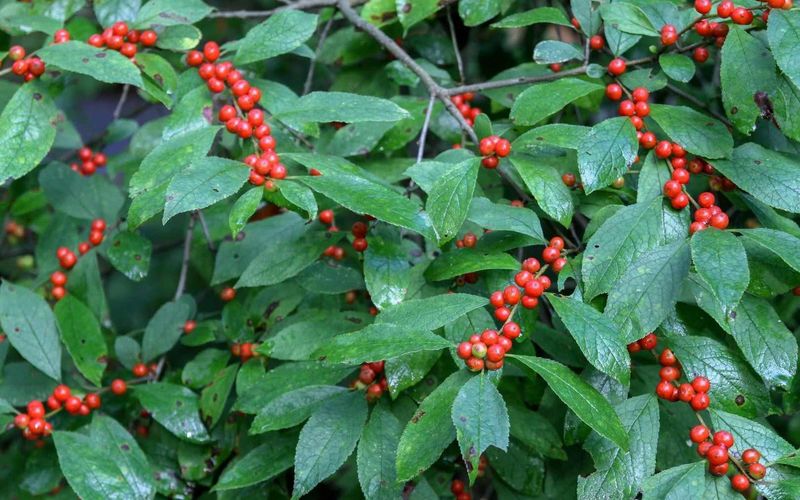
Technique differs here from watering a deep-rooted tree.
Winterberry roots occupy the top eight to twelve inches of soil and spread outward roughly to the branch spread and somewhat beyond.
Apply water across that full area rather than at the base of the stems.
Slow application matters considerably. Water arriving faster than the soil absorbs it runs off and accomplishes nothing.
A hose set to a trickle for twenty or thirty minutes works, and a soaker hose coiled around the drip line works better.
Deep soaking beats frequent light watering, though “deep” for this plant means thoroughly wetting that top foot rather than driving water two feet down.
Check before watering instead of following a schedule.
Push a finger three or four inches into the soil near the outer branches, and dry conditions there mean water is needed.
Morning application suits the plant well, delivering moisture before afternoon demand and letting foliage dry.
Overhead sprinklers waste water on foliage and leave leaves wet through cool nights, which encourages fungal problems.
Newly planted shrubs need considerably more attention than established ones, often twice weekly through their first two growing seasons.
Container-grown winterberry dries fast enough to need near-daily checking in warm weather.
Michigan fall rain frequently handles much of this, so watch actual rainfall before running water.
Mulch Does Half The Work
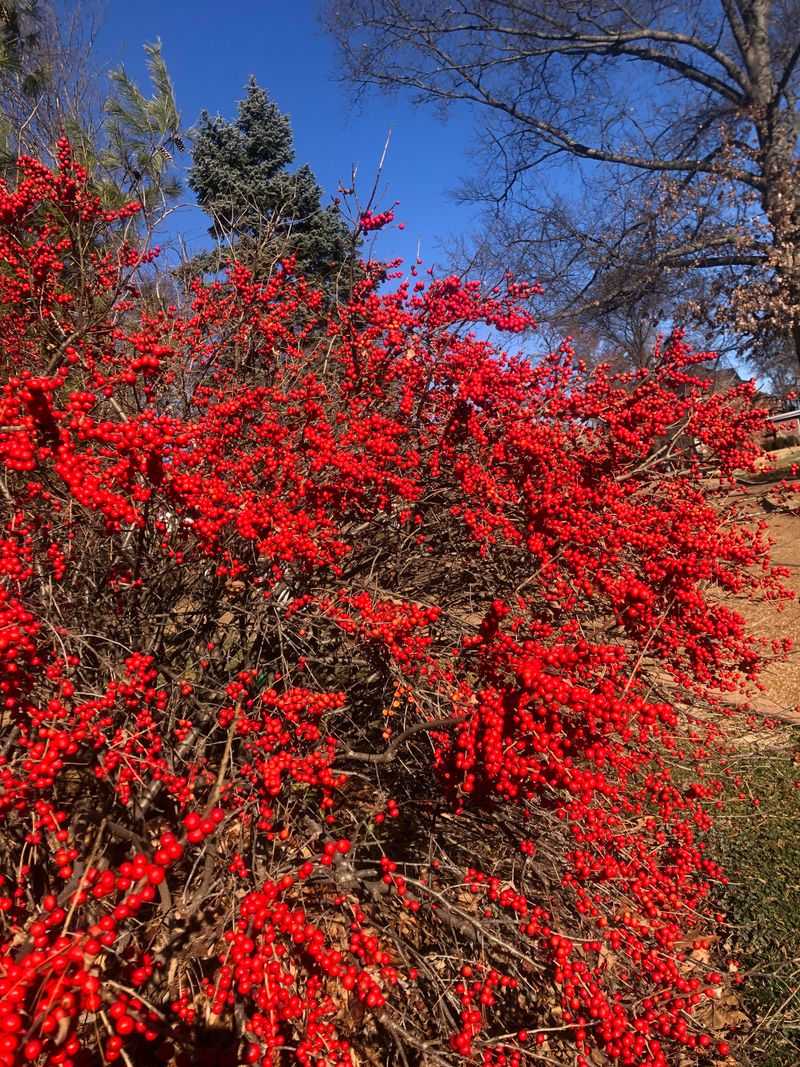
Mulch is what makes your watering last.
Two to three inches of organic material across the root zone dramatically extends how long each application holds.
Moisture retention is the main benefit, and soil temperature moderation matters too for a shallow root system.
Shredded bark, pine straw, chopped leaves, and pine bark fines all suit winterberry well.
Pine-based materials fit particularly here, since winterberry prefers acidic soil and those materials break down without pushing pH upward.
Keep mulch pulled back a few inches from the stems. Material packed against bark holds moisture where rot develops.
Depth deserves attention. More than three or four inches can restrict air movement to shallow roots and keep the surface too wet.
Weed competition drops substantially under mulch, which matters when everything is drawing from the same shallow layer.
Refresh the layer as it decomposes, since a thin patchy covering does very little.
Fall application timing is flexible. Mulch added now holds late-season moisture, and a top-up after the ground cools provides winter insulation.
Michigan freeze-thaw cycles can heave shallow roots, and mulch reduces that movement considerably.
One clarification worth making. Pine needles and bark shift soil pH only marginally, so use them for moisture rather than expecting real acidification.
Warning Signs Worth Catching
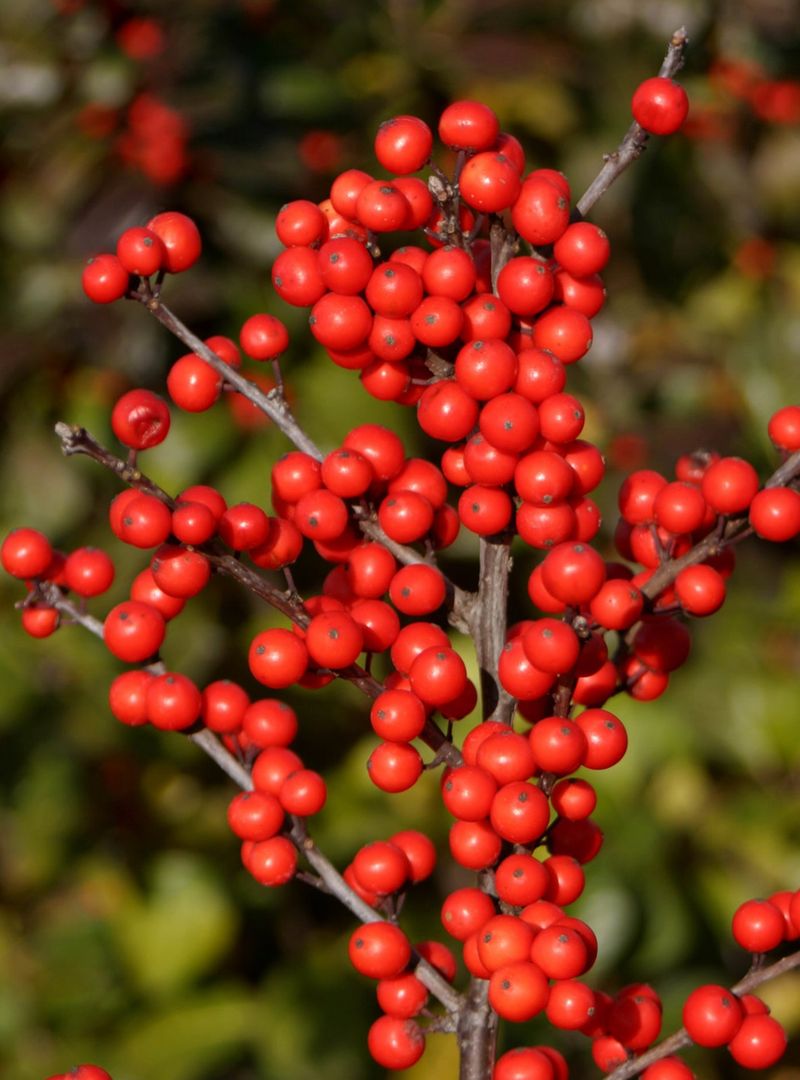
Winterberry signals water stress clearly, and early detection protects the fruit.
Leaves wilting and drooping is the first indicator. Some afternoon wilting in heat is normal, while foliage still limp the next morning means the plant needs water.
Leaf edges browning and curling suggest extended dry conditions rather than a single hot day.
Early leaf drop is the more serious sign, since losing foliage in September costs the plant photosynthesis it needs.
Berries shriveling, wrinkling, or dropping while still green point directly at moisture stress.
That fruit will not recover, so the goal is preventing further loss.
Dull grayish foliage instead of glossy green indicates ongoing rather than acute stress.
Yellowing between leaf veins tells a different story. That pattern usually indicates iron chlorosis from soil pH running too high for winterberry, which is a soil issue rather than a watering one.
Michigan’s alkaline soils in some areas cause that regularly, and it needs addressing with soil amendment rather than water.
Checking soil moisture separates the possibilities reliably.
Wilting in wet soil suggests drainage problems or root damage instead of drought.
Sandy soils across parts of Michigan hold much less water than clay, so identical weather affects plants differently by site.
Exposed windy locations increase water loss noticeably, which is worth factoring in.
What Not To Do This Month
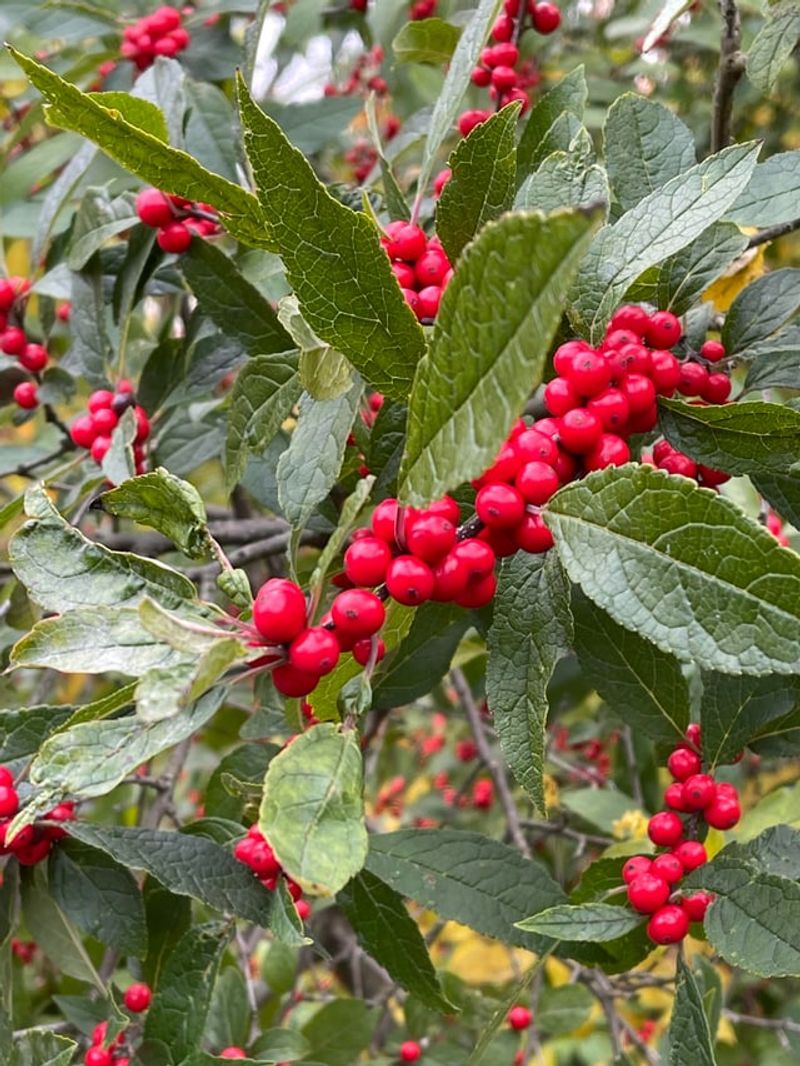
Several instincts work against the plant right now.
Pruning is the most costly mistake. Winterberry fruits on old wood, and cutting branches removes both this year’s berries and next year’s flower buds.
Save any shaping for late winter or early spring, and even then keep it light.
Fertilizer belongs on the skip list too. Nitrogen applied in September pushes soft growth that cannot harden before cold arrives.
Spring after growth begins is the appropriate window, using an acid-loving plant formulation.
Excess fertilizer also risks reducing fruit set, which defeats the purpose entirely.
Avoid digging or cultivating near the plant, since those shallow roots damage easily and disturbance during fruit development costs stored energy.
Transplanting belongs in early spring or after fruit drops, not now.
Heavy soil amendment right at the crown creates a wet pocket that invites rot.
Herbicides deserve caution nearby, since surface roots absorb what drifts or leaches into their zone.
Berry harvesting for arrangements is tempting and worth delaying, since fruit color deepens through fall and holds better on the plant.
Overwatering is its own risk. Winterberry tolerates wet soil far better than most shrubs and still dislikes standing water against the crown.
Water, mulch, and restraint cover the month.