The One Thing North Carolina Hydrangeas Need In August Or They Will Skip Blooming Next Spring
August feels late in the season to be making decisions that affect next spring’s bloom, but hydrangeas in North Carolina are already doing exactly that work during the hottest weeks of summer.
Next year’s flower buds begin forming on certain hydrangea types well before the current season ends, and what happens to the plant during August directly determines whether those buds develop properly or fail before they ever get a chance to open.
One specific need goes unmet in a surprising number of North Carolina gardens during this month, and the consequence does not show up until spring arrives and the expected bloom simply does not come.
By then the window for doing anything about it has been closed for eight months.
1. Stop Pruning Before August
Most gardeners reach for their pruners out of habit, especially when a shrub starts looking a little wild in midsummer. For bigleaf and oakleaf hydrangeas growing in North Carolina, that habit can quietly cost you an entire season of blooms.
The cutoff date matters more than most people realize. Bigleaf and oakleaf hydrangeas bloom on old growth, which means the flowers you see this summer came from stems that were already on the plant last year.
By late July or early August, those same stems are already starting to form the buds that will open next spring and early summer.
NC State Plant Toolbox recommends that pruning for bigleaf hydrangeas should be completed before August 1, and that guidance exists for a very good reason.
Once August arrives, any cut you make risks removing buds that are already quietly developing. You cannot see them with the naked eye at that stage, but they are there.
The plant is doing important work on the inside, and cutting into that process sets the whole bloom cycle back by a full year.
North Carolina summers are long and warm, which actually speeds up bud development on these plants. That means the window for safe pruning closes earlier here than it might in cooler climates.
The single most protective thing you can do for your hydrangeas in August is nothing at all. Step back, resist the urge to tidy, and let those stems do exactly what they were designed to do.
2. Know Which Hydrangea You Have
Not every hydrangea in your yard follows the same rules, and that is one of the most common sources of confusion for gardeners across North Carolina.
Before you even think about picking up your pruners in late summer, you need to know exactly what type of hydrangea you are working with.
Bigleaf hydrangeas, also called Hydrangea macrophylla, are the classic mophead and lacecap types with big round or flat-topped blooms.
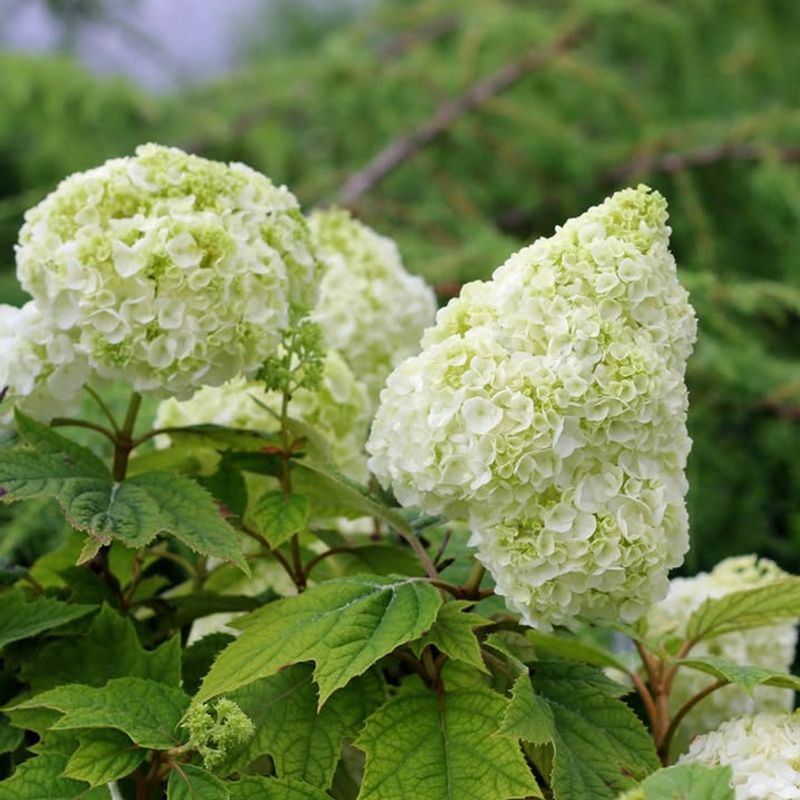
Oakleaf hydrangeas, Hydrangea quercifolia, have distinctive lobed leaves and cone-shaped white flowers that age to parchment.
Both of these types bloom on old growth, meaning they carry their flower buds on stems from the previous season. Cutting those stems in August or later removes those buds before they ever get a chance to open.
Your North Carolina Garden Changes Every Week. Your Plan Should Too.
Gardening in North Carolina changes quickly throughout the season. Every Friday you’ll receive a simple weekly plan showing exactly what to plant, prune, fertilize, harvest, and protect so you never miss the right timing.
Smooth hydrangeas, like the popular Annabelle variety, and panicle hydrangeas, which include Limelight and Quick Fire, are completely different.
They bloom on new growth produced in the current season, so they can be pruned in late winter or early spring without any risk to their flowers. These types actually benefit from a harder cutback at that time of year.
The simplest way to tell them apart is by flower shape, leaf shape, and bloom time. If you are not sure which type you have, take a photo and run it through the NC State Plant Toolbox or ask your local Cooperative Extension office.
Getting this identification right is the foundation of every good pruning decision you will ever make.
3. Leave Old Stems In Place
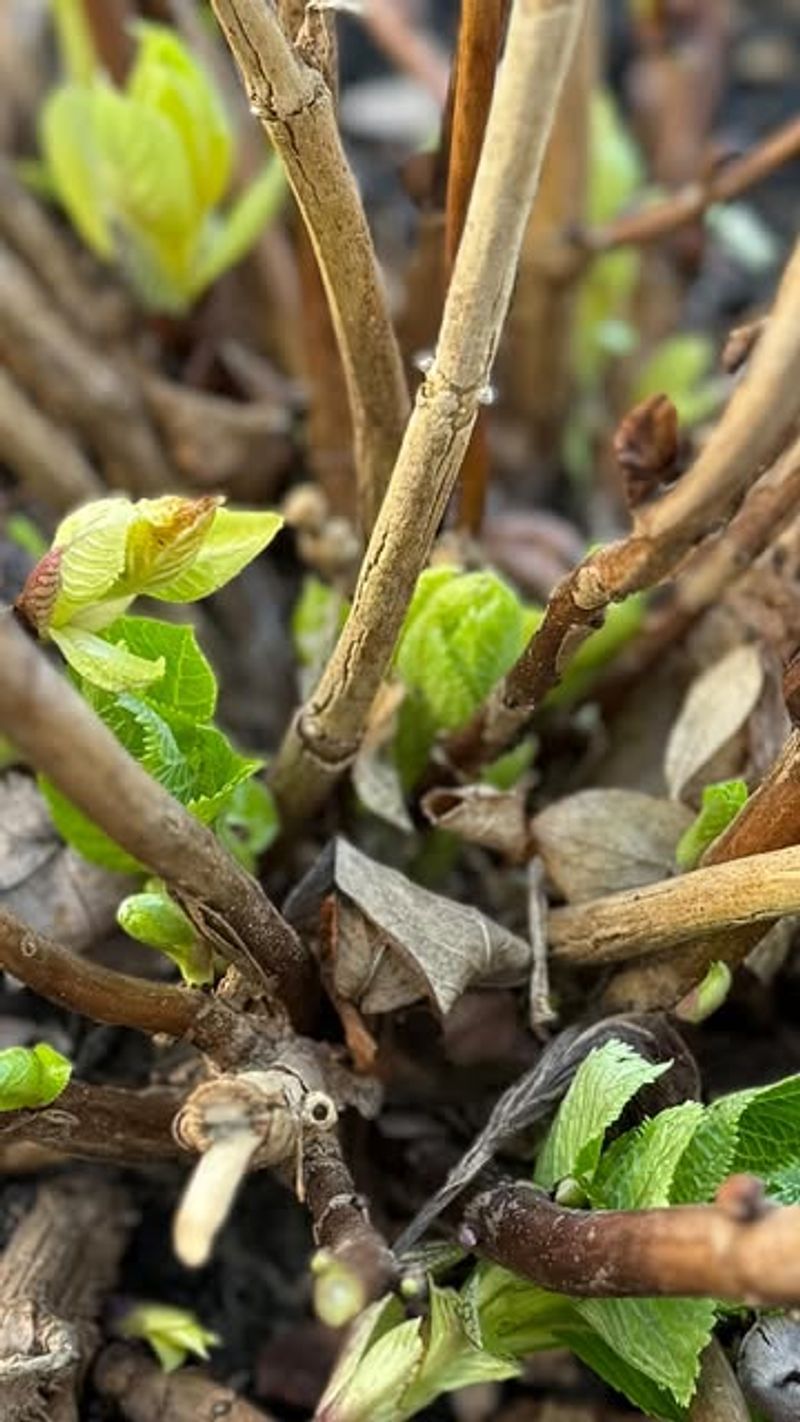
Old stems on a hydrangea might not look like much in late summer. They can appear rough, a little woody, maybe not as fresh as the new green growth nearby.
But those stems are carrying something incredibly valuable: the foundation of next year’s entire flower display.
For bigleaf and oakleaf hydrangeas, the flower buds for next spring form on stems that are already present by late summer.
The North Carolina Cooperative Extension explains clearly that bigleaf hydrangeas form their flower buds on old wood during late summer and fall.
By the time August rolls around, that process is either underway or about to begin, and every old stem you remove takes a portion of that future bloom potential with it.
Gardeners sometimes look at old stems and think they need to go because the plant would look tidier without them. Resist that instinct entirely.
A slightly less manicured shrub in August is a much better trade than a shrub that shows up next June with almost no flowers on it. The blooms are worth the patience.
Leaving old stems in place also gives the plant a natural framework that supports new growth without stress. The shrub stays structurally balanced, and when spring arrives, those old stems push out leaves and then flowers right on schedule.
Think of each old stem as a promise the plant made to you last season. Keeping it intact means the plant can follow through on that promise when the warmer months return.
4. Do Not Shape The Shrub In August
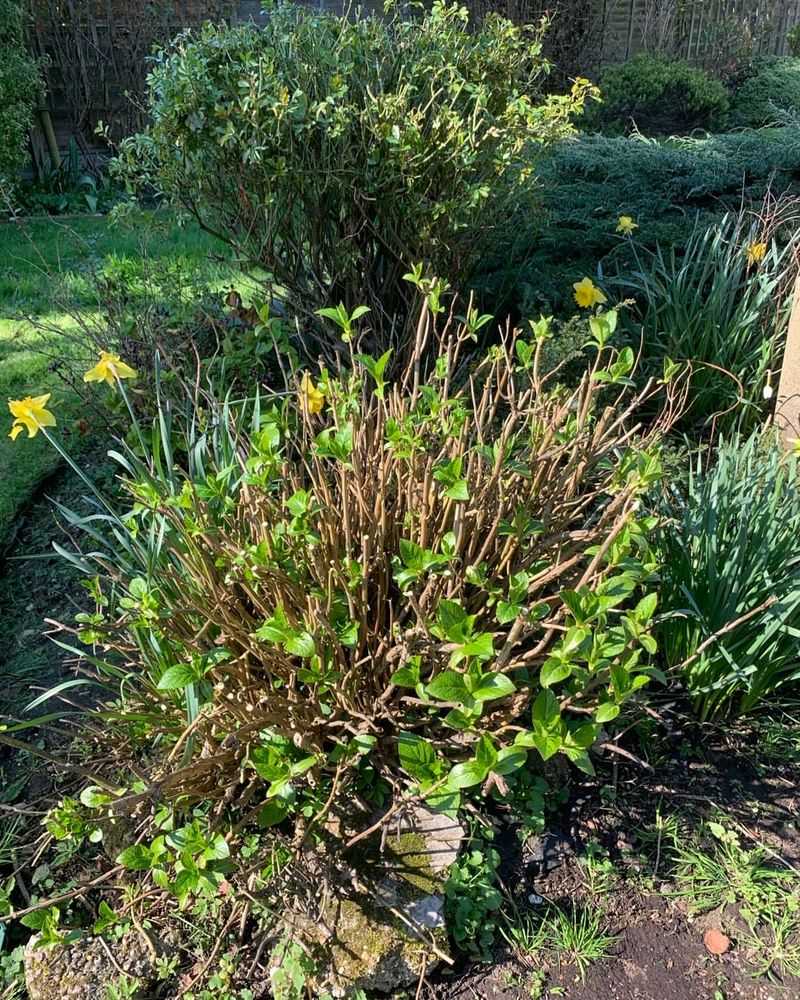
August has a way of making hydrangeas look a little overgrown, especially after a full summer of North Carolina heat and rainfall. It is tempting to grab your pruners and give the shrub a quick shaping, just to neaten up the edges and bring it back into proportion.
That temptation is worth ignoring completely. Shaping cuts might feel minor, but on a bigleaf or oakleaf hydrangea in August, even small cuts can remove forming buds.
The buds developing at this time of year are not always visible from the outside, and there is no reliable way to tell which stems are already carrying them just by looking.
A trim that takes off a few outer branches can quietly remove a significant portion of next season’s blooms without you ever realizing it happened.
The right time to shape these hydrangeas is right after they finish flowering, before late summer bud formation begins. That window typically falls in late spring or early summer in North Carolina, depending on the variety.
Shaping at that point gives the plant the rest of the growing season to fill back in and begin setting buds on the new framework you have created.
If the shrub looks a bit large or unruly right now, make a note of it and save the work for after bloom next year. A hydrangea that is slightly oversized but covered in flowers is far more satisfying than a neatly shaped shrub that barely blooms.
Patience in August pays off in a big way the following June.
5. Remove Only Clear Problem Growth
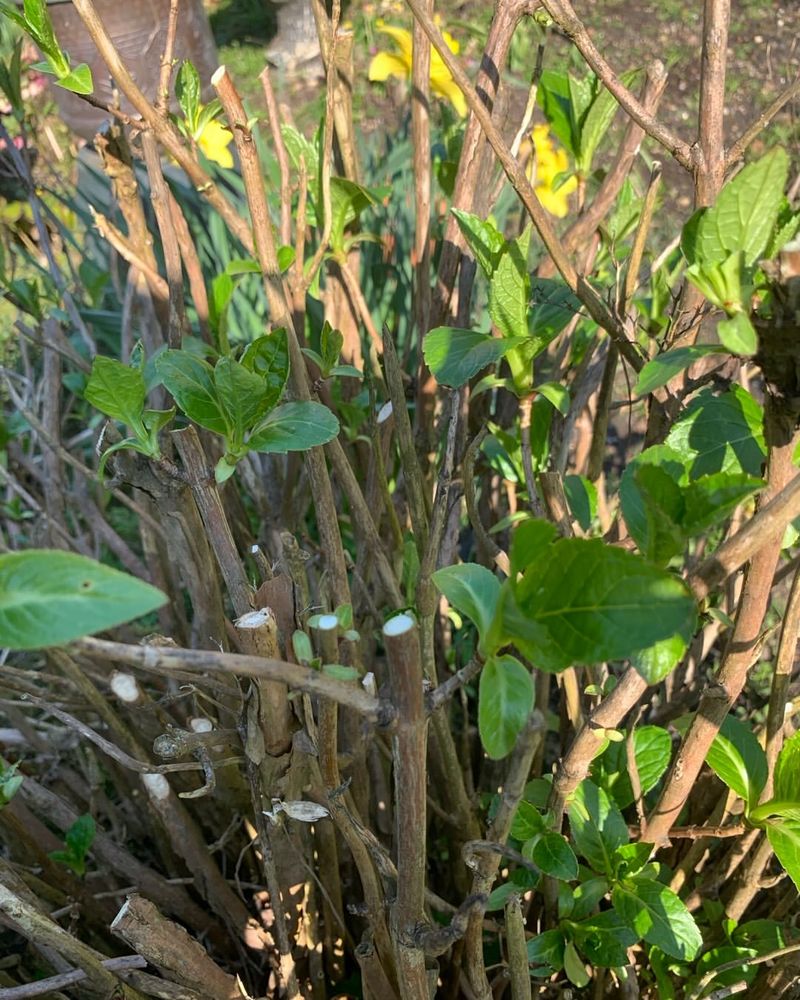
August care for old growth hydrangeas should be gentle above all else. The goal right now is not to improve the shape of the plant or reduce its size.
The goal is simply to keep the shrub healthy while it quietly builds next season’s blooms on the stems already in place.
There are situations where some light attention is genuinely necessary. A stem that snapped in a summer storm, one that is clearly rubbing against another branch and causing bark damage, or growth that shows obvious signs of disease are all reasonable exceptions.
Removing those specific problem areas does not require touching the healthy, bud-bearing stems around them, so the risk to next year’s blooms stays very low.
The key word here is selective. Go in with a clear purpose, address only the specific issue you can see, and then step away from the plant.
General trimming, opportunistic shaping, or cutting back stems that simply look a little long are all off the table until after bloom next year. Every cut beyond what is truly necessary is a risk you do not need to take in August.
A good habit is to walk around the shrub first and identify exactly what needs attention before you ever open the pruners. If what you find is only cosmetic, close them back up and walk away.
North Carolina Cooperative Extension guidance supports a hands-off approach for old growth hydrangeas in late summer, and that guidance reflects years of real-world observation from gardeners across the state.
6. Protect Buds From Heat Stress
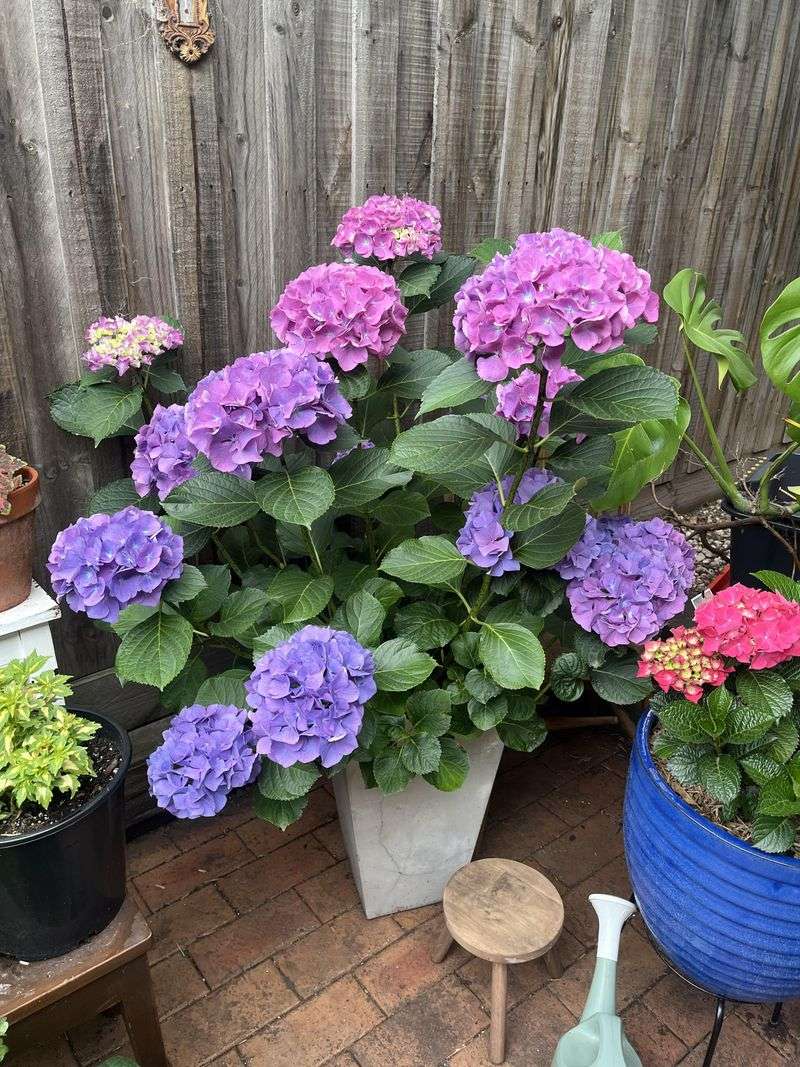
Once you have made the commitment to stop pruning, the next step is making sure the plant has what it needs to actually form strong, healthy buds through the rest of the summer.
North Carolina Augusts are no joke, and the combination of heat and humidity can put real strain on hydrangeas that are already working hard underground and inside those stems.
Moisture is the most important support you can offer right now. Bigleaf hydrangeas are especially sensitive to drought stress, and when the soil dries out too much in late summer, the plant diverts energy away from bud development and toward basic survival.
A consistent watering schedule, ideally at the base of the plant rather than overhead, helps keep that energy focused where you want it. Mulch is your best friend for maintaining that moisture.
A two to three inch layer of organic mulch around the base of the shrub, kept a few inches away from the main stems, holds soil moisture longer between waterings and also keeps the root zone cooler during heat spikes.
That cooler, steadier environment supports better bud development through August and into fall.
Afternoon shade makes a noticeable difference for bigleaf hydrangeas in particular. If your plant sits in full sun all day, consider whether a shade cloth or a nearby taller plant could take the edge off the hottest part of the afternoon.
Pruning timing is still the number one protection step, but keeping the plant comfortable through summer heat gives those forming buds the best possible chance to fully develop before winter arrives.
7. Avoid Heavy Fertilizer In August
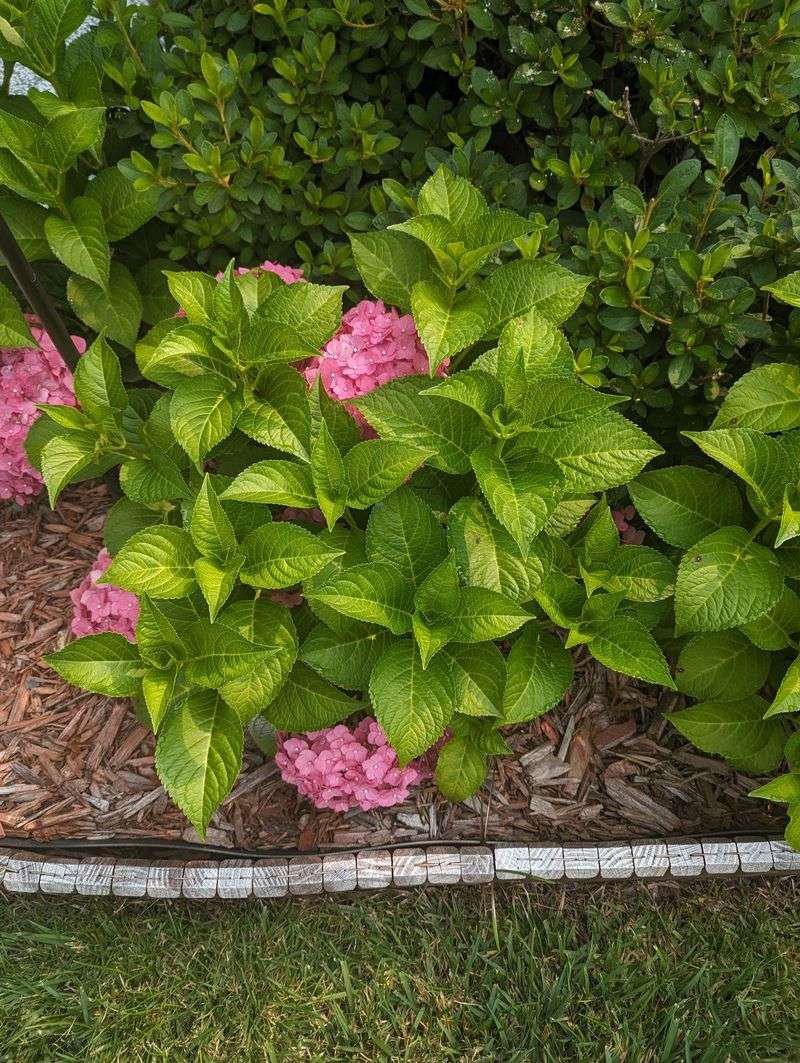
Fertilizer feels like a generous thing to give a plant that is working hard, but August is actually one of the worst times to push hydrangeas with a heavy feeding.
For bigleaf and oakleaf hydrangeas in North Carolina, the late summer goal is steady and calm, not fast and pushy.
High-nitrogen fertilizers applied in August can trigger a flush of soft, leafy new growth at exactly the wrong moment.
That new growth pulls the plant’s energy away from bud development and toward producing leaves and tender stems that have almost no time to harden off before cooler temperatures arrive.
Soft growth heading into fall is also more vulnerable to early cold snaps, which can cause real setbacks for the whole plant.
The better approach is to focus on soil health rather than quick fixes. If you want to give your hydrangea some support this time of year, a layer of compost worked lightly into the top of the soil around the drip line is a much gentler option.
Compost feeds slowly, improves soil structure, and encourages the kind of steady, unhurried root activity that supports good bud formation.
Soil testing through your local North Carolina Cooperative Extension office is also worth considering if you have not done it recently. Testing tells you exactly what your soil actually needs rather than leaving you guessing.
Many fertilizer problems in home gardens come from applying products the soil did not need in the first place. Work with what your soil is telling you, and your hydrangeas will reward you for it next spring.
8. Plan Next Year’s Pruning Right After Bloom
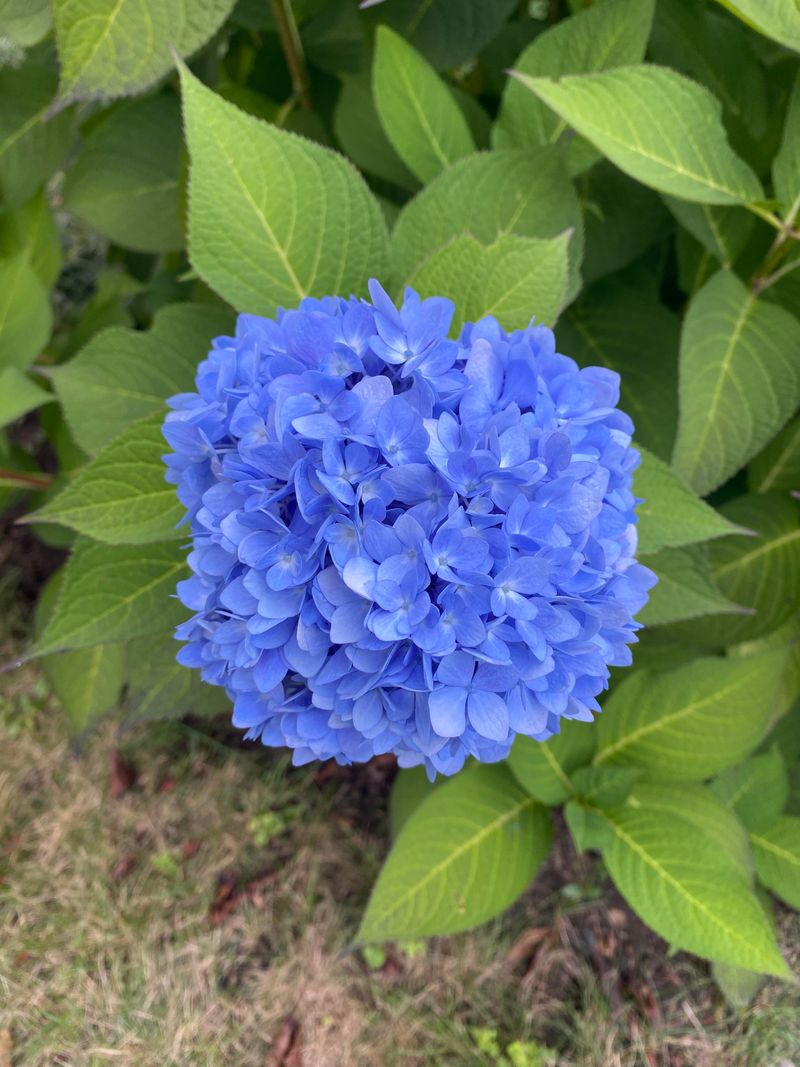
The best time to solve an August pruning problem is actually back in June or July, right after the flowers fade. Planning ahead with a clear timeline turns a stressful late-summer decision into a simple, stress-free habit that protects your blooms every single year.
For bigleaf and oakleaf hydrangeas in North Carolina, the ideal pruning window opens right after the current season’s flowers finish.
At that point, the plant has already bloomed, the stems that carried this year’s flowers are still present, and new bud formation for next year has not yet begun in earnest.
That window gives you the freedom to shape, thin, or remove older woody stems without touching anything that carries future blooms.
The practical advice from North Carolina Cooperative Extension is straightforward: prune old growth hydrangeas right after flowering if pruning is needed at all, and finish any cuts well before late summer bud development begins.
Some gardeners mark it on their calendar the moment they see the first flowers open, so they do not miss the window when summer gets busy.
Once August begins, the rule is simple. Put the pruners away for bigleaf and oakleaf hydrangeas and do not pick them back up until after bloom next year.
Smooth hydrangeas and panicle hydrangeas follow a different schedule entirely and can be handled in late winter or early spring.
Knowing your plants, respecting their timing, and planning your cuts around their natural cycle is what separates a garden full of blooms from one that leaves you wondering what went wrong.