The One Thing North Carolina Knockout Roses Need Before Japanese Beetles Strip Them Bare
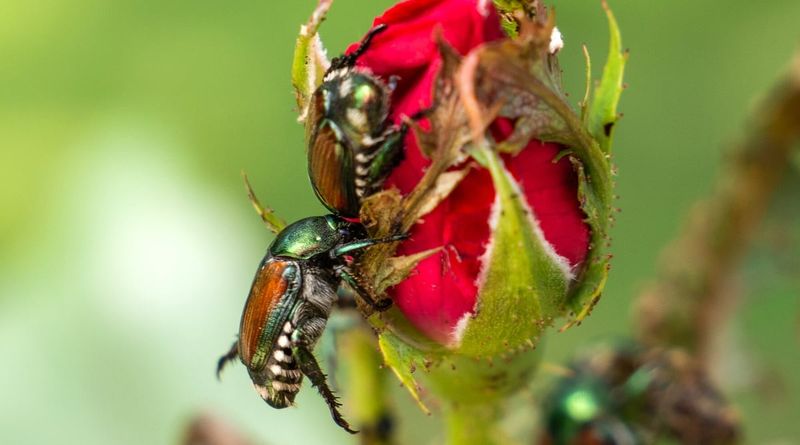
Walk out to your Knock Out roses on a June morning in the Piedmont and you might find a cluster of metallic beetles already working through a bloom, petals falling like confetti onto the mulch. Japanese beetles know a good thing when they land on it, and flowering roses are near the top of their list. The good news is that one practical move, putting a loose mesh or cheesecloth cover over your most prized roses before beetle numbers climb, can reduce how much feeding happens on those plants. It will not save every rose in your yard, but it buys your favorites some breathing room while you work through the rest of the season.
Mesh Offers A Practical First Defense

Your most prized Knock Out rose does not have to face Japanese beetle season unprotected. The move that gives it the best early chance is simple: drape a loose, breathable fine-mesh or cheesecloth cover over a limited number of your most valued plants or blooms before beetle numbers build in your area, or as soon as you spot the first adults on the wing. NC State Extension’s rose pest management calendar specifically lists covering roses with cheesecloth as a control option during the May through August management window, so this is not a folk remedy, it is a documented first step.
The cover works by blocking beetles from landing on the foliage and flowers. It does not poison or trap them. Adults that cannot reach the plant simply move on, at least for the moment, which is why early placement matters more than perfect installation.
Think of it as targeted protection rather than a whole-yard solution. Covering every rose on a half-acre lot is not realistic, and beetles will still find uncovered plants nearby. But for the two or three roses you planted in a spot of honor near the porch or along the front walk, a well-placed cover can make a genuine difference during the weeks when adults are most active.
One quick preview worth noting: the cover needs to sit loosely enough that it does not crush stems or trap excessive heat against the foliage. The fuller details on how to install and monitor it come in the next section, but keep that principle in mind from the start. A barrier that stresses the plant it is meant to protect has missed the point.
Flowering Roses Attract Hungry Adults
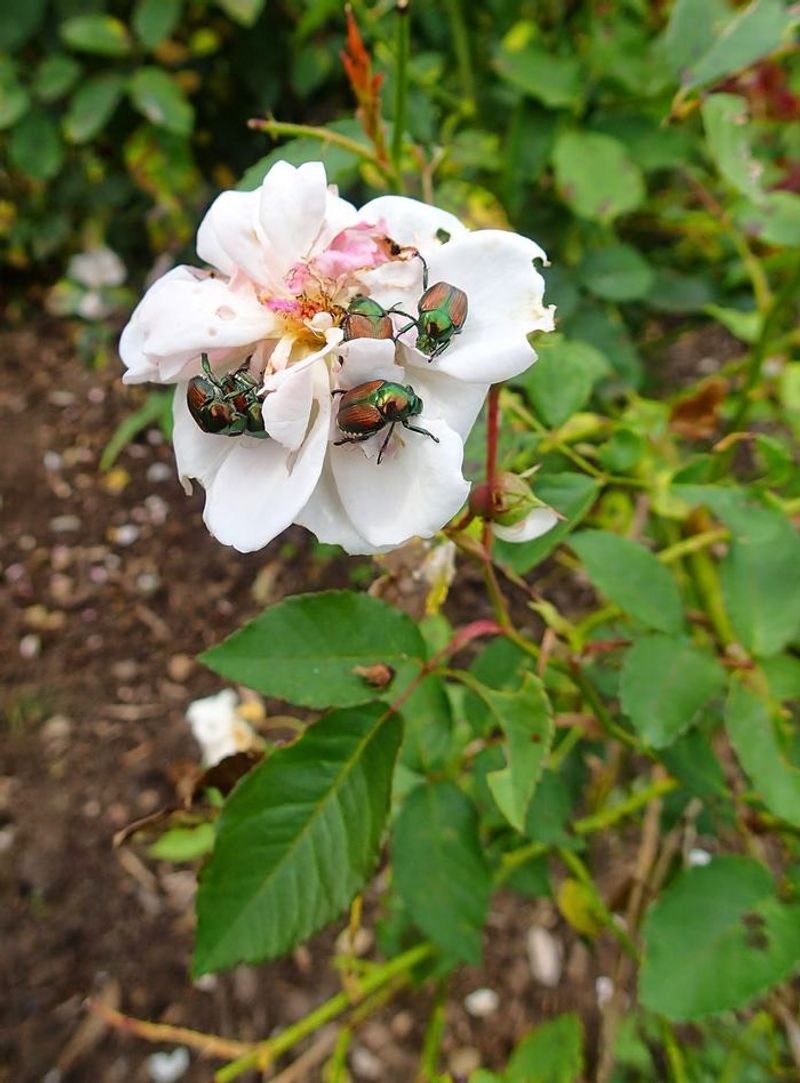
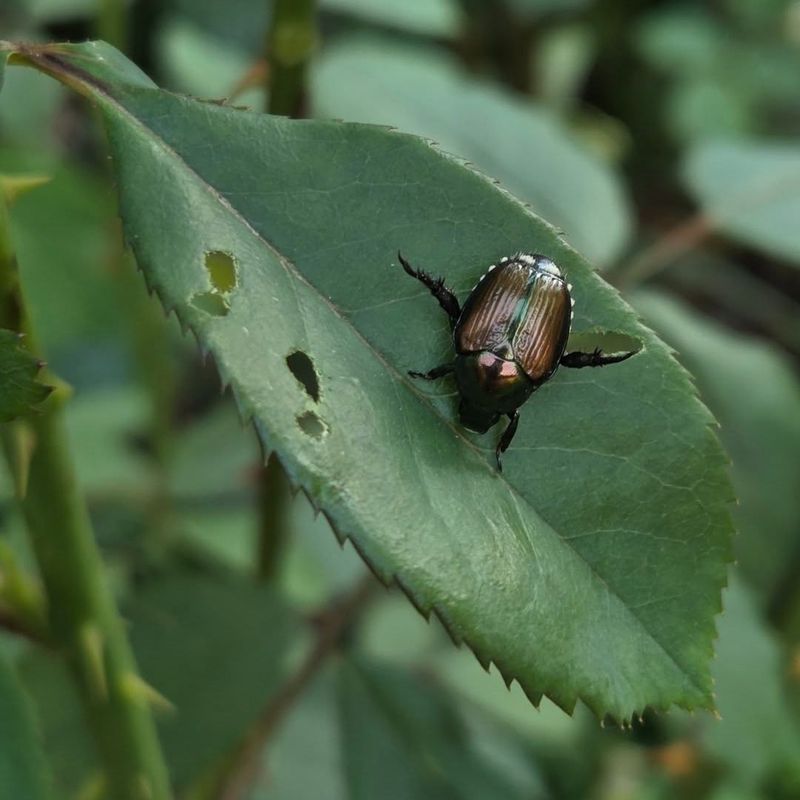
Popillia japonica, the Japanese beetle, is hard to miss once you know what you are looking for. Adults are roughly half an inch long, about 12 millimeters, with a metallic green head and thorax and copper-colored wing covers. They often feed in groups, and NC State Extension’s guide to rose pests describes the damage clearly: beetles chew through petals and foliage, leaving blooms ragged and leaves skeletonized between the veins. Heavily fed leaves look like lace, with only the skeleton of the leaf remaining.
Roses rank among the beetles’ most preferred ornamental hosts, but the story gets a little more specific than that. Research on floral characteristics and Japanese beetle attraction found that when beetles had a choice between flowering and nonflowering plants, they landed almost exclusively on the flowers. Yellow and white blooms drew more beetles than darker-colored ones, and larger flowers attracted more adults than smaller ones.
Your North Carolina Garden Changes Every Week. Your Plan Should Too.
Gardening in North Carolina changes quickly throughout the season. Every Friday you’ll receive a simple weekly plan showing exactly what to plant, prune, fertilize, harvest, and protect so you never miss the right timing.
Those findings came from studies on hybrid tea roses, not specifically on every Knock Out cultivar. Flower color and size influence how attractive a plant is to arriving beetles, but that does not mean every Knock Out shade carries equal risk or that darker-flowered varieties are fully safe. Japanese beetles feed on more than 300 plant species and will work through whatever is available.
What the attraction research does tell you is why acting before the blooms open, or right when the first adults appear, gives a cover its best shot. A flowering rose in full color is genuinely more appealing to a hungry beetle than bare green foliage, so timing the barrier to coincide with bloom is not just convenient, it is the point.
Use A Loose Cover On Selected Blooms
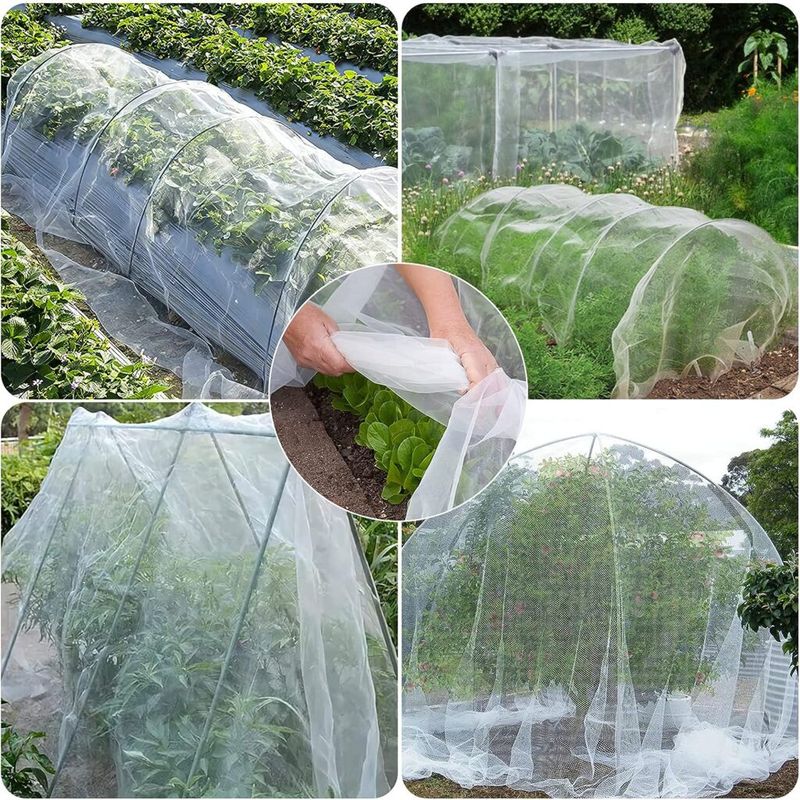
NC State Extension recommends cheesecloth, nets, or perforated bags for protecting a limited number of rose blooms from Japanese beetles, and the practical version of that advice starts with one word: loose. A cover that presses tightly against stems and foliage can bruise new growth, trap moisture against the canes, and create a warm, poorly ventilated pocket that stresses the plant more than the beetles would have. Drape the material so it sits a few inches above the outermost stems and lets air move through freely.
Fine-mesh row cover fabric, the kind sold at garden centers for vegetable protection, works well. Cheesecloth is a lower-cost option that is easy to find and simple to cut to size. Avoid solid plastic sheeting or any non-breathable material, those create heat and moisture problems quickly in a North Carolina summer, especially in the Sandhills or Coastal Plain where afternoon temperatures can climb well past 90 degrees Fahrenheit.
Secure the edges lightly with garden clips, clothespins, or a loose tie of twine. The goal is to keep the fabric from blowing off in an afternoon storm, not to seal every gap. NC State’s rose pest guidance presents this as a targeted tactic for selected blooms, and that framing matters. Covering one or two prized plants is manageable.
Trying to cover an entire landscape planting is neither practical nor necessary.
Check the covered rose every day or two. Look for signs of heat stress such as wilting or yellowing leaves, trapped insects underneath the fabric, or moisture pooling on stems. University of Minnesota Extension notes that covers can block pollinators, so if you want bees to reach the blooms or if conditions become uncomfortably hot or airless, remove or adjust the fabric. Think of these checks as sensible precautions, not as findings from a controlled study, just good habits that keep the cover from creating a new problem.
Watch For The First Beetles In Your Area
Across North Carolina, NC State Extension’s turf pest guide reports that adult Japanese beetles commonly appear around mid-May, with the main management period running through August. That range covers a lot of ground, literally. A gardener in the mountains near Boone may see first adults a week or two later than someone in the warm, humid Coastal Plain near Wilmington. Weather in any given year can shift the whole schedule earlier or later.
Rather than circling a date on the calendar and hoping it holds, build a simple habit. Starting in early May, spend a couple of minutes each morning walking past your roses and looking at the blooms and upper leaves. The first Japanese beetle you spot is your signal, not a fixed date. That sighting tells you beetle flight has begun in your specific neighborhood, which is more useful than any statewide average.
NC State’s rose pest management calendar also recommends nipping buds when beetles are first noticed, which is a way to reduce the floral display that draws more adults to the plant. Placing a cover before numbers build is a reasonable preemptive choice if your roses are already blooming when that first beetle appears. If you have not covered yet, covering immediately after the first sighting still gives you a window before populations peak.
Keep monitoring even after the cover goes on. Adult flight continues for several weeks, and the NC State rose pest resource notes that activity typically tapers as summer progresses. When you notice far fewer beetles on surrounding plants or on any uncovered roses nearby, that is a reasonable cue to remove or adjust the cover and let pollinators back in.
Handpick Beetles From Exposed Roses
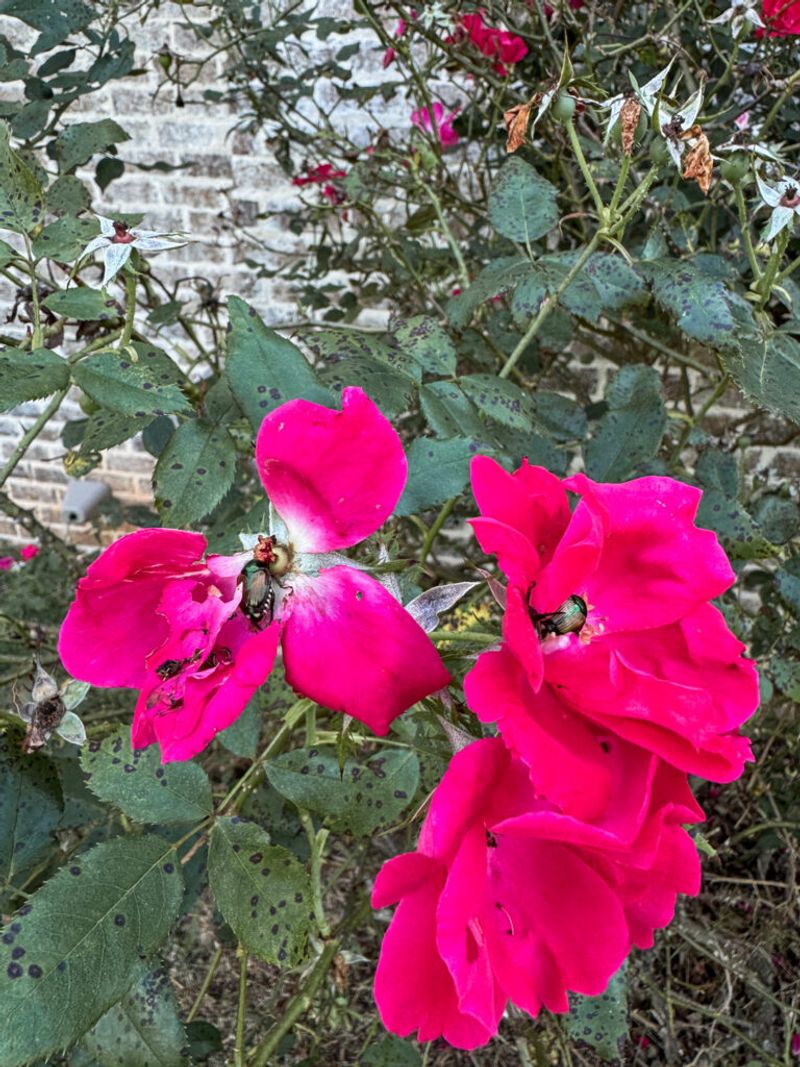
Not every rose can wear a cover, and some beetles will find their way to plants that do. For exposed roses, the most reliable daily tactic is also the least complicated: go out early, before the sun warms the air, and knock beetles into soapy water.
Here is the practical routine. Fill a container, a wide-mouthed jar or an old yogurt tub works fine, with an inch or two of water and a squirt of dish soap. Hold it directly beneath a beetle-covered branch, then tap the branch firmly. Cool beetles are sluggish in the morning and drop easily rather than flying away.
The soapy water traps them quickly. Extension guidance on Knock Out roses and Japanese beetles confirms this morning approach and emphasizes holding the container beneath the foliage rather than simply knocking beetles onto the ground, where they can recover and climb back up.
University of Minnesota Extension notes that adult flight continues over several weeks, so this is a repeated routine, not a one-time fix. Expect to go out every morning during peak activity and accept that new adults will arrive from surrounding landscapes. That is not a reason to give up. Consistent removal keeps populations lower on your specific plants, even if it cannot stop every beetle from trying.
After you handpick, take a look at any blooms or leaves that are heavily chewed. Removing them tidies the plant and may slightly reduce the visual and scent signals that recruit more beetles. A peer-reviewed study on Japanese beetle control on roses found that removing beetles and damaged blooms together produced only marginally greater injury reduction compared to removal alone, so treat foliage cleanup as modest maintenance rather than a beetle-proofing method. The soapy water bucket is genuinely the more important part of the morning.
Keep Traps Away From Prized Roses
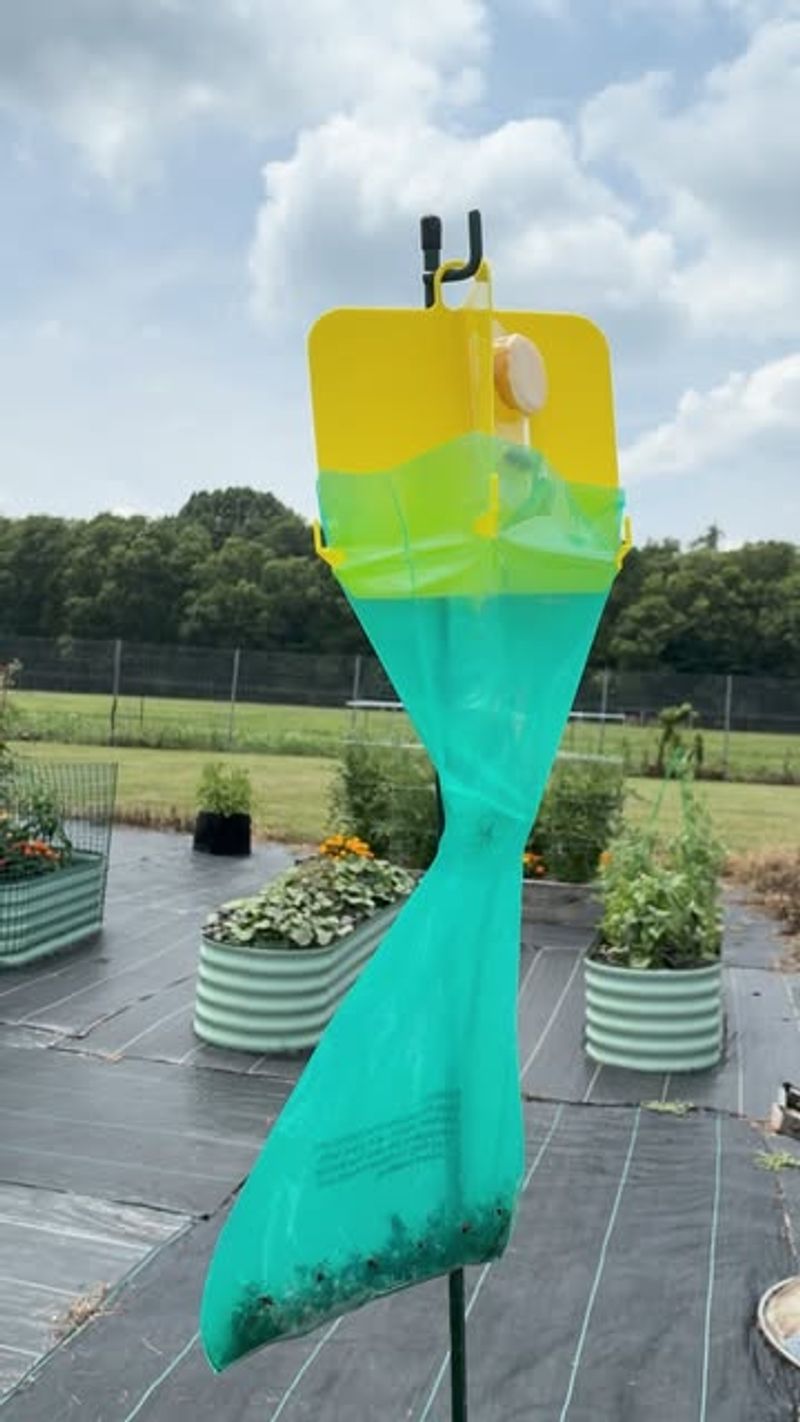
Beetle traps are sold at nearly every garden center, and the bags fill up fast, which makes them feel like they are working. Here is where it gets tricky. NC State Extension’s Japanese beetle resource explains that traps may actually attract more beetles toward your property than they manage to capture. Placing one next to your prized roses is likely to bring a larger crowd to exactly the spot you are trying to protect.
If you want to use a trap as a monitoring tool, position it well away from your rose bed, at least 30 to 50 feet if your yard allows it, and check it to gauge how active beetle flight is in your area. That information can help you decide when to put covers on or when to step up daily handpicking. Just do not expect the trap to protect the roses on its own.
Chemical control is a secondary option, not a first response. If damage on uncovered roses becomes genuinely unacceptable, look for a product whose label specifically lists both roses and Japanese beetles. Penn State Extension warns that pyrethroids, carbaryl, and acephate are toxic to bees, and those products are commonly used against Japanese beetles. Read the label before you buy, not after.
Timing and method matter as much as product choice. EPA guidance on pollinator protection identifies bloom-time restrictions, time-of-day requirements, application-rate limits, and untreated buffer zones as tools that reduce pollinator risk. Do not spray open flowers while bees are actively visiting. Many labels direct applicators to treat before dawn or after dusk for exactly that reason.
University of Minnesota Extension also cautions that neem oil requires repeat applications and is less effective when beetle pressure is high, so it is not a complete answer on its own either. Monitor first, reach for a spray only when physical methods are not keeping damage at an acceptable level, and follow every label direction exactly.
Know What A Cover Cannot Do
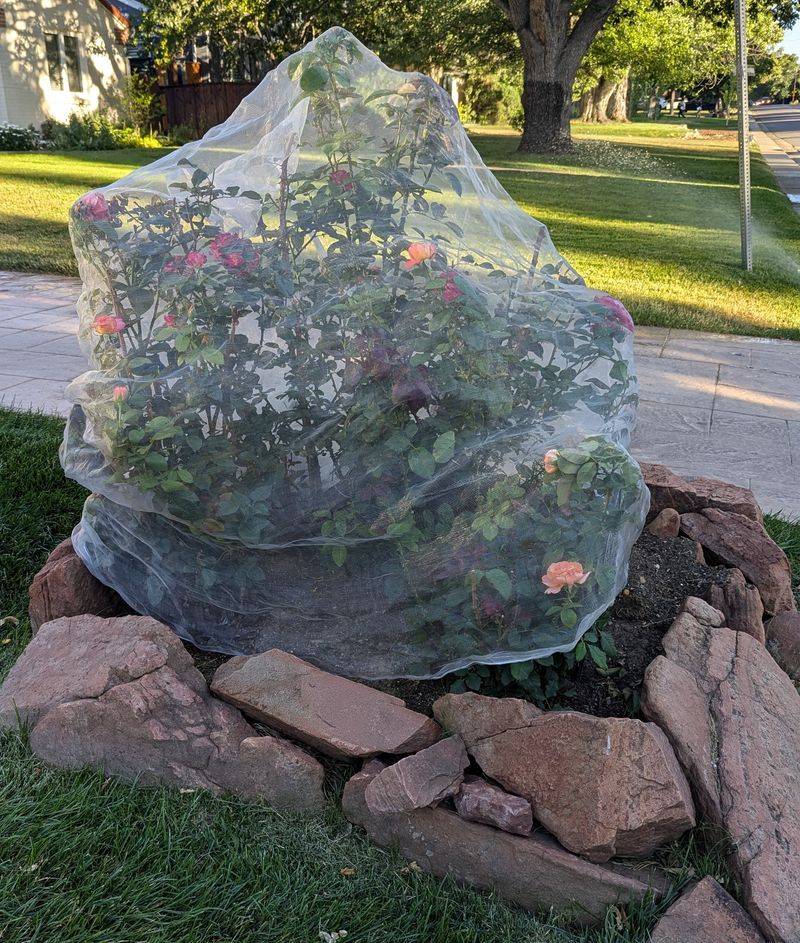
A cheesecloth cover over one rose does a specific job: it reduces beetle feeding on that plant while the fabric is in place. It does not create a force field around the yard, and beetles will find every uncovered plant within reach. Japanese beetles feed on more than 300 plant species and fly strongly enough to move in from neighboring properties and surrounding landscapes. Protecting a few prized roses is a realistic goal.
Protecting every plant in a quarter-acre yard with fabric is not.
Another common point of confusion involves lawn grubs. Japanese beetle grubs live in the soil and feed on grass roots, while the adults that damage roses are flying insects arriving from above. Treating your lawn for grubs may reduce future beetle populations in your immediate area over time, but NC State’s turf pest guide makes clear that adult beetles can migrate in from elsewhere, so a grub treatment will not stop this summer’s adults from reaching your roses.
The cover also blocks pollinators. Knock Out roses grown purely for their ornamental display do not need pollination for their flowers to look attractive, so blocking bees for a few weeks will not affect the blooms you are seeing right now. Still, removing or adjusting the cover when you want bee activity around your garden is a reasonable and neighborly thing to do.
On the question of whether Knock Out roses are naturally resistant, the answer is no. A study on rose susceptibility to Japanese beetle feeding tested Rosa ‘Radrazz’, the original Knock Out cultivar, and found it susceptible to adult feeding. That study did not test every Knock Out color or later cultivar, so it would be an overreach to say all Knock Out varieties suffer equally. University of Minnesota Extension reinforces the practical takeaway: no rose cultivar should be considered reliably beetle-proof, and a physical barrier remains the most straightforward protection available for a limited number of plants.
Moderate Damage May Not End The Season
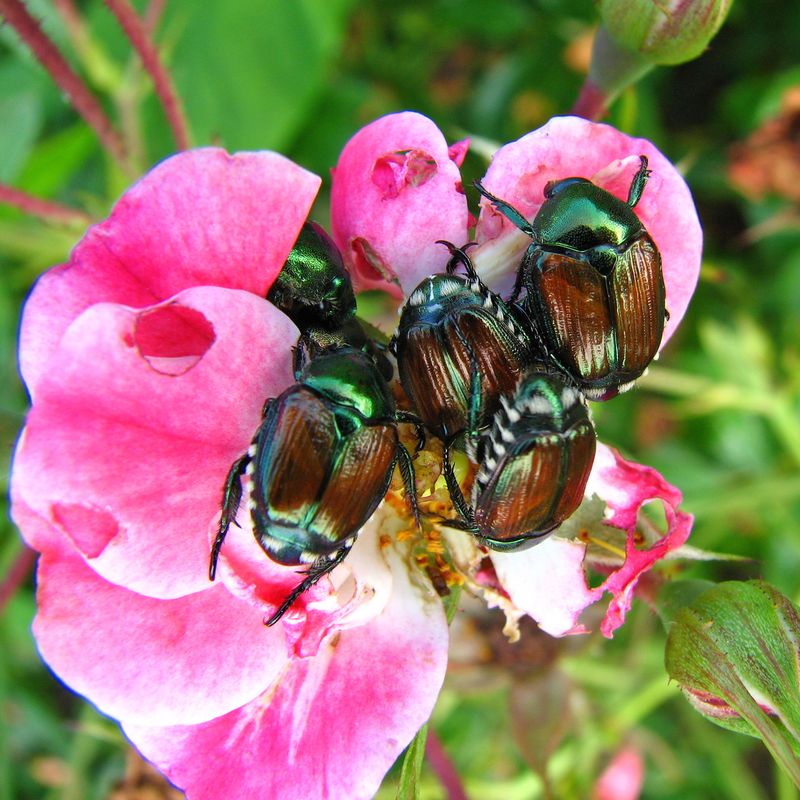
Finding chewed leaves and ragged blooms on a rose you have tended all spring is genuinely discouraging. But moderate damage is usually a setback in appearance, not a death sentence for the plant. University of Maryland Extension notes that many plants tolerate moderate defoliation and may produce new growth and rebloom after beetle numbers decline. Knock Out roses are notably vigorous, and a plant that looks rough in July can push out fresh foliage and new buds by late August or September once adult flight winds down.
Severe or repeated defoliation is a different matter. A rose that loses most of its leaves multiple seasons in a row, or one that is also dealing with drought, heat stress, or root problems, has fewer reserves to draw on. Give a stressed plant good basic care: consistent watering during dry stretches, which are common across the Piedmont and Sandhills in late summer, and avoid heavy fertilizing right after a defoliation event, which can push tender new growth that beetles will find attractive.
Keep monitoring through the season even after you feel like the worst has passed. NC State’s rose pest resource notes that activity typically tapers as summer progresses, so the finish line is real. Adjust or remove covers for airflow and pollinator access as beetle pressure drops. Continue handpicking on exposed plants for as long as adults are active.
The layered plan holds together simply: cover a prized rose early, check it often, handpick beetles from exposed plants each morning, and escalate carefully only if damage stays unacceptable. A rose that comes through a tough beetle season and blooms again in September has already proven it was worth the effort.