The One Thing North Carolina Tomatoes Desperately Need Before The Next Heatwave Hits
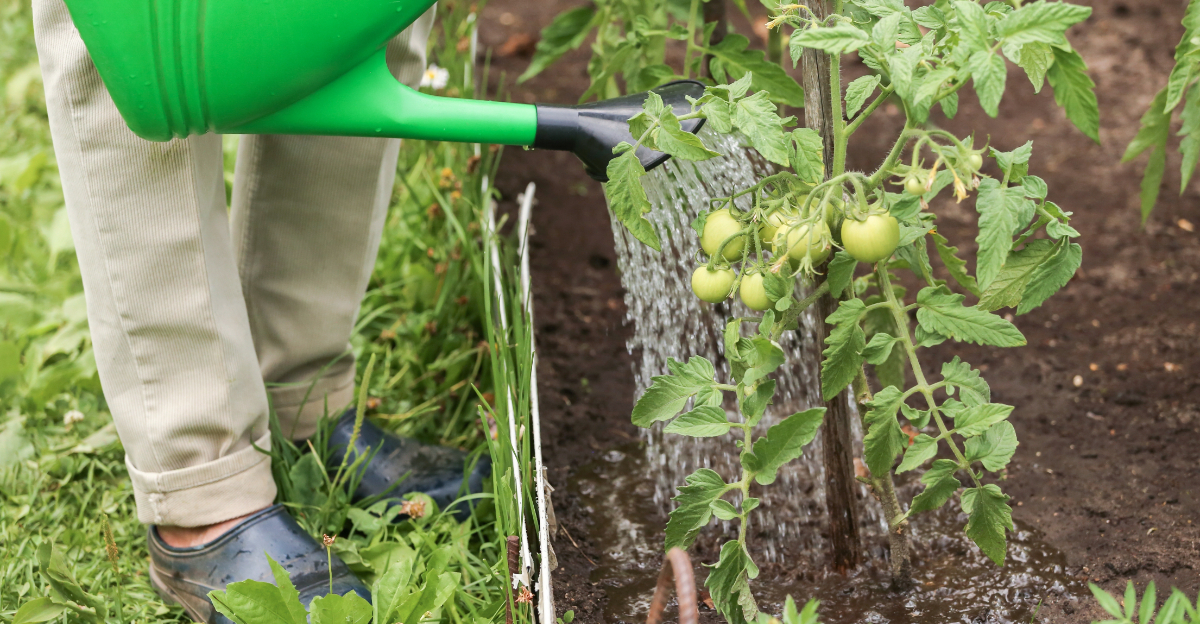
Deep, consistent watering is the one thing North Carolina tomatoes need right now, before an incoming heatwave causes fruit to split unexpectedly.
Sudden temperature spikes cause tomatoes to swell rapidly, and skins that haven’t been given consistent moisture struggle to expand along with the fruit inside.
Watering deeply the day before extreme heat arrives helps plants build up moisture reserves ahead of the stress.
Mulching around the base further helps regulate soil temperature and reduce the moisture swings that trigger splitting in the first place.
Harvesting any tomatoes that are already close to ripe can also protect them from splitting during the worst of the heat.
Checking soil moisture several inches down gives a clearer picture than judging by the surface alone.
Providing afternoon shade through cloth or nearby plants can ease additional stress during the hottest hours. Taking these steps now can protect your harvest before the heatwave really sets in.
1. Keep Soil Moisture Consistent
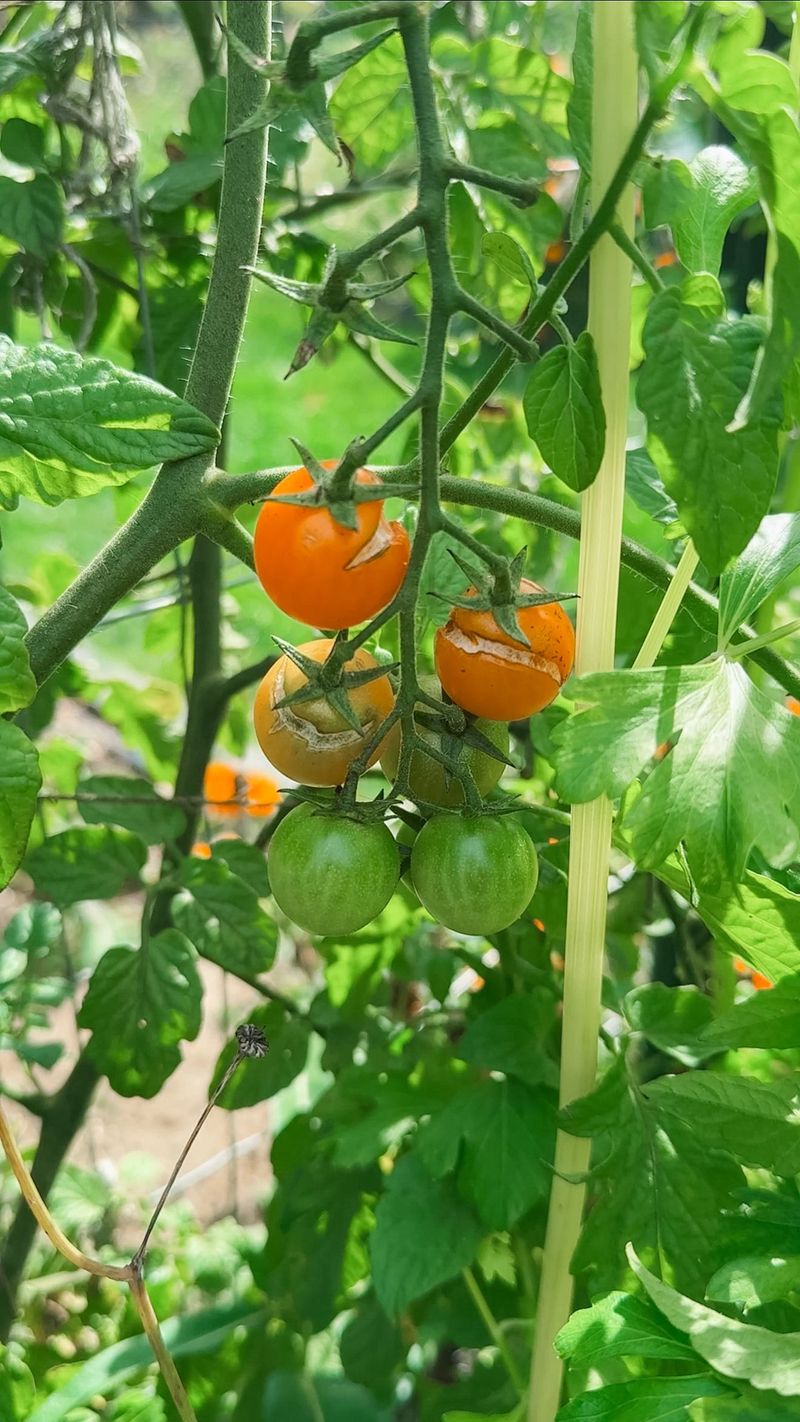
Steady soil moisture is the single most powerful thing you can give your tomato plants before a heatwave arrives.
When the moisture level in the soil stays even, tomato fruit grows at a steady, controlled pace.
The skin of the tomato expands gradually along with the inside, and everything stays balanced. When that balance gets disrupted, trouble starts fast.
Tomatoes take in water through their roots, and the fruit responds almost immediately to what the roots are getting.
If the soil goes from very dry to suddenly soaked, the inside of the tomato swells too quickly while the outer skin cannot keep up. That rapid expansion is exactly what causes splitting.
North Carolina summers can be brutally uneven, with dry spells followed by heavy afternoon thunderstorms.
That pattern makes consistent moisture management more important here than almost anywhere else.
You cannot always control the rain, but you can control how you water and how well your soil holds onto moisture between waterings.
Think of your tomato plant like a runner preparing for a race. It needs steady hydration throughout training, not a big drink right before the starting gun.
Keeping the soil consistently moist, not soggy and not bone dry, gives your tomatoes the stability they need to grow strong fruit without cracking under pressure when the temperatures climb.
2. Do Not Let The Soil Become Extremely Dry
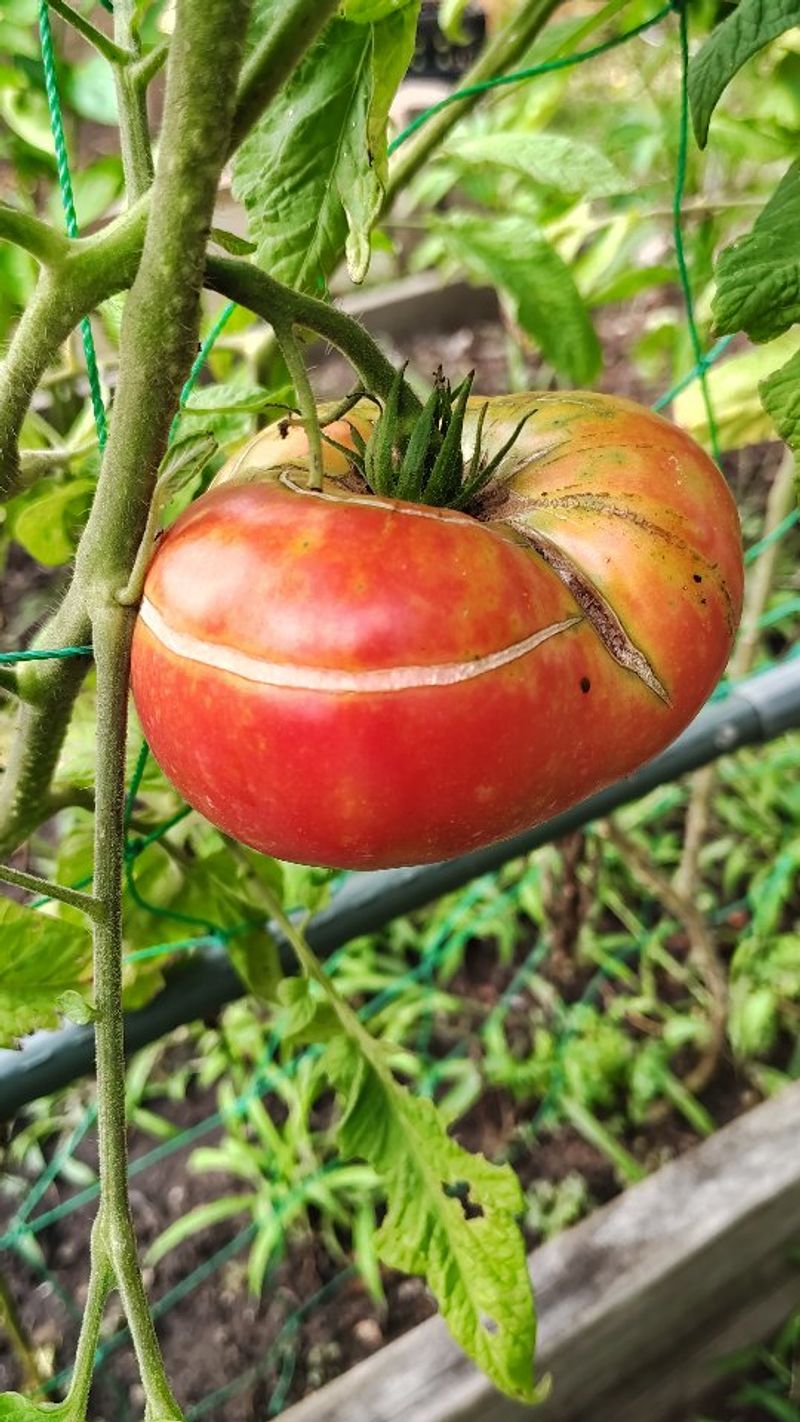
Here is something that surprises a lot of first-time tomato growers: the splitting usually does not happen because of too much water. It happens because the soil got way too dry first.
When tomato plants go through a period of extreme dryness, the fruit slows its growth and the skin begins to tighten and harden slightly as a response to stress.
Once water finally arrives, whether from irrigation or a sudden rainstorm, the inside of the tomato absorbs it rapidly and begins expanding again.
But the skin that hardened during the dry period cannot stretch fast enough to keep up with that sudden burst of growth.
The result is a crack running right through the fruit, sometimes deep enough to ruin it entirely.
Your North Carolina Garden Changes Every Week. Your Plan Should Too.
Gardening in North Carolina changes quickly throughout the season. Every Friday you’ll receive a simple weekly plan showing exactly what to plant, prune, fertilize, harvest, and protect so you never miss the right timing.
Preventing this starts with not letting the soil reach that extreme dry point in the first place.
Check your garden regularly during hot stretches, especially in July and August when North Carolina heat is at its most intense.
Stick your finger about two inches into the soil near the base of the plant. If it feels dry at that depth, your plants need water soon.
Catching dryness early means you can add water gradually and keep conditions stable rather than playing catch-up.
A little attention every couple of days during a heatwave can make a huge difference in how many tomatoes you actually get to enjoy from your garden this season.
3. Water Deeply When The Soil Needs It
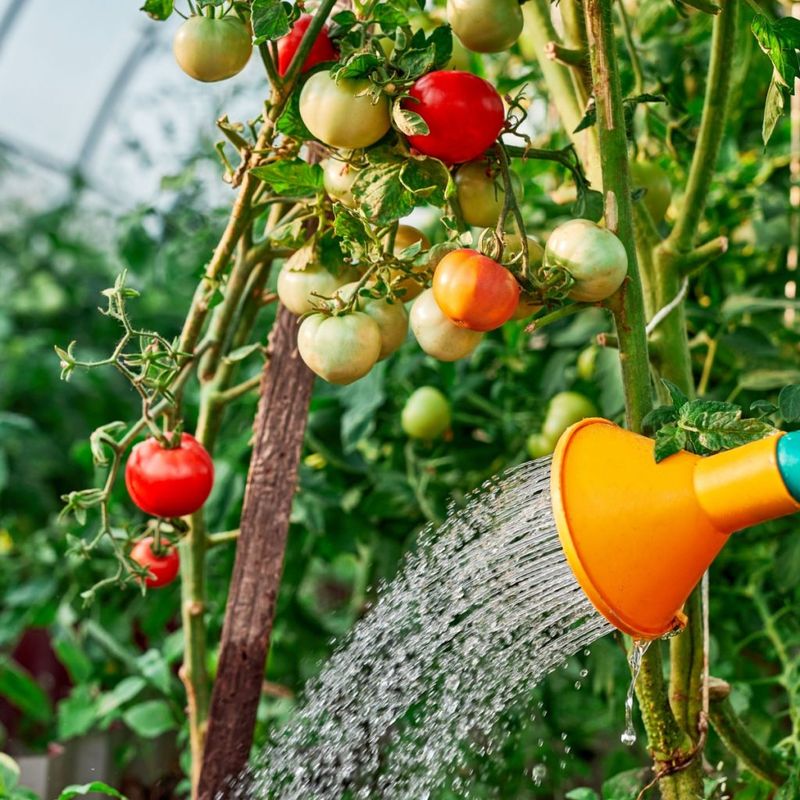
There is a big difference between watering your tomatoes every single day on a schedule and actually watering them when they need it.
Shallow, frequent watering encourages roots to stay near the surface, where the soil dries out the fastest.
Deep, thorough watering done less often pushes roots down into cooler, more stable soil layers where moisture lasts much longer.
When you water deeply, you are soaking the soil several inches down so that the entire root zone gets access to moisture.
A good rule of thumb is to water slowly enough that the water actually soaks in rather than running off.
You want the top six to eight inches of soil to feel consistently moist, which typically means watering thoroughly and then checking soil moisture before watering again rather than following a rigid daily routine.
In North Carolina’s summer heat, the top layer of soil can dry out within a day or two, but the deeper layers hold moisture much longer.
By encouraging deep root growth through thorough watering, your tomato plants become more resilient during a heatwave because they can draw from that deeper reservoir of moisture even when the surface looks dry.
Watering in the early morning is also a smart move. The soil absorbs water more efficiently when temperatures are cooler, and the plant has access to that moisture throughout the hottest part of the day.
This simple habit keeps your root zone stable and your tomatoes growing at a steady, even pace.
4. Mulch To Slow Moisture Loss
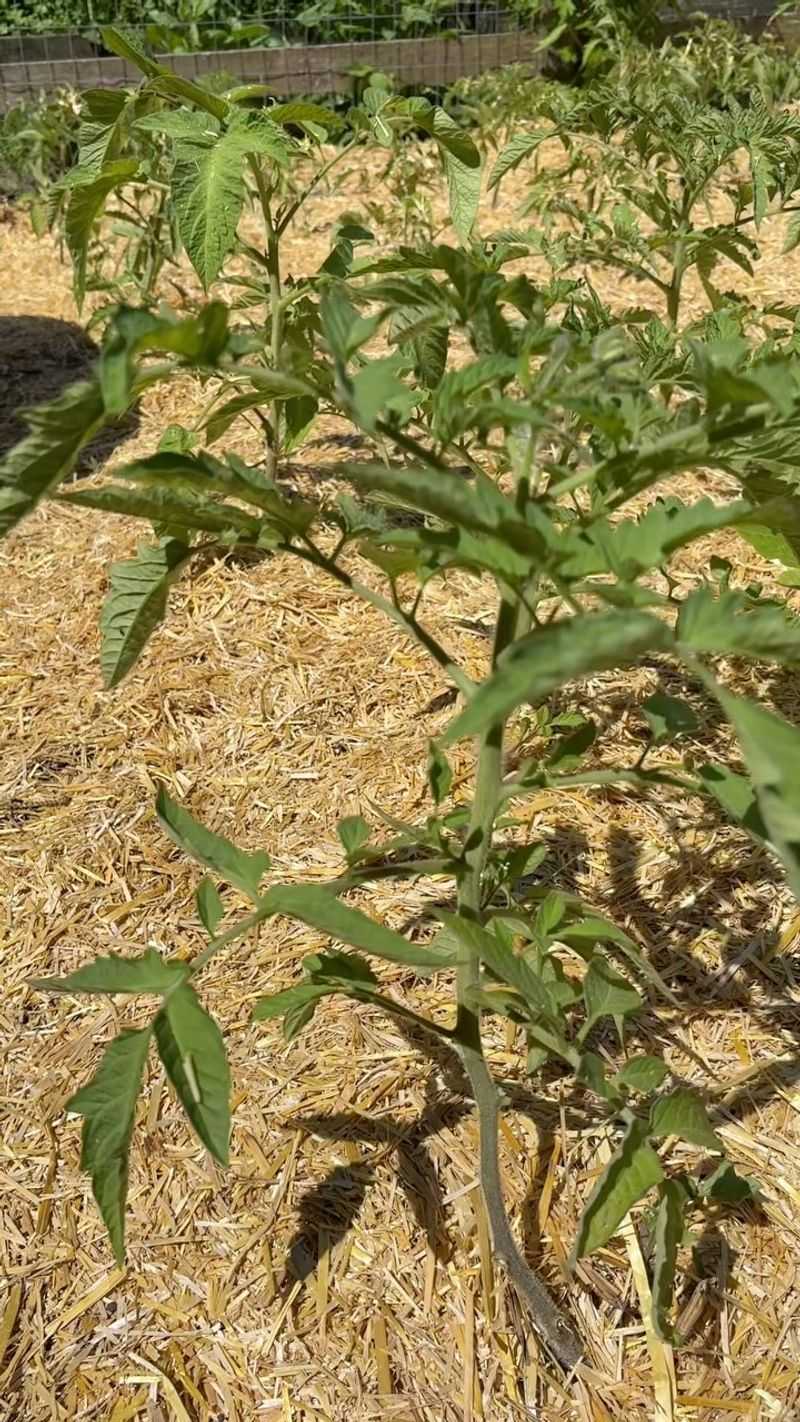
Mulch might just be the most underrated tool in a tomato grower’s arsenal, especially heading into a North Carolina heatwave.
A thick layer of mulch spread around the base of your plants acts like a blanket for the soil, holding moisture in and slowing down how quickly the sun and heat pull water out of the ground.
Without mulch, bare soil in direct summer sun can lose a significant amount of moisture within just a few hours.
That rapid drying is exactly what sets up the dangerous wet-dry cycle that leads to splitting.
With a good layer of mulch, the soil stays cooler and holds onto moisture far longer between waterings, giving your tomatoes a much more stable environment to grow in.
Straw, wood chips, shredded leaves, and even grass clippings all work well as mulch for tomatoes.
Aim for a layer about two to three inches thick around the base of each plant, keeping the mulch a few inches away from the stem itself to prevent moisture buildup right against the plant.
That small gap helps prevent rot while still giving the surrounding soil excellent protection. Applying mulch before a heatwave arrives is the key move here. Once the heat is already baking the soil, the damage to moisture levels has already begun.
Getting your mulch down early, ideally when you transplant or shortly after, means your soil goes into the hottest weeks of summer in the best possible condition to keep your tomatoes healthy and crack-free.
5. Watch Containers More Closely
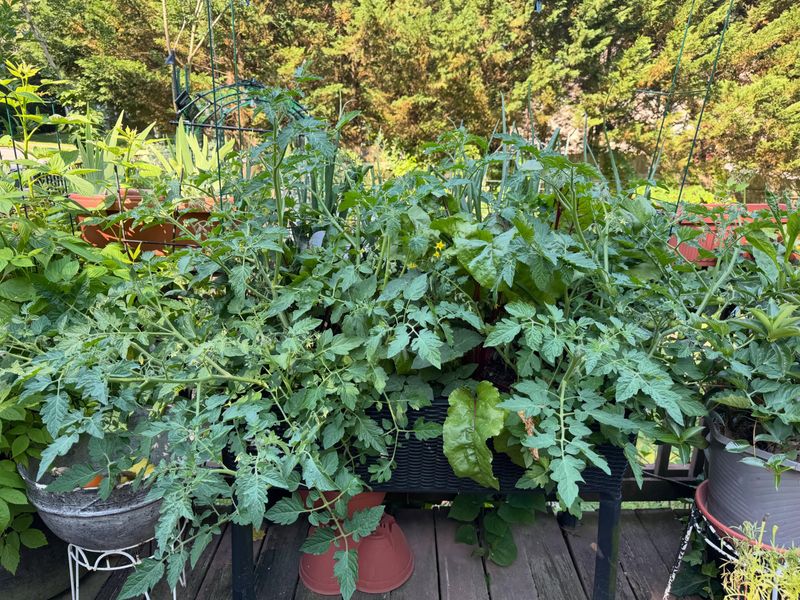
If you are growing tomatoes in pots or containers, you have got an extra challenge on your hands during a heatwave.
Container tomatoes dry out dramatically faster than tomatoes planted directly in the ground, and that difference becomes even more extreme when temperatures climb into the upper 90s that North Carolina summers can bring.
The reason is simple: containers hold a limited amount of soil, which means a limited amount of moisture.
The sun heats up the sides of the pot, which warms the soil from the outside in. Dark-colored containers absorb even more heat.
All of that combined means the soil in a container can go from adequately moist to dangerously dry in just a matter of hours on a scorching afternoon.
During a heatwave, container tomatoes may need water every single day, sometimes even twice a day if the pot is small or the sun exposure is intense.
The best way to know for sure is to check the soil moisture daily by pressing your finger into the top inch or two of soil.
If it feels dry, water thoroughly until you see it draining from the bottom of the pot. Grouping containers together in a spot that gets afternoon shade can also help slow moisture loss.
Moving pots out of the most intense direct sunlight during a heatwave is not giving up on your plants.
It is a smart, practical move that keeps the soil from overheating and helps your tomatoes stay hydrated and crack-free through the toughest days of summer.
6. Avoid A Sudden Flood Of Water
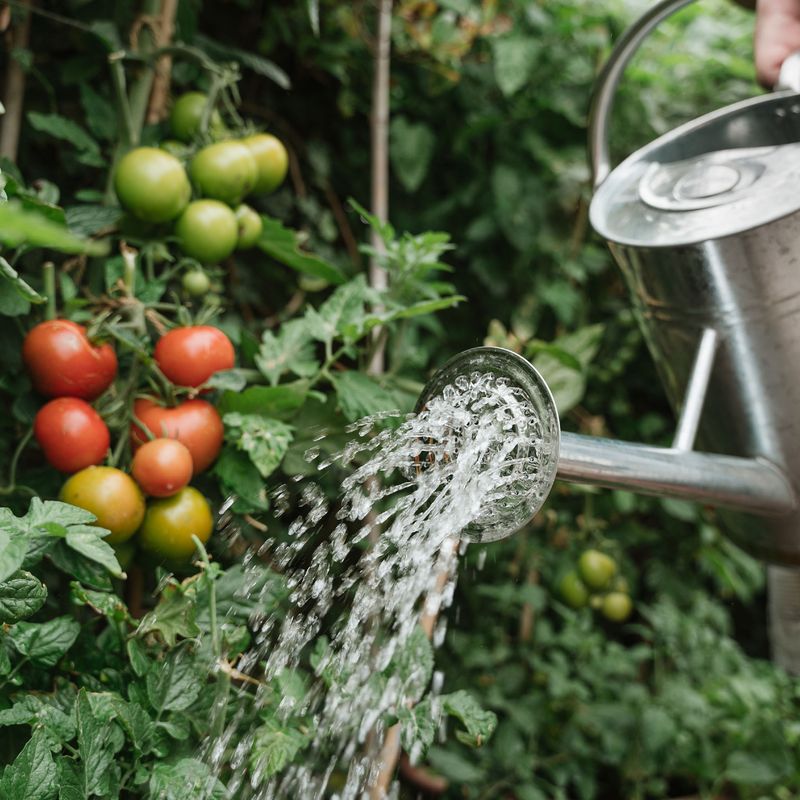
Watering your tomatoes after they have gone through a dry spell feels like the right thing to do, and it is, but how you do it matters just as much as doing it at all.
Dumping a large amount of water all at once after the soil has been very dry creates exactly the kind of dramatic moisture swing that causes tomatoes to crack.
Picture what happens inside the fruit during that sudden flood. The roots absorb the water rapidly because the plant has been under stress and is essentially in survival mode.
That water rushes into the fruit, the cells expand quickly, and the outer skin, which has been through a period of dryness and slight hardening, simply cannot stretch fast enough.
The result is a split that can run from the stem all the way down the side of the tomato. Instead of flooding the soil, try to rehydrate it gradually.
Water slowly and steadily, giving the soil time to absorb moisture rather than letting it run off or pool on the surface.
If you use a soaker hose or drip irrigation system, these tools are perfect for this because they deliver water slowly and consistently right to the root zone.
The goal is to bring soil moisture back up to a healthy level without shocking the plant with a sudden surge.
A gradual approach keeps the fruit expanding at a controlled rate, which is the whole key to avoiding splits.
Slow and steady genuinely wins the race when it comes to watering stressed tomato plants.
7. Let Rain Count Toward Their Water Needs
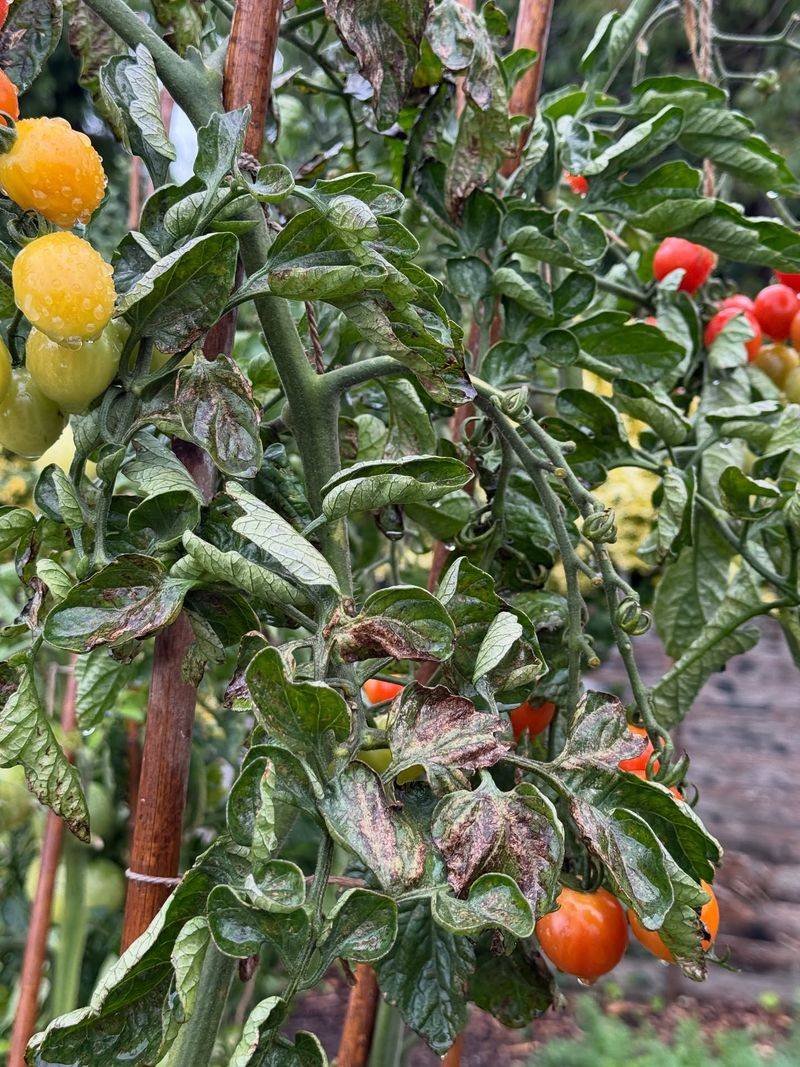
North Carolina gets its share of summer thunderstorms, and those afternoon downpours can deliver a surprising amount of water to your garden in a short time.
One of the mistakes gardeners sometimes make is sticking to a watering schedule without accounting for what the sky already delivered.
Overwatering after a rainstorm can push soil moisture too high and create the same kind of imbalance that leads to splitting. Before you reach for the hose, check the soil.
If a storm dropped a good amount of rain the night before, your tomatoes might be perfectly hydrated and not need anything additional for a day or two.
Feeling the soil at a depth of two inches is the most reliable way to know. If it still feels moist and cool, hold off on watering and check again the next day.
Rain gauges are a simple and inexpensive tool that can help you track exactly how much water your garden received.
Tomatoes generally need about one to one and a half inches of water per week, including rain.
Keeping that total in mind helps you avoid both under-watering and over-saturating the soil, both of which can stress the plant and lead to cracking fruit.
Working with the weather rather than against it makes gardening easier and more effective.
North Carolina summers have a rhythm to them, and once you start paying attention to the rain patterns in your area, you will get much better at giving your tomatoes exactly what they need without guessing or overdoing it.
8. Keep Moisture Steady Through The Heat
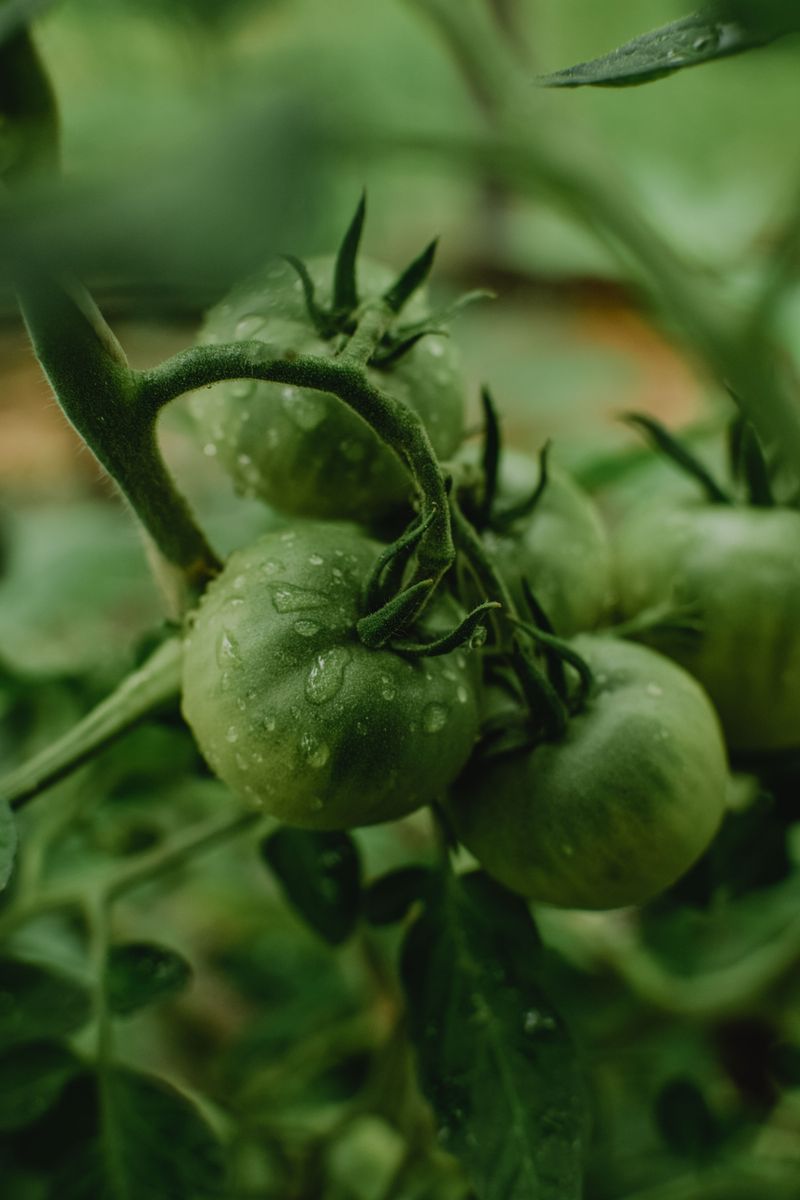
When it comes to protecting your tomatoes from splitting during a North Carolina heatwave, no fertilizer, no spray, and no special trick beats the power of consistent moisture.
Gardeners sometimes reach for extra nutrients or other solutions when they see their plants struggling in the heat, but what the tomatoes really need is simple: steady, even soil moisture from one day to the next.
Extra fertilizer during a heatwave can actually make things worse.
High nitrogen levels push rapid leafy growth and can also encourage the fruit to expand too quickly, increasing the risk of splitting when moisture levels are already uneven.
Focus on moisture management first, and save the feeding for cooler periods when the plant can use nutrients more efficiently.
Consistency is the word that matters most here. You do not need to water more than your plants actually need.
You just need to make sure the soil never swings between extremely dry and extremely wet.
That steady middle ground is where tomatoes thrive and where the fruit develops evenly without putting pressure on the skin.
Going into a heatwave with mulch in place, a good deep watering routine, and regular soil checks puts you in the strongest possible position as a gardener.
Your tomatoes will reward that attention with smooth, uncracked fruit that you can actually enjoy at the peak of summer.
A little consistency now saves a lot of disappointment later, and that is the kind of gardening win that makes all the effort worthwhile.