The One Thing Ohio Hydrangeas Need In August Or They Will Skip Blooming Next Spring
August feels like the quiet month for Ohio hydrangeas. The blooms have peaked, the garden has moved on to other things, and the hydrangea gets less attention than almost any other plant in the yard.
That inattention in August is exactly what turns next spring into a disappointment. Hydrangeas are making decisions right now.
Not about this season, which is largely settled. About next spring, about where to put energy, about what the bloom count looks like twelve months from now.
What happens to the plant in August factors directly into those decisions in a way most Ohio gardeners never realize. One specific thing done this month keeps those decisions going in the right direction.
Skip it and the plant makes its own choices, and those choices tend not to favor the gardener come May. Next spring’s bloom is not as far away as August makes it feel.
1. Protect Old Wood Before Buds Set
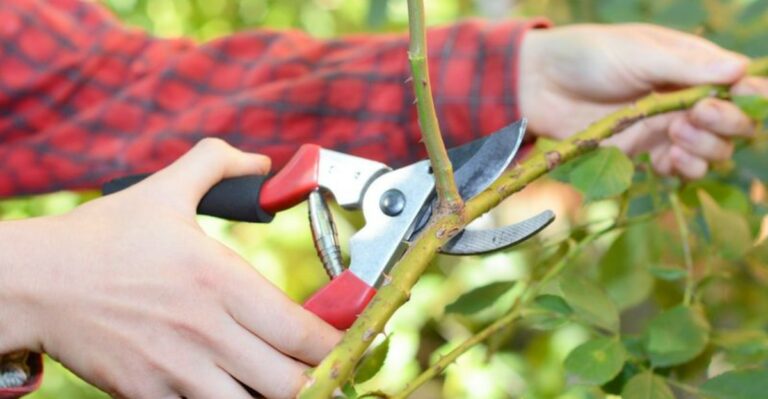
A tempting pair of pruners and a shrub full of fading flowers is a combination that leads many gardeners into trouble every August.
The most important action you can take this month is simple: put the pruners down on old-wood hydrangeas until you know exactly what you are working with.
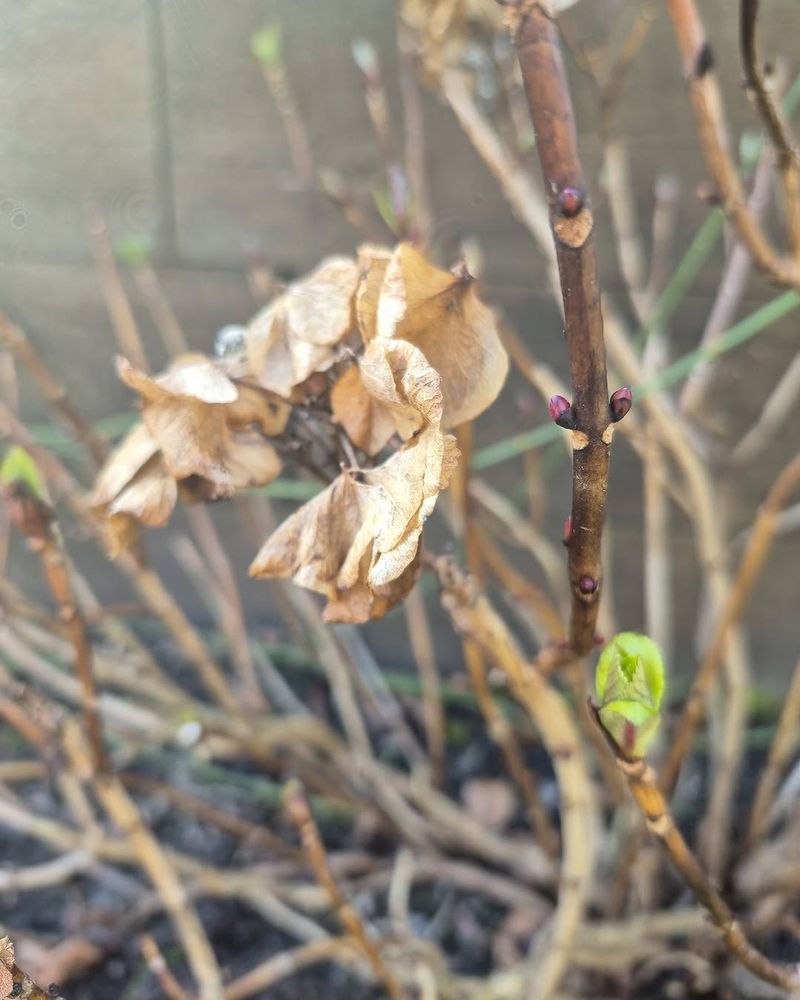
Flower buds for next spring may already be forming on woody stems, depending on the variety and the season’s conditions.
Old wood refers to stems that grew during the previous season and survived winter. On certain hydrangeas, those stems carry the buds that will open into flowers next year.
Cutting them in August can remove your entire next bloom cycle before it ever gets a chance to develop.
OSU Extension guidance and university horticulture sources consistently warn about improper pruning timing. It is one of the leading reasons old-wood hydrangeas fail to bloom the following spring.
The fix is not complicated. Remove only clearly withered, broken, or diseased wood when you must.
Leave healthy green or brown stems alone. Protecting that woody framework now gives next year’s buds the best possible chance to survive into spring.
Winter injury, late freezes, and deer can still affect results, but removing the risk of August pruning mistakes is a strong first step.
2. Know Which Hydrangeas Bloom On Old Wood
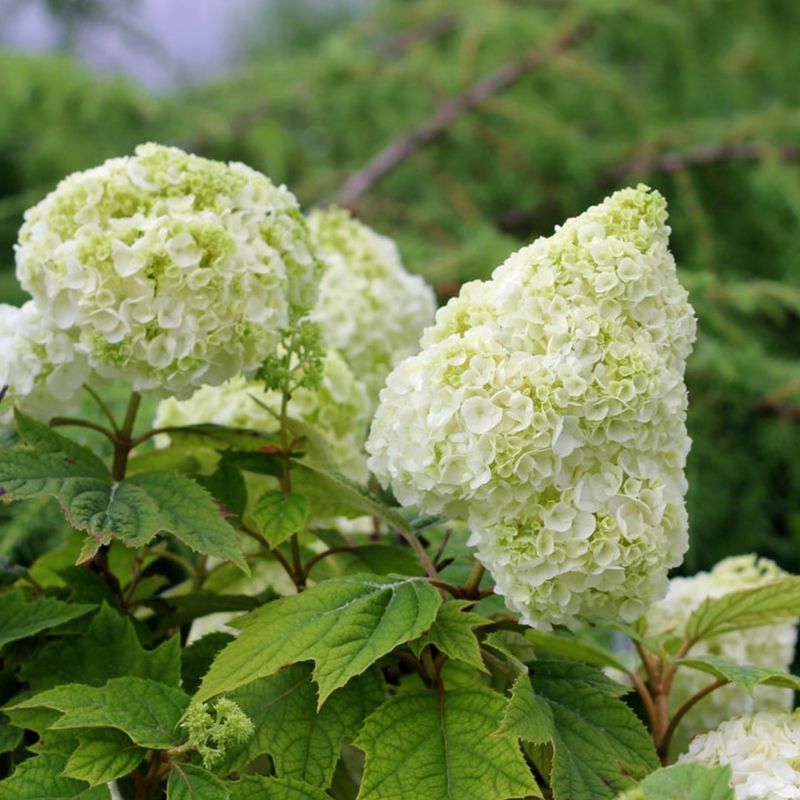
A plant tag might be tucked near the base of your shrub or still stapled to the original pot. It may hold the answer to one of the most important hydrangea questions in August.
Knowing your hydrangea type is not optional when it comes to smart pruning decisions. Bigleaf, oakleaf, mountain, and climbing hydrangeas can bloom on old wood, meaning their flower buds are carried on stems from the previous growing season.
If you inherited a shrub from a previous homeowner or received one as a gift without a label, identification takes a little detective work. Bigleaf hydrangeas have large, rounded or lacecap flower heads and broad, glossy leaves.
Oakleaf hydrangeas have distinctive lobed leaves that resemble oak leaves and cone-shaped flower clusters. Climbing hydrangeas cling to walls or fences with aerial rootlets.
Your Ohio Garden Changes Every Week. Your Plan Should Too.
Gardening in Ohio changes quickly throughout the season. Every Friday you’ll receive a simple weekly plan showing exactly what to plant, prune, fertilize, harvest, and protect so you never miss the right timing.
University extension sources recommend checking bloom shape, leaf shape, and growth habit together rather than relying on one feature alone. No single trait is foolproof for identification.
If you are unsure, consult a trusted extension guide or take a sample to your local OSU Extension office. Making cuts before you know your hydrangea type is a gamble that can cost you an entire season of flowers.
Patience and a little research now can pay off beautifully next May or June.
3. Skip August Pruning On Bigleaf Hydrangeas
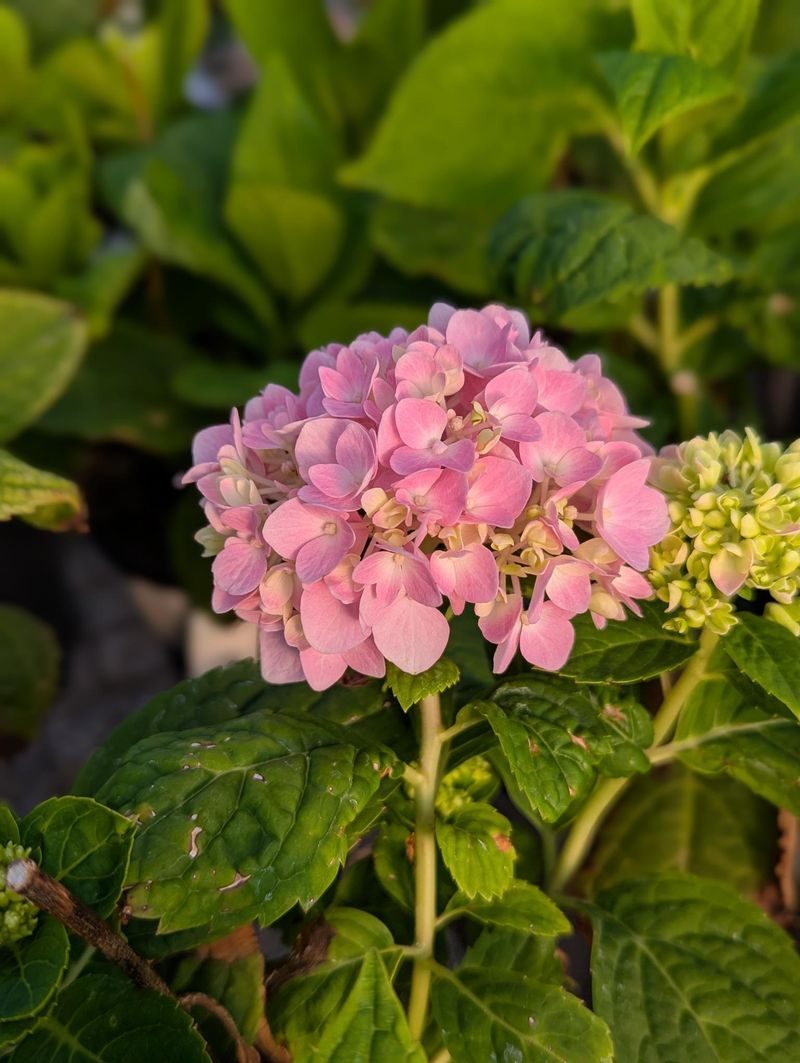
Few sights in a summer garden are as satisfying as a bigleaf hydrangea loaded with big blue or pink flower heads. When those blooms start to fade in August, the urge to clean things up with a hard cut is completely understandable.
Resist it. Many bigleaf hydrangeas bloom on old wood, and August pruning can quietly remove the flower buds that were meant to open next spring.
Horticulture experts advise leaving healthy bigleaf stems intact through the late summer and fall. The buds that will produce next year’s flowers may already be developing along those stems, even if you cannot see them yet.
Cutting stems back hard now could mean a shrub full of healthy green leaves next year but no flowers at all.
Some reblooming bigleaf varieties, such as certain Endless Summer types, can flower on both old and new wood. That flexibility is helpful, but it does not make harsh August pruning a safe habit even for rebloomers.
Removing old wood still reduces the plant’s overall blooming potential. The safest approach for any bigleaf hydrangea in August is to remove only withered or clearly damaged wood and leave the rest alone.
Wait for the correct pruning window before making any shaping cuts. Most extension sources place that window right after blooming or in very early spring before new growth begins.
4. Leave Oakleaf Hydrangeas Alone After Bloom
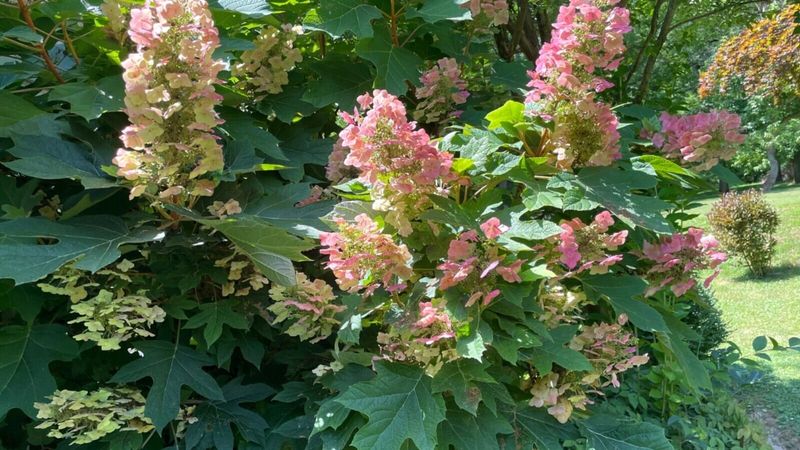
Aging flower clusters on an oakleaf hydrangea have a quiet beauty that many gardeners overlook. Those papery, creamy-white cones slowly turn pinkish and then tan as summer winds down.
They can look striking against the large lobed leaves as they begin to shift toward fall color. Removing them all in August might seem tidy, but it comes with real risk for next year’s bloom.
Oakleaf hydrangeas bloom on old wood, so pruning after their safe window can reduce next season’s flowers. University extension sources generally recommend pruning oakleaf hydrangeas right after they finish blooming if shaping is needed.
Do not prune weeks or months later, when buds may already be forming on the woody stems. Late-summer shaping cuts are not advisable.
Beyond the flowers, oakleaf hydrangeas offer outstanding fall foliage in shades of burgundy, orange, and red, along with attractive peeling bark on mature stems.
These features make the shrub a year-round asset in local gardens, so preserving its woody framework is worth the restraint.
The plant does not need to be tidied up every time a bloom fades. Healthy old stems are doing important work.
Let them stand, protect them from unnecessary cuts, and allow the natural framework to carry next year’s flower buds safely through the coming months. The reward in spring is worth the patience now.
5. Deadhead Lightly Without Cutting Next Year’s Buds
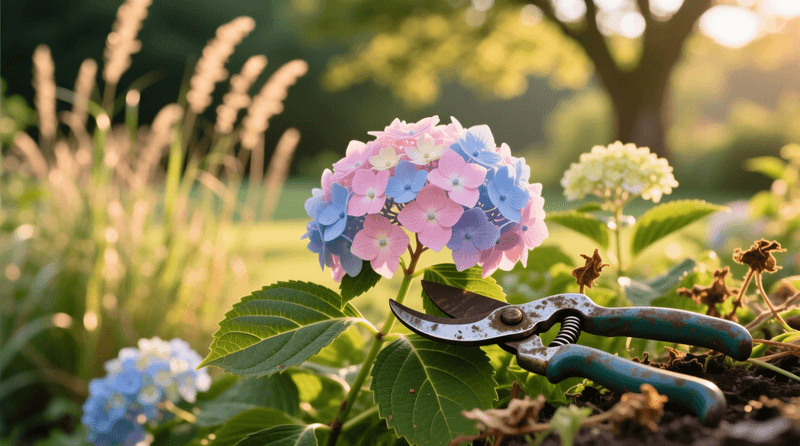
Deadheading and hard pruning are not the same thing, and mixing them up in August can cost you next spring’s flowers on old-wood hydrangeas. Deadheading simply means removing a spent flower head to tidy the plant or redirect its energy.
Done carefully, it is a much lighter action than cutting stems back by several inches or more.
When deadheading an old-wood hydrangea in late summer, snip just below the faded flower head and stop there. Do not cut down into healthy stem tissue looking for a better spot.
The nodes and potential buds that carry next year’s flowers are located along those stems, and deep cuts can remove them before they ever develop. If you are not sure where a safe cut ends and a risky cut begins, the smartest move is to leave the flower head in place.
Dried hydrangea blooms left on the plant through fall and winter actually serve a purpose beyond looks. They can provide a small amount of insulation around the stem tips and give the garden visual interest during bare months.
Botanical garden guidance often notes that dried hydrangea heads are an attractive feature rather than a problem. Deadheading is not required for next spring’s bloom on most hydrangeas.
Think of it as optional maintenance and approach it with a light hand, especially on bigleaf, oakleaf, mountain, and climbing types.
6. Water Deeply So Stressed Shrubs Can Recover
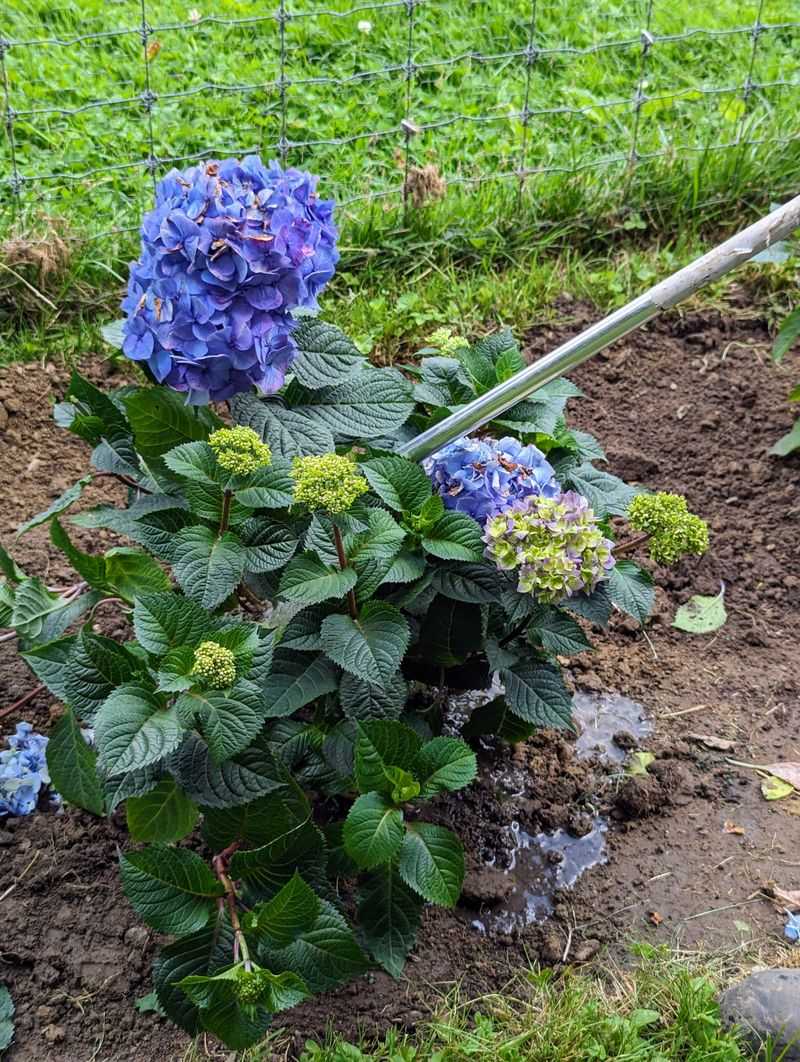
Hot, dry August weather puts real pressure on hydrangea shrubs across this state. A plant under stress is not in the best condition to develop and protect next year’s flower buds.
Protecting those buds is not only about what you do not cut. Supporting the plant’s overall health through smart watering is equally important.
Deep, infrequent watering works better than shallow, frequent sprinkles for most established shrubs. When soil is dry an inch or two below the surface, water slowly and thoroughly at the root zone rather than spraying the foliage.
Wet leaves in warm weather can invite fungal issues. A two-to-three-inch layer of organic mulch around the base of the shrub helps retain soil moisture between waterings and keeps roots cooler during heat waves.
Drought stress can weaken a hydrangea’s overall performance and may affect how well it handles the coming fall and winter. However, watering alone does not guarantee next spring’s blooms.
Winter injury, late freezes, and other factors are still in play no matter how well the plant was watered in August. Think of deep watering as one part of a broader care approach, not a single solution.
OSU Extension guidance on landscape shrubs consistently points to consistent soil moisture as a foundation of good plant health. Hydrangeas are no exception to that principle.
7. Stop Fertilizing Before Tender Growth Gets Pushed
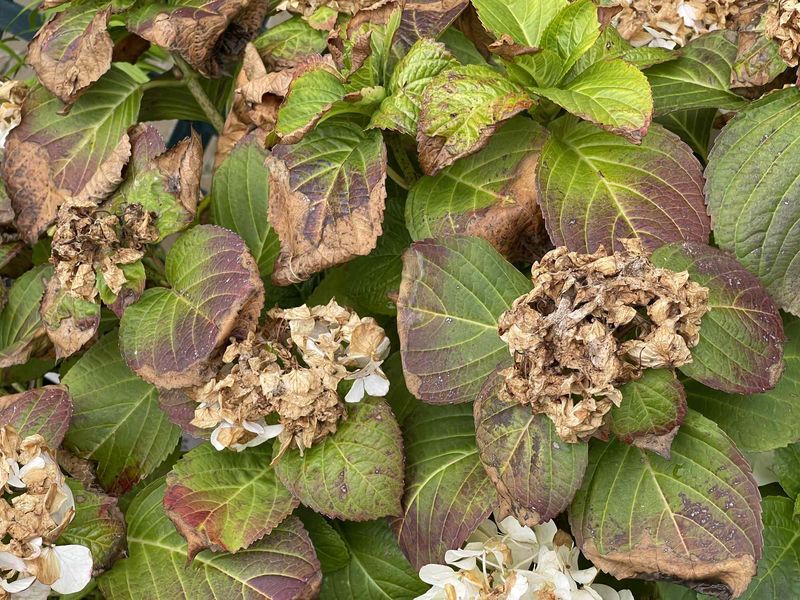
Late summer is not the time to push a hydrangea into a growth spurt. Fertilizer applied too late in the season can encourage a flush of soft, tender new growth, especially products high in nitrogen.
That growth does not have enough time to harden before cold weather arrives. That tender growth is vulnerable to frost damage, and damaged stems are not reliable carriers of next year’s flower buds.
Pruning guidance and university extension sources generally suggest wrapping up heavy fertilizer applications for hydrangeas by midsummer.
If you follow a soil-test-based fertilizer program, stick to the timing recommendations from that test rather than adding extra feeding in August.
Mulching and consistent watering do more good for a hydrangea in late summer than a late nitrogen boost.
Fertilizer also does not fix pruning mistakes. If next spring’s blooms are missing because old wood was cut in August, no amount of fertilizer the following year will bring those flowers back for that season.
The bloom cycle on old-wood hydrangeas depends on preserving the right stems, not on feeding the plant harder. If you suspect a nutrient deficiency or serious plant health problem, consult your local OSU Extension office or a qualified plant professional.
Do that rather than guessing with fertilizer. Restraint is the safer and smarter late-summer message for feeding hydrangeas in Ohio.
8. Mark Panicle And Smooth Hydrangeas As Exceptions
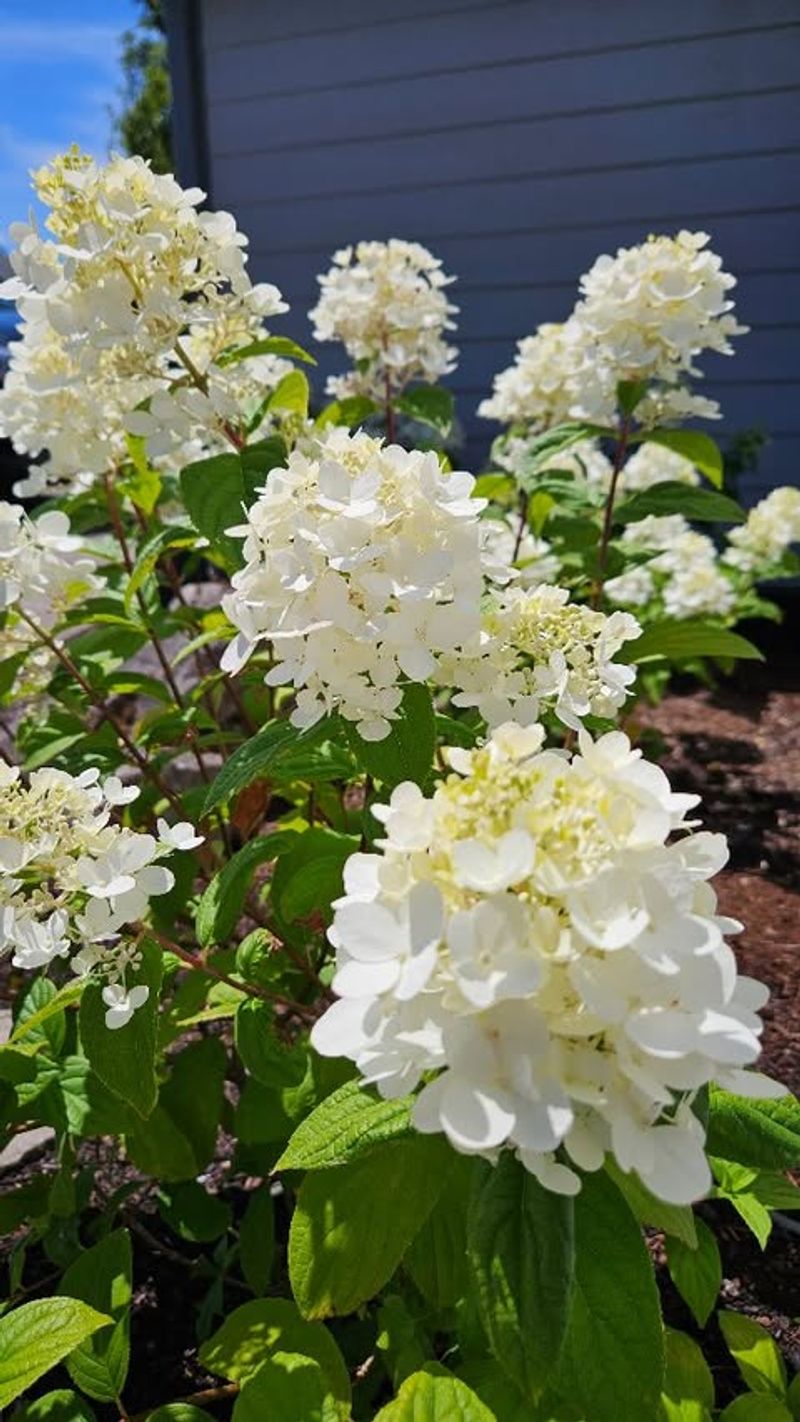
Not every hydrangea in your yard needs the same August protection plan, and that distinction matters a lot before you start worrying about every shrub on the property.
Panicle hydrangeas, often sold under names like Limelight or Quick Fire, and smooth hydrangeas, including the popular Annabelle, bloom on new wood.
That means they produce flowers on growth that develops in the current season, not on old stems from the year before.
Because panicle and smooth hydrangeas bloom on new wood, the old-wood bud protection advice in this article does not apply to them in the same way. August pruning concerns are much less critical for these types.
Most extension sources recommend pruning panicle and smooth hydrangeas in late winter or early spring before new growth begins. That is a very different schedule from old-wood bloomers.
Identifying your hydrangeas before applying any care advice is the real takeaway from this entire article. Panicle hydrangeas have cone-shaped or elongated flower clusters and smaller leaves compared to bigleaf types.
Smooth hydrangeas have large, round white flower heads and softer stems that often flop without support. Knowing which type you have tells you immediately which rules apply.
August hydrangea care in the Buckeye State starts with one honest question: does next year’s flower grow on old wood or new wood? Answer that first, and every other decision becomes much clearer and far less risky.