The One Thing You Must Do To Crape Myrtles In Florida Before August Is Over
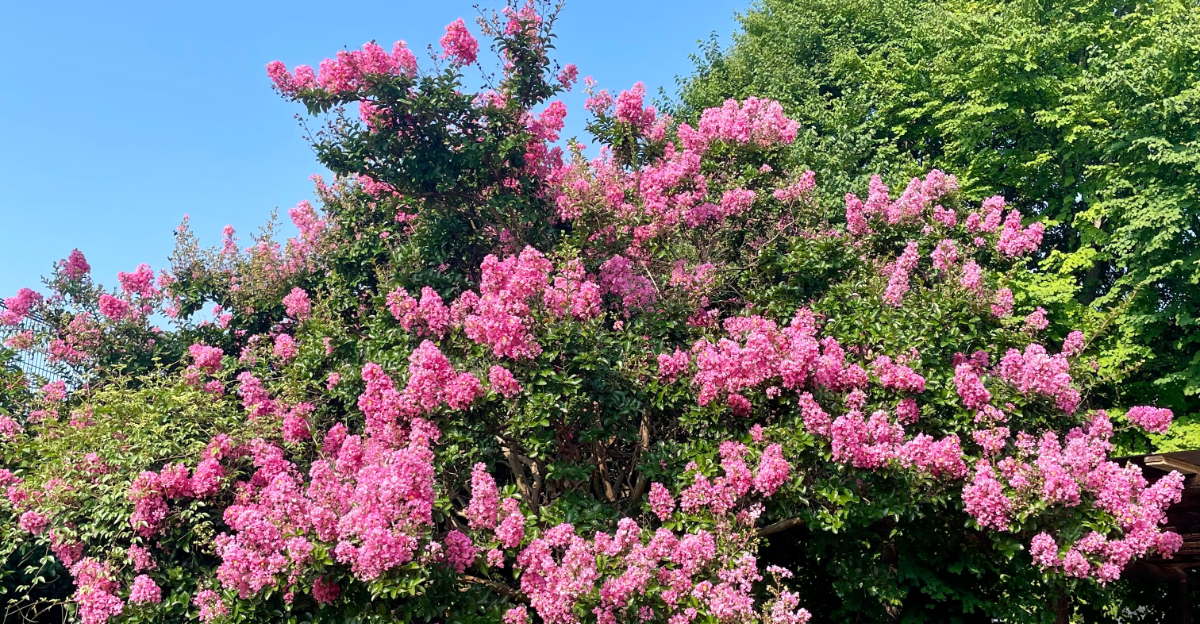
Crape myrtles in Florida look like they handle themselves. Through heat, through humidity, through the kind of summer that tests everything else in the yard.
That self-sufficiency is real for most of the season and misleading right now. August is when crape myrtles make decisions about fall.
Not the gardener. The plant.
And without one specific intervention before the month ends, those decisions trend in the wrong direction. The window is narrow.
It opens in late summer and closes before September settles in. Inside that window, one task redirects the plant’s energy toward a fall flush of color that most Florida crape myrtles never fully deliver because nobody acted at the right moment.
Outside that window, the opportunity is gone for another full year. The crape myrtle looks fine either way.
The fall bloom is what tells the story of whether August was handled correctly or not.
1. Spent Flower Clusters Are Where The Late-Summer Reset Begins
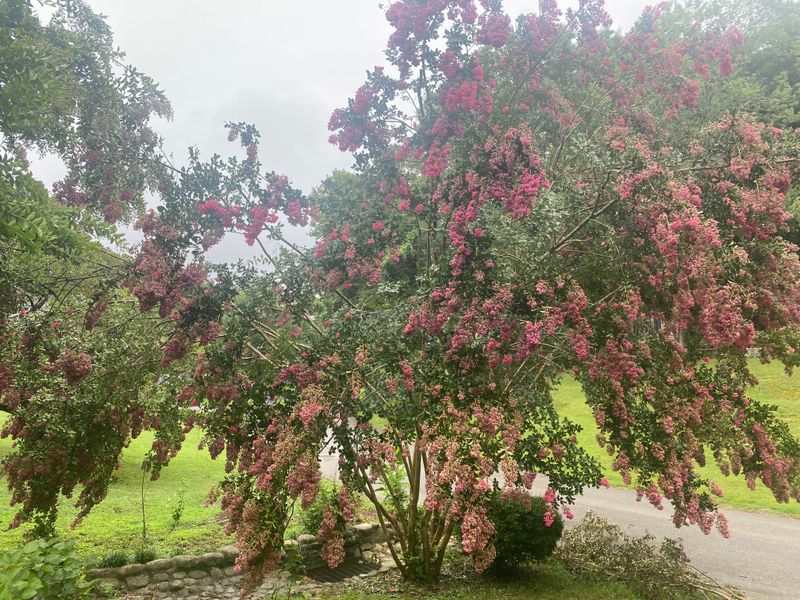
Brown and papery flower clusters hanging at the ends of crape myrtle branches are the Florida gardener’s starting point for late-summer trimming.
Those faded panicles have already finished their job, and small round seed capsules are beginning to form right where the blooms once were.
Identifying these spent clusters correctly is the first skill you need before picking up any pruning tool.
UF/IFAS supports removing spent flowers or developing seed capsules during the growing season as a way to encourage continued flowering. The key is understanding exactly where the spent growth ends and the permanent structural wood begins.
You are looking at the very tip of the branch, where soft, young stem meets the old flower cluster.
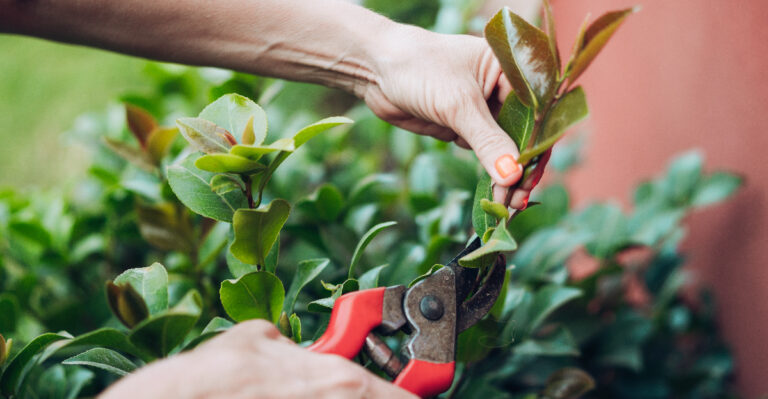
A small tip cut in that zone is all that is needed. You are not reshaping the canopy or shortening major limbs.
Think of it as tidying up the outermost growth, nothing more.
If your tree still has fresh, open flowers on some branches, those tips do not need to be touched. Only the sections where blooms have fully faded and seedpods are forming are candidates for removal.
Leaving healthy, actively blooming tips alone protects the display already in progress and keeps the tree looking its best while you work through the spent sections.
2. A Small Snip Can Trigger Another Round Of New Growth
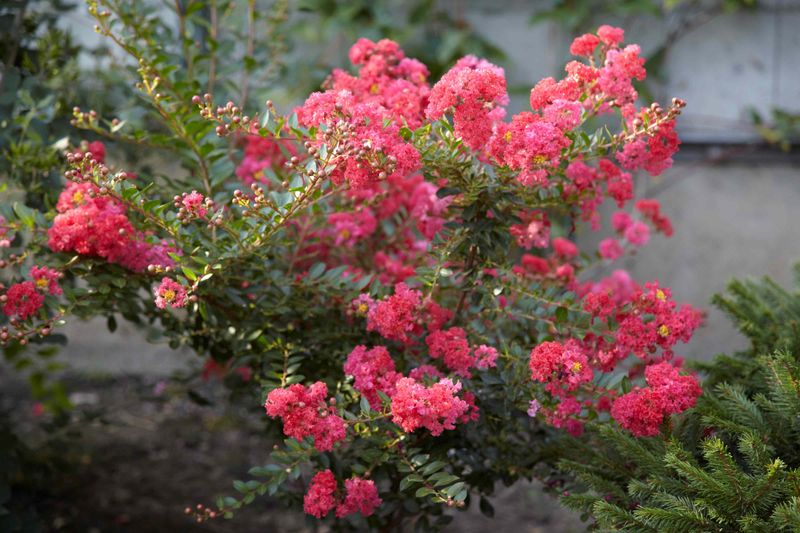
Crape myrtles bloom at the tips of new growth, which is the biological detail that makes trimming a worthwhile late-summer strategy. When you remove the terminal tip of a branch, dormant buds just below the cut can wake up and push out fresh shoots.
Those new shoots then grow toward the sun and, if conditions cooperate, develop flower buds at their own tips.
This is a growth response, not a guaranteed flowering switch. Think of it as giving the tree a gentle nudge rather than flipping a light switch.
Healthy, actively growing trees are the best candidates for this optional treatment because they already have the energy reserves to produce new shoots quickly.
The cut itself should stay on small, young terminal stems, typically no thicker than a pencil. Moving further down into larger wood changes the entire character of the cut.
Your Florida Garden Changes Every Week. Your Plan Should Too.
Gardening in Florida changes quickly throughout the season. Every Friday you’ll receive a simple weekly plan showing exactly what to plant, prune, fertilize, harvest, and protect so you never miss the right timing.
That kind of reduction is closer to structural pruning, which belongs in the dormant season, not late August.
Topping or heading back large limbs is a completely different practice and carries real risks for tree form and long-term health. A light tip cut preserves almost all of the canopy while still giving dormant buds the signal they need.
Keep the snip small, keep it at the tip, and let the tree do the rest of the work.
3. Four To Six Weeks Could Bring The Color Back
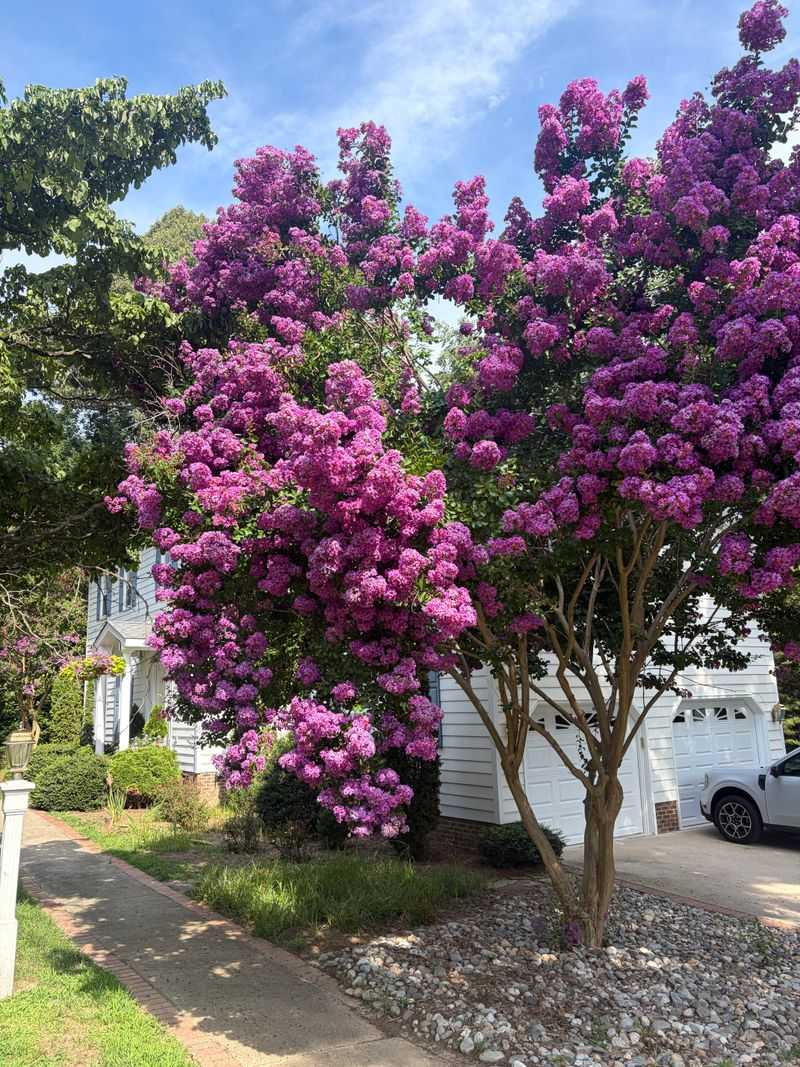
Timing is everything with late-summer trimming. UF/IFAS Extension guidance points to roughly four to six weeks between a tip cut and a potential second bloom flush.
Trim before August ends, and that rebloom window lands in early to mid-fall, which is a genuinely pleasant time to have fresh color in the Florida yard.
The reason the timing works is straightforward. New growth has to emerge after the cut, mature enough to carry flower buds, and then actually open those buds.
That process takes time, and the four-to-six-week estimate reflects the pace of a healthy tree in warm growing conditions.
Weather, cultivar, tree vigor, available sunlight, and local soil conditions all influence how quickly or slowly that process unfolds. Some trees may respond faster, others slower, and a few may not produce a noticeable second flush at all.
No calendar date can guarantee flowers on every tree.
Gardeners farther north in the state should also keep in mind that a late response could overlap with cooler fall temperatures, which can slow new growth.
For most of the peninsula, though, warmth lingers well into autumn, giving a late-August tip cut a reasonable chance to pay off.
The goal is to set the process in motion before the growing season loses too much of its remaining energy.
4. Seedpods Signal Where Your Pruners Should Stop
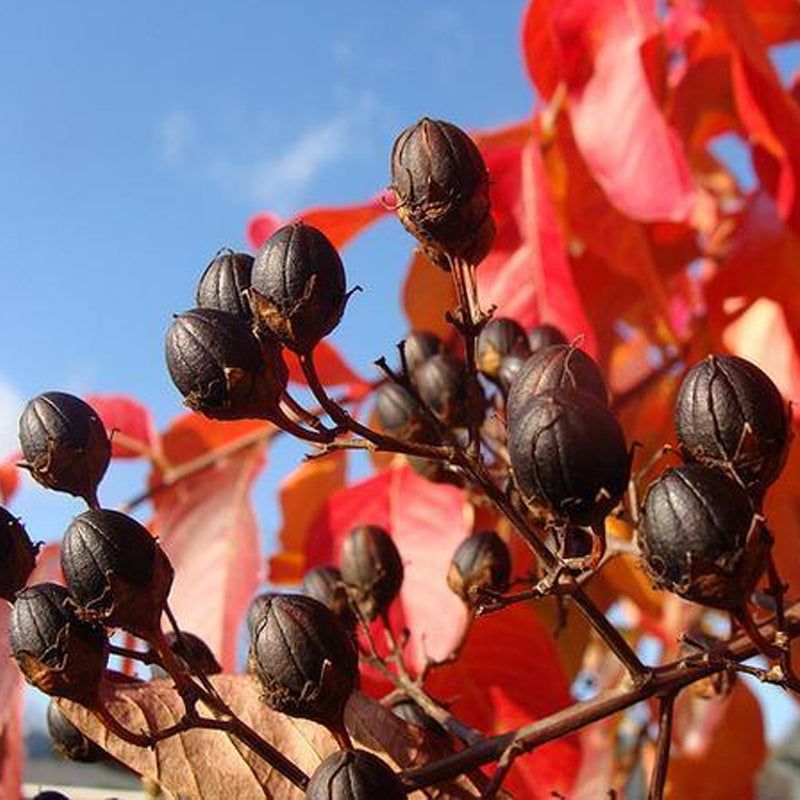
Seed capsules are actually helpful guides when you are deciding where to make your cut. They develop right where the summer flower clusters were located, sitting at the very end of each terminal stem.
That position makes them a reliable visual marker for the boundary between spent growth and the wood you want to keep.
Work near the terminal cluster rather than traveling far down into substantial wood. A cut just below the seed capsule group removes the spent material without sacrificing any meaningful branch structure.
Moving several inches or more down the stem puts you into older wood that is not the target of this optional technique.
Here is a reassuring fact worth knowing: UF/IFAS notes that seed capsules left on the tree through winter do not reduce the following year’s flowering. Seedpods are not a threat to the tree’s long-term performance.
Their presence on a branch does not signal a problem that requires urgent correction.
Removing them now has one specific purpose, which is to stimulate another growing-season flush before the warm months run out. If you have a large, mature tree with hundreds of spent clusters, there is no need to chase every single seedpod.
Focus on the most visible or accessible branch tips and let the rest remain. The tree will not suffer, and you will save yourself a great deal of unnecessary effort in the process.
5. Pencil-Thin Tips Are Fair Game While Big Branches Stay Put
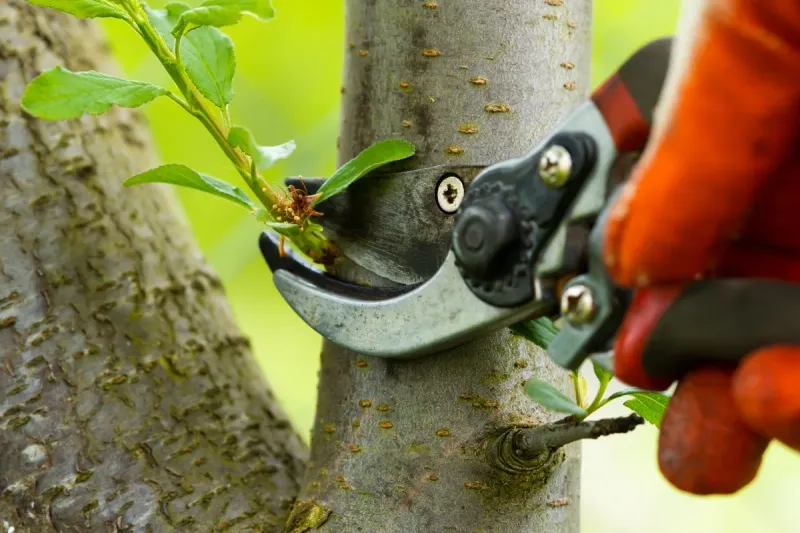
UF/IFAS uses terms like tipping or pencil pruning to describe exactly this kind of work, and those names are genuinely descriptive. The stems you are targeting are young, outer growth roughly the diameter of a pencil.
They are flexible, easy to cut cleanly with a sharp pair of bypass hand pruners, and quick to respond with new buds.
Contrast that with removing large-diameter branches, which is a fundamentally different task with very different consequences for the tree.
Cutting into substantial wood changes the tree’s structure, exposes more surface area to pests and pathogens, and requires the tree to spend significant energy healing.
That kind of work is not part of the late-August trimming routine.
Keeping cuts small also preserves nearly all of the canopy, so the tree continues to look full and healthy while new growth develops below the cut points. You are not creating gaps or altering the tree’s natural silhouette.
The canopy stays largely intact.
One practical note worth considering: large, mature crape myrtles with high canopies may simply be impractical to trim by hand. Reaching into tall growth or working from a ladder just to chase another flower flush is not worth the safety risk.
For those trees, stepping back and letting them proceed on their own timeline is a perfectly reasonable choice. Tip pruning is most practical on younger, smaller, or lower-branching trees where the spent tips are within comfortable reach.
6. Hard Pruning Now Creates Problems Instead Of More Flowers
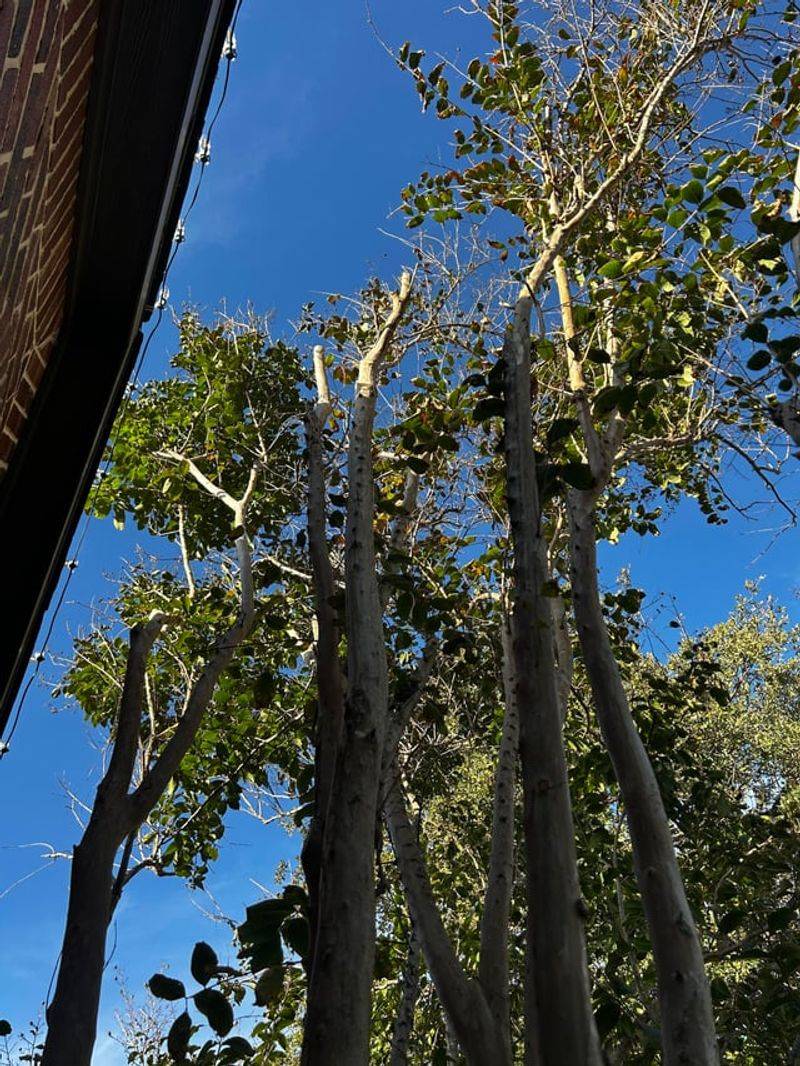
Late summer is not the time for major reshaping, heavy reduction, or any practice that removes large portions of the crape myrtle canopy.
UF/IFAS generally does not recommend hard pruning during the active growing season, and there are good reasons behind that guidance.
The tree is working hard to support its full canopy and any developing seed growth, and heavy cuts disrupt that process significantly.
Topping, which means cutting the main stems back to flat, stubby endpoints, is a common mistake that causes lasting damage to tree form. It triggers vigorous, weakly attached sprouts from the cut points and creates an unnatural silhouette.
On many cultivars, it can also delay or shorten the bloom period. More cuts do not mean more flowers when the cuts are in the wrong place.
Severe canopy reduction in summer can also stress the tree by removing too much of its leaf surface at once. Leaves are where the tree produces the energy it needs to grow, bloom, and maintain its root system.
Taking away too much of that surface in one session puts real strain on the plant.
Structural or corrective pruning belongs in the dormant season, typically late winter before new growth begins. That timing allows the tree to recover and redirect energy into fresh spring growth.
Keep the contrast clear in your mind: a small terminal cut for optional rebloom now, and any major pruning decisions saved for the appropriate winter window.
7. Newer Crape Myrtles May Rebloom Without Any Help At All
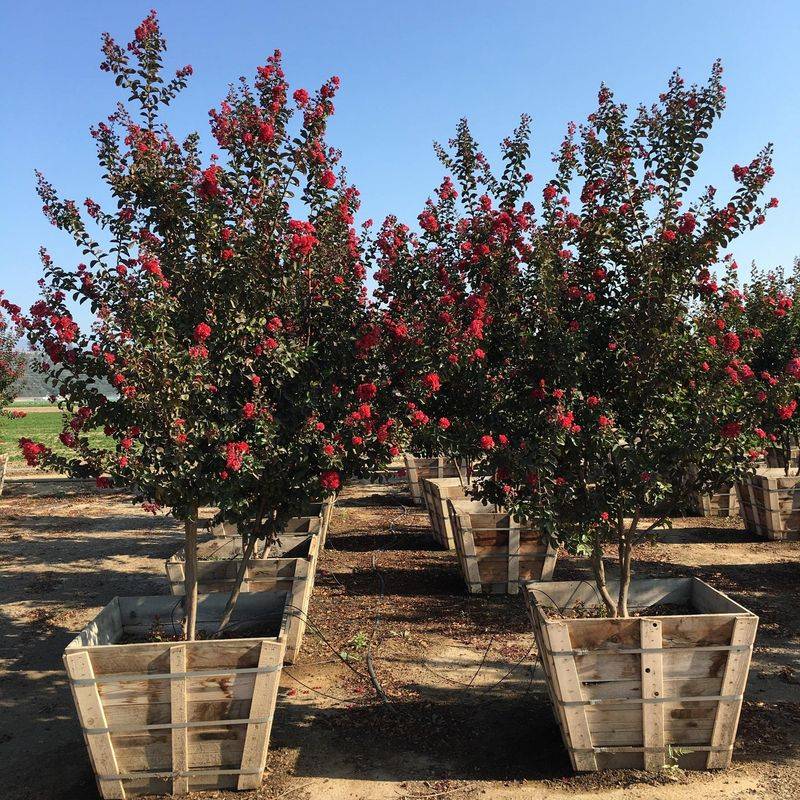
Plant breeders have spent decades selecting crape myrtle cultivars for longer, more continuous flowering seasons.
Many of the newer varieties available at garden centers today are specifically bred to produce repeated bloom flushes with little or no help from the gardener.
If you planted one of these modern selections, your tree may already be working on its next round of flowers right now.
UF/IFAS notes that repeated tip pruning can therefore be unnecessary for many contemporary cultivars. Before reaching for your pruners out of habit, take a few minutes to actually look at the tree.
Check the branch tips carefully for signs of fresh bud development or new green growth already pushing through near spent flower clusters.
If new growth is already visible and healthy, putting the pruners away is often the smarter move. The tree has already received the signal it needs from its own biology.
Cutting into actively developing new growth would only interrupt a process that is going well on its own.
Cultivar genetics play a large role in how long and how often a crape myrtle blooms. Properly selected and well-placed trees can go through an entire season needing little or no routine pruning at all.
The headline uses the phrase must do, but that wording is editorial shorthand for gardeners chasing a second flush. It is not a universal rule that applies to every tree in every Florida yard.
Observe first, then decide.
8. Late August Is Your Window If Fall Flowers Are The Goal
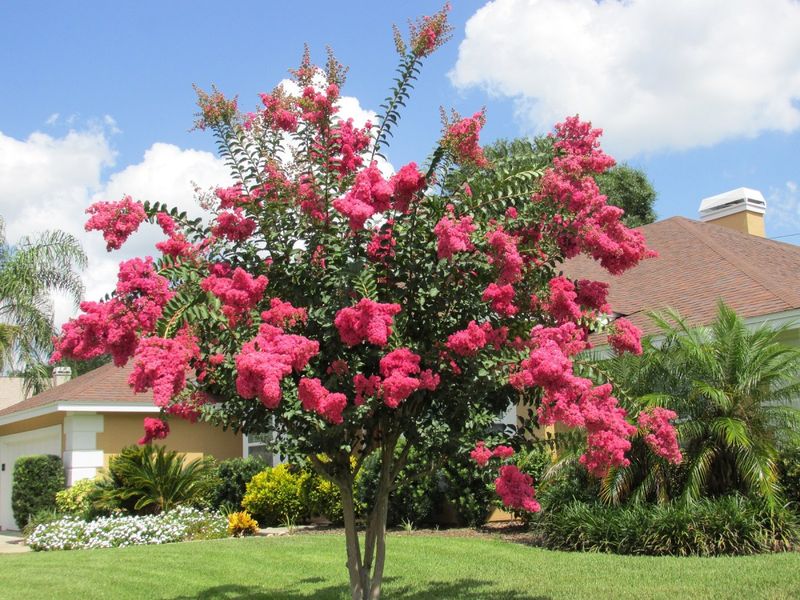
All of the information in this article points toward one simple decision you need to make before the month runs out. Look at your tree honestly.
If the first summer bloom has fully faded, you can try encouraging another flush of color. A light tip cut on the spent terminal clusters is a reasonable approach.
If the tree is already showing fresh growth or new buds, step back and let it continue on its own.
Large, mature trees with high canopies can simply be left alone. Trimming a towering crape myrtle is impractical, and the tree will manage its own cycle without your help.
Prioritize accessibility and safety over the pursuit of a second bloom that may or may not appear anyway.
Whatever you do this month, remember that major reshaping is not part of this conversation. Structural corrections, canopy reductions, and significant branch removals should wait for the dormant season.
That pruning window typically falls in late winter before new growth emerges. Doing that work now would undermine the tree’s health and form without delivering any meaningful bloom benefit in Florida.
Late summer offers one narrow, optional opportunity: a gentle tip cut to nudge the tree toward another flowering cycle. The possible reward is a fall display of fresh color arriving roughly four to six weeks later.
That is worth a few minutes with a sharp pair of pruners, as long as you keep the cuts small and the expectations realistic.