The One Thing You Must Do To Crape Myrtles In North Carolina Before August Is Over
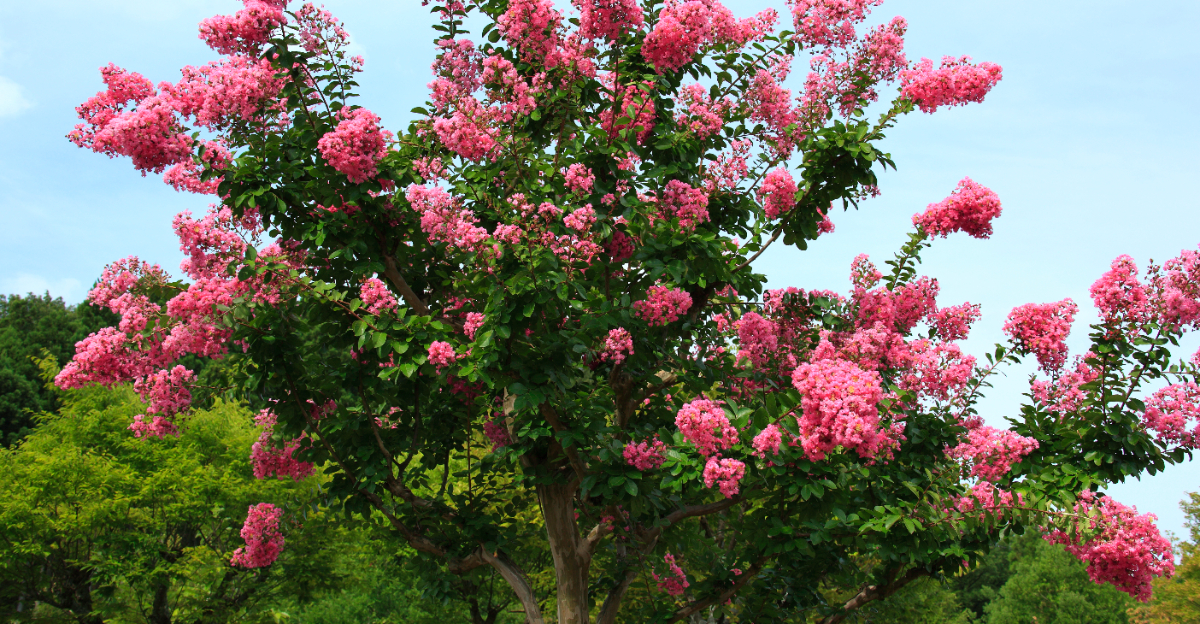
Removing spent blooms is the one task North Carolina gardeners cannot skip on crape myrtles before August wraps up if they want continued flowering.
Removing faded flower clusters encourages the plant to produce a fresh round of blooms rather than redirecting energy toward seed production.
This simple task can extend the blooming season significantly, sometimes adding several more weeks of color before fall arrives. Cutting just below the spent flower cluster, rather than deep into the branch, protects the tree’s overall shape and structure.
Skipping this step often results in blooming slowing down dramatically as the plant shifts focus toward seed pods instead. Consistent watering after deadheading supports the energy needed to produce another healthy flush of blooms.
Avoiding heavy pruning this late in the season protects the tree from unnecessary stress heading into fall. Taking a few minutes now can make a noticeable difference in how long your crape myrtle continues blooming.
1. Remove Faded Flower Clusters Before August Ends
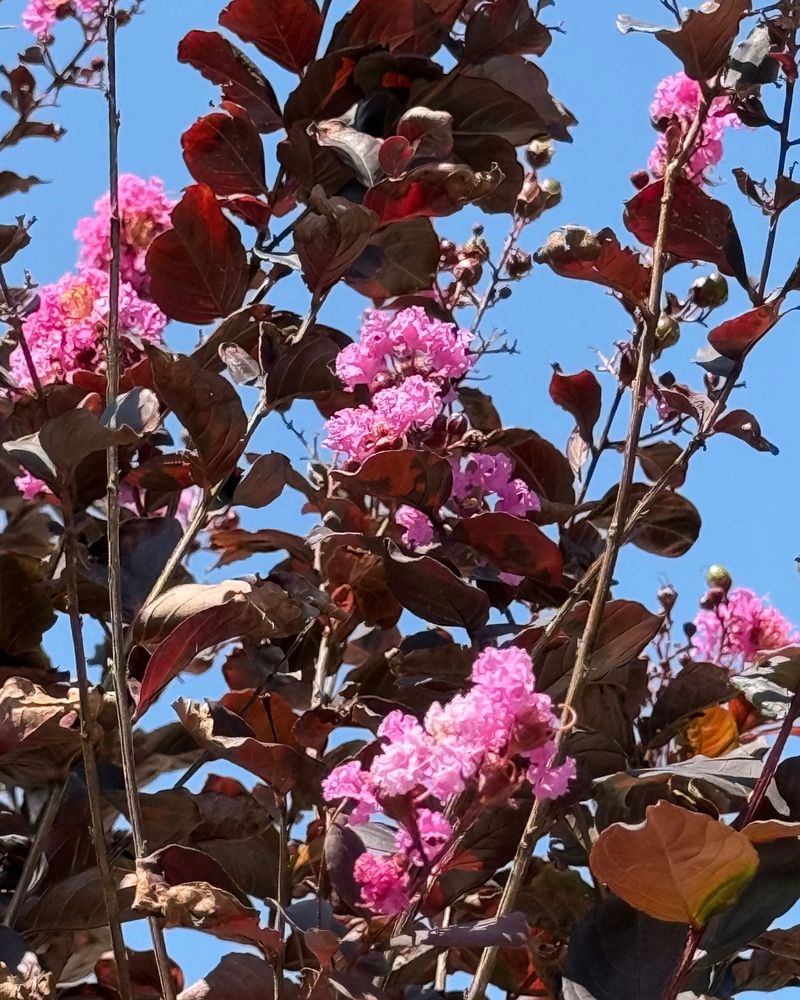
Picture your Crape Myrtle covered in bright blooms all the way into September. That picture can become reality if you act before August slips away.
When flowers finish and begin to fade, the plant shifts its energy toward forming seed capsules. Removing those spent clusters before the plant commits too much energy to seed production gives the stems a chance to push out fresh new growth.
That fresh growth can carry another flush of flowers while warm weather still holds. The key word here is “can,” not “will.” A second bloom is genuinely possible, not a guarantee.
Variety plays a huge role, as some cultivars rebloom more reliably than others. Weather, sunlight, plant health, and how much of the warm season remains all work together to decide whether new flowers actually open.
North Carolina summers stretch long enough to make a second display realistic in many parts of the state, especially in the Piedmont and coastal regions where heat lingers well into September.
Getting out there with a clean pair of hand pruners during August gives you the best possible shot at that reward.
Even if a full second flush does not appear, removing spent blooms keeps the plant looking tidy and prevents unnecessary seed capsule formation. Think of August deadheading as giving your Crape Myrtle a small but meaningful nudge in the right direction.
A little effort now can translate into weeks of extra color before fall arrives and temperatures finally begin to cool down for the season.
2. Make The Cut Above Healthy Leaves Or A Side Branch
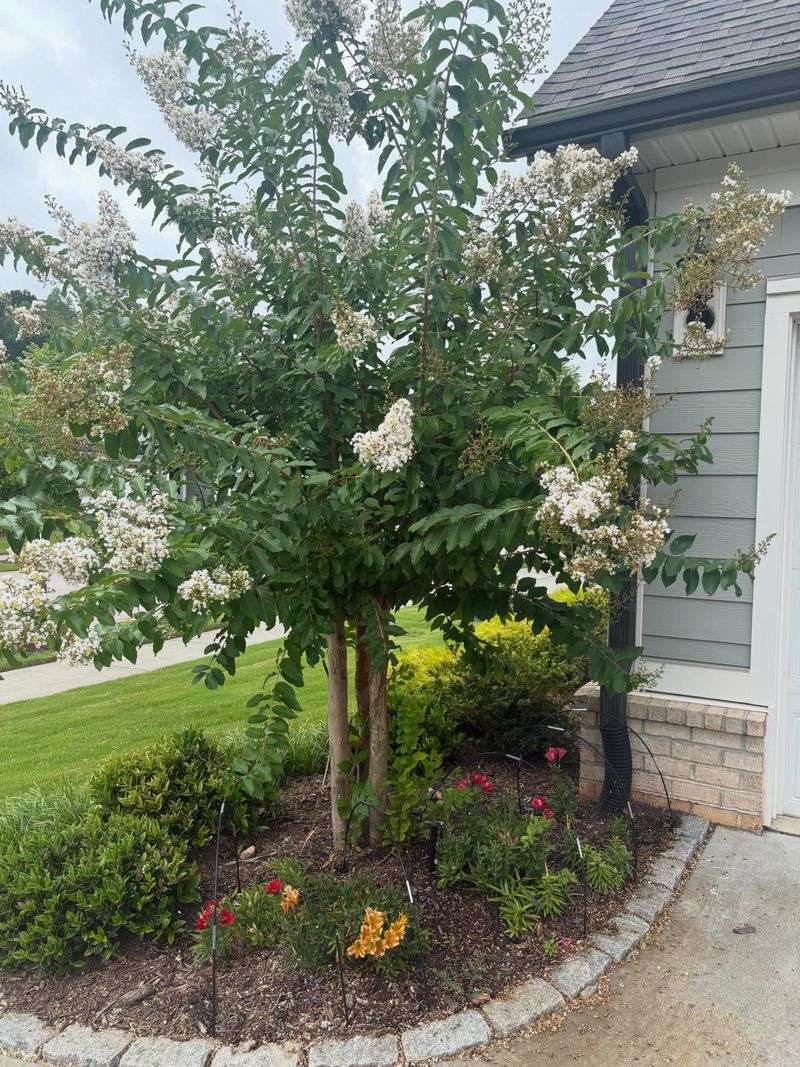
Knowing where to snip makes all the difference between a clean, helpful cut and one that leaves the plant looking awkward.
Follow each spent flower cluster down the stem until you reach a healthy pair of leaves or a strong side branch growing outward.
That is exactly where your cut should go, just above that point. Cutting there encourages the stem to branch right at that spot, which is precisely what you want.
The goal is to remove only the finished flowering portion of the stem. Nothing more, nothing less.
Your North Carolina Garden Changes Every Week. Your Plan Should Too.
Gardening in North Carolina changes quickly throughout the season. Every Friday you’ll receive a simple weekly plan showing exactly what to plant, prune, fertilize, harvest, and protect so you never miss the right timing.
Gardeners sometimes get carried away and shorten large limbs at the same time, thinking it will help. Cutting into thick wood during August does not improve flowering and can actually disrupt the plant’s natural shape heading into fall.
Stick to the spent tips and leave the healthy framework alone. A sharp, clean pair of hand pruners works best for this task. Dull blades crush stem tissue instead of cutting cleanly, which slows healing and can invite problems.
Wipe your blades with rubbing alcohol between plants if you have multiple Crape Myrtles to work on. Selective cuts made just above healthy leaves preserve the graceful, natural shape that makes Crape Myrtles so appealing in the landscape.
The branching that develops near the ends of the stems after a proper cut also tends to look fuller and more natural than regrowth from a rough or improper cut. Precision here pays off in both appearance and plant health over the long run.
3. Do Not Turn Deadheading Into Heavy Pruning
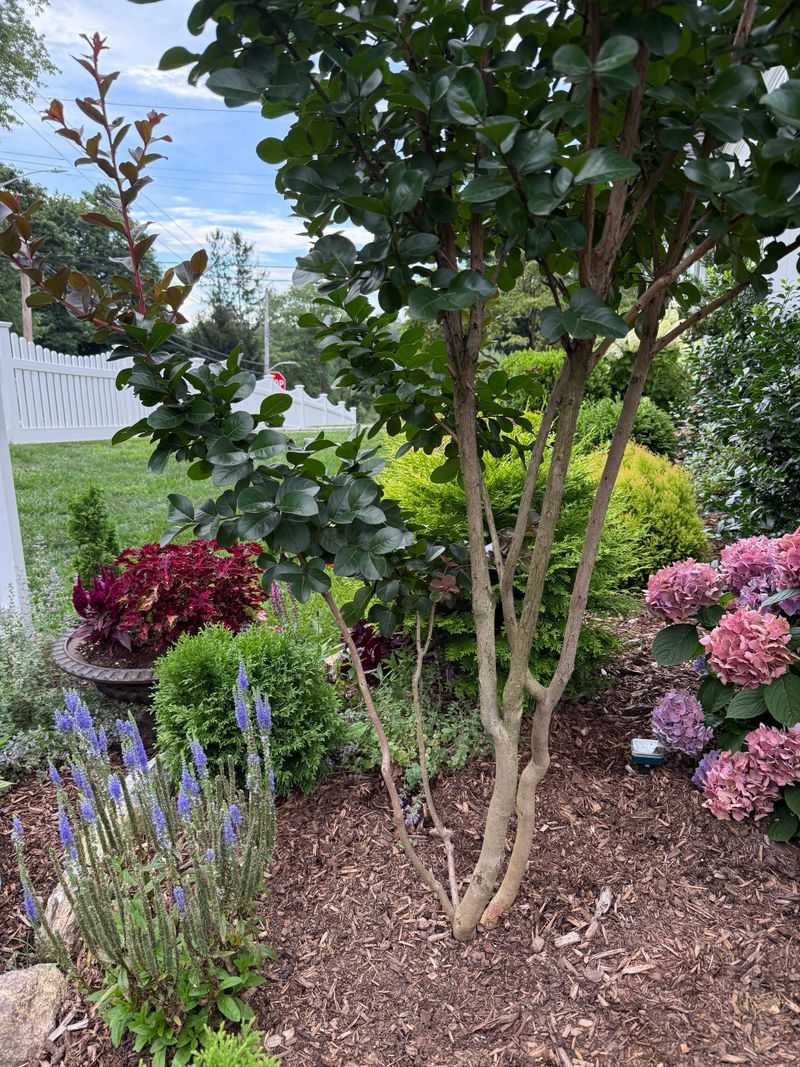
August deadheading and heavy pruning are two completely different things, and mixing them up can cause real problems. Light deadheading means removing spent flower clusters and nothing else.
Heavy pruning means cutting major branches back to thick stubs, drastically reducing the canopy, or shortening the tree to a fraction of its natural size. Only one of those belongs in August, and it is not the heavy version.
Crape Myrtles do not need severe cutting to produce flowers. They bloom naturally on new growth that develops each season, so extreme cutting is never a requirement for good flowering.
In fact, severe cuts often trigger an explosion of fast-growing, thin shoots that crowd together and look unnatural. That type of regrowth also tends to be weak and can weigh down stems as the season continues.
The attractive trunk color, smooth bark, and graceful branching that make mature Crape Myrtles so beautiful take years to develop, and heavy cuts can set that development back significantly.
August work should stay focused and minimal. Remove spent flower clusters, cut away any unwanted suckers emerging from the base, and clip off genuinely damaged small branches if you spot them. That is the full scope of what August care should include.
Gardeners who save structural shaping for the proper dormant season will always end up with healthier, better-looking trees than those who treat every visit to the garden as an opportunity to cut back hard.
Restraint in August is one of the best things you can do for a Crape Myrtle.
4. Leave Healthy Green Foliage In Place
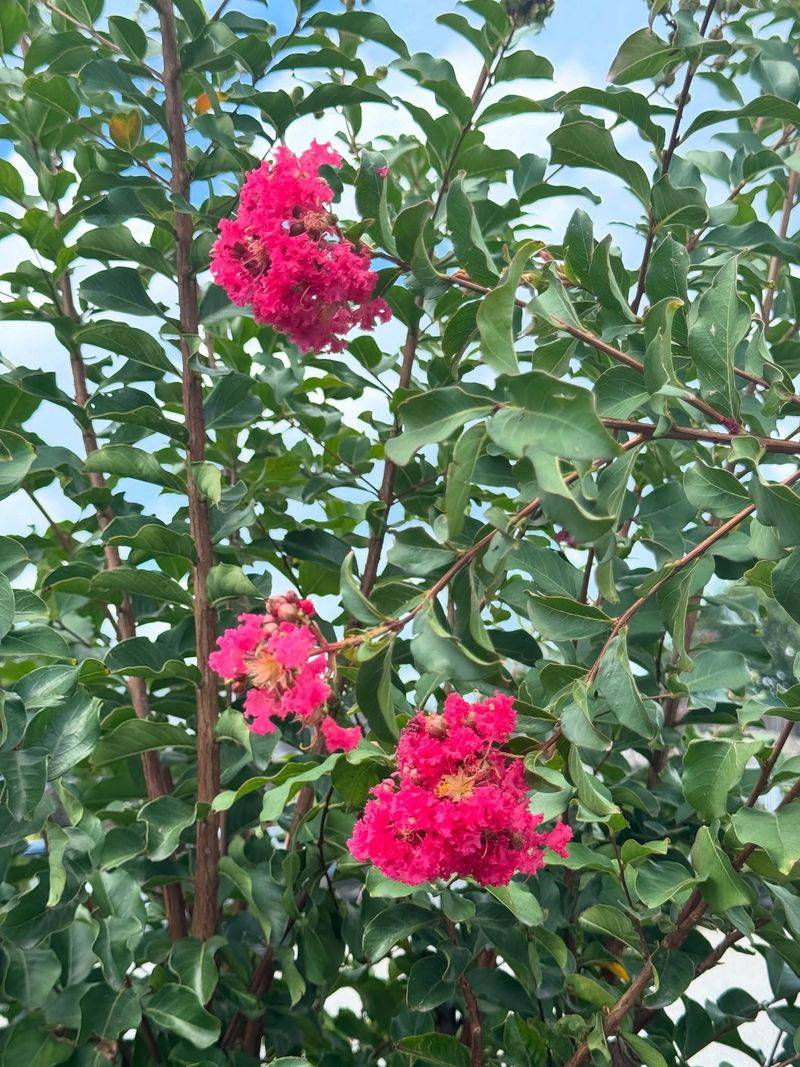
Healthy leaves are not just decoration. Every green leaf on a Crape Myrtle is actively working, capturing sunlight and converting it into the energy the plant needs to stay strong.
That energy feeds the roots, supports stem growth, and helps the plant build up the reserves it will rely on once cooler weather arrives and the growing season winds down.
Removing large amounts of healthy leafy growth in August cuts into that process at exactly the wrong time.
Some gardeners strip foliage in an attempt to make the tree look smaller or more manageable.
That approach backfires because it forces the plant to spend energy replacing leaves rather than directing resources toward roots and late-season preparation.
For recently planted Crape Myrtles that are still establishing their root systems, losing significant foliage during a hot August can be especially hard to recover from before the season ends.
Trees already dealing with drought stress or extreme summer heat are in a similar position. They need every leaf they have to manage water loss and keep internal processes running.
Pulling off healthy green growth adds unnecessary stress on top of an already challenging situation. The rule to follow is simple: if a leaf is green, healthy, and attached to a branch you are keeping, leave it alone.
August is not the time for aggressive foliage removal. Focus your attention on spent flower clusters and let the plant’s healthy green canopy do the important work it is already doing so well throughout the remainder of the season.
5. Water Before Expecting More Flowers
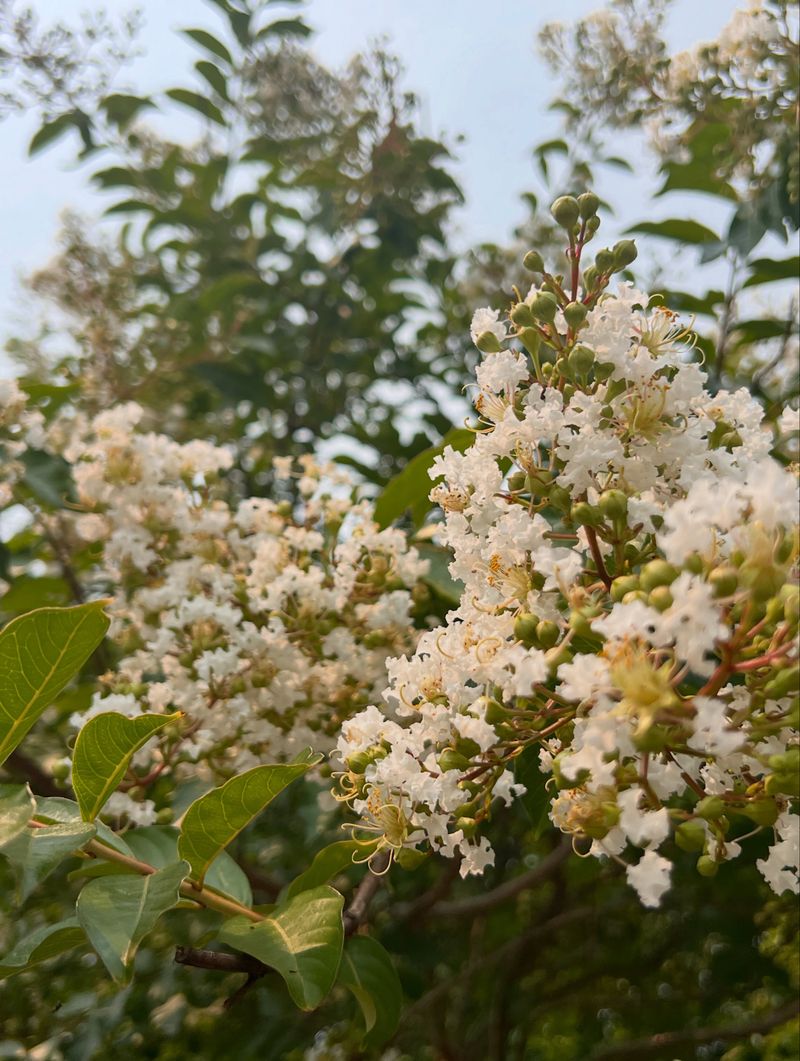
Deadheading alone cannot push a stressed Crape Myrtle into another round of blooming. If the soil around the roots has been dry for weeks, the plant simply does not have the resources to support new flowering.
Checking soil moisture before and after deadheading is a smart habit during North Carolina’s often dry August weather. Push a finger a few inches into the soil near the root zone. If it feels dry at that depth, the plant needs water.
Deep, thorough watering works far better than frequent shallow sprinkles. When you water lightly and often, moisture stays near the surface and roots stay shallow chasing it.
A deep soak encourages roots to grow downward where soil stays cooler and moisture lasts longer.
Concentrate water over the root area, which typically extends out to the edge of the canopy or slightly beyond, rather than just wetting the soil directly against the trunk.
Established Crape Myrtles are genuinely tough plants that handle some drought reasonably well. Still, prolonged dryness through the hottest part of summer can slow new growth and reduce flowering noticeably.
Watering deeply every week or so during dry spells gives the plant what it needs without overdoing it.
Soggy soil is its own problem, so avoid keeping the root zone constantly saturated. Good drainage combined with occasional deep watering strikes the right balance.
Think of water as the fuel that makes everything else you do in August actually work, because without it, even the most careful deadheading produces disappointing results.
6. Skip Heavy August Fertilizer Applications
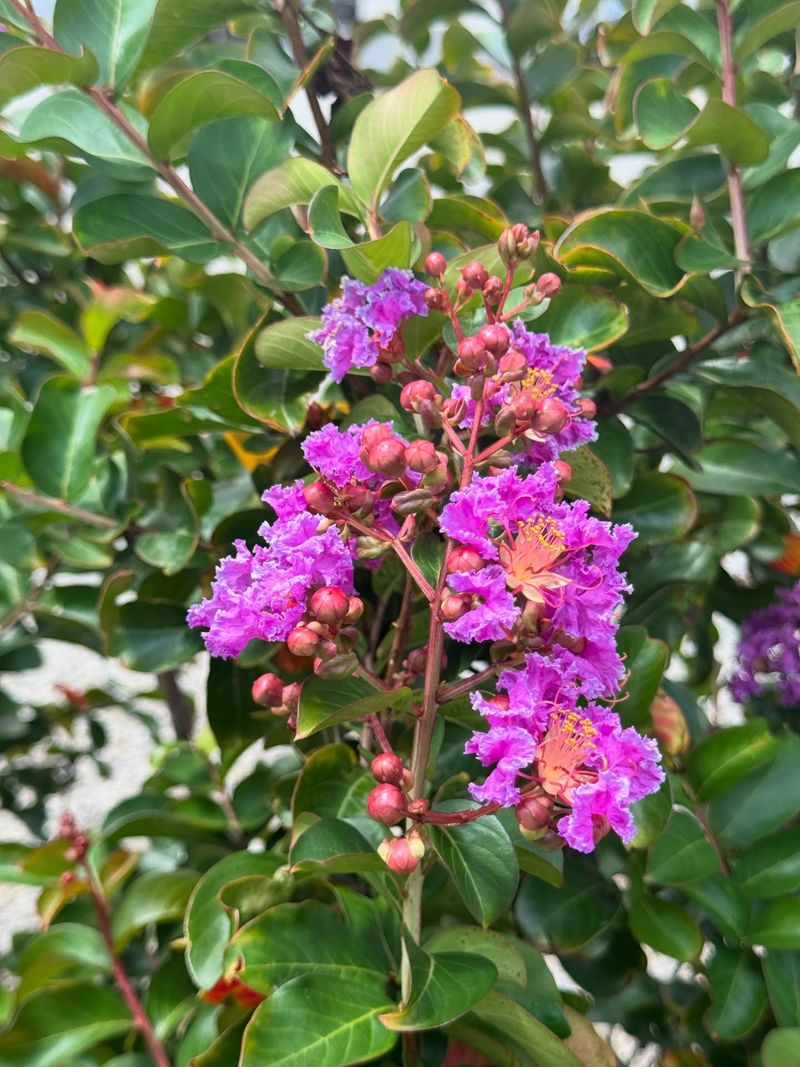
Combining deadheading with a large dose of fertilizer might seem like a smart way to supercharge a second bloom, but it often backfires.
High-nitrogen fertilizers are particularly problematic because nitrogen pushes lush, leafy growth rather than flowers.
Dumping a heavy application on a Crape Myrtle in August can send the plant into a burst of soft, leafy stem growth that looks vigorous but contributes little to late-season flowering.
There is another concern with heavy fertilizing this late in the season. Tender new growth that emerges quickly in response to a nitrogen surge has less time to harden before cooler temperatures eventually arrive.
While Crape Myrtles are tough plants overall, encouraging a flush of soft growth at the tail end of summer is not a practice that benefits the plant heading into its dormant period.
Soil fertility that was established earlier in the growing season is what actually supports late blooms.
Fertilizer is most helpful in early spring when Crape Myrtles are waking up and actively pushing new growth. By August, the plant already has everything it needs in the soil from proper spring feeding.
If a soil test reveals a specific deficiency, addressing it with a targeted, modest application is reasonable. Otherwise, trust that sunlight, moisture, plant health, and the cultivar itself are the real drivers of late-season flowering.
No amount of fertilizer compensates for poor conditions or bypasses the natural limits of the variety you are growing. Save the heavy feeding for next spring when it will genuinely pay off.
7. Remove Basal Suckers While They Are Small
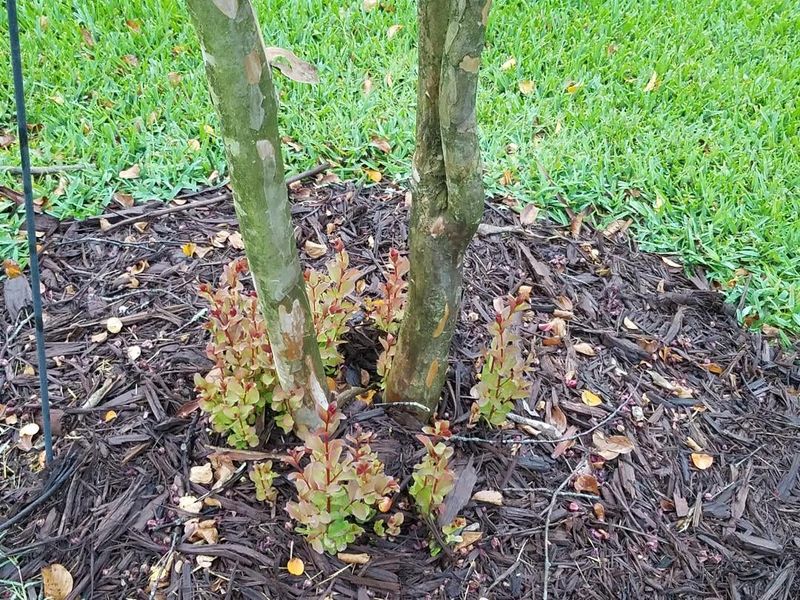
August is a convenient time to tackle one more quick task while you are already out working on your Crape Myrtle.
Basal suckers, those thin shoots that sprout from the base of the trunk or from roots near the ground, have a habit of appearing throughout the growing season.
Catching them while they are still small makes removal much easier and cleaner than waiting until they develop into thick, woody stems.
The right way to remove them is to trace each sucker back to its point of origin, as close to the trunk or root as possible, and make a clean cut right there. Cutting them off higher up often leaves a small stub that simply re-sprouts quickly.
Getting down low and removing them at the source reduces the chance of immediate regrowth. Avoid digging aggressively around the root zone in the process, since disturbing roots during summer heat adds unnecessary stress to the plant.
Suckers divert energy away from the main canopy and trunk framework that you have spent time shaping and caring for. Removing them keeps the tree looking clean and directs resources toward the branches and flowers you actually want.
One important note: if you are growing your Crape Myrtle as a natural multi-stem shrub rather than a single-trunk tree, healthy stems originating near the base are part of the plant’s intended form.
Only remove stems that are unwanted based on the shape you are trying to maintain. Context always matters when deciding what stays and what goes.
8. Save Major Shaping For The Proper Season
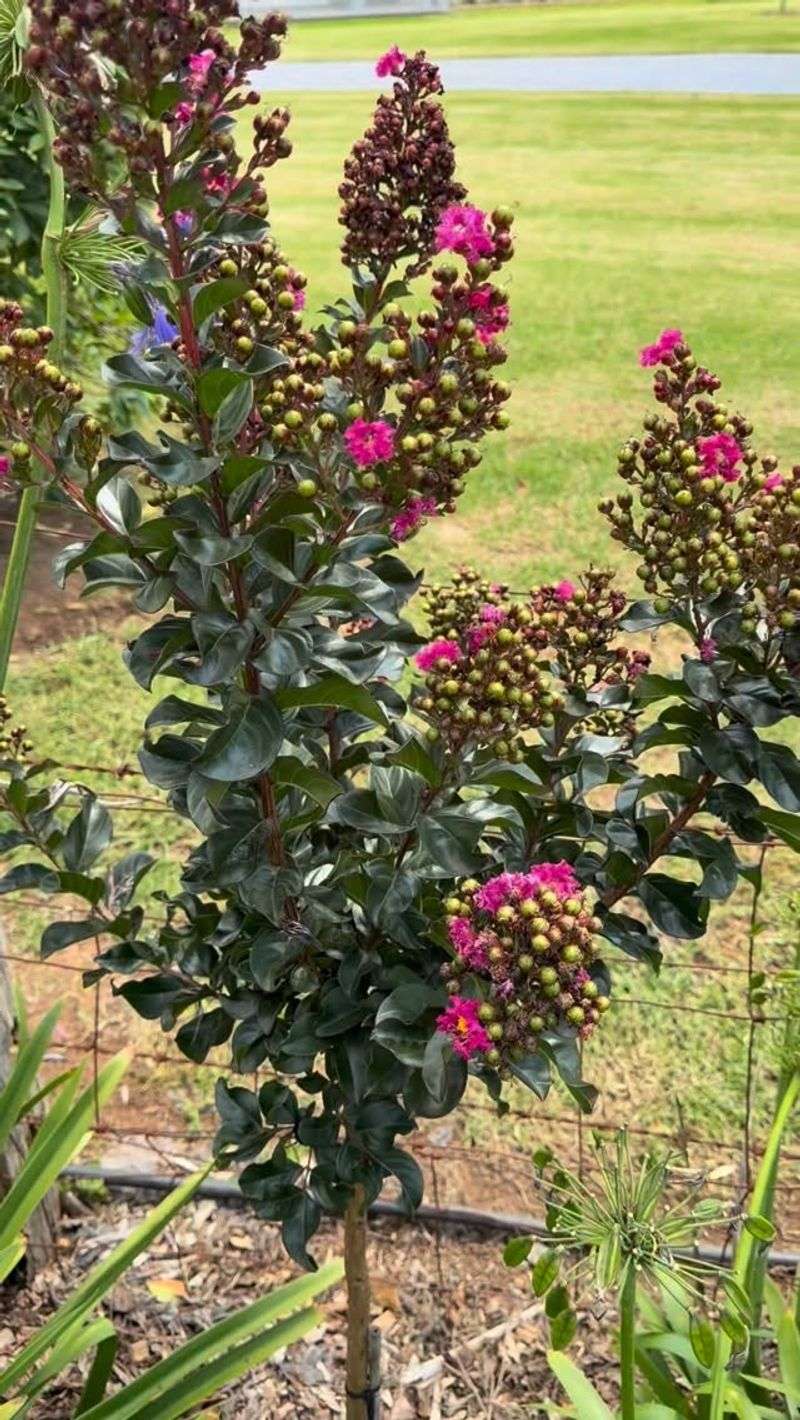
August care should always stay light and purposeful. The main job this month is removing spent flower clusters when you want to encourage another flush, keeping the plant tidy, and making sure it has adequate moisture.
That is a meaningful to-do list without adding any large structural work on top of it.
Major shaping decisions belong in late winter or very early spring, during the dormant season, when the branch structure is fully visible and easy to evaluate without foliage in the way.
Crape Myrtles are genuinely beautiful plants when they are allowed to develop naturally over time. The smooth, peeling bark in shades of cinnamon, tan, and gray becomes one of the most striking features of a mature specimen.
Graceful arching branches and a naturally layered canopy develop slowly over years of healthy growth.
Repeated severe cutting disrupts all of that, resetting the plant and forcing it to spend energy rebuilding basic structure instead of maturing into the ornamental showpiece it is capable of becoming.
North Carolina gardeners who commit to light, selective August maintenance and save structural pruning for the proper season consistently end up with healthier, more attractive Crape Myrtles than those who cut hard whenever the mood strikes.
The productive August task is targeted deadheading, nothing more dramatic than that. Respect the plant’s natural growth habit, give it water and sunlight, and trust the process.
Crape Myrtles reward patience and thoughtful care with years of reliable color, beautiful form, and that unmistakable late-summer presence that makes them a beloved staple of the Southern landscape.