More Praying Mantises In Your Texas Garden Means Fewer Pest Insects (How To Attract Them)
If you could hire a pest control expert who works around the clock, never asks for a day off, and charges absolutely nothing, you would sign up immediately. Well, that expert already exists.
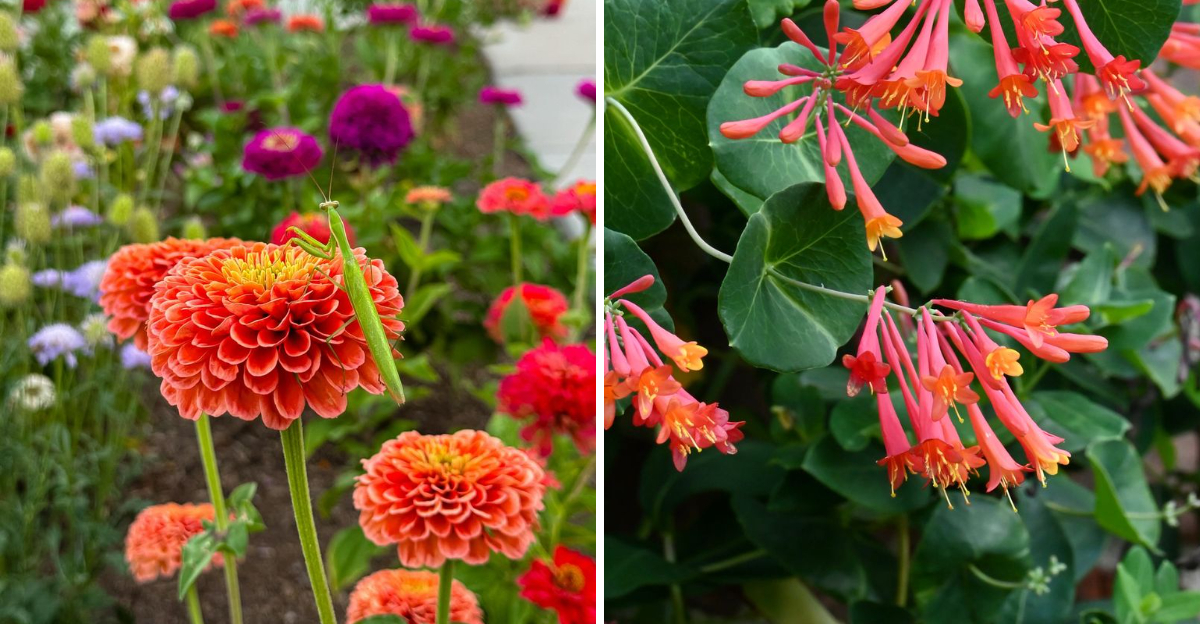
It has six legs, a swiveling head, and a hunting accuracy that puts most predators to shame. And it’s called a praying mantis.
These extraordinary hunters go after aphids, beetles, caterpillars, flies, grasshoppers, and just about any other pest insect that dares show up in your garden. They’re patient, precise, and incredibly effective.
A healthy mantis population can make a noticeable difference in your pest problem without a single drop of chemical pesticide involved. The great news is that attracting praying mantises to your Texas garden is very doable.
They have specific preferences when it comes to habitat, shelter, and food sources, and once you understand what they’re looking for, you can create an environment they absolutely love. Here’s exactly how to make your garden a praying mantis paradise.
1. Provide Tall Grasses And Native Shrubs
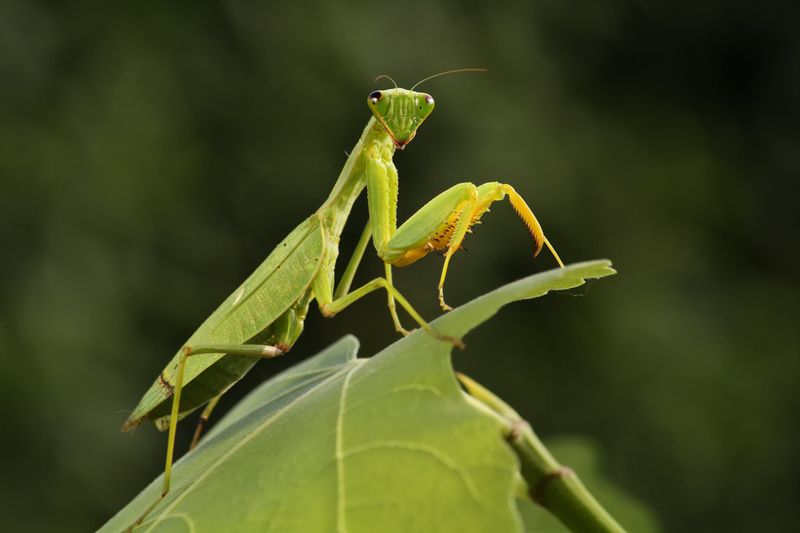
Picture a praying mantis standing completely still on a tall blade of grass, waiting patiently for the perfect moment to strike. That image is exactly why dense, tall vegetation is one of the most important things you can offer these incredible hunters.
Without the right plants to hide in and perch on, mantises simply move on to find better hunting grounds elsewhere.
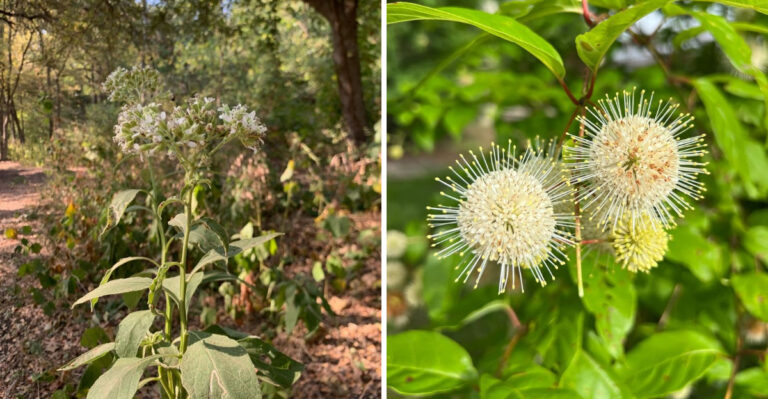
Native grasses like Gulf Muhly, Little Bluestem, and Lindheimer’s Muhly are fantastic choices for Texas gardens. These grasses grow tall and create a layered environment where mantises can blend in perfectly.
Texas Sage, also known as Cenizo, is another excellent shrub that provides both shelter and a hunting perch all in one. Wildflower clusters are equally useful because they attract the small insects that mantises love to eat, which keeps the mantises coming back regularly.
The key is to let some areas of your garden grow a little wild. Neatly trimmed lawns and tightly pruned hedges leave mantises with nowhere to hide or hunt.
Allowing grasses to reach their natural height and letting shrubs fill out creates a more complex habitat. Even a small patch of tall native grasses tucked into a corner of your yard can make a big difference.
Mantises are ambush predators, meaning they rely on cover to sneak up on prey. The more layered and textured your garden is, the more opportunities mantises have to set up their hunting spots and stay in your yard for the entire growing season.
2. Plant Beneficial Flowering Plants
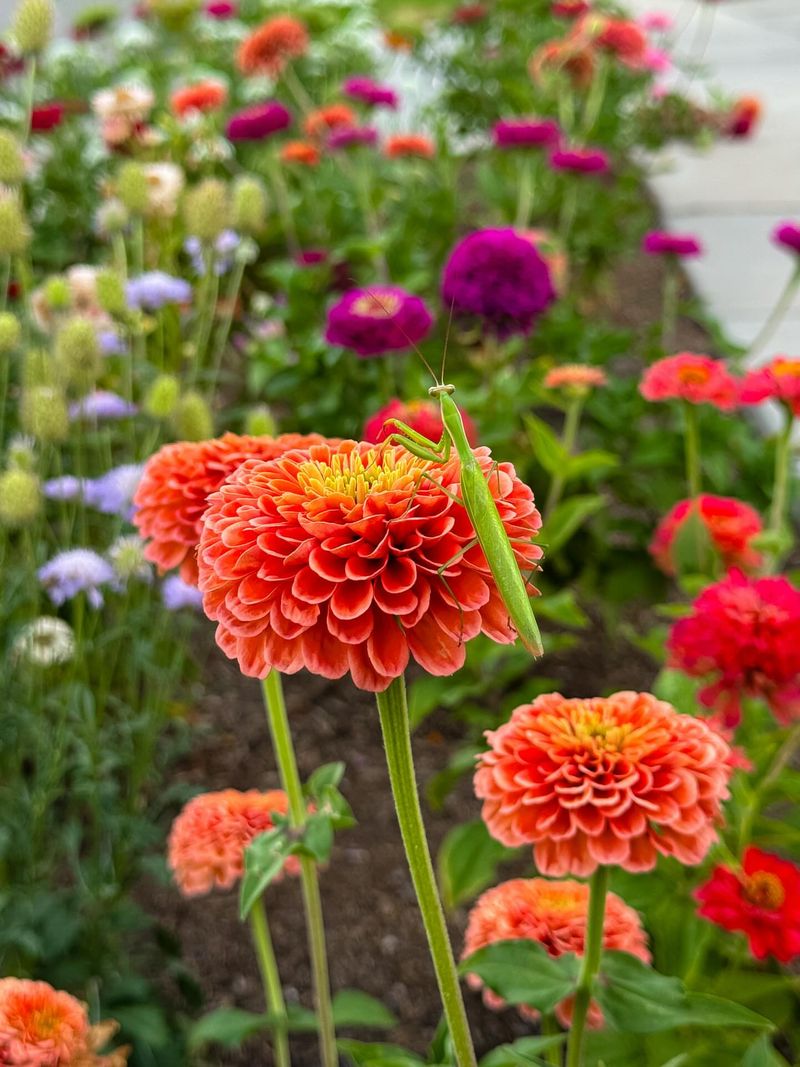
Here is a fun fact that surprises a lot of gardeners: praying mantises do not come to your garden for the flowers. They come for the bugs that love the flowers.
Planting the right flowering plants creates a steady buffet of small insects, and where the food is, the mantises will follow. It is honestly one of the smartest and most beautiful ways to support these natural pest controllers.
Milkweed is a superstar in the Texas garden for many reasons, and attracting mantis prey is one of them. It draws aphids, small beetles, and other soft-bodied insects that mantises find irresistible.
Your Texas Garden Changes Every Week. Your Plan Should Too.
Gardening in Texas changes quickly throughout the season. Every Friday you’ll receive a simple weekly plan showing exactly what to plant, prune, fertilize, harvest, and protect so you never miss the right timing.
Coreopsis, sometimes called tickseed, blooms in cheerful yellow and attracts a wide variety of small pollinators and insects. Wild bergamot, a native flowering herb, brings in everything from bees to flies to tiny moths, giving mantises plenty of options at mealtime.
Planting these flowers in clusters rather than scattering them individually makes a bigger impact. A dense patch of blooms creates a hotspot of insect activity that is hard for a hunting mantis to resist.
Try mixing different heights and bloom times so your garden offers food sources from early spring all the way through fall. Keeping a variety of flowering plants also ensures that even when one plant stops blooming, another picks up the slack.
Over time, your garden becomes a self-sustaining ecosystem where mantises have every reason to stick around, hunt, and eventually lay their eggs so the next generation can continue protecting your plants naturally and without any effort from you.
3. Avoid Pesticides
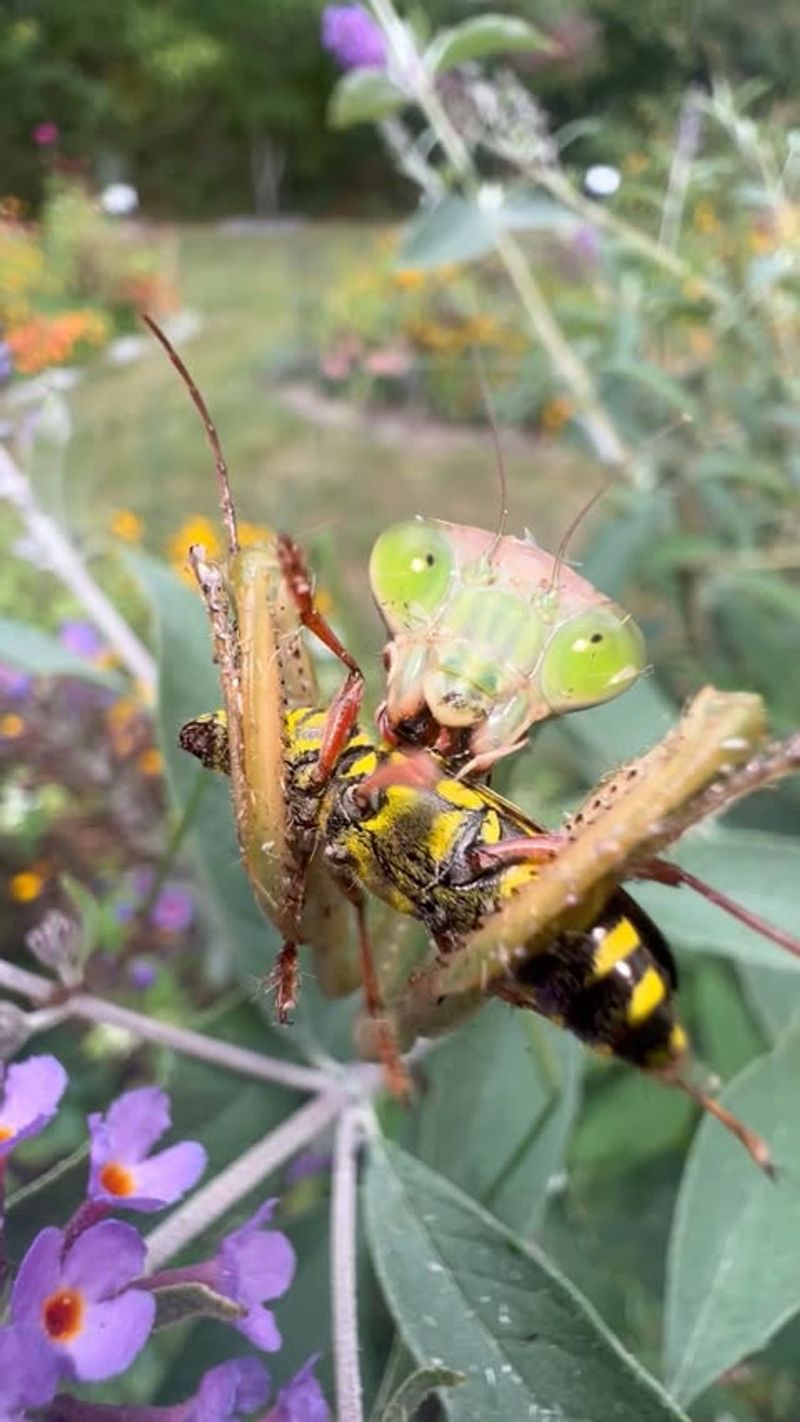
Reaching for a bottle of pesticide spray might seem like the quickest fix when you spot pest insects on your plants, but that decision can wipe out one of your garden’s greatest allies. Chemical insecticides do not discriminate.
They affect beneficial insects just as much as harmful ones, and praying mantises are especially vulnerable because they spend so much time out in the open on plant stems and leaves where sprays land directly.
Beyond the direct impact on mantises themselves, pesticides also reduce the number of small insects in your garden. Since those insects are what mantises eat, a chemically treated garden quickly becomes a place where there is simply not enough food to survive.
Mantises will relocate to find better hunting grounds, and you lose the natural pest control they provide. It becomes a cycle that ends up making your pest problem worse over time.
Going pesticide-free does not mean letting pests take over your garden unchecked. Healthy soil, diverse plantings, and a thriving population of beneficial insects like mantises, ladybugs, and lacewings work together to keep pest numbers naturally balanced.
If you feel you must treat a specific problem, look into targeted organic options like neem oil or insecticidal soap, which break down quickly and pose far less risk to beneficial insects.
Creating a chemical-free zone, even if it is just one section of your garden, gives mantises a safe refuge.
Over time, that safe space becomes a launching pad from which they spread throughout your entire yard and begin managing pest populations on your behalf every single day.
4. Provide Overwintering Sites
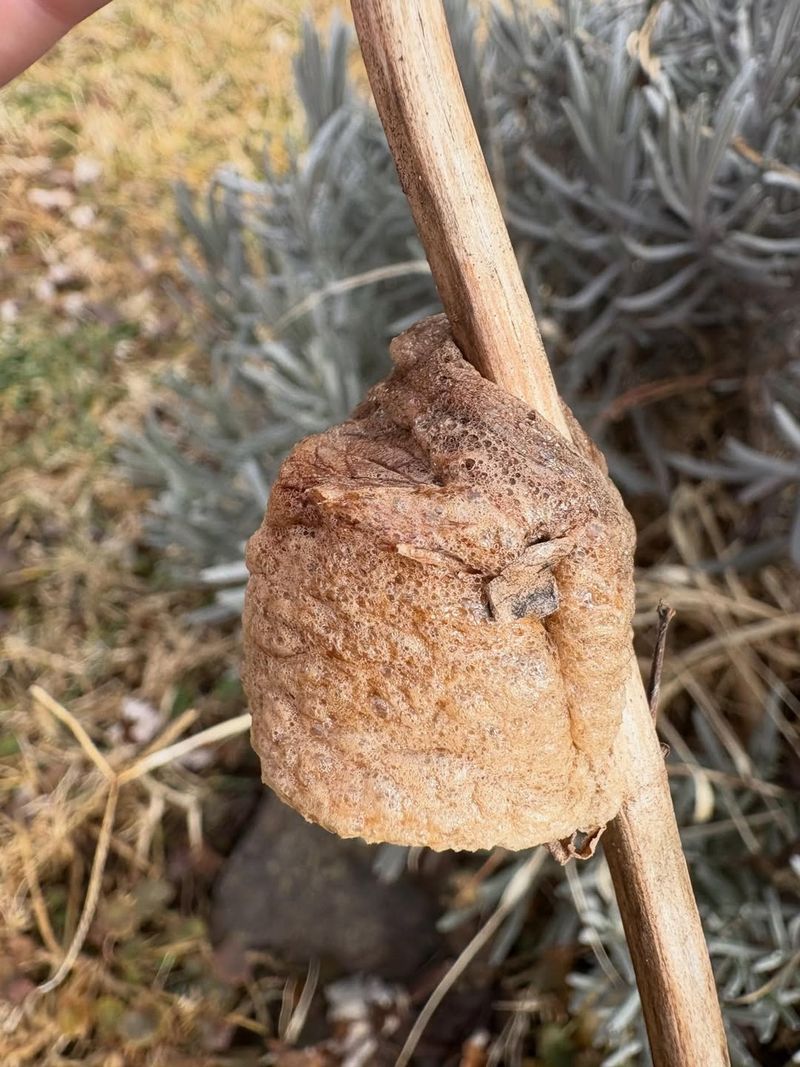
Most gardeners tidy up their garden beds at the end of the season without realizing they might be removing next year’s mantis population at the same time.
Praying mantises lay their eggs in a protective foam casing called an ootheca, which hardens into a tough shell that protects the eggs all winter long.
These egg cases are attached to plant stems, wooden fences, shrub branches, and even the sides of garden structures.
When you cut down every stem and rake up every branch in the fall, there is a good chance you are removing oothecae before the eggs have a chance to hatch in spring.
Leaving some stems standing through the winter, especially those that are at least pencil-thick and positioned in sheltered spots, gives the egg cases the support and protection they need.
Rough wooden fences and unpainted garden stakes also make excellent attachment points that mantises seem to favor.
Think of a slightly messy winter garden as an investment in next spring’s pest control team. You do not have to leave your entire garden looking unkempt.
Simply choose a few patches or corners where you allow stems and branches to remain until late spring after temperatures consistently warm up. By then, the young mantises, called nymphs, will have already hatched and scattered into the garden.
They are tiny but immediately start hunting small insects. Supporting this overwintering cycle is one of the most powerful things you can do to build a self-sustaining mantis population that grows stronger and more effective in your garden with every passing year.
5. Offer Sunny, Open Spots
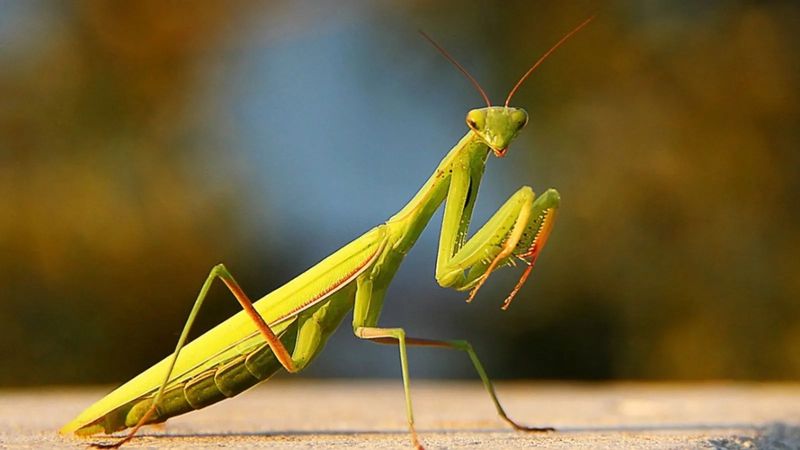
Praying mantises are cold-blooded, which means they depend on the sun to warm their bodies and stay active. A garden that is entirely shaded or blocked from sunlight is simply not an appealing place for a mantis to set up a hunting territory.
Sunny, open spots within your garden are just as important as the dense vegetation where mantises hide and rest between hunting sessions.
The ideal setup is a garden that offers both. Think of it like a neighborhood where the mantis has a sunny front yard for hunting and a shady backyard for resting.
Open, sun-warmed areas attract grasshoppers, flies, beetles, and other pest insects that mantises love to eat. The warmth also helps mantises move faster, making them more effective hunters.
When the afternoon heat becomes intense, they retreat into nearby shaded shrubs or tall grasses to cool down and wait for the next opportunity.
You can create these sun-dappled zones by arranging taller plants along the north side of your garden beds and leaving lower-growing or open areas toward the south where sunlight reaches the ground more directly.
Raised garden beds, stone pathways, and wooden garden borders also absorb heat and create warm microclimates that mantises are drawn to. Even a simple flat stone placed in a sunny spot can serve as a warm basking platform.
Balancing sun and shade throughout your garden layout gives mantises everything they need to be comfortable, active, and productive pest hunters from early morning all the way through the late afternoon hours of a warm Texas day.
6. Introduce Native Plants With Vertical Structure
Not all gardens are created equal when it comes to mantis appeal, and one of the biggest differences comes down to structure. A flat, low-growing garden gives mantises very little to work with.
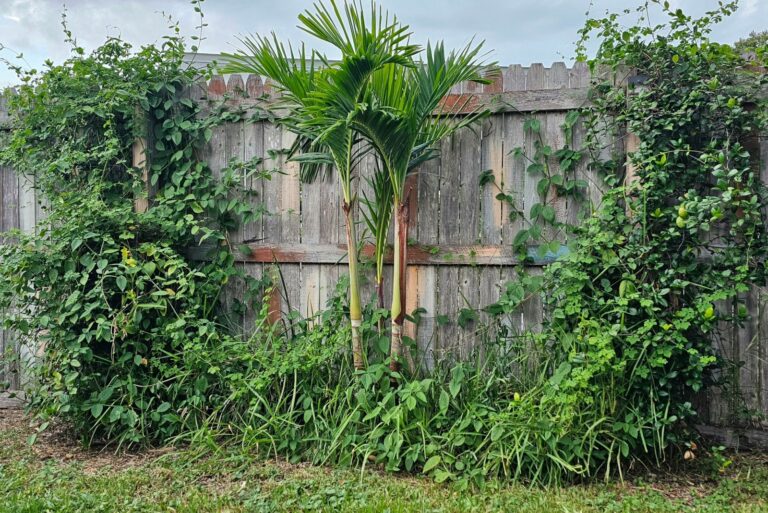
But a garden that grows upward, with vines climbing trellises, shrubs reaching different heights, and tall flowering stalks stretching toward the sky, creates a three-dimensional world that mantises absolutely thrive in.
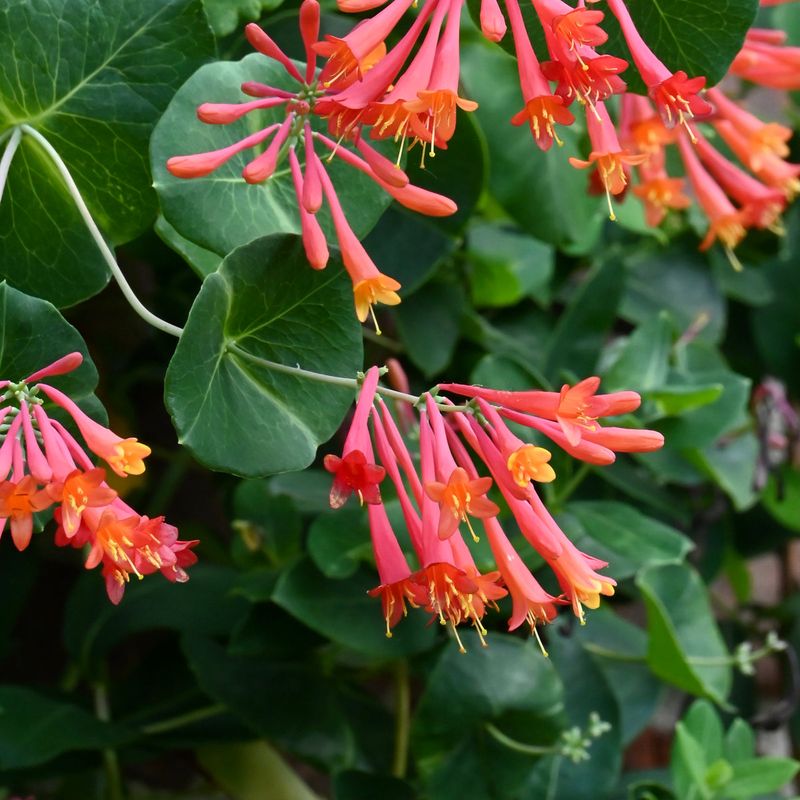
Coral honeysuckle is a native Texas vine that checks nearly every box. It climbs fences and trellises beautifully, produces tubular red flowers that attract hummingbirds and insects alike, and provides plenty of vertical stems for mantises to perch on and lay their egg cases.
Trumpet creeper is another vigorous native climber that grows quickly and creates dense vertical coverage.
Texas Sage, when left to grow naturally rather than being heavily pruned, develops a layered branching structure that mantises use both for hunting and for depositing their oothecae in protected spots.
Adding a simple wooden trellis or garden obelisk planted with one of these native climbers can dramatically increase the amount of vertical habitat in even a small garden space.
Mantises are naturally inclined to climb upward to get a better view of their surroundings and spot prey below them.
The higher they can perch, the more ground they can survey. Combining vertical plants with mid-height shrubs and low ground cover creates a layered garden ecosystem that supports mantises at every stage of their life cycle.
Over time, a garden with strong vertical structure becomes a permanent, thriving habitat where mantises return season after season to hunt, rest, and reproduce.