The One Thing You Must Do To Crape Myrtles In Texas Before December
Some of the toughest summer bloomers in the South can bounce back from a whole branch frozen to the ground. The secret lives somewhere you rarely look. I used to stare at the bare branches each fall and wonder what they needed from me.
To my surprise, the answer had nothing to do with shears or fertilizer bags. It sits right at ground level, in a few inches of soil most of us walk past every day. A little attention there can mean the difference between a tree that sulks in spring and one that bursts with color.
Texas winters love to play tricks on us. One week feels like shorts weather, and the next brings a hard freeze that rattles the windows.
Personally, I think the fix is almost too easy. Grab a rake, a hose, and a free afternoon. Are your trees ready for that first surprise cold snap?
1. Those Bare Crape Myrtle Branches Are Hiding A Busy Secret
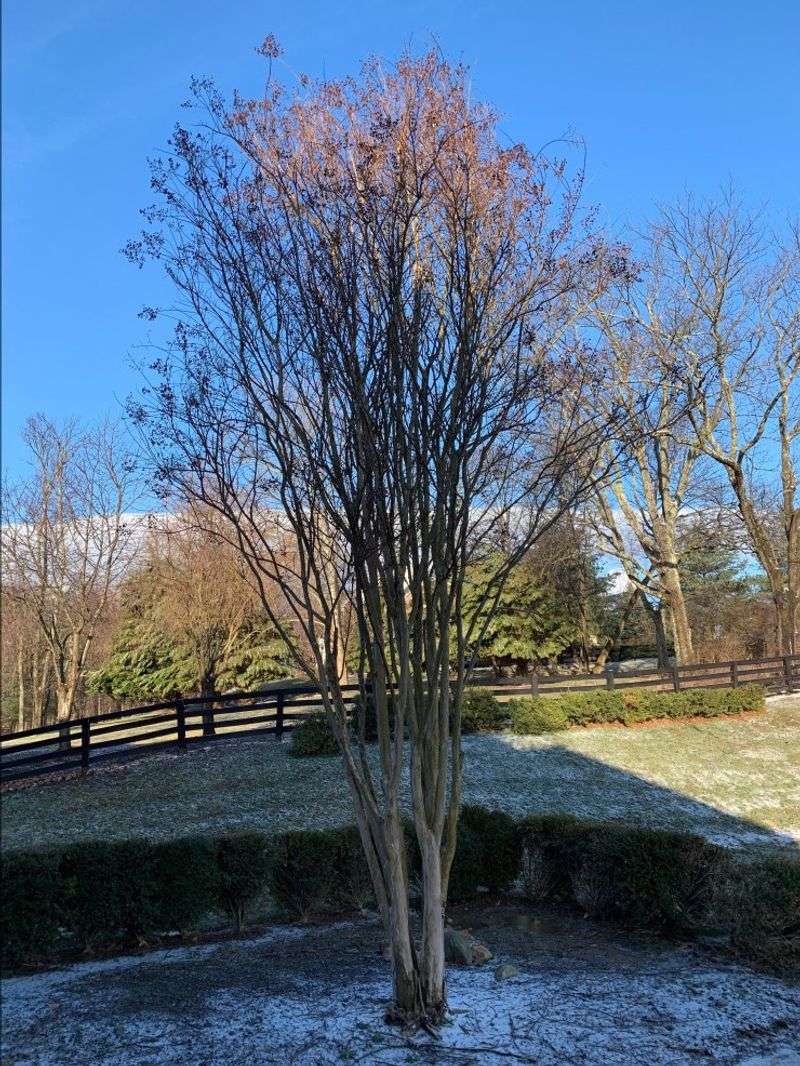
Leaves dropping in November can look like the show is over. Underground, though, crape myrtles are still working hard, storing energy in their roots for next summer’s flowers.
That root zone is where winter trouble usually starts. A crape myrtle’s feeder roots sit mostly in the top foot of soil, and that shallow layer swings fast between warm afternoons and freezing nights.
Bare soil dries out and chills quickly, which stresses those roots right when the tree is trying to settle into dormancy.
So the one thing worth doing before December is simple. You need to protect and hydrate that root zone with a deep watering and a fresh layer of mulch. It sounds small, but it covers the part of the tree that does the heavy lifting all winter.
I like how this job flips the usual fall checklist upside down. Most of us focus on what we can see, like branches and seed pods. The roots never get the spotlight, yet they decide how strong your spring growth will be.
Crape myrtles are tough, and most established trees in USDA zones 7 through 9 handle Texas winters well. A little root care just gives them an extra cushion when the weather gets moody.
2. Tuck A Thick Mulch Blanket Around Your Crape Myrtle Roots
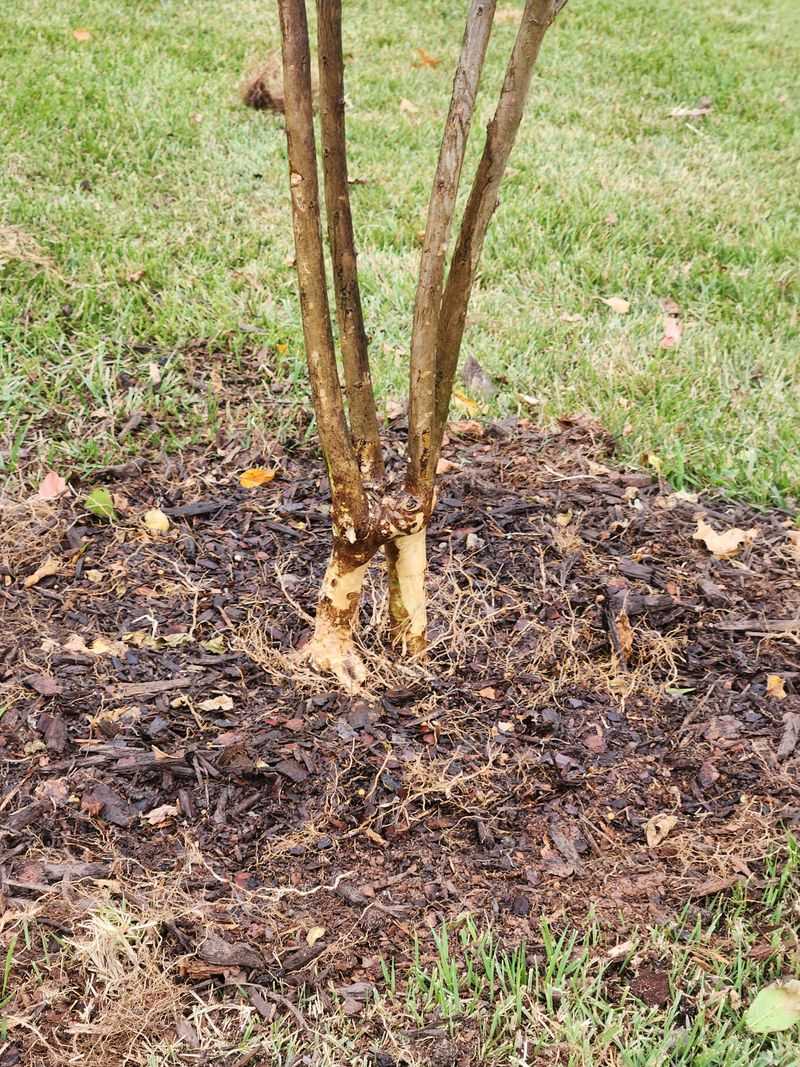
Mulch is basically a cozy quilt for soil. A 2 to 4 inch layer of organic material keeps root temperatures steadier, holds in moisture, and keeps winter weeds from moving in.
Shredded hardwood, pine bark, pine straw, or chopped leaves all work nicely. Spread it in a wide ring that reaches toward the drip line, which is the outer edge of the branches. A bigger circle protects more roots than a tiny donut hugging the trunk.
One rule matters more than the rest. Pull the mulch back a few inches from the trunk so the bark stays dry. Mulch piled against the base, often called a mulch volcano, traps moisture and invites rot and pests.
Thicker is not better here. Layers deeper than about 3 to 4 inches can keep water and air from reaching the soil, so roots end up struggling instead of resting.
Believe it or not, your fallen leaves are a free source of mulch. Run them over with the mower first so they break down faster and do not mat into a soggy sheet. You save money and give your yard a little natural recycling at the same time.
3. A Deep Drink Helps Crape Myrtles Handle A Hard Freeze
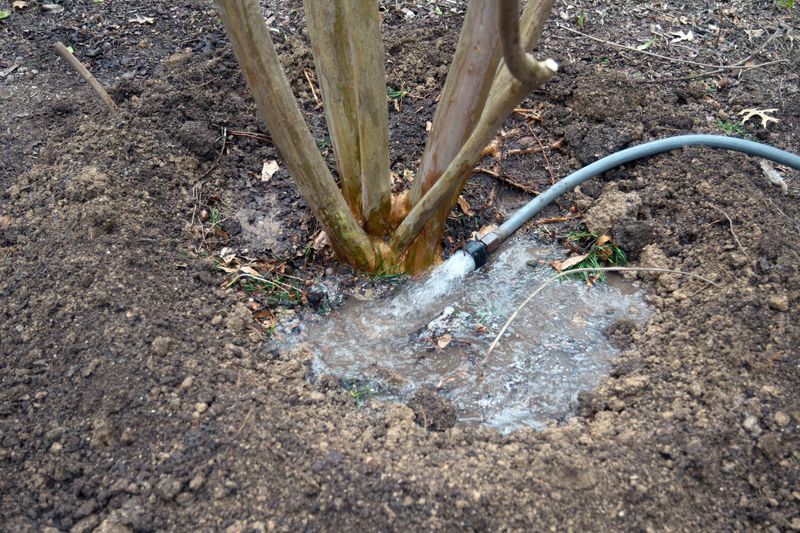
Here is a fun twist that surprises plenty of gardeners. Moist soil holds heat better than dry soil, so a well-watered root zone stays a bit warmer on a frosty night.
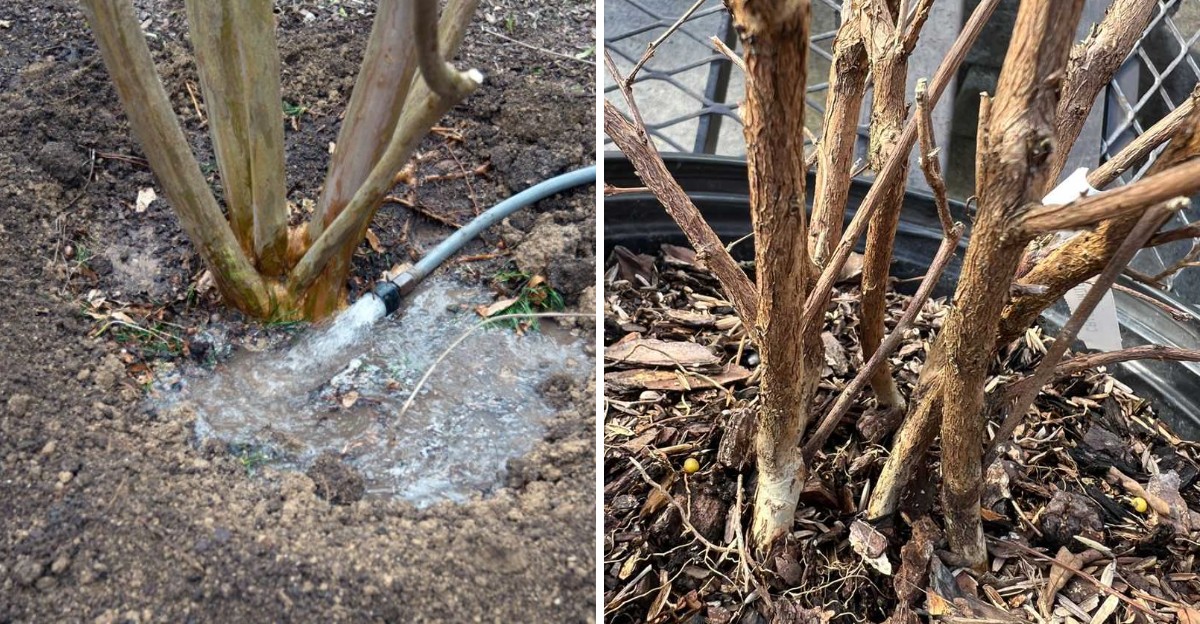
Fall in much of the state can be surprisingly dry, especially in West and Central regions. If rain has been scarce, give your crape myrtles a slow, deep soaking before the first predicted freeze. Aim to wet the soil several inches down, not just the surface.
A soaker hose or a garden hose trickling at the base for 30 minutes or so works well. Move it around the drip line so the whole root area gets a turn. Quick sprinkles from a nozzle mostly run off or evaporate.
Dormant trees need far less water than they did in August. Watch the weather and water every few weeks during long dry spells, skipping it when rain does the job for you.
Personally, I check soil with a simple screwdriver test. If it slides in easily, the ground has enough moisture.
If it fights back, the tree is thirsty. Watering before mulching, then again afterward if needed, gives you the best of both steps.
4. Skip The Fertilizer Bag Until Your Crape Myrtle Wakes Up
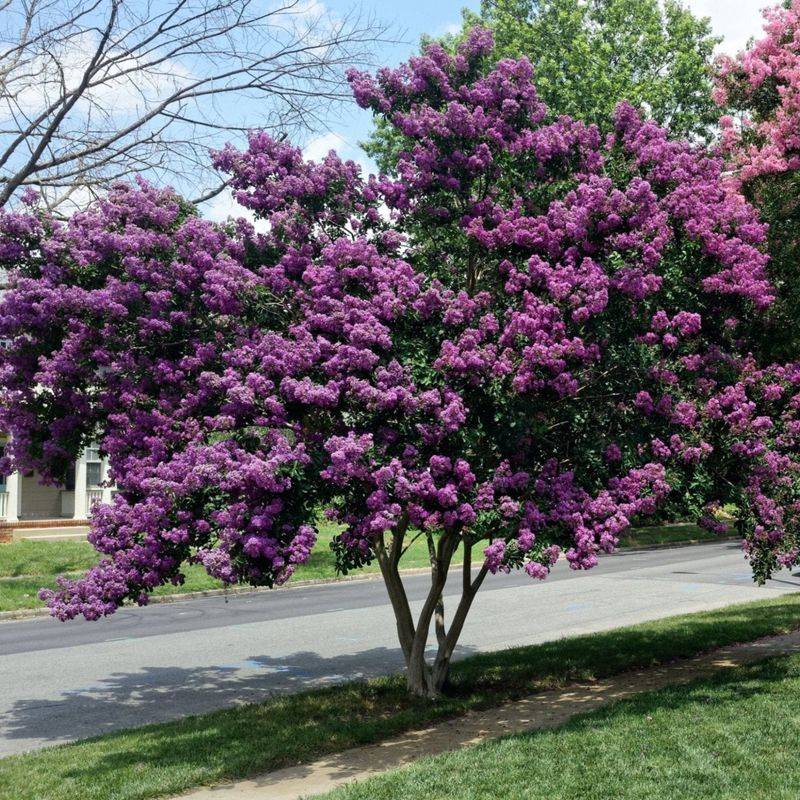
Feeding plants feels like a kind thing to do. With crape myrtles in fall, it can backfire in a hurry.
Nitrogen fertilizer pushes fresh, soft growth. If that happens in October or November, those tender shoots have no time to harden before a cold front rolls through. The first hard freeze can damage them, and the tree burns energy it should have saved for spring.
Texas A&M AgriLife experts generally suggest fertilizing crape myrtles in spring, once new growth begins. Many established trees in decent soil need very little feeding at all. Too much nitrogen can even lead to lots of leaves and fewer blooms.
I can’t imagine a sadder sight than a burst of bright new leaves blackened by frost a week later. It happens more often than you would guess during warm Texas autumns.
So put the fertilizer bag on a high shelf and mark your calendar for spring. In the meantime, that mulch layer slowly breaks down and adds a little organic matter to the soil.
Think of it as a gentle snack instead of a big meal, which suits a sleepy tree perfectly.
5. Young And Potted Crape Myrtles Need Extra Cold Protection
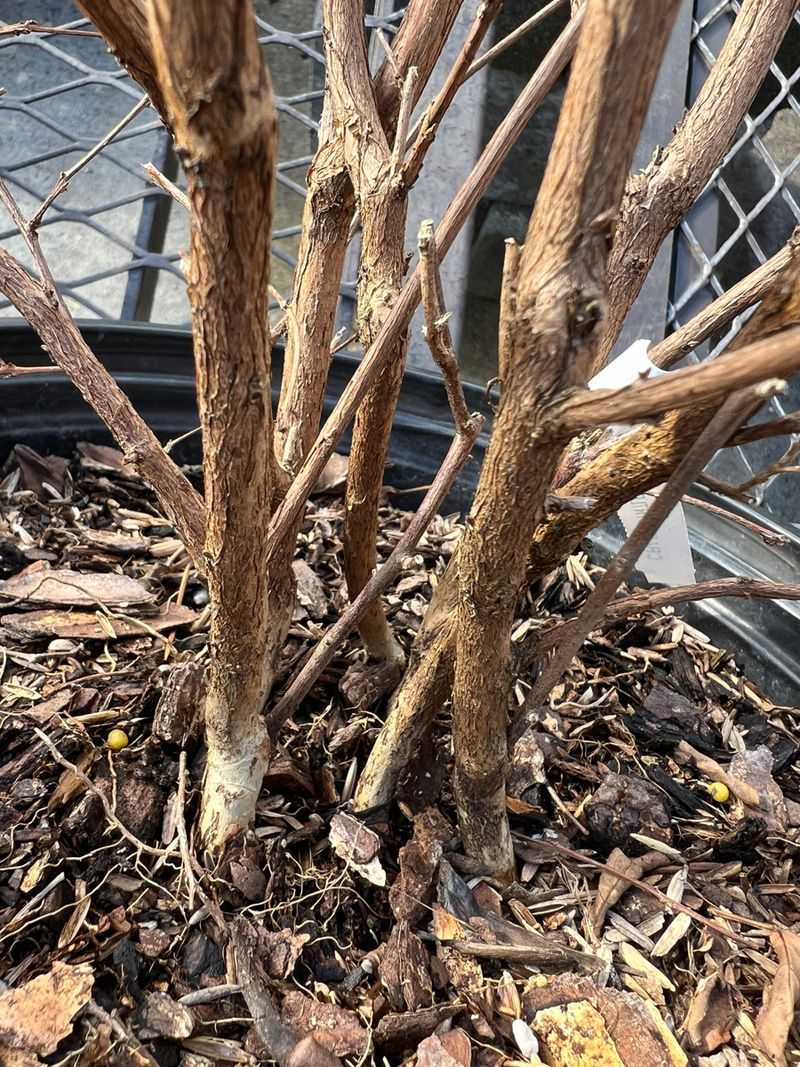
Babies get extra blankets, and so should newly planted crape myrtles. Trees in their first year or two have smaller root systems and thinner bark, so a sudden freeze hits them harder.
Before a hard cold snap, wrap the lower trunk of young trees with burlap or breathable frost cloth. Skip plastic, since it can trap moisture and heat up on sunny days. Remove the wrap once the cold passes.
Container crape myrtles are the most exposed of all. Roots in a pot sit above ground with no soil around them for insulation, so they can freeze much faster than roots in the yard. Dwarf varieties in patio pots are especially at risk.
Move potted trees into an unheated garage, shed, or against a south-facing wall during freezes.
If a pot is too heavy, wrap it in burlap, old blankets, or bubble wrap, and group containers together for shared warmth.
Gardeners in the Panhandle and North Texas should pay the closest attention, since their winters run colder than the Gulf Coast or Rio Grande Valley. A few minutes of prep can save a tree you waited all summer to enjoy.
6. Put Down The Pruning Shears And Save Crape Myrtle Trunks From Topping
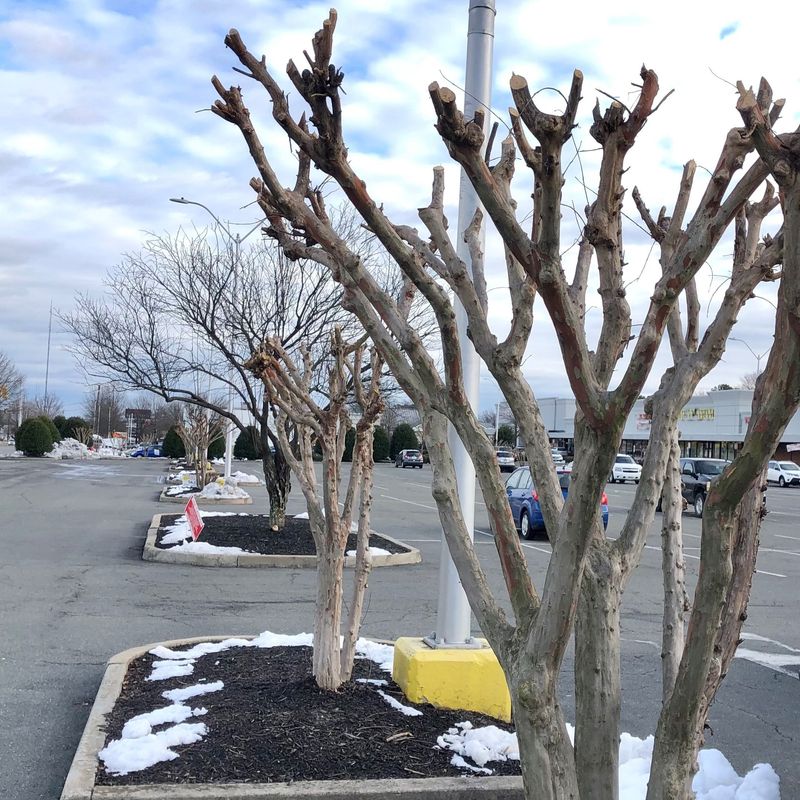
Every winter, neighborhoods fill with crape myrtles chopped down to thick stubs. Gardeners call it crape murder, and those ugly knobs often lead to weak, floppy shoots later.
Fall is the wrong time to start cutting. Pruning before December can trigger new growth that freezes, and it leaves fresh wounds right as cold weather arrives.
Texas A&M AgriLife recommends saving any pruning for late winter, usually late January through February, before spring growth begins.
Even then, less is more. Remove suckers at the base, crossing branches, and limbs rubbing together. Thin out crowded interior stems to open the canopy and improve airflow.
Topping does not make the tree bloom more. Healthy crape myrtles flower on new growth whether you trim them or not, and natural shapes show off that gorgeous peeling bark.
If a tree keeps outgrowing its spot, heavy cutting each year will not fix that. The better answer is choosing a variety sized for the space next time you plant.
Grab a mug of coffee this winter and simply admire those smooth, sculpted trunks instead of reaching for the saw. You’ll thank yourself in June.
7. Check Crape Myrtle Bark For White Scale While Planning Spring Blooms
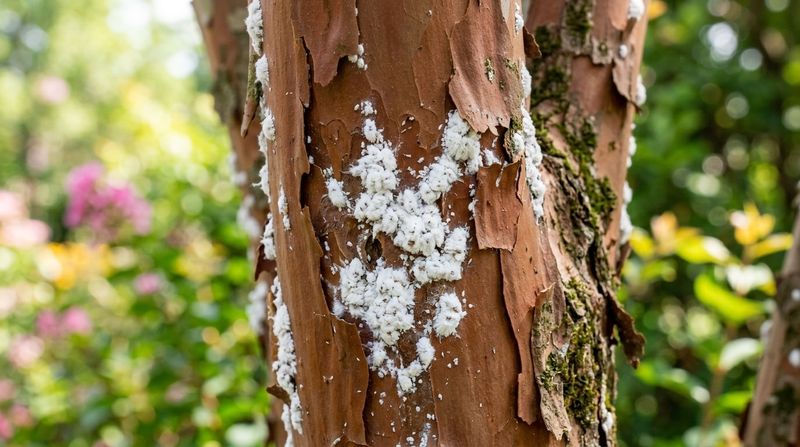
Bare branches turn every crape myrtle into an open book. Take a closer look at the trunk and branch crotches while you are out there spreading mulch.
Crape myrtle bark scale is an invasive insect that has spread across much of Texas since showing up near Dallas around 2004.
It looks like white or gray felt-like crusts on the bark, and it may ooze pink fluid when crushed. Black sooty mold on trunks is another clue.
Spotting it now gives you a head start. A gentle scrub with a soft brush and mild soapy water can remove many scales on reachable branches.
AgriLife experts also mention dormant oil sprays and spring soil-applied treatments for heavier problems.
While you inspect, make a few notes for next year. Did the tree bloom well, or did shade and overcrowding slow it down? Is it pushing against your roof or sidewalk?
Those small observations shape smarter choices, from better spacing to picking a mildew-resistant variety.
Honestly, a fall walk with a notebook and a hose might be the most relaxing garden chore of the year. Your crape myrtles will repay the favor with a summer full of ruffled color.