The Oregon Shade Trees That Cool Yards Without Eventually Swallowing Small Spaces
A shady yard sounds wonderful until the tree providing it starts behaving like it owns the entire property.
In a smaller Oregon garden, one ambitious canopy can quickly crowd patios, loom over rooftops, and turn a cozy planting area into something that feels more like a forest takeover.
Great for squirrels, slightly less great for your deck. That is why choosing a shade tree for a compact space takes a little more thought than simply picking the prettiest option at the nursery.
You want enough canopy to make hot afternoons more comfortable without spending the next decade wondering why branches are suddenly touching everything in sight.
Oregon gardeners also have to think about how a tree fits with the rest of the yard as it matures. Height is only part of the story.
Canopy spread, growth habit, roots, and placement can all influence how manageable that tree feels years down the road.
For anyone craving cooler outdoor space without sacrificing half the garden, some trees strike a much better balance. The right choice can bring welcome shade while still leaving your yard room to breathe.
1. Japanese Maple Gives Small Yards Shade Without Taking Over
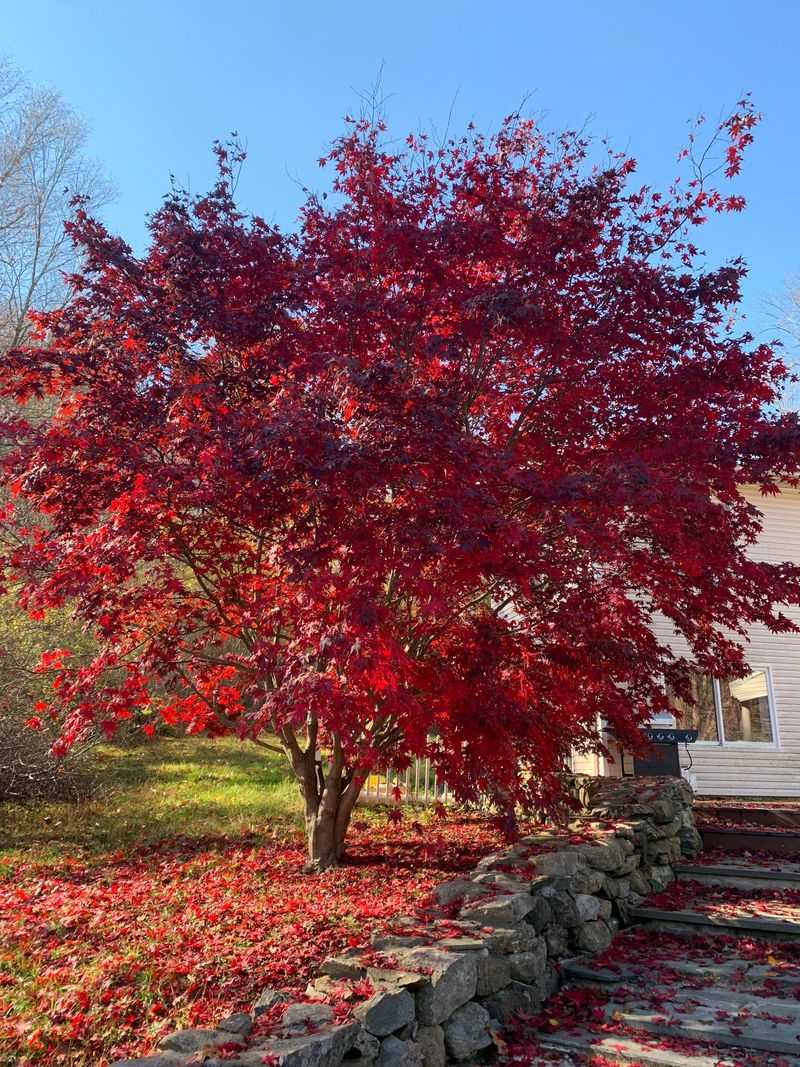
Few trees earn as much admiration from neighbors as a well-placed Japanese maple. With its layered branches and deeply cut leaves, it creates a soft canopy that filters sunlight without blocking it completely.
The shade it casts is gentle and dappled, which is perfect for gardens underneath.
Most Japanese maples grow between 10 and 25 feet tall, depending on the variety. Some stay as small as 6 feet, making them ideal for tight corners or container planting.
Growth is slow and steady, so you will not wake up one morning to find it has doubled in size.
Fall color is one of this tree’s biggest selling points. Leaves shift from green or burgundy to brilliant red, orange, or gold before dropping cleanly in late autumn.
The bare branch structure in winter is also beautiful on its own. Planting one in partial shade works well, especially in hot summer climates. Too much direct afternoon sun can scorch the delicate leaves.
A spot with morning sun and afternoon shade tends to bring out the best color and growth. Japanese maples also pair well with other plants. Ferns, hostas, and low-growing shrubs look great underneath the canopy.
Because the tree does not cast deep shade, most shade-tolerant plants thrive nearby without struggling for light.
2. Vine Maple Fits Naturally Into Compact Oregon Gardens
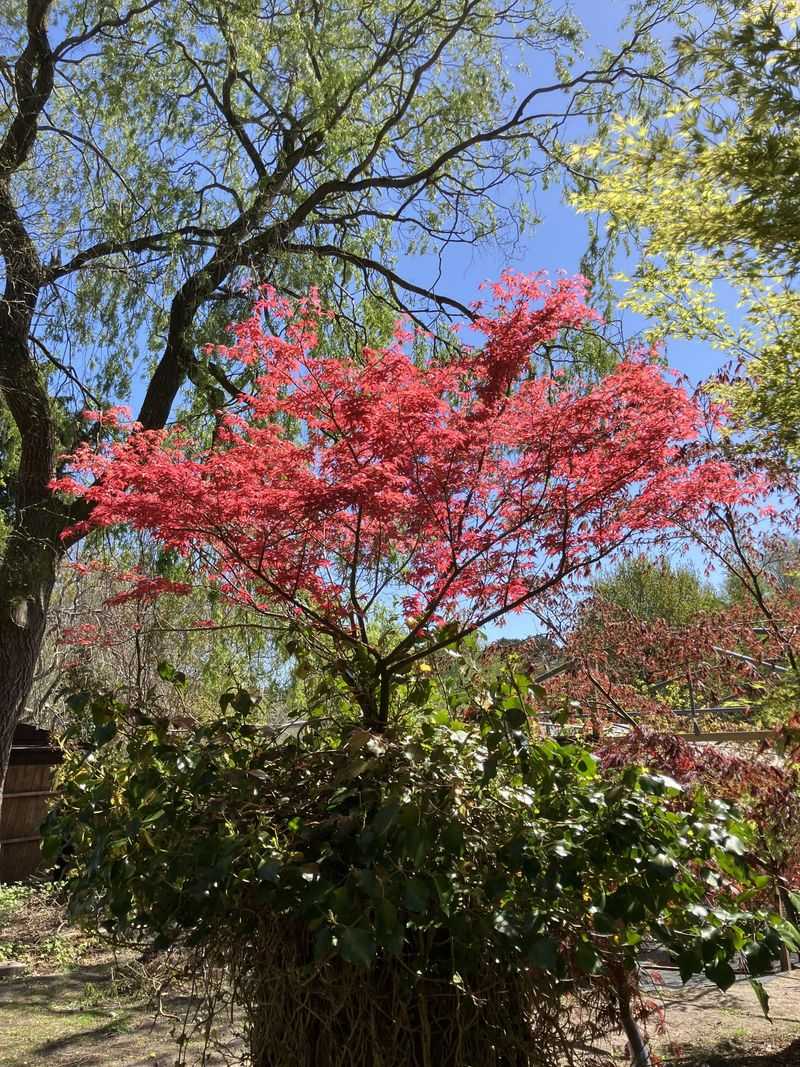
Walk through almost any Pacific Northwest forest and you will find vine maple growing happily in the understory.
That natural adaptability makes it one of the most reliable small trees for home gardens in this region. It knows how to thrive without needing a lot of fuss.
Vine maple typically grows 15 to 25 feet tall with a graceful, multi-stemmed form. The branches spread wide and arch outward in a way that creates natural, layered shade.
That spreading habit gives you good coverage without requiring a massive trunk or root system.
Your Oregon Garden Changes Every Week. Your Plan Should Too.
Gardening in Oregon changes quickly throughout the season. Every Friday you’ll receive a simple weekly plan showing exactly what to plant, prune, fertilize, harvest, and protect so you never miss the right timing.
Spring brings small reddish flowers that are easy to overlook but charming up close. Summer leaves are bright green and slightly lobed.
Come fall, the foliage turns a mix of orange, red, and yellow that rivals any ornamental tree in the yard.
One of the best things about vine maple is how well it handles partial shade. Unlike many ornamental trees that demand full sun, this one does just fine under taller trees or along a shaded fence line.
That makes it incredibly versatile for tricky spots. Water needs are moderate, and once established, vine maple handles dry summers reasonably well.
It rarely needs heavy pruning and tends to keep a tidy shape on its own. For low-maintenance beauty in a small space, few natives compare.
3. Kousa Dogwood Adds Shade Without A Huge Canopy
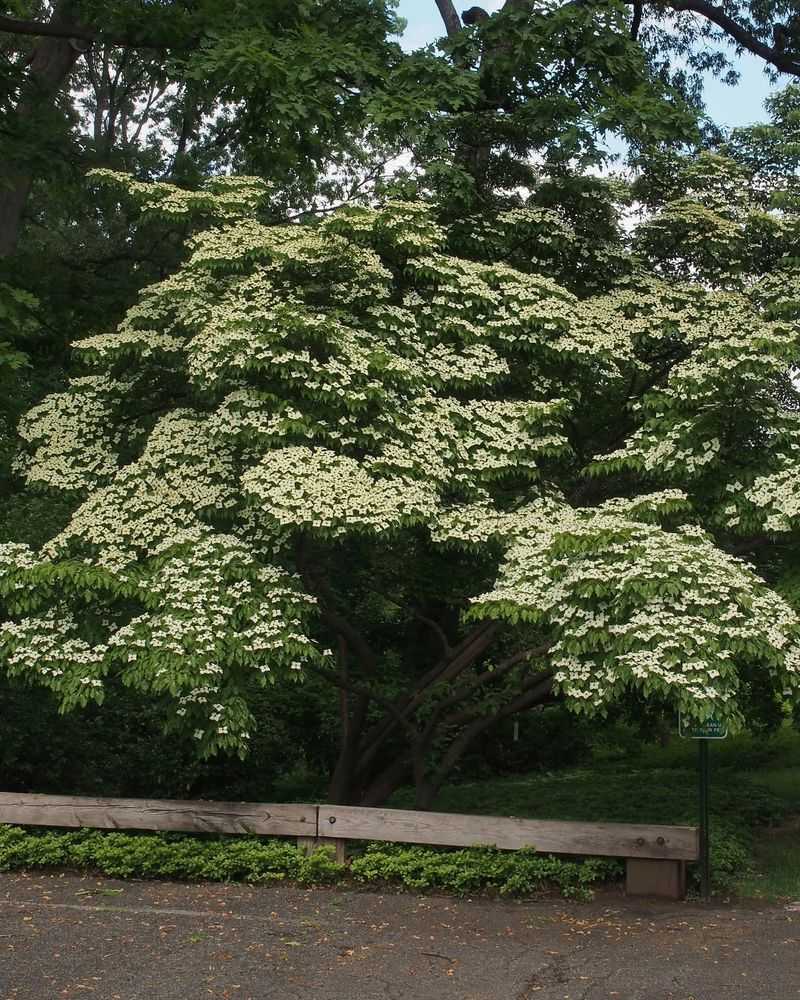
Kousa dogwood is the kind of tree that stops people mid-stride. When it blooms in late spring, the branches are completely covered in white or pink star-shaped flower bracts.
The display lasts for weeks, which is longer than most flowering trees can claim.
Unlike its American cousin, Kousa dogwood blooms after the leaves emerge. That gives the tree a lush, layered look during flowering season.
The blossoms sit on top of the foliage like little stars, which creates a truly eye-catching effect.
Size-wise, Kousa dogwood usually tops out between 15 and 30 feet tall. The canopy spreads wide and horizontal, which means you get good shade coverage without a towering tree overhead.
That horizontal structure also makes it a natural focal point in any yard layout. Summer brings interesting raspberry-like fruits that birds absolutely love. Fall foliage turns deep red or purple before dropping.
Even in winter, the exfoliating bark adds visual texture to the bare branches. Kousa dogwood handles Oregon’s climate well, especially west of the Cascades. It prefers well-drained, slightly acidic soil and does best in a spot with morning sun.
Once established, it is more drought-tolerant than most dogwoods and resists many common diseases that trouble other varieties. Planting it as a specimen tree near a patio gives you both beauty and functional shade.
4. Flowering Dogwood Stays Manageable In Smaller Spaces
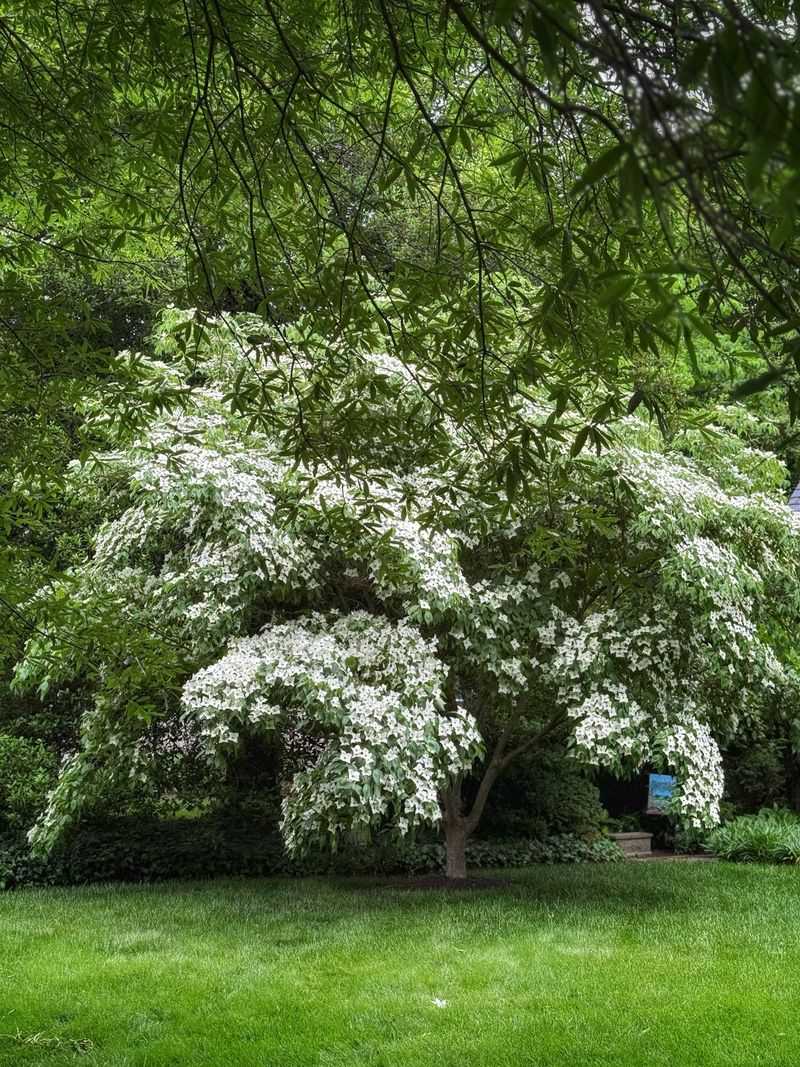
There is something almost nostalgic about a flowering dogwood in full bloom. The large white or pink blossoms open in early spring before most other trees have even started budding.
For weeks, the tree looks like it is draped in tissue paper flowers. Flowering dogwood grows slowly and rarely exceeds 20 to 30 feet in height.
The canopy stays relatively wide and low, which means it shades the ground around it without towering over nearby structures. That makes it a great fit for front yards and smaller side gardens.
The tree performs best with some protection from harsh afternoon sun, especially during hot summers. Morning light suits it well.
Planting near a fence or taller structure on the west side can give it the shelter it needs to thrive.
Fall is another strong season for this tree. Leaves turn deep red and purple, and clusters of bright red berries appear along the branches. Those berries attract birds and add color to the yard well into late autumn.
Soil health matters a lot for flowering dogwood. Rich, well-drained soil with good organic matter gives it the best start.
Mulching around the base helps retain moisture and keeps roots cool during summer. Avoid compacting the soil near the root zone, and this tree will reward you with decades of seasonal beauty and reliable, comfortable shade in a compact footprint.
5. Serviceberry Brings Light Shade And Seasonal Interest
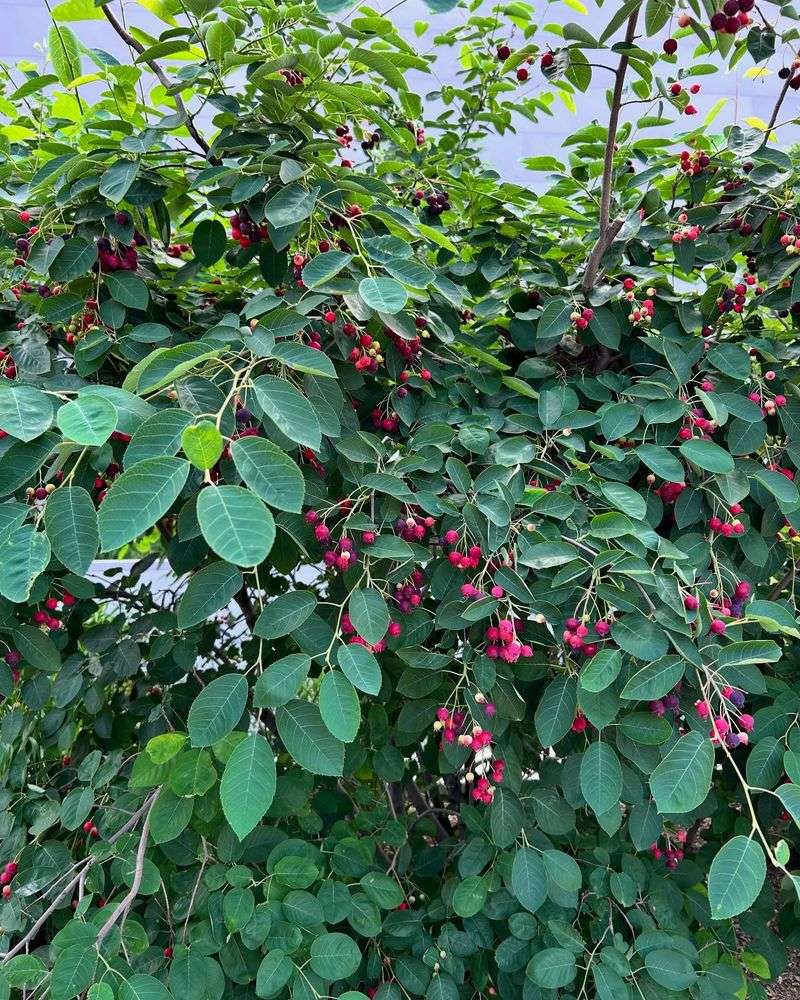
Serviceberry might just be the most underrated small tree for home gardens. It blooms earlier than almost anything else in spring, often while there is still a chill in the air.
Those early white flower clusters are a welcome sign that warmer days are coming.
Most serviceberry varieties grow between 15 and 25 feet tall, though some stay smaller. The form can be single-trunked or multi-stemmed, and both look great in a yard setting.
Multi-stemmed forms tend to have a more natural, woodland feel that suits Pacific Northwest gardens especially well.
After the spring flowers fade, small purple-red berries ripen in early summer. These berries taste sweet and mild, almost like a cross between a blueberry and an apple.
Birds tend to find them before most gardeners get a chance to harvest them, but that is part of the charm.
Summer foliage is clean and green, casting light, filtered shade that is comfortable without being heavy. Fall color ranges from orange to red, and the show can be quite striking depending on the variety and the year’s weather patterns.
Serviceberry is also remarkably adaptable. It handles both wet and dry conditions better than most small ornamental trees.
Full sun or partial shade both work well. For a four-season tree that earns its place in a small yard without crowding anything out, serviceberry is hard to beat.
6. Crabapple Works Well Where A Large Shade Tree Would Not
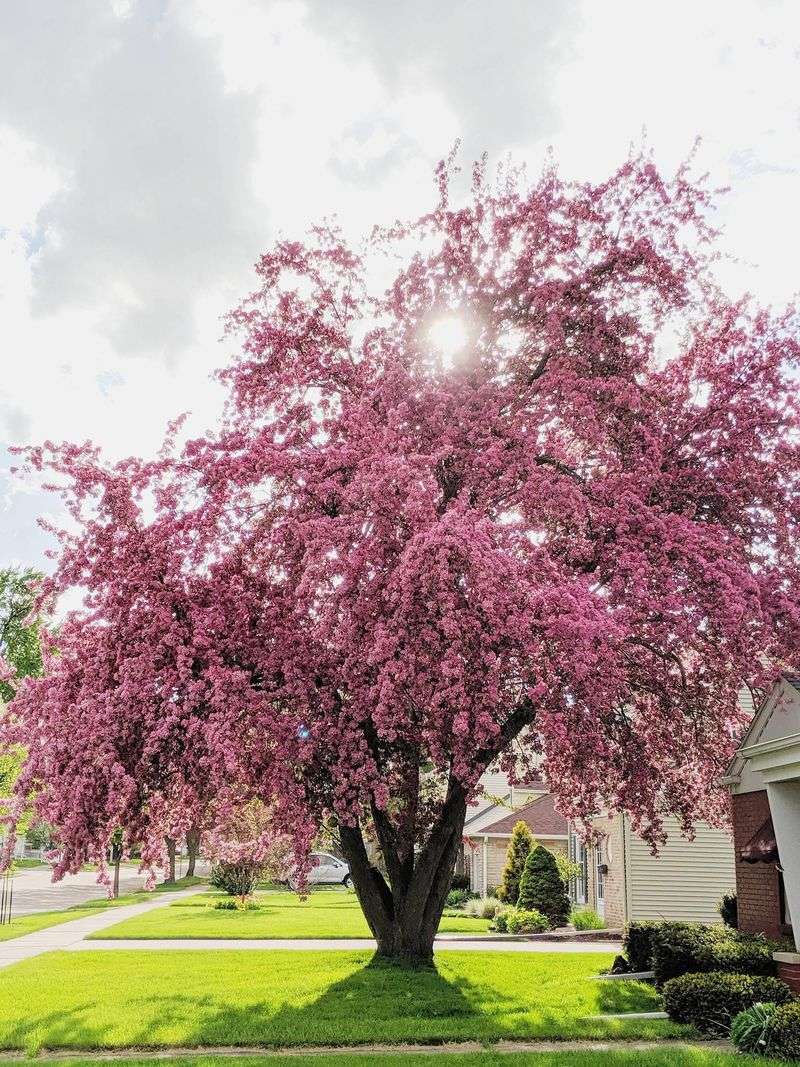
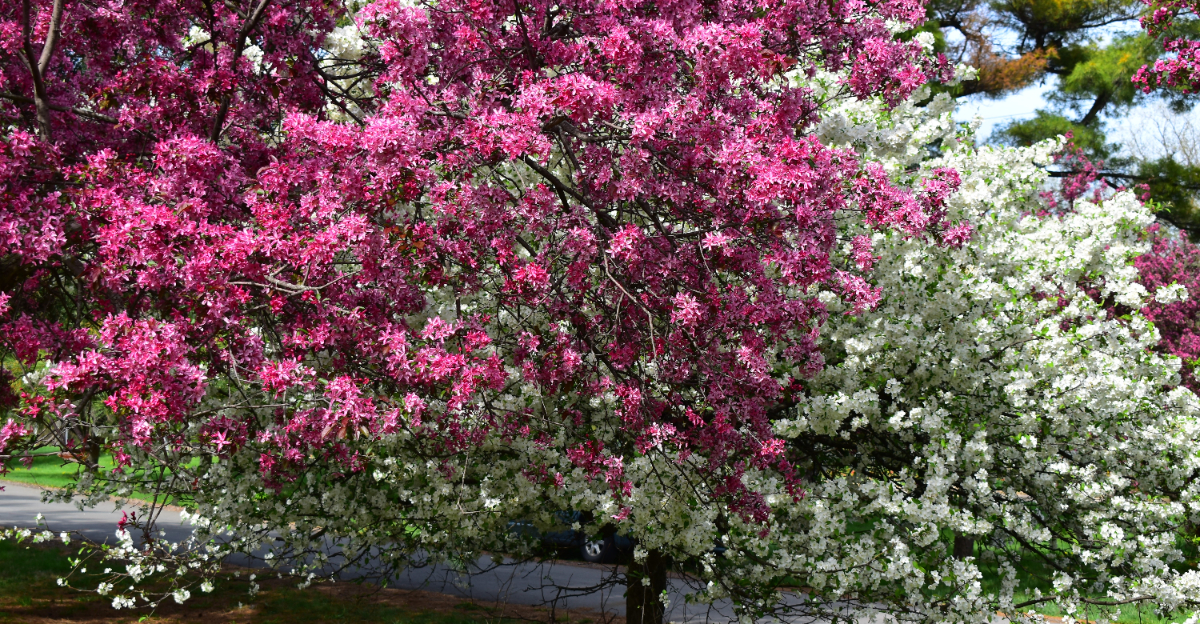
Crabapple trees have a reputation that does not always do them justice. Yes, they drop fruit, but modern varieties have been bred to hold their small fruits through winter, which actually feeds birds during the coldest months.
The mess problem has largely been solved by smart plant breeding. Most ornamental crabapples stay between 15 and 25 feet tall with a rounded or slightly spreading canopy.
That size is perfectly suited to yards where a full-sized oak or maple would simply be too much. You get real shade without the scale problems.
Spring bloom is spectacular. Flowers range from pure white to deep rose-pink, and the fragrance can fill an entire yard on a warm afternoon.
The display usually lasts one to two weeks, but the visual impact is memorable enough to carry the season.
Disease resistance has also improved dramatically in newer varieties. Older crabapples were prone to apple scab and rust, but today’s selections are bred to handle those issues with much less intervention.
Choosing a disease-resistant variety saves a lot of headaches over the years. Summer foliage provides solid shade, and some varieties offer attractive purple or bronze leaves throughout the growing season.
Crabapple also pairs beautifully with spring-blooming bulbs planted beneath the canopy.
The tree’s roots are not aggressive, so underplanting is easy and rewarding. For a tree that works hard in multiple seasons, crabapple punches well above its weight class.
7. Japanese Snowbell Keeps A Graceful, Smaller Footprint
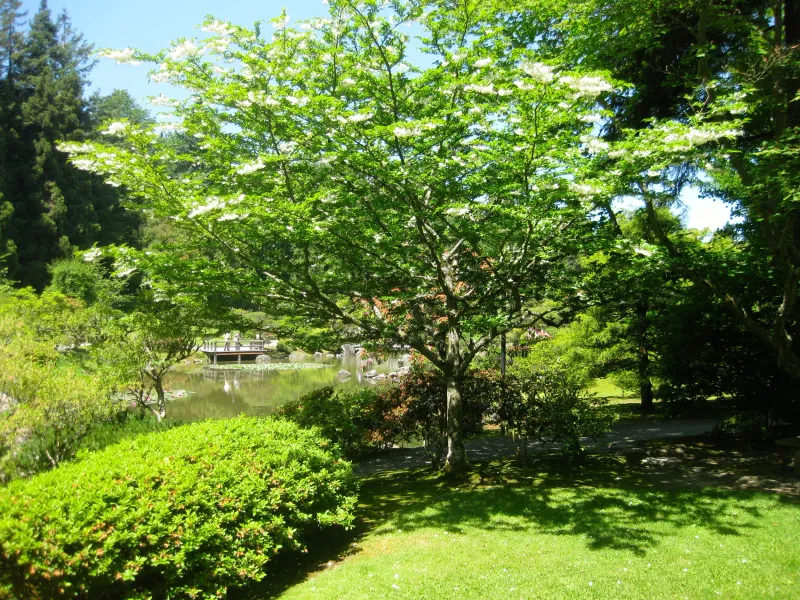
Not every great shade tree announces itself loudly. Japanese snowbell works with quiet elegance, letting its hanging white bell-shaped flowers do the talking in late spring.
The blossoms dangle beneath the branches like tiny lanterns, and the sweet fragrance drifts through the yard on still mornings.
Growing between 20 and 30 feet tall, Japanese snowbell fits comfortably into smaller landscapes.
The canopy spreads wide relative to its height, which means good shade coverage without excessive vertical growth.
The horizontal branching pattern also gives it a sculptural quality that looks beautiful year-round.
Leaves are clean and rounded, turning yellow in fall before dropping. The fall color is not as dramatic as some other trees on this list, but the overall effect is still pleasant and tidy.
Winter reveals the attractive branching structure, which has its own quiet beauty.
This tree performs best in partial shade with moist, well-drained, acidic soil. It does not love harsh afternoon sun or prolonged drought.
Planting near a building’s east side or under a light canopy of taller trees suits it well.
Japanese snowbell rarely needs heavy pruning. Its natural form is already graceful and well-balanced.
A little cleanup of crossing branches in late winter is usually all it needs. For gardeners who want a refined, low-fuss tree with genuine charm, Japanese snowbell is one of the best choices available for a compact yard or garden space.
8. Saucer Magnolia Adds Shade Without Becoming Enormous
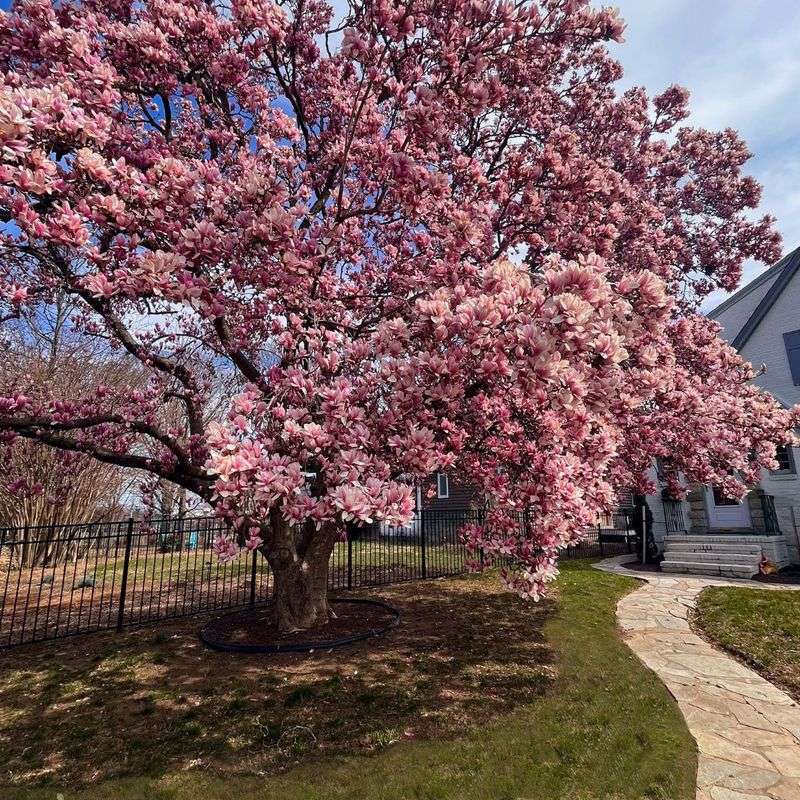
Few spring moments match the sight of a saucer magnolia in full bloom. The large, tulip-shaped flowers open in shades of pink, white, and purple before the leaves even appear.
It is one of those trees that makes people slow down when they drive past. Saucer magnolia grows at a moderate pace and usually reaches 20 to 25 feet at maturity. The canopy is rounded and fairly dense, providing comfortable shade during summer.
Unlike the large Southern magnolias often seen in warmer climates, saucer magnolia stays at a size that works well in residential settings.
Bloom timing can be a double-edged experience. The flowers open early in spring, which means a late frost can damage the blossoms in some years.
Planting in a spot with northern or eastern exposure can delay bloom slightly and reduce frost risk. Many gardeners find the trade-off well worth it for the spring show this tree delivers.
Summer foliage is bold and tropical-looking, with large, deep green leaves that cast solid shade.
The canopy fills in well and creates a cool spot underneath during warm afternoons. Planting near a patio or seating area maximizes the benefit.
Soil should be rich, moist, and slightly acidic for best results. Mulching heavily around the base helps retain moisture and protects the shallow roots.
Saucer magnolia rarely needs much pruning and holds its shape naturally over many years of steady, well-behaved growth.
9. Redbud Gives You A Broad Canopy In A Smaller Package
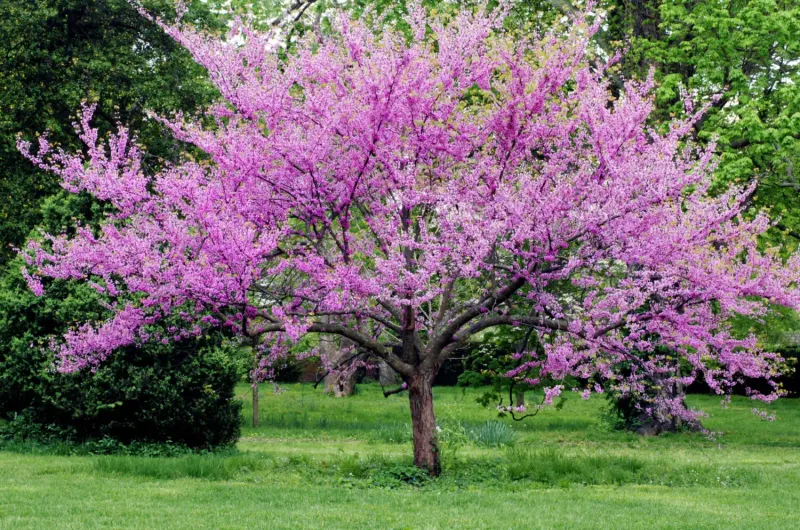
Redbud earns its name in the most dramatic way possible. Before a single leaf appears, the bare branches erupt in clusters of bright pink-purple blossoms that cover every twig from trunk to tip.
The effect is almost unreal, like someone painted the tree overnight. Eastern redbud grows 20 to 30 feet tall with a wide-spreading, rounded canopy. That broad spread is what makes it such a good shade provider for small yards.
You get generous horizontal coverage without the tree shooting up to an unmanageable height.
After the spring bloom fades, large heart-shaped leaves emerge and provide dense shade through summer.
The leaves are a fresh, bright green that cools the look of any yard. In fall, they turn yellow before dropping cleanly, making cleanup easy.
Redbud adapts to a range of soil types and tolerates both clay and sandy conditions better than many ornamental trees.
Full sun to partial shade both work well, though more sun generally means better flowering. Good drainage is the one thing it really needs to perform at its best.
A fun detail worth knowing: redbud flowers are edible and have a mild, slightly tangy flavor. Some gardeners toss them into salads for a pop of color and taste.
Beyond that quirky bonus, redbud is simply a hard-working, beautiful tree that fits naturally into Pacific Northwest yards without ever becoming a problem. It is a smart choice for anyone who wants shade and style in a smaller space.