The Owl More Pennsylvanians Are Spotting This Fall
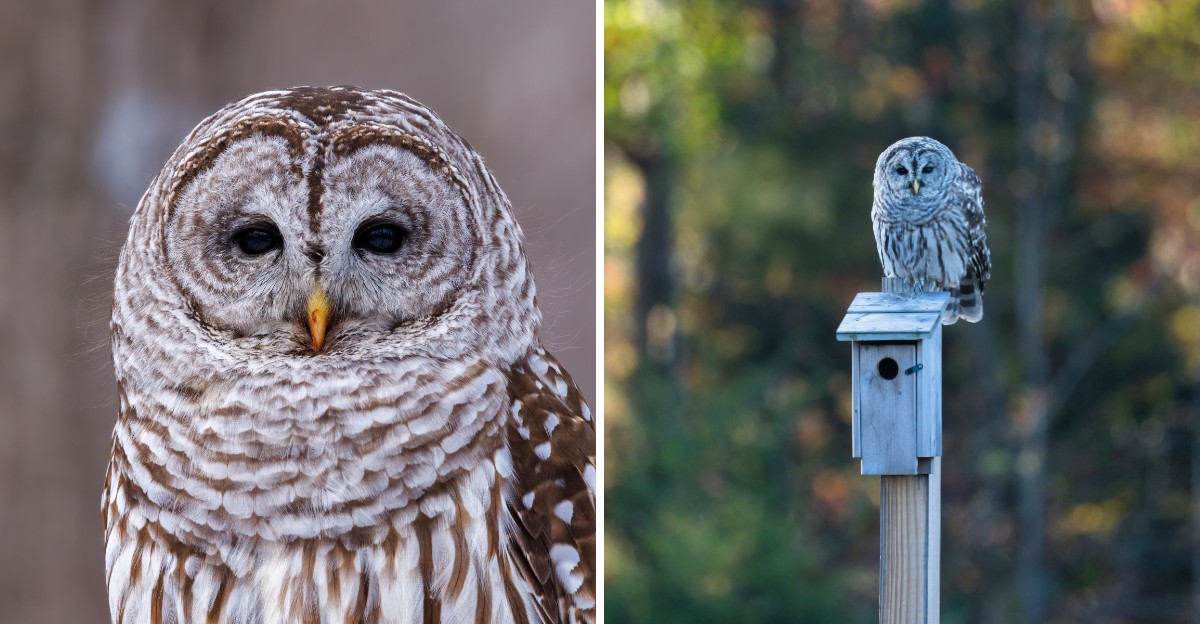
Across Pennsylvania, more people are glancing outside at dusk and spotting a large, round-headed owl perched in a backyard tree. Some find it sitting quietly on a fence post. Others see it swoop across the yard in broad daylight.
It’s a striking bird, with soft gray-brown feathers, a streaked chest, and deep, dark eyes that make it look almost gentle.
It’s also one of the state’s most talkative owls, known for a loud, rhythmic hooting that echoes through the woods at night.
Fall is when sightings tend to pick up. Young owls are leaving their parents to find territories of their own, and adults get more vocal as they defend their turf.
If one has been hanging around your neighborhood, there’s a lot it might be telling you.
A Familiar Pennsylvania Owl
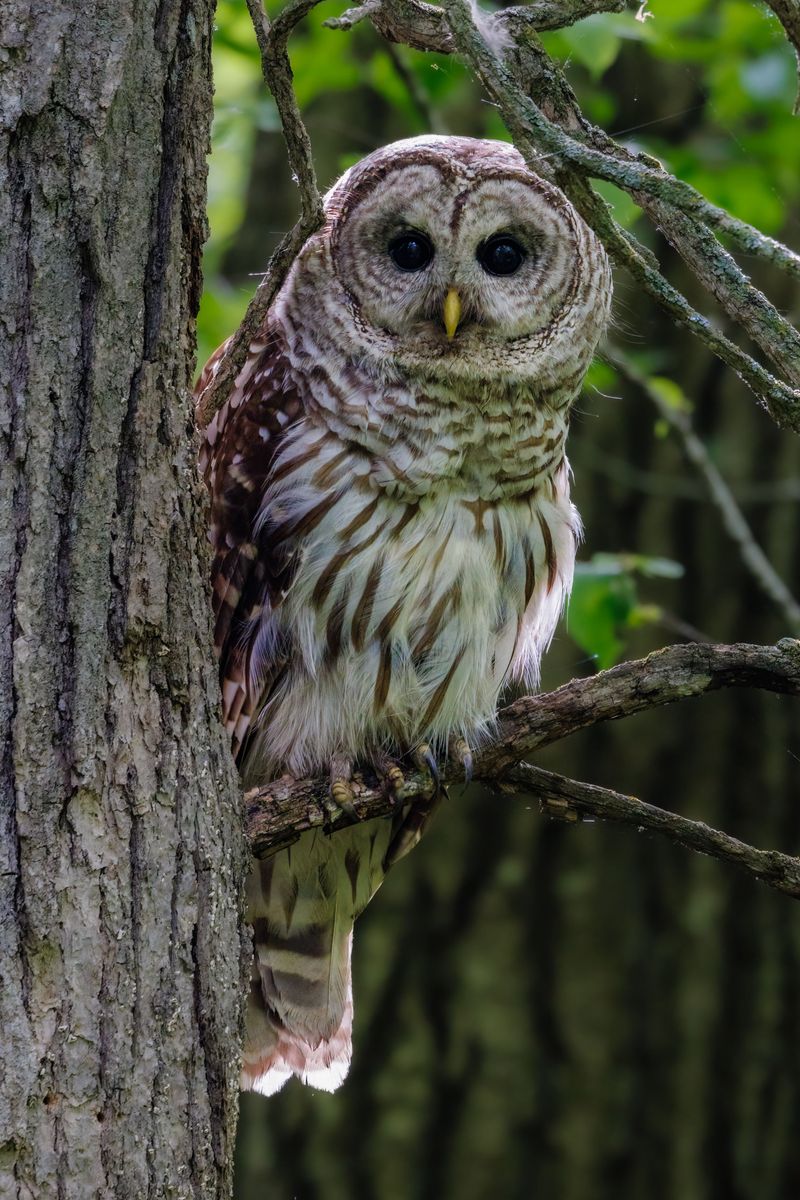
Some neighbors never knock on the door. The barred owl is one of them, and it may already live closer to you than you think. It is one of the most common large owls in Pennsylvania.
Barred owls are medium-to-large birds. An adult stands about 17 to 20 inches tall. Its wings can stretch over three feet from tip to tip. That is wider than most kids can reach with their arms spread out!
You can find barred owls all across the state. They love old, mature forests with tall trees. They really like woods near streams, rivers, swamps, and wetlands. Water areas give them plenty of food and good places to hide.
Old trees matter a lot to these owls. Barred owls nest inside big holes in tree trunks. Those holes often form in older trees after a branch breaks off. Young forests usually do not have enough of these cozy hollows.
Lately, barred owls have been showing up in new places too. Many people now see them in wooded suburbs and city parks.
If a neighborhood has large, old trees, an owl might move right in. Some folks have even spotted them sitting on a fence or a backyard swing set.
Want to find one near you? Start by visiting a state park or nature trail with a creek running through it.
Places like the Pocono woods or forests along the Susquehanna River are great choices. Walk slowly and look up into thick branches near the trunk.
Fun fact: barred owls tend to stay in the same area for years. Once a pair finds a good home, they often keep it for a long time. So if you spot one, you may get to see it again and again.
How To Recognize It
Picking out a barred owl is easier than you might guess. Once you know a few clues, you will spot one like a pro. Think of it as a fun bird detective game.
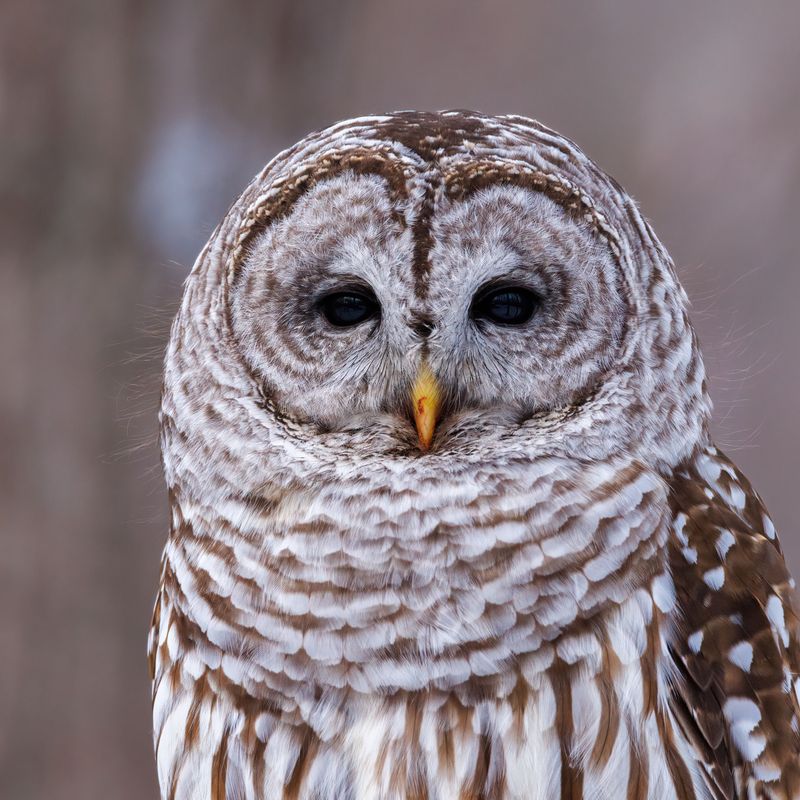
First, look at the color. Barred owls are brownish-gray all over. Their feathers have lots of white and brown patterns. That coloring helps them blend in with tree bark during the day.
Your Pennsylvania Garden Changes Every Week. Your Plan Should Too.
Gardening in Pennsylvania changes quickly throughout the season. Every Friday you’ll receive a simple weekly plan showing exactly what to plant, prune, fertilize, harvest, and protect so you never miss the right timing.
Next, check the head. A barred owl has a big, round head with no ear tufts. Ear tufts are the little feather points that stick up on some owls.
The great horned owl has them, but the barred owl does not. If you see a smooth, round head, that is a good sign.
Now look at the eyes. Most owls in Pennsylvania have yellow or orange eyes. Barred owls have dark brown eyes that look almost black. Many people say these eyes look soft and friendly.
The best clue is in the name. Barred owls have horizontal bars across the upper chest. Below that, they have vertical streaks running down the belly. So the lines go sideways on top and up and down on the bottom.
Here is a handy tip for remembering. Picture a striped scarf around the neck and a striped sweater below. The scarf stripes go across, and the sweater stripes go down.
Bring binoculars on your walk if you can. They let you see these details without getting too close. A simple field guide or a bird app can help you double-check your sighting.
Did you know? Female barred owls are usually a bit bigger than males. That is true for many kinds of owls and hawks.
Its Famous Who Cooks For You Call
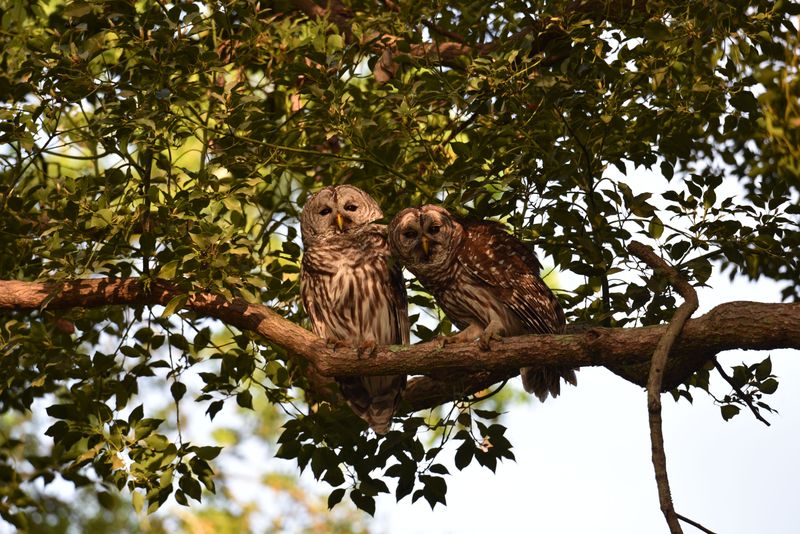
“Who cooks for you? Who cooks for you-all?” No, that is not a hungry neighbor shouting across the yard. It is the barred owl, and it has one of the most famous calls in the woods.
Bird watchers love this call because it is so easy to remember. The hoots come in a rhythm that sounds like a question. Say the words out loud, and you will hear the pattern. Many people learn this call before they ever see the bird.
Barred owls are very chatty, especially in fall and winter. Pairs often call back and forth to each other. It is like they are checking in or sharing news. One owl hoots, and the other answers right away.
Sometimes things get wild. A pair might break into a loud chorus of hoots, cackles, and screeches. It can sound like monkeys in a jungle! The first time you hear it, you might jump out of your socks.
Owls call for many reasons. They tell other owls that a territory is taken. They also talk to their mates and keep in touch at night. Young owls make raspy begging sounds when they want food.
Want to hear one yourself? Try going outside just after sunset on a calm night. Stand still near the woods and listen closely. Bring a grown-up and a flashlight for safety.
You can also practice with online bird sound libraries. The Cornell Lab of Ornithology has great recordings to study. Just listen at home, and do not play them loudly outside.
Fun fact: barred owls sometimes call during the day. On cloudy afternoons, you may hear a surprise hoot drifting through the trees.
Why Sightings Rise In Fall
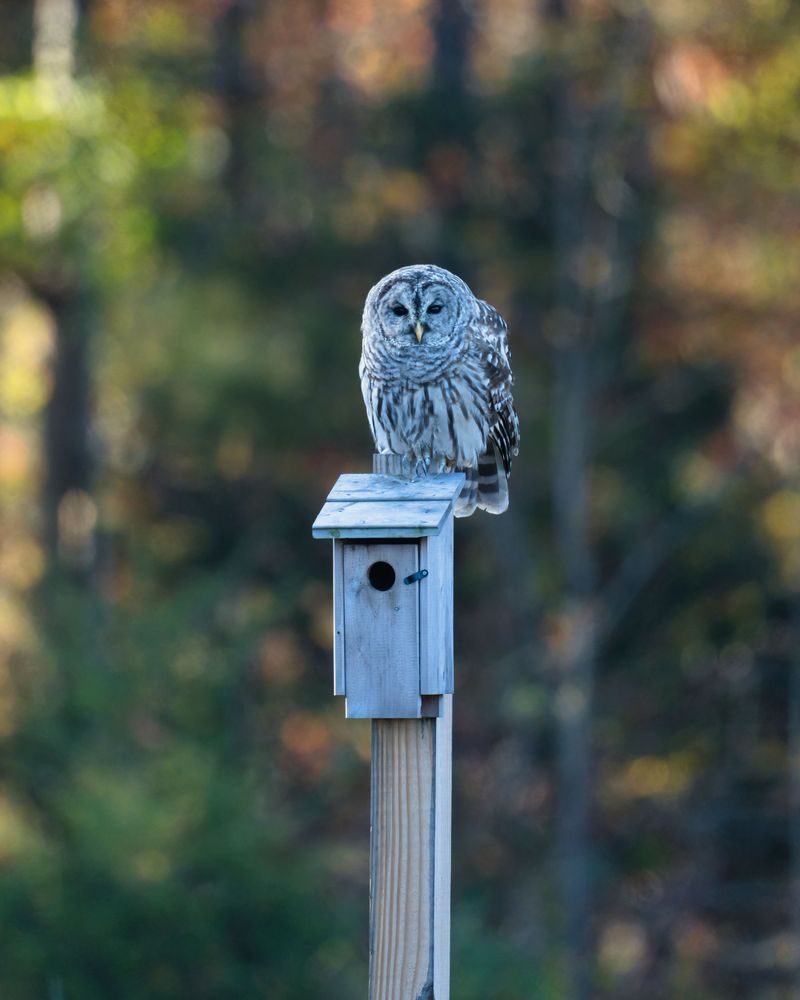
Moving out is a big step for anyone, owls included. Every fall, young barred owls pack up and leave home. That is one big reason more Pennsylvanians are spotting them right now.
Baby barred owls hatch in spring. All summer, they stay close to their parents and learn to hunt. By fall, they are ready to live on their own. Their parents want them to find new places so the old territory is not too crowded.
So the young owls set out exploring. They fly from woods to woods looking for an open home. Many good forests already have owls in them. That pushes young birds into new neighborhoods, parks, and backyards.
These young owls may not know where they are going yet. You might find one perched on a mailbox or a porch rail. They can look a little lost or curious. Most of the time, they are just resting before moving on.
Timing helps too. Barred owls often hunt at dusk, when people are still outside. Sometimes they even hunt during the day. Most owls stay hidden until dark, but barred owls are more relaxed.
Falling leaves also make a difference. Once branches go bare, owls are much easier to see. A big gray shape stands out against an empty tree.
Here is a smart tip. Check the edges of woods around sunset in October and November. Look for a round shape sitting still on a low branch. Listen for crows making a loud fuss, because they often gang up on owls.
Keep a nature journal of your sightings. Write the date, time, and place. Over time, you might notice patterns in when owls show up.
What It Eats
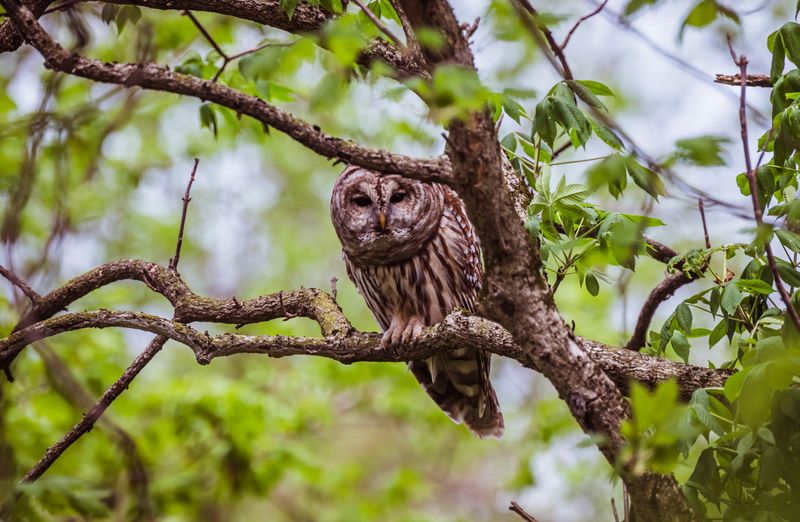
Think of the barred owl as a picky eater? Think again! It will snack on almost anything small enough to catch. That big menu helps it live in many different places.
Small mammals are a favorite. Barred owls hunt mice, voles, chipmunks, and even squirrels. They also grab rabbits now and then. These furry meals make up a large part of their diet.
Water creatures are popular too. Barred owls love frogs, crayfish, and small fish. They will wade into shallow streams to catch dinner. Some people have even seen owls with wet, muddy feet after a hunt!
How do they catch so much? Owls have amazing hearing. Their ears are placed at slightly different heights on their heads. That helps them pinpoint exactly where a sound is coming from, even under leaves or snow.
Their feathers help as well. Owl wings have soft, fringed edges. That design lets them fly almost silently. A mouse has little warning before the owl swoops down.
Barred owls usually sit and wait. They perch on a branch and watch the ground below. When they spot movement, they drop down with sharp talons ready.
Seeing a barred owl is good news for your area. It often means the woods are healthy. A healthy forest has clean water and plenty of small animals. Owls need all of that to survive.
Want to help? Leave some natural spaces in your yard. Piles of leaves and brush give homes to the small critters owls eat. Keeping creeks clean helps frogs and crayfish too.
Fun fact: owls swallow small prey whole. Later, they cough up pellets of fur and bones that scientists study.
How To Enjoy Them Responsibly
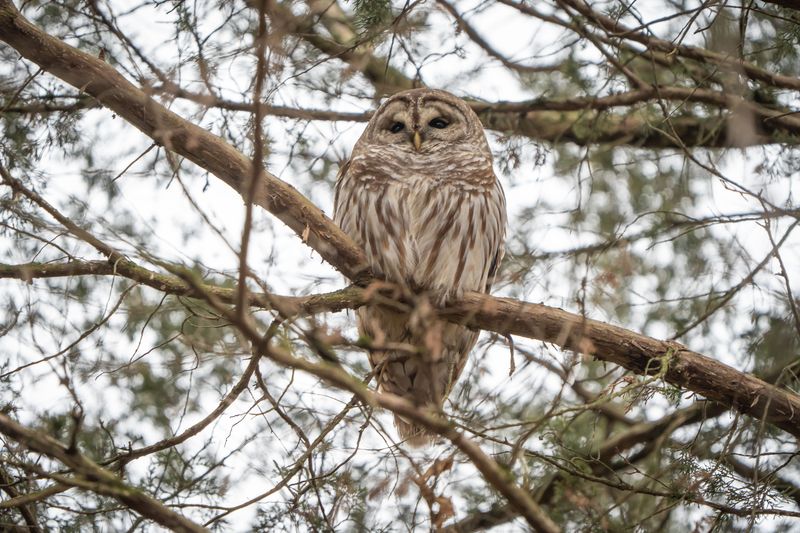
Respect goes a long way with wildlife. Barred owls are wonderful to watch, but they need space to stay healthy and safe. A little care from us makes a big difference for them.
First, know the rules. Barred owls are protected by federal and state law. It is illegal to harm them, capture them, or disturb their nests. Even keeping a feather you find is not allowed without a permit.
Always watch from a distance. Use binoculars or a camera zoom instead of walking closer. If the owl stares at you, shifts around, or flies off, you are too close. Back away slowly and quietly.
Skip the recorded calls. Some people play owl sounds on their phones to bring birds closer. That can stress the owl and pull it away from hunting or its mate. It may think a rival has moved in.
Be careful with rat poison. Owls eat lots of rodents. If a mouse eats poison and an owl eats that mouse, the owl can get very sick. Try snap traps or sealing holes in your home instead.
Drive slowly near woods at night. Owls sometimes swoop low over roads while chasing prey. Watching your speed helps keep them safe.
Found an owl that seems hurt? Do not try to pick it up. Call a licensed wildlife rehabilitator or the Pennsylvania Game Commission for help.
Sharing your sightings can help science, too. Apps like eBird let you report owls you see. Researchers use that information to learn where owls live and how they are doing. With patience and kindness, you can enjoy barred owls for many falls to come.