The Pennsylvania Patio Herb That Comes Back Bigger Every Single Year
Most herbs in Pennsylvania containers have a season. They perform beautifully through spring and summer, get cut back, and by the following year you’re essentially starting over.
The cycle is fine, but it’s also a recurring expense and a recurring effort that some Pennsylvania patio gardeners have quietly opted out of. There is one herb that takes a completely different approach.
Instead of needing to be replaced each season, this herb comes back every single year in a container or a patio planting, and it comes back bigger than it was before. More robust, more productive, more fragrant, and more established with each passing season.
It’s hardy, low maintenance, beautiful in a container, and genuinely useful in the kitchen and beyond.
Here’s the Pennsylvania patio herb that keeps coming back bigger every year and exactly why it earns a permanent spot on your patio.
Plant Chives For A Perennial Patio Herb
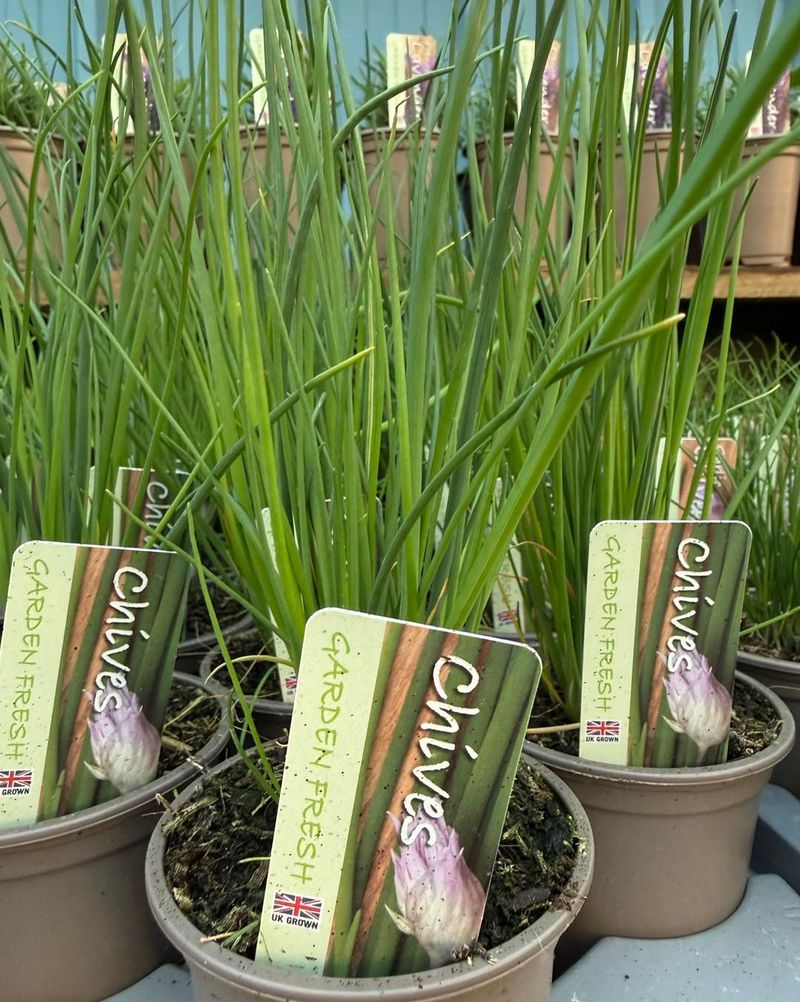
Meet the herb that shrugs off frost and keeps showing up year after year. Chives belong to the onion family, and they are built to handle the cold weather Pennsylvania throws at them.
Unlike basil or cilantro, which fade once temperatures drop, chives are a perennial. That means the plant does not need to be replanted every spring.
It rests during the cold months and then wakes up on its own when the days grow longer.
Growing them on a patio makes life simple. You can keep a pot right by your back door, so fresh snips are always within reach when you are cooking dinner.
A container also lets you control the soil and move the plant to catch the best sunlight.
Starting chives is easy too. You can plant seeds, but buying a small starter plant from a garden center gives you a faster harvest.
Just tuck it into a roomy pot with fresh potting mix, water it well, and set it in a bright spot.
Within a few weeks, you will see slender green blades reaching upward. Give the plant a little care, and it settles in quickly.
Once established, chives ask for very little.
Here is a fun bit of history. People have grown chives for thousands of years, and cooks in ancient China and Europe both prized them.
When you plant a pot of chives, you are joining a very old tradition of growing this dependable, flavorful herb close to home.
Why Chives Come Back Each Spring
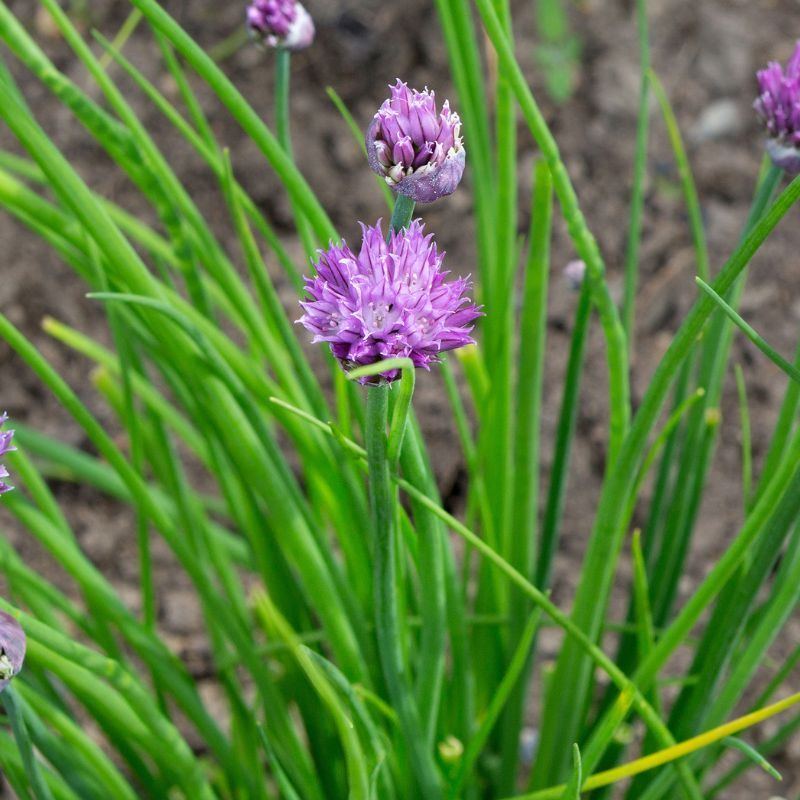
There is a bit of quiet magic in watching chives return each year. The secret lies in their roots, which stay alive underground through winter and hold energy for the next growing season.
When cold weather arrives, the green blades above the soil fade back. The plant is not gone, though.
It simply goes dormant, resting like a bear in a den until spring sunshine signals that it is time to grow again.
As soon as the soil warms, fresh green shoots push up from the crown. This yearly cycle is what makes chives a perennial, and it is why you get free herbs without buying new plants.
Your Pennsylvania Garden Changes Every Week. Your Plan Should Too.
Gardening in Pennsylvania changes quickly throughout the season. Every Friday you’ll receive a simple weekly plan showing exactly what to plant, prune, fertilize, harvest, and protect so you never miss the right timing.
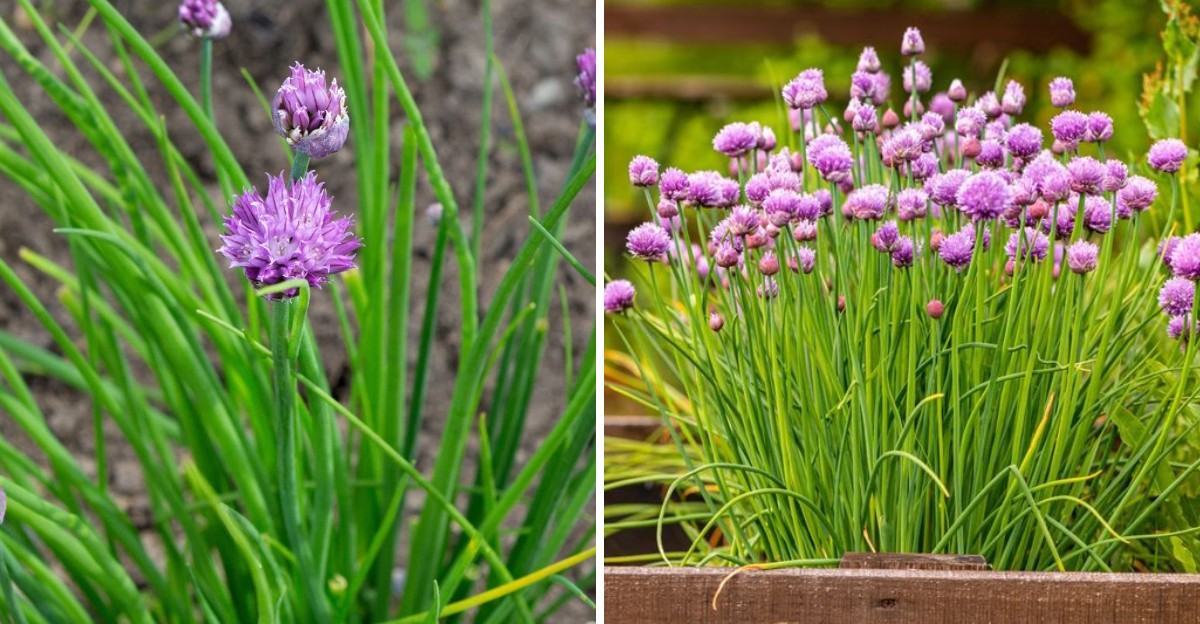
What really surprises new gardeners is how the plant grows bigger over time. Each chive plant slowly multiplies, forming new little bulbs at the base.
Those bulbs send up more blades, so the whole clump gets thicker and fuller.
A plant that started as a small tuft can become a dense, bushy mound after two or three seasons. More leaves mean more to harvest, so your snacking and cooking supply keeps growing right along with it.
You may also notice purple flowers appear in late spring. These blooms are not only pretty, they are edible and can be sprinkled on salads.
The takeaway is simple. Plant chives once, take good care of them, and they reward you with a steady, expanding harvest.
Few herbs offer that kind of long-term payback for so little effort on your part.
Give Chives The Right Container Conditions
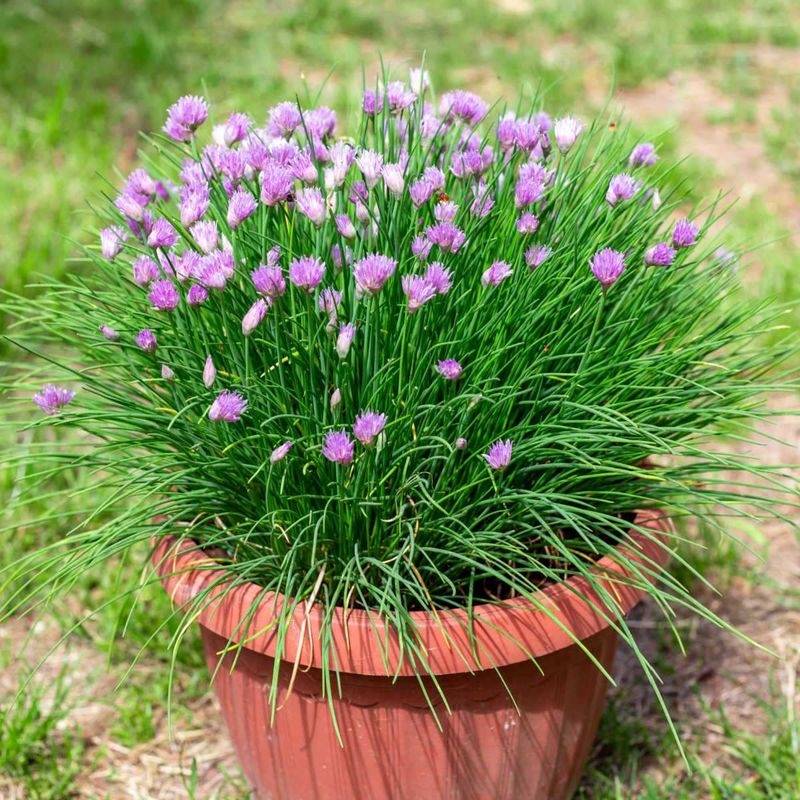
Getting the setup right from the start saves you a lot of trouble later. Chives are forgiving, but they do have a few clear favorites when it comes to their home in a pot.
Sunlight tops the list. These plants love bright spots and do best with at least six hours of direct sun each day.
A patio that faces south or west usually works great.
The container itself matters more than you might think. Pick a pot with holes in the bottom so extra water can drain away.
Without drainage, water pools at the roots and can rot the plant.
Fill the pot with good-quality potting soil instead of dirt dug from the yard. Potting mix stays loose and drains well, which keeps the roots happy and healthy.
Garden dirt often packs down hard and holds too much water.
Chives like steady moisture, so water when the top inch of soil feels dry to your finger. During hot summer days, a container may need water more than once.
Just avoid keeping the soil soggy all the time.
A pot about eight to ten inches wide gives roots room to spread and multiply. Bigger pots also dry out more slowly, which means less frequent watering for you.
Feed the plant a little balanced fertilizer once or twice during the growing season if you want extra vigor. Get these basics right, and your chives will grow lush and green, ready to snip whenever you need a fresh, oniony flavor.
Harvest Chives Without Weakening The Plant
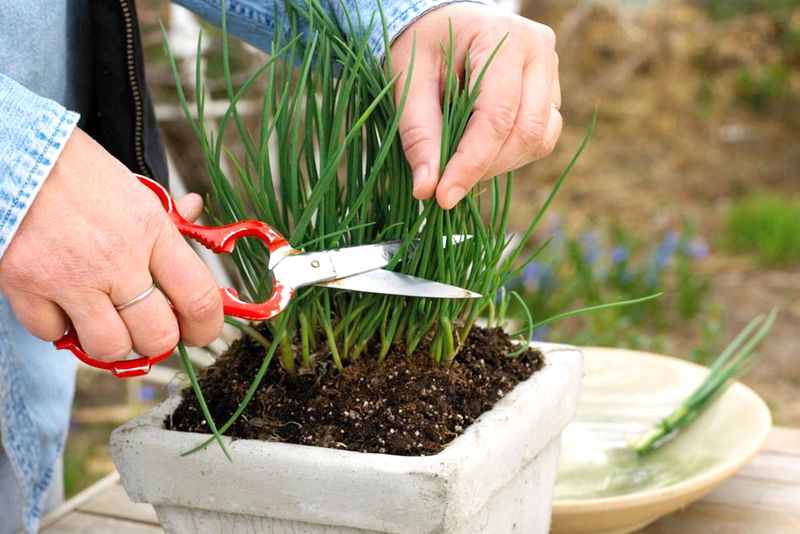
Snipping chives feels good, but a little know-how keeps the plant strong while you gather your harvest. The trick is to cut smart, not greedy.
Grab a clean pair of scissors and cut the blades about one to two inches above the soil. Cutting near the base encourages fresh new growth to come up quickly.
Ragged tearing by hand can bruise the leaves, so scissors are the better choice.
Always leave some green behind. A good rule is to never take more than a third of the plant at one time.
Those remaining leaves keep making energy from sunlight, which the plant needs to grow back fast.
You can start harvesting once the blades reach about six inches tall. Regular snipping actually helps, because it pushes the plant to send up tender new shoots.
A plant you cut often stays fuller than one you ignore.
Harvest from the outer edges of the clump first, and rotate around the pot. This spreads the cutting evenly so no single spot gets overworked.
Fresh chives taste best right after cutting, so snip only what you plan to use.
If flowers appear and you want more leaves, snip the flower stalks. This tells the plant to focus its energy on making blades instead of seeds.
Store any extra chives in the fridge wrapped in a damp paper towel, or freeze chopped pieces for later. Treat your plant kindly with careful cutting, and it will keep serving up flavor all season long without slowing down one bit.
Help Patio Chives Survive Pennsylvania Winters
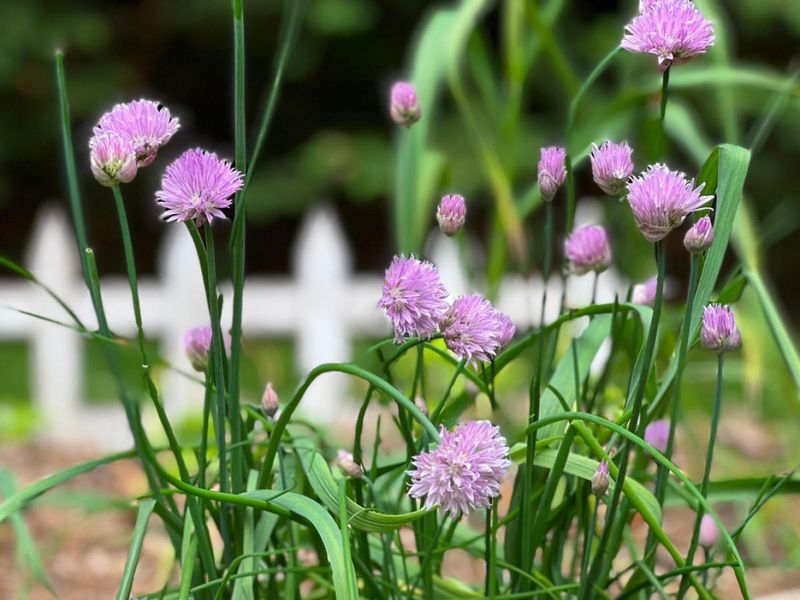
Pennsylvania winters can be harsh, but chives are tough customers that handle the cold well. Still, plants in containers need a little extra help to make it through comfortably.
The main challenge is not the cold itself, since chives are naturally cold-hardy. The real danger comes from roots freezing too hard in a pot, which cannot protect them the way deep garden soil does.
Good drainage becomes even more important in winter. Soggy soil that freezes and thaws over and over can harm the roots.
Make sure your pot drains freely so water never sits at the bottom.
One easy trick is to move the container to a sheltered spot. Tucking it against the house wall or into a garage on the coldest nights blocks the worst wind and cold.
An unheated garage or shed works nicely.
You can also group pots together and wrap them in burlap or bubble wrap. This adds a layer of protection around the roots without smothering the plant.
Mulching the top of the soil with straw helps too.
Do not worry when the green blades fade in late fall. The plant is only resting, and it will bounce back once spring arrives.
Water sparingly during dormancy, since a resting plant needs very little.
Come spring, brush away any covering and set the pot back in the sun. Soon you will spot fresh green shoots pushing up, proof that your care paid off.
With these simple steps, your patio chives will greet you year after year.
Divide Chives When The Clump Gets Crowded
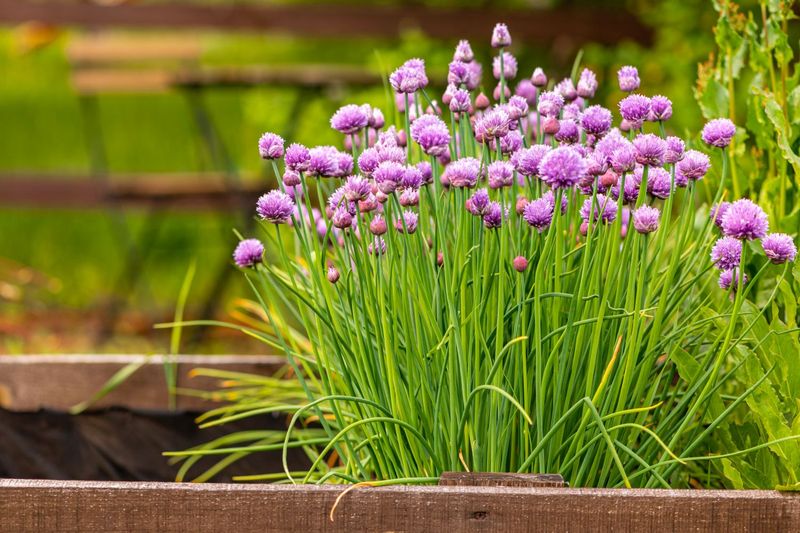
After a few good years, your chives may grow so full that they look packed tight in the pot. That crowded look is your cue to divide the clump, and it comes with a bonus of free plants.
Dividing simply means splitting one big plant into several smaller ones. When a clump gets too dense, the center can grow tired and thin.
Splitting it gives each piece fresh room to spread out and grow strong again.
Early spring or fall is the best time to do this. Gently slide the whole plant out of its pot, and you will see a thick mass of roots and small bulbs bunched together.
Use your hands or a clean knife to break the clump into two or three sections. Each section should have plenty of roots and several green shoots.
Try not to make the pieces too tiny, since larger chunks recover faster.
Replant one section back into the original pot with fresh soil. Tuck the other pieces into new containers or hand them off to a friend who wants to start their own herb garden.
Water each new division well after planting to help the roots settle in. Within a couple of weeks, the pieces perk up and start putting out new blades.
Dividing every two or three years keeps your chives young, vigorous, and productive. It is a smart way to refresh an aging plant while multiplying your supply.
One little pot can slowly turn into a whole collection of thriving chive plants around your patio.