The Rare Ohio Native Wildflower Most Gardeners Mistake For A Bluebell
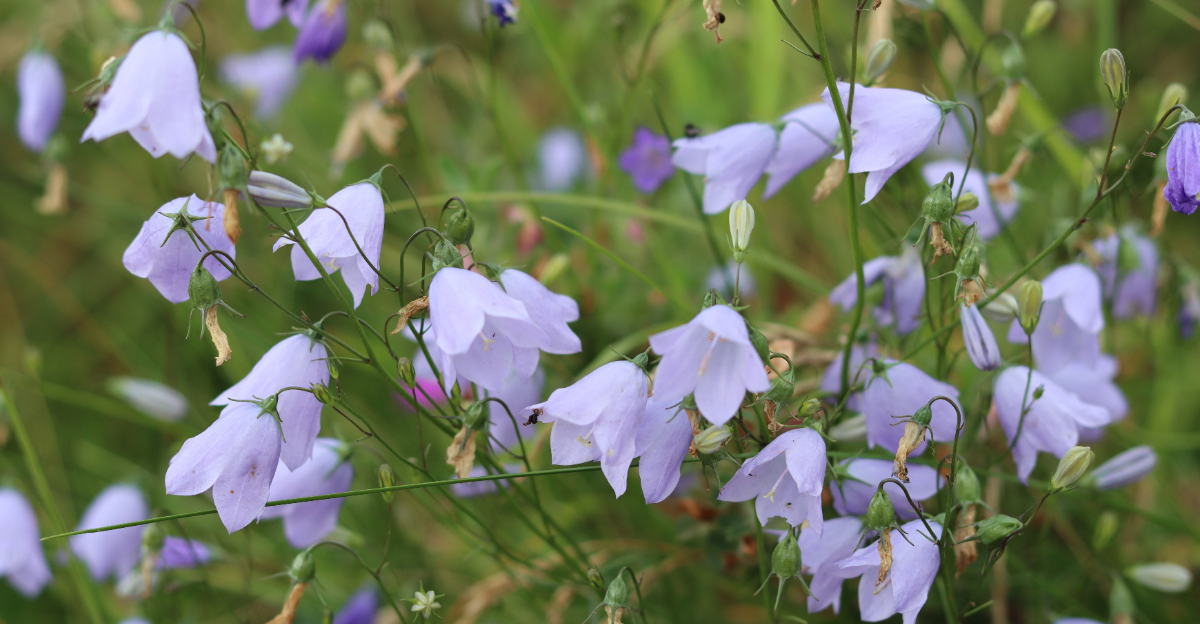
You’ve probably walked past this Ohio wildflower a dozen times and called it something it’s not. Its delicate, nodding blue bells sway on wiry stems so thin they seem to disappear in the wind.
Gardeners spot the shape, spot the color, and assume they’ve found a common bluebell. They haven’t.
This native holds its own identity, its own history in Ohio’s rocky bluffs and prairie edges, and a resilience that true bluebells can’t match. Few people ever encounter it in the wild.
It favors thin, dry soil and exposed limestone ledges where most plants refuse to grow, tucking itself into cracks and slopes far from casual foot traffic. That rarity is exactly what makes a sighting feel like a small reward.
Mistaken identity has followed this flower for generations. Once you learn what actually separates it from a bluebell, you’ll never confuse the two again.
1. Harebell Is The Native Bluebell Most Gardeners Overlook
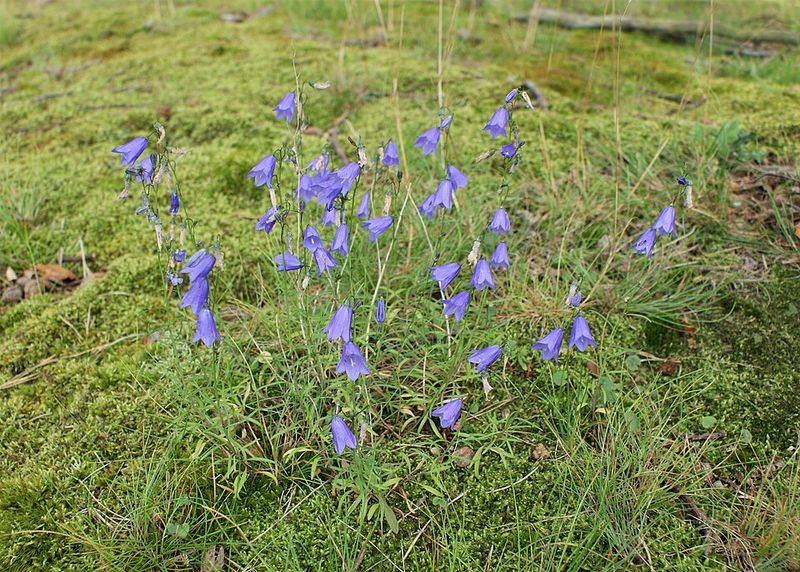
Harebell, known scientifically as Campanula rotundifolia, is a genuine native wildflower with a long list of accepted common names. Bluebell is one of them.
So is bluebell bellflower. The name bluebell is not a mistake or an old-fashioned error.
Common names simply get shared across unrelated plants, and bluebell is a name that travels widely.
Ohio lists harebell as a threatened species, which tells you something about its standing in the region. It grows here, but not abundantly.
Spotting it in the wild takes some luck and the right kind of habitat.
The flowers are small, nodding bells in shades of violet-blue or purplish blue. They hang from slender stems that rarely exceed eighteen inches in height.
Some plants stay closer to six inches tall. The overall impression is light and airy rather than bold or showy.
Because bluebell is a shared common name, it can point gardeners toward very different plants depending on the region. A gardener who hears bluebell and pictures a full, leafy spring plant may be thinking of an entirely separate species.
Harebell fits the bluebell name in its own way. Its bell shape is clear, and its color earns the label.
Scientific names like Campanula rotundifolia remove any doubt about which plant you mean.
2. Its Nodding Flowers Look Nothing Like Virginia Bluebells
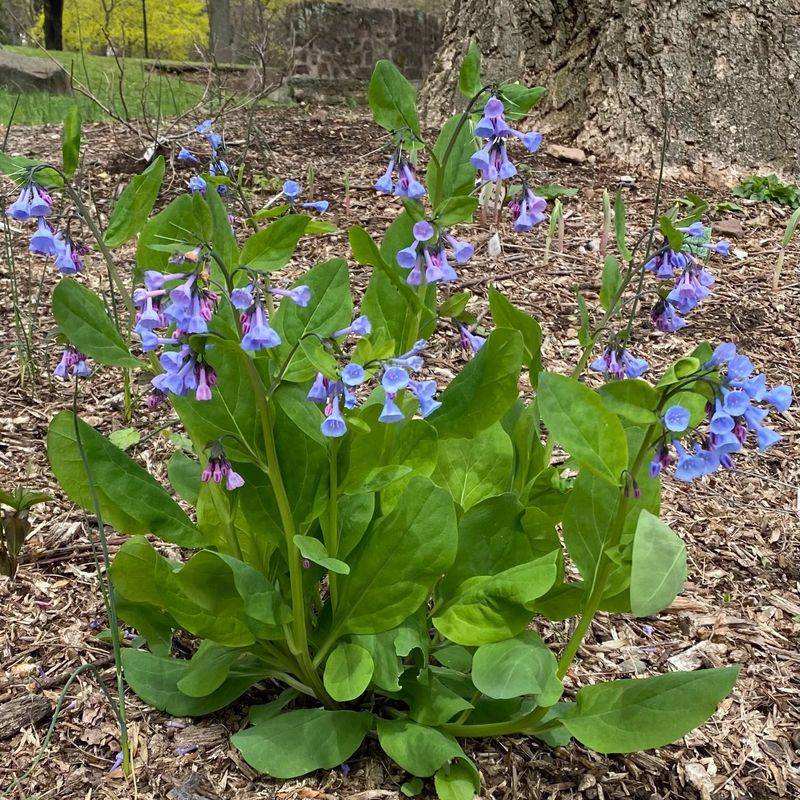
Stand a clump of Virginia bluebells next to a stem of harebell and the differences become obvious quickly. Virginia bluebells, known botanically as Mertensia virginica, form a full, leafy plant with clustered flowers arranged along arching stems.
The plant has broad, soft leaves and a presence that fills a woodland floor in spring.
Harebell looks nothing like that in overall shape. Its stems are wiry and sparse.
Leaves on the upper stem are narrow, almost grass-like. The flowers hang separately rather than bunching together, each one dangling on its own small stalk.
Both plants produce bell-like flowers in blue-violet tones, so the visual family resemblance is real. The subheading uses editorial emphasis.
Your Ohio Garden Changes Every Week. Your Plan Should Too.
Gardening in Ohio changes quickly throughout the season. Every Friday you’ll receive a simple weekly plan showing exactly what to plant, prune, fertilize, harvest, and protect so you never miss the right timing.
A closer look reveals clear differences in stature, leafiness, stem thickness, and flower arrangement.
Bloom season separates them too, though that detail gets its own section. For now, focus on structure.
Virginia bluebells produce a lush, rounded clump that looks at home in a rich woodland garden. Harebell produces something more open and linear.
Its flowers appear to float above whatever ground cover surrounds them.
Gardeners familiar with Mertensia virginica who hear the word bluebell will naturally picture that spring plant first. Harebell simply occupies a different visual category, even when both names overlap.
3. Summer Blooms Set It Apart From The Spring Woodland Favorite
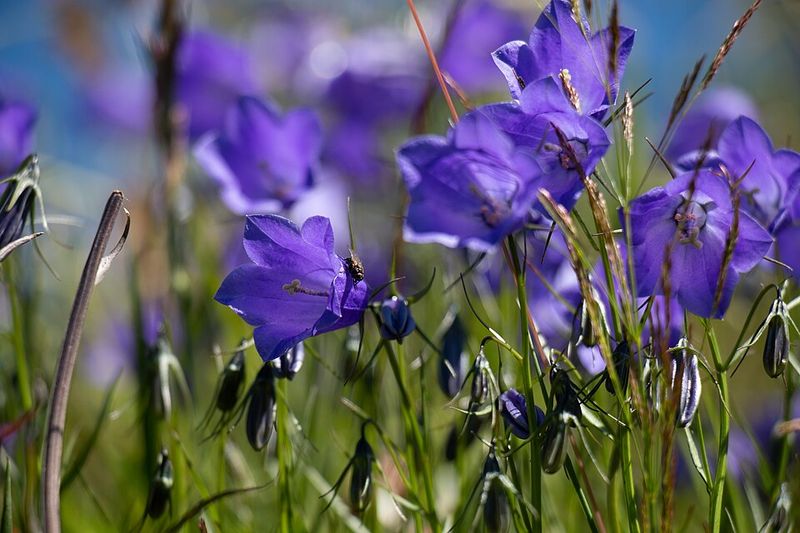
Bloom timing is one of the clearest ways to separate these two plants in the field. Virginia bluebells flower in spring, often peaking from March through May depending on local conditions.
By early summer, the plant has usually gone dormant and its foliage has faded back into the soil.
Harebell takes a different path through the season. Reliable regional guidance places its flowering window during summer.
Some sources extend that range through September. Ohio populations may vary based on elevation, moisture, and local weather patterns in a given year.
No single statewide date applies to every plant.
What matters practically is that harebell can provide violet-blue flowers well after spring ephemerals have finished their display. A garden or natural area that loses its spring color by June has room for a plant that steps in later.
Harebell fills that space in a quiet, understated way.
Do not expect one plant to bloom nonstop from early summer through fall. Flowering duration varies by individual plant and site.
The published seasonal range reflects when the species may be found in bloom somewhere across its territory, not a guarantee for every garden.
This summer flowering habit also reflects the open, sun-exposed habitats where harebell grows best. Spring woodland plants like Virginia bluebells work on a very different schedule tied to forest light and soil moisture.
4. Thin Stems Give Harebell Its Delicate Windswept Look
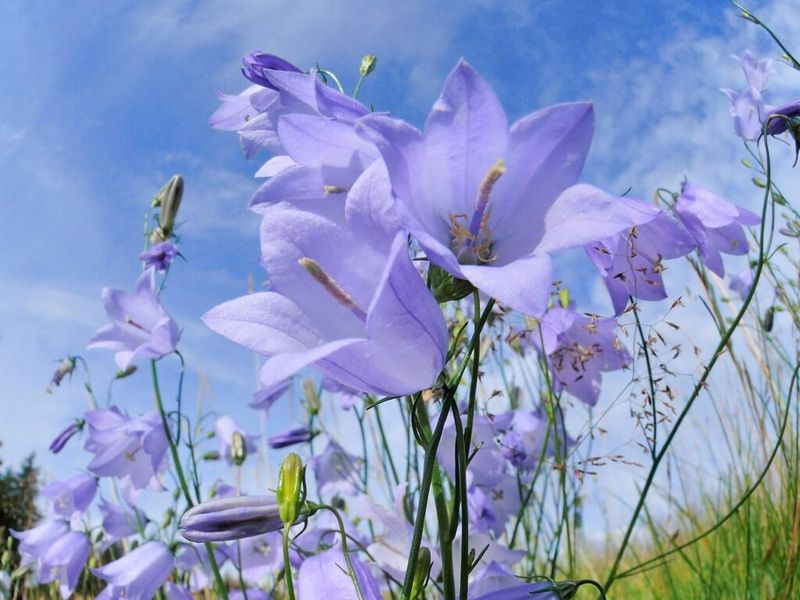
Look closely at a flowering harebell stem and the structure seems almost improbable. The stem is slender and wiry, yet it holds one or more nodding bells without bending to the ground.
That combination of thinness and function is part of what makes the plant so visually distinctive.
The flowers themselves are small bells that tilt downward. Each one opens at the tip into five pointed lobes.
The overall size is modest. Nothing about the flower demands attention from a distance the way a large showy bloom might.
The leaves tell a curious story. The scientific name rotundifolia means round-leaved.
Yet the rounded leaves grow at the base of the plant and may disappear before or during flowering. Upper stem leaves are narrow and grass-like.
A gardener encountering a blooming plant for the first time might not guess that round basal leaves belong to the same species.
Different leaves on different parts of the plant is not unusual in the botanical world. The name rotundifolia refers to those basal leaves, even if they are not always visible at peak bloom time.
Slender stems do not mean fragile. Plants in open, well-drained sites stand through summer breezes without staking.
The windswept impression comes from movement, not weakness. That airy quality sets harebell apart from the denser, heavier look of many spring wildflowers.
5. Rocky Open Ground Fits It Better Than A Woodland Floor
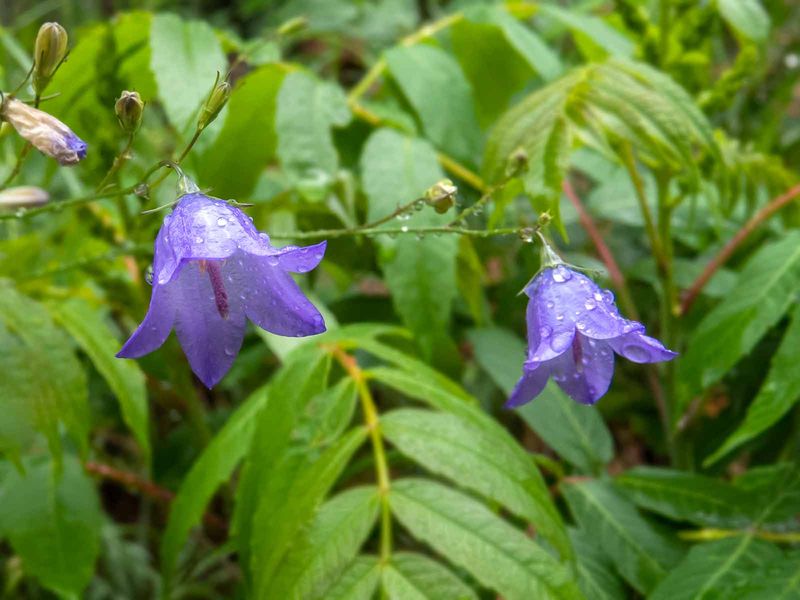
Picture a dry, open slope where the soil drains fast and sunlight reaches the ground all day. That kind of site suits harebell far better than a shaded forest floor.
Authoritative sources place this plant in meadows, grassy areas, open bluffs, and rocky banks. The common thread is exposure and drainage.
Ohio populations tend to appear in these open or semi-open settings rather than in the moist, rich woodland spots where Virginia bluebells thrive. The two plants occupy genuinely different ecological niches.
Neither niche is better. They simply reflect different plant strategies.
Well-drained soil is the most consistent soil requirement mentioned in regional guidance. Open and rocky does not automatically mean bone dry, though.
Some harebell sites receive adequate moisture through rainfall or groundwater movement. Drought can stress the plant.
Calling it drought-proof would go further than the evidence supports.
Rich, consistently moist soil is more likely to favor competing vegetation than to benefit harebell directly. Plants that need open ground can struggle when taller, leafier neighbors close in around them.
Site openness may matter as much as soil chemistry.
For gardeners, this habitat profile suggests a sunny native bed or rock garden setting rather than a shaded border. Matching the plant to its preferred conditions is more likely to produce a healthy, long-lived specimen than forcing it into a spot that suits a different species.
6. Full Sun Gives This Bluebell A Very Different Garden Role
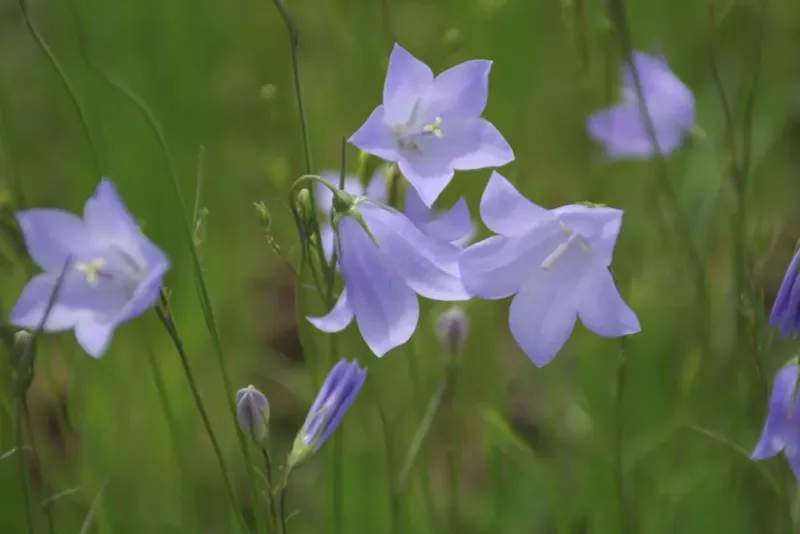
Sunlight is a key part of what separates harebell from the spring woodland plants that share its common name. Horticultural guidance consistently supports full sun as the preferred exposure for Campanula rotundifolia.
Some populations across its wide natural range may tolerate partial shade, but open sunlight is where the plant performs most reliably.
Virginia bluebells are strongly associated with woodland conditions. They thrive in the dappled light of a floodplain forest or a shaded stream corridor.
Placing harebell in that same setting would put it in the wrong environment entirely.
Full sun placement opens up a different set of garden possibilities. A sunny native plant bed, a meadow-style planting, or a rock garden can all provide the light and drainage conditions that suit this species.
Horticultural sources support rock garden use specifically, and that setting mirrors the open, rocky habitats where wild plants are found.
Full sun does not mean a hot, paved surface reflecting heat onto the plant. Soil temperature and moisture still matter.
A sunny bed with fast-draining, moderately lean soil is a more accurate target than a baking concrete border.
Understanding the light requirement also helps explain why harebell is not competing with Virginia bluebells for the same garden space. Each plant belongs in a different type of planting.
That distinction makes them complementary rather than interchangeable.
7. Its State Rarity Makes Wild Plants Worth Protecting
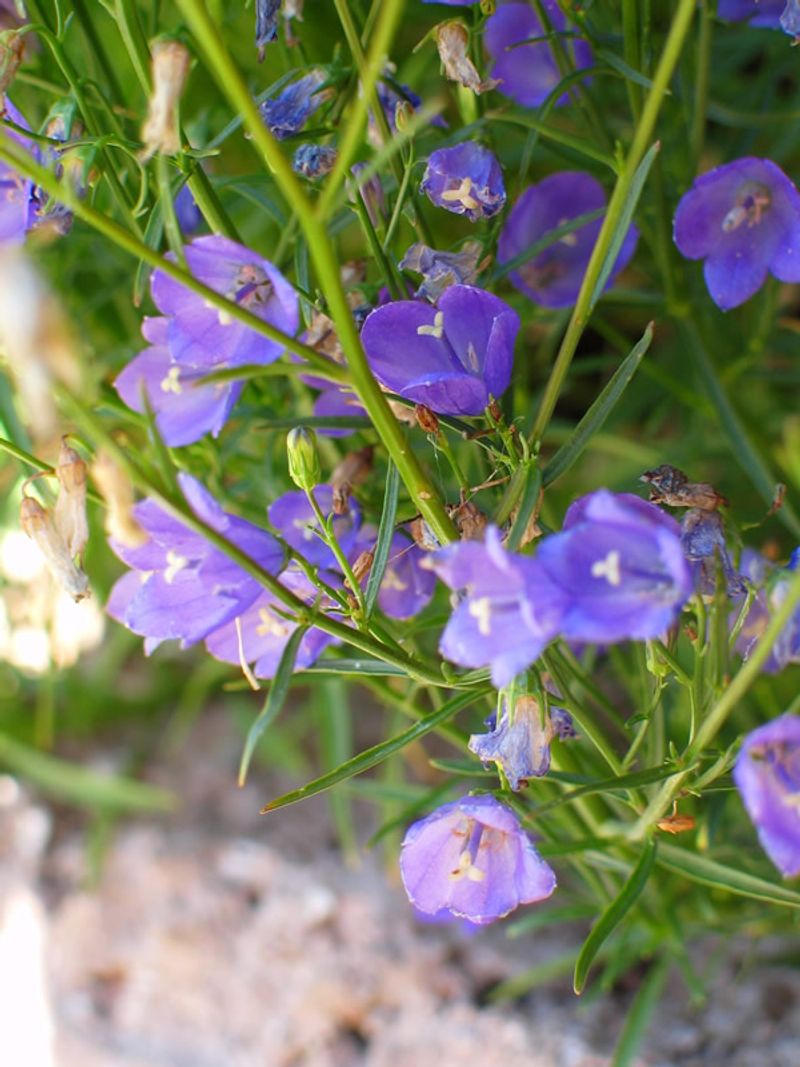
A threatened plant designation carries real meaning. Under current Ohio Administrative Code, Campanula rotundifolia holds threatened status within the state.
Threatened means the species faces pressures that put its continued presence in the region at risk. It does not mean the plant is on the edge of vanishing from the earth.
The species may be far more common in other parts of its range.
What threatened status means practically is that wild populations in the state deserve protection. Digging plants from natural areas, preserves, or roadsides is not a responsible option.
Collecting seed from a small wild population puts additional stress on plants that may already be struggling to reproduce and persist.
No specific population counts or county tallies are cited here, because inventing those numbers would misrepresent the actual data. The official state list and the Ohio Natural Heritage Program hold that information.
Legal details around collection of listed plants can be complex depending on land ownership and permit status. The clearest practical guidance is straightforward.
Leave wild threatened plants where they grow. Do not collect them, transplant them, or take seed from them without proper authorization.
State rarity does not make a plant more glamorous or desirable as a collector’s item. It makes wild individuals more important to leave undisturbed.
Every plant contributing to a small population has a role that a garden specimen cannot replace.
8. Nursery Grown Plants Are The Right Way To Add It
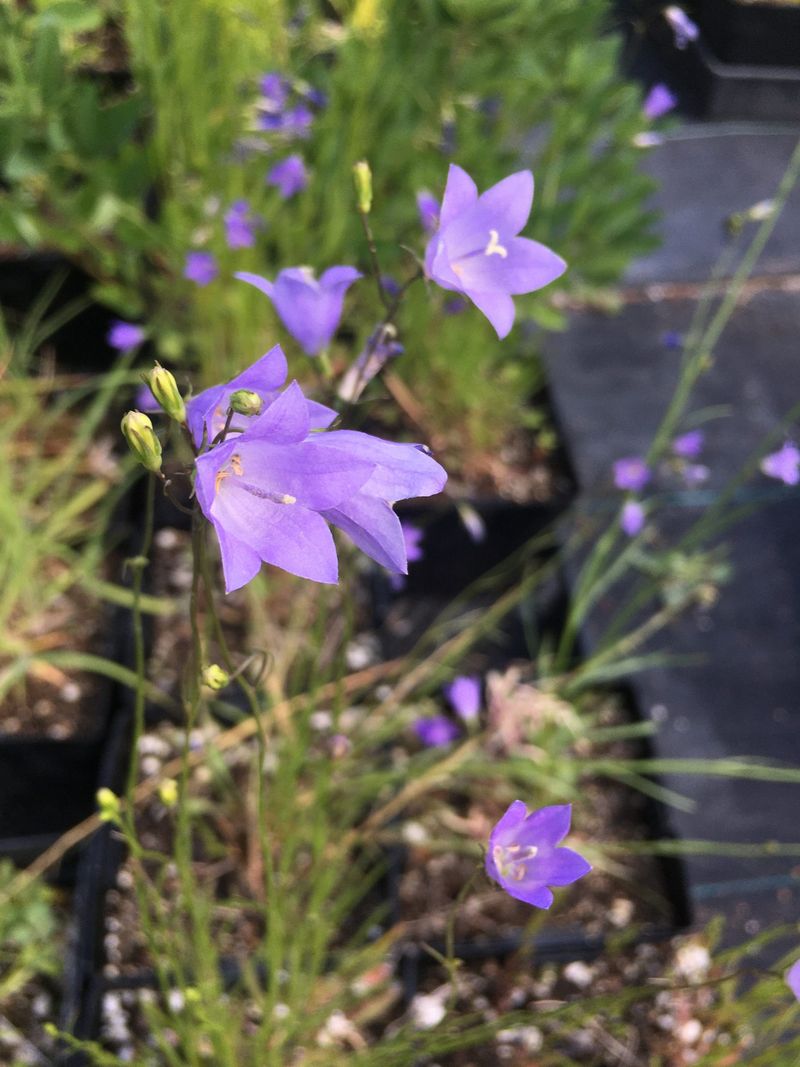
Legally propagated nursery stock is the responsible path for any gardener who wants to grow harebell. Reputable native plant nurseries sometimes carry Campanula rotundifolia or can point you toward a propagated seed source.
Availability varies by region and season. Claiming the plant is easy to find everywhere would not be accurate, but neither is it impossible to source through patient searching.
Seed-grown plants from nursery stock let you enjoy the species without putting any pressure on wild populations. Garden cultivation and ecological restoration are separate activities.
Growing harebell in your yard does not restore a wild population, and nursery plants should not be transplanted into natural areas as a substitute for conservation work.
When selecting a source, look for nurseries that clearly propagate their own stock rather than wild-collect. A reputable native plant specialist will be able to tell you where their plants came from.
That transparency matters for Ohio populations of a state-listed species.
In the garden, match the plant to the conditions described in earlier sections. Open, sunny, well-drained sites give it the best chance.
Treat it as the modest, slender wildflower it is rather than expecting a bold border plant.
The name bluebell is shared by many plants across the world. When a name points in multiple directions, the scientific name does the clearest work.
Campanula rotundifolia is its own species, with its own story, and it deserves to be known on those terms.