The Real Meaning Behind Those Big Wasps Hovering Over Texas Lawns All Summer
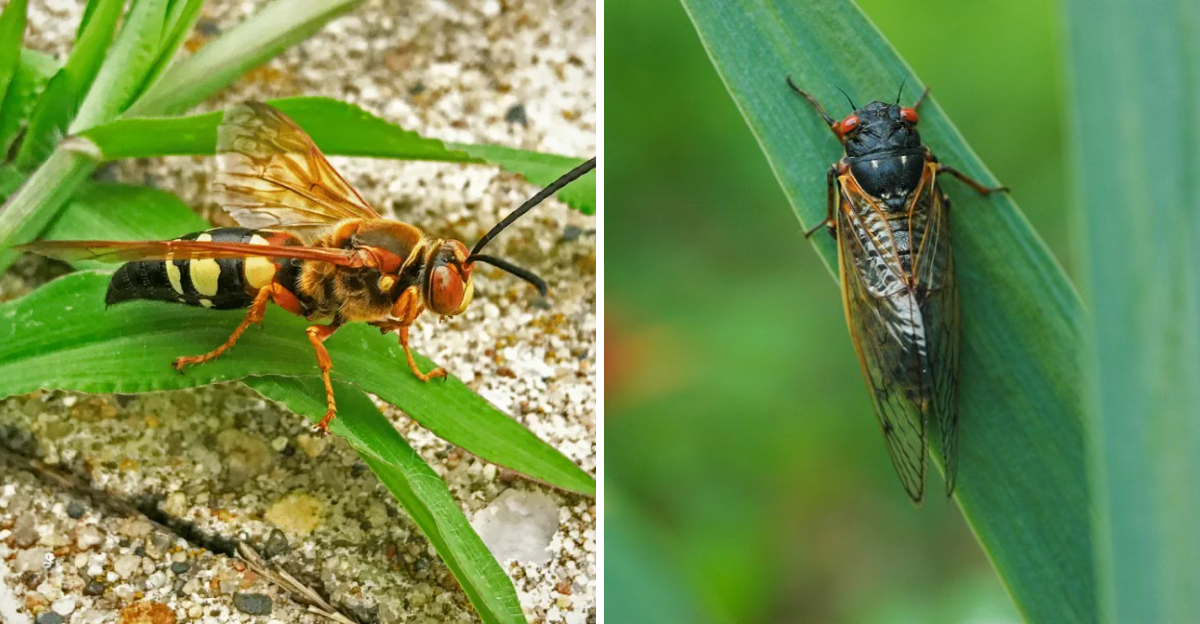
If you’ve noticed large, low flying wasps making slow, deliberate passes over your Texas lawn during the summer months, you’ve probably had one of two reactions.
Either you backed away slowly and went inside, or you stood there genuinely puzzled about what they were doing and whether you should be worried.
Both reactions are completely reasonable. But the answer is a lot more interesting than most people expect.
These big hovering wasps are not being aggressive. They’re not defending a nest, and they’re not looking for trouble.
What they’re actually doing says a lot about what’s living just below the surface of your lawn, and once you understand what’s going on, the whole scene becomes fascinating rather than alarming.
Their presence is actually a sign of something worth knowing about your yard and your soil. Here’s what those large hovering wasps are really doing over your Texas lawn and what it means for your outdoor space.
1. They Are Probably Cicada Killer Wasps
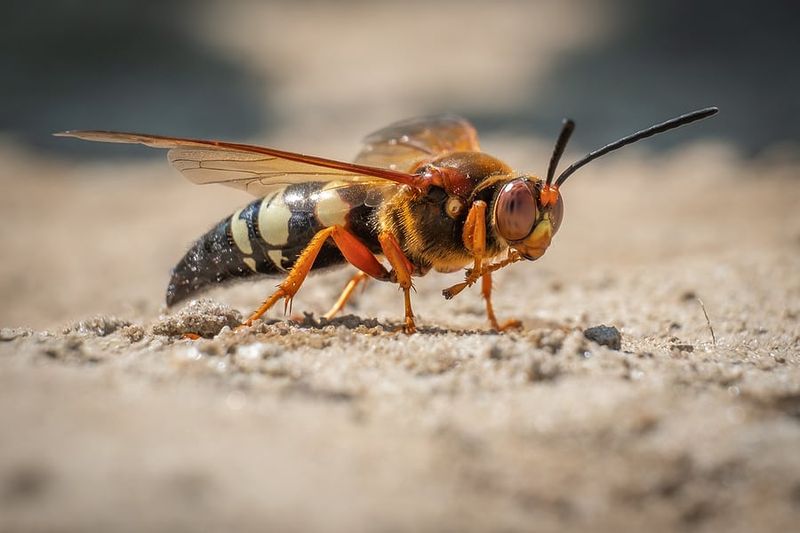
Spotting a wasp the size of your thumb hovering just above your lawn can be a startling experience. Most people assume the worst right away.
But those giant wasps cruising slowly over Texas yards in summer are almost always cicada killers, and once you know what they are, they become a lot less scary.
Cicada killer wasps are one of the largest wasp species found in North America. Adult females can grow up to two inches long.
They have thick, striped bodies with yellow and black markings, and their size alone is enough to make anyone back away quickly. They look like something out of a science fiction movie, but they are completely real and very common across Texas.
These wasps are solitary insects, which is a big deal. Unlike yellow jackets or hornets, cicada killers do not build large colonies or swarm together to protect a nest.
Each female digs her own individual burrow and minds her own business. She is not interested in chasing people around the yard or protecting a shared hive.
Cicada killers have been around for millions of years. They are a natural part of the summer ecosystem in Texas and across much of the eastern and central United States.
Seeing them in your yard is actually a sign that your local environment supports a healthy food chain. They are not an invasive species or a new threat.
They are just big, and big gets attention fast when it is buzzing near your feet on a hot afternoon.
2. They Are Hunting Cicadas, Not You
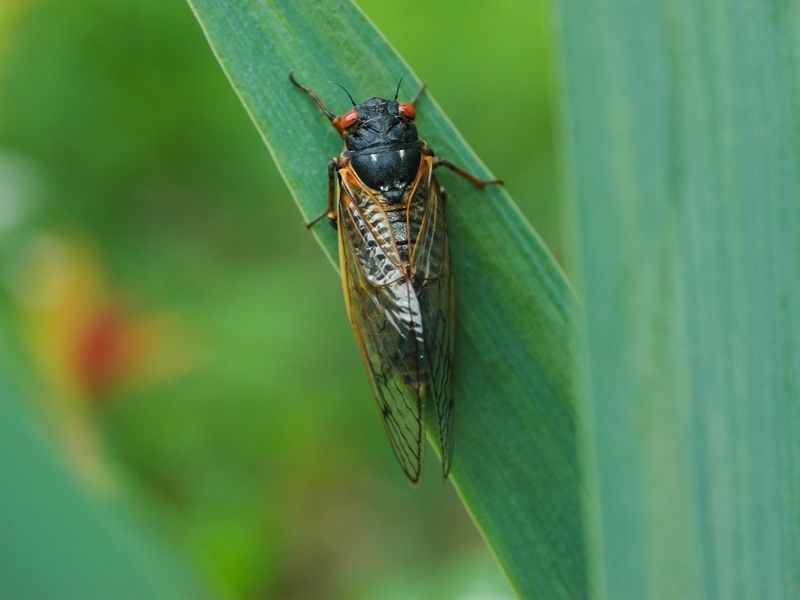
Here is something that might completely change how you feel about these wasps: they are not hovering over your lawn because of you. Female cicada killers have one main goal during summer, and that is finding cicadas.
You just happen to be standing in their hunting ground. The female wasp hunts by flying through trees and listening for the loud buzzing sound that cicadas make. When she finds one, she stings it to paralyze it.
Your Texas Garden Changes Every Week. Your Plan Should Too.
Gardening in Texas changes quickly throughout the season. Every Friday you’ll receive a simple weekly plan showing exactly what to plant, prune, fertilize, harvest, and protect so you never miss the right timing.
The cicada does not get harmed permanently right away. It stays alive but cannot move. The female then hauls the heavy cicada back to her underground burrow, which is an impressive feat since cicadas can weigh more than the wasp herself.
Once the cicada is inside the burrow, the female lays an egg on it. When the egg hatches, the young wasp larva has a fresh food source waiting right there.
This is how cicada killers have reproduced for thousands of generations. It sounds intense, but it is just nature doing its thing in your backyard.
The presence of cicada killers in your yard actually tells you something useful. Cicadas are nearby, and your yard or the trees around it are producing enough of them to attract a hunter.
Cicadas can damage tree roots and branches, so having natural predators around is not the worst situation. The female wasp is focused entirely on her task.
She has no reason to bother you, your pets, or your kids unless she is grabbed or stepped on directly. She is simply a very busy, very large insect on a mission.
3. The Ones Hovering Aggressively Are Often Males
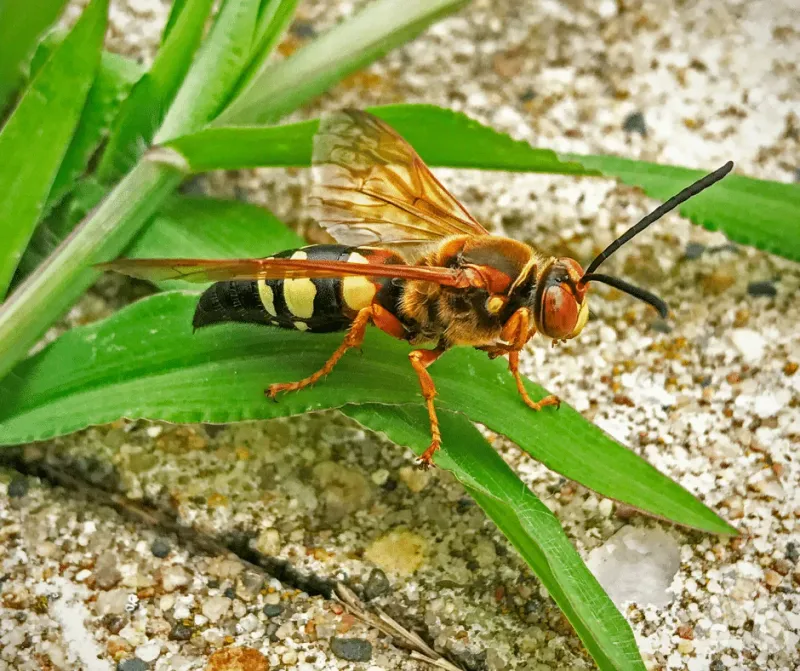
You might have noticed that some of these wasps seem almost confrontational. They hover right in your face, dart toward you when you walk by, and act like they own the whole yard.
That bold behavior is almost always coming from the males, and here is the twist that surprises most people: male cicada killers cannot sting at all.
Male wasps do not have stingers. Only female wasps have the stinging equipment, and it actually evolved from an egg-laying organ.
So when a male cicada killer zips toward your face or hovers aggressively near your feet, all he can really do is look threatening. He has zero ability to back up that attitude with any kind of sting.
Males spend their summer days doing one thing: guarding territory. They pick a sunny patch of lawn or a section of open ground and defend it from other males.
They are waiting for females to pass through so they can mate. Any intruder, whether it is another wasp, a butterfly, or a curious human, gets the same bold response. They charge, hover, and bluff their way through every encounter.
Understanding this makes a huge difference in how you experience these wasps. That aggressive-looking insect buzzing right at your face on a July afternoon is putting on a show.
Walk calmly through the area and he will quickly lose interest and return to his patrol. There is no need to run, swat, or panic.
Standing still for a moment usually works best. He will move on once he decides you are not a threat to his territory or his summer plans.
4. Their Burrows Mean Your Lawn Has Easy-Digging Soil
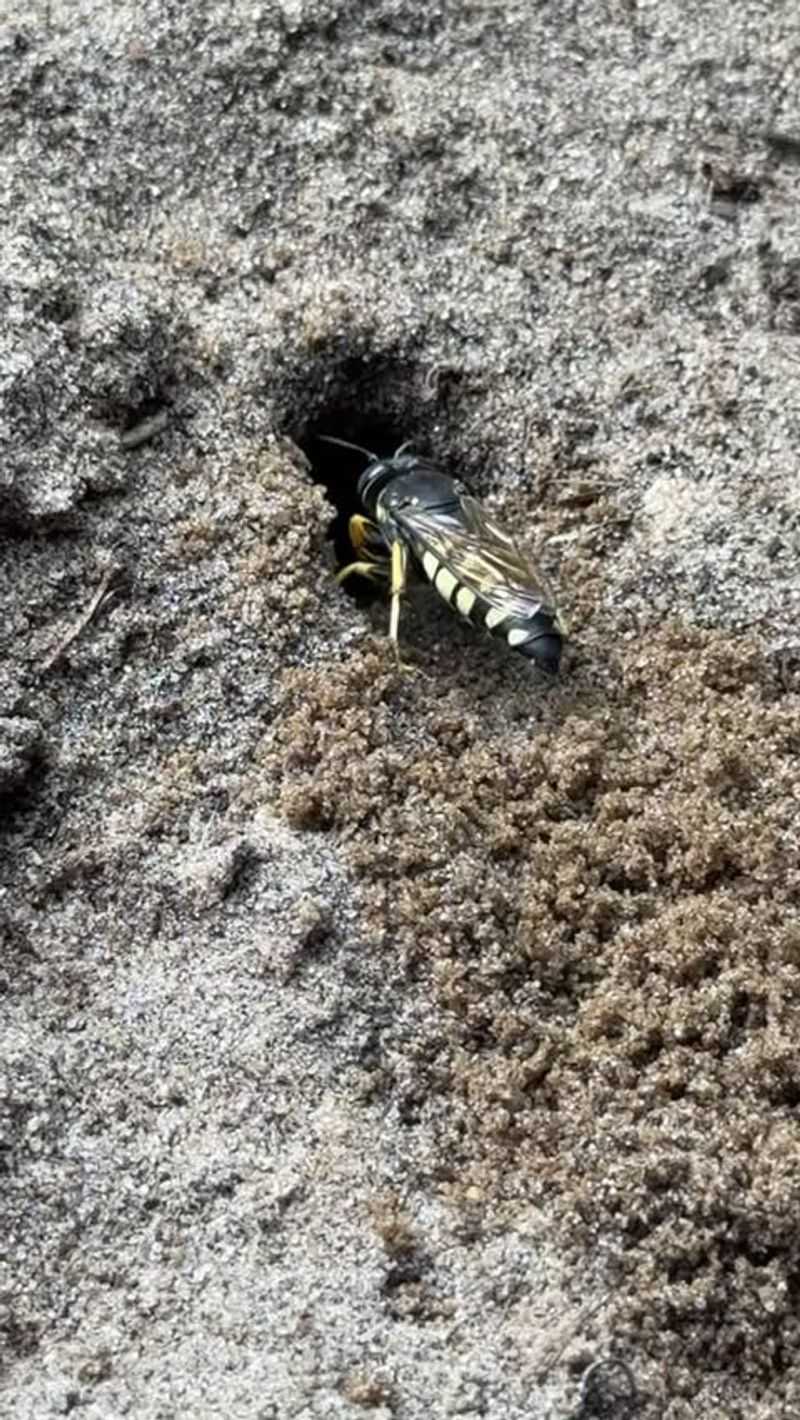
Noticing small mounds of loose dirt scattered across your lawn alongside those big wasps is a clue about your soil. Cicada killers are picky about where they nest.
They need ground that is easy to dig through, drains well, and gets plenty of direct sunlight. If they keep coming back to the same spots in your yard, your lawn is sending them an open invitation.
These wasps strongly prefer areas with thin grass, bare patches, sandy or loose soil, and open sunny edges along walkways, driveways, or garden beds. Compacted clay soil is harder for them to work with, so they avoid it.
If you have a spot where grass struggles to grow or where the soil stays dry and loose, that is prime real estate for a cicada killer looking to set up a burrow.
Each female digs her own burrow, which can go down about a foot deep and branch into separate chambers. She kicks the loose soil out as she digs, leaving a small mound near the entrance.
A yard with several females nesting close together can start to look like it has a lot of activity going on, even though each wasp is working completely independently.
The practical takeaway here is that the wasps are pointing out a lawn care problem you may have overlooked. Thin turf, compacted edges, or bare patches near sidewalks and flower beds are weak spots in your lawn’s coverage.
Fixing those areas will make your yard less appealing for ground-nesting wasps of all kinds. The wasps are not creating the problem. They are simply taking advantage of conditions that already exist in your lawn.
5. They Are Usually More Beneficial Than Dangerous
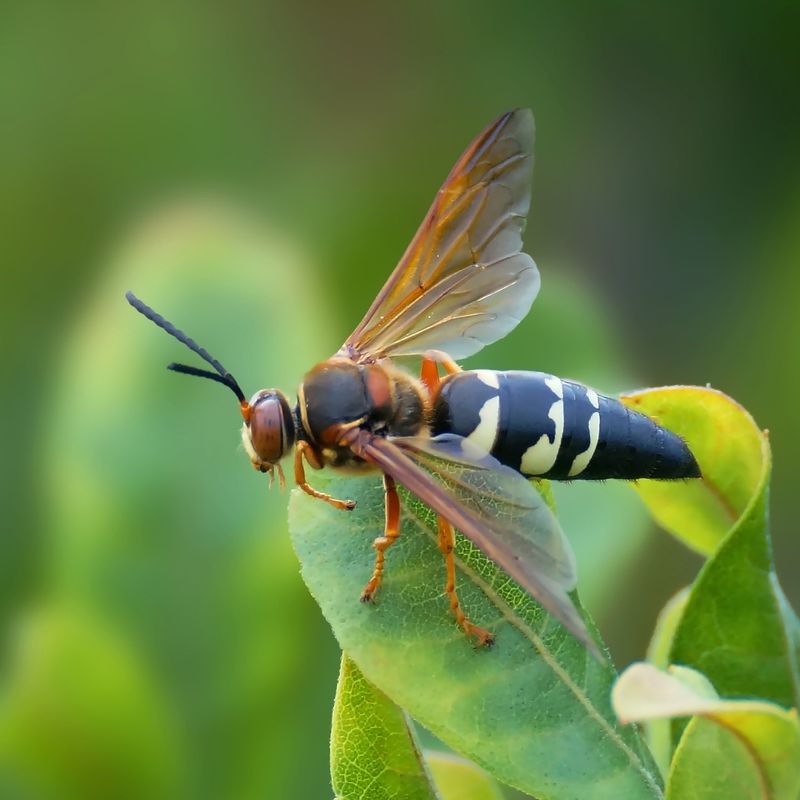
It feels strange to call a giant, buzzing wasp beneficial, but that is exactly what cicada killers are for the most part. Once you move past their intimidating appearance, you start to see them in a completely different way.
These insects actually do more good for your yard and garden than most people realize. Adult cicada killers feed on flower nectar and plant sugars. That means they visit flowers and can act as pollinators, similar to bees.
They are not as efficient as honeybees, but any pollinator activity in your garden helps. Flowers, vegetables, and fruit plants all benefit from insects that move pollen from one bloom to another.
On top of that, cicada killers help control cicada populations. Cicadas can be noisy and sometimes damaging to trees, especially during large emergence events.
Having a natural predator that actively hunts and removes cicadas from the local area helps keep their numbers in check without any chemical sprays or human effort involved.
Female cicada killers will only sting a person if they are physically handled, squeezed, or stepped on with bare feet. Even then, the sting is described by most people as less painful than a bee sting.
Allergic reactions are possible with any insect sting, so people with known allergies should always be cautious. But for the average person walking through a yard where cicada killers are active, the real risk is very low.
Giving them space and avoiding direct contact is all it takes to coexist peacefully. These wasps are one of summer’s most misunderstood visitors, and they deserve a second look before you reach for a can of spray.
6. The Best Fix Is A Healthier, Denser Lawn
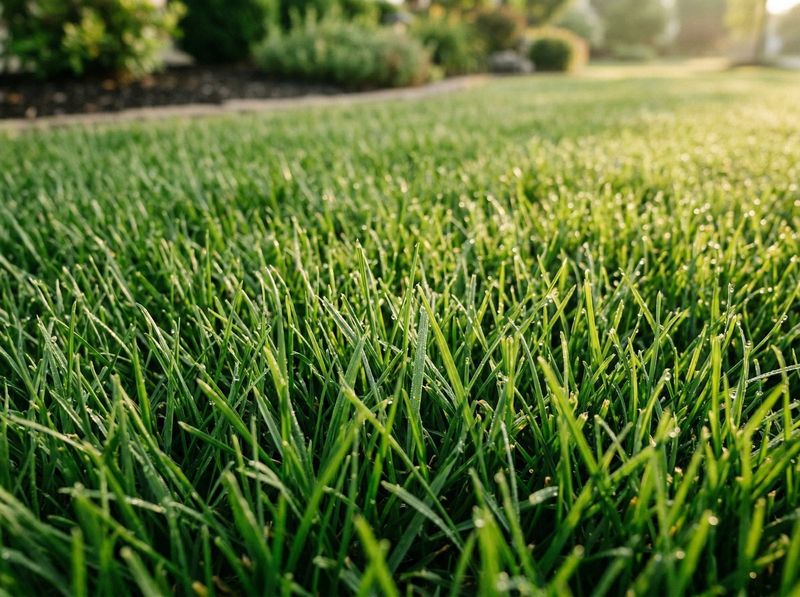
Getting rid of cicada killers does not have to mean reaching for chemicals. The most effective long-term solution is also the most practical one for your lawn overall: make the soil less appealing for digging.
A thick, healthy lawn with dense turf coverage is your best natural defense against ground-nesting wasps of any kind.
Start by identifying the bare or thin spots where the wasps keep appearing. Reseed those areas with a grass variety that works well in Texas heat, like Bermuda, St. Augustine, or Zoysia.
Water consistently to help new grass establish deep roots. A dense lawn makes it physically harder for wasps to access the soil and find a good nesting spot.
Aeration can also help. If your soil is too loose or sandy in certain spots, top-dressing with compost and overseeding can firm things up over time.
Watering properly encourages grass roots to spread and fill in gaps. Avoid over-watering, which can soften soil and actually make it easier to dig through in some cases.
Along driveways, sidewalk edges, and garden bed borders where wasps often appear, consider using mulch, edging, or ground cover plants to eliminate exposed soil. These small changes reduce the number of open nesting sites available each summer.
You do not need to treat the wasps directly. Just take away the conditions they need to settle in.
A healthier lawn benefits you in dozens of ways beyond just discouraging wasps. Fewer weeds, better curb appeal, and a cooler yard in summer heat are all bonuses.
Think of managing cicada killers as extra motivation to finally give your Texas lawn the attention it deserves.