Why Georgia Homeowners Should Stop Piling Mulch Against Tree Trunks
Some yard habits become so common that nobody stops to question them. You see the same thing in neighborhood after neighborhood, so it feels like it must be the right way to do it.
That is exactly how small mistakes can stick around for years without anyone realizing they are causing problems. Good intentions do not always lead to good results, especially when it comes to caring for trees.
Sometimes a simple change can protect a tree far better than spending extra time or money. Knowing which habits are helping and which are hurting makes a bigger difference than most expect.
One landscaping practice deserves a closer look before it becomes part of your routine.
Many trees in Georgia are affected by mulch piled against their trunks, even though it often looks neat and well maintained.
Understanding why that happens may completely change the way you mulch around your trees.
1. Mulch Can Trap Too Much Moisture
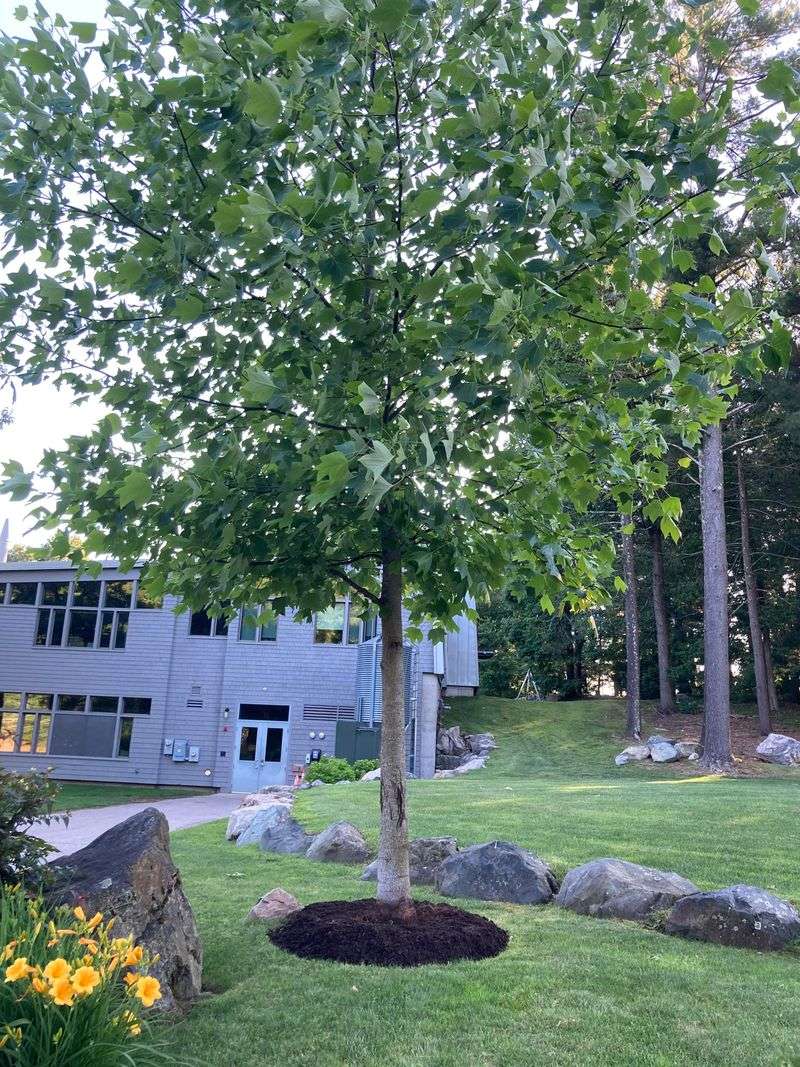
Soggy bark is a serious problem, and excess mulch is often the reason behind it. When mulch gets stacked thick against a trunk, moisture gets trapped between the wood and the pile.
Bark that stays wet for long stretches can begin to break down.
In warm, humid climates like Georgia, this becomes a bigger issue than in drier regions. Summers bring heavy rainfall, and that extra water has nowhere to go when mulch blocks drainage.
Wet conditions around the trunk can invite fungal growth and bark decay over time.
A tree’s outer bark is its protective layer. When that layer stays moist for too long, it softens and becomes more vulnerable to damage.
Insects and pathogens tend to favor these damp environments.
Moisture problems from mulch are not always visible right away. By the time you notice soft or discolored bark, the issue may have already been developing for a season or two.
Catching it early makes a real difference.
Pulling mulch back even a few inches from the trunk can help moisture escape more naturally. Proper airflow around the base of a tree goes a long way toward keeping the bark dry and healthy.
Small adjustments in how you apply mulch can have a noticeable impact on tree health over time.
2. Buried Root Flares Can Weaken Trees
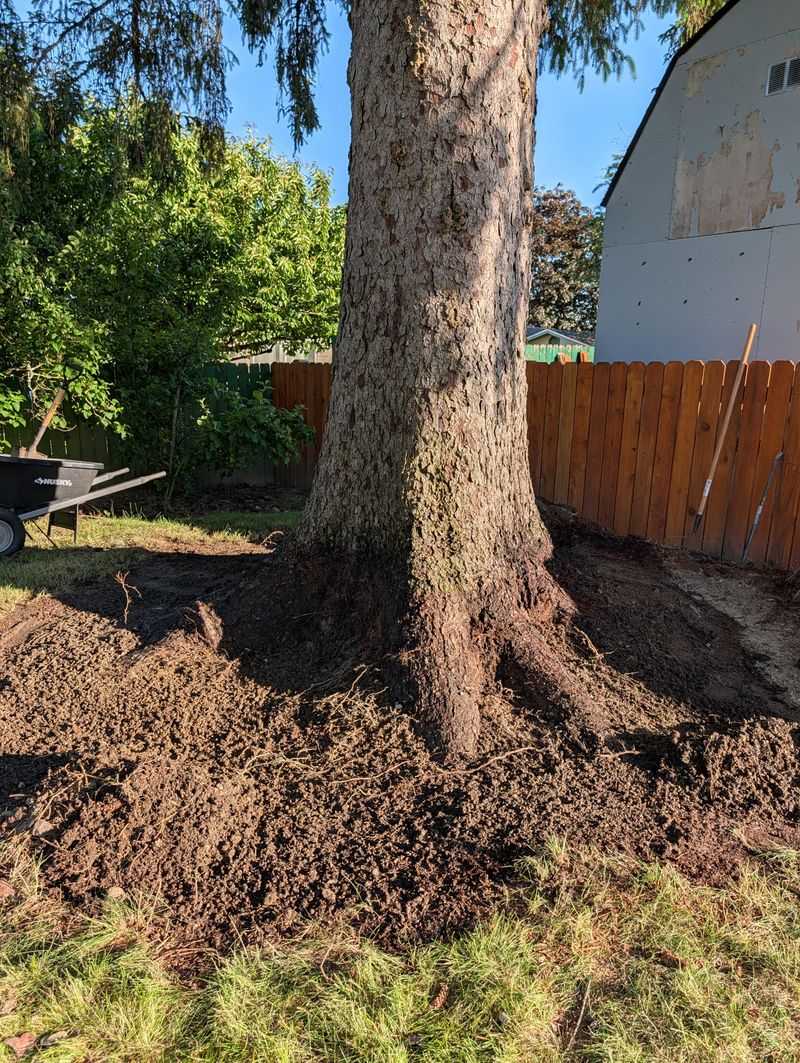
Root flares are the spot where a trunk widens and meets the soil. Covering them with mulch can quietly stress a tree in ways that are hard to spot at first.
Most people do not even realize the root flare has been buried.
When the flare is buried under mulch or soil, the tree cannot exchange gases properly at its base. Roots need oxygen, and blocking that exchange can affect how well the tree absorbs nutrients.
Over time, the tree may show signs of poor growth or thinning canopy.
Girdling roots are another concern. When mulch stays piled too high, roots sometimes begin growing into the soft mulch layer instead of spreading outward.
These roots can eventually wrap around the trunk and restrict the flow of water and nutrients.
Your Georgia Garden Changes Every Week. Your Plan Should Too.
Gardening in Georgia changes quickly throughout the season. Every Friday you’ll receive a simple weekly plan showing exactly what to plant, prune, fertilize, harvest, and protect so you never miss the right timing.
A healthy root flare should be visible at the base of every tree. You should see the trunk gradually widen as it meets the ground.
If the base looks like a straight pole going into the mulch, that is a sign the flare may be buried.
Exposing a buried root flare is not complicated. Gently pull back the mulch and any soft soil that has accumulated.
In many cases, trees respond well once the flare is uncovered and airflow is restored to the base.
3. Excess Mulch Can Increase Disease Risk
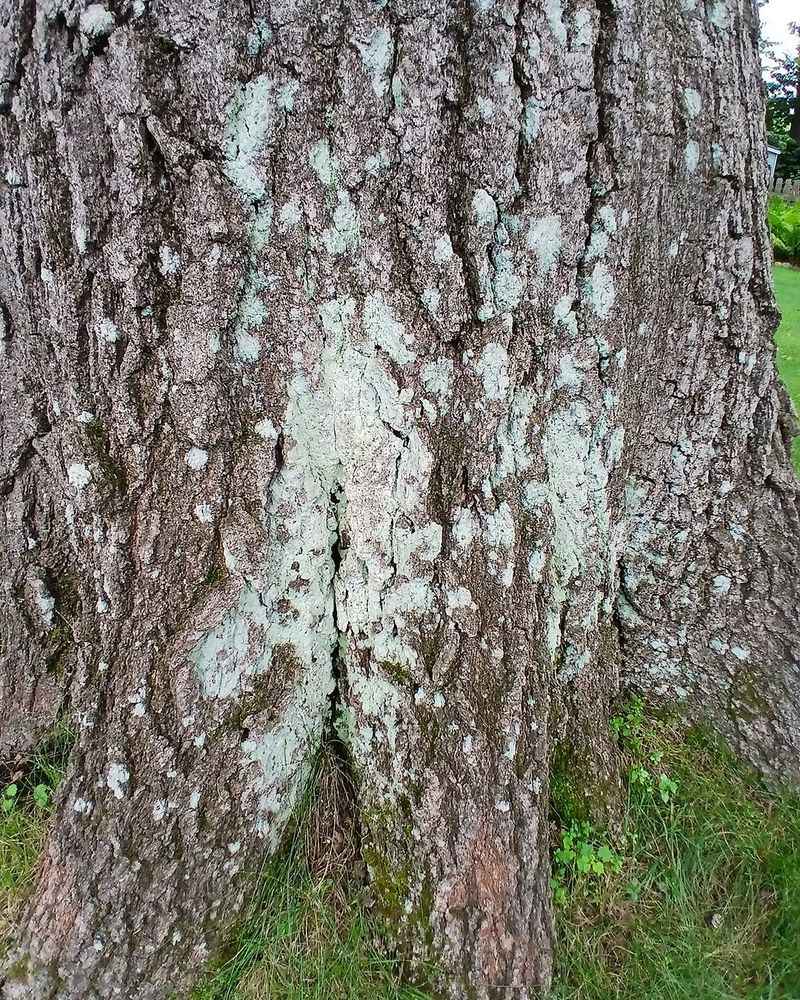
Fungal problems love warm, damp conditions. Piling mulch against a trunk creates exactly that kind of environment, especially during Georgia’s long, humid summers.
Bark disease often starts small and spreads gradually.
Canker diseases, wood rot, and various fungal infections are among the issues that can develop when moisture and warmth combine at the base of a tree.
Cankers are sunken or discolored areas on bark that form when fungal or bacterial pathogens move in. Once established, they can be difficult to manage.
Mulch that stays wet and dense also provides cover for pests. Certain beetles and borers prefer moist bark environments.
A tree already stressed from moisture buildup may have a harder time defending itself from these insects.
Not every mulch situation leads to disease. Tree health, mulch depth, and local drainage conditions all play a role.
But the risk does go up when mulch stays piled tight against the trunk for extended periods.
Switching to a proper mulch application method reduces these risks noticeably. Keeping mulch a few inches away from the trunk and limiting depth to around two to three inches allows the soil to breathe.
Organic mulches like wood chips break down over time, so checking depth each season is a good habit.
4. Keep Mulch Away From The Trunk
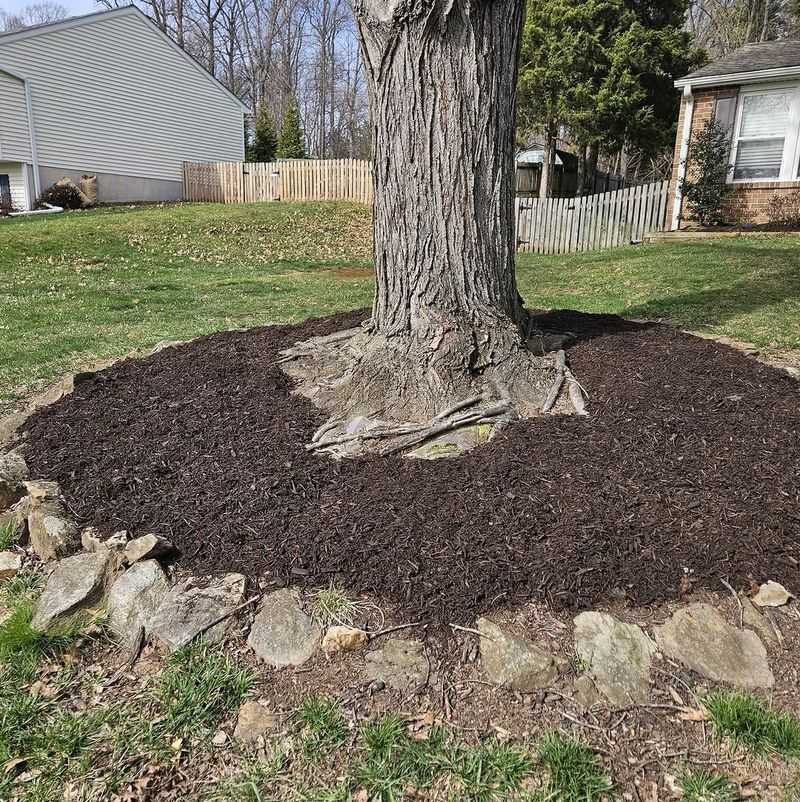
One of the most practical steps you can take is simply keeping mulch away from direct contact with the bark. Even a two to three inch gap makes a meaningful difference.
It sounds minor, but it changes how moisture and air interact with the trunk.
Mulch pressed against bark creates a damp microenvironment. Bark is not designed to stay wet indefinitely.
A gap allows the base of the tree to dry out between rain events, which reduces the chance of rot and fungal buildup.
Many homeowners pile mulch up against trunks thinking it protects the tree. In reality, the tree benefits more from mulch spread outward rather than inward.
Protection comes from covering the root zone, not from surrounding the trunk itself.
When you are applying fresh mulch, use a hand rake or your fingers to clear a small circle around the base first. Pull the material back so the trunk base is clearly visible.
That visual check helps confirm the gap is actually there and not just assumed.
Gaps do not need to be large. Two to three inches of clearance is enough in most situations.
Check that gap after heavy rain, since mulch can shift toward the trunk as water moves it around.
5. Spread Mulch In A Wide Ring Instead
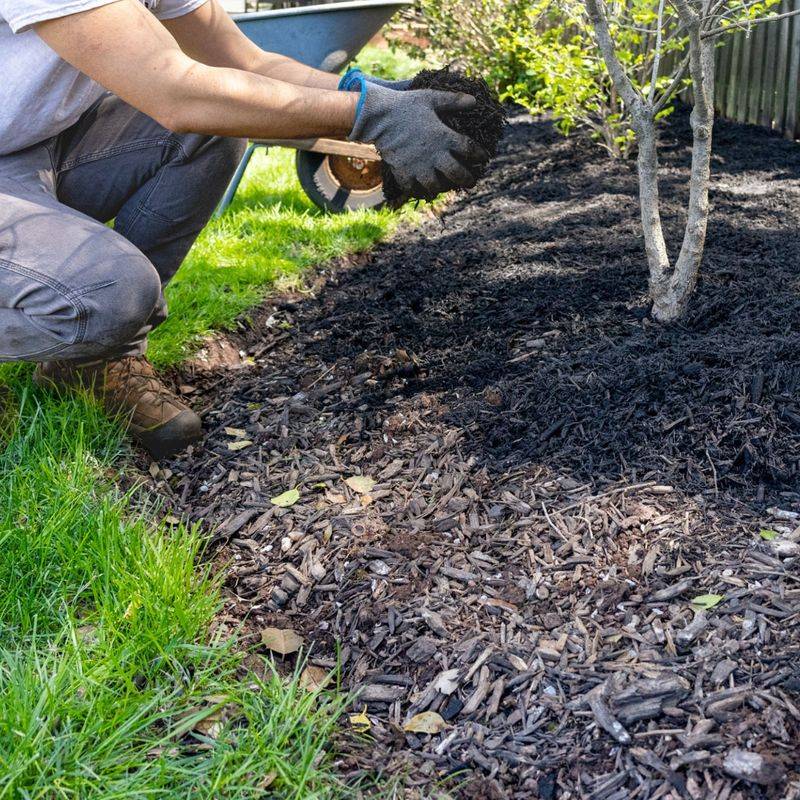
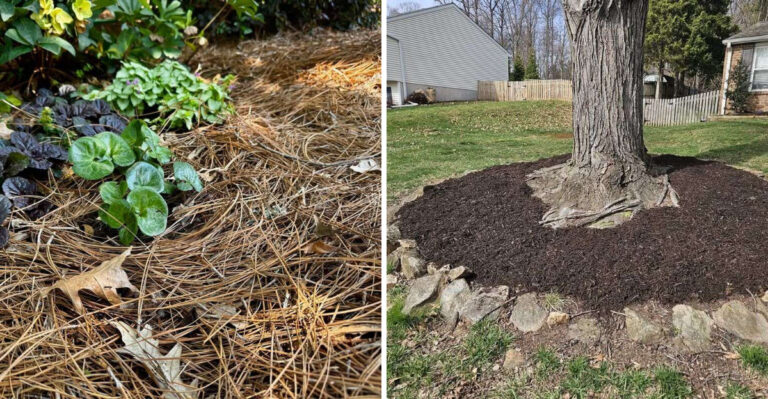
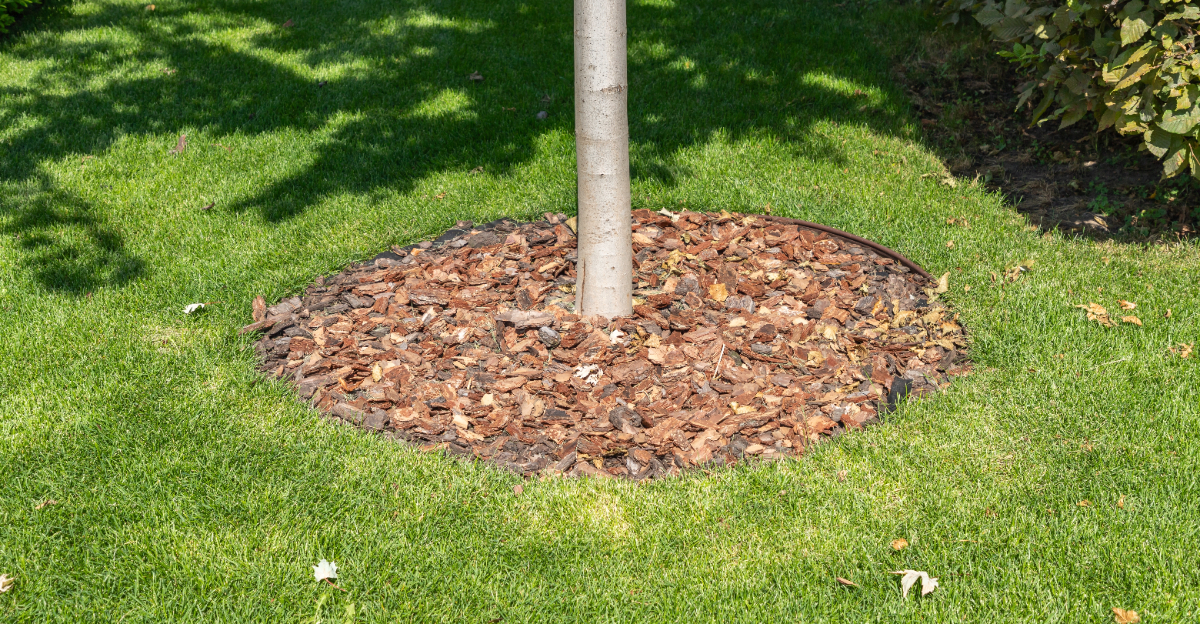
Wide mulch rings do more good for trees than deep piles ever could. Spreading mulch outward covers more of the root zone, which is where the real benefit happens.
Roots extend far beyond the canopy edge in many mature trees.
A wide ring helps retain soil moisture across a larger area. It also moderates soil temperature, which matters during both summer heat and winter cold snaps.
Roots stay more stable when the soil around them is protected.
Aim for a ring that extends at least three to four feet from the trunk. Wider is often better, especially for larger trees.
Covering more of the root zone gives the tree more consistent access to the moisture and temperature benefits mulch provides.
Wide rings also reduce competition from grass and weeds. Turf growing right up to a tree trunk competes directly for water and nutrients.
Removing that competition gives the tree better access to what it needs from the soil.
Shape matters too. A flat, even ring works better than a mounded pile.
Flat mulch lets water soak down into the soil instead of running off the sides of a mound.
If you have been mulching in a volcano shape, reshaping to a flat ring is a straightforward fix that can benefit the tree noticeably over the following growing season.
6. Use A Thin Layer Around Trees
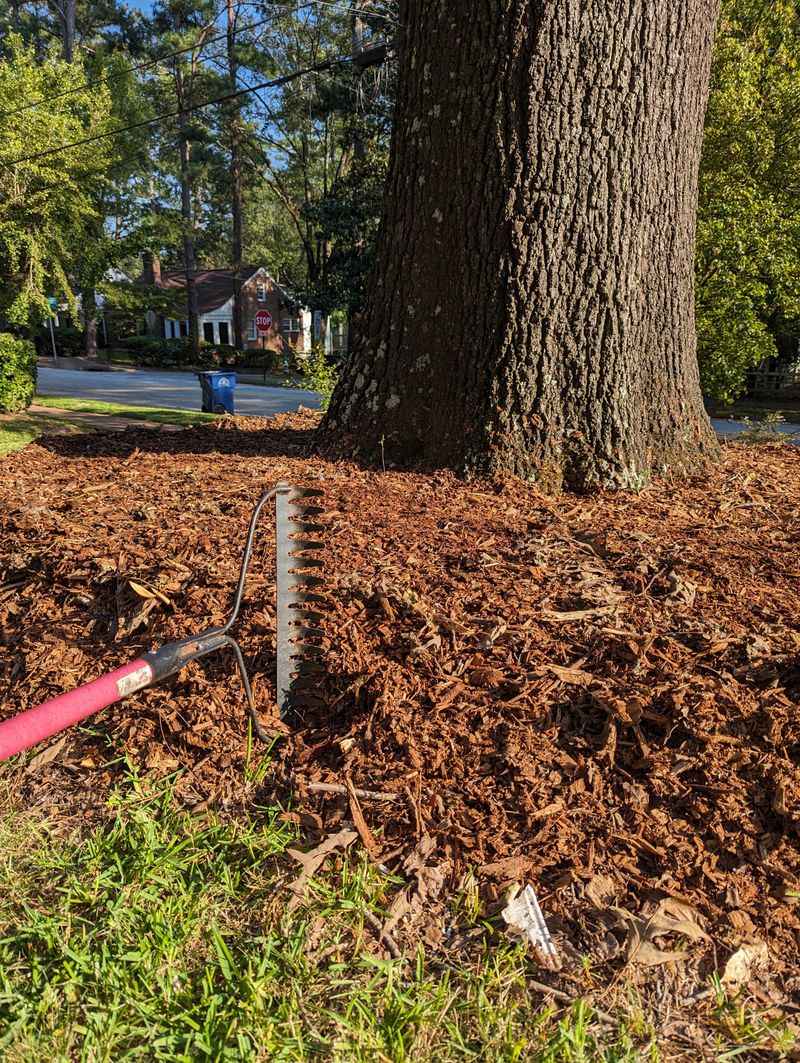
More mulch is not better mulch. Piling it thick might seem like extra protection, but it can actually work against the tree.
Two to three inches is the recommended depth for most situations, and that range is worth sticking to.
Thick mulch layers restrict how well air and water move through the soil. Roots need both oxygen and moisture to function properly.
A layer that is too deep can create conditions where neither reaches the root zone as efficiently as it should.
Shallow layers also break down at a healthier rate. Organic mulch like shredded wood or bark chips decomposes over time, adding organic matter back to the soil.
When the layer is too thick, decomposition can slow down or become uneven, reducing that benefit.
Check your mulch depth each spring before adding more. Probe the existing layer with your fingers or a small stick.
If the layer is still close to two or three inches, skip adding more that season. Only refresh when the depth has dropped noticeably.
Hardwood mulch, pine bark, and pine straw are all common choices in the Southeast. Each has slightly different decomposition rates and appearances.
Pine straw is lightweight and drains well, making it a practical option in areas with heavy rainfall.
7. Leave The Root Flare Exposed
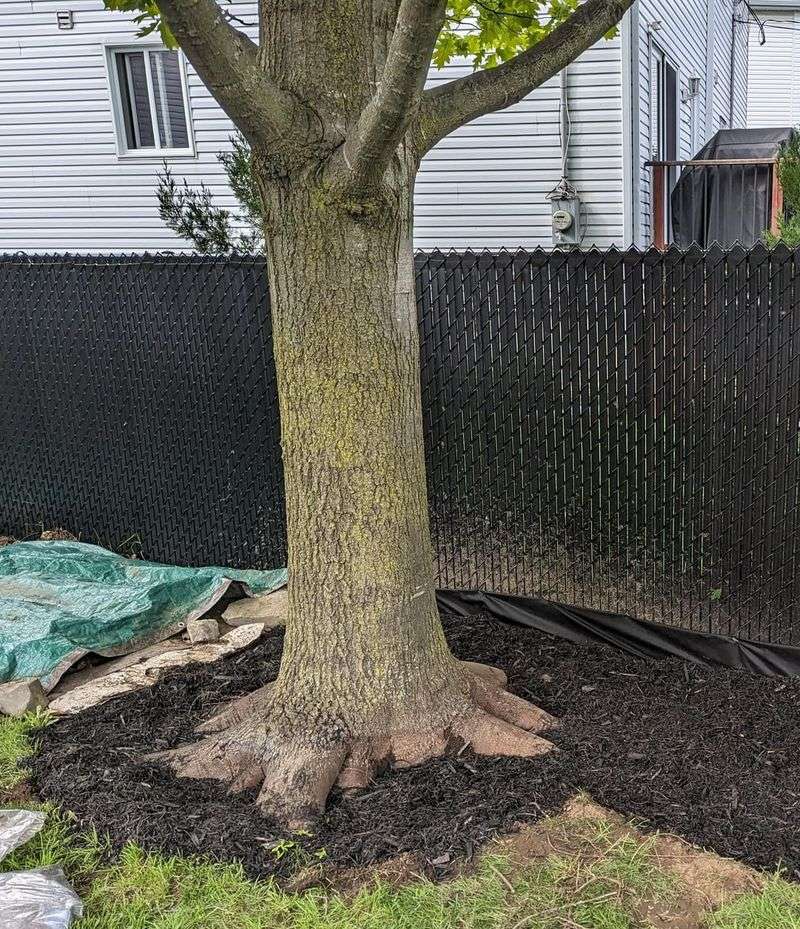
Seeing the root flare is actually a good sign. It means the tree is planted and mulched correctly.
A visible flare at the base shows the trunk has room to breathe and that moisture is not being trapped against the bark.
Root flares should not be buried under mulch, soil, or sod. When they are, the bark at the base stays moist and the tree may struggle to move nutrients and water efficiently.
Uncovering a buried flare is one of the most helpful things you can do for a stressed tree.
Use a hand tool or your fingers to gently clear away mulch from the base. Work carefully to avoid scraping the bark.
The goal is to expose the natural widening of the trunk without disturbing the roots just below the surface.
Some homeowners worry that an exposed flare looks untidy. In practice, a clean mulch ring with a visible flare looks intentional and well-maintained.
It also signals to neighbors and guests that the yard is being cared for thoughtfully.
Once the flare is exposed, maintain that clearance going forward. Check it each time you refresh the mulch bed.
Mulch can creep toward the trunk over time, especially after rain or wind. Keeping that base clear is an ongoing habit rather than a one-time fix.