The Real Reasons Your Virginia Hydrangeas Have Leaves But No Blooms
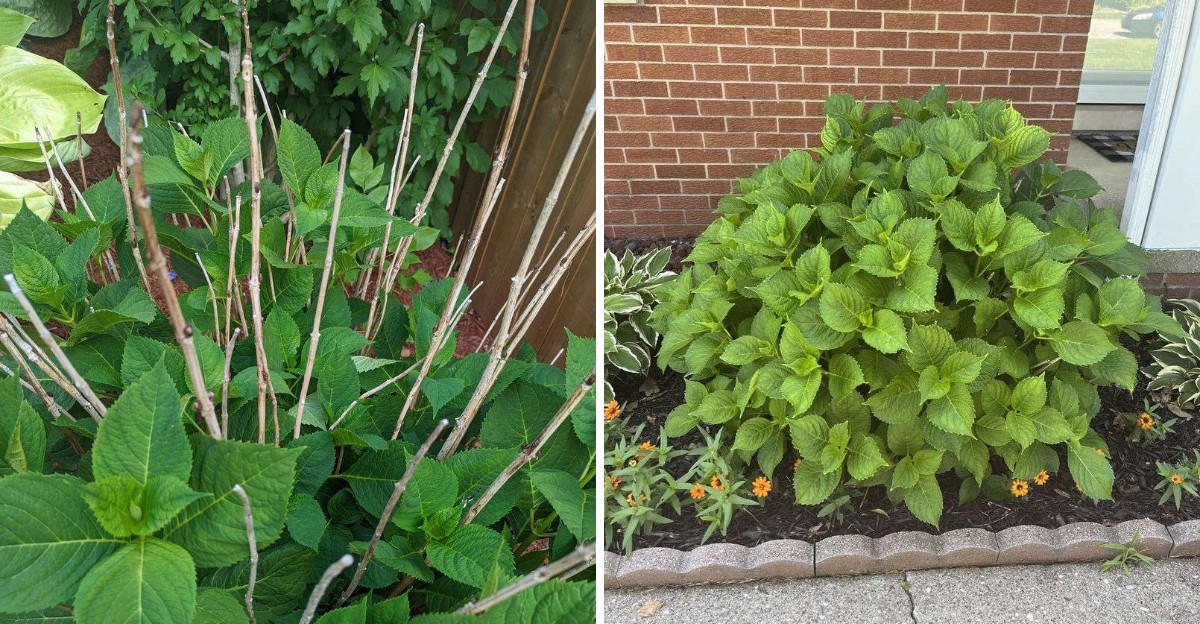
Nothing stings quite like a hydrangea bursting with glossy green leaves and not a single flower. You watered it, admired it, and waited through a long spring for nothing.
Luckily, most bloom problems have simple causes you can fix. Some trace back to a quick snip of the pruners months ago.
Others come from weather, sunlight, soil, or even hungry visitors after dark. This year’s hard April freeze left plenty of Virginia gardeners with the same leafy disappointment.
The clues are usually hiding in plain sight, from stem tips to the branches overhead. A slow walk around your plant can reveal more than you’d expect.
The reasons below explain exactly why your shrub is sulking. Better yet, they show how to coax those big, beautiful blooms back next summer.
1. Pruning At The Wrong Time Removed Next Year’s Buds
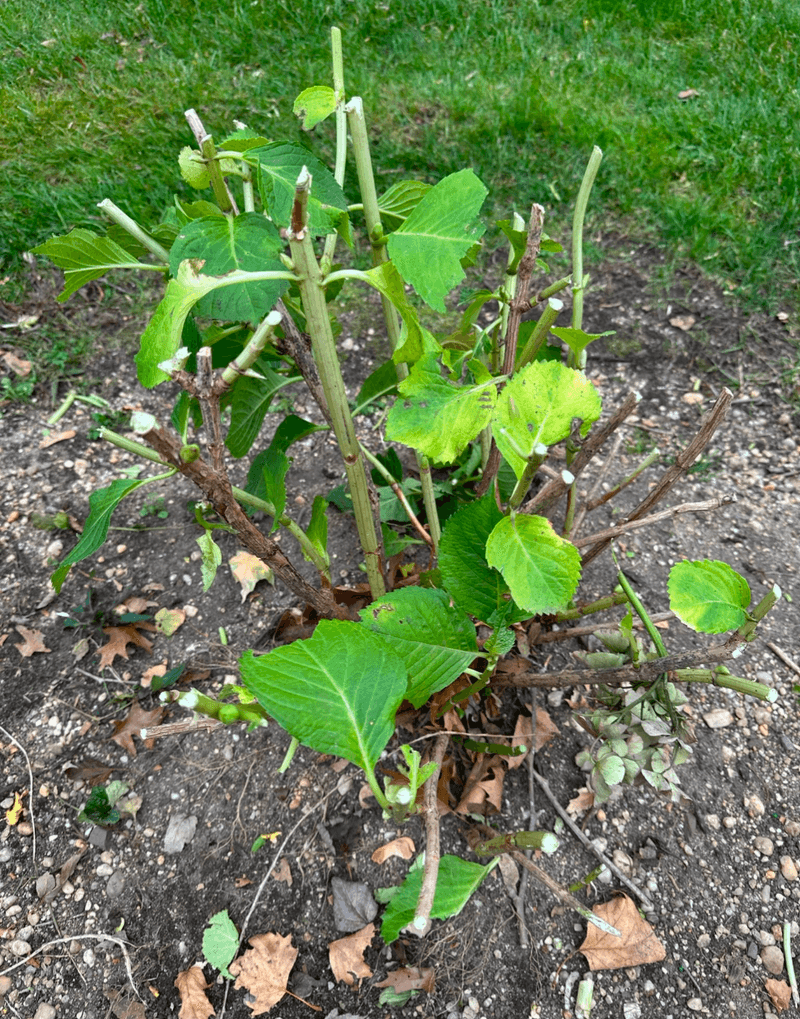
Picture a tidy gardener in February, happily trimming every hydrangea stem down to knee height. Come June, that same gardener stares at a leafy shrub wondering where the flowers went.
Timing is everything with pruning, and the type of hydrangea decides the calendar. Bigleaf and oakleaf hydrangeas bloom on old wood, meaning last year’s stems.
Their flower buds form in late summer and sit quietly on the stems all winter. Cut those stems in fall, winter, or early spring, and you remove the next flower show.
Smooth and panicle hydrangeas play by different rules. They bloom on new wood, so their buds grow on fresh stems each spring.
Those new wood types can handle a trim in late winter or early spring. Plenty of Virginia gardeners grow both kinds, which makes mix-ups very easy.
Here is a simple rule that saves a lot of heartache. Prune bigleaf and oakleaf types in summer, right after their flowers fade.
Not sure which type you own? Look at the leaves and flowers for quick clues.
Oakleaf types have lobed leaves shaped like oak leaves. Bigleaf types have broad, shiny leaves with mophead or lacecap blooms.
Panicle types grow cone-shaped flower clusters, often white fading to pink. Smooth types, like ‘Annabelle’, produce round white snowballs on thin stems.
Reblooming varieties such as some ‘Endless Summer’ types flower on both old and new wood. Those give you a little more wiggle room if you slip up.
Write your plant’s type on a garden tag near its base. Future you will be grateful when the pruning itch strikes in late winter.
2. A Late Spring Freeze Damaged The Flower Buds
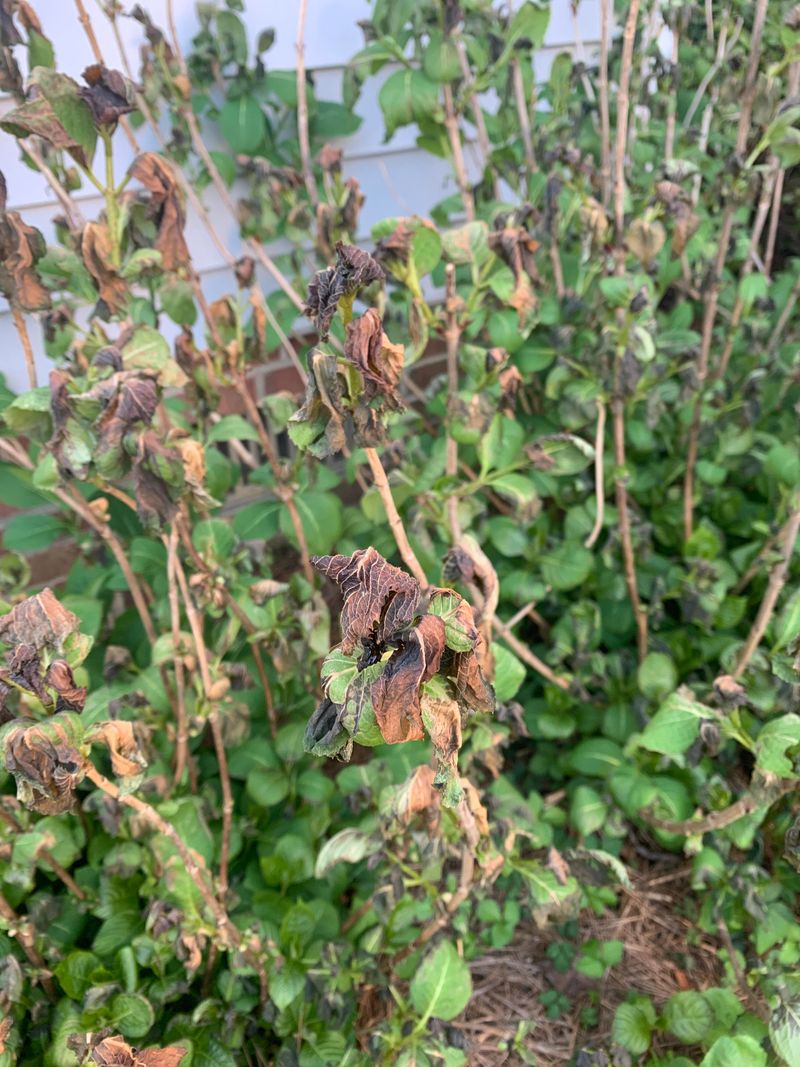
April in Virginia can feel like a prank. One week brings shorts weather, and the next brings frost on the windshield.
Those wild swings are rough on bigleaf and oakleaf hydrangeas. Their flower buds formed last summer and have waited patiently all winter.
Warm spells coax the buds to swell and loosen up. Then a sudden freeze hits the tender tissue and browns it overnight.
Sneaky damage is the frustrating part. Leaves may still pop out lush and green from lower buds along the stem.
Your Virginia Garden Changes Every Week. Your Plan Should Too.
Gardening in Virginia changes quickly throughout the season. Every Friday you’ll receive a simple weekly plan showing exactly what to plant, prune, fertilize, harvest, and protect so you never miss the right timing.
From the patio, the shrub looks perfectly healthy. Up close, though, the top buds that held the flowers look shriveled, black, or mushy.
Watch the forecast closely once your hydrangea starts leafing out. A frost warning is your cue to grab some simple protection.
Old bedsheets, frost cloth, or burlap draped over the shrub work nicely overnight. Remove the cover in the morning so the plant can breathe and soak up sun.
Another handy trick uses a tomato cage wrapped in burlap. Fill it loosely with dry leaves to insulate buds through cold snaps.
Avoid plastic touching the leaves, since it can transfer cold straight to the plant. Fabric traps ground warmth much better.
Here is an encouraging fact for colder spots. Smooth and panicle hydrangeas bloom on new wood, so late freezes rarely steal their flowers.
If frost bites your bigleaf shrub often, consider adding one of those tougher types nearby. You will get reliable blooms while your bigleaf hydrangea gets its lucky year.
3. Harsh Winter Winds Dried Out The Stem Tips
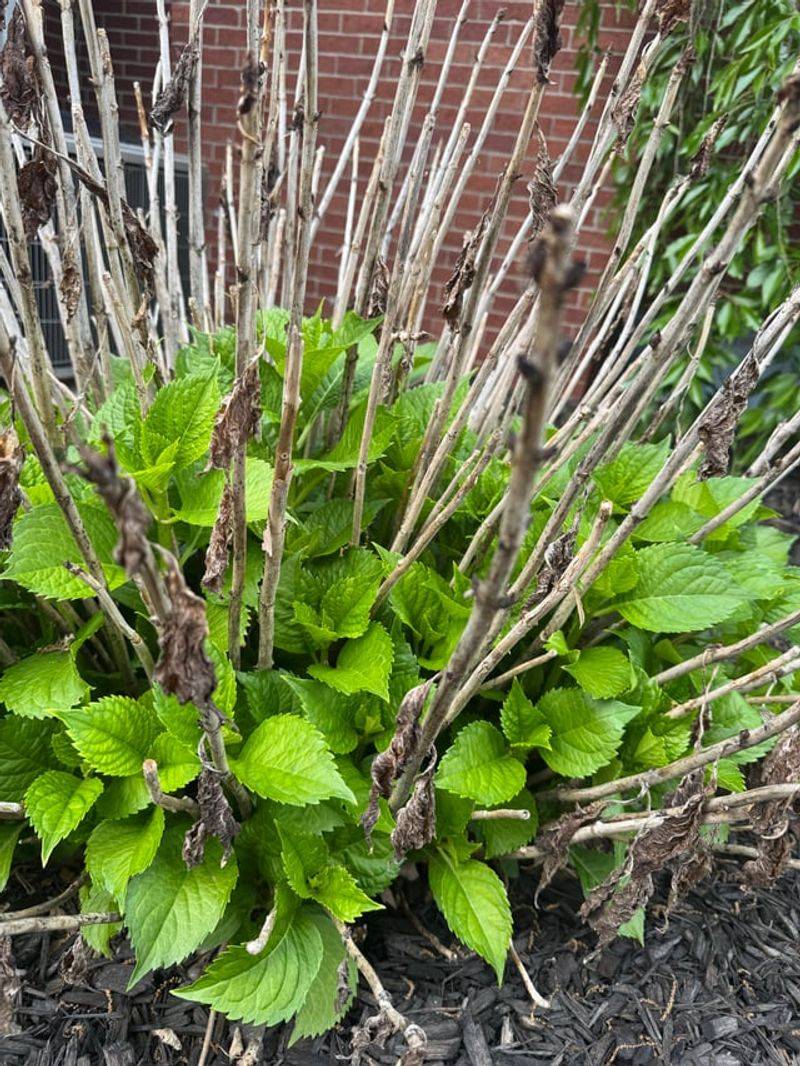
Winter wind acts like a giant hair dryer set on cold. It blows steadily across bare stems and slowly pulls moisture from them.
Hydrangea buds sit right at the tips of those stems, fully exposed. Once the tips dry out, the flower buds inside go brown and brittle.
Bigleaf hydrangeas feel this the most. Freeze and thaw cycles add extra stress, cracking tender tissue again and again.
Take a peek at your shrub in early spring. Scratch a stem tip gently with your fingernail.
Green under the bark means the stem is still alive and healthy. Brown and crispy means the wind likely won that round.
Location matters a lot here. A shrub standing alone in an open yard catches every blast rolling across the lawn.
Planting near a fence, wall, or house corner gives natural shelter. Many gardeners tuck hydrangeas along the east side of a home for this reason.
Already planted in a breezy spot? A simple burlap screen on stakes can block the worst gusts from November through March.
Roots need care too, since dry, frozen soil stresses the whole plant. Spread three to four inches of shredded leaves or pine straw around the base.
Mulch keeps soil temperature steady and holds moisture longer. Keep it a few inches away from the stems to discourage rot.
One last tip helps in dry winters. Water deeply during a warm spell if the ground is thawed and weeks pass without rain.
4. Deep Shade Is Starving It Of Sunlight
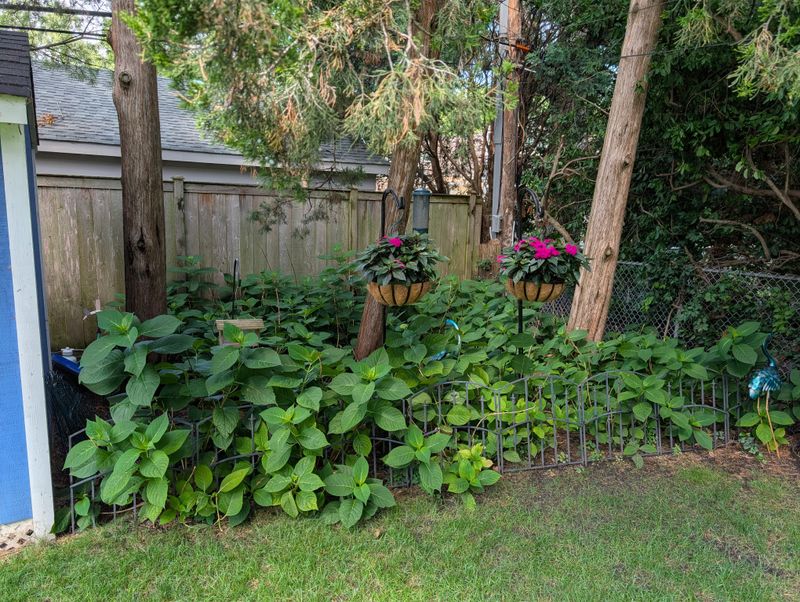
Hydrangeas have a reputation as shade plants, and that label causes plenty of confusion. They like some shade, but they still crave sunshine to bloom.
Flowers take a lot of energy to build. Plants make that energy from sunlight through a process called photosynthesis.
In deep, all-day shade, a hydrangea has just enough fuel for leaves. Blooms get pushed to the bottom of its to-do list.
The sweet spot is morning sun followed by afternoon shade. Gentle early light powers the plant without the harsh heat later in the day.
That afternoon break matters during steamy summers. Strong late-day sun can scorch leaves and wilt the whole shrub.
Try a simple sun test on a free Saturday. Check your hydrangea every hour or two and note when direct light touches it.
Fewer than three or four hours of direct sun usually means trouble. You may see big, dark leaves on long, stretchy stems reaching toward light.
Solutions do not have to be dramatic. Thinning a few low tree branches can let morning rays slip through.
Moving the shrub to a brighter spot works well too. Transplant during fall or early spring when the plant is resting.
Love that shady corner and want to keep it? Oakleaf hydrangeas handle shade better than most other types.
Oakleaf types also offer bonus features, like peeling bark and rich red fall color. Your shady nook might end up being the prettiest spot on the block.
5. Too Much Nitrogen Pushed Leaves Instead Of Flowers
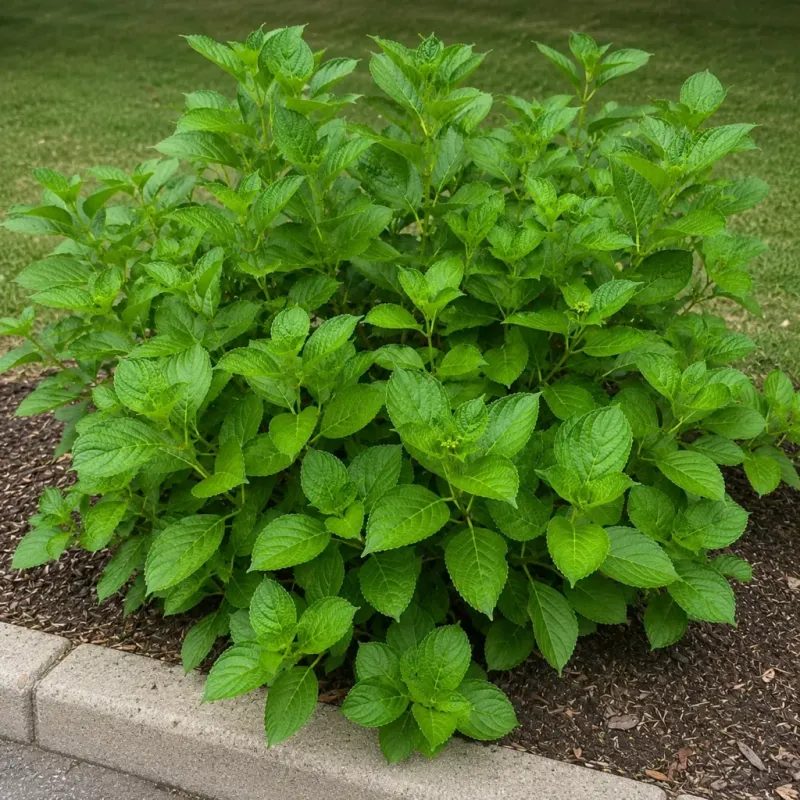
Love can be a little too generous sometimes. Many hydrangeas get fed so often they turn into jungle-green leaf factories.
Nitrogen is the nutrient that drives leafy growth. It is the first number on a fertilizer bag, like the 20 in 20-10-10.
Flowers depend more on phosphorus and potassium. Too much nitrogen tips the balance, and the plant chooses leaves over blooms.
Lawn fertilizer is a common hidden culprit. Many lawn blends are loaded with nitrogen to keep grass bright green.
If your hydrangea sits beside the lawn, it may be drinking that runoff. Spreaders can also toss granules right into flower beds.
Watch for clues like huge, dark leaves and very few flower heads. Brown, crispy leaf edges can also signal fertilizer burn and root stress.
Luckily, the fix is easy on your wallet. Feed hydrangeas just once in spring with a balanced, slow-release fertilizer.
Products made for acid-loving plants work well too. Follow the label carefully, since more is not better here.
Skipping a year is perfectly fine for a shrub that seems overfed. Spread a layer of compost around the base instead.
Compost releases nutrients slowly and improves soil texture at the same time. Many clay soils benefit greatly from that extra organic matter.
Give it a full season to rebalance. Patience here often pays off with a much better flower show the following summer.
6. Late Summer Drought Stalled Bud Formation
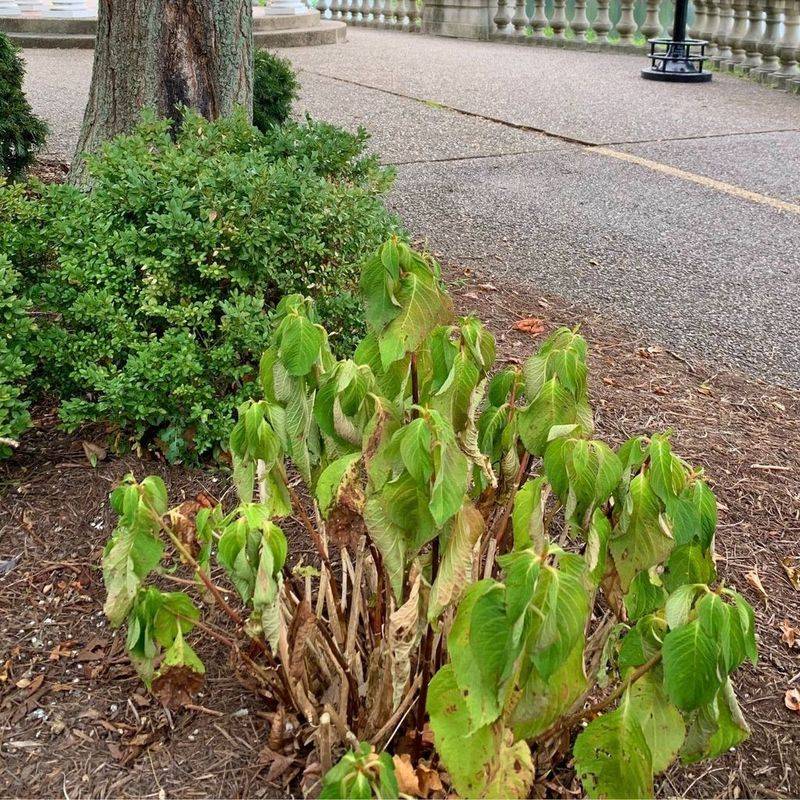
Here is a surprising twist in the hydrangea story. Missing flowers this year might trace back to a dry spell last August.
Old wood hydrangeas set next year’s flower buds in late summer. During that stretch, the plant needs steady moisture to finish the job.
Drought stress forces the shrub into survival mode. It focuses on keeping leaves alive and skips building buds.
Hydrangeas are thirsty plants, and their name even hints at water. The word comes from Greek roots meaning water vessel.
Hot, dry weeks in summer can drain the soil quickly. Droopy leaves in the afternoon are the plant waving a little white flag.
Deep watering beats frequent light sprinkles every time. Aim for a long, slow soak two to three times weekly in hot weather.
Soaker hoses or a slow-running garden hose work wonderfully. Water should reach several inches down, where roots do their best work.
Morning is the best time to water. Leaves dry off during the day, which helps prevent fungal problems.
Mulch acts like a cozy blanket for thirsty roots. Two to three inches of shredded bark or pine straw keeps soil cooler and moister.
A quick finger test tells you when to water. Push a finger two inches into the soil, and water if it feels dry.
Keep that routine going into September, even after the heat fades. Those late weeks set the stage for next year’s blooms.
7. A Young Or Recently Moved Plant Is Still Settling In
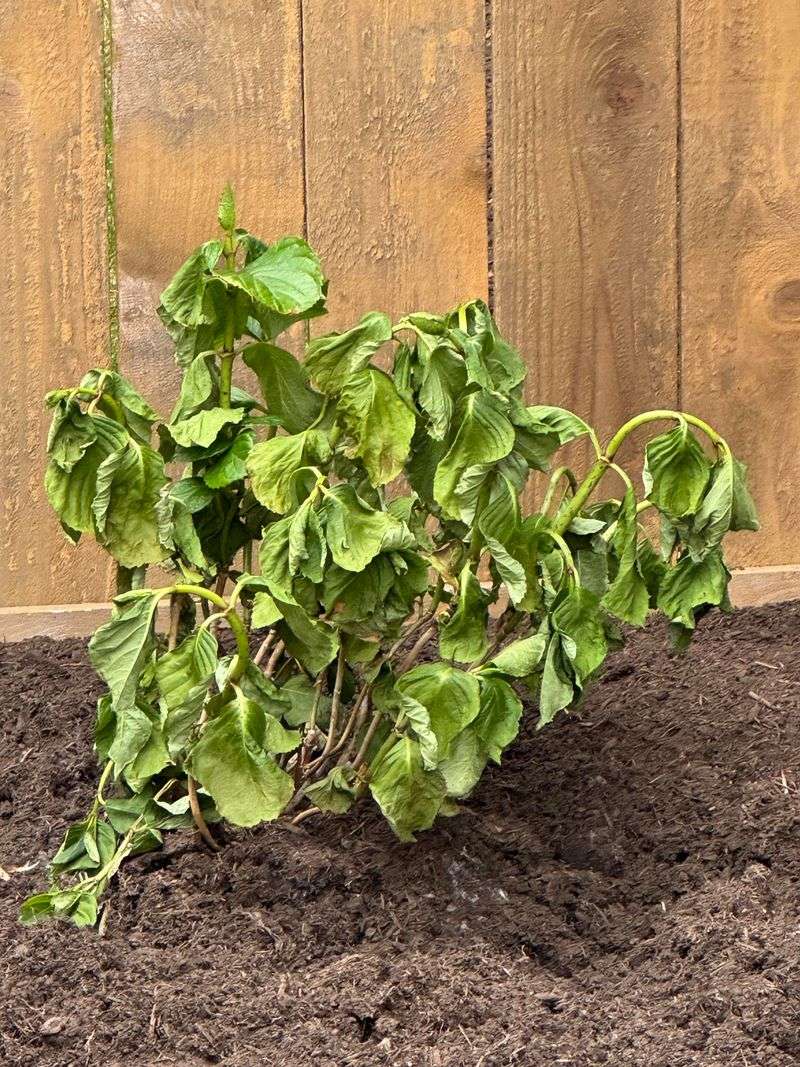
Moving to a new house is exhausting, and hydrangeas feel the same way. A freshly planted shrub spends its early energy on roots, not flowers.
Newly planted hydrangeas may take two to three years to bloom well. Some, like climbing hydrangeas, can need five to seven years.
Nursery plants are often grown in perfect conditions and may arrive already flowering. Once in your yard, they pause to adjust.
Transplant shock is common when an established plant gets moved. Watch for wilting, dropping leaves, and a season without blooms.
The good news is that most shrubs bounce back with care. Consistent watering is the biggest help during that recovery period.
Timing makes a real difference when moving a hydrangea. Fall or early spring, while the plant rests, causes the least stress.
Dig wide and deep to keep as much of the root ball as possible. More roots mean faster settling in its new home.
Water deeply right after planting, then keep the soil evenly moist. The first full season is when roots do their most important growing.
Skip heavy fertilizer during this adjustment period. Extra nutrients can push soft growth that the young roots struggle to support.
Plenty of Virginia gardeners get impatient and move a shrub again. Resist that urge, since each move resets the clock.
Snap a photo each spring to track progress. Seeing the plant fill out year by year makes waiting a lot more fun.
8. Deer Nibbled The Buds Over Winter
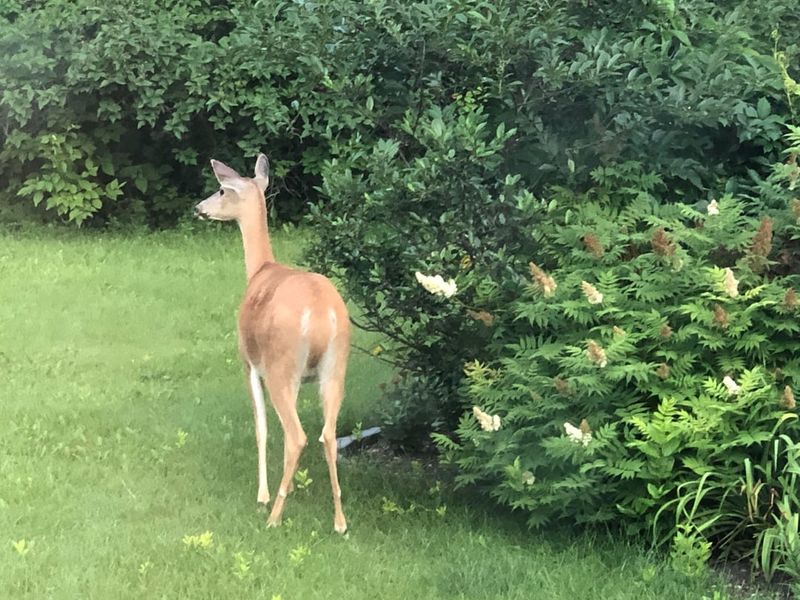
Late one winter evening, a quiet guest may be sampling your garden buffet. White-tailed deer are plentiful across Virginia, and bare months leave them hungry.
Hydrangea buds make a tasty snack when greenery is scarce. Deer tend to nibble the plump tips, right where flower buds hide.
Spotting deer damage takes a little detective work. Look for stems with rough, torn ends instead of clean cuts.
Deer lack upper front teeth, so they rip rather than snip. Rabbits leave neat, angled cuts lower to the ground.
Hoof prints and droppings nearby confirm your suspicion. Stems chewed around waist height point strongly to deer.
Physical barriers work best for protection. A simple circle of wire fencing or plastic netting around the shrub blocks hungry mouths.
Remove the barrier in spring once fresh greenery returns elsewhere. Your hydrangea can then grow freely all summer.
Repellent sprays can help too, especially those with strong odors. Reapply after heavy rain and switch brands now and then so deer stay wary.
Motion-activated sprinklers startle deer without harming them. They work well in yards with frequent overnight visitors.
Planting choices can also tip the odds in your favor. Oakleaf hydrangeas are generally less appealing to deer than bigleaf types.
Fuzzy, tougher leaves seem to make oakleaf plants less of a treat. Swap in a few for peace of mind in deer-heavy neighborhoods.
9. Fall Cleanup Cut Off Stems Holding Next Year’s Blooms
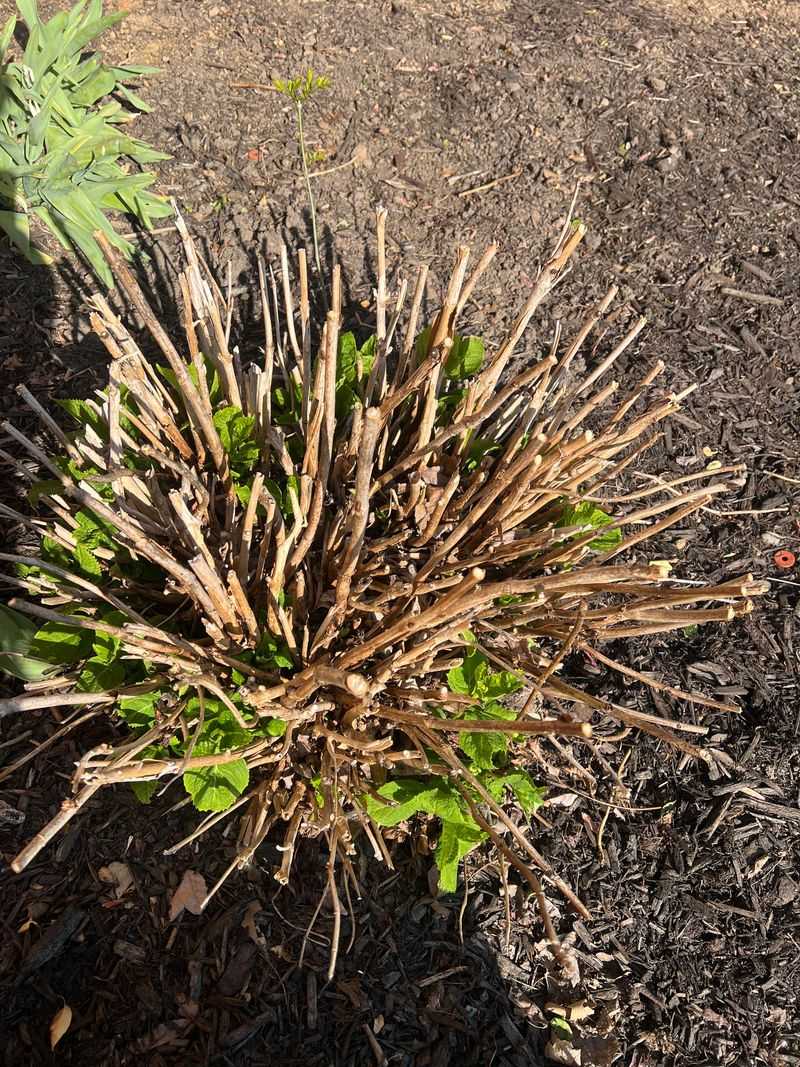
Autumn brings a strong urge to tidy everything up. Raking, bagging, and trimming feel productive after a long, busy summer.
Unfortunately, a zealous fall cleanup can quietly erase next year’s flowers. Bigleaf and oakleaf hydrangeas already have their buds set by then.
Cutting those stems back in October removes the blooms before winter even starts. Many gardeners never connect the fall chore with the empty summer shrub.
Removing faded flowers is still possible, though. Just cut right below the spent flower head, taking as little stem as you can.
Gardeners call that trimming, and it differs from pruning. The goal is leaving the plump buds lower on the stem untouched.
Honestly, you can skip trimming altogether. Dried flower heads add charming texture and may offer buds a bit of winter shelter.
Frosty mophead blooms also look lovely in winter arrangements. Snip a few for indoor vases, cutting carefully above the buds.
Panicle and smooth hydrangeas are more forgiving in fall. Tidy faded flowers and straggly stems, but save major pruning for late winter.
Late cuts come with another risk worth knowing. Pruning in fall can trigger soft new growth that frost damages quickly.
Keep a simple garden calendar on the fridge. Mark which shrubs get trimmed when, especially if several hydrangea types share your yard.
Helpers mean well too, so share the plan with family. Hired landscapers should also know which stems stay put through winter.