The Reason Carolina Wrens Keep Nesting Near Georgia Front Porches
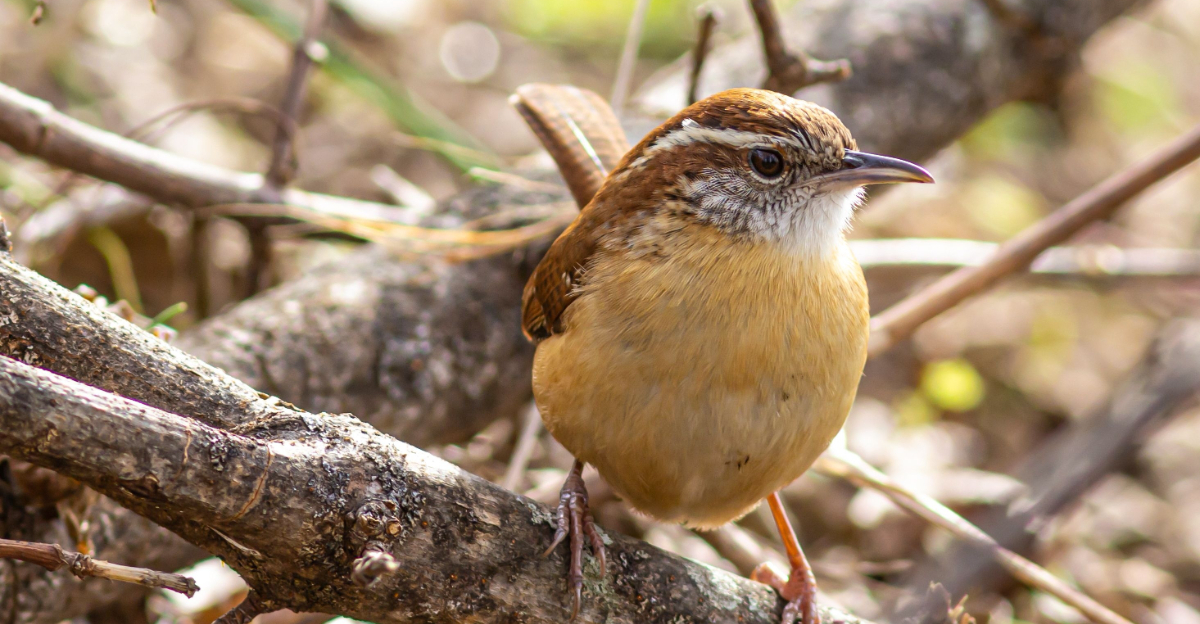
Carolina wrens seem to pick the same front porches again and again, and it is not by accident. If one keeps showing up, your Georgia yard is probably offering something it values.
Before you try to discourage another nest, understand what attracts these tiny birds in the first place. One overlooked detail often makes all the difference.
Keep reading before you change anything. A better understanding can help you protect the birds while avoiding unnecessary frustration.
Small adjustments around your porch may encourage safer nesting without creating conflict for your household. Knowing the reason behind this familiar behavior also makes it easier to enjoy these energetic visitors throughout the season.
You’ll appreciate every cheerful song a little more once you know what keeps bringing them back year after year naturally.
1. Sheltered Porches Offer Safe Nesting Sites
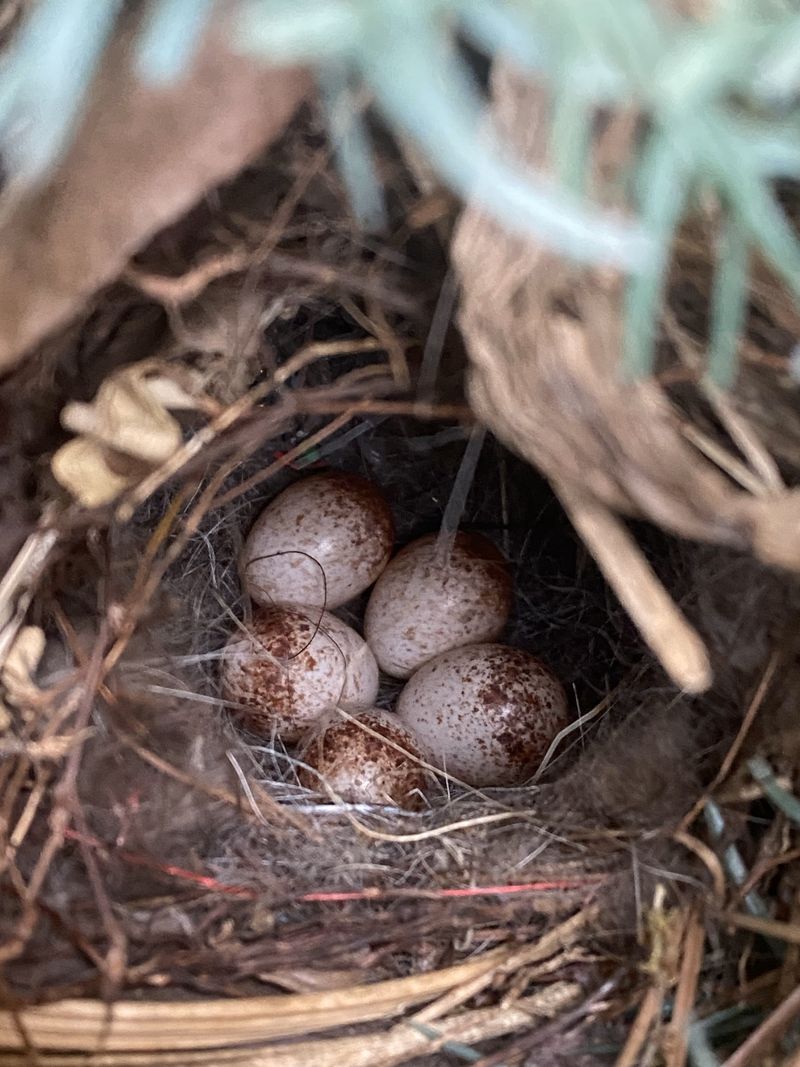
Front porches are basically bird apartments, and Carolina Wrens figured that out a long time ago. A covered porch gives them three solid walls, a roof overhead, and a dry floor below.
That combination is hard to beat when you are a small bird looking for a safe place to raise chicks.
Wrens weigh less than an ounce. Wind, rain, and sudden temperature drops can stress them out fast.
A sheltered porch blocks most of that, which makes nesting there far less risky than an exposed tree branch.
Nooks and corners on porches feel especially secure to wrens. A gap behind a hanging basket, a shelf with a stored pot, or even an old boot left by the door can look like a perfect nesting cavity.
Wrens naturally nest in enclosed spaces, so anything with a small opening and a protected interior fits their instincts well.
Porches also tend to be quieter during early morning hours when wrens are most active. Less foot traffic means fewer disturbances during the critical early nesting phase.
Once a wren pair decides a spot feels right, they commit quickly and start building within days. Repeated nesting in the same area is common because wrens often return to locations that worked before.
2. Nearby Shrubs Provide Quick Cover From Predators
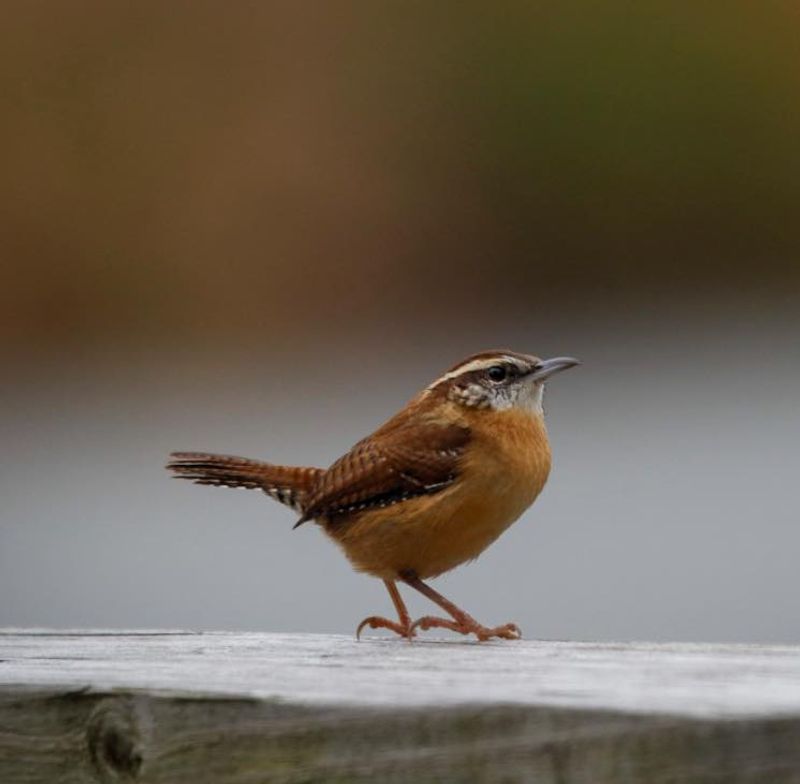
Predator pressure is real for small birds, and Carolina Wrens know it. Cats, hawks, and snakes are constant threats in suburban Georgia neighborhoods.
Wrens respond by nesting close to dense vegetation that offers fast escape routes.
Azaleas, hollies, and camellias are common in front yard landscaping across the region. These plants grow thick and close together, giving wrens a quick place to disappear when danger shows up.
A porch that sits right next to these shrubs becomes even more attractive as a nesting site.
Wrens do not fly far when startled. Short, fast bursts into nearby cover are their go-to move.
If your porch has shrubs within a few feet, wrens can dart from the nest to cover in under two seconds. That speed and proximity make the location feel manageable and relatively safe to them.
Dense ground-level plants also hide the approach of predators, giving wrens a chance to spot threats before they get too close. A yard with layered shrubs near the porch creates a natural buffer zone.
Your Georgia Garden Changes Every Week. Your Plan Should Too.
Gardening in Georgia changes quickly throughout the season. Every Friday you’ll receive a simple weekly plan showing exactly what to plant, prune, fertilize, harvest, and protect so you never miss the right timing.
Wrens read that landscape and factor it into where they choose to build. Trimming shrubs too far back sometimes reduces wren interest in a porch location, though results can vary depending on the individual bird.
3. Insects Around The Yard Supply Plenty Of Food
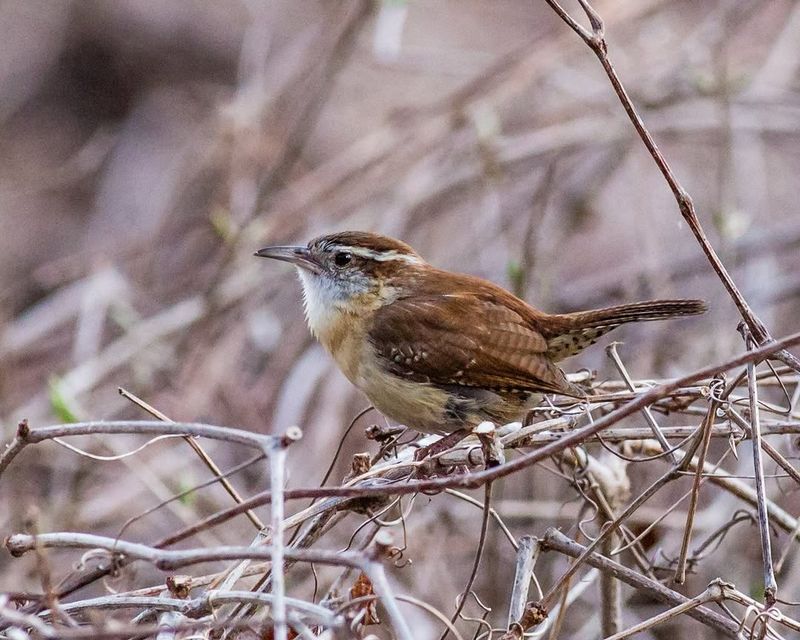
Food availability drives nearly every nesting decision a bird makes. Carolina Wrens eat insects almost exclusively, and suburban yards are loaded with them.
Beetles, spiders, caterpillars, and ants are all fair game for a hungry wren.
Leaf litter under shrubs, mulched garden beds, and wood piles are especially productive foraging spots. Wrens spend a lot of time flipping leaves and probing bark for hidden insects.
A yard that has these features close to the porch gives wrens both a nesting site and a nearby food source in one convenient location.
Georgia summers push insect populations into high gear. Warm, humid conditions accelerate insect reproduction, which means more food during the critical weeks when wren chicks are growing fast and need constant feeding.
Parents make dozens of food trips per hour during peak feeding periods.
Wrens rarely travel far from the nest to forage when chicks are young. Keeping food sources within a short distance reduces time away from the nest and lowers exposure to predators.
A porch surrounded by productive foraging habitat is essentially a complete package. Yards with diverse plantings tend to support more insect life, which makes them more attractive to wrens looking to settle nearby.
Reducing pesticide use can help keep that insect supply consistent throughout the nesting season.
4. Easy Access To Nesting Materials Saves Time
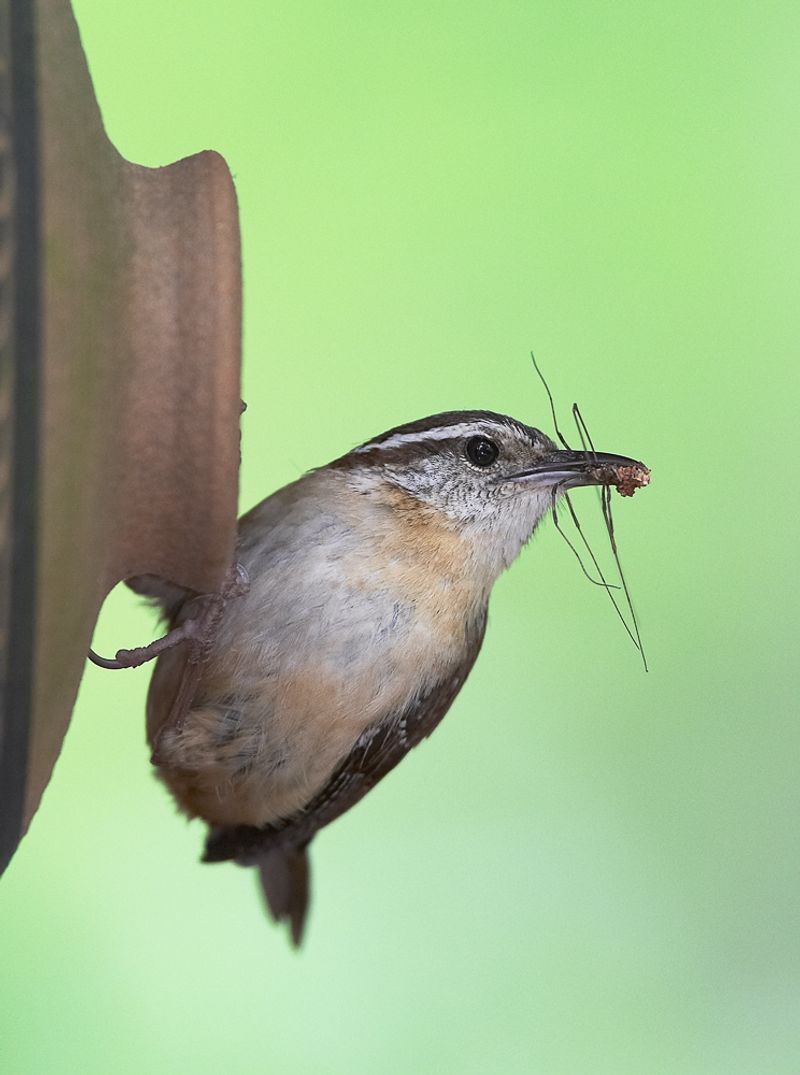
Building a nest is hard work, and wrens do not waste energy if they can help it. Carolina Wrens use dry leaves, bark strips, grass stems, pine needles, and even bits of string or paper.
Front porches in residential areas tend to be surrounded by exactly those kinds of materials.
Leaf piles near the foundation, dried plant debris in garden beds, and loose mulch all serve as ready-made supply depots. A wren nesting on your porch may only need to fly ten feet to grab the next piece of building material.
That efficiency matters when a nest needs to be completed quickly before weather changes or predators notice the activity.
Wrens build bulky, dome-shaped nests with a side entrance. They stuff the interior with softer materials like feathers, fur, or plant down to create a warm lining for eggs and chicks.
Yards with a mix of rough exterior materials and soft interior options nearby make the building process faster and easier.
Human activity actually helps sometimes. Shed pet hair left outside, loose string from garden twine, or dried moss from a hanging basket can all end up woven into a wren nest.
Wrens are resourceful and observant. If your yard consistently offers good materials, it becomes a reliable destination that wrens remember and revisit in future nesting seasons.
5. Covered Entryways Protect Nests From Rain
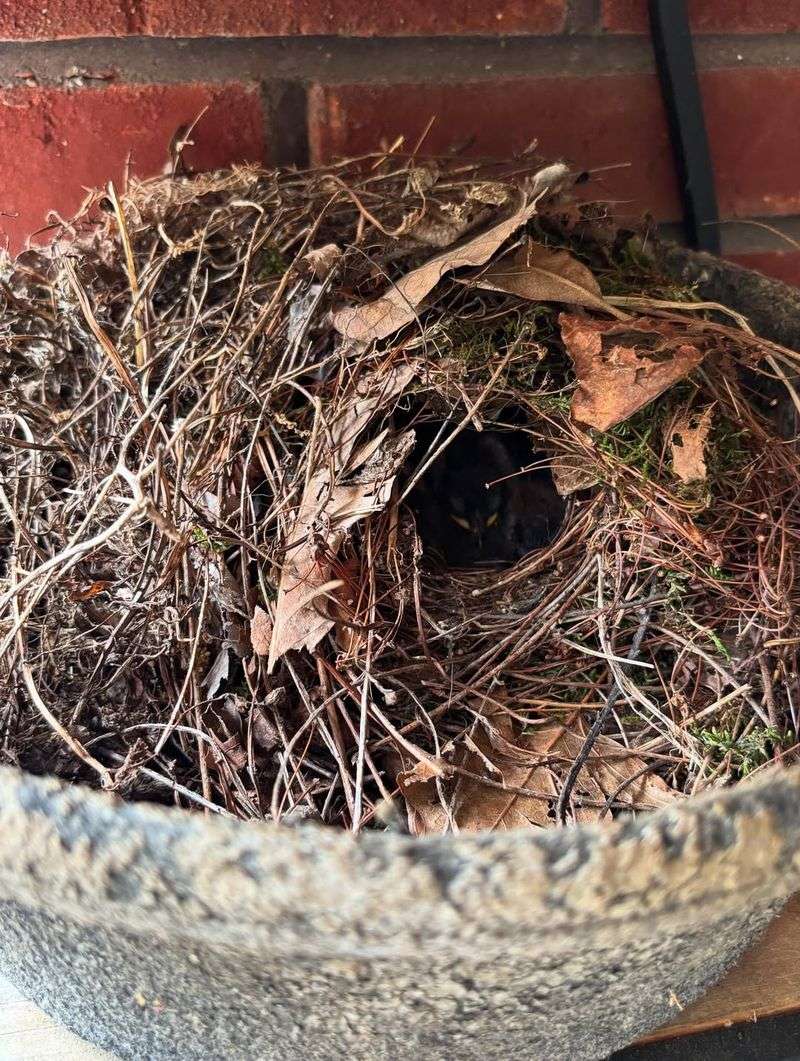
Rain is one of the biggest threats to an active bird nest. Wet eggs can struggle to develop properly, and soaked chicks lose body heat fast.
Carolina Wrens in the South deal with heavy spring and summer rain, so finding a dry nesting spot is a real priority.
A covered front porch solves that problem neatly. Overhangs and rooflines deflect rain away from corners and shelves where wrens like to build.
Even during a heavy downpour, a nest tucked under a deep porch roof can stay completely dry. Wrens seem to recognize that protection and favor it strongly.
Open nesting sites like tree branches offer no such guarantee. A nest exposed to driving rain can be damaged or flooded, which puts eggs and chicks at serious risk.
Porches eliminate that variable almost entirely, which is likely one reason wrens return to them year after year.
Humidity is another factor worth noting. Georgia summers bring muggy air that can encourage mold growth in nest material.
Good airflow under a covered porch helps keep the nest drier between rain events. Wrens that nest in spots with both overhead protection and decent air circulation tend to have better outcomes than those in poorly ventilated locations.
Porch design inadvertently creates near-ideal microclimate conditions that wrens have learned to seek out over generations.
6. Simple Changes Can Discourage Repeat Nesting
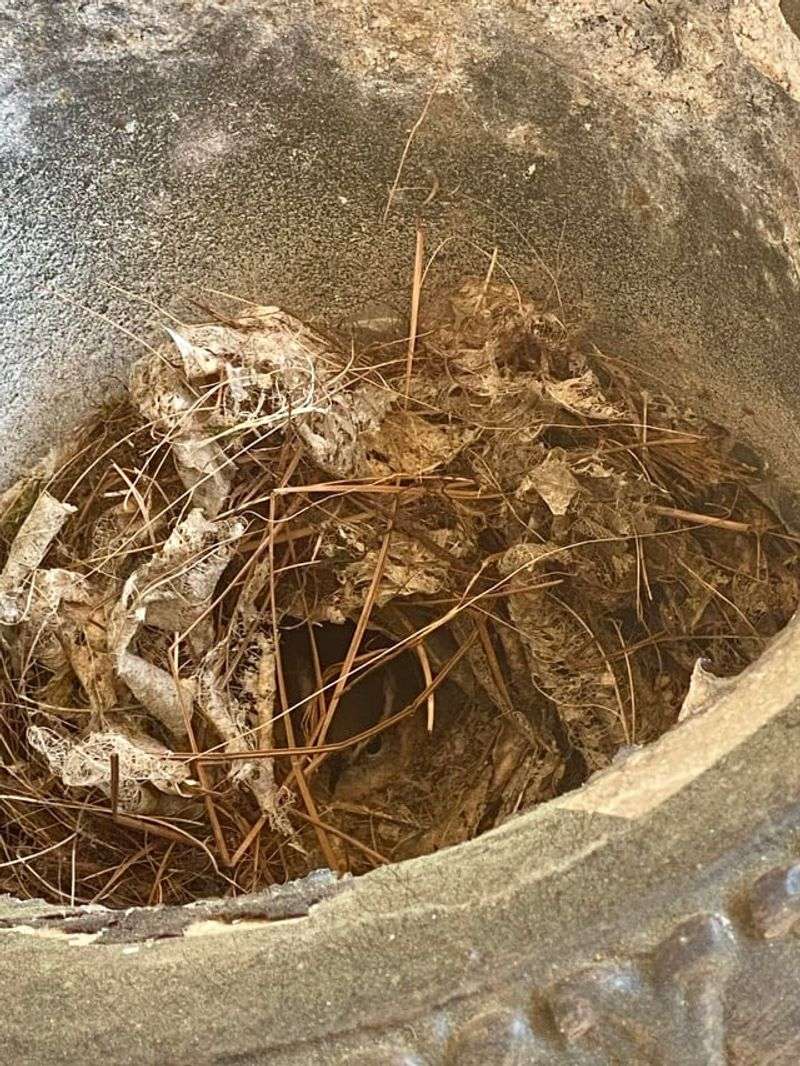
Not everyone wants birds nesting at their front door, and that is a fair preference. Constant chirping, droppings on the porch floor, and the stress of avoiding the nest for weeks can get old quickly.
Fortunately, a few practical steps can reduce the chances of wrens setting up again next season.
Blocking access to favored spots is the most effective approach. Wrens need a small enclosed space to feel comfortable.
Covering open shelves with mesh, filling in gaps along the roofline, or removing items like stored boots and hanging baskets can eliminate the spots wrens find most appealing.
Timing matters too. Wrens begin scouting nest sites in late winter and early spring.
Putting deterrents in place before that window opens gives you a head start. Once a nest is active and eggs are present, it is protected under federal law, so early prevention is the practical path.
Reflective tape or wind chimes near porch entries can make the area feel less settled and calm, which wrens prefer. Moving potted plants away from corners removes both cover and nesting options.
No single method works in every situation, and determined wrens sometimes adapt around obstacles. Combining two or three strategies together tends to produce better results than relying on just one approach.
7. Protect Active Nests Until The Young Birds Leave
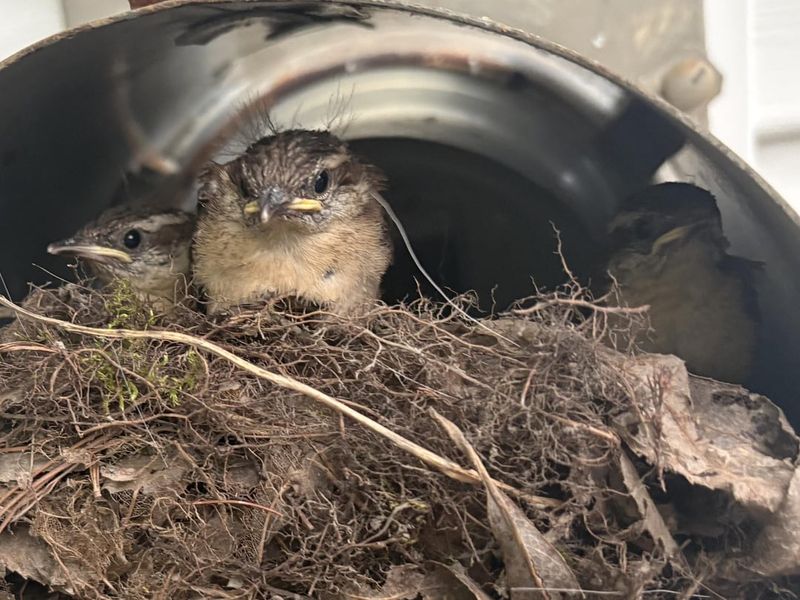
Once a Carolina Wren nest has eggs in it, your options change significantly. Under the Migratory Bird Treaty Act, active nests with eggs or chicks cannot legally be removed or disturbed.
Knowing what to expect during that period makes it much easier to live alongside the family until they are ready to move on.
Incubation takes roughly two weeks after the last egg is laid. Chicks hatch blind and featherless but grow fast.
Within about twelve to sixteen days after hatching, young wrens are typically ready to leave the nest. So the active nesting period from egg to fledgling is usually around four to five weeks total.
During that time, parent birds will be vocal and busy. Expect constant trips back and forth with food.
Wrens may scold loudly if you get too close, but they rarely abandon a nest due to brief human presence. Giving the area a little extra space during the first week after hatching helps reduce stress on the adults.
Once fledglings leave the nest, the site can be cleaned out and modified before the next season. Wrens in the South sometimes raise two or even three broods per year, so acting promptly after fledglings depart matters.