The Reason North Carolina Homeowners Are Planting Fast-Growing Conifers This Summer
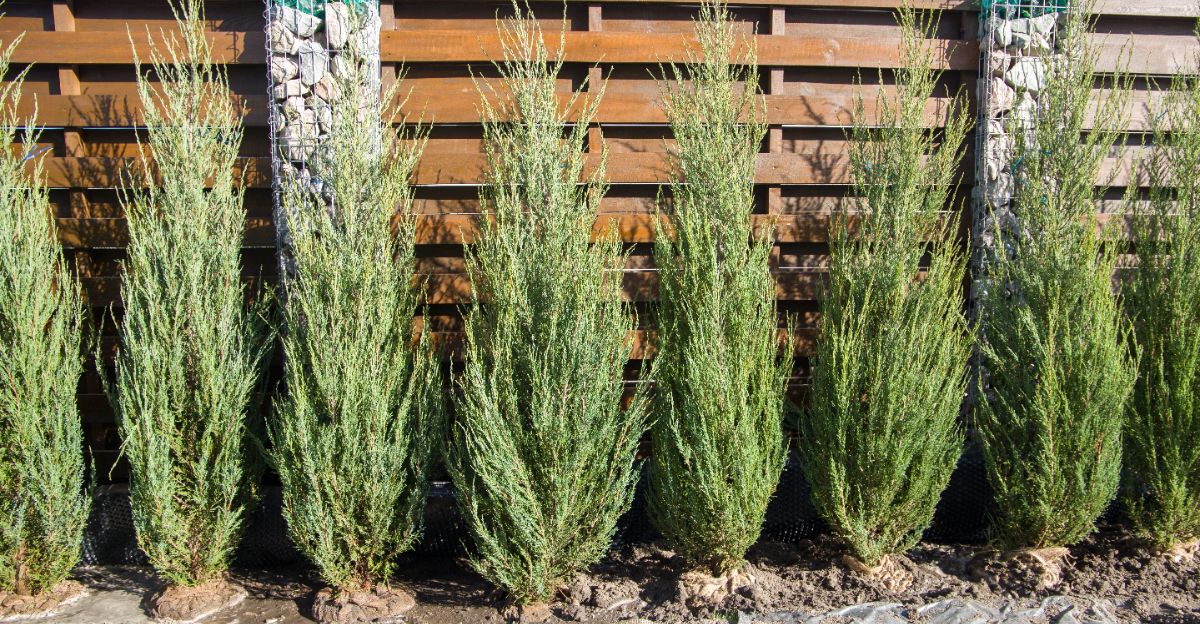
Something is happening in North Carolina backyards this summer, and it involves a lot of digging. Fast-growing conifers keep showing up in yard after yard, and the pattern is no accident.
These evergreens pull double duty. They shoot up fast, hold their color through every season, and quietly patch over the yard problems homeowners have been staring at for years.
A new neighbor built a deck with a clear view into your kitchen. A bare fence line has looked tired since spring. Conifers handle both without much fuss.
Curious what’s driving this backyard rush across the state? The reason behind it might have you reaching for a shovel too.
Fast-Growing Conifers Give Instant Privacy Without Waiting Years For A Screen
Your neighbor just built a two-story deck. Now you feel like you are living on a stage every time you step outside.
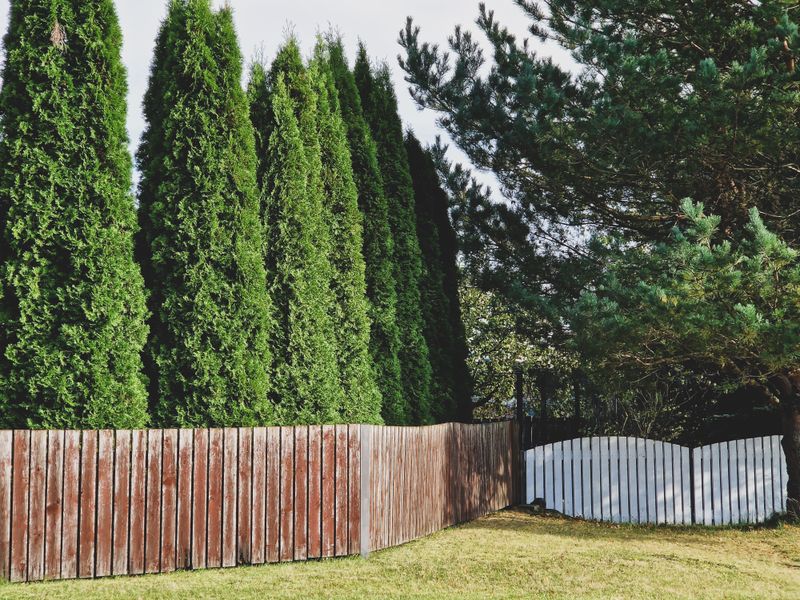
Fast-growing conifers solve that problem faster than most people expect. Trees like Leyland cypress and Green Giant arborvitae can shoot up three to five feet per year under good conditions.
That kind of speed means a meaningful screen can appear within just two or three growing seasons. You are not waiting a decade for shade or coverage.
Planting fast-growing conifers this summer puts you ahead of the timeline. By next summer, those trees will already be making a noticeable difference along your property line.
The dense, layered branches of conifers block sightlines without looking harsh or industrial. They create a living wall that softens noise, wind, and unwanted views all at once.
Unlike wooden fences, these trees keep filling in and growing taller on their own, with no rebuilding or replacing involved. That means fewer headaches and more natural beauty over time.
A six-foot fence feels like a barrier. A row of conifers feels like a forest edge, and that distinction matters for how your yard actually feels to spend time in.
Homeowners who planted Green Giants just three summers ago are already enjoying full privacy. Their yards went from wide open to genuinely secluded in a surprisingly short window.
Privacy is one of the top reasons people leave cities for suburban life. Conifers help you protect that peace without sacrificing curb appeal or charm.
Making Summer Planting Work In North Carolina’s Climate
Fall usually gets the credit as the best planting season, and for good reason. But North Carolina summers can still work in your favor with the right care.
Warm soil temperatures can speed up early root development, though the heat means new plantings need closer attention to watering. Roots spread faster when the ground holds heat from weeks of sunshine.
Humidity plays a big role here too. The muggy summers that make people groan actually help young conifers stay hydrated between waterings.
Rainfall patterns across the Piedmont and coastal plain regions tend to bring afternoon showers that support new plantings. Nature does some of the watering work for you during peak growing months.
Fast-growing conifers planted in June or July still get a full stretch of warm weather to settle in before winter arrives. With consistent watering, that head start helps them enter their first cold season in decent shape.
Your Michigan Garden Changes Every Week. Your Plan Should Too.
Gardening in Michigan changes quickly throughout the season. Every Friday you’ll receive a simple weekly plan showing exactly what to plant, prune, fertilize, harvest, and protect so you never miss the right timing.
Red clay soil, which covers much of the state, can be challenging. But conifers like arborvitae and Eastern red cedar adapt well with a little soil amendment at planting time.
The long growing season in North Carolina gives these trees more active weeks than they would get further north. More growing weeks means more vertical growth before the first frost slows things down.
Gardeners in Charlotte, Raleigh, and Asheville have had good first-year results from summer-planted conifers when watering stayed consistent. The state’s long growing season gives these trees more time to settle in than they’d get further north.
Planting now is not just convenient, it gives your conifers a solid head start heading into fall.
Best Fast-Growing Conifers For North Carolina Yards
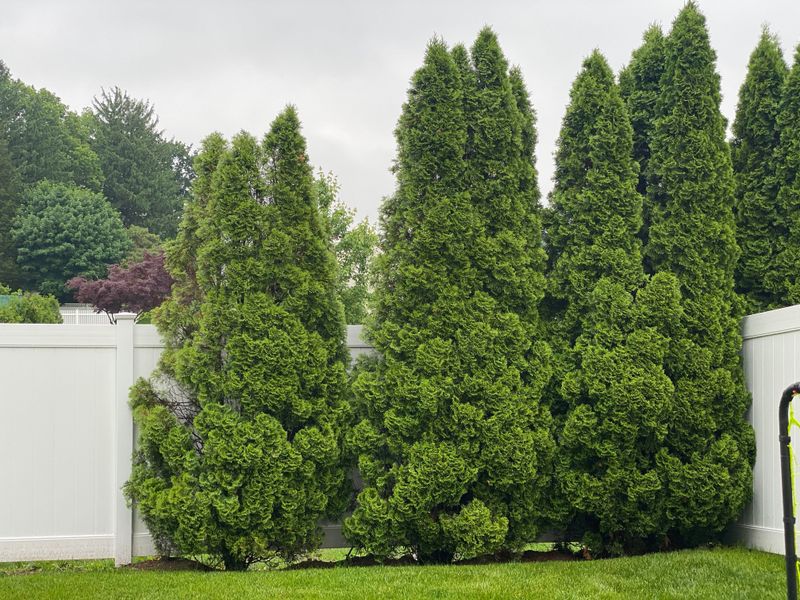
Not every conifer grows at the same pace. Picking the right species makes all the difference between a thriving screen and a frustrating stall.
Green Giant arborvitae is the crowd favorite across the state. It handles heat, clay soil, and humidity without complaining, and it grows three to five feet per year in good conditions.
Leyland cypress is another powerhouse. It rockets upward quickly and creates a thick, feathery wall of green that neighbors cannot see through.
Eastern red cedar is the scrappy local hero. Native to North Carolina, it tolerates drought, poor soil, and wind better than almost any other conifer on this list.
Cryptomeria japonica, also called Japanese cedar, brings a softer texture and a slightly more ornamental look. It grows fast and stays healthy in the warmer parts of the state.
Nellie Stevens holly is technically not a conifer, but it earns a mention here because it behaves like one in terms of dense screening ability and fast growth.
For mountain areas around Asheville, Norway spruce is a strong contender. It thrives in cooler elevations and adds a classic, stately look to hillside properties.
Buying from a local nursery gives you trees already adapted to your specific region. A tree grown in North Carolina soil is ready for North Carolina conditions from day one.
Choosing the right conifer for your yard is the single most important decision in this whole process. Get that right, and everything else becomes much easier.
Spacing And Placement For A Solid Privacy Screen
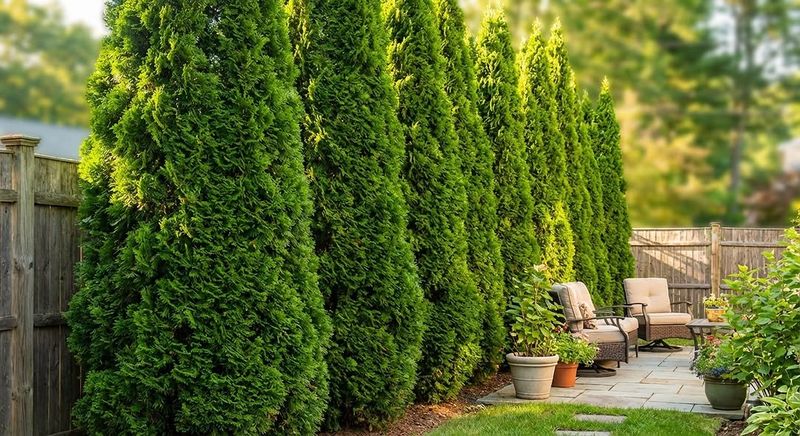
Planting too close together is one of the most common mistakes people make. Trees that are crowded compete for water and nutrients, and the whole row ends up weaker.
For Green Giant arborvitae, spacing them five to six feet apart creates a solid screen without suffocating the roots. That gap looks wide at first, but the trees fill it fast.
Leyland cypress needs more room, around ten to fifteen feet between each tree. Give them that space and they reward you with thick, overlapping canopies within a few seasons, without crowding roots or airflow later on.
Placement along the property line requires knowing where that line actually is. Planting even one foot into a neighbor’s yard can create legal headaches down the road.
Consider the mature height of your chosen species before planting near power lines or roof overhangs. A tree that tops out at 40 feet needs clearance from overhead infrastructure.
Staggering two rows of shorter conifers can create an even denser screen than a single row of tall trees. The zigzag pattern closes gaps at ground level where privacy matters most.
South and west-facing property lines get the most sun exposure. Planting conifers there maximizes growth rates and creates shade that cools your yard during hot afternoons.
Mark your planting spots with stakes before digging. Walking the line and visualizing the mature trees helps you catch spacing errors before they become permanent.
Good placement today saves expensive corrections later. Take the time to plan it right from the start.
Watering And Care During The First Summer
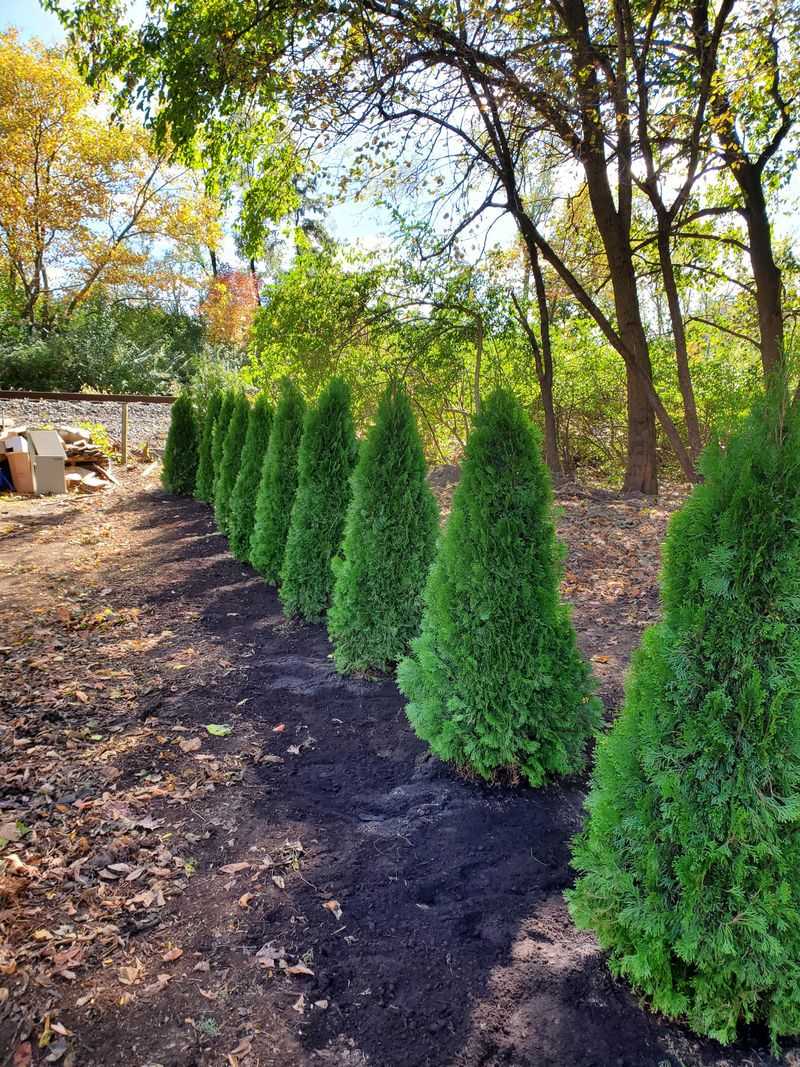
The first summer is the most critical window for any newly planted tree. Get the watering right during this stretch, and the tree builds roots that carry it through years of growth.
New conifers need about one inch of water per week. During dry spells, that means supplementing with a slow, deep soak rather than a quick spray from the hose.
Drip irrigation is the most efficient method for a row of privacy trees. It delivers moisture directly to the root zone without wasting water on surrounding grass or weeds.
Mulching around the base of each tree makes a noticeable difference. A three-inch layer of wood chips keeps moisture in, regulates soil temperature, and reduces weed competition all at once.
Avoid piling mulch against the trunk. That habit traps moisture against the bark and invites rot and disease over time.
Fertilizing in the first summer should be done carefully. A slow-release balanced fertilizer applied once in early summer gives the roots a gentle push without burning tender new growth.
Watch for yellowing needles, which can signal overwatering or poor drainage. Conifers prefer consistent moisture but struggle when roots sit in soggy soil for extended periods.
Checking on your trees once a week takes only a few minutes. That small habit catches problems early, before they become setbacks that cost weeks of growth.
Healthy first-summer care sets the foundation for years of strong, fast growth ahead.
Common Mistakes That Slow Down Growth
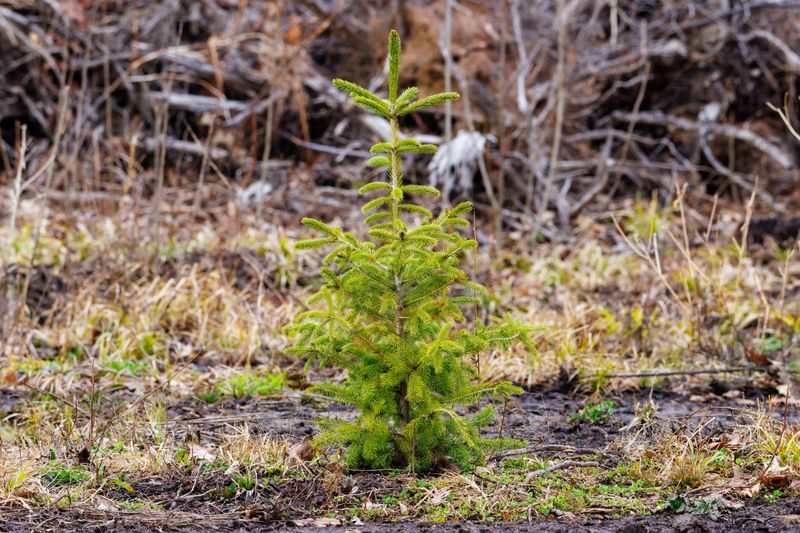
Planting too shallow is the mistake that catches the most homeowners off guard. When the root ball sits too high, roots dry out fast and the tree struggles to get a solid anchor.
The top of the root ball should sit level with the surrounding soil, not above it. That small detail often decides how well the tree ends up growing.
Overwatering destroys more young conifers than drought does. Soggy soil suffocates roots and opens the door to fungal disease that spreads quickly in warm, humid conditions.
Skipping soil amendment in heavy clay is another common misstep. Mixing compost into the planting hole improves drainage and gives roots an easier path to spread outward.
Planting in full shade is a setup for disappointment. Most fast-growing conifers need at least six hours of direct sunlight to hit their growth potential.
Choosing the wrong species for your specific region slows everything down. A tree suited for mountain elevations will struggle in the humid coastal plain, and vice versa.
Ignoring pests in the first season can derail an entire row of trees. Bagworms, spider mites, and scale insects settle on stressed young conifers and spread quickly if left unchecked.
Skipping staking in windy areas lets young trees rock, which tears developing roots before they can anchor properly. One season of staking prevents years of stunted growth.
Avoiding these mistakes puts your fast-growing conifers on the path to becoming the thriving privacy screen you envisioned from the start.