The Reason Praying Mantises Show Up In Illinois Gardens
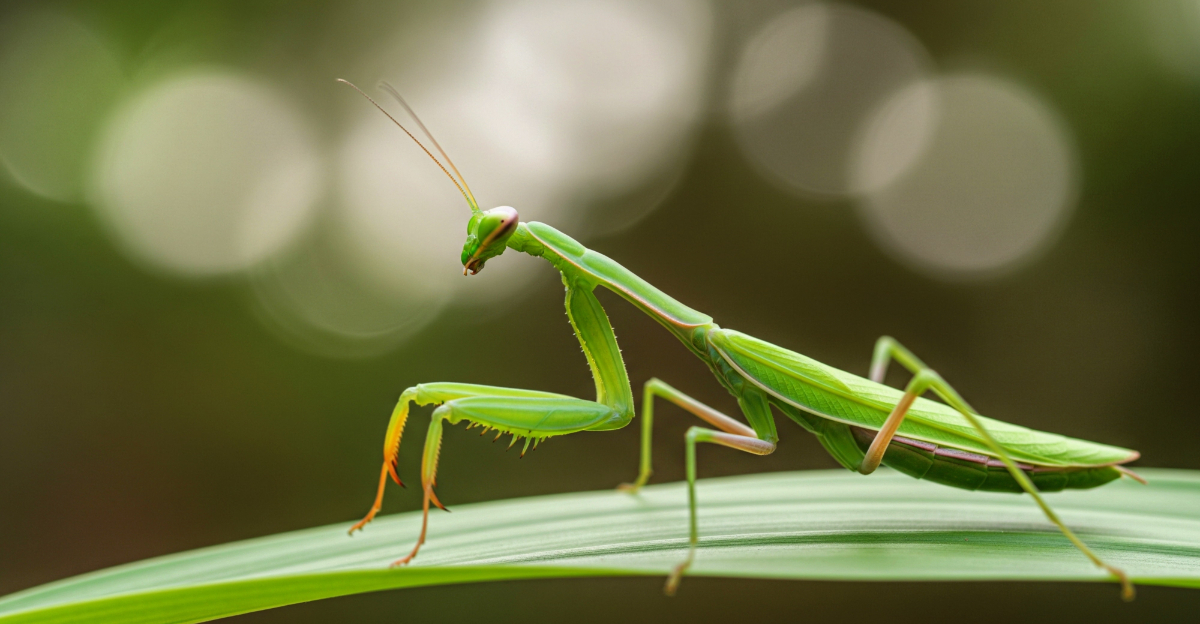
A humid July evening in your Illinois backyard, and something shifts near the pepper plants. Two spindly front legs fold together in that unmistakable pose, and a pair of triangular eyes tracks your every move.
Praying mantises have quietly become regulars in gardens across the state, and their arrival isn’t luck. These predators scout locations with precision, weighing food supply, cover, sunlight exposure, and the density of nearby stems before settling in.
Illinois gardens, it turns out, check nearly every box on their list. A closer look reveals exactly why.
Abundant Prey Draws Mantises Into Illinois Gardens
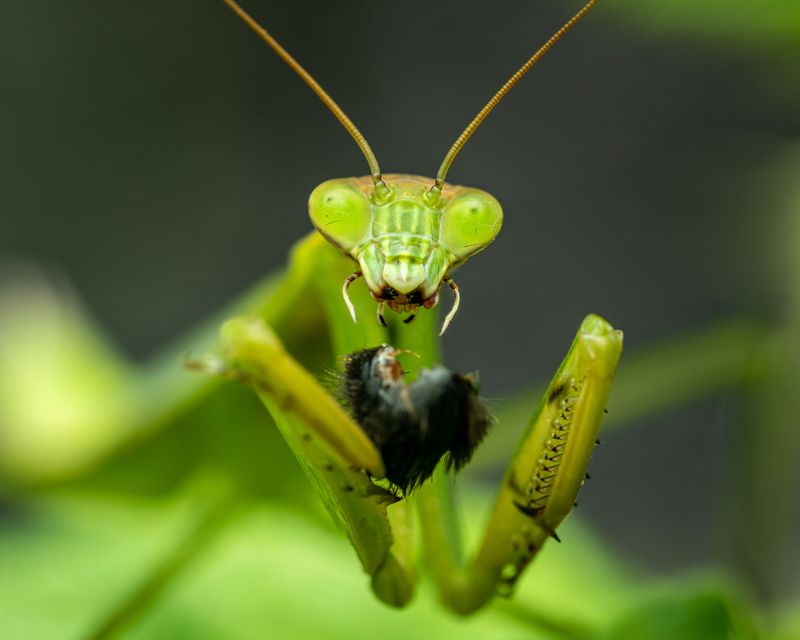
Hunger is the number one reason a praying mantis shows up in your yard. Praying mantises in Illinois gardens are expert hunters, and they follow the food supply like a compass needle follows north.
Gardens are basically all-you-can-eat buffets for these insects. Aphids, grasshoppers, beetles, and caterpillars pack into vegetable beds and flower borders every summer.
A mantis can spot movement from several feet away with its large compound eyes. Once it locks onto a target, the strike happens faster than a human blink.
Illinois gardens tend to attract a wide range of soft-bodied insects that mantises love most. Roses, herbs, and leafy greens all pull in the exact prey that keeps a mantis well-fed all season.
Organic gardens are especially attractive because they skip pesticides that would otherwise eliminate the pest population. A garden buzzing with insects isn’t a problem here; it’s exactly what draws mantises in and signals a healthy, balanced yard.
If your garden has visible aphid clusters or caterpillar damage, a mantis may have already scoped it out. Think of that leaf damage not just as a problem but as a neon sign to a hungry predator nearby.
Companion planting with dill, fennel, and marigolds pulls in extra insects that serve as mantis meals. The more diverse your plant selection, the richer the prey pool becomes.
A garden full of life is a garden a mantis will claim as its hunting ground.
Native Plants Create Ideal Mantis Habitat
Native plants are not just pretty. They are the backbone of a working ecosystem that supports insects at every level of the food chain.
When you plant native species, you invite native bugs. When native bugs arrive, predators like the praying mantis follow close behind.
Illinois has a rich palette of native plants including coneflowers, milkweed, goldenrod, and wild bergamot. Each one feeds pollinators and small insects that become easy targets for a waiting mantis.
Non-native ornamentals often support fewer insect species, which means less food for predators. A garden planted mostly with exotic blooms can feel like a food desert to a hungry mantis scouting the neighborhood.
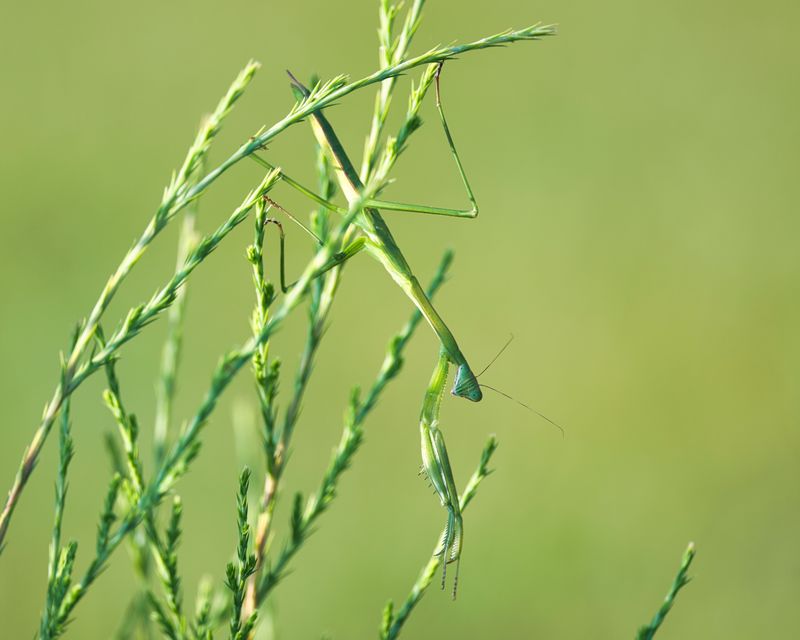
Native grasses like little bluestem and prairie dropseed offer dense, sheltered stems perfect for a mantis to hide in and ambush from. The vertical structure of grasses mirrors the tall vegetation mantises naturally favor for hunting and camouflage.
Shrubs like buttonbush and wild rose create layered habitat that supports insects at multiple heights. A mantis can move from ground level to mid-canopy without ever leaving the safety of dense foliage.
Your Illinois Garden Changes Every Week. Your Plan Should Too.
Gardening in Illinois changes quickly throughout the season. Every Friday you’ll receive a simple weekly plan showing exactly what to plant, prune, fertilize, harvest, and protect so you never miss the right timing.
Planting a mix of native perennials, grasses, and shrubs gives your garden the complexity that mantises need. Variety is the secret ingredient that turns a simple flower bed into prime mantis territory.
Your plant choices directly shape which wildlife visits, and native species tip the odds in favor of these remarkable hunters every time.
Warm Microclimates Support Mantis Egg Cases
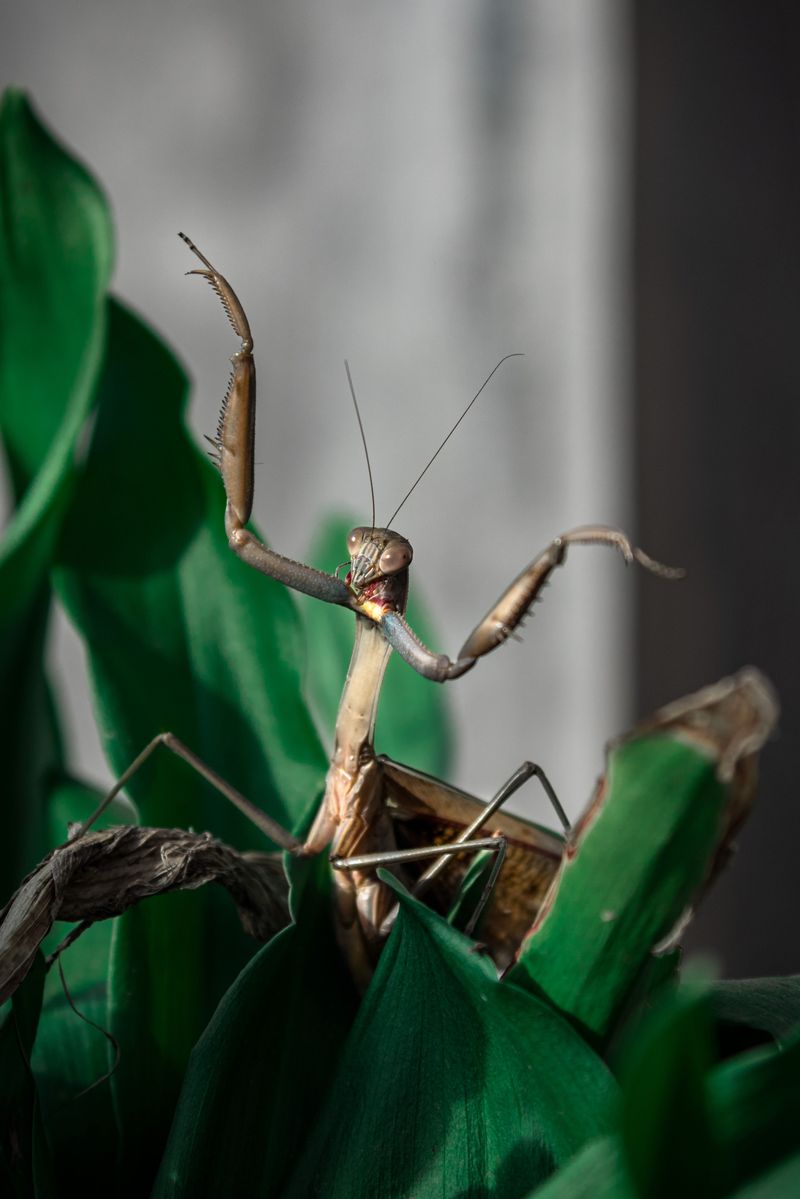
Praying mantis egg cases are tougher than they look, but they still need the right conditions to survive a Midwest winter. Warm microclimates in Illinois gardens give those egg cases a fighting chance.
A microclimate is a small area that holds more heat than the surrounding space. South-facing brick walls, raised beds, and dense shrubs all create pockets of warmth that mantises instinctively seek out.
Female mantises lay their egg cases, called oothecae, on woody stems and fence posts in late fall. They choose locations that will catch winter sun and stay protected from the worst cold snaps.
Illinois winters can be brutal, but a well-placed egg case near a sun-warmed wall can survive temperatures that would destroy eggs in an exposed location. That warmth difference of even a few degrees matters enormously to developing embryos.
Gardeners who leave decayed plant stems standing through winter unknowingly provide perfect egg case anchors. Cutting everything down in fall can accidentally remove egg cases that would have produced next season’s mantises.
Raised garden beds heat up faster in spring, which can trigger earlier hatching and give young mantises a head start on the pest season. A warm microclimate is not just about survival but about timing.
Paying attention to the warmest corners of your yard helps you understand why mantises return to the same spots year after year. Heat is a resource, and these insects know exactly where to find it.
Garden Structure Offers Camouflage And Hunting Perches
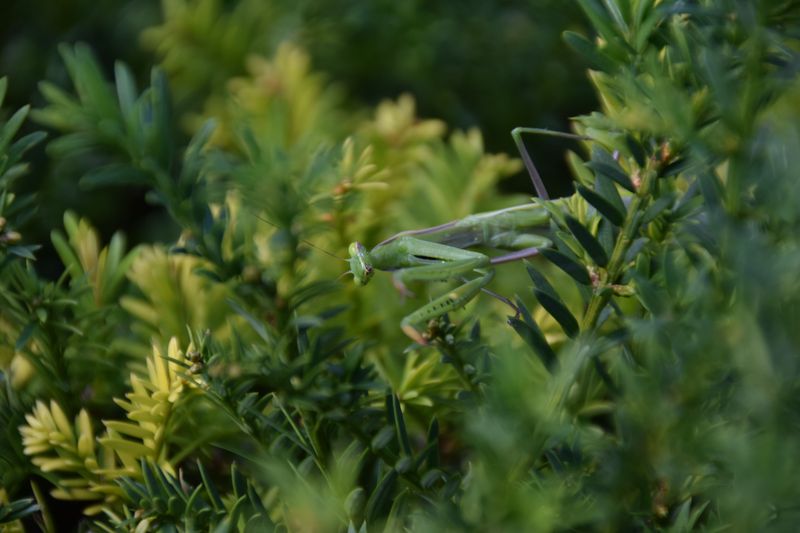
A mantis without cover is a mantis in danger. Garden structure is one of the biggest reasons these insects settle into a particular yard and stay all season long.
Tall stems, layered foliage, and tangled vines give a mantis the cover it needs to both hide from birds and ambush unsuspecting prey. Without that physical complexity, a garden just does not offer enough security.
Mantises are masters of camouflage, and they rely on their surroundings to complete the illusion. A green mantis on a bare fence post is exposed, but the same insect on a leafy pepper plant becomes nearly invisible.
Trellises covered in climbing beans or cucumbers are particularly attractive because they combine vertical hunting perches with dense leaf cover. A mantis can sit motionless for hours waiting for the next meal to wander by.
Densely planted herb gardens with basil, parsley, and cilantro create a layered canopy close to the ground. That low-level structure suits younger mantises that are still too small to climb high into the garden.
Flower borders with varying heights, from low sedums up to tall zinnias, give mantises an escalator of perches to choose from throughout the day. Movement through the garden follows the sun and the bugs, and structure enables that movement.
The more architectural complexity your garden has, the more attractive it becomes to a hunting mantis looking for the perfect ambush spot.
Seasonal Timing Brings Mantises Out In Late Summer
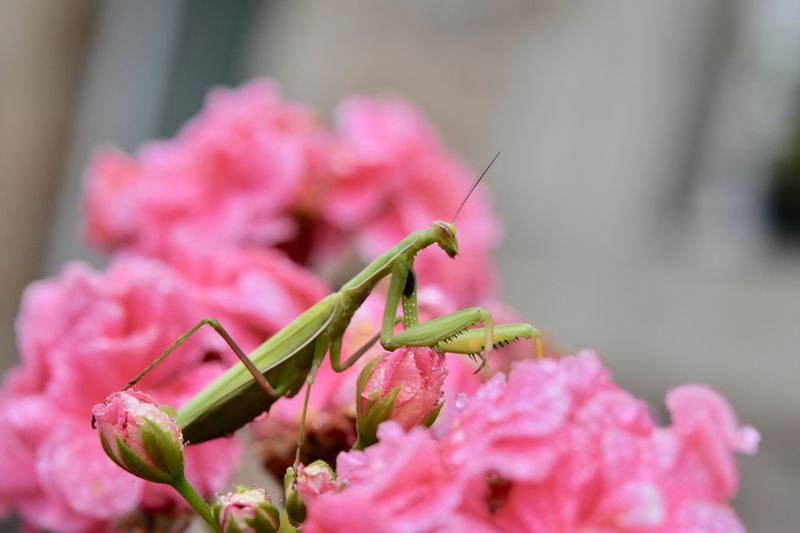
Late summer in Illinois is mantis season, plain and simple. If you have never noticed one before August, that is not a coincidence.
Mantises hatch in late spring as tiny nymphs barely the size of a fingernail. By the time August rolls around, they have molted multiple times and grown into the impressive adults that stop gardeners in their tracks.
The late summer surge in insect activity also peaks right when mantises reach full size. Grasshoppers are everywhere, caterpillars are munching through vegetable beds, and the garden buzzes with activity that feeds a hungry adult mantis.
Adult mantises are also searching for mates during this window, which increases how much they move around. A mantis that wandered in from a neighboring lot may simply be following hormonal signals through your garden.
Illinois gardens hit their peak density of soft-bodied insects between July and September. That timing lines up perfectly with when mantises are large enough to tackle bigger prey and need more calories each day.
Cooler nights in September signal the end of the season, and females begin laying egg cases to carry the population into next year. The adults you see in late summer are the last generation, racing to reproduce before the first frost.
Spotting a mantis in your garden in August or September means the season timed out perfectly, and your yard offered exactly what these insects needed to survive and grow.
Simple Steps Attract More Mantises To Your Yard
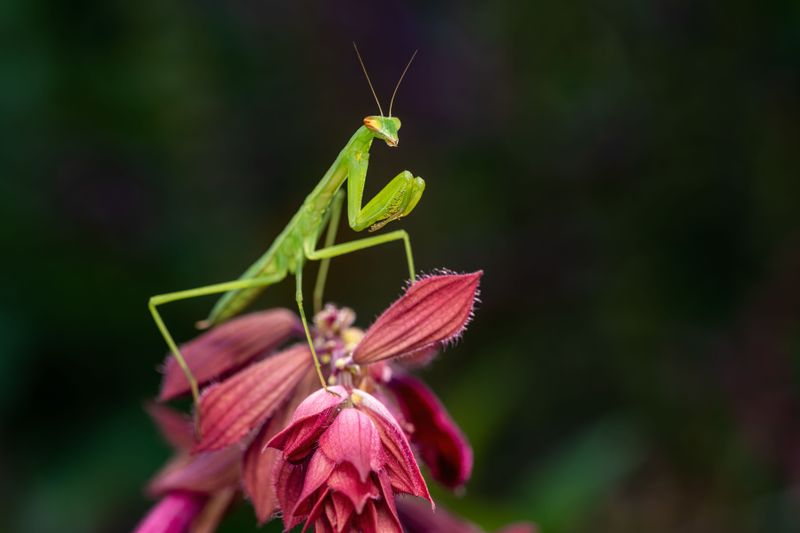
You do not need a science degree to make your yard more attractive to praying mantises in Illinois gardens. A few thoughtful choices can turn an ordinary backyard into prime mantis territory.
Start by skipping synthetic pesticides entirely. Even one application can eliminate the insect population that mantises depend on, sending them straight to a neighbor’s yard instead.
Leave decaying plant stems standing through winter rather than cutting everything back in fall. Those hollow, woody stalks are exactly where female mantises attach their egg cases before the cold sets in.
Add a layer of diversity to your planting plan by mixing native wildflowers with herbs and ornamental grasses. That combination creates the layered structure and prey-rich environment that mantises find irresistible.
Consider purchasing mantis egg cases from a garden center or online supplier if you want to jumpstart the population. Place them on sheltered, south-facing stems in early spring and let nature handle the rest.
Reduce outdoor lighting near the garden at night since bright lights attract moths and disrupts the natural insect balance that mantises rely on. A calmer nighttime environment keeps the prey population steady and predictable.
Water your garden consistently because moist soil supports more insects, which in turn supports more mantis activity. A garden that dries out completely loses its insect community fast.
Every small step you take builds a garden that works as a living ecosystem, and praying mantises will reward that effort with a season-long presence that gardeners remember for years.